If you’ve ever stared down a mountain of damp towels, bedding, and clothes on a Sunday evening, you know the true meaning of a laundry marathon. That relentless cycle of wash, dry, fold, repeat can devour an entire weekend, leaving you wondering if your appliances are secretly conspiring against your free time. The game-changer? A large-capacity dryer that doesn’t just handle bigger loads but fundamentally reimagines how you approach laundry day.
These powerhouse appliances have evolved far beyond simple metal drums that spin and heat. Today’s large-capacity models combine engineering sophistication with thoughtful features that protect fabrics, slash energy bills, and—most importantly—give you back your Saturdays. Whether you’re managing a family of five’s sports uniforms and weekly bedding or simply want to dry a king-size comforter without a trip to the laundromat, understanding what makes these dryers transformative is your first step toward laundry liberation.
Top 10 Large-Capacity Dryers
Detailed Product Reviews
1. Kenmore 7.0 cu. ft. Front Load Electric Dryer - with Guard to Reduce Wrinkles & Static - Smart Sensor Drying - LED - White

Overview: The Kenmore 7.0 cu. ft. Front Load Electric Dryer strikes an excellent balance between functionality and affordability for medium-sized households. This white-finished appliance offers a substantial drum capacity that handles family-sized loads while incorporating smart technology typically found in higher-end models.
What Makes It Stand Out: The Wrinkle Guard Option sets this dryer apart by intermittently tumbling clothes post-cycle, preventing creases from setting in when you can’t immediately unload. Smart Sensor Drying technology continuously monitors moisture levels, automatically adjusting time to prevent over-drying that damages fabrics. The Energy Saver mode reduces consumption by 7.6% compared to normal cycles, helping lower utility bills without sacrificing performance.
Value for Money: At $573.29, this Kenmore positions itself in the sweet spot between budget and premium dryers. You’re getting brand reliability, essential smart features, and generous capacity without paying for unnecessary luxury additions. Comparable dryers with sensor technology often cost $100-200 more, making this a prudent investment for cost-conscious families.
Strengths and Weaknesses: Strengths include effective wrinkle prevention, accurate moisture sensing, user-friendly LED controls, and energy-saving capabilities. The 7.0 cu. ft. capacity easily accommodates bedding and bulky items. Weaknesses include the lack of steam refresh options, absence of ENERGY STAR certification, and fewer cycles than premium models. The white finish may show wear more readily than metallic alternatives.
Bottom Line: This dryer delivers reliable, intelligent performance for families seeking practical features without premium pricing. The wrinkle prevention and sensor drying alone justify the cost, making it a smart choice for busy households.
2. Kenmore 8.0 cu. ft. Front Load Electric Dryer with Wrinkle Guard & Accela Steam to Reduce Wrinkles, Static & Odors - Smart Sensor Drying - LED - ENERGY STAR Certified - Metallic Silver

Overview: The Kenmore 8.0 cu. ft. Front Load Electric Dryer represents the brand’s premium offering, combining expansive capacity with advanced steam technology. This metallic silver appliance caters to large families and those prioritizing garment care convenience.
What Makes It Stand Out: The Accela Steam technology refreshes clothes in just 15 minutes, reducing wrinkles, static, and odors without a full wash cycle. Paired with Wrinkle Guard, it delivers exceptional fabric care. ENERGY STAR certification ensures 8.2% energy reduction, while Smart Sensor Drying prevents over-drying. The extra-large 8.0 cu. ft. capacity handles comforters and family-sized loads effortlessly.
Value for Money: At $1,026.94, this premium dryer commands a significant price premium over its 7.0 cu. ft. sibling. However, the steam functionality, ENERGY STAR efficiency, larger capacity, and additional cycles justify the cost for those who value time-saving convenience. Steam-equipped competitors often exceed $1,200, making this competitively priced within its class.
Strengths and Weaknesses: Strengths include rapid steam refresh, superior wrinkle reduction, energy efficiency, massive capacity, and comprehensive cycle options. The LED controls remain intuitive despite advanced features. Weaknesses center on the high upfront cost, which may exceed budgets for smaller households. The steam feature requires a water line connection, adding installation complexity.
Bottom Line: For large families or professionals needing quick garment refresh capabilities, this dryer justifies its premium price. The steam technology and ENERGY STAR efficiency deliver tangible benefits that compensate for the higher investment.
3. Euhomy Dryer, 3.5 Cu. Ft. 1500W Clothes Dryer, Stainless Steel Tumble Dryer with Exhaust Hose for Home, Apartment, Dorm, White

Overview: The Euhomy 3.5 Cu. Ft. Clothes Dryer addresses the needs of space-constrained living without sacrificing core drying performance. This compact unit suits apartments, dorms, and small homes where traditional dryers won’t fit, offering vented drying in a portable package.
What Makes It Stand Out: The Sensor Dry mode automatically adjusts heating duration based on moisture detection, a rare feature in compact dryers. The ECO mode runs a 270-minute cycle with strategic heating periods to maximize efficiency. Its wide-angle 105° door opening simplifies loading, while the stainless steel drum ensures durability uncommon in budget-friendly portables.
Value for Money: At $371.99, this Euhomy offers impressive technology for its class. Most compact dryers under $400 lack sensor drying, relying on basic timers. You’re getting intelligent moisture detection and ETL safety certification typically found in pricier models, representing solid value for small-space dwellers.
Strengths and Weaknesses: Strengths include sensor drying technology, energy-conscious ECO mode, quality stainless steel construction, wide door opening, and ETL certification. The 1500W power suits standard electrical circuits. Weaknesses include limited 3.5 cu. ft. capacity, lower maximum temperature (140°F) resulting in longer drying times, and basic aesthetic design. The exhaust hose may require creative venting solutions in apartments.
Bottom Line: This Euhomy excels for apartment residents needing vented drying with smart features. While compact, its sensor technology and safety certifications make it a reliable choice that punches above its weight class.
4. BLACK+DECKER BCED37 Compact Dryer for Standard Wall Outlet, Small, 4 Modes, Load Volume 13.2 lbs., White
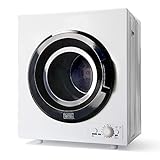
Overview: The BLACK+DECKER BCED37 Compact Dryer delivers convenience through true plug-and-play operation. Weighing just 49.5 pounds and connecting to any standard 120V outlet, this portable unit eliminates installation barriers for renters and small-space occupants seeking immediate drying solutions.
What Makes It Stand Out: Unlike most dryers requiring 240V circuits, this model operates on standard household outlets, making it immediately usable without electrical modifications. The transparent lid lets you monitor drying progress, while four distinct modes (Air Dry, Cool, Warm, Hot) provide flexibility for different fabrics. Overheat protection adds safety peace of mind.
Value for Money: At $399.99, the BLACK+DECKER commands a slight premium over generic compact dryers, but the brand reputation and standard outlet compatibility justify the cost. You avoid expensive electrician fees, potentially saving hundreds in installation costs. Comparable models with similar voltage flexibility are rare in this price range.
Strengths and Weaknesses: Strengths include effortless installation, lightweight portability, brand reliability, transparent monitoring, and safety features. The 13.2-pound load capacity handles personal laundry effectively. Weaknesses include longer drying times (30-200 minutes), smaller capacity unsuitable for families, and basic timer-based operation without smart sensors. The compact size limits bulky item drying.
Bottom Line: This BLACK+DECKER is ideal for renters and dorm residents seeking hassle-free drying. The standard outlet requirement and portable design outweigh capacity limitations, making it a practical solution for temporary or space-limited living situations.
5. Washer and Dryer Combo, 5.0 cu.ft, with LED Display, 12 Cycle Selections All In One Washer Dryer,Large Capacity Front Load Washing Machine and Dryer, for Apartment RV Home

Overview: This All-in-One Washer and Dryer Combo presents an ambitious space-saving solution, integrating both functions into a single 5.0 cu. ft. front-load unit. Designed for apartments, RVs, and compact homes, it promises full laundry capability without requiring separate appliances or extensive space.
What Makes It Stand Out: The front-loading design uses less water and energy than top-load alternatives while offering easier access. Twelve cycle selections provide versatility typically reserved for separate units. The LED display clearly shows settings and remaining time, simplifying operation. The 5.0 cu. ft. capacity is generous for a combo, handling larger loads than most competitors.
Value for Money: At $338.99, this combo unit is remarkably affordable—costing less than many standalone dryers alone. For space-constrained buyers, it eliminates purchasing two separate machines. However, the low price raises questions about long-term durability and drying efficiency, as combo units traditionally struggle with drying performance compared to dedicated dryers.
Strengths and Weaknesses: Strengths include unbeatable space efficiency, front-load convenience, large capacity for its class, and cycle variety. The price point makes it accessible for budget buyers. Weaknesses include typical combo unit compromises: extended cycle times (often 3-5 hours total), potential moisture retention issues, and unknown brand reliability. Separate washer/dryer pairs consistently outperform combos in speed and effectiveness.
Bottom Line: Consider this combo only if space absolutely prohibits separate units. While affordable and feature-rich, traditional washer-dryer pairs deliver superior performance. It’s a compromise solution for extreme space limitations where installation flexibility trumps speed and efficiency.
6. Euhomy Compact Laundry Dryer, 3.5 cu ft Front Load Stainless Steel Clothes Dryers With Exhaust Pipe, 1500W, LCD Control Panel Four-Function Portable Dryer For Apartments, Home, Dorm, White

Overview: The Euhomy Compact Laundry Dryer delivers full-size performance in a space-saving 3.5 cubic foot design. With 1500W power and 26.4-pound capacity, this 110V dryer handles substantial loads while reaching 140°F for efficient drying. Designed for apartments, dorms, and homes lacking vented dryer connections, it combines portability with serious drying capability.
What Makes It Stand Out: The front-and-back flip function sets this dryer apart, using a large-diameter stainless steel drum that rotates both directions to prevent tangling and reduce wrinkles. The LCD control panel offers four specialized modes: Strong for heavy items, Intelligent with humidity-sensing auto-adjustment, ECO for deodorizing, and Normal for everyday fabrics. Safety features include automatic stop when the door opens and effective cotton filtration.
Value for Money: At $314.99, the Euhomy sits in the mid-range for compact dryers. The 1500W power output and bidirectional tumbling justify the premium over basic models. While not the cheapest option, the intelligent humidity sensor and robust safety certifications (ETL/DOE) provide peace of mind that budget alternatives lack. For those needing serious capacity without permanent installation, it offers solid returns.
Strengths and Weaknesses: Strengths include high capacity-to-size ratio, dual-direction tumbling, intelligent drying mode, comprehensive safety features, and quality certifications. Weaknesses involve the need for spin-dried laundry for optimal performance, potential longer drying times compared to full-size units, and the 110V limitation for heavy-duty use. The exhaust pipe requires venting consideration.
Bottom Line: The Euhomy Compact Dryer excels for users prioritizing capacity and smart features in a portable package. Apartment dwellers and small-space residents will appreciate its thoughtful design and safety credentials. While not a replacement for institutional dryers, it’s an excellent compromise between size and performance.
7. ROVSUN 13.2LB Portable Clothes Dryer, 3.5 Cu.Ft High End Front Load Tumble Laundry Dryer with LCD Touch Screen, Stainless Steel Tub for Apartment, Home, Dorm-110V, Luxury Grey

Overview: The ROVSUN 13.2LB Portable Clothes Dryer brings modern convenience to compact laundry spaces with its 3.5 cubic foot capacity and high-end LCD touch screen interface. Operating on standard 110V power and delivering 1300W, this luxury grey unit reaches 140°F to dry everything from daily wear to bed sheets, making it suitable for family use in constrained environments.
What Makes It Stand Out: Unlike traditional knob-controlled compact dryers, ROVSUN’s sensitive touch screen offers precise control over multiple drying modes and temperature levels. The stainless steel tub accommodates up to 13.2 pounds, while its 59-pound weight and modest 23.43 x 20.1 x 26.8-inch dimensions enable true portability. Wall-mounting capability maximizes floor space in tight apartments, dorms, or RVs.
Value for Money: Priced at $289.99, this dryer undercuts many competitors while offering premium features like touch screen controls. The 1300W power is slightly lower than some rivals, but the intelligent controls compensate with efficiency. For budget-conscious buyers wanting modern features without sacrificing capacity, it presents compelling value compared to knob-operated alternatives.
Strengths and Weaknesses: Strengths include intuitive touch screen interface, wall-mounting flexibility, solid capacity, lightweight portability, and responsive customer service. Weaknesses are the lower wattage potentially extending drying times, limited mention of advanced features like humidity sensors, and the 13.2-pound capacity being less than some competitors. The single-direction tumbling may increase wrinkling.
Bottom Line: The ROVSUN Portable Dryer is ideal for tech-savvy users seeking modern controls in a compact form. Its touch interface and mounting versatility make it perfect for apartments and RVs. While power users might want higher wattage, most will find the feature set and price point well-balanced for everyday drying needs.
8. ROVSUN 25LBS Full Automatic Washing Machine and 1.8CuFt Portable Clothes Dryer Set, Compact Laundry Washer and Dryer Combo Set with Stainless Steel Inner Tub, for Apartment, Dorms, Home

Overview: The ROVSUN Washer-Dryer Combo Set solves the complete laundry cycle in one purchase, pairing a 25-pound fully automatic washer with a 1.8 cubic foot portable dryer. This 110V system enables same-day washing and drying without leaving home, processing up to 6.6 pounds of laundry from dirty to wearable in hours. The set targets apartment dwellers and families seeking integrated convenience.
What Makes It Stand Out: This is a true two-machine system, not an all-in-one unit. The washer’s 26-minute quick wash and diamond-like stainless steel drum protect fabrics while tackling tough stains across 10 modes and 5 water levels. The dryer’s multi-filtration system captures lint and pet hair, while air exchange technology ensures fresh results. The seamless transfer between machines eliminates damp waits.
Value for Money: At $419.99 for both appliances, this combo represents significant savings versus purchasing separate units. The washer’s large capacity and quick cycle times add tremendous value. While the dryer’s 1020W power is modest, the system is designed for coordinated efficiency. For those starting from scratch, it’s a cost-effective path to full laundry independence.
Strengths and Weaknesses: Strengths include complete laundry solution, large washer capacity, quick wash cycles, fabric protection features, pet hair filtration, and coordinated design. Weaknesses involve the dryer’s lower wattage requiring smaller loads (6.6 lbs for quick drying), potential space constraints for two units, and the need to manually transfer clothes. The dryer needs rest after long use.
Bottom Line: This ROVSUN combo is perfect for those needing both washer and dryer on a budget. The washer’s performance impresses, while the dryer adequately handles daily loads. Space-conscious buyers should measure carefully, but the value proposition is undeniable. It’s a practical solution for apartments and dorms where separate purchases would be prohibitive.
9. Gleedelish 21.1 LBS Compact Laundry Dryer, 3.5 cu ft Front Load Stainless Steel Clothes Dryers With Exhaust Pipe, 1500W, LCD Control Panel, 4 Function Portable Dryer For Apartments, Home, Dorm, White

Overview: The Gleedelish 21.1 LBS Compact Laundry Dryer offers a balance of capacity and portability in a 3.5 cubic foot white unit. Weighing just 54.9 pounds, this 1500W dryer handles substantial loads while reaching 140°F maximum temperature. Designed for flexible placement in apartments, dorms, and RVs, it can be freestanding, built-in, or wall-mounted to suit any space constraint.
What Makes It Stand Out: The back-and-forth drum rotation ensures even heating and reduces tangling, while the LCD panel provides four specialized functions: powerful drying, smart drying, deodorizing, and normal mode. The timer function enables set-and-forget operation, with an audible beep alerting completion. Multi-filtration effectively removes pet hair and debris, and the wide 105° door opening simplifies loading.
Value for Money: At $299.99, the Gleedelish positions itself as a mid-tier option with premium power output. The 1500W heating element matches higher-priced competitors, while the lighter weight enhances portability. The one-year warranty and ETL/DOE certifications provide assurance. For those prioritizing wattage and flexibility at a reasonable price, it delivers strong value.
Strengths and Weaknesses: Strengths include high power output, lightweight portability, flexible installation options, bidirectional tumbling, timer convenience, and comprehensive filtration. Weaknesses are the 21.1-pound capacity being less than some rivals, potential noise at high power, and the need for proper venting with the included exhaust pipe. The compact size may limit large bedding.
Bottom Line: The Gleedelish Compact Dryer suits users wanting maximum power in a lightweight package. Its installation versatility and timer function cater perfectly to apartment and RV lifestyles. While capacity trails some competitors, the 1500W performance and thoughtful features make it a reliable choice for daily drying needs without permanent installation.
10. KoolMore 27" Front Load X-Large 8 Cu. Ft. Dryer, Large Capacity Home Unit with Wrinkle Release Steam Function and Smart Sensor Dry Technology, Stainless-Steel Drum [White] [240V] (FLD-8CWH)
![KoolMore 27" Front Load X-Large 8 Cu. Ft. Dryer, Large Capacity Home Unit with Wrinkle Release Steam Function and Smart Sensor Dry Technology, Stainless-Steel Drum [White] [240V] (FLD-8CWH)](https://m.media-amazon.com/images/I/419U1mSpawL._SL160_.jpg)
Overview: The KoolMore 27" Front Load Dryer represents a full-size, premium solution with an expansive 8 cubic foot stainless steel drum. Operating on 240V power, this $1,488 unit targets homeowners seeking advanced features like sensor dry technology and wrinkle release steam functions. It’s designed for large families needing to dry substantial loads efficiently.
What Makes It Stand Out: Smart sensor technology monitors moisture across 12 drying cycles, automatically adjusting time to prevent over-drying while optimizing energy consumption. The wrinkle care cold steam function releases creases without heat damage, keeping garments crisp. The front-load design improves accessibility in tight laundry rooms, and the massive capacity handles everything from delicates to bulky blankets.
Value for Money: Priced at $1,488.38, this dryer commands a premium but delivers commensurate features. The sensor technology reduces energy waste and fabric wear, potentially lowering long-term costs. Compared to basic large-capacity dryers, the steam function and advanced sensors justify the price for those who value garment care. It’s an investment in convenience and clothing longevity.
Strengths and Weaknesses: Strengths include enormous capacity, intelligent sensor drying, energy efficiency, steam wrinkle release, stainless steel durability, and 12 specialized cycles. Weaknesses are the high upfront cost, 240V requirement limiting installation options, substantial physical size requiring dedicated space, and complexity that may overwhelm basic users. It’s not portable and demands professional installation.
Bottom Line: The KoolMore Dryer is ideal for homeowners wanting premium performance and maximum capacity. Its smart features and steam function excel at garment care, while the sensor technology ensures efficiency. While overkill for apartments or occasional use, families with heavy laundry demands will find the investment worthwhile for the convenience and advanced functionality.
Understanding Dryer Capacity: What “Large” Really Means
When manufacturers label a dryer as “large-capacity,” they’re speaking a specific language measured in cubic feet—but that number only tells part of the story.
Cubic Feet Explained
Dryer capacity typically ranges from 3.5 to 9.0 cubic feet. Standard models hover around 5.8 to 7.0 cubic feet, while true large-capacity units start at 7.3 cubic feet and climb upward. However, capacity isn’t just about volume; it’s about usable space. The drum’s shape, baffle design, and airflow pattern determine how effectively that space dries clothes. A poorly designed 8.0-cubic-foot dryer might perform worse than a well-engineered 7.3-cubic-foot model.
Family Size Matching
The sweet spot for most families of four to six people begins at 7.3 cubic feet, which comfortably handles king-size comforters and bulky loads. For households that regularly wash heavy items like sleeping bags, pillows, or multiple sets of curtains, stepping up to 8.0+ cubic feet prevents the need for multiple drying cycles. Consider not just your family size but your laundry habits—if you prefer doing laundry once weekly rather than multiple smaller loads, prioritize maximum capacity.
The Real-World Benefits of Upsizing Your Dryer
Moving to a large-capacity model delivers advantages that extend far beyond fitting more clothes inside.
Time Savings
A single large load dries more efficiently than two smaller loads, even accounting for the increased volume. Modern moisture sensors prevent over-drying, and the improved airflow in larger drums means heat penetrates fabrics more evenly. Most users report cutting their total laundry time by 30-40% simply by consolidating loads. That king-size comforter that once needed two hours in a standard dryer? It might dry completely in 45 minutes with proper tumbling space.
Energy Efficiency at Scale
Counterintuitively, larger dryers often consume less energy per pound of laundry. Running one cycle instead of two halves the energy wasted on startup heating and standby power. ENERGY STAR-certified large-capacity models optimize this advantage further with heat pump technology and advanced sensors that stop the cycle precisely when clothes are dry, preventing the energy drain of unnecessary tumbling.
Fabric Care Advantages
Overcrowding a small dryer is the fastest path to wrinkled, unevenly dried clothes that require ironing or rewashing. Large drums give garments room to tumble freely, reducing friction and allowing hot air to circulate properly. This gentle treatment preserves fabric integrity, maintains color vibrancy, and significantly reduces static cling without chemical dryer sheets.
Key Features That Define a Premium Large-Capacity Dryer
Not all large dryers are created equal. The features separating workhorse machines from transformative appliances live in the details.
Advanced Moisture Sensors
Basic dryers use a single thermostat that estimates dryness by measuring exhaust air temperature. Premium models deploy multiple moisture sensors throughout the drum that detect dampness at various points. This multi-point system recognizes when jeans are dry but towels still need time, automatically adjusting cycle length and preventing the damage caused by over-drying delicate fabrics.
Customizable Cycles
Look beyond standard “cotton” and “permanent press” settings. True premium dryers offer granular control over temperature, dryness level, and tumbling speed. Some feature specialty cycles for activewear (gentle heat that preserves elastic), bedding (periodic tumbling to prevent clumping), and even pet items (extended sanitizing heat). The ability to create and save custom cycles means your dryer adapts to your specific wardrobe, not the other way around.
Drum Design Innovations
Drum baffles—the fins that lift and tumble clothes—have evolved from simple plastic ridges to sculpted, curved designs that create optimal airflow patterns. Some manufacturers use angled baffles that prevent small items from riding the drum wall while ensuring bulky items get fully turned. Lighted drums with sapphire or LED illumination aren’t just aesthetic; they help you spot that stray sock hiding in the shadows.
Ventilation Systems: Vented vs. Ventless Technology
Your home’s infrastructure may dictate which drying technology works best, but understanding the trade-offs helps you make an informed decision.
Traditional Vented Dryers
Vented models exhaust hot, moist air outside through a duct. They dry faster and typically cost less upfront, but require proper venting installation and regular maintenance to prevent lint buildup. Large-capacity vented dryers need a minimum 4-inch diameter rigid metal vent, ideally under 20 feet with minimal bends. Longer vent runs dramatically reduce efficiency and create fire hazards.
Ventless Heat Pump Models
Heat pump dryers recycle heated air through an evaporator that removes moisture, then reheats the dry air to continue the cycle. This closed-loop system uses up to 50% less energy than vented models and can be installed anywhere with a power outlet and drainage. The trade-off is longer drying times—typically 60-90 minutes for a standard load—but the energy savings and installation flexibility often outweigh the time difference for busy families who value set-it-and-forget-it operation.
Condenser Dryers: The Middle Ground
Condenser dryers extract moisture from air and collect it in a reservoir or drain it away, but unlike heat pumps, they don’t recycle heat efficiently. They offer ventless installation without the premium price of heat pump technology, though they consume more energy and generate more heat in your laundry space. For large-capacity needs, condenser models are becoming rare as heat pump technology becomes more affordable.
Heat Pump Dryers: The Energy-Efficient Revolution
Heat pump technology represents the most significant advancement in dryer efficiency in decades, particularly beneficial for large-capacity models.
How Heat Pump Technology Works
Instead of generating heat with energy-intensive heating elements, heat pump dryers use a refrigerant system similar to an air conditioner. A compressor pressurizes refrigerant gas, creating heat that’s transferred to the drum. Moist air passes through an evaporator coil where water condenses out, and the now-dry air returns to the heat exchanger to begin the cycle again. This process consumes roughly 1,500 watts compared to 5,000+ watts in conventional dryers.
Cost Savings Over Time
While heat pump dryers cost $300-$600 more upfront, the energy savings typically pay for the difference within 3-5 years for average families. With electricity rates averaging $0.14 per kWh, a heat pump dryer saves approximately $75-$120 annually. Large families doing 8-10 loads weekly can see payback in under three years, plus potential utility rebates that further offset the initial investment.
Installation Flexibility
Because they don’t require venting, heat pump dryers can be installed in closets, bathrooms, or even kitchens—anywhere with a 240-volt outlet and nearby drain. Some models offer a built-in reservoir that needs manual emptying, while others connect directly to a drain hose like a washing machine. This flexibility makes them ideal for apartments, multi-story homes where venting is impractical, or laundry room relocations.
Moisture Sensing Technology: Precision Drying Explained
The difference between clothes that emerge perfectly dry and those that are damp or scorched often comes down to sensor sophistication.
Single vs. Multi-Point Sensors
Entry-level dryers use a single sensor that measures exhaust humidity, essentially guessing dryness based on air moisture. This works adequately for uniform loads but fails with mixed fabrics. Premium large-capacity dryers use two to four sensors embedded in the drum that directly contact clothes, measuring electrical resistance caused by moisture. This direct-contact method detects dryness in real-time, stopping the cycle the moment the last damp spot disappears.
Preventing Over-Drying Damage
Over-drying is fabric enemy number one. It breaks down cotton fibers, shrinks wool and synthetics, and sets wrinkles permanently. Advanced sensors prevent this by offering selectable dryness levels—damp for ironing, normal for folding, or extra-dry for immediate storage. Some systems even learn your preferences over time, automatically adjusting future cycles based on how often you restart loads for additional drying.
Drum Materials and Design: Why Construction Matters
What happens inside the drum determines how long your clothes last and how well they dry.
Stainless Steel vs. Powder-Coated Drums
Stainless steel drums dominate premium large-capacity models for good reason. They resist chipping, scratching, and rust while maintaining a smooth surface that reduces fabric snagging. Powder-coated drums, while adequate in smaller dryers, can develop chips over time in large-capacity units where heavier items create more impact. Those chips expose bare metal that rusts and stains clothes. Some manufacturers now offer textured stainless steel that increases surface area for better grip and tumbling action.
Baffle Design and Airflow
Modern baffles do more than lift clothes—they’re engineered to create specific airflow patterns. Curved, spiral-shaped baffles generate a figure-eight tumbling motion that prevents items from balling up. This is crucial for large-capacity dryers where a balled-up comforter would dry only on the outside while staying soaked inside. Look for baffles with small perforations that allow air to pass through, ensuring even heat distribution throughout the load.
Smart Connectivity: When Your Dryer Joins Your Smart Home
Wi-Fi-enabled dryers have moved beyond gimmicks to become genuinely useful tools for busy households.
Remote Monitoring and Control
Smart dryers send notifications to your phone when cycles complete, preventing that musty smell from forgotten loads. You can start, pause, or extend cycles remotely, perfect for managing laundry while running errands. Some apps track energy usage per cycle, helping you identify which settings cost most. Integration with voice assistants means you can check remaining time while cooking dinner: “Hey Google, how much time left on the dryer?”
Maintenance Alerts and Diagnostics
The most valuable smart feature might be predictive maintenance. Sensors monitor airflow restriction, lint buildup, and component performance, alerting you before problems become expensive repairs. Instead of discovering a clogged vent when the dryer stops heating, you’ll get a warning weeks in advance. Diagnostic modes allow technicians to troubleshoot issues remotely, often resolving problems without a service call.
Steam Functions: Wrinkle-Fighting and Refresh Power
Steam has transformed from a luxury feature to a practical tool for managing modern wardrobes.
True Steam vs. Mist Systems
True steam systems connect to a water line and generate actual steam through a heating element, reaching temperatures that sanitize and relax fibers. Mist systems simply spray water into a hot drum, creating steam-like effects but without the same sanitizing power or wrinkle penetration. For large-capacity dryers, true steam is essential—the volume of air in a big drum dilutes mist systems, making them ineffective for full loads.
Sanitization Capabilities
Steam cycles that reach 150°F+ can eliminate 99.9% of bacteria and dust mites without harsh chemicals, ideal for allergy sufferers or families with young children. This is particularly valuable for large-capacity dryers where bulky items like pillows and stuffed animals—difficult to wash thoroughly—can be sanitized between deep cleanings. The refresh cycle uses steam to dewrinkle clothes that aren’t dirty enough for washing, perfect for work clothes worn briefly or packed luggage.
Noise Levels and Vibration Control: Keeping the Peace
A large-capacity dryer shouldn’t sound like a jet engine taking off in your laundry room.
Decibel Ratings Explained
Dryer noise typically ranges from 60 to 75 decibels. For context, 60 dB is normal conversation, while 75 dB is a vacuum cleaner. Premium large-capacity models operate at 62-65 dB thanks to better insulation, inverter-driven motors, and improved drum balancing. If your laundry room sits near living spaces or bedrooms, prioritizing quiet operation transforms your home’s acoustic comfort.
Anti-Vibration Technologies
Large drums spinning heavy, wet comforters generate significant vibration. High-end models use counterweight systems, reinforced cabinets, and advanced suspension to minimize movement. Some feature direct-drive motors that eliminate belt noise and reduce mechanical vibration. Look for models with “vibration reduction technology” or similar branding, and always install on a solid, level floor—even the best technology can’t compensate for an uneven surface.
Energy Efficiency Ratings: Decoding the Labels
Understanding efficiency metrics ensures your large-capacity dryer saves money rather than draining it.
ENERGY STAR Certification
ENERGY STAR-certified dryers use about 20% less energy than standard models. For large-capacity units, this certification is particularly crucial because bigger drums can become energy hogs without efficient design. The certification requires meeting strict combined energy factor (CEF) standards that measure pounds of clothes dried per kWh of electricity. As of 2024, ENERGY STAR dryers must achieve a CEF of 3.93 or higher—significantly more efficient than older models.
Understanding the EnergyGuide Label
The yellow EnergyGuide label estimates annual operating cost based on national electricity rates and average usage. For large-capacity dryers, check the “estimated yearly electricity use” figure rather than just the cost. Multiply this by your local rate for accurate projections. The label also shows where the model falls on the efficiency spectrum compared to similar sizes, helping you quickly identify top performers.
Installation Considerations for Oversized Models
Buying the perfect dryer means nothing if it doesn’t fit or function properly in your space.
Space Requirements
Large-capacity dryers typically measure 27-29 inches wide, 32-34 inches deep, and 38-43 inches tall. Add 6 inches behind for venting and connections, plus 1 inch on each side for airflow. For closet installations, you need a minimum 24-inch wide door for service access. Measure your space three times: once with doors open, once with the washer installed (if side-by-side), and once accounting for any baseboards or molding that reduce clearance.
Electrical and Venting Needs
Most large-capacity dryers require a 240-volt outlet (NEMA 14-30R). If upgrading from an older model, verify your outlet type—some homes still have outdated three-prong outlets that need updating. For vented models, rigid metal venting is non-negotiable; flexible foil or plastic vents create fire hazards and reduce efficiency by up to 30%. The vent should exhaust directly outside, not into attics or crawl spaces.
Delivery Logistics
Large-capacity dryers can weigh 140-180 pounds and may not fit through narrow doorways or up tight staircases. Measure all access points, including hallways and turns. Some models have removable doors or control panels that reduce width by 2-3 inches for installation. Consider delivery teams that offer white-glove service—they’ll handle placement, leveling, and basic connection, ensuring your investment isn’t damaged during a DIY install.
Maintenance Tips for Maximum Longevity
A large-capacity dryer represents a significant investment. Proper maintenance extends its life from 10 years to 15+ while maintaining efficiency.
Lint Management Beyond the Trap
The lint screen captures only 70-80% of lint; the rest accumulates in the vent system and internal ductwork. Every three months, remove the lint screen and vacuum the cavity beneath it using a long, flexible hose attachment. Once yearly, hire a professional to clean the entire vent system from dryer to exterior cap. For heat pump models, clean the evaporator and condenser coils quarterly—dust buildup here forces the compressor to work harder, shortening its lifespan.
Drum Cleaning Protocols
Residue from fabric softeners, dryer sheets, and detergents creates a film on the drum that transfers to clean clothes. Monthly, wipe the drum with a cloth dampened with white vinegar and water. For stubborn buildup, run an empty cycle with a dryer cleaning product or a damp towel soaked in vinegar. Stainless steel drums benefit from occasional polishing with a microfiber cloth to maintain the smooth surface that prevents snagging.
Vent System Maintenance
For vented models, disconnect the vent from the dryer annually and clean it thoroughly. Check the exterior vent cap for blockages from bird nests, lint, or debris. A vent that’s even 25% clogged can double drying times and triple energy consumption. Install a vent box with a magnetic door rather than a flapper-style cap—flappers can stick closed, creating dangerous backpressure.
Common Mistakes When Buying Large-Capacity Dryers
Even savvy shoppers fall into traps that lead to buyer’s remorse. Avoid these pitfalls.
Overbuying Capacity
An 9.0-cubic-foot dryer might seem future-proof, but if your washing machine only holds 4.5 cubic feet, you’ll never fill the dryer efficiently. The dryer should be roughly twice the capacity of your washer for optimal performance. Oversized dryers running half-full loads waste energy because sensors struggle to detect small moisture amounts, often running full timed cycles for tiny loads.
Ignoring Venting Constraints
Falling in love with a vented model only to discover your condo can’t accommodate venting is a costly mistake. Before shopping, know your venting situation. If venting is impossible or the run would exceed 35 feet, focus exclusively on heat pump or condenser models. Don’t assume you can “make it work”—building codes and safety standards are non-negotiable.
Overlooking Closet Depth
Many large-capacity dryers protrude 5-7 inches beyond standard 24-inch deep countertops. In tight laundry closets, this prevents doors from closing or creates tripping hazards. Check “installed depth” not just product depth. Some manufacturers offer shallow-depth large-capacity models that sacrifice a small amount of volume for better fit, often worth the trade-off for space-constrained homes.
The Total Cost of Ownership: Beyond the Sticker Price
The purchase price is just the beginning. Calculating true cost reveals which dryer offers genuine value.
Energy Consumption Impact
A standard electric dryer costs roughly $100-$150 annually to operate. A heat pump large-capacity model cuts this to $50-$75. Over a 12-year lifespan, that’s $600-$900 in savings—often more than the price premium. Factor in your local electricity rates; in areas with $0.20+ per kWh, the savings multiply. Use the EnergyGuide label’s kWh figure multiplied by your rate for precise calculations.
Maintenance and Repair Costs
Budget $50-$100 annually for professional vent cleaning (vented models) or filter replacement (heat pump models). Extended warranties for large-capacity dryers often pay for themselves; compressor replacements on heat pump models can exceed $400, while control board failures run $200-$300. A 5-year extended warranty costing $150-$200 provides peace of mind for complex electronics.
Resale Value Considerations
Premium large-capacity dryers with steam, smart features, and heat pump technology retain value better than basic models. If you sell your home, a modern, efficient laundry pair can be a selling point. Some buyers specifically seek homes with ventless laundry capabilities for flexible room placement. Keep original manuals and warranty documentation to transfer to new owners, potentially recovering 20-30% of your initial investment.
Frequently Asked Questions
1. How much capacity do I really need for a family of four?
For a family of four, a dryer with at least 7.3 cubic feet is recommended. This size handles a week’s worth of clothes plus bulky items like bedding without overcrowding. If you wash comforters or large blankets regularly, consider 7.5-8.0 cubic feet to ensure these items have room to tumble freely.
2. Are heat pump dryers worth the higher upfront cost?
Yes, for most households. While they cost $300-$600 more initially, the energy savings of $75-$120 annually typically provide payback within 3-5 years. They also offer installation flexibility, run cooler (reducing fabric wear), and often qualify for utility rebates that further offset the premium.
3. Can I stack a large-capacity dryer on top of my washer?
Most large-capacity dryers (7.3+ cubic feet) can be stacked, but you need a matching front-load washer and a manufacturer-approved stacking kit. Ensure your washer can support the dryer’s weight (often 150+ pounds) and that you can safely reach the dryer’s controls. Some brands offer risers or control panel extensions for easier access.
4. What’s the difference between steam refresh and steam sanitize cycles?
Steam refresh uses short bursts of steam to dewrinkle clothes and remove odors without washing, ideal for items worn briefly. Steam sanitize cycles maintain higher temperatures (150°F+) for longer periods, killing 99.9% of bacteria and allergens. Sanitize cycles are perfect for bedding, pillows, or items that can’t be washed in hot water.
5. How often should I clean the dryer vent?
Clean your lint trap after every load. Vacuum the lint screen cavity every three months. Have a professional clean the entire vent system from dryer to exterior cap at least once yearly—more often if you do laundry daily. Clogged vents are the leading cause of dryer fires and can triple energy consumption.
6. Will a large-capacity dryer increase my electricity bill?
Not necessarily. While each cycle uses similar or slightly more energy, you’ll run fewer cycles overall. ENERGY STAR-certified large-capacity models often cost less to operate annually than older standard models because they dry more efficiently. The key is matching load size to capacity and avoiding running the dryer half-empty.
7. What electrical requirements do large-capacity dryers need?
Most require a 240-volt outlet (NEMA 14-30R) on a dedicated 30-amp circuit. Some compact large-capacity heat pump models can operate on 120 volts, but drying times increase significantly. Always check the specific model’s requirements and have a licensed electrician install the proper outlet if needed.
8. How long should a large-capacity dryer last?
With proper maintenance, expect 12-15 years of service. Heat pump models may last longer because they operate at lower temperatures, reducing component stress. Regular vent cleaning, lint management, and avoiding overloading are the three most important factors for longevity.
9. Can I install a vented dryer in a closet?
Only if the closet meets strict requirements: minimum 24-inch door width, louvered doors or equivalent ventilation, and clearance specified by the manufacturer (typically 1 inch on sides, 6 inches behind). Never install a vented dryer in a closet with solid doors—it creates fire hazards and violates building codes.
10. Do smart dryers really save time and money?
Smart features provide convenience rather than direct cost savings. Remote notifications prevent rewashing forgotten loads (saving time and water), while maintenance alerts prevent costly repairs. Energy tracking helps identify inefficient settings. The real value is in convenience and peace of mind, particularly for busy households juggling multiple responsibilities.