There’s something magical about losing yourself in a sewing marathon—when hours melt away as seams align perfectly and fabric transforms under your skilled hands. But that creative flow? It screeches to a halt the moment your iron sputters, spits, or forces you to pause for yet another water refill. For serious sewists, quilters, and garment makers, a steam generator iron with continuous fill isn’t just a convenience; it’s the heartbeat of productivity. Unlike conventional irons that demand cooling down before refilling, these powerhouse tools let you top up the water tank mid-session without missing a beat, keeping your momentum and your fabric perfectly pressed.
Whether you’re flat-felling seams on a structured blazer, pressing intricate quilt blocks, or fusing miles of interfacing, the right steam generator iron becomes an extension of your creative process. But not all continuous fill systems are created equal, and the difference between a frustrating tool and a seamless one lies in understanding the nuanced features that matter most for marathon sessions. Let’s dive deep into what separates professional-grade performance from disappointing gimmicks.
Top 10 Steam Generator Irons for Sewing
Detailed Product Reviews
1. Rowenta Steam Station, Stainless Steel Soleplate, Professional Iron Steamer for Clothes, 1.1L Removable Tank, Fast Heat Up, 1800 Watts, Blue Clothes Iron, DG8624

Overview: The Rowenta DG8624 Steam Station bridges the gap between domestic convenience and professional performance. This 1800-watt powerhouse features a built-in boiler system that generates high-pressure steam through a precision-engineered 400-hole Microsteam soleplate. With a generous 1.1-liter removable water tank, it supports extended ironing sessions without constant refilling, heating up rapidly to tackle demanding wrinkles on all fabric types.
What Makes It Stand Out: The integrated boiler technology delivers exceptional steam output that rivals commercial equipment, while the lightweight design ensures surprising maneuverability for a steam station. Its leakproof construction, complete with a calc collector, promises longevity and consistent performance. The 400-hole soleplate distribution system provides uniform steam coverage, making quick work of stubborn creases across various fabrics.
Value for Money: At $249.98, this model sits in the sweet spot between basic irons and premium steam stations. You’re investing in Rowenta’s patented boiler system and professional-grade soleplate technology without paying the top-tier price. For households that iron weekly or handle large laundry loads, the time savings and superior results justify the investment over standard $100 irons.
Strengths and Weaknesses: Strengths include powerful continuous steam, large removable tank, lightweight handling, and durable anti-calc system. The stainless steel soleplate glides effortlessly and resists scratching. Weaknesses include the significant countertop footprint, lack of automatic shut-off mention, and price point that may exceed casual users’ needs. The blue aesthetic, while attractive, may not suit all laundry rooms.
Bottom Line: The DG8624 is ideal for serious home users wanting professional results without commercial equipment costs. It excels at handling everything from delicate silks to heavy linens, making it a worthwhile upgrade for those who value efficiency and quality.
2. Reliable Velocity 240IR Steam Iron for Sewing, Quilting and Clothes, 1800W Compact Vapor Generator, Leak Free Continuous Steam, Touch Activated Control, Scratch Resistant and Easy to Clean Soleplate

Overview: The Reliable Velocity 240IR redefines ironing convenience with its compact vapor generator design and intelligent features. Engineered specifically for sewing and quilting enthusiasts, this 1800-watt iron eliminates traditional frustrations through patented dual-chamber technology. It delivers consistent, dry steam at any temperature without the leaking, dripping, or spitting that plagues conventional irons, even at low heat settings.
What Makes It Stand Out: The sensor-touch handle automatically activates steam when gripped, eliminating button fatigue—a game-changer for those with hand or wrist discomfort. The Auto Steam mode intelligently selects optimal output for fabrics, while Turbo mode boosts power for stubborn materials. Its scratch-resistant anodized aluminum soleplate withstands zippers and buttons, and the bypassable 8-minute auto shutoff keeps the iron ready during long projects.
Value for Money: At $199, the 240IR competes aggressively with mid-range steam stations while offering superior control. The leak-free performance alone saves time and prevents water stains, justifying the premium over basic $80 irons. For sewers and quilters, the continuous steam reliability and safety bypass feature make it invaluable compared to conventional irons.
Strengths and Weaknesses: Strengths include the revolutionary no-leak system, intuitive sensor activation, durable soleplate, and flexible auto-shutoff. It heats quickly and maintains consistent temperature. Weaknesses include a smaller water capacity than full steam stations, requiring more frequent refills during marathon sessions. The compact design means less steam volume than boiler-based systems, and there’s a slight learning curve for the touch sensor.
Bottom Line: Perfect for crafters and detail-oriented users, the Velocity 240IR combines innovation with practicality. Its smart features and reliable performance make it a top choice for anyone tired of traditional iron frustrations.
3. Reliable Velocity 180IR Steam Iron for Sewing, Quilting and Clothes, 1800W Compact Vapor Generator, Leak Free Continuous Steam, Variable Steam Dial, Ceramic Soleplate with Three Heat Settings

Overview: The Reliable Velocity 180IR brings the brand’s acclaimed leak-free technology to a more accessible price point. This 1800-watt iron features the same patented dual-chamber system as its premium sibling, ensuring consistent dry steam without dripping. Manual controls give users direct command over three heat settings and variable steam output, making it versatile for different fabrics and ideal for those who prefer tactile adjustments.
What Makes It Stand Out: You get Reliable’s core innovation—continuous steam without leaks—at a budget-friendly price. The ceramic soleplate provides smooth gliding across cotton, polyester, silk, and linens while heating evenly and cleaning easily. Like the 240IR, it includes the bypassable 8-minute auto shutoff, a crucial feature for quilters and sewers who need uninterrupted work sessions without constant reheating.
Value for Money: At $129, this is exceptional value. You’re paying for premium steam technology that typically costs $200+. The manual controls trade some convenience for affordability, but the performance remains professional-grade. It outperforms similarly priced conventional irons while matching features of $180+ competitors, making it a smart budget pick.
Strengths and Weaknesses: Strengths include the no-leak dual-chamber system, ceramic soleplate’s easy cleaning, bypassable auto-off, and precise manual controls. It’s lightweight and heats quickly. Weaknesses include the lack of sensor-touch activation and auto steam modes, requiring more user attention. The ceramic soleplate may be slightly less durable than anodized aluminum against heavy embellishments, and water capacity is modest for large loads.
Bottom Line: The Velocity 180IR is the smart choice for budget-conscious buyers who refuse to compromise on core performance. It delivers Reliable’s signature leak-free experience with essential controls, making it ideal for students, occasional sewers, and value-seeking households.
4. Rowenta, Iron, Ultimate Steam Pro Stainless Steel Soleplate Professional Steam Station for Clothes, 1800 Watts, 1.3L Removable Tank, Boiler Technology, Fast Heat Up, Black Clothes Iron, DG8668

Overview: The Rowenta DG8668 Ultimate Steam Pro represents the pinnacle of home ironing technology. This flagship steam station boasts a massive 1.3-liter removable tank and 1800 watts of power, delivering up to 2.5 hours of continuous ironing. The built-in boiler generates instantaneous high-pressure steam on demand, while the precision trigger offers both continuous output and precision shot modes for targeted wrinkle removal across all fabric types.
What Makes It Stand Out: The premium cork handle sets a new standard for comfort, remaining cool and breathable during extended sessions. With 400 microsteam holes and heat-up in just three minutes, it cuts ironing time dramatically. The extra-large tank capacity minimizes interruptions, and the professional-grade construction ensures years of reliable service for the most demanding users who iron frequently.
Value for Money: At $449.95, this is a significant investment—but one that pays dividends for large families, professionals, or perfectionists. The time savings and exceptional results justify the cost when compared to dry-cleaning bills or replacing cheaper irons every few years. It’s essentially commercial equipment adapted for home use, making it worthwhile for heavy users.
Strengths and Weaknesses: Strengths include unmatched steam output, marathon 2.5-hour runtime, rapid heating, ergonomic cork handle, and durable stainless steel soleplate. The large tank is easily removable for refilling. Weaknesses include the premium price, substantial storage space requirements, and weight when full. It’s over-engineered for occasional users, and the complexity may intimidate those wanting simple operation.
Bottom Line: The DG8668 is for serious ironers who demand the best. If you tackle mountains of laundry weekly or run a small tailoring business from home, this powerhouse transforms ironing from chore to craft. For casual users, it’s unnecessary extravagance.
5. Rowenta Iron for Clothes, High Pressure Steamer Iron with Boiler System, 400 Steam Holes, Vertical Steaming, 37oz Tank, Stainless Steel Soleplate, Auto-Off 1800 watts, Black Green, DG7626

Overview: The Rowenta DG7626 offers a compelling balance of power and practicality in a compact steam station design. This 1800-watt iron features a built-in boiler system delivering up to 380 grams per minute of steam through its 400-hole stainless steel soleplate. The 1.1-liter (37oz) tank supports extended use while the unit’s streamlined form factor eases storage challenges in modern homes.
What Makes It Stand Out: Vertical steaming capability adds versatility for drapes and hanging garments, while the compact footprint doesn’t sacrifice performance. The integrated cord management and safety lock enhance user convenience. Anti-drip protection prevents water stains, and the auto-off feature provides peace of mind. The black and green design offers modern aesthetics distinct from typical appliance styling.
Value for Money: Priced at $193.40, this model undercuts many steam stations while delivering Rowenta’s signature boiler technology. It competes directly with the Reliable Velocity series but offers larger water capacity than most compact irons. For under $200, you get professional-level steam output and versatility that basic irons can’t match, representing solid mid-range value.
Strengths and Weaknesses: Strengths include powerful 380 g/min steam, dual vertical/horizontal functionality, safety features (auto-off, anti-drip, lock), and compact storage design. The 400-hole soleplate ensures even distribution. Weaknesses include potential leakage concerns (no mention of patented leakproof tech), less premium materials than higher-end Rowenta models, and the 1.1L tank may still require refilling for very large families. The design lacks the luxury feel of the Ultimate Steam Pro.
Bottom Line: The DG7626 is an excellent all-rounder for households wanting steam station power without bulk or premium pricing. It handles diverse fabrics and vertical steaming needs efficiently, making it a smart middle-ground choice for practical buyers seeking performance and value.
6. Pursteam Steam Station Max Ceramic Soleplate Steam Iron for Clothes 1500W, 50.7oz Removable Water Tank, Fast Heat Up Self-Clean, Auto Shut-Off, Professional Iron Steamer for Ironing

Overview: The Pursteam Steam Station Max delivers professional steam station performance at an accessible price point. This 1500-watt unit features an exceptionally large 50.7-ounce removable water tank, enabling extended ironing sessions ideal for large families. The ceramic soleplate promises smooth gliding across all fabric types, while the rapid 1.5-minute heat-up time addresses busy morning routines.
What Makes It Stand Out: The massive water capacity sets it apart in the sub-$100 category—most competitors offer tanks half this size. The ceramic soleplate provides even heat distribution for consistent results. Safety features include auto shut-off and an anti-drip system, plus integrated cable storage that makes it practical for small spaces. The removable tank design minimizes refill interruptions.
Value for Money: At $99.99, this steam station offers remarkable value. You’re getting steam station capacity and features typically found in $150+ units. The time saved through fewer refills alone justifies the cost for households with substantial laundry loads. It bridges the gap between basic irons and premium steam stations without the premium price.
Strengths and Weaknesses: Strengths include the generous water tank, quick heating, comprehensive safety features, and compact storage design. The ceramic soleplate resists sticking and scratches well. Weaknesses include the unspecified steam output rate, which makes performance comparisons difficult. The 1500W power is adequate but not exceptional, and plastic construction feels less premium than metal alternatives.
Bottom Line: The Pursteam Steam Station Max is an excellent choice for families seeking high-capacity ironing without breaking the bank. While it may lack raw power-user specifications, its practical features and massive tank make it a smart, efficient buy for everyday household use.
7. Rowenta Iron Steamer for Clothes Master Steam Station, Professional Steam Iron for Clothes with Stainless Steel Soleplate, 57 Oz, 400 Microsteam Holes, Built-In Pump, 1750 Watts, Black/Green, VR8338

Overview: Rowenta’s Master Steam Station represents the pinnacle of home ironing technology, delivering professional-grade performance for discerning users. This 1750-watt powerhouse features a massive 57-ounce removable tank and a precision-engineered stainless steel soleplate with 400 microsteam holes. Designed for serious ironers, it combines commercial steam output with thoughtful ergonomics.
What Makes It Stand Out: The 320 g/min steam boost is genuinely class-leading, powering through stubborn wrinkles that defeat lesser irons. Rowenta’s signature precision tip accesses tight areas around buttons and collars with surgical accuracy. The built-in pump maintains consistent pressure, while the heat-resistant base with locking system ensures safe, confident handling during extended sessions.
Value for Money: At $199.99, this is a substantial investment that delivers true steam station capabilities. The combination of tank capacity, steam power, and German-engineered build quality rivals commercial units costing twice as much. For serious sewists, large families, or those ironing weekly, the time savings and professional results justify every penny.
Strengths and Weaknesses: Strengths include unmatched steam output, exceptional soleplate design, generous capacity, and professional-grade construction. The precision tip is invaluable for detailed work. Weaknesses include the large countertop footprint and considerable weight when full. The premium price puts it out of reach for casual users, and there’s a learning curve to master its capabilities.
Bottom Line: The Rowenta Master Steam Station is worth the investment for power users who demand the best. If you iron frequently or work with varied fabrics, this unit’s performance and durability transform a chore into a professional operation, making it a long-term investment in garment care.
8. Newbealer Steam Generator Iron, 1500W Turbo Steamer for Clothes, 2 Bar Pressure Clothes Iron, 4 Steam & 4 Dry Heat Modes, Fast Heat-Up, 350ml Detachable Tank, Auto-Off, Self-Cleaning (Gold)

Overview: The Newbealer Steam Generator Iron brings innovative thinking to the mid-range market with distinctive features wrapped in an eye-catching gold finish. This 1500-watt unit emphasizes versatility through four steam and four dry heat modes, plus a unique front light that illuminates wrinkles for precise ironing. The pressure-based system delivers professional-style steaming in a compact package.
What Makes It Stand Out: The front LED light is genuinely innovative, revealing hidden wrinkles around buttons and collars. The 2-bar pressure system generates 200 g/min turbo steam—serious power for this category. The 360° anti-drip design enables both horizontal and vertical steaming, making it equally effective for traditional ironing and hanging garment touch-ups.
Value for Money: At $99.00, this iron punches above its weight with premium features. The pressure steam system and diamond ceramic soleplate compete with $150+ units. Multiple fabric modes and the unique lighting system provide functionality rarely seen below $200, making it exceptional value for detail-oriented users.
Strengths and Weaknesses: Strengths include the innovative front light, pressure steam capability, versatile modes, and compact footprint. The 8-foot cord provides good reach. Weaknesses include the modest 350ml tank requiring frequent refills during large jobs. The 1500W power is adequate but not outstanding, and Newbealer lacks the brand recognition and support network of established competitors.
Bottom Line: The Newbealer is ideal for users prioritizing innovative features and versatility. Perfect for detailed work and quick touch-ups, its unique lighting system and pressure steam deliver remarkable value. While not suited for all-day ironing, it’s a clever, capable performer for everyday needs.
9. Sundu Iron Steamer for Clothes,1600W Steam Station Professional Steam Iron For Clothes with 44 oz Tank, 400 microsteam holes, Built-In Pump, Ceramic baseplate,Iron Lock For Easy Carry

Overview: The Sundu Steam Station bridges the gap between basic irons and premium steam stations, offering reliable performance for price-conscious consumers. With 1600 watts of power and a 44-ounce tank, it handles moderate to large ironing loads efficiently. The ceramic soleplate features 400+ micro-holes for even steam distribution across all fabric types.
What Makes It Stand Out: The iron lock feature provides safe, easy carrying and storage—particularly valuable in households with children. The built-in anti-calc system and anti-drip technology demonstrate attention to longevity and garment protection. The transparent removable tank simplifies water level monitoring and refilling under any faucet.
Value for Money: Priced at $142.49, the Sundu offers premium features without top-tier cost. The large tank capacity and ceramic soleplate with extensive hole pattern deliver performance comparable to $180+ units. It’s a sensible middle-ground option for regular ironers who need capacity and safety without paying for industrial-level power.
Strengths and Weaknesses: Strengths include generous tank size, safety lock feature, effective anti-calc system, and smooth-gliding ceramic soleplate. The 40 g/min continuous steam handles most fabrics competently. Weaknesses include moderate steam pressure compared to pump-driven models, and 1600W heating is good but not class-leading. Build quality may not match premium European brands, and the design is more functional than stylish.
Bottom Line: The Sundu Steam Station is a reliable workhorse for families seeking capacity and safety. It won’t match the raw power of $200+ units, but delivers consistent, dependable performance that makes it a smart purchase for regular household ironing needs where safety and convenience matter.
10. oliso TG1600 ProPlus Smart Iron with Auto-Lift – 1800 Watt Steam Iron for Clothes, Sewing, Quilting & Crafting – Diamond Ceramic-Flow Soleplate, Turquoise
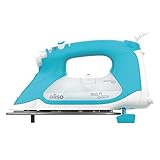
Overview: The oliso TG1600 ProPlus reinvents ironing with its innovative Auto-Lift system, representing the smartest iron available today. Designed in California specifically for sewists and quilters, this 1800-watt powerhouse combines intelligent safety features with professional-grade performance. The striking turquoise housing houses technology that transforms the ironing experience through ergonomic innovation.
What Makes It Stand Out: The touch-activated Auto-Lift system eliminates repetitive wrist strain and prevents scorching—revolutionary for extended crafting sessions. The mineral-infused Diamond Ceramic-Flow soleplate offers exceptional glide and durability against fusible materials. The extended 30-minute auto shut-off caters specifically to project-based work requiring uninterrupted heat.
Value for Money: At $199.99, you’re investing in specialized innovation rather than capacity. The 3-year warranty and rigorous factory testing justify the cost for serious hobbyists. While the tank is smaller than steam stations, the feature set targets users who prioritize ergonomics and safety over marathon capacity.
Strengths and Weaknesses: Strengths include revolutionary Auto-Lift technology, powerful 1800W heating, excellent soleplate, extra-long cord, and maker-focused features like the precision tip. Weaknesses include the modest 12.75-ounce tank requiring frequent refills. The premium price is hard to justify for casual ironers, and it’s specialized rather than a general-purpose family iron.
Bottom Line: The oliso TG1600 ProPlus is essential for sewists, quilters, and anyone with wrist or shoulder concerns. While overkill for occasional use, its smart features and ergonomic design transform the ironing experience for dedicated users, making the premium price worthwhile for its target audience who value innovation and physical comfort.
Why Continuous Fill Matters for Marathon Sewing Sessions
The traditional iron cycle—press, cool, refill, wait, repeat—disrupts your workflow and introduces inconsistencies in your pressing. Continuous fill technology revolutionizes this process by separating the water reservoir from the heated boiler, allowing you to add water at any time without temperature drops or pressure loss. For sewing marathons that stretch across entire weekends or late into the night, this means your last seam receives the same crisp, professional press as your first. The psychological benefit is equally valuable: you maintain creative momentum without the jarring interruption of equipment limitations.
Understanding Steam Generator Iron Technology
The Science Behind High-Pressure Steam
Steam generator irons produce steam at significantly higher pressure than traditional irons—typically 5-7 bars compared to 1-2 bars. This pressure forces steam deep into fabric fibers, relaxing them from the inside out rather than just surface-smoothing. For sewists working with stubborn fabrics like linen, heavy denim, or multiple layers of interfacing, this penetration means you press once and move on, rather than repeatedly attacking the same seam. The continuous fill design ensures this pressure remains constant, even as water levels fluctuate during your session.
Continuous Fill vs. Traditional Water Tanks
Traditional irons integrate the water tank directly above the hot soleplate, creating a sealed system that can’t be opened while hot. Continuous fill generators position the tank separately, often connected via a pump system. This architectural difference means you can refill from a water bottle beside your sewing station without ever lifting the iron from its base. The best systems maintain boiler pressure and temperature during refilling, while budget models may experience minor fluctuations. Understanding this distinction helps you set realistic expectations for performance consistency.
Key Features That Define Professional-Grade Performance
Steam Output and Pressure Metrics
When evaluating steam generator irons, you’ll encounter specifications like “grams per minute” (g/min) and “bar pressure.” For marathon sewing, aim for minimum steam output of 120g/min with sustained pressure of at least 5 bars. However, raw numbers don’t tell the complete story. Look for models offering variable steam control—being able to dial back to 40g/min for delicate silks prevents water spots and distortion. The most sophisticated units provide independent steam and temperature controls, giving you surgical precision over your pressing environment.
Boiler Capacity and Heating Time
Boiler capacity directly impacts how long you can maintain maximum steam output. A 1.2-liter boiler typically provides 60-90 minutes of intensive steaming before the pump activates more frequently. For true marathon sessions, consider systems with 1.5-2 liter boilers that can sustain heavy use for 2+ hours. Heating time matters too—professional units reach operating temperature in 2-3 minutes, while consumer models may take 5-7 minutes. Quick heat-up means you can start pressing interfacing while your sewing machine warms up, maximizing efficiency.
Soleplate Materials and Glide Technology
Your iron’s soleplate is your direct contact point with precious fabric. Stainless steel offers durability and excellent glide, but ceramic-coated soleplates provide superior non-stick properties for fusible interfacing and delicate fabrics. Palladium or titanium coatings represent the premium tier, offering scratch resistance and optimal heat distribution. Look for precision tips with detailed grooves around buttons and seams—this becomes crucial when pressing intricate garment sections. The best soleplates maintain consistent temperature across the entire surface, eliminating cold spots that cause uneven pressing.
The Ergonomics of Extended Ironing Sessions
Weight Distribution and Handle Design
During an eight-hour sewing marathon, a poorly balanced iron becomes a literal pain. Steam generator irons separate the heavy boiler from the handheld unit, but weight still matters. The handheld portion should weigh under 1.5kg (3.3 lbs) for comfortable extended use. Handle design is equally critical—look for heat-resistant silicone grips with ergonomic contours that accommodate various hand positions. Vertical steam functions should feel natural, not strain-inducing. Some premium models offer ambidextrous cord exits, preventing cord drag regardless of your dominant hand.
Cord Length and Maneuverability
A 1.8-meter (6-foot) cord might suffice for small sewing nooks, but marathon sewists often work in larger studios. Seek minimum 2.5-meter (8-foot) cords with 360-degree swivel connections that prevent tangling. The steam hose connecting iron to base should be equally generous—1.6-1.8 meters allows you to position the base under your sewing table while keeping the iron within easy reach. Cord storage solutions integrated into the base prevent tripping hazards during intense work sessions.
Noise Levels During Operation
The pump in continuous fill systems creates unavoidable noise, but quality varies dramatically. Budget models can produce 65-70 decibels—equivalent to a vacuum cleaner—while premium units operate at 45-50 decibels (quiet conversation level). For marathon sessions, this difference impacts fatigue and concentration. Look for models with insulated boilers and dampened pump mounts. Some units offer “night mode” settings that sacrifice a bit of steam pressure for whisper-quiet operation during late-night sewing sessions.
Water Quality and Its Impact on Performance
Hard Water Considerations
Hard water is the silent killer of steam generator irons. Calcium and magnesium deposits clog steam vents, reduce efficiency, and eventually destroy internal components. If your water measures above 7 grains per gallon (120 ppm), you must prioritize models with robust anti-scale systems. Some units include built-in water softening resin filters that require periodic regeneration with salt—similar to whole-house softeners. Others use electromagnetic or chemical filtration. For marathon sewists, the cost of distilled water is negligible compared to the frustration of mid-project descaling.
Filtration Systems and Anti-Scale Technology
Modern steam generators employ multiple anti-scale strategies. Removable cartridges capture minerals before they reach the boiler—these need replacement every 1-3 months depending on usage and water hardness. Self-cleaning systems flush minerals through a separate valve, requiring you to simply empty a collection container. The most advanced units combine both approaches with automated alerts. For sewing marathons, cartridge-based systems offer more reliable protection, ensuring consistent steam quality throughout your session without performance degradation.
Safety Features for Intensive Use
Auto-Shutoff Override Options
Standard auto-shutoff features are safety essentials but become maddening during sewing marathons when you’re pressing, sewing, pressing in rapid succession. Professional-grade units offer override functions that keep the iron ready during active sessions, then automatically reactivate safety mode after a set period of inactivity. Some models detect base movement or handle touch to reset timers. This feature alone can save 10-15 minutes of reheating time during a long sewing day, preserving both your schedule and your sanity.
Locking Mechanisms and Carry Handles
The iron-to-base locking mechanism prevents accidents when moving your setup. Look for positive-lock systems with audible clicks rather than friction-based holders. Integrated carry handles on the base unit should support the full weight securely—essential when repositioning your station mid-marathon. The best designs allow one-handed operation, letting you move the entire unit without interrupting your workflow. Heat-resistant base surfaces protect your sewing table from accidental contact.
Overheat Protection Systems
Multiple temperature sensors and pressure relief valves prevent catastrophic failures. Quality units monitor both boiler temperature and soleplate temperature independently, shutting down if either exceeds safe parameters. This is particularly important when pressing thick interfacing sandwiches that can reflect heat back into the soleplate. Look for certifications from recognized testing laboratories—these indicate rigorous safety testing beyond basic compliance.
Temperature Control Precision for Delicate Fabrics
Digital vs. Analog Controls
Analog dials offer simplicity but lack precision. Digital controls with LED displays provide exact temperature readings within 5-degree increments, crucial when working with heat-sensitive fabrics like polyester blends or laminated cottons. Some advanced models feature programmable presets—imagine one-touch switching from “cotton interfacing” at 400°F to “silk setting” at 300°F without guesswork. For marathon sessions, this precision prevents costly fabric disasters and eliminates the mental load of remembering settings.
Fabric-Specific Presets
Pre-programmed settings for wool, silk, cotton, linen, and synthetics remove guesswork, but the best systems go further. Look for “interfacing” presets that provide high steam with moderate heat, or “fusible web” settings that optimize temperature for adhesive activation without scorching. Some units allow you to customize and save your own presets—perfect for the sewist who consistently works with specific fabric combinations. This feature transforms your iron from a tool into a personalized pressing assistant.
Steam Delivery Mechanisms
Vertical Steaming Capabilities
Vertical steaming isn’t just for hanging garments—it’s invaluable for pressing draped muslins, steaming quilt batting, or refreshing fabric on the bolt. Effective vertical steam requires sustained pressure and a well-designed steam channel that prevents water droplet formation. Test this feature by observing steam consistency when holding the iron horizontally versus vertically. The best units maintain equal performance in both orientations, with no sputtering or dripping that could stain fabric.
Steam Burst and Eco Modes
Steam burst functions deliver concentrated steam jets for stubborn creases or thick seams. For sewing marathons, look for programmable burst duration—some units offer 3-second, 5-second, or continuous burst options. Eco modes reduce steam output by 30-40% while maintaining temperature, perfect for lighter fabrics or when you want to conserve water during long sessions. The ability to toggle between modes without stopping to adjust settings keeps your rhythm flowing.
Durability and Build Quality
Commercial vs. Domestic Grade Components
Commercial-grade steam generators use brass or stainless steel boilers instead of aluminum, and solenoid valves instead of plastic diaphrams. These components withstand daily use for 5-10 years rather than 2-3. For marathon sewists, domestic units marketed as “heavy duty” often provide the sweet spot—commercial durability without industrial noise levels or power requirements. Inspect the steam hose connection points; metal reinforcements indicate better longevity than all-plastic construction.
Warranty Coverage Expectations
Standard warranties run 1-2 years, but premium manufacturers offer 3-5 year coverage on boilers and heating elements. Read the fine print—some warranties require using the manufacturer’s proprietary water filters or descaling solutions. For intensive use, prioritize brands with hassle-free replacement policies and authorized service centers. A 30-day satisfaction guarantee lets you test the unit during an actual sewing marathon, revealing issues that showroom testing can’t expose.
Space and Storage Considerations
Compact vs. Full-Size Units
Compact steam generators with 1-liter boilers fit snugly into small sewing nooks but require more frequent refilling. Full-size units with 2-liter boilers demand dedicated counter space but support uninterrupted 3-4 hour sessions. Consider your typical marathon duration and workspace real estate. Some full-size models feature vertical storage options, reducing footprint when not in use. The iron locking mechanism should secure the handheld unit even when the base is stored on its side.
Integrated Storage Solutions
Quality units include cord winders, hose management clips, and accessory storage for cleaning tools or extra filters. Look for bases with non-slip feet that keep the unit stable on various surfaces—from sewing tables to kitchen counters. Some models feature detachable water tanks that can be filled at the sink, eliminating the need to maneuver the entire unit near water sources. This becomes particularly valuable in multi-purpose sewing spaces.
Energy Efficiency for Long Sessions
Power Consumption Ratings
Steam generators typically draw 2000-3000 watts during heat-up, then cycle to maintain temperature. Units with efficient insulation maintain heat using 800-1200 watts, while poorly insulated models may continuously draw 1500+ watts. Over an eight-hour sewing marathon, this difference impacts your electricity bill. Look for energy star ratings or manufacturer-provided consumption data. Some models display real-time wattage usage, helping you optimize settings for both performance and efficiency.
Standby Mode Efficiency
During pattern cutting or fitting sessions, your iron idles. Intelligent standby modes reduce boiler temperature by 50% after 10 minutes of inactivity, cutting energy use by 70% while maintaining quick recovery time. The best systems detect when you lift the iron and automatically resume full temperature within 30 seconds. Avoid units that completely shut down after 30 minutes—reheating from cold wastes time and energy during multi-day sewing projects.
Maintenance Requirements
Descaling Procedures
Even with filtration, descaling becomes necessary every 3-6 months depending on usage. Look for systems with automated descaling cycles that guide you through the process with indicator lights. Manual descaling should require no tools and minimal disassembly. Some units include dedicated descaling solution containers that attach directly to the water inlet. For marathon sewists, a 15-minute descaling process beats a 45-minute ordeal that eats into precious sewing time.
Cleaning the Soleplate
Fusible interfacing residue is inevitable. Soleplates with non-stick coatings clean easily with a damp cloth, while stainless steel may require specialized cleaning pastes. Some premium models feature self-cleaning soleplate functions that use steam to loosen residue. Avoid abrasive cleaning methods that scratch the surface—scratches snag delicate fabrics and reduce glide efficiency. Keep a soleplate cleaning cloth nearby during marathons for quick wipe-downs between projects.
Storage Best Practices
Always empty the water tank and run a steam cycle to clear the boiler before storage. Store the iron locked to its base in a dust-free environment. If storing for more than a week, add a few drops of distilled water to the tank and run a short steam cycle monthly to keep seals lubricated. Cover the unit with a breathable cloth—not plastic—to prevent moisture buildup. These simple habits extend lifespan and ensure your iron is ready when inspiration strikes.
Budget vs. Performance Trade-offs
Entry-Level Features to Accept
Budget continuous fill irons ($150-250) typically offer 5-bar pressure and 120g/min steam output—adequate for most sewing tasks. You’ll compromise on digital controls, using analog dials instead. Boiler capacity may be limited to 1-1.2 liters, and noise levels will be higher. However, if you’re upgrading from a conventional iron, even entry-level generators provide transformative improvements. Accept shorter warranties (1-2 years) and plan for earlier replacement, but enjoy immediate productivity gains.
Premium Features Worth the Investment
Mid-range units ($300-450) add digital precision, larger boilers, and superior filtration. This is the sweet spot for serious sewists. Premium models ($500+) offer programmable presets, whisper-quiet operation, and commercial-grade components. Consider your annual sewing hours—if you log 500+ hours, the durability and efficiency of a premium unit cost pennies per hour. The frustration saved from inconsistent steam or mid-project failures justifies the investment for professionals and passionate hobbyists alike.
Common Pain Points and How to Avoid Them
Leaking and Spitting Issues
Leaking typically stems from overfilling, damaged seals, or using hard water despite filtration. Always fill to the indicated maximum line, not beyond. If leaking persists, check the steam hose connection for tightness. Spitting occurs when steam condenses in the hose—prevent this by keeping the hose as straight as possible and using the steam burst function periodically to clear condensation. Premium models include anti-drip valves that prevent water flow until the soleplate reaches optimal temperature.
Inconsistent Steam Production
Inconsistent steam often indicates scale buildup or a failing pump. If steam output drops mid-session, try the steam burst function to clear blockages. Regular descaling prevents most issues. Some units have adjustable steam valves that can loosen over time—check your manual for calibration procedures. If problems persist, the pump may be failing—a common issue in units with plastic pump components after 2-3 years of heavy use.
Short Lifespan Indicators
Premature failure usually traces to hard water damage or inadequate maintenance. Red flags include increasingly frequent descaling alerts, visible mineral deposits in steam vents, or unusual pump noises. Invest in a water hardness test kit—if your water exceeds 10 grains per gallon, commit to distilled water or a dedicated filtration system. The $50 annual cost of distilled water pales compared to replacing a $400 iron every 18 months.
Making Your Final Decision
Creating Your Personal Feature Priority List
Rank features by your sewing style: Quilters need maximum steam output and large boilers. Garment sewists prioritize precise temperature control and vertical steaming. Bag makers need durable soleplates for heavy interfacing. List your top five non-negotiable features—perhaps continuous fill capability, 5+ bar pressure, digital controls, anti-scale filtration, and auto-shutoff override. Use this list to evaluate options objectively, ignoring flashy features you’ll never use.
Where to Test Before Buying
Specialty sewing stores often have demo units available for test drives. Bring fabric scraps similar to your typical projects—heavy denim, delicate silk, and fusible interfacing. Test vertical steaming, steam burst functions, and the locking mechanism. Pay attention to noise levels and how the weight feels after 5-10 minutes of use. Online reviews from professional sewists provide insights beyond marketing copy. Look for reviews mentioning “daily use” or “professional” to gauge durability under marathon conditions.
Frequently Asked Questions
How does continuous fill technology actually work during active ironing?
Continuous fill systems use a separate water reservoir connected to a pressurized boiler via a pump. When water levels drop, the pump automatically draws more water into the boiler while maintaining temperature and pressure. You can refill the external tank at any time without interrupting steam production, as the boiler remains sealed and pressurized throughout your session.
What’s the realistic steam output difference between 5-bar and 7-bar pressure?
The difference is noticeable on heavy fabrics but marginal for most quilting cottons and garment-weight materials. 7-bar pressure excels at pressing thick seams like denim flat-fells or multiple layers of wool interfacing. For typical sewing marathons involving cotton, linen, and light-to-medium weight fabrics, 5-6 bars provide excellent results. The law of diminishing returns applies—each additional bar offers less noticeable improvement.
Can I use tap water if I have a water softener at home?
Softened water still contains minerals, just different ones. Water softeners exchange calcium and magnesium for sodium, which can still cause buildup and corrosion in steam boilers. Test your softened water—if it measures below 3 grains per gallon, occasional use is acceptable. For optimal performance and longevity, especially during marathon sessions where consistency matters, distilled or demineralized water remains the gold standard regardless of softening.
How often should I descale if I’m using distilled water exclusively?
Even with distilled water, descale every 6-12 months. Trace minerals from manufacturing residues or airborne contaminants can accumulate over time. However, you’ll use significantly less descaling solution compared to tap water users. Some manufacturers offer “distilled water” settings that extend descaling intervals by 50%. Always run a steam cycle with fresh distilled water after descaling to flush any residual solution.
Is a larger boiler always better for sewing marathons?
Not necessarily. A 2-liter boiler provides 3-4 hours of continuous steam but takes longer to heat initially and consumes more energy. If your typical marathon sessions run 2-3 hours with breaks, a 1.5-liter boiler offers the best balance. Consider your work patterns—continuous 6-hour sessions justify larger boilers, while intermittent sewing with natural breaks pairs well with compact units that heat quickly.
What’s the ideal soleplate temperature for pressing fusible interfacing?
Most fusible interfacings activate between 280-320°F (138-160°C). Too hot and the adhesive bleeds through; too cool and it doesn’t bond properly. Use a “wool” setting (around 300°F) as your starting point. Test on fabric scraps first—properly fused interfacing should feel smooth, not crunchy, and shouldn’t separate when gently pulled. Some irons have dedicated “interfacing” presets that optimize temperature and steam for this specific task.
How do I prevent water spots on delicate fabrics?
Water spots occur when steam condenses into droplets before reaching the fabric. Prevent this by: using the steam burst function to clear the hose before pressing silks, keeping the steam hose as straight as possible, reducing steam output to minimum for delicate fabrics, and pressing with a press cloth. Premium irons with anti-drip valves and insulated steam channels virtually eliminate this issue. If spots occur, immediately steam the area again without touching it—the heat often evaporates the marks.
Can I leave my steam generator iron on all day during a sewing marathon?
Modern units with intelligent standby modes are designed for extended operation. However, continuous 8+ hour use requires periodic breaks. Allow the unit to enter standby mode for 15 minutes every 2-3 hours to prevent component overheating. Units with auto-shutoff override still benefit from manual cooldown periods. Always ensure adequate ventilation around the base unit, and never leave it unattended for extended periods, even with safety features active.
What’s the lifespan difference between commercial and domestic steam generator irons?
Commercial units built with brass boilers and metal components typically last 5-7 years with daily use. Heavy-duty domestic models average 3-5 years under marathon sewing conditions. Basic domestic units may show performance degradation after 2-3 years. The key factor isn’t just build quality but maintenance—regular descaling and using appropriate water extends any unit’s life by 50-100%. Your sewing volume determines which tier makes financial sense.
Are there any fabrics I shouldn’t press with a steam generator iron?
Avoid using high-pressure steam on water-sensitive fabrics like waxed canvas, oilcloth, or some coated laminates—the steam can break down waterproofing. For these, use a dry iron or traditional iron with minimal steam. Very delicate vintage fabrics may not tolerate the force of high-pressure steam even at low temperatures. When in doubt, test on scraps and use a press cloth. Most modern fabrics, including performance knits and technical fabrics, respond beautifully to steam generator pressing when using appropriate settings.