A clinic laundry room is usually a converted closet with a washer, a dryer and a shelf of clean linen that must not touch the floor. The volume is modest compared with a hotel, but the consequences of a damp towel or an over-dried sheet are higher, because the next user may be a patient with compromised skin or a treatment room that needs to be turned over in twenty minutes. Reliability matters more than capacity.
Healthcare buyers also ask a question that home buyers never do: does the dryer sanitize? The honest answer is that heat reduces bacteria, but a dryer is not a sterilizer, and a manufacturer's sanitizing cycle is not the same as a validated infection-control process. What the machine can do is reach and hold a temperature for the cycle, dry evenly, and avoid the damp patches where bacteria survive a rushed wash.
This guide covers machines from a 3.6 cu ft compact unit to a 33-pound commercial tumbler. Some are suited to a small clinic's towel and gown load; others belong in a hospital laundry with three-phase power and a full-time operator. We compared specifications, features and owner reports to place each one.
Capacity, heat source, venting and documented cycles are the four things that separate a clinic dryer from a home appliance, and all four appear in the picks below.
Top picks at a glance
Speed Queen ADA 7 Cu. Ft. Sanitizing Gas Dryer with Pet Plus in Matte Black
Check price on AmazonEQCOTWEA Commercial Clothes Dryer 33LB Heavy-Duty, 8KW Industrial Laundry Drye
Check price on AmazonINTSUPERMAI Commercial & Industrial Clothes Dryer Heavy-Duty Automatic Dryer M
Check price on AmazonCompare the shortlist
| Model | Type | Capacity | Key feature | Amazon |
|---|---|---|---|---|
| 1. Speed Queen ADA 7 Cu. Ft. Sanitizing Gas Dryer with Pet Plus in | Gas | 7 cu ft | Sanitize cycle | Check price |
| 2. LG DLEX4200B 7.4 cu. ft. Ultra Large Capacity Smart Wi‑Fi Enable | Front-load | 7.4 cu ft | Sensor drying | Check price |
| 3. LG DLEX4000B 7.4 cu. ft. Ultra Large Capacity Smart Wi‑Fi Enable | Front-load | 7.4 cu ft | Steam | Check price |
| 4. 7.4 cu. ft. Ultra Large Capacity Smart wi-fi Enabled Front Load | Front-load | 7.4 cu ft | Connected controls | Check price |
| 5. INTSUPERMAI Commercial & Industrial Clothes Dryer Heavy-Duty Aut | Dryers | — | Connected controls | Check price |
| 6. EQCOTWEA Commercial Clothes Dryer 33LB Heavy-Duty, 8KW Industria | Stain remover | — | Efficiency | Check price |
| 7. BLACK+DECKER 4.4 Cu. Ft. Electric Dryer with Heat Pump, 22 lb. C | Heat pump | 4.4 cu ft | Ventless | Check price |
| 8. Auertech 3.6 CU. FT Clothes Dryer, Large Capacity Laundry Dryer | Electric | 3.6 cu ft | Connected controls | Check price |
Detailed reviews
Speed Queen ADA 7 Cu. Ft. Sanitizing Gas Dryer with Pet Plus in Matte Black

Speed Queen's 7 cu ft gas dryer lists a sanitizing cycle, over-dry protection and anti-static control, with Pet Plus for lint and hair. For a clinic, the appeal is the straightforward sanitizing option and the lack of complex electronics. Gas heat recovers quickly between loads. The cabinet is 42.75 inches tall, so check the counter or shelf above it before ordering.
What stands out
- Sanitizing cycle is clearly listed for shared linen
- Over-dry protection helps preserve gowns and sheets
- Simple controls reduce training time for staff
Watch out for
- Requires gas service, a flue and an installer
- Tall cabinet may not fit under existing shelving
LG DLEX4200B 7.4 cu. ft. Ultra Large Capacity Smart Wi‑Fi Enabled Front Load Dryer in Black Steel with TurboSt

LG's DLEX4200B offers 7.4 cu ft, TurboSteam, an AI fabric sensor and ThinQ monitoring. The sensor evaluates load size and moisture and adjusts the cycle, which reduces the chance of a damp load going back on the shelf. Steam refresh is useful for privacy curtains and uniforms that need freshening rather than a full wash. It runs on 240V and needs a clean vent.
What stands out
- 7.4 cu ft drum handles gowns and bath towels
- Steam refresh works on curtains and uniforms
- AI sensor reduces both under-drying and over-drying
Watch out for
- Needs 240V service and a dedicated vent
- Residential duty rating for a clinical schedule
LG DLEX4000B 7.4 cu. ft. Ultra Large Capacity Smart Wi‑Fi Enabled Front Load Electric Dryer — Black Steel

The DLEX4000B is the electric LG with twelve programs, TurboSteam, sensor dry and FlowSense. FlowSense matters in a clinic because a restricted duct slows cycles and raises drum temperature, and maintenance staff may not think to check it. Steam sanitizing and antibacterial options sit alongside towel and delicate cycles. It pairs with LG's front-load washers and runs on standard 240V service.
What stands out
- FlowSense alerts staff when the duct needs attention
- Steam sanitizing and antibacterial cycle options are included
- Twelve programs cover towels, delicates and bedding
Watch out for
- Electric only, with no gas alternative here
- Not built for continuous all-day commercial laundry use
7.4 cu. ft. Ultra Large Capacity Smart wi-fi Enabled Front Load Gas Dryer with Built-In Intelligence

This LG gas dryer, model DLG3601V, brings 7.4 cu ft and built-in intelligence to a facility with gas service. The listing is sparse, but the drum size and heat source fit a clinic drying towels and gowns in batches. Wi-Fi lets staff check a cycle without leaving the treatment floor. It matches LG's front-load washers, which simplifies a matched installation.
What stands out
- Gas heat and 7.4 cu ft suit batch linen
- Built-in intelligence simplifies cycle selection for clinic staff
- Wi-Fi status checks from the treatment floor
Watch out for
- Limited cycle detail in the supplied listing
- Gas line and venting constrain where it can be placed
INTSUPERMAI Commercial & Industrial Clothes Dryer Heavy-Duty Automatic Dryer Machine Laundry Equipment,33LB Au
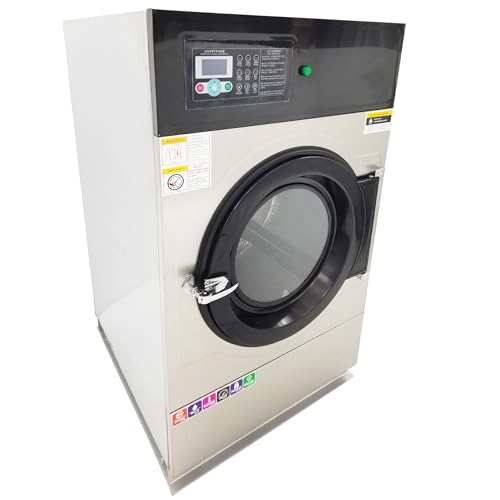
INTSUPERMAI's 33-pound tumbler is the commercial option for a facility laundry, with a 220V three-phase motor, 8KW heater and 304 stainless drum. Dual thermal sensors and programmable hot-air selection give some control over fabric protection, and the safety lock prevents mid-cycle door openings. Noise is quoted at or below 80 dB. It needs a dedicated 3.9-inch exhaust duct and a solid floor.
What stands out
- 33 lb cycles handle a full day of facility linen
- Dual thermal sensors reduce shrinkage and scorching risk
- Safety lock suits a shared healthcare laundry
Watch out for
- Three-phase 220V service is required for this machine
- Dedicated 3.9-inch duct and floor space needed
EQCOTWEA Commercial Clothes Dryer 33LB Heavy-Duty, 8KW Industrial Laundry Dryer,Stainless Steel Drum, with saf
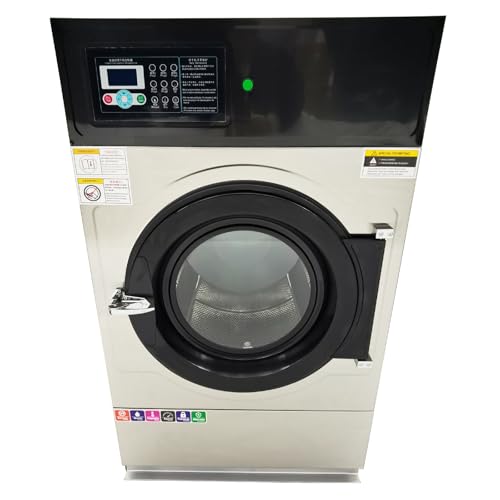
EQCOTWEA's industrial unit carries the same 33-pound rating with 8KW heat and a 0.55KW motor. The 304 stainless drum is smooth and burr-free to protect fabrics, and the control system manages drum temperature with overheat protection. A tempered-glass door and removable lint net make checks easy. At 545 pounds it needs a structural review before installation, not after the fact.
What stands out
- Commercial capacity is sized for high-turnover linen loads
- Smooth stainless drum protects delicate fabrics from snags
- Overheat protection and safety lock built in
Watch out for
- 545 pounds requires floor and delivery planning
- Three-phase power and a vent run are mandatory
BLACK+DECKER 4.4 Cu. Ft. Electric Dryer with Heat Pump, 22 lb. Capacity , 240V Electric Clothes Dryer with 16

BLACK+DECKER's BDFH44M is a 4.4 cu ft ventless heat pump dryer with a 22-pound capacity and sixteen cycles. It collects water in a tank or drains through the included 51-inch hose, so it can sit in an interior room. The stainless drum and clear door suit a clinic's smaller loads. Professional hardwiring on 240V is required, and cycles are slower than a vented machine.
What stands out
- Ventless installation works in an interior utility room
- Drain hose option avoids daily tank emptying
- Included drain hose means no daily tank routine
Watch out for
- 4.4 cu ft is small for a busy clinic
- Heat pump drying takes longer on cotton
Auertech 3.6 CU. FT Clothes Dryer, Large Capacity Laundry Dryer with 12 Drying Modes & Stainless Steel Tub, Dr

Auertech's 3.6 cu ft dryer has twelve modes, a stainless tub and a 160-degree door, with a 1400W heater that reaches about 140 degrees Fahrenheit. Delay start and a child lock are included. For a small practice, the gentle heat is an advantage for synthetics and delicate gowns, but the drum is too small for a full day's linen in a busy facility.
What stands out
- Gentle 140-degree heat suits delicate gowns and fabrics
- Twelve modes include baby care and refresh
- Compact cabinet fits a small utility closet
Watch out for
- 3.6 cu ft limits throughput for a clinic
- Longer cycles run at a lower drum temperature
Buying guide
What Sanitizing Means on a Dryer Spec Sheet
A sanitizing cycle is a time-and-temperature promise from the manufacturer, not a certification from a health authority. It typically holds the drum at an elevated temperature for a set period, which reduces many bacteria and dust mites on fabrics that can take the heat. It does not sterilize, and it cannot compensate for a wash cycle that was too cool, too short or overloaded. Treat the dryer cycle as one step in a laundry process, not as the process itself. If the washer is old and towels come out soupy, no dryer setting will make them safe; fix the wash first. Record the cycle and load weight so the next shift can repeat it. A clipboard by the machine is enough.
Read the cycle list carefully. The Speed Queen lists a sanitizing cycle directly, and LG's steam sanitizing option appears among the twelve programs on the DLEX4000B. Smaller machines may offer a high-heat cotton cycle without calling it sanitizing. If your facility has a written infection-control policy, match the machine's documented cycle to that policy rather than assuming a label is enough. When in doubt, follow the linen manufacturer's washing and drying instructions and document what you did. Ask the manufacturer for the cycle temperature and duration in writing, and keep that sheet with the manual. If a salesperson cannot produce it, that tells you something about the claim. Documentation beats a glossy brochure.
Temperature Control Protects Linens and Equipment
Healthcare linen includes items that cannot take a hot drum: elastic waistbands, synthetic gowns, privacy curtains, mop heads with plastic fittings. Over-drying damages elastic and makes cotton feel harsh, and a dryer that runs too hot can shrink a sheet until it no longer fits the mattress. Sensor dry helps because it stops when the load reaches the selected dryness, and over-dry protection on the Speed Queen serves the same purpose. A damp alert is useful too, because it catches a load before it goes back on the shelf. A moisture sensor also prevents the common habit of restarting a cycle because the outside feels dry while the center is still damp. Check the center of a folded sheet.
Compact machines need the same care. The Auertech tops out around 140 degrees Fahrenheit, which is gentler than a 240V dryer and slower on heavy cotton. The heat pump models run cooler still. That is an advantage for synthetics and a disadvantage for a pile of wet towels. Match the cycle to the fabric, and do not assume that a longer cycle at a lower temperature is always safer; a load left damp in a warm drum is worse than one dried completely. If the facility dries both cotton and synthetics, run separate loads; mixing them means one fabric is always under- or over-dried. Label the cycles for each fabric and post the list near the machine.
Air Quality, Venting and Separation
A vented dryer pulls air from the room and pushes it outside, carrying lint, moisture and whatever was on the linen. In a healthcare setting, that exhaust should not discharge near an air intake, a loading dock or a window that opens into a treatment area. Keep the duct smooth, short and sealed, and check the exterior hood for lint. If the laundry shares a room with clean linen storage, separate the two with a partition or at least a distance and a shelf cover. If the building has a shared exhaust riser, have it inspected before adding a dryer; a boosted run may not have capacity for another machine. Ask the mechanical contractor to measure it.
Ventless heat pump and condenser dryers avoid the duct but not the air-quality question. They condense moisture into a tank or drain and release some heat into the room, and their filter packs need regular cleaning. They are a reasonable choice for a small clinic with no exterior wall, provided the room is ventilated and the condensate is managed. Do not put one in a sealed closet and expect the humidity to disappear. A small clinic may find that a vented condenser unit is the only option that fits, in which case plan two shorter batches a day rather than one long one, and check the condensate drain weekly. Keep a spare filter pack on the shelf and log each cleaning.
Matching Capacity to a Clinic, Not a Hospital
A small clinic might generate two or three loads of towels, gowns and sheets a day. A 7.4 cu ft dryer handles that comfortably, and a 4 cu ft ventless unit can cover it in smaller batches. A surgery center or a small hospital laundry is a different problem: the 33-pound INTSUPERMAI and EQCOTWEA units exist for that volume, with 15 kg cycles and 8KW heaters, and they need three-phase power and a dedicated exhaust. Buying a commercial tumbler for two loads a day wastes money and floor space. A 33-pound machine also needs a laundry room with a door wide enough for a pallet jack; measure before the delivery truck arrives. That mistake is expensive.
Count the linen, then add a margin for isolation rooms and emergency turnover. If the facility handles contaminated linen, confirm that the laundry flow is one-way, dirty to clean, and that the dryer sits on the clean side. Capacity is not just drum size; it is the number of cycles you can complete while a treatment room waits. A second smaller dryer is sometimes more useful than one large machine, because it lets you run a hot load and a delicate load at the same time. If the clinic shares a building, confirm who owns the exhaust and who pays for the service; shared ducts fail quietly. Put the responsibility in writing before installation.
Safety Locks, Training and Documentation
Commercial dryers lock the door during a cycle, which prevents a hurried staff member from opening a hot drum. The INTSUPERMAI and EQCOTWEA both list a safety lock, and the compact machines include child locks that serve a similar purpose in a shared room. Check that the door opens easily from the inside if the lock fails, and make sure the emergency stop or breaker is accessible. A dryer that cannot be opened in an emergency is a hazard, not a convenience. Post the lock-release procedure inside the room and rehearse it once with staff, because a jammed door during a fire drill is not the time to read a manual. Keep the manual in a sleeve by the door.
Training and documentation are unglamorous but decisive. Keep a log of filter cleaning, vent checks and cycle temperatures. Label the cycles that are approved for healthcare linen, and put the infection-control policy where staff can see it. Record any load that comes out damp and rewash it rather than running it through again on a hotter setting. When a machine is serviced, file the report with the log. If an inspector asks how linen is dried, a filled-in log is a better answer than a brochure. If the facility is inspected, keep the logs for the period the regulator requires and store them with the maintenance records, not in a drawer in the laundry. A binder works.
Frequently asked questions
Does a sanitizing dryer sterilize healthcare linen?
No. A sanitizing cycle reduces bacteria through sustained heat, but sterilization requires an autoclave or a validated industrial process. A dryer is one step in a laundry workflow that starts with an appropriate wash cycle. Follow your facility's infection-control policy and the linen manufacturer's instructions rather than relying on a cycle name.
Can a clinic use a residential dryer for patient linens?
A small clinic with light linen volume can use a 7.4 cu ft dryer, provided it has a sanitizing or high-heat cycle and a clean vent. The limitation is duty cycle, not capacity: a residential cabinet is not built for all-day use. If the clinic runs seven days a week with high turnover, a commercial unit is the more reliable choice.
Is a ventless heat pump dryer suitable for a clinic?
It can be, in a small facility with no exterior wall and a ventilated room. Heat pump dryers condense moisture into a tank or drain and run at lower temperatures, which suits synthetics and delicate items. They dry more slowly and need their filter pack cleaned often. Do not use one as the only dryer for a busy surgical center.
How often should healthcare dryer lint filters be cleaned?
Before every load, and after every load if the linen sheds heavily. A clogged filter reduces airflow, lengthens the cycle and raises drum temperature, which is both a fabric risk and a fire risk. Weekly, wash the filter if the manufacturer allows it, and check the vent hood monthly. Log each cleaning.
What power do healthcare laundry dryers need?
The 33-pound commercial units here need 220V three-phase service and an 8KW heater. Residential-style electric dryers need 240V, gas models need a gas line and flue, and compact heat pump units run on 240V with a drain or tank. Have an electrician confirm the panel capacity before you buy.
Verdict
For a clinic or small practice with standard 240V service, the LG DLEX4000B is the best fit. The 7.4 cu ft drum handles gowns and towels, the steam sanitizing program covers shared linen, and FlowSense warns when the duct is restricting airflow. It is a residential-duty machine, so keep the daily volume realistic.
A single-chair practice or a satellite clinic with light linen should choose the Auertech 3.6 cu ft; it is compact and gentle, but it will not clear a busy treatment schedule. Facilities with three-phase power and a real laundry volume should buy the INTSUPERMAI 33-pound tumbler, which is built for repeat cycles. Where no duct is possible, the BLACK+DECKER heat pump is the ventless compromise.