The complaint is almost always the same: the room is hot, the mirrors fog, and the dryer takes two cycles to finish a load. The owner buys a bigger fan, mounts it in the wall, and nothing changes. That is because the fan was rarely the bottleneck. A dryer pushes roughly two hundred cubic feet of air a minute out of the building, and that air has to come back in from somewhere. In a sealed closet with a louvered door that does not actually open, it comes in through the water heater flue instead.
Ventilation in a commercial laundry is a system of four parts: the dryer exhaust, the duct that carries it out, the makeup air that replaces it, and the air movement that keeps the people working in the room from overheating. Fix one part and the other three will show you what is still wrong. This guide covers each, plus the equipment that shows up when you search for commercial laundry ventilation on Amazon, which is a stranger mix than the category name suggests.
We compared specifications, features and owner reports on eight listings. Some are genuine ventilation hardware. Some are dryers that create the problem. One is a bilge heater that has no business in a laundry at all, and we say so below rather than pretending otherwise.
Top picks at a glance
Simple Deluxe 18 Inch Industrial Wall Mount Fan, 3 Speed Commercial Ventilatio
Check price on AmazonRYUJNDK 220V Industrial Ventilation Fan Extractor Fan Wall-Mounted Window Exha
Check price on AmazonBoat Engine Compartment Heater 700W with Self-Regulated PTC Element and Waterp
Check price on AmazonCompare the shortlist
| Model | Type | Capacity | Key feature | Amazon |
|---|---|---|---|---|
| 1. Simple Deluxe 18 Inch Industrial Wall Mount Fan, 3 Speed Commerc | Vent | — | Low noise | Check price |
| 2. RYUJNDK 220V Industrial Ventilation Fan Extractor Fan Wall-Mount | Vent | — | — | Check price |
| 3. Midea MLTW41A1BGK1 Top Load Washer and Electric Dryer Laundry Pa | Top-load | 4.1 cu ft | Top-load | Check price |
| 4. COSTWAY Portable Clothes Dryer, 13.2 LBS Front Load Compact Laun | Front-load | — | Stackable | Check price |
| 5. INTSUPERMAI Coin-Op Washer Dryer Combo 26.4lbs Washer Dryer Comb | Front-load | — | Low noise | Check price |
| 6. Boat Engine Compartment Heater 700W with Self-Regulated PTC Elem | Commercial | — | Compact footprint | Check price |
| 7. Euhomy Compact Dryer 1.8 cu. ft. Portable Clothes Dryers with Ex | Portable | 1.8 cu ft | Delay start | Check price |
| 8. 1PCS Drying Machine Water Tank PVC Air Duct Drum Dryer Condenser | Condenser | — | Condenser | Check price |
Detailed reviews
Simple Deluxe 18 Inch Industrial Wall Mount Fan, 3 Speed Commercial Ventilation Metal Fan for Warehouse, Green

An 18-inch wall-mount fan with a three-speed motor, 4200 CFM on high, and 115V power draw of 110 watts. It tilts a full 360 degrees, uses dual ball bearings rather than sleeve bearings, and carries an OSHA-compliant rust-resistant grille. Noise is listed at 60 dB on high and 45 on low. It circulates air in a room; it does not exhaust moisture or supply fresh air.
What stands out
- Publishes airflow, noise and wattage figures on the listing
- 4200 CFM moves a lot of air for 110 watts
- Dual ball bearings suit continuous daily running in a laundry
Watch out for
- Circulates room air but extracts no moisture at all
- 60 dB on high is loud in a small room
RYUJNDK 220V Industrial Ventilation Fan Extractor Fan Wall-Mounted Window Exhaust Fan For Kitchen Bathroom And
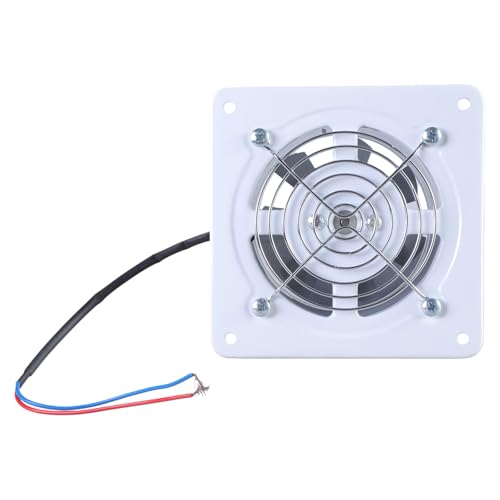
A 220V wall or window-mounted extractor aimed at kitchens, bathrooms and laundry rooms. The listing has the right form factor for a small utility space and a painted finish meant to survive damp, but it publishes no airflow rating, no duct diameter and no decibel figure. That makes it a gamble unless the seller answers those questions. It is also a 220V unit, so it needs the matching circuit.
What stands out
- Wall or window mounting suits a small utility room
- Painted housing resists the damp conditions of a utility room
- Simple extractor design with few parts to fail
Watch out for
- No CFM, duct size or noise rating published
- Requires a 220-240V circuit, not a standard outlet
Midea MLTW41A1BGK1 Top Load Washer and Electric Dryer Laundry Pair Bundle 4.1 Cu Ft Washer 7 Cu Ft Dryer with
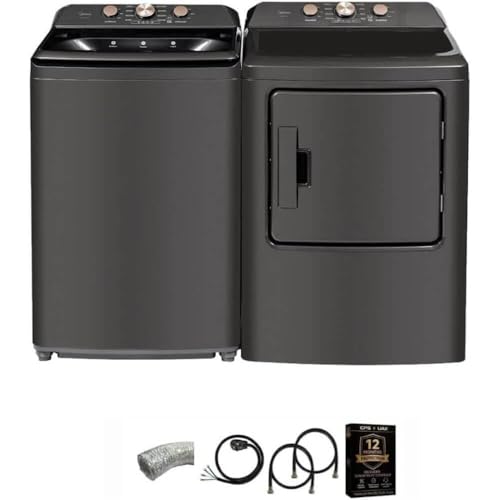
A matched Midea pair: a 4.1 cu. ft. top-load washer and a 7.0 cu. ft. electric dryer, sold with a vent, a power cord and a twelve-month protection plan. The washer has eight cycles, the dryer eight cycles and four temperature settings, and the whole bundle weighs about 220 pounds. This is the replacement path when the old dryer is the reason the room stays wet.
What stands out
- Dryer arrives with vent and power cord included
- 8 drying cycles and 4 temperatures add flexibility
- Twelve-month protection plan covers both washer and dryer
Watch out for
- Residential capacity, not built for commercial duty cycles
- 220 pounds means a two-person delivery and a wide doorway
COSTWAY Portable Clothes Dryer, 13.2 LBS Front Load Compact Laundry Dryer with Stainless Steel Drum, 5 Drying
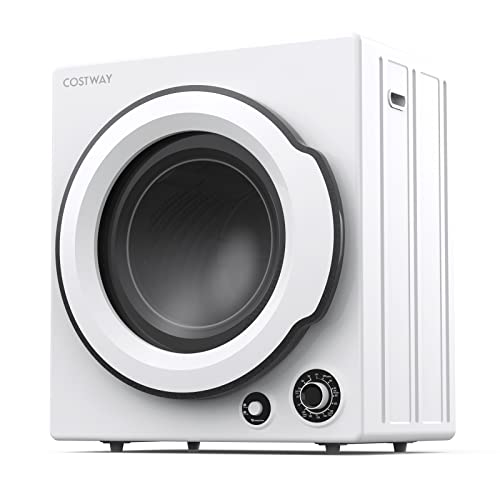
A 13.2-pound front-load portable dryer rated at 1350 watts, with five programs and an exhaust vent that can be set vertically or horizontally. It can be wall-mounted, stacked or left freestanding, though the wall kit is sold separately. The drum reaches 153 degrees Fahrenheit. It is a vented machine, so it needs a window, a wall vent or a duct, and it is not sold in California.
What stands out
- Adjustable vent direction simplifies a tight closet install
- Five programs cover delicates through heavy cotton cloth
- Compact enough for a closet or a small flat
Watch out for
- Still needs a real exhaust path to the outdoors
- Wall-mount kit is not included in the box
INTSUPERMAI Coin-Op Washer Dryer Combo 26.4lbs Washer Dryer Combo Automatic Laundry Washer Spinner Dryer Machi

A coin-operated 12 kg washer-dryer combo with a 304 stainless drum, a stackable layout and a top-vent dryer using a 110 mm outlet. It lists a 1.5 kW washer, a 6 kW dryer, a 46 RPM spin and under 60 dB operation, all on 220V. The tamper-proof coin box and programmable cycles are aimed at laundromats and gyms rather than homes.
What stands out
- Coin-op payment suits unattended laundromat and gym use
- Stackable footprint saves floor space in a small room
- 304 stainless drum and lint filter resist corrosion
Watch out for
- 110 mm vent is small for a 6 kW dryer
- Needs 220V service and a weekly coin collection routine
Boat Engine Compartment Heater 700W with Self-Regulated PTC Element and Waterproof Fan for Boats Up To 36', Mu
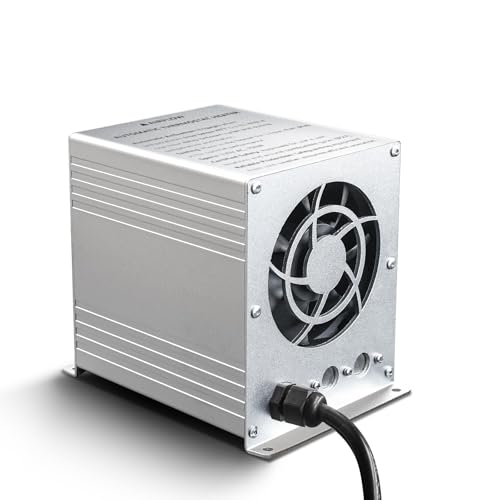
A 700-watt PTC heater for boat engine compartments that switches on at 40 degrees Fahrenheit and off at 55, with an IPX7 waterproof housing. It is compact at roughly five inches on each side and weighs about five and a half pounds. It is not a ventilation product and does not belong in a laundry unless the room is unheated and the pipes are at risk of freezing.
What stands out
- Thermostat turns it on and off without monitoring
- IPX7 housing tolerates damp and wet utility spaces
- Small footprint fits behind equipment or under a shelf
Watch out for
- Does not ventilate, exhaust or move air at all
- 700 watts of heat is the opposite of what a laundry needs
Euhomy Compact Dryer 1.8 cu. ft. Portable Clothes Dryers with Exhaust Duct with Stainless Steel Liner Four Fun
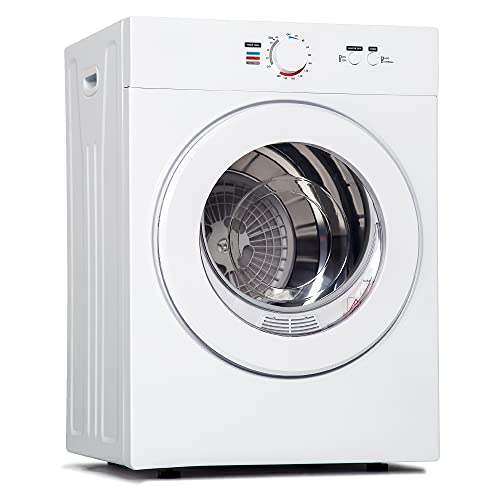
A 1.8 cu. ft. portable dryer with a stainless steel drum, 1020 watts of heating and seven drying modes including an eco setting and an anti-wrinkle cycle. An exhaust duct and fittings come in the box, and the unit is ETL and DOE certified. At about 19 by 18 by 27 inches it fits under a counter or into a closet with a vent path.
What stands out
- Exhaust duct and fittings included in the box
- Seven modes include eco and anti-wrinkle drying settings
- Small enough for a closet with a vent
Watch out for
- 1.8 cu. ft. is a half-load machine at best
- Needs an hour of rest after long running
1PCS Drying Machine Water Tank PVC Air Duct Drum Dryer Condenser Dust Collector Flexible Stretch Exhaust Duct

A retrofit kit pairing a water tank with a flexible PVC duct, intended to collect lint and condensate from a condenser-style drum dryer. The duct stretches to fit most standard installations and needs no tools. It is a patch for a ventless machine or a sagging connection, not a substitute for a proper metal exhaust run. The listed dimensions look like package size rather than the deployed duct.
What stands out
- Stretches to bridge an awkward gap behind the dryer
- No tools needed for a basic retrofit install
- Useful spare part for a condenser dryer setup
Watch out for
- PVC flex traps lint in a hidden run
- Not a replacement for proper rigid metal ducting
Buying guide
Exhaust is only half a system
A vented dryer works like a leaf blower. It pulls room air through the drum, heats it, tumbles the load in it, and pushes the whole volume outdoors through a duct. That is why a dryer needs a vent and why the room needs a path for replacement air. If the room is tight, the dryer's fan fights a vacuum. Airflow drops, the drum runs hotter than it should, cycles stretch, and the machine's thermal cutoff starts tripping on long loads. The dryer is not broken. It is choking, and no amount of service will fix a machine that is pulling against a sealed door. In a building with a gas water heater or furnace in the same room, that backdraft can spill carbon monoxide, which makes the pressure question a safety question and not only a comfort one.
The symptoms are consistent enough to diagnose from the doorway. The dryer takes two cycles on towels. The laundry door is hard to pull open while the dryer runs. There is a faint exhaust smell in the room. A tissue held against the transfer grille will tell you whether air is actually moving through it, and a cheap manometer will tell you how hard the dryer is pulling. The fix is usually a properly sized grille or louvered door, not a bigger exhaust fan. A grille's effective free area is smaller than its nominal size, often by a third, so measure rather than guess. If you add extraction without adding makeup air, you make the pressure problem worse and the room no drier, which is the part that surprises people most.
Sizing exhaust to the dryers you actually run
Start with the machines, not the room. A typical seven cubic foot electric dryer moves around two hundred cubic feet per minute, which is the figure in most installation manuals. Six of them running at once want roughly twelve hundred. Larger commercial dryers move considerably more: a 30-pound unit can push two to three times what a home machine does, so a room built for a domestic pair is often short by a wide margin when a real commercial dryer arrives. Add a margin for duct losses, then compare the total with the fan's rating at the static pressure your run will produce. If the arithmetic puts you above about 1,500 CFM, the answer is a designed system with a proper blower, not a wall fan.
That last part is where most purchases go wrong. A wall fan advertised at 4200 CFM is quoting free-air delivery with nothing attached. Put it behind twenty feet of eight-inch duct with two elbows and the real figure can fall by half. Fans are rated on a curve, and the curve sags as resistance rises, which is why two rooms with identical fans can behave completely differently. Ask for the airflow at a quarter inch and a half inch of static pressure, or buy from a supplier who publishes the curve. A smaller fan on a short, straight run will out-move a large one fighting a badly planned duct, and it will do it more quietly. Duct diameter matters as much as length, since a four-inch run cannot carry the air of a six-inch one at the same velocity.
Ductwork, lint and the fire question
Lint is fuel, and a dryer duct is where it accumulates. Use rigid galvanized pipe with taped seams, keep the run as short and straight as the building allows, and count every elbow as added equivalent length. Most dryer manufacturers cap the total at around twenty-five feet with a couple of elbows, and some are stricter. Corrugated vinyl flex is the worst choice for a hidden run: the ridges trap lint, the material sags between hangers, and a crushed section closes the duct without anyone noticing. Undersized duct raises velocity and noise and deposits lint faster, because the air cannot carry it the full length of the run. The short flexible section that connects the dryer to the wall is the one place flex is acceptable, and only because it has to move when the machine is pulled out.
Terminate outdoors with a proper hood and a backdraft damper, not under a deck, not into the attic and not into a garage. In cold climates the outside flap can freeze shut, which turns the duct into a dead end; check it after the first hard freeze each year. Clean the run annually, and more often if the building runs heavy loads or the dryer serves a salon or gym with a lot of lint-producing fabric. A lint fire is rare compared with a clogged duct, but it is the reason the cleaning schedule exists, and it is not a job to defer because the ladder is inconvenient. If the run is longer than the manual allows, add a booster fan rather than hoping. Keep a dated note on the machine so the next manager knows when it was last cleaned.
Fans, humidity and the people in the room
Circulation and extraction get sold as if they were the same thing, and they are not. A circulation fan moves the air already in the room. It dries nothing and adds no fresh air, but it breaks up the layer of hot, wet air that collects at the ceiling and pushes it across the workers. An extractor pulls air out and, by definition, pulls replacement air in through whatever opening you provide. It removes heat and moisture, but only at the volume its rating supports, which for a small wall unit is nowhere near a bank of dryers. The practical arrangement is both, on different controls, with the extractor sized to the duct and the circulator aimed at the people. Neither substitutes for the other, and a listing that calls a fan a ventilator is using the word loosely.
Humidity is the measure that tells you whether the system works. Target roughly fifty percent relative humidity and check it with an inexpensive hygrometer at the folding table, because the reading you care about is the air the staff are breathing. Above sixty percent during a shift, you are leaking duct, short of exhaust or short of makeup air, and a dehumidifier is treating a symptom. The people are the other load: a folding station beside two running dryers sits near eighty-five degrees by mid-morning, and heat illness in laundries is a documented problem. Air movement across the workers helps more than cooling the whole room, and a fan wired to the light switch gets turned off the moment someone wants quiet. Run the extractor on a humidistat or a timer that keeps it going twenty minutes after the last load.
Frequently asked questions
How much exhaust airflow do I need per dryer?
For a typical seven cubic foot electric dryer, plan around two hundred cubic feet per minute, and use the figure in your model's installation manual rather than an average. Add roughly ten percent for duct losses. Larger commercial dryers move considerably more, so six residential units and one 30-pound machine are not the same problem.
Can I vent a dryer indoors with a water tank kit?
Only for a condenser or ventless dryer designed for it, and only with the kit that matches that machine. A water tank and flexible duct do not make a vented dryer safe to run indoors. If your dryer has a four-inch exhaust port, the lint and moisture belong outside, not in the room.
Do I need makeup air in a small laundry room?
Yes, if the room is tight. Every cubic foot the dryer pushes out has to come back in. A louvered door or a transfer grille sized for the airflow is usually enough for one or two machines. Without it, the dryer starves and any gas appliance nearby can backdraft, which is a carbon monoxide risk.
Why does my laundry stay humid even with the fan running?
Three likely causes, in order: a duct that leaks or has come loose inside the wall, a fan moving far less air than its box claims, or no path for replacement air. Check the duct joints first, then the fan's real rating against the run, then the door and any transfer grille.
Can a wall fan replace an exhaust fan?
No. A wall fan circulates air inside the room. It does not exhaust moisture and it does not bring in fresh air. It is useful for worker comfort and for breaking up hot air at the ceiling, but it will not lower the humidity reading on its own. You need extraction plus makeup air for that.
Verdict
The Simple Deluxe 18-inch wall fan is the most useful single item in this group, and that says as much about the category as the product. It publishes its airflow, its noise figures and its electrical draw, and 4200 CFM of circulation is enough to make a hot folding room livable. It is not ventilation, whatever the listing title implies.
For the actual venting, the AYSBUWZED duct and tank kit is the cheap fix when a run is crushed or disconnected, and the Midea washer and dryer pair is the upgrade if the equipment itself is finished. Nobody should buy the bilge heater for a laundry unless the pipes freeze. Real commercial ventilation is designed around your duct run, and no single box on this page replaces that work.