Living in a dorm room means mastering the art of maximizing minimal square footage while maintaining basic comfort. For many students, the dreaded trek to communal laundry facilities becomes a weekly chore that eats into study time, social life, and precious sleep. Imagine the freedom of tossing your workout clothes in a wash cycle right after class, or handling a small load of delicates without lugging a heavy basket across campus in the rain. Compact washing machines offer a potential solution, transforming that cramped closet corner or under-desk space into a personal laundry hub. But choosing the right one requires careful thought – it’s not just about size, but about matching the machine’s capabilities to the unique demands of dorm living.
Navigating the world of mini appliances can feel overwhelming, especially when your budget is tight and space is tighter. You need a machine that won’t drown out your Zoom lectures, fits through narrow doorways during move-in, and won’t break the bank on your dorm’s shared electricity meter. Forget the misleading allure of simple “best of” lists; the truly best machine is the one perfectly tailored to your specific room layout, laundry habits, and campus regulations. This guide cuts through the noise, focusing on the essential features and considerations every student should weigh before bringing a compact washer into their dorm sanctuary. Let’s explore how to make this smart investment work seamlessly within your academic life.
Top 10 Compact Washing Machines
Detailed Product Reviews
1. ROVSUN 17.8LBS Portable Washing Machine, Full-Automatic Electric Laundry Machine with Stainless Steel Drum, Compact Washer and Spin Dryer Combo with Drain Pump for Apartment, Dorm, Home

Overview: This compact 17.8LBS (1.5cu.ft) fully automatic washer-dryer combo targets space-constrained users in apartments, dorms, or RVs. It integrates washing and spin-drying into one seamless cycle, eliminating manual transfers.
What Makes It Stand Out: The diamond-patterned stainless steel drum minimizes fabric wear while boosting cleaning efficiency. Ten wash modes (expanded from typical 8 in rivals), five water levels, and a 26-minute quick cycle cater to diverse fabrics. The self-cleaning tub, child lock, and drain pump add practical convenience.
Value for Money: Priced competitively for its automation level, it undercuts full-sized machines while offering superior ease versus semi-automatic twins. Ideal for singles or couples, though larger households may need frequent cycles.
Strengths and Weaknesses: Strengths: True hands-free operation; versatile settings; space-efficient; quiet drainage. Weaknesses: Limited 17.8LBS capacity strains larger families; no explicit energy certification mentioned; shorter spin cycle than dedicated dryers.
Bottom Line: A top pick for urban dwellers seeking hassle-free, compact laundry—prioritize it over semi-automatics if budget allows for automation.
2. ROVSUN 25LBS Portable Washing Machine, Full-Automatic Electric Laundry Machine with Stainless Steel Drum, Compact Washer and Spin Dryer Combo with Drain Pump for Home, Apartment

Overview: Scaling up from its sibling, this 25LBS (2.3cu.ft) model serves small families or frequent launders in homes/apartments. It retains full automation but accommodates bulkier loads with identical core tech.
What Makes It Stand Out: The larger capacity handles 50% more laundry per cycle without sacrificing features. Ten specialized wash modes (vs. eight in smaller models) and five water levels ensure fabric-specific care. Dimensions (22.24"x22.40"x35.94") fit tight spaces despite the size bump.
Value for Money: Justifies its slight price premium over the 17.8LBS version for households needing higher volume. Beats laundromat costs long-term but competes closely with budget full-sized units where space permits.
Strengths and Weaknesses: Strengths: Excellent capacity for portables; robust stainless drum; intuitive controls; includes rat-proof board. Weaknesses: Heavier (54.81lbs) limits mobility; spin-dry results less thorough than standalone dryers; no energy stats provided.
Bottom Line: Opt for this if you need higher capacity without sacrificing automation—ideal for couples or small families in compact homes.
3. Auertech Portable Washing Machine, 28lbs Twin Tub Washer Mini Compact Laundry Machine with Drain Pump, Semi-automatic 18lbs Washer 10lbs Spinner Combo for Dorms, Apartments, RVs
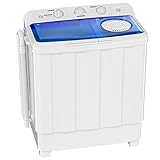
Overview: This 28LBS twin-tub unit (18LBS wash/10LBS spin) offers semi-automatic operation, requiring manual water filling and load transfer. Targets RVers, dorm students, or budget-focused users.
What Makes It Stand Out: The 1300 RPM motor delivers powerful cleaning/spin cycles. Drain pump flexibility lets you eject water upward (≤45 inches), crucial for RV setups. Separate time controls and lint filters enhance customization.
Value for Money: Significantly cheaper than full-automatics, making it accessible for tight budgets. However, manual steps offset time savings—best for those prioritizing cost over convenience.
Strengths and Weaknesses: Strengths: High spin speed; dual-tub efficiency; lightweight portability; drain pump versatility. Weaknesses: Semi-automatic demands user effort; imbalance risks require careful loading; smaller spin capacity (10LBS) vs. wash (18LBS).
Bottom Line: A solid budget buy for tech-savvy users comfortable with manual steps—skip if you demand set-and-forget automation.
4. Pataku Portable Washing Machine, 17.6 Lbs Compact Mini Washer and Dryer Combo,Twin Tub Laundry Washer with Spin Cycle, Soaking Function Ideal for Apartment, Dorms, RVs Camping, Grey

Overview: This 17.6LBS twin-tub washer (11LBS wash/6.6LBS spin) emphasizes simplicity for dorms or RVs. It combines soaking, washing, and spinning in a lightweight, semi-automatic design.
What Makes It Stand Out: The dedicated 0-20 minute soak function tackles stubborn stains pre-wash. Transparent lid and straightforward dials (wash/spin timers, drain control) enable easy monitoring. Compact size suits bathtubs or closets.
Value for Money: Affordable entry into portable laundry, but the 6.6LBS spin limit strains practicality. Savings over laundromats justify it only for very light, infrequent use.
Strengths and Weaknesses: Strengths: Soak function enhances cleaning; ultra-portable; intuitive controls; energy-efficient. Weaknesses: Mismatched capacities (spin holds 40% less than wash); semi-auto process; prone to imbalance if overloaded.
Bottom Line: Suitable for solo travelers or minimalists needing occasional washes—avoid for regular family use due to spin limitations.
5. Comfee Portable Washing Machine, 0.9 cu.ft Compact Washer With LED Display, 5 Wash Cycles, 2 Built-in Rollers, Space Saving Full-Automatic Washer

Overview: This ultra-slim 0.9cu.ft (17.6LBS) full-auto washer prioritizes space efficiency with built-in rollers and a compact footprint (18.1"x17.7"x31.5"). Targets micro-apartments or RVs.
What Makes It Stand Out: Auto Unbalance Detection (AUD) prevents “dancing” during spins—a rarity in portables. DOE-certified 87.5% energy savings, LED timer display, and customizable cycles (5 presets + addiwash) elevate usability.
Value for Money: Premium-priced but justified by AUD safety and energy stats. Outperforms cheaper models in reliability, though capacity suits individuals only.
Strengths and Weaknesses: Strengths: Exceptional stability; energy-efficient; roller mobility; transparent lid; lint filter. Weaknesses: Smallest capacity here (17.6LBS); no dedicated drain pump (relies on gravity); limited to 5 wash programs.
Bottom Line: The smartest investment for safety-conscious renters in tiny spaces—prioritize it over competitors lacking AUD.
6. BLACK+DECKER 0.9 Cu. Ft. Portable Washer, 6.6 lb. Capacity Washing Machine for Homes & Apartments, 5 Wash Cycles, Quick Connect Sink Adapter and Drain Hose Included, Transparent Lid, BPWM09W, White
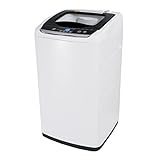
Overview: This compact BLACK+DECKER portable washer targets space-constrained households, offering a self-contained solution for small laundry loads up to 6.6 lbs. Its 0.9 cu. ft. capacity and sink-top design make it ideal for apartments or RVs, requiring only a standard faucet hookup.
What Makes It Stand Out: The transparent lid allows real-time monitoring, while 5 dedicated wash cycles (including Soak and Rapid) cater to varied fabrics. Safety features like auto unbalance detection, child lock, and auto shutoff enhance reliability. The included quick-connect adapter simplifies setup without permanent plumbing.
Value for Money: Priced moderately, it eliminates laundromat trips for small loads. While limited by cold-water-only operation (a key constraint for stain removal), its durability (stainless steel tub) and included accessories justify the cost for occasional use. It’s cheaper than larger portables but less versatile than hot/cold models.
Strengths and Weaknesses: Strengths: Ultra-portable (roller wheels, side handles), quiet-close lid, rust-proof tub, and easy storage. Weaknesses: Cold water only restricts cleaning power; 6.6 lb capacity suits singles but not families; no delay start.
Bottom Line: A solid budget-friendly pick for individuals or couples needing infrequent, small-load washing where hot water isn’t critical. Avoid if you handle heavy stains or larger households.
7. Erivess Portable Twin Tub 18lbs Washing Machine with Drying Rack and 10 Hangers, 11lbs Washer Mini Compact Laundry Machine with 7lbs Spinner, Semi-automatic Washer Combo for Dorms, Apartment

Overview: This semi-automatic twin-tub system combines an 11 lb washer and 7 lb spinner in one compact unit, targeting dorms or tiny homes. It requires manual water filling/drainage but includes a drying rack and 10 hangers for a complete laundry solution.
What Makes It Stand Out: The bundled drying rack and hangers add exceptional value, eliminating extra purchases. Its 15-minute wash and 5-minute spin cycles save time, while the filter net simplifies lint removal. No installation is needed—just plug in and use.
Value for Money: Extremely cost-effective for ultra-budget buyers. At roughly the price of 30 laundromat visits, it pays for itself quickly for frequent small loads. However, the semi-auto design demands more user effort than fully automatic rivals, making it best for those prioritizing savings over convenience.
Strengths and Weaknesses: Strengths: Lowest upfront cost; space-efficient; drying accessories included; fast cycles; 18 lb total capacity. Weaknesses: Manual water handling; spinner capacity (7 lbs) lags washer (11 lbs); no temperature control; basic build quality.
Bottom Line: Ideal for students or minimalists seeking the cheapest entry into home laundry, but only if you accept hands-on operation and lack of hot water. Not for convenience-focused users.
8. BLACK+DECKER Small Portable Washer, Washing Machine for Household Use, Portable Washer 2.0 Cu. Ft. with 6 Cycles, Transparent Lid & LED Display
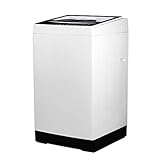
Overview: This mid-sized BLACK+DECKER model (2.0 cu. ft.) balances capacity (15.4 lbs) and portability for small families. It features hot/cold/warm wash options and a modern LED display, positioning itself as a versatile upgrade from entry-level portables.
What Makes It Stand Out: Hot water capability significantly improves stain removal versus cold-only models. The 6 cycles—including Bulky and Delicate—and 24-hour delay start offer exceptional flexibility. The transparent lid and stainless steel tub maintain visibility and durability, while rollers/handles ensure mobility.
Value for Money: Priced higher than basic portables but justified by hot water functionality and larger capacity. It outperforms smaller units for family use and avoids laundromat costs long-term. Comparable to Product 9 but slightly less capacious; better value if 15.4 lbs suffices.
Strengths and Weaknesses: Strengths: Hot water support; spacious for portables; intuitive LED controls; child lock; robust tub. Weaknesses: Heavier (79.4 lbs) than mini models; no built-in pump (requires gravity drain); limited to top-load convenience.
Bottom Line: The top recommendation for households needing hot water washing in a portable format. Perfect for 1–2 person families, though its weight may challenge frequent movers.
9. BLACK+DECKER 3.0 Cu. Ft. Portable Washer, 26.5 lb. Capacity Washing Machine, 6 Cycles, Quick Connect Sink Adapter and Drain Hose Included, Transparent Lid & LED Display, BPW30MW, White
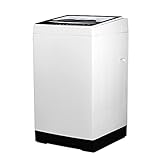
Overview: BLACK+DECKER’s largest portable (3.0 cu. ft.) supports heavy 26.5 lb loads, targeting small families or frequent laundry users in spaces without full-sized machines. It retains core portability features while maximizing capacity.
What Makes It Stand Out: Unmatched load capacity in this category—ideal for bedding or multiple outfits. Like Product 8, it offers hot/warm/cold temps and 6 cycles, but the expanded tub handles bulky items effortlessly. The quick-connect adapter and transparent lid ensure user-friendly operation.
Value for Money: Commands a premium price but delivers exceptional utility per dollar for high-volume needs. Cheaper than installing permanent plumbing, it’s cost-effective for those washing 3+ loads weekly. Surpasses smaller portables in efficiency but may be overkill for singles.
Strengths and Weaknesses: Strengths: Highest capacity here; hot water capability; durable stainless tub; comprehensive safety locks. Weaknesses: Bulkiest model (challenging storage); no delay start; requires significant floor space during use.
Bottom Line: Best for families or heavy users needing near-full-sized capacity in a portable unit. Skip if space is extremely tight or loads are consistently small.
10. COMFEE’ 1.6 Cu.ft Portable Washing Machine, 11lbs Capacity Fully Automatic Compact Washer with Wheels, 6 Wash Programs Laundry Drain Pump, Ideal for Apartments, RV, Camping, Magnetic Gray

Overview: This fully automatic COMFEE’ model (1.6 cu. ft.) emphasizes energy efficiency and user convenience for apartments or RVs, featuring a built-in drain pump and magnetic gray aesthetic. It handles 11 lbs of laundry with minimal setup.
What Makes It Stand Out: The integrated drain pump eliminates gravity-drain hassles—a rarity in portables. Energy savings (marketed as 84% less than standard machines) and the reload function (add forgotten items mid-cycle) are standout features. Child lock and delay start enhance practicality.
Value for Money: Priced competitively, the drain pump and energy efficiency justify costs over time, especially for RV/camping use. It’s more convenient than twin-tub models but slightly pricier than cold-water-only portables. Ideal if you value hassle-free drainage.
Strengths and Weaknesses: Strengths: Built-in pump; energy-efficient; reload feature; space-saving footprint; 6 versatile programs. Weaknesses: Only 11 lbs capacity (less than Product 8/9); no temperature display; limited spin speed options.
Bottom Line: A top-tier choice for RVers or apartment dwellers prioritizing drainage ease and eco-friendliness. Opt for larger BLACK+DECKER models if capacity is critical.
Understanding Dorm Room Constraints
Living in a dorm presents unique spatial and logistical hurdles that directly impact your appliance choices. Recognizing these limitations upfront is crucial for a successful compact washer setup.
Measuring Your Available Space Accurately
Precision is non-negotiable. Don’t just eyeball it – grab a tape measure and record the exact height, width, and depth of your intended location, including clearance needed for ventilation, door swing, and accessing plumbing. Remember to factor in space for the drain hose and water supply connections. Account for potential obstacles like radiators, vents, or built-in furniture that might restrict placement options. Even an extra inch can determine whether a unit fits comfortably or becomes a frustrating squeeze.
Navigating Campus Laundry Policies
Your university’s housing rules are the ultimate authority. Before purchasing, meticulously review the dormitory handbook or contact housing administration directly. Many campuses explicitly prohibit personal washing machines due to concerns about water usage, electrical load, potential flooding, or wear on plumbing systems. Some may allow them only in suite-style dorms with private bathrooms, while others have strict size or type restrictions (e.g., only ventless condenser dryers allowed, no drain pumps). Ignoring these policies can result in fines, forced removal, or even disciplinary action.
Assessing Electrical and Plumbing Access
Dorm rooms weren’t designed for major appliances. Verify the electrical outlet near your intended location is a standard 120V, 15-amp circuit (most compact units require this) and isn’t shared with high-draw devices like microwaves or space heaters to prevent tripping breakers. Crucially, determine your water source: Will you connect directly to a sink faucet using a special adapter kit (most common), or is there access to dedicated plumbing? Similarly, plan your drain solution – will you use a standpipe into the sink, a floor drain, or rely on the machine’s built-in pump to lift water to sink height? Lack of suitable hookups is a dealbreaker.
Decoding Capacity Needs for Student Life
Choosing the right capacity ensures your compact washer handles your laundry without constant, tedious small loads, while avoiding the mistake of getting something too large for your space.
Realistic Load Sizes for Dorm Dwellers
Forget handling king-sized comforters. Focus on what you actually wash: typically 1-2 weeks’ worth of personal clothing, bedding for a twin XL bed, and perhaps small towels. A true compact washer (often called a “portable” or “mini” washer) usually ranges from 1.0 to 2.2 cubic feet. For a single student, 1.6 to 2.0 cubic feet is often the sweet spot – large enough for a comforter or several days’ clothes, but small enough to fit in tight spaces. Be realistic; overloading a small drum leads to poor cleaning and excessive wear.
Weight Considerations and Fabric Types
Compact machines have lower spin speeds than full-size units, meaning clothes come out wetter. Consider how often you’ll need to use a communal dryer – a machine with a higher maximum spin speed (RPM) will extract more water, reducing drying time and cost. Also, think about the fabrics you wash most: delicate synthetics common in athletic wear might benefit from specific gentle cycles, while heavier denim requires sufficient drum strength. Avoid machines that can’t handle the weight of even a small, wet towel load.
Estimating Weekly Laundry Volume
Track your laundry for a week. How many outfits do you wear? How often do you change sheets? This helps determine if a 1.6 cu ft machine (suitable for 4-6 shirts or 1-2 sets of twin sheets) meets your needs, or if you’d constantly be running partial loads, wasting water and time. If you have a roommate sharing the machine, double your estimate – but ensure campus policy allows shared appliances.
Essential Performance and Feature Evaluation
Beyond basic size, the machine’s operational characteristics significantly impact your daily dorm life and long-term satisfaction.
Water and Energy Efficiency Imperatives
Dorm utilities are often shared or metered, making efficiency critical. Look for the ENERGY STAR label, which signifies the unit meets strict government standards for low water and electricity consumption. Pay close attention to the estimated gallons per cycle (GPC) – compact machines can range from 3 to 15+ gallons. Lower GPC means less strain on dorm plumbing and potentially lower utility costs if you’re billed. Efficient models also tend to have shorter cycle times, a major bonus.
Noise and Vibration Control for Shared Spaces
Your neighbors (and your own study sessions) will thank you for prioritizing quiet operation. Dorm walls are notoriously thin. Seek features like:
- Vibration reduction systems: Look for descriptions of advanced suspension or anti-vibration feet.
- Lower spin speeds: While less efficient for water extraction, slower spins are significantly quieter (though drying takes longer).
- Insulated drums/casings: Some models incorporate extra sound-dampening materials.
- Placement tips: Even the quietest machine needs a dead-level floor; consider a rubber mat underneath.
Cycle Options and Wash Programs
Don’t assume all compact machines offer the same cleaning power. Essential cycles include:
- Quick Wash: For lightly soiled items when you need something fast.
- Delicate/Gentle: Crucial for synthetic athletic wear and lingerie.
- Heavy Duty: For towels, jeans, or heavily soiled items (though use sparingly in small drums).
- Spin-Only: Useful for hand-washed items or removing excess water before using the communal dryer. Avoid models with only one or two basic cycles; flexibility is key for varied student wardrobes.
Installation and Operational Realities
Getting the machine hooked up and running smoothly in a dorm environment requires practical solutions and awareness of limitations.
Sink Connection Kits and Adapters
Most dorm-compatible compact washers rely on a faucet adapter to connect the inlet hose directly to your sink faucet. These kits are usually included or available separately. Ensure the adapter fits your specific sink type (common thread types vary). Consider how the connection looks and functions – some adapters are bulkier than others and might obstruct sink use. A secure, leak-proof connection is paramount to prevent water damage.
Drain Hose Management Strategies
Where does the dirty water go? Common solutions include:
- Standpipe into the sink: The drain hose sits vertically in the sink basin. Simple but takes up sink space during the drain cycle.
- Drain hose into a bucket: Requires manual emptying of the bucket, messy and inconvenient.
- Pump-assisted drain: Higher-end compact models include a small pump that actively lifts water 3-4 feet, allowing you to drain directly into the sink without a standpipe or into a nearby floor drain. This is often the most convenient (but pricier) option for dorms. Never kink the drain hose, as this prevents proper drainage and can cause overflow.
Ventilation and Heat Dissipation
Compact washers generate heat during operation, especially during the spin cycle. Ensure there’s adequate air space (usually 2-4 inches) around the sides and back of the machine as specified in the manual. Blocking vents can lead to overheating, reduced efficiency, and premature failure. Avoid tucking the unit tightly into a closet without airflow unless the manual explicitly states it’s designed for enclosed spaces.
Maintenance and Longevity Considerations
A compact washer in a dorm needs to be durable and easy to care for, as professional repair services are rarely an option.
Self-Cleaning Cycles and Drum Care
Mold and mildew thrive in the damp, dark environment of a washing machine drum, especially in compact units that see frequent small loads with less water circulation. Prioritize models with a dedicated “Drum Clean” or “Tub Clean” cycle that uses hot water and sometimes a cleaning agent to sanitize the drum and dispensers. Run this cycle monthly with a washing machine cleaner. Always leave the lid/door slightly ajar after use to allow the drum to dry completely.
Filter Accessibility and Cleaning Frequency
All washing machines have a pump filter that traps lint, coins, and debris. In compact units, this filter is often small and can clog quickly with frequent use. Locate where the filter is on potential models – is it easily accessible at the front, or hidden underneath requiring you to move the heavy machine? A filter you can easily check and clean every 1-2 weeks is essential for preventing clogs, leaks, and foul odors. Avoid models where filter access is notoriously difficult.
Durability of Components and Expected Lifespan
Dorm life is tough on appliances. Research the build quality – look for metal tubs over all-plastic drums (though rare in true compacts), sturdy door/lid hinges, and reliable brand reputations for compact models. Understand that even a well-maintained compact washer in a dorm setting might have a shorter lifespan (3-5 years) than a full-size unit at home due to frequent moves, potential vibration stress on uneven floors, and intensive use cycles. Factor this into your cost-per-use calculation.
Budgeting Beyond the Purchase Price
The sticker price is just the beginning. Smart dorm dwellers calculate the true cost of ownership.
Upfront Cost vs. Long-Term Value
Compact washers range significantly in price. While the cheapest option is tempting, consider:
- Does it have the necessary features (pump, quiet operation) to actually work well in your dorm?
- Is the build quality sufficient to last your entire stay?
- Will poor efficiency lead to higher utility costs over time? Spending a bit more upfront for a reliable, efficient model often saves money and hassle in the long run compared to replacing a flimsy unit after one semester.
Estimating Utility Cost Impact
If your dorm charges for electricity or water usage (check your housing contract!), factor this in. Calculate approximate cost per load:
- Find the machine’s kWh per cycle (usually in specs/manual).
- Multiply by your dorm’s electricity cost per kWh (if charged).
- Find the machine’s gallons per cycle (GPC).
- Multiply by water/sewer cost per gallon (if charged). Even small differences add up over dozens of loads per semester. Energy-efficient models pay for themselves over time in charged-utility scenarios.
Factoring in Replacement Parts and Potential Repairs
Compact washer parts (hoses, pumps, control boards) can be surprisingly expensive relative to the machine’s cost. Research part availability and cost for models you’re considering. Understand that professional repair for a $300 machine rarely makes economic sense if a major component fails. Budget mentally for the possibility of needing a replacement before graduation, especially if you plan to stay beyond the first year.
Maximizing Your Compact Washer Experience
Strategies to ensure your machine integrates smoothly into dorm life and delivers reliable performance.
Optimizing Load Size and Detergent Usage
Overloading is the enemy of compact washers. Fill the drum only 1/2 to 2/3 full for optimal cleaning and to prevent strain. Use less detergent than you would in a full-size machine – high-efficiency (HE) detergent is usually required, and even then, use only 1-2 tablespoons per load. Excess suds don’t clean better and can cause malfunctions and residue buildup. Always follow the detergent manufacturer’s guidelines for compact/HE machines.
Strategic Placement for Convenience and Safety
Choose the location carefully:
- Proximity to sink: Minimizes hose length and potential kinks/leaks.
- Level surface: Critical to prevent excessive vibration and noise (use a level and shims if needed).
- Accessibility: Ensure you can easily open the lid/door, access the filter, and move the machine if required (e.g., for cleaning or move-out).
- Away from high-traffic areas: Prevent accidental bumps during spin cycles.
- Water damage protection: Place on a waterproof mat or tray with an overflow sensor if possible, especially on upper floors.
Integrating with Communal Dryers Effectively
Most compact washers don’t include drying capability (combo units exist but are larger, louder, and less efficient). Plan your workflow:
- Use the washer’s highest spin speed to minimize moisture.
- Transfer wet loads to the communal dryer promptly to avoid mildew.
- Consider the dryer’s capacity – your compact washer load might only fill half a standard communal dryer drum, so coordinate with roommates if possible.
- Factor the dryer cost and time into your overall laundry schedule.
Frequently Asked Questions
How much space do I really need for a compact washer in a dorm?
You need the exact external dimensions of the specific model plus 2-4 inches of clearance on all sides for ventilation and hose access. Measure meticulously – include height for the drain hose loop and space for the water inlet connection at the sink. Don’t forget the footprint for the sink adapter.
Can I really connect a washer to my dorm room sink?
Yes, most compact washers designed for small spaces use faucet adapter kits that screw onto standard sink aerators. Ensure the adapter fits your sink type (common thread sizes vary). Connection must be secure to prevent leaks, and the sink must be accessible during fill/drain cycles.
Will a compact washer damage my dorm room floor or cause leaks?
Proper installation minimizes risk. Always place the machine on a level surface using shims if necessary. Use a waterproof mat or tray underneath. Ensure all hose connections are tight (hand-tight plus a quarter turn is usually sufficient – don’t overtighten plastic fittings). Regularly check hoses for wear and replace them every few years.
Do compact washers clean as well as regular machines?
They clean effectively for appropriately sized loads. Overloading is the main reason for poor cleaning. They may struggle with very large, bulky items or extremely heavy soils compared to full-size machines, but for typical student clothing loads, a quality compact washer performs well when used correctly.
How loud are compact washers during the spin cycle?
Noise varies significantly. Look for models specifically advertising quiet operation (< 70 dB during spin is good for dorms). Vibration reduction technology and proper leveling are crucial. Spin cycles are always the loudest phase; avoid running during quiet hours or late at night if neighbors are sensitive.
How often do I need to clean the machine itself?
Run a dedicated “Drum Clean” or “Tub Clean” cycle with washing machine cleaner monthly. Wipe the door gasket and detergent dispenser dry after each use. Leave the lid/door open to air out the drum completely between washes to prevent mold and mildew.
Can I wash a comforter in a compact washer?
Only if the machine’s capacity specifically lists queen/king comforters and your comforter is for a twin XL bed (dorm standard). Most true compact washers (under 2.0 cu ft) cannot adequately wash and rinse a full twin XL comforter without overloading. Check the manufacturer’s capacity guidelines carefully.
Do I need special detergent for a compact washer?
Yes, always use HE (High-Efficiency) detergent. Compact washers use less water, and regular detergent creates too many suds, leading to poor cleaning, residue, and potential malfunctions. Use only the small amount recommended for HE detergents in compact machines (usually 1-2 tbsp).
How much does it cost to run a compact washer in terms of utilities?
Calculate using: (kWh per cycle x electricity cost per kWh) + (Gallons per cycle x water/sewer cost per gallon). Energy-efficient (ENERGY STAR) models use less water (3-8 gal/cycle) and electricity, keeping costs low – often under $0.50 per load in typical dorm utility scenarios.
What’s the biggest mistake students make when buying a dorm washer?
Ignoring campus laundry policies and space limitations. Always verify housing rules first. The second biggest mistake is buying a machine that’s too small for actual laundry needs or too large for the available space, leading to constant frustration or the need for a return. Measure twice, buy once.