A hand-crank washer sounds like a compromise until you watch one work. The handle turns a basket of clothes through two or three gallons of water, then spins the same basket fast enough that the load stops dripping. No outlet, no plumbing, no installation. Just a faucet, a little detergent and somewhere for the grey water to go.
The catch is size. Most of these machines hold five to eight pounds, which is a pair of jeans, two shirts and a few socks. The crank also drives both the wash and the spin, so the bearing, the seal and the handle joint decide how long the unit lasts. A stiff crank under a heavy load is the sound of a plastic gear about to strip.
We compared specifications, features and owner reports for ten products sold as hand-crank washers, from a plunger that is not a crank at all to a foot-pedal tub and a pair of wash bags. Several of them share dimensions and weight to the ounce, which tells you something about how this corner of the market is assembled.
The units that look identical usually are. Rebranded drums share molds, baskets and handles, so the deciding differences are the warranty, the drain hose and whether the seller stocks replacement baskets. Spend your attention there rather than on the color of the lid.
Top picks at a glance
TeamSky Manual Washing Machine, Portable Hand Crank Clothes Washer No electric
Check price on AmazonHand Crank Washing Machine, 2 in 1 Non-Electric Washer Manual Traveling Outdoo
Check price on AmazonDenash Manual Clothes Washer, Non electric Portable Rotary Washing Machine, Co
Check price on AmazonCompare the shortlist
| Model | Type | Capacity | Key feature | Amazon |
|---|---|---|---|---|
| 1. TeamSky Manual Washing Machine, Portable Hand Crank Clothes Wash | Portable | — | Quick cycle | Check price |
| 2. Portable Hand Crank Manual Washing Machine, Non Electric, Nordic | Portable | — | Quick cycle | Check price |
| 3. Denash Manual Clothes Washer, Non electric Portable Rotary Washi | Portable | — | Compact footprint | Check price |
| 4. Hand Crank Washing Machine, 2 in 1 Non-Electric Washer Manual Tr | Compact | — | Compact footprint | Check price |
| 5. QGHMWCZ Portable Manual Washing Machine 2-in-1 Hand Crank | Portable | — | Compact footprint | Check price |
| 6. Hand Crank Washing Machine, 2-in-1 Non-Electric Portable Manual | Portable | — | Compact footprint | Check price |
| 7. Lehman's Manual Clothes Washer Plunger, Portable Breathing Washi | Portable | — | Compact footprint | Check price |
| 8. Dezitrek Large Portable Washing Machine | Portable | — | Compact footprint | Check price |
| 9. Pebegain Mini Manual Washing Machine, Portable Foot-Operated Was | Portable | — | Connected controls | Check price |
| 10. WonderWash Portable Washing Machine for Apartment & Tiny Spaces | Portable | — | Top-load | Check price |
Detailed reviews
TeamSky Manual Washing Machine, Portable Hand Crank Clothes Washer No electricity required , Compact and light

A plain crank washer with a 10.6 by 15 inch plastic body and no spin function. You fill it, turn the handle, drain it and wring by hand. TeamSky says so directly in the listing, which is more honest than most. It weighs about eight pounds and needs no installation. Expect it to handle one shirt and a few small items per fill.
What stands out
- Straightforward design with nothing to configure
- Light enough to move between rooms
- Works from any faucet and drains into a sink
Watch out for
- No spin basket, so clothes come out soaked
- Small tub handles socks and underwear only
Portable Hand Crank Manual Washing Machine, Non Electric, Nordic Grey, for Dormitory Apartment Camping

A crank drum with a detachable wash basket, four suction feet and a handle that folds down. The company claims 1,200 RPM in spin mode, a number no hand-driven drum reaches in practice, but the basket does shed a useful amount of water. The Nordic grey body measures about 16 by 14 inches.
What stands out
- Detachable basket is easy to rinse and dry
- Suction feet stop the unit walking
- Folding handle keeps storage height low
Watch out for
- Spin speed claim is unrealistic for hand power
- Basket is small even by compact standards
Denash Manual Clothes Washer, Non electric Portable Rotary Washing Machine, Compact Hand Crank Rotary Washer f

A rotary crank unit about 15.75 inches square and 11.8 inches tall, weighing just under 8 pounds. The handle turns a basket inside a plastic tub; there is no spin basket or drain pump, so you tip it out or use a hose. It is aimed at underwear, socks and delicates.
What stands out
- Rotary motion is easier on the wrist
- Flat top stores under a shelf
- No assembly beyond attaching the handle
Watch out for
- No spin function to remove water
- Too small for shirts or towels
Hand Crank Washing Machine, 2 in 1 Non-Electric Washer Manual Traveling Outdoor Washing Machine Grey Mini Comp

A 5.56-pound two-in-one measuring 13.8 by 12.6 inches, with wash and spin modes selected by moving the basket. The handle folds for storage and the body has a smooth grey finish. Dimensions and weight match the QGHMWCZ exactly, which suggests the same machine sold under a second brand. The 12.6-inch height lets it store under a sink.
What stands out
- Wash and spin in a single compact tub
- Folding handle and light 5.56-pound body
- Simple switch between wash and spin
Watch out for
- Very small load size per cycle
- Appears to be identical hardware to a rival
QGHMWCZ Portable Manual Washing Machine 2-in-1 Hand Crank
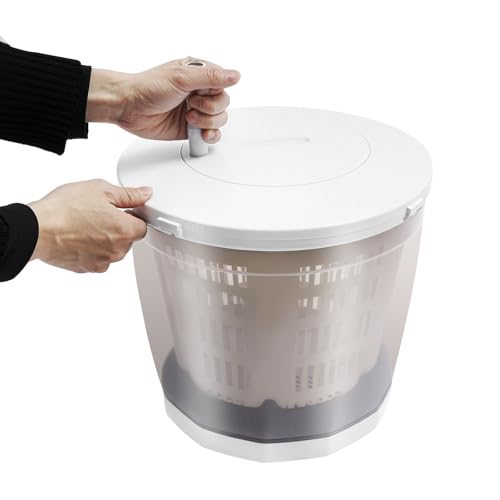
A 5.56-pound manual two-in-one with wash and spin modes, four suction feet and a lid that holds position at any angle. The spin basket lifts out for cleaning, and the folding handle lets the unit store at about 12.6 inches tall. No electricity, no plumbing, no installation. At 12.6 inches tall with the handle folded, it fits under most bathroom sinks.
What stands out
- Spin basket lifts out for thorough cleaning
- Lid stays where you put it
- Suction feet reduce wobble during spinning
Watch out for
- A few garments per cycle, no more
- Plastic fittings are the weak point over time
Hand Crank Washing Machine, 2-in-1 Non-Electric Portable Manual Washing Machine, 4.4 lb Weight Capacity, Dual

A two-in-one manual washer rated at 4.4 pounds, or 2 kg, with dual wash cycles and a transparent lid. The body measures about 13.3 by 13.7 inches and the handle turns easily enough for light daily loads. It spins as well as washes, though hand-driven extraction leaves clothes damp. The 2 kg rating covers about three shirts, so a week of underwear takes two fills.
What stands out
- Clear lid shows the wash action
- Dual cycles for normal and delicate loads
- Compact footprint fits a bathroom corner
Watch out for
- 4.4-pound capacity is below most rivals
- Spin leaves clothes damp, not dry
Lehman's Manual Clothes Washer Plunger, Portable Breathing Washing Agitator for Bucket, Sink or Tub
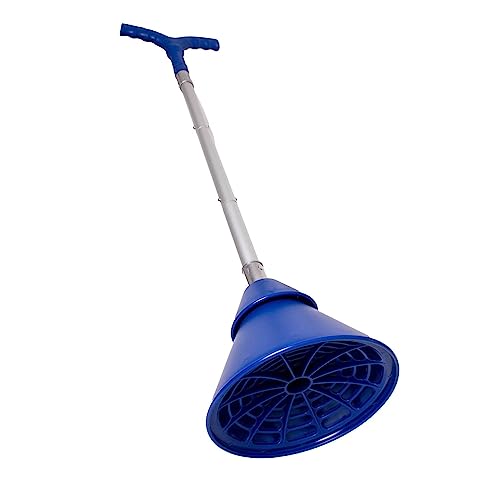
A plunger rather than a crank: a heavy-duty plastic agitator on a three-piece aluminum handle with metal threads and a storage bag. The 31.75-inch shaft lets you work standing at a bucket or tub, and the splash guard keeps soapy water off your shirt. There is no basket, no spin and nothing to jam.
What stands out
- Cleans bulky items a small drum cannot hold
- Collapsible handle and storage bag included
- No seals or bearings to wear out
Watch out for
- No spin cycle, so wringing is by hand
- Requires a bucket and a place to dump water
Dezitrek Large Portable Washing Machine

A 17-inch wash bag with its own plunger, 1.9 pounds empty and built from waterproof fabric. The separate plunger does the agitation, forcing water through the load instead of relying on kneading, and the roll top seals for washing and opens for draining. It takes clothing, towels and everyday laundry rather than a couple of travel items. No power, no plumbing and no frame; it wants a bathtub, sink or bucket to sit in.
What stands out
- Plunger creates stronger agitation than kneading
- Holds towels and a change of clothes
- Packs down flat between trips
Watch out for
- No spin, so wringing is by hand
- Needs a tub or bucket to support it
Pebegain Mini Manual Washing Machine, Portable Foot-Operated Washing Machine, Fast Washing Tool for Family Out

The one machine here that runs on feet rather than hands: a 19.6-inch tub with a pedal-driven agitator, a removable laundry bucket and a textured non-slip base. You sit or stand and step to move the wash, which puts the work in your legs. It needs no power and no plumbing beyond a water source, and the bucket lifts out for emptying. One outfit per cycle is realistic.
What stands out
- Leg power is easier than cranking for many users
- Removable bucket simplifies emptying
- No electricity or plumbing connection
Watch out for
- Pedaling for ten minutes is still real work
- Small tub handles one outfit at a time
WonderWash Portable Washing Machine for Apartment & Tiny Spaces

The retro drum most people picture when they hear manual washer: a 5-pound ABS tub, 12 by 16 by 12 inches, with a lid lever and a handle that tumbles clothes through soapy water. There is no basket and no drain hose, so you fill, rock, pour out and wring. A three-year warranty covers it, which is rare at this size, and the sealed body keeps water off the counter.
What stands out
- Three-year warranty backs the plastic body
- Sealed drum contains water on a countertop
- Tumbles instead of scrubbing, so delicates survive
Watch out for
- No spin basket, so wringing is manual
- Five-pound load is a couple of outfits
Buying guide
What the crank actually turns
Inside every one of these drums is a perforated basket sitting in a solid tub. In wash mode the basket rotates slowly, lifting clothes out of the water and dropping them back in. That tumbling action is gentle, which is why wool and knits survive, but it is also why heavily soiled work clothes need a pre-soak. There is no agitator fin to scrub against.
In spin mode the same basket turns fast and water leaves through the perforations. The seal between the basket shaft and the tub is the part that fails first; if it drips during a spin, the bearing below it is already on the way out. A lid that seals and a basket that lifts out for cleaning both extend the life of that seal, because grit and lint stop collecting around the shaft.
Water level matters more than detergent. Too little and the load rubs against itself instead of floating; too much and the tumbling stops because everything is submerged. Fill until the clothes move freely but are not swimming, usually two or three inches above the load. Hard water needs a little more detergent and one extra rinse, not a longer crank, and a fifteen-minute pre-soak does more for collars than doubling the soap.
Wash and spin in one drum
Two-in-one machines switch between a slow wash rotation and a fast spin by moving the basket or turning a selector. The spin is the feature worth paying attention to. It will not leave clothes wearable, but it turns a dripping load into a damp one, which cuts line-drying time from a day to a few hours and stops your bathroom floor from becoming a puddle.
The practical routine is fill, wash, drain, refill, rinse, drain, spin. Some units drain through a hose you hang over the sink; others need to be tipped. If you are washing in a bathtub, a unit with a drain hose is far easier to manage than one you have to lift. Keep a second bucket handy for the spin water, which is dirtier than most people expect.
The two-bucket method speeds up rinsing. Keep one bucket of clean water beside the machine, wring the washed load over the drain, then rinse in the second bucket while the first refills. It sounds fussy, but it cuts the number of times you carry a full tub across a room. A shower with a removable head is the easiest place to work, provided the machine is light enough to carry there.
Effort, torque and where you stand
Ten minutes of cranking does not sound like much until the drum is full of wet denim. Handle length and gearing decide how hard the work feels. A long handle gives more leverage but needs clearance; a short one is compact but harder under load. With wrist or shoulder problems, a rotary knob turned with the forearm beats a vertical pump handle.
Height matters as much as gearing. Set the machine on a counter or a sturdy stool so the handle sits near hip height, and you crank with your shoulder rather than your lower back. On the floor, most people hunch over within a minute. The suction feet only work on smooth tile or glass; on a textured floor they let go and the drum walks.
Water changes and detergent dosing
Two to four gallons per wash is the norm, and rinsing doubles it. That is still a fraction of what a full-size machine uses, but it means two trips with a bucket if you have no hose. Drain the wash water first, then refill with clean water and agitate for a minute. Repeat until the water runs clear, which is usually twice for everyday clothes and three times for towels.
Use a tablespoon of liquid detergent for a five-pound load, not a capful. Manual washers have no heater, so the water temperature is whatever the tap gives you. Warm water and a fifteen-minute soak do more for greasy stains than extra detergent. Skip fabric softener; without a proper rinse cycle it leaves a film that makes towels stiff.
Where a plunger beats a crank
A plunger is not a crank, and the Lehman's model in this list is included because it often does the job better. You drop the cone into a five-gallon bucket or a bathtub, push down and pull up, and the water moves through the fabric with more force than a small drum can generate. It also handles items a five-pound basket cannot: a jacket, a throw blanket, a pair of work boots without the insoles.
The tradeoffs are real. There is no spin, so wringing is by hand, and a soaked blanket is heavy. You need a bucket and a draining plan. But there is nothing to break, nothing to seal and nothing to store beyond a collapsed handle. For a cabin, a boat or a power outage, that simplicity is worth more than the convenience of a basket.
Plungers also work better in a bathtub than most people expect. Fill four or five inches of water, add detergent and work the cone through the load with the stopper in place. The tub gives you room to spread out a jacket, and the drain handles the water without a bucket. Rinse the tub afterward, since detergent film makes the next shower slippery.
Maintenance that keeps a crank turning
Rinse the basket and tub with clean water after every session and leave both open to dry. Detergent film turns sticky, collects lint and eventually smells; a monthly wipe with white vinegar handles it without abrasives. Check the drain hose for kinks and the seal around the shaft for drips, because a slow leak is what kills the bearing.
Store the unit with the lid ajar and the basket out if the design allows. Plastic sealed with moisture grows mildew within a week. Do not store it in a freezing garage with water in the lines, and do not lift it by the handle when the tub is full. None of this is difficult, but a crank washer put away wet will not last a year.
Parts are the long-term question. Baskets, lids and handles are what break, and a seller who lists replacements is worth more than one who does not. If the machine arrives with a spare drain hose, keep it; the hose is the first thing to split. Photograph the model plate before you store the unit so you can order the right part next year.
Frequently asked questions
Do hand-crank washing machines really clean clothes?
They clean lightly soiled clothes surprisingly well, because the tumbling action is gentle and the water is changed often. Grease, ground-in dirt and heavy sweat need a pre-soak and a second wash. The limit is not agitation quality so much as water temperature and the amount of time you are willing to crank.
How long does one load take?
Plan on ten minutes of washing, five to drain and refill, five to rinse and five to spin. That is about twenty-five minutes of attention, plus drying. A full drum of denim takes longer and cranks harder. Two loads is a realistic evening.
Can a hand-crank washer spin clothes dry?
No. The spin basket removes a useful amount of water, but the load comes out damp. Rolling it in a dry towel and pressing before hanging gets it closer to ready. Anyone expecting dry clothes straight from a hand-cranked spin will be disappointed, and the listings that imply otherwise are stretching the truth.
How is this different from a WonderWash or a wash bag?
A WonderWash tumbles clothes in a sealed drum that you rock or spin by hand, with no basket or drain hose. A wash bag is a dry bag you knead. A crank washer adds a real spin cycle, which is the main advantage. If drying time is your problem, the crank unit wins; if portability is, the bag wins.
Are hand-crank machines safe for wool and delicates?
Yes, if you keep the wash short and the water cool. The basket lifts and drops fabric rather than scrubbing it, which is gentler than most agitators. Use a mesh bag for bras and anything with a hook, skip the spin for wool, and dry knits flat so they keep their shape.
Verdict
The QGHMWCZ two-in-one is the top pick because it combines a wash basket, a usable spin and a lid that stays put, at 5.56 pounds and about 13 inches across. The Denash is the value choice if you only wash delicates and socks; its rotary handle is easier on the wrist and there is less to go wrong.
The upgrade is the aqxreight, whose basket lifts out completely, making it the easiest of the group to rinse and dry between loads. If you want the smallest kit, the WonderWash drum and the Dezitrek bag both pack away, and the Pebegain moves the work to your feet. If bulky items are part of your laundry, skip the drums and buy the Lehman's plunger plus a five-gallon bucket. It cleans a jacket better than any of these machines can.