The complaints about high-efficiency top-loaders tend to arrive in year two. The machine worked fine at first. Then towels start coming out stiff, the drum smells like a wet basement, and someone in the house decides the washer never gets the clothes wet enough. None of that is a design failure. It is what happens when a machine that uses a few inches of water is loaded, dosed and maintained as if it were a 1990s agitator tub.
These washers are built around sensors. They weigh or sense the load, pick a water level, agitate briefly, then let the clothes soak in a concentration of detergent that does the real work. That is why a high-efficiency top-loader can clean a normal load with a fraction of the water, and why it struggles when the drum is stuffed to the rim or the detergent is a non-HE formula that whips into foam.
We compared specifications, features and owner reports across eight products, from a 3.2 cu ft Speed Queen with sixteen cycles to a 5.5 cu ft LG with AI cycle selection, with Midea, Frigidaire and Kenmore machines in between. The aim is to match drum style, capacity and controls to your laundry, not the biggest number on the sheet.
Top picks at a glance
Speed Queen ADA 3.2 Cu. Ft. Ultra-Quiet Top Load Washer in Matte Black
Check price on AmazonMidea MLTW41A1BMG 4.1 Cu. Ft. Gray Top Load Washer
Check price on AmazonMidea MLTW37A1BWW Agitator Machine, Auto Top Load Sensing Washer, 12 Washing C
Check price on AmazonCompare the shortlist
| Model | Type | Capacity | Key feature | Amazon |
|---|---|---|---|---|
| 1. Speed Queen ADA 3.2 Cu. Ft. Ultra-Quiet Top Load Washer in Matte | Top-load | 3.2 cu ft | Low noise | Check price |
| 2. Midea MLTW37A1BWW Agitator Machine, Auto Top Load Sensing Washer | Top-load | 3.7 cu ft | Sensor drying | Check price |
| 3. Frigidaire 4.4 cubic foot top load washer with MaxFill | Top-load | — | Quick cycle | Check price |
| 4. Midea MLTW41A1BWW 4.1 Cf Top Load Washer Agitator Stainless Tub | Top-load | — | Top-load | Check price |
| 5. Midea MLTW45M4BWW 4.5 Cf Top Load Washer Impeller Stainless Tub | Top-load | — | Top-load | Check price |
| 6. Speed Queen TC5003WN 26" Top Load Washer with 3.2 cu. ft. Capaci | Top-load | 3.2 cu ft | Quick cycle | Check price |
| 7. Midea MLTW41A1BMG 4.1 Cu. Ft. Gray Top Load Washer | Top-load | 4.1 cu ft | Top-load | Check price |
| 8. LG WT8400CW 5.5 Cu. Ft. White Mega Capacity Smart Top Load Washe | Top-load | 5.5 cu ft | Connected controls | Check price |
Detailed reviews
Speed Queen ADA 3.2 Cu. Ft. Ultra-Quiet Top Load Washer in Matte Black
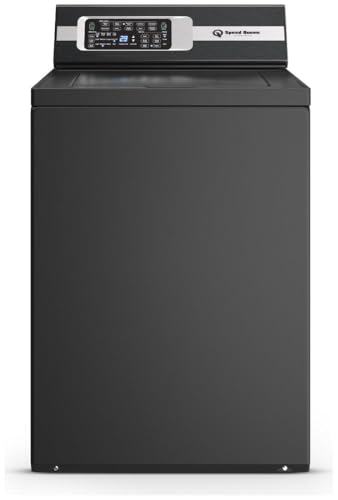
Speed Queen's 3.2 cu ft top-loader is the quiet, deliberate option. Sixteen cycles, the Perfect Wash system and out-of-balance management cover the practical ground, and the matte black cabinet looks more considered than most laundry appliances. It stands 44.5 inches tall and 30.5 inches deep, so confirm the control height and the hose clearance before ordering, and check that the lid clears any shelf above it.
What stands out
- Sixteen cycles give more control than most top-loaders offer
- Out-of-balance management keeps the spin from walking the cabinet
- Ultra-quiet operation suits laundry next to a bedroom
Watch out for
- 3.2 cu ft is small for households washing bedding weekly
- 30.5-inch depth eats into galley and closet layouts
Midea MLTW37A1BWW Agitator Machine, Auto Top Load Sensing Washer, 12 Washing Cycles, Dial Control Panel, 3.7 C

Midea's 3.7 cu ft model keeps a traditional dial and agitator, which makes it easy to run without a manual. Twelve presets, load sensing that sets water level and cycle time, a power boost agitator for stronger flow, and a soft-close transparent lid. At 41 inches tall and 25.2 inches wide it slips into spaces that full-size machines cannot use.
What stands out
- Dial control is easy for guests and older household members
- Power boost agitator adds force on heavy, dirty loads
- Narrow 25.2-inch cabinet fits older closets and narrow doorways
Watch out for
- Dial-only control means no delay start or app features
- Transparent lid shows every splash, smudge and hard-water spot
Frigidaire 4.4 cubic foot top load washer with MaxFill

Frigidaire's 4.4 cu ft machine is the practical middle of this group. MaxFill lets you override the sensor when a load needs more water, the drum is rated for about 25 towels, and the quick cycle turns around lightly soiled clothes in 30 minutes. Ten cycles cover delicates, activewear and towels and bedding, with a favorite-cycle memory for the wash you repeat most.
What stands out
- MaxFill overrides the sensor for bulky, floating loads
- Quick wash finishes lightly soiled items in 30 minutes
- Rated for roughly 25 towels in a single load
Watch out for
- Agitator post limits space for comforters and sleeping bags
- Controls are basic next to machines with app support
Midea MLTW41A1BWW 4.1 Cf Top Load Washer Agitator Stainless Tub

This Midea 4.1 cu ft washer is the white agitator version of the brand's mid-size platform, with a stainless tub, a high-water option, a tub clean cycle and auto sensing. It stands 45.75 inches tall and 29 inches wide, one of the wider cabinets here, so check the doorway and the gap beside a dryer before you commit to the footprint.
What stands out
- High-water option helps with soaked towels and heavy fabrics
- Stainless tub resists rust and holds heat longer
- Tub clean cycle is a single-button maintenance job
Watch out for
- 29-inch width leaves little gap beside a matching dryer
- 45.75-inch height limits installation beneath shelves and cabinets
Midea MLTW45M4BWW 4.5 Cf Top Load Washer Impeller Stainless Tub

Midea's 4.5 cu ft impeller machine is the capacity play. The stainless drum has no agitator post, so bedding and blankets can turn over, and temperature control lets you set the wash water rather than accept a preset. At 43.5 inches tall and 27 inches wide it is easier to site than the brand's agitator models, though it weighs around 141 pounds.
What stands out
- Impeller drum leaves room for comforters and blankets
- Temperature control gives real hot and cold wash options
- Stainless steel tub is durable and easy to wipe down
Watch out for
- Few listed extras beyond capacity and temperature control
- Heavier than most 4.5 cu ft machines to move
Speed Queen TC5003WN 26" Top Load Washer with 3.2 cu. ft. Capacity, 6 Wash Cycles, in White

The Speed Queen TC5003WN is deliberately old-fashioned: 3.2 cu ft, six wash cycles, an agitator, a stainless tub and no lid lock. That last detail matters if you like to toss in a stray sock mid-cycle. It runs on 120 volts, weighs about 200 pounds, and measures 25.62 inches wide by 28 inches deep, which fits a surprising number of closets.
What stands out
- No lid lock means you can add items mid-cycle
- Six cycles keep operation simple, predictable and easy to learn
- Narrow 25.62-inch width suits tight closets and narrow doorways
Watch out for
- 3.2 cu ft needs two cycles for a king comforter
- 200-pound weight makes solo installation or a stair carry unrealistic
Midea MLTW41A1BMG 4.1 Cu. Ft. Gray Top Load Washer
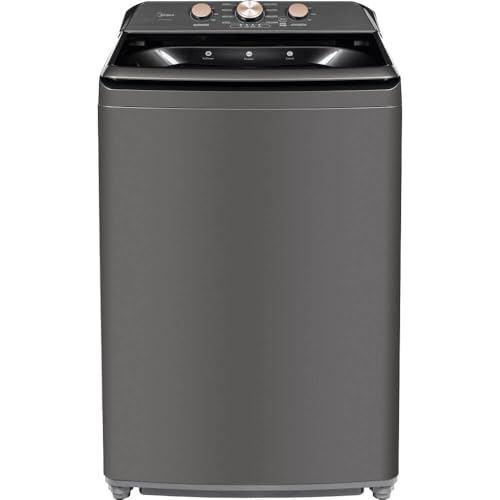
This is the gray version of Midea's 4.1 cu ft agitator platform, with the same high-water option, tub clean cycle and auto sensing as the white model, plus eight presets. The cabinet is 46 inches tall and 29 inches wide, so it is one of the taller, wider machines here, and it weighs about 128 pounds. The gray finish hides lint better than white.
What stands out
- Eight presets cover the common cycles without a menu dive
- High-water option adds depth for soaked towels and heavy knits
- Gray finish hides lint and hard-water marks better than white
Watch out for
- 46-inch height leaves little room under a shelf or cabinet
- Adds nothing over the white 4.1 cu ft Midea beyond color and presets
LG WT8400CW 5.5 Cu. Ft. White Mega Capacity Smart Top Load Washer w/EasyUnload
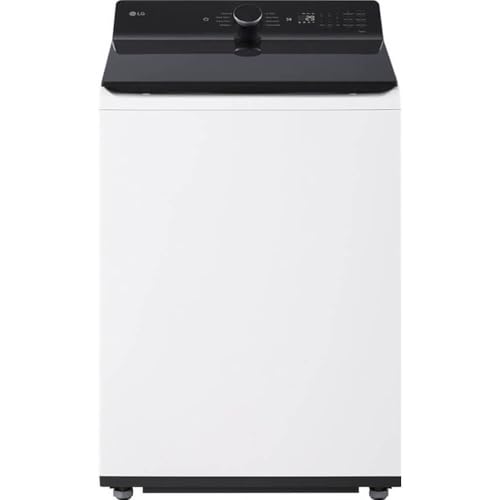
The LG WT8400CW is the capacity outlier in this group at 5.5 cu ft. The EasyUnload layout reworks the drum so the bottom is easier to reach, built-in AI chooses settings for the load, and the redesigned top-load cabinet is meant to reduce bending. Treat the listed dimensions as unconfirmed and measure your alcove. For a household that washes bedding and towels together, this is the drum that makes it possible.
What stands out
- 5.5 cu ft drum takes king bedding and a towel load together
- EasyUnload drum reduces reaching and lifting
- Built-in AI sets the cycle without manual guesswork
Watch out for
- Listing dimensions look like placeholders and need checking
- Large drum invites half loads in a small household
Buying guide
What High-Efficiency Really Changes
An HE top-loader does not fill the tub. It adds enough water to saturate the load, then relies on a concentrated detergent solution and mechanical action to lift soil. Load sensing decides how much water that takes, which is why the level looks alarmingly low on a half-full drum and why the same machine draws more for a king comforter. The energy saving comes almost entirely from heating and moving less water, not from a more efficient motor. It is also why these washers feel slower than the agitator machines people remember, with longer soak stages and more pauses between fills. A sensor that misreads a heavy towel load can underfill the drum, which is exactly why bulky cycles exist on better machines.
The trade-off is margin for error. A traditional washer could absorb a careless overload because there was water everywhere. An HE machine cannot. Clothes packed above the impeller or agitator never circulate, detergent stays in one spot, and the rinse leaves residue behind. That is the origin of most stiff-towel and musty-drum stories, and it is why the manual keeps repeating the word loosely. Use the recommended dose for an HE formula, fill to the top row of perforations rather than the rim, and the machine behaves the way it was designed to. One overloaded cycle can leave a film that takes months to clear. Most of the complaints that follow a new HE washer trace back to dosing and loading habits rather than the machine itself.
Agitator or Impeller: Two Different Cleaning Styles
An agitator is a central post with fins that reverses direction and pulls clothes down through the water. It is aggressive, fast and effective on mud, food and workshop grime, and it takes up drum space. If your laundry includes kids sports kits, gardening clothes or greasy shop rags, an agitator machine earns its footprint. The cost shows up as stretched collars, pilled knits and the occasional tangled sleeve, which is why so many delicates end up in a mesh bag. Speed Queen still builds its top-loaders this way, and the TC5003WN even skips the lid lock so you can drop in a missed sock. That is also why farm clothes and shop rags come out cleaner in an agitator tub with far less pretreatment.
An impeller is a low plate or cone at the bottom that swirls water through the load. There is no post to wrap around, so the drum holds bulkier items and a comforter can turn over in the drum. Cleaning depends on water level and cycle length, and heavily soiled loads often need a soak or a second wash. For households that mostly wash lightly worn clothes, towels and bedding, the impeller is the more versatile choice. For mud and grease, the agitator still wins. The practical compromise many families land on is an impeller machine plus a pretreatment spray kept next to the detergent. Whichever you choose, the drum should never be packed tight enough to stop clothes from turning over.
Sizing: Match the Drum to the Week, Not the Catalog
A 3.2 cu ft top-loader is a genuine family machine if the family is two or three people. A 4.5 cu ft drum starts to make sense when bedding, bath towels and a week of clothes land in the same basket. Anything above five cubic feet is about comfort and fewer cycles rather than cleaning power, and the extra volume comes with a taller cabinet that may not clear a shelf or a soffit. Measure the opening, then measure again with the lid open, and add a few inches behind the machine for hoses, the drain loop and the water shutoffs. A pedestal or a drawer base changes the height again, so measure with the machine in its final position.
Depth is the quieter constraint. Full-size top-loaders run 27 to 30 inches deep, and the hoses need another three or four inches before the cabinet touches the wall. A 46-inch-tall machine under a 48-inch shelf has no room to open, which is a common and expensive surprise. Two machines can share a capacity class and still differ by inches in every direction, which is why the tape measure matters more than the spec sheet. Delivery crews will not remove a door frame, and a machine that cannot reach the room is a machine you return. A tape measure and a helper solve this before the delivery truck arrives.
Water Level, Temperature and Hard Water
Options like MaxFill exist because HE machines sometimes need more water than the sensor chooses, particularly for a bulky load that floats. A high-water or deep-fill setting is worth having. It costs a little efficiency and buys a lot of cleaning on comforters, rugs and anything that has absorbed a spill. On machines without it, splitting the load is the workaround, and it usually takes less time than rewashing. Midea fits a high-water option to its 4.1 cu ft models for exactly this reason, and Frigidaire builds MaxFill into its 4.4 cu ft tub. Bulky cycles on the Frigidaire and Midea models are the fallback when a comforter refuses to sink. Both settings are worth learning before the first comforter load.
Hard water is the other variable people underestimate. Calcium and magnesium bind with detergent, so the dose that works in soft municipal water leaves scum in a well. If your glassware spots and your shower head crusts, your washer is fighting the same minerals. A water softener solves it properly; a packaged booster or a slightly larger dose helps in the short term. Temperature matters too, because most detergents work faster above 60 degrees Fahrenheit, and a hot wash once a month keeps towels and bedding from holding onto body oils. A test strip from a hardware store will tell you the hardness before you blame the detergent. Test strips settle the hardness question in about a minute. That single habit also keeps the drum cleaner.
Keeping the Drum From Smelling Like a Cellar
Residue is the root of the smell. Detergent, fabric softener and body oils coat the outer tub and the underside of the impeller or wash plate, and in a low-water machine that film never gets flushed away. Run a tub clean cycle monthly with a washer cleaner, wipe the dispenser drawer, and leave the lid open between wash days so the drum dries. Skip liquid fabric softener entirely if you can, since it is the worst offender for coating a drum. If the smell persists, check the drain hose for a sag that holds dirty water between cycles. A sagging drain hose is the most common cause of a smell that returns a week after cleaning. A cup of white vinegar in the rinse helps in the short term.
The hidden areas matter as much as the visible ones. On impeller machines, grit collects under the wash plate and around the balance ring, and a soft brush and a crevice tool reach places a rag cannot, so both are worth keeping in the laundry cabinet. Check the water inlet screens once a year as well, because sediment there reduces fill pressure and makes the machine look weak. Both jobs take ten minutes and prevent service calls that cost far more. None of it takes long, and all of it costs less than a service call for a machine you could have maintained. Ten minutes a month is the whole schedule.
Frequently asked questions
Why does my high-efficiency top-loader use so little water?
Because that is the design. The machine wets the load, then relies on concentrated detergent and mechanical action instead of a full tub. Less water means less energy spent heating it. If clothes are not clean, check for an overloaded drum, foaming non-HE detergent or a low water level.
Do HE top-loaders clean as well as agitator washers?
On normal soil, yes. On heavy soil, an agitator usually has an edge because it works the fabric physically. An impeller HE washer closes the gap with a soak or a second wash. For most homes the difference is small.
Can I add water to an HE top-loader during a cycle?
Only if the model offers a deep-fill or high-water option, and only before the wash stage ends. Pouring water in by hand confuses the level sensor. If a load needs more water, stop the machine, let it unlock, redistribute the clothes and restart on the high-water setting.
How long should an HE top-loader last?
Most are built for roughly ten years of household use, though hard water, overloading and oversized loads shorten that. Drain pumps, inlet valves and control boards are the usual failures. Leveling the machine and replacing hoses prevents more trouble than a warranty.
Agitator or impeller for pet hair?
An agitator moves pet hair off fabric more aggressively, but hair then collects in the tub and on the post. An impeller is gentler on blankets but may leave hair behind on the first pass. A lint roller and a rinse cycle do more than drum design either way.
Verdict
The top pick for most households is the Speed Queen ADA 3.2 cu ft model. Sixteen cycles, out-of-balance management and a genuinely quiet build make it the least fussy machine in this group. The value pick is the Frigidaire 4.4 cu ft with MaxFill: ten cycles, a 30-minute quick wash and room for about 25 towels.
The upgrade is the LG WT8400CW, which adds 5.5 cu ft of drum, the EasyUnload layout and AI cycle selection for households that wash bedding and towels in the same week. If you want an impeller drum without the extra capacity, the Midea 4.5 cu ft model is the middle path.