A sewing machine gets the attention, but the iron does half the work. Every seam is pressed before it is crossed by another, and every dart, collar and hem is shaped with heat rather than thread. Sewists who press as they go get flatter seams, sharper points and fewer surprises at fitting. The iron, in other words, is not a laundry appliance that happens to sit in the sewing room.
That changes what you want from it. A sewing iron spends more time being set down and picked up than sliding, so weight and balance matter. It needs a tip that reaches into a seam allowance without swallowing the whole seam. It needs steam you can switch off, because fusible interfacing and steam are a bad combination. And it needs a soleplate that does not leave shine on dark wool.
The eight irons here cover three approaches: full-size irons with good tips, compact travel irons with fixed heat, and detail irons built for small work. None is right for everyone, and the honest answer is that many sewists end up with two. Match the iron to the work you actually do, not to the shelf with the biggest badge.
Top picks at a glance
oliso M3Pro Project Mini Steam Iron
Check price on AmazonBLACK+DECKER Easy Steam Compact Iron for Clothes, Automatic Shutoff, Nonstick
Check price on AmazonPIOMATIC Travel Iron Mini with Steam for Clothes with Dual Voltage
Check price on AmazonCompare the shortlist
| Model | Type | Capacity | Key feature | Amazon |
|---|---|---|---|---|
| 1. oliso M3Pro Project Mini Steam Iron | Portable | — | Steam | Check price |
| 2. PIOMATIC Travel Iron Mini with Steam for Clothes with Dual Volta | Portable | — | Steam | Check price |
| 3. BLACK+DECKER Professional Steam Iron with Stainless Soleplate | Steam iron | — | Steam | Check price |
| 4. BLACK+DECKER The Classic Iron, F67E-T, Aluminum Soleplate, Steam | Ironing | — | Steam | Check price |
| 5. SINGER® SteamCraft Steam Iron (1700W), Auto Shutoff | Steam iron | — | Steam | Check price |
| 6. BEAUTURAL Mini Travel Steam Iron for Clothes with Dual Voltage, | Steam iron | — | Steam | Check price |
| 7. BLACK+DECKER Easy Steam Compact Iron for Clothes, Automatic Shut | Compact | — | Steam | Check price |
| 8. BLACK+DECKER Allure Professional Steam Iron for Clothes | Steam iron | — | Steam | Check price |
Detailed reviews
oliso M3Pro Project Mini Steam Iron

A 1,000-watt detail iron with an open two-inch pointed tip and an LED that lights the fabric ahead of the plate. It weighs two pounds, has a three-position fabric dial and switches automatically between 120 and 220 volts. The small tank feeds burst steam, and the eight-foot cord gives room at the table. Auto-off runs 10 minutes flat or 30 upright.
What stands out
- A two-inch tip reaches into narrow, fiddly seams
- The LED lights dark fabric ahead of the plate
- The 30-minute upright auto-off suits long sewing sessions
Watch out for
- The small tank needs frequent refills during projects
- Two pounds is heavy for a mini detail iron
PIOMATIC Travel Iron Mini with Steam for Clothes with Dual Voltage

A one-pound mini iron with a manual 100-240V selector, a non-stick soleplate and a single temperature fixed around 320 degrees. Five steam outlets provide a light burst, and a heel rest lets you stand it up between passes. The 6.7-inch body fits a drawer or a corner of a suitcase. It is simple to a fault: one heat setting means no low temperature for synthetics.
What stands out
- It weighs just one pound in the hand
- The manual dual voltage covers most 100-240V countries
- A heel rest keeps the hot plate upright
Watch out for
- A single fixed temperature limits your fabric choice
- The steam output is light for heavier fabrics
BLACK+DECKER Professional Steam Iron with Stainless Soleplate
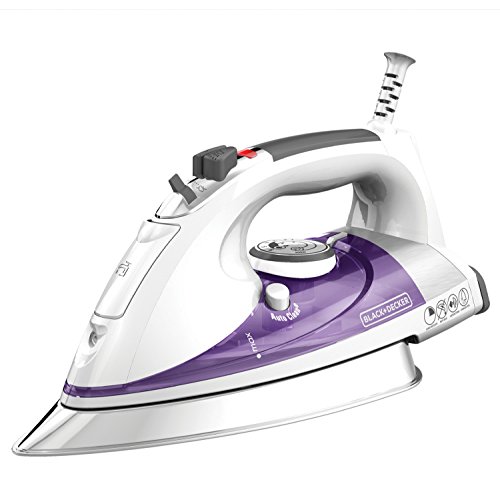
BLACK+DECKER's professional hand iron has a stainless soleplate, variable steam and temperature controls, auto-clean and anti-drip. The three-way auto-off cuts power after 30 seconds flat or on its side, and after eight minutes upright. At three pounds it is steady on a board without being tiring. It is a practical all-rounder for sewists who want independent steam control and a plate that cleans up easily.
What stands out
- Independent steam and temperature controls give useful flexibility
- The auto-clean system flushes out built-up mineral deposits
- The stainless plate wipes clean after every use
Watch out for
- An eight-minute upright shut-off interrupts the sewing flow
- There is no precision tip for collars and seams
BLACK+DECKER The Classic Iron, F67E-T, Aluminum Soleplate, Steam or Dry Ironing, 7 Temperature Settings, Anti-

The BLACK+DECKER Classic is a simple, cheap iron with an aluminum soleplate, steam or dry operation, anti-drip and a numbered fabric dial. A groove near the tip helps you work around buttons and collars, and the pivoting cord keeps the flex out of the way. At 3.2 pounds it presses firmly. The auto-off is the usual 30 seconds flat and eight minutes upright.
What stands out
- A groove near the tip clears buttons easily
- The pivoting cord stays out of the way
- The simple dial is easy to read at a glance
Watch out for
- The aluminum plate scratches more easily than steel
- The eight-minute upright shut-off is short for sewing
SINGER® SteamCraft Steam Iron (1700W), Auto Shutoff

The SINGER SteamCraft is a 1,700-watt iron with an OnPoint precision tip, a stainless plate and a 300-milliliter tank. Its 30-minute upright auto-off is one of the longest here and suits press-sew-press work, while the swivel cord keeps the flex from dragging. An anti-calc filter and self-clean cycle handle hard water. At 3.3 pounds it is balanced for long sessions, and the tip is genuinely useful around seams and pleats.
What stands out
- A 30-minute upright auto-off suits press, sew, press work
- The OnPoint tip reaches seams, pleats and buttons
- A 300 ml tank plus an anti-calc filter
Watch out for
- There is no digital temperature display, only a dial
- It is heavier than a mini, at 3.3 pounds
BEAUTURAL Mini Travel Steam Iron for Clothes with Dual Voltage, White

A 420-watt mini with 110-127 and 220-240V settings, three temperature levels, a non-stick plate and five steam outlets. It heats in about 40 seconds and wraps its six-foot cord around the base. At 5.5 inches it fits beside a machine or in a bag. The three heat levels cover cotton, wool and synthetics, though the light body tips easily on a soft mat.
What stands out
- The three temperature settings cover most common fabrics
- The 40-second heat-up is quick between short seams
- The cord wraps around the base for storage
Watch out for
- The light body tips easily on a soft mat
- The small tank needs refilling during longer projects
BLACK+DECKER Easy Steam Compact Iron for Clothes, Automatic Shutoff, Nonstick Plate, Light Weight, 1200 Watts

A 1,200-watt compact iron with a TrueGlide non-stick soleplate, spray mist and three-way auto-off. Steam is managed by Black and Decker's SmartStream anti-drip system, and the 360-degree pivoting cord keeps the iron moving freely. It is light and easy to handle, with an ergonomic grip. The non-stick plate suits fusibles and craft work, though it is less durable than stainless on heavy seams.
What stands out
- A non-stick plate suits fusible web and craft work
- Spray mist helps loosen stubborn creases and folds
- A 360-degree pivoting cord keeps the flex free
Watch out for
- The non-stick surface wears faster than a steel plate
- Its basic temperature dial offers limited fine control
BLACK+DECKER Allure Professional Steam Iron for Clothes
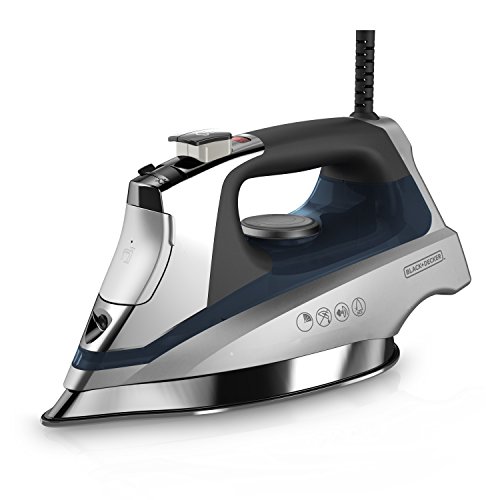
The Allure Professional is a full-size iron with a stainless soleplate, a precision tip and vertical steam. It offers variable temperature and steam controls, auto-clean and automatic shutoff, and Black and Decker claims 30 percent more steam than two named competitors. At 1.9 pounds it is the lightest full-size iron here, which makes it easy to lift between seams. A solid choice for sewists who want control without weight.
What stands out
- At 1.9 pounds it is easy to lift
- A precision tip reaches collars, seams and tight cuffs
- Independent steam control lets you press completely dry
Watch out for
- The light weight needs extra pressure on denim
- No long shut-off timer for press, sew, press work
Buying guide
Pressing is not ironing, and the iron is a tool
When you press a seam, you set the iron down, let the heat do the work, and lift it away. When you iron, you slide. Sliding stretches a seam that has just been sewn, especially on a bias, and it distorts the seam allowance you are trying to set. Most patterns say press, and they mean it. A soleplate with a smooth glide helps, but a heavy hand hurts more than a cheap plate, and a scorched seam is harder to fix than a wrinkled one. A seam roll and a clapper do more for your results than an expensive iron. A dry press with a little steam at the end is the usual compromise. Test on a scrap before you touch the garment.
The sequence matters as much as the tool. Press the seam flat as sewn, then press it open or to one side, then press the unit from the right side with a press cloth. Each step uses a slightly different motion, and a full-size iron with a wide plate handles the first two faster than a mini. A mini earns its keep on the third step and on anything narrow: cuffs, collars, straps and waistbands. That division of labor is why so many sewing rooms end up with both, and why the board rarely gets folded away. Let each step cool for a second before the next, because that pause is where the shape sets. Rushing undoes the flatness you just created.
Tips, plates and reaching into a seam
Tip shape is the most underrated specification in sewing. The SINGER SteamCraft uses an OnPoint tip that narrows to a point for buttons, seams and pleats. The BLACK+DECKER Classic has a groove near the tip that lets you work around buttons without lifting the plate. The oliso M3Pro takes the idea further with an open two-inch pointed tip, small enough to press a seam open without touching the fabric on either side. A good tip saves time on every garment, and it is the difference between pressing a collar and reshaping it. A dry press with a little steam at the end is the usual compromise. Test on a scrap before you touch the garment. That is the whole trick.
A wide plate is not automatically better. It covers more area, which helps with yardage and interfacing, but it also makes it harder to see where the tip is. If you sew garments, look for a plate that comes to a genuine point and a front edge you can see past. If you quilt or craft, a short plate may suit you better. Handle shape matters too, because you will grip it thousands of times. A narrow handle will find the joint in your thumb by the end of a long project. Let each step cool for a second before the next, because that pause is where the shape sets. Rushing undoes the flatness you just created. Look at the tip in profile before you buy.
Steam control, fusibles and water marks
Steam is useful on wool, linen and cotton, and disastrous on fusible interfacing. Most interfacing instructions call for a dry iron, because steam can prevent the adhesive from bonding or cause bubbles. Buy an iron with a steam switch you can turn fully off, not one that only reduces the flow. The BLACK+DECKER Professional and Allure both offer variable steam and temperature controls independently, which is the arrangement you want when you switch between wool and fusible in the same hour. Read the interfacing instructions before you assume steam is harmless. A dry press with a little steam at the end is the usual compromise. Test on a scrap before you touch the garment. Test the drape on a scrap before you commit.
Anti-drip matters more in a sewing room than a laundry room, because a drop of water on silk or interfacing leaves a mark that will not come out. The BLACK+DECKER Classic, Professional and Easy Steam models all list anti-drip. Use distilled water if your tap water is hard, and empty the tank after each session. Water left standing in an iron smells and spits, and the inside of the tank is not a place you can clean easily with a cloth. A self-clean cycle helps, but it is not a substitute for fresh water. Let each step cool for a second before the next, because that pause is where the shape sets. Rushing undoes the flatness you just created.
Weight, cord and the board beside the machine
Weight is a genuine trade. The Allure is 1.9 pounds, the PIOMATIC one pound, the SINGER 3.3. A light iron is easy to lift and set down but needs more pressure on heavy fabric; a heavier one presses with less effort but tires the wrist. For garment sewing, something around two to three pounds is a reasonable compromise, and the balance of the handle matters as much as the number on the scale. A light iron with a good tip beats a heavy one you avoid using. A dry press with a little steam at the end is the usual compromise. Test on a scrap before you touch the garment. The extra weight does the work for you.
Cord and shut-off are the practical details. A pivoting or 360-degree swivel cord keeps the flex from dragging the iron off line, and the SINGER's 30-minute upright shut-off is far better suited to sewing than the usual eight minutes. If you press, sew, press, an eight-minute timer will catch you at least once an hour. A heat-resistant rest or a silicone pad protects the table and gives you somewhere to park the plate. Put both within reach before you sit down at the machine. Let each step cool for a second before the next, because that pause is where the shape sets. Rushing undoes the flatness you just created. An extension cord with a flat plug helps in tight rooms.
Mini irons: when a small plate is the right plate
Mini irons are the third option, and they are not just travel tools. The oliso M3Pro is built for detail pressing: two pounds, a two-inch tip, an LED and a three-position dial, with auto-off at 10 minutes flat or 30 upright. The PIOMATIC and BEAUTURAL minis are lighter and less expensive, with small plates and either fixed or three-step heat. They suit classes, small projects and pressing beside the machine, and they store in a drawer when the table is needed for cutting. None of them replaces a full iron for a whole garment. A dry press with a little steam at the end is the usual compromise. Test on a scrap before you touch the garment. Try one at a class first.
What minis cannot do is press a whole garment. A five-inch plate takes several passes on a shirt back, and a one-pound iron needs help on heavy denim. Tanks are small, and some minis have no steam at all. Think of a mini as a second iron: it lives on the table beside the machine and handles seams, while a full-size iron deals with yardage, interfacing and final pressing. Two tools, two jobs, and less walking between them, which is worth more than the slight extra clutter. Let each step cool for a second before the next, because that pause is where the shape sets. Rushing undoes the flatness you just created. A drawer is easier to reach than a high shelf.
Frequently asked questions
What iron is best for sewing?
A full-size iron with a pointed tip, a steam switch you can turn off and a smooth soleplate. The SINGER SteamCraft and the BLACK+DECKER Allure both fit that brief, and the 30-minute shut-off on the SINGER suits press-sew-press work. Add a mini iron if you do detail work or take classes.
Do I need a mini iron for sewing?
Not strictly, but it helps. A mini reaches into small seams, cuffs and collars and can sit beside the machine without taking over the table. It cannot press a whole garment or a length of interfacing. If you sew garments regularly, a full-size iron first and a mini second is the sensible order.
Can I use steam when fusing interfacing?
Usually no. Most interfacing makers specify a dry iron, because steam can stop the adhesive bonding and cause bubbling. Turn steam off, use a press cloth and hold the iron still for the recommended time. Steam is fine for wool and linen, and for shrinking fabric before you cut.
Why does my iron scorch fabric?
Either the temperature is too high for the fiber, the iron is sitting still on the cloth, or residue on the soleplate is transferring. Synthetics scorch at settings meant for cotton. Clean the plate, use a press cloth and test on a scrap. An iron with accurate presets, like the BEAUTURAL 1800-watt model, reduces the guesswork.
How long should a sewing iron stay on?
Long enough to survive a ten-minute stint at the machine. Eight-minute shut-offs are common and annoying; 30 minutes is better. The SINGER SteamCraft offers 30 minutes upright, and the oliso M3Pro runs 30 minutes upright. If yours shuts off early, a quick movement usually wakes it, but check before you rely on it.
Verdict
The SINGER SteamCraft is the top pick for garment sewing: a 1,700-watt iron with an OnPoint tip, a 300-milliliter tank and a 30-minute shut-off that survives a real sewing session. The BLACK+DECKER Allure is the value choice at 1.9 pounds, with a precision tip and independent steam control. The oliso M3Pro is the upgrade for anyone who presses seams and collars at the machine.
If you sew once a month, the Allure alone is enough. If you sew most days, the SINGER plus a mini covers both the wide work and the narrow work without moving the board.