The phrase laundry pedestal with sink gets typed into search bars by people who want two different things. Some have a front loader sitting on a factory pedestal and want a basin within arm's reach for pretreating, hand washing, or filling a mop bucket. Others have no pedestal at all and want a freestanding stainless sink that stands at waist height and does the same job. The listings rarely make that clear, and the terminology does not help.
There is also a hard truth about the category. Washer pedestals are built as drawers, shelves, or open frames, and none of the major appliance makers sells one with a basin molded into the top. The plumbing would have to run through a box that also carries several hundred pounds of vibrating machine. So the practical version is a freestanding utility sink beside the washer, or one tall enough that you never bend to use it.
That changes what you shop for. Instead of matching a pedestal to a washer model, you are matching a sink to a wall, a drain, and a floor. Width and depth decide whether it blocks the dryer door. Bowl depth decides whether you can soak a stained shirt or only rinse a sponge. The steel gauge decides whether the front panel dents when a bucket knocks into it. Two sinks cover the realistic end of this market, and they are built for different rooms.
Top picks at a glance
Jocisland 32 x 24 x 34 Inch Stainless Steel Utility Sink with Cabinet
Check price on AmazonKRAUS Standart Pro 32” 18-Gauge Stainless Steel Single Bowl Freestanding Comme
Check price on AmazonCompare the shortlist
| Model | Type | Capacity | Key feature | Amazon |
|---|---|---|---|---|
| 1. Jocisland 32 x 24 x 34 Inch Stainless Steel Utility Sink with Ca | Stain remover | — | Quick cycle | Check price |
| 2. KRAUS Standart Pro 32” 18-Gauge Stainless Steel Single Bowl Free | Stain remover | — | Low noise | Check price |
Detailed reviews
Jocisland 32 x 24 x 34 Inch Stainless Steel Utility Sink with Cabinet

A 32 by 24 by 34 inch stainless utility sink built into a two-door cabinet, with a 27.6 by 15.7 inch bowl and a dual-temperature faucet included. The cabinet hides cleaning supplies and keeps the P-trap out of sight, and the countertop is rated for 400 pounds. Adjustable feet let you level it on an uneven laundry floor.
What stands out
- Enclosed cabinet keeps detergent and mop heads out of sight
- 34-inch counter height matches most kitchen and folding counters
- Dual-temp faucet included, so no separate fixture to buy
Watch out for
- 7.1-inch bowl is too shallow to soak bulky items
- Thin 0.6 mm panels dent more easily than 18-gauge steel
KRAUS Standart Pro 32” 18-Gauge Stainless Steel Single Bowl Freestanding Commercial Style Laundry Utility Sink
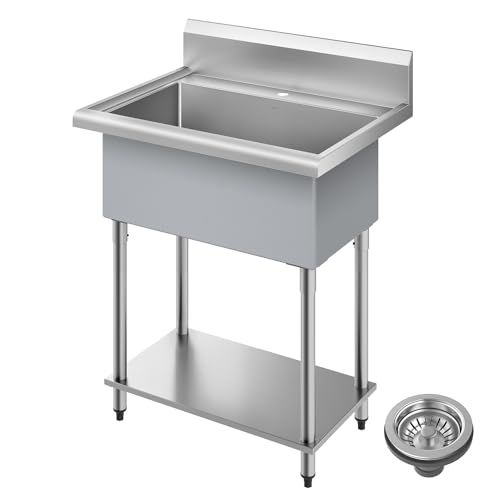
A commercial-style freestanding sink with a 32 by 24 inch footprint, 18-gauge stainless steel, and a 12-inch-deep bowl that holds 23.5 gallons. It stands 42.5 inches with a high backsplash, includes a shelf rated for 120 pounds, and ships with legs, adjustable feet, a drain assembly, and a removable strainer. The deck is pre-drilled for a single-hole faucet.
What stands out
- 12-inch depth handles mop buckets and full soaks
- 18-gauge steel resists dents and stays quiet under load
- 120-pound shelf keeps cleaning supplies within easy reach
Watch out for
- 42.5-inch rim is high for shorter users
- Sold without a faucet and the deck is single-hole only
Buying guide
The Plumbing Comes Before the Sink
A freestanding utility sink drains by gravity, which means the trap has to sit below the bottom of the bowl and the wall drain has to be lower still. In a laundry room the drain stub is often 12 to 18 inches off the floor, leaving plenty of room under a 34-inch cabinet sink and enough under a 42-inch model for a deep trap. If the only drain is a standpipe at counter height, or the floor sits several inches above the slab, the sink will not empty properly without a pump. Photograph the wall, measure from the floor to the center of the drain, and take those numbers with you.
Supply lines are the easier half. Most laundry rooms already have hot and cold shutoffs for the washer, and a utility sink can tee off them if the valves are accessible and the pressure is steady. What trips people up is the faucet deck. The Kraus sink arrives pre-drilled for a single-hole faucet, so a widespread faucet will not fit without a new deck plate. The Jocisland cabinet includes a dual-temperature faucet, which saves a purchase but limits you to the supplied hardware. Check the spout reach against the bowl before you commit, because a long spout over a 7-inch basin throws water onto the floor.
One more piece of paperwork. Adding a sink can count as a plumbing alteration in some jurisdictions, particularly if you cut into a vent stack. A permit is not usually expensive, but skipping it can complicate a future inspection or a sale. If the sink simply replaces an existing basin in the same spot, you are on much simpler ground.
A Pedestal Sink and a Utility Sink Are Not the Same Fixture
Search results blur the words, so it helps to separate them. A bathroom pedestal sink is a ceramic basin on a narrow column, typically 30 to 34 inches to the rim, with a bowl 5 to 7 inches deep and a faucet set for washing hands. It looks right in a powder room and is close to useless for laundry. A mop bucket will not fit under the spout, a soaking tub will not sit level in the bowl, and the porcelain chips when a detergent jug lands on it.
A laundry or utility sink is a different animal: a deep stainless or composite basin, 10 to 12 inches down, often 27 inches wide, with a faucet tall enough to fill a bucket and a drain wide enough to pass lint. The Kraus model is 12 inches deep and lists a 23.5-gallon basin. The Jocisland bowl is 7.1 inches deep and 27.6 inches wide, which is fine for hand washing and pretreating but not for submerging a queen comforter.
What does not exist in any meaningful way is a washer pedestal with a basin built in. Pedestals are rated to carry a machine that weighs a few hundred pounds wet and shakes at high spin speeds. Adding plumbing to that box adds leak risk in the one place you cannot see it. If a listing promises a pedestal sink for a washer, read the dimensions carefully. It is almost certainly an ordinary utility sink with optimistic keywords.
Measure the Wall, the Door, and the Hose Path
The two sinks here are both about 32 inches wide and 24 inches deep, the size that fits beside a 27-inch washer in a standard two-appliance laundry room. Height is the bigger difference. The Jocisland cabinet stands 34 inches to the counter, roughly the same as a kitchen counter, so it lines up with a folding table or a counter run. The Kraus stands 42.5 inches with a high backsplash, which puts the rim just above waist height and the faucet near eye level.
Walk the path before ordering. A 24-inch depth plus the machine's depth can leave less than 30 inches of aisle, and a front-loader door needs room to swing. Hoses need 2 to 3 inches behind the sink, and the supply lines should not kink against the wall. If the sink sits under a window, the backsplash height matters. On the Kraus, the splash guard is part of the frame, so a low sill becomes an obstruction rather than a detail.
The last measurement is the one people forget: the swing of the laundry room door and the turning radius of a full basket. A sink that fits but blocks the door is a sink you will resent. Masking tape on the floor, cut to the footprint, settles the question in five minutes and costs nothing.
Steel, Depth, and the Parts That Wear Out
Stainless is the default for a reason. It does not chip, it tolerates bleach, and it wipes clean. The differences are in thickness and shape. The Kraus uses 18-gauge steel, stiff enough that the front apron does not oil-can when you lean on it. The Jocisland uses 0.6 mm panels, thinner stock that keeps cost and the 53-pound unit weight down but dents more readily at the corners. Neither is a problem in normal use. Both are a problem if you drop a cast-iron pan into the bowl.
Bowl shape decides how the sink feels day to day. Rounded corners are easier to wipe than square ones. A sloped bottom with channel grooves moves water toward the drain instead of leaving a film. Soundproofing pads, which Kraus markets as NoiseDefend, make a real difference when a faucet hits a bare steel box. Without them, a utility sink rings like a drum every time the water runs.
Load ratings are static figures. A 400-pound countertop rating on the Jocisland and a 120-pound shelf rating on the Kraus describe how much weight the structure holds when it is sitting still, not what happens when someone leans on the front edge to reach a shelf. Treat them as a ceiling, not a target. The parts that actually fail first are the drain assembly and the faucet, both of which are replaceable without pulling the sink away from the wall.
Installation Day and the First Week
Both sinks are manageable for two people and awkward for one. The Jocisland cabinet weighs about 53 pounds assembled, with a boxy shape that catches air on stairs. The Kraus frame weighs about 40 pounds but stands 42.5 inches tall, so it needs to be tipped through doorways. Adjustable feet on both let you level the sink on an uneven floor before the plumbing goes together. Level it first, then connect the supplies, then set the P-trap so the trap arm slopes down toward the wall.
The first week is about catching leaks. Run hot water for a minute, then cold, and check both supply connections with a dry paper towel. Fill the bowl, pull the stopper, and watch the trap and the wall joint while it drains. On the Kraus, the high backsplash should be sealed where it meets the wall; on the Jocisland, a bead of silicone around the counter edge keeps spills out of the cabinet. Keep the cabinet interior dry, because standing water is what eventually ruins the hinges and the stored supplies.
Frequently asked questions
Can I put a sink on top of a washer pedestal?
No. Pedestals are sized to carry a washer or dryer and are not built to support a basin, a faucet, or the plumbing that comes with them. Drilling a pedestal to run supply lines also voids the load rating and puts water directly above the machine. Set a freestanding utility sink beside the washer instead, or use the pedestal for storage and keep water on the other side of the room.
What height should a laundry sink be?
Most people are comfortable with a rim 34 to 36 inches off the floor, which is counter height. Taller users and anyone with back trouble often prefer 40 to 42 inches, which is why the Kraus model stands 42.5 inches. Measure from the floor to the crease of your wrist with your arm relaxed at your side; that is roughly where the rim should land.
Do I need a plumber to install a freestanding utility sink?
Usually yes, at least for the drain. Hooking braided supply lines to existing shutoffs is a homeowner job, but cutting into a drain line, setting a P-trap at the right height, and venting the fixture is not. The cabinet sink includes assembly hardware, not plumbing fittings. Budget for a plumber visit and you avoid the most common cause of a slow, gurgling drain.
Is 18-gauge stainless worth the extra cost?
For a sink that sees daily buckets, mop water, and pet bowls, yes. Eighteen-gauge steel resists denting, stays quiet under a running faucet, and holds its shape when the apron takes a knock. For a sink used mostly for hand washing and the occasional soak, thinner 0.6 mm panels are adequate. The difference shows up after a few years, not on the first day.
How do I keep a stainless utility sink looking new?
Rinse it after anything with bleach, wipe with a soft cloth and dish soap, and dry the surface to avoid water spots. Skip steel wool and cleaners with chlorides, which pit stainless. A little white vinegar handles hard-water film. Check the caulk at the backsplash and the cabinet edge once a year, and tighten the drain assembly if the basket starts to wobble.
Verdict
For most laundry rooms, the Kraus KHS230-32 is the top pick. The 12-inch bowl is deep enough for a mop bucket or a soaking tub, 18-gauge steel survives daily use, and the 120-pound shelf keeps supplies off the floor. The 42.5-inch height is the catch: comfortable for tall users, a stretch for shorter ones, and the high backsplash needs clear wall behind it.
The Jocisland cabinet is the value pick when storage matters as much as washing. Its double doors hide detergent and mop heads, the 34-inch counter doubles as a folding surface, and the dual-temperature faucet is included. The Kraus is also the upgrade: deeper bowl, thicker steel, taller working height, and a more commercial feel. Choose the cabinet for a mudroom or utility corner, and the Kraus for a working laundry room where the sink is the main tool.