Search for a laundry stain stick and the results are a lesson in how a category drifts. Almost nothing on the shelf is a stick anymore. What you find instead is a gel in a squat bottle with a scrubber brush screwed onto the top, a wall of trigger sprays, and a few refill jugs big enough to last a year. The solid bar that used to live in a bathroom cabinet, rubbed directly on a collar, has largely disappeared from American retail.
The reason is mostly chemistry. A solid stick has to hold a detergent concentrate in a form that stays firm on the shelf but releases when it meets water and friction. Enzymes and oxygen bleach are easier to stabilize in a liquid or a powder, and a spray reaches a whole shirt collar in two passes. The stick survived longest in Europe and in travel kits, where the format still makes sense.
So this guide treats the category by applicator rather than by name. A gel with a built-in brush is the closest thing to the old stick, and it is the right tool for a collar or a cuff. A trigger spray covers area and is better for a spill. Both are pretreaters, and neither is a substitute for detergent or for acting quickly.
We compared specifications, features and owner reports for eight pretreaters sold in this corner of the aisle, and sorted them by the job each one does best.
Top picks at a glance
Miss Mouth's Messy Eater Stain Treater Spray, Laundry Stain Remover, 4 Oz
Check price on AmazonSpray 'n Wash Max Laundry Stain Remover Spray for Clothes, 16oz
Check price on AmazonGrandma's Secret Spot Remover Laundry Spray
Check price on AmazonCompare the shortlist
| Model | Type | Capacity | Key feature | Amazon |
|---|---|---|---|---|
| 1. Miss Mouth's Messy Eater Stain Treater Spray, Laundry Stain Remo | Stain remover | — | — | Check price |
| 2. Stardrops The Pink Stuff Miracle Laundry Stain Remover Spray, 16 | Stain remover | — | — | Check price |
| 3. Spray 'n Wash Max Laundry Stain Remover Spray for Clothes, 16oz | Stain remover | — | — | Check price |
| 4. Shout Triple Acting Laundry Stain Remover Spray Refill, 60oz, (1 | Stain remover | — | High efficiency | Check price |
| 5. OxiClean Max Force 5 in 1 Power Laundry Stain Remover Spray, 12 | Stain remover | — | — | Check price |
| 6. Shout Advanced Set-In Stain Scrubber, 8.7 fl Ounce | Stain remover | — | High efficiency | Check price |
| 7. Shout Triple-Acting Active Enzyme Laundry Stain Remover Spray, 2 | Stain remover | — | High efficiency | Check price |
| 8. Grandma's Secret Spot Remover Laundry Spray | Stain remover | — | — | Check price |
Detailed reviews
Miss Mouth's Messy Eater Stain Treater Spray, Laundry Stain Remover, 4 Oz

A four-ounce spray built for baby clothes and the messes that come with them: formula, baby food, fruit juice, ketchup and blowouts. It carries EPA Safer Choice certification, which is rare in this aisle, and the brand says it works on both fresh and set-in stains. The bottle is small enough for a diaper bag. Spray, rub gently if needed, then wash. For blood, keep the water cool.
What stands out
- EPA Safer Choice certified for use around the household
- Small bottle fits a diaper bag or glove box
- Works on fresh stains and ones already set in
Watch out for
- Four ounces empties quickly in a busy house
- The fine mist can drift onto surrounding fabric
Stardrops The Pink Stuff Miracle Laundry Stain Remover Spray, 16.9 Fl Oz
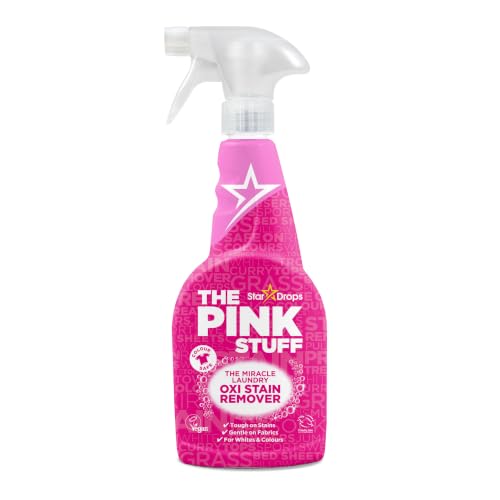
The Pink Stuff's entry is a 16.9-ounce oxygen spray aimed at grease, oil and dirt on whites and colors. The brand's Oxi technology is the same idea as a color-safe bleach, delivered as a pretreatment, and the instructions are the standard spray, wait a few minutes, wash. It is a large bottle for the money and the trigger is comfortable. Do not let it dry on colored fabric without testing first.
What stands out
- 16.9 ounces covers a lot of pretreatment
- Oxi action suits grease, oil and food stains
- Marketed as safe for both whites and colors
Watch out for
- Oxygen formulas can lift dye on unstable colors
- The scent is stronger than the label suggests
Spray 'n Wash Max Laundry Stain Remover Spray for Clothes, 16oz

Spray 'n Wash Max is the dried-in-stain specialist, advertised against seven-day-old wine, coffee, blood and food marks. That is the right product for a laundry basket that sits for a week, which describes most households. The 16-ounce bottle gives a five-minute dwell instruction, works at any temperature, and is gentle enough for most washable fabrics. It is a mainstream formula with wide availability.
What stands out
- Targets stains that have already dried into fabric
- Works in cold, warm or hot wash water
- The five-minute dwell time suits a quick routine
Watch out for
- Not intended for delicate fabrics or dry-clean-only items
- Trigger can drip down the bottle over time
Shout Triple Acting Laundry Stain Remover Spray Refill, 60oz, (1-Pack)

A 60-ounce refill of Shout Triple Acting, the largest bottle in this group. The brand says the formula is 50 times more concentrated than in-wash powder when applied directly, and the enzyme blend covers food, drinks, makeup, grass, dirt, wine and blood. It works in HE and standard machines at any temperature, and treated items can wait up to a week. Pour it into a spray bottle you already own and skip the plastic.
What stands out
- 60 ounces treats a large household for months
- The enzyme blend handles food, grass, wine and blood
- Works in any water temperature and machine type
Watch out for
- Sold as a refill with no trigger included
- Large jug is awkward to pour without a funnel
OxiClean Max Force 5 in 1 Power Laundry Stain Remover Spray, 12 oz
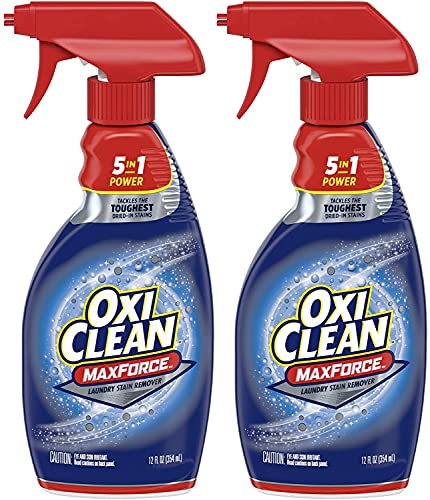
A two-pack of 12-ounce OxiClean Max Force spray, which the brand describes as five products in one with four types of stain fighters. It is aimed at grass, grease and oil, and it is safe on colorfast washable fabrics. The smaller bottles are easier to store than a 22-ounce jug, and the two-pack means one can live upstairs and one by the machine. It is the strongest oxygen option here for outdoor stains.
What stands out
- Two 12-ounce bottles, one for each laundry location
- Four stain fighters aimed at grease and grass
- Safe on colorfast, washable fabrics when used as directed
Watch out for
- Small bottles run out fast on heavy stains
- Not intended for delicate fabric or non-washable garments
Shout Advanced Set-In Stain Scrubber, 8.7 fl Ounce

The closest thing to a stain stick in this guide: an 8.7-ounce bottle of thick enzyme gel with a scrubber brush built into the cap. The formula is aimed at set-in stains from coffee, wine, food, makeup and grass, and the brush works it into the weave where a spray would sit on top. Squeeze, rub, wash, up to a week later. The gel does not run, which is why it works on a collar.
What stands out
- Built-in brush adds real mechanical action to the gel
- Thick gel stays put on collars and cuffs
- Enzyme formula targets set-in food and drink stains
Watch out for
- Brush head needs rinsing or it dries crusty
- Only 8.7 ounces, so heavy use empties it
Shout Triple-Acting Active Enzyme Laundry Stain Remover Spray, 22oz

The 22-ounce version of Shout Triple Acting, with the same enzyme formula and a claim of more than 100 everyday stains. The five-minute action is quicker than the gel, and the trigger lays down a broad, even mist for a shirt front or a tablecloth. The bottle is made with 25 percent post-consumer plastic, excluding the trigger and label. It is the bottle to keep by the machine for everyday spills.
What stands out
- 22 ounces covers big items such as tablecloths
- A five-minute action that suits last-minute laundry emergencies
- Bottle body uses 25 percent post-consumer recycled plastic
Watch out for
- Mist drifts, so spray close to the stain
- Bottle is tall and tips in a crowded cabinet
Grandma's Secret Spot Remover Laundry Spray

A 16-ounce spray plus a 2-ounce travel bottle, both free of chlorine and bleach. Grandma's Secret lists an unusually wide stain range: rust, blood, food, grass, pet accidents, iodine, coffee, tea, wine, crayon, uncured latex paint, chocolate, egg and grease. The formula has a citrus scent, no phosphates, and works at any temperature. Apply, agitate, blot. The small bottle is the one that lives in a suitcase.
What stands out
- Covers rust and other stains most sprays ignore
- Two sizes, one for home and one for travel
- No chlorine, bleach or phosphates in the formula
Watch out for
- The citrus fragrance is noticeable on treated fabric
- Blotting rather than rinsing takes a little practice
Buying guide
What replaced the solid stick
The classic stick was a bar of surfactant and solvent, applied dry, worked in with a fingernail or a brush, then washed. It was cheap, it did not leak in a bag, and it lasted for years. What killed it was probably a mix of dose control and marketing: a spray lets a brand sell a larger bottle, add a fragrance, and claim a stain count. The solid format also struggles with enzyme stability, since water activity is hard to control in a bar that must dissolve on demand.
The functional replacement is a gel with a scrubber top. The thick gel stays where you put it instead of running down the front of a shirt, and the brush works it into the fibers the way a thumb used to. Shout's Advanced Set-In Stain Scrubber is the clearest example here, and it is the product to buy if the thing you actually want is a stick. Everything else in this group is a spray, which is a different tool with different strengths.
Gel and brush versus trigger spray
A gel wins on precision. You can lay a bead along a collar, on a cuff edge or around a single spot, and it will not migrate into the surrounding fabric. The built-in brush adds the mechanical action that lifts soil from a weave, which matters on ring-around-the-collar, where the soil is partly body oil pressed into cotton. The trade-off is speed: treating a whole basket with a gel takes time, and the brush head needs rinsing so it does not dry into a crust.
A spray wins on coverage and speed. Two passes over a shirt front, a five-minute dwell, and the load goes in. Sprays are also easier on delicate fabric because you are not scrubbing. The weakness is overspray and waste: a mist lands on the floor, the bottle, the wall. Trigger sprays also fail upside down, which matters if you are treating a hem while the garment hangs. For most households the honest answer is one of each, gel for collars and sprays for volume.
Enzymes, oxygen and solvents
Three chemistries show up on these labels. Enzyme pretreaters use protease, amylase and lipase to break protein, starch and fat, which covers food, grass, blood and body oil. Oxygen formulas rely on hydrogen peroxide or percarbonate to oxidize dye-based stains such as wine, coffee and fruit. Solvent-heavy sprays cut grease and oil directly. A product can combine two of these, and the better ones do. The OxiClean and Pink Stuff sprays lean on oxygen, while Shout's scrubber gel leans on enzymes.
The chemistry tells you what to buy for a given mess. Blood and dairy respond to enzymes and cool water, because heat sets protein. Grease and salad dressing respond to a solvent or a surfactant-heavy gel. Wine, tea and berry juice respond to oxygen, which is also why they fade in sunlight. Matching the product to the stain matters more than the brand, and buying one bottle of each chemistry is a better use of shelf space than three bottles of the same idea.
Dwell time, colorfast tests and the labels people skip
Every bottle gives a dwell time and almost nobody follows it. Five minutes is typical for a spray. Shout says its formula can sit on fabric for up to a week before washing, which is useful for a laundry basket that fills slowly, but that is a maximum, not a target. Leaving a pretreater to dry in a hot car or a sunny window can set the stain and damage the dye. Treat, wait, wash. If you cannot wash within a day, bag the garment and keep it cool.
Test on a hidden seam before you treat anything colored, especially with an oxygen spray. Apply, wait the full dwell time, then blot with a white cloth. If color lifts onto the cloth, stop. Never iron or tumble dry a garment that still has pretreater on it, because heat can bake both the product and the stain into the fiber. And do not combine a pretreater with chlorine bleach unless the labels explicitly allow it; the combination can produce fumes and can yellow synthetics.
Where a pretreater stops working
Rust is not a stain in the usual sense; it is oxidized metal in the fiber, and oxygen or enzyme chemistry will not shift it. Grandma's Secret lists rust among the stains it targets, which makes it the one product here worth trying first on a rust mark. Mildew is a living problem, not a soil problem, and it needs a sanitizing wash rather than a pretreater. Dye transfer that has already been through the dryer is usually permanent, though a color catcher in the next wash will stop it spreading.
Some garments should never see a pretreater at all. Dry-clean-only wool, silk, rayon and anything with a care label that says no water belong at the cleaner, not in the sink with a spray bottle. Suede and leather are out for the same reason. For washable baby clothes, an EPA Safer Choice formula is a reasonable default, and a second rinse costs nothing. When a stain has survived two attempts, stop. More chemistry on the same spot is how fabric gets a hole.
Frequently asked questions
Do laundry stain sticks work as well as sprays?
A gel with a brush works better on collars and cuffs because it stays put and adds friction. A spray covers more area faster and is easier on delicate fabric. The chemistry matters more than the applicator, so choose the formula that matches the stain and then pick the format you will actually use.
How long can I leave stain remover on clothes before washing?
Five to fifteen minutes is enough for most formulas, and Shout allows up to a week before washing. Do not let any pretreater dry in direct sun or on a radiator. If you cannot wash the same day, keep the garment cool and damp, and never iron or machine dry it until the product has been rinsed out.
Can I use a stain stick on wool, silk or delicates?
Only if the care label allows water and you have patch tested a hidden seam. Enzyme formulas can damage protein fibers like wool and silk over time, and scrubbing a delicate weave can pull it out of shape. For dry-clean-only garments, let the cleaner handle the stain.
Do stain removers work in cold water?
All the sprays and gels here are labeled for any water temperature, and cold is the right choice for blood and dairy because heat sets protein. Cold water slows the chemistry, so give the product its full dwell time and use a longer wash cycle. Warm water helps with grease and body oil.
Which stains should I not try to remove at home?
Rust, mildew, dye transfer that has been heat set, and anything on suede, leather or a dry-clean-only fabric. Repeated attempts on the same spot do more damage than the original mark. If two rounds of pretreating and washing fail, a professional cleaner is the cheaper next step.
Verdict
Shout Advanced Set-In Stain Scrubber is the top pick because it is the closest thing left to a real stain stick: a thick enzyme gel with a brush built into the cap, designed for the set-in marks that survive a normal wash. The Shout Triple Acting 60-ounce refill is the value choice, since it treats a whole household's worth of laundry and can be poured into any spray bottle you already own.
Miss Mouth's is the upgrade for families with babies and young children. It is EPA Safer Choice certified, works on formula and baby food, and comes in a small bottle that fits a diaper bag. Add a bottle of Spray 'n Wash Max if dried-in stains are your recurring problem, and keep the gel for collars.