Walk into any laundry room and you can usually guess who overpours fabric softener. The towels feel slick, dark shirts carry faint pale streaks, and the dispenser drawer has a gummy ring around the siphon tube. Liquid softener is not complicated chemistry, but it is unforgiving. It has to arrive in the rinse, diluted, after the detergent has lifted soil away, and it does nothing useful if it lands on dry fabric at the start of the cycle.
We compared specifications, features and owner reports for the eight liquids below. What separates them is rarely the softening chemistry, which comes from a narrow family of conditioning compounds. It is concentration, scent strength, whether the maker built the formula around sensitive skin, and how honestly the bottle describes its load count. A 32-ounce bottle claiming 32 loads and a 140-ounce bottle claiming 190 are doing very different arithmetic.
This guide sticks to liquid softeners because the format earns its place: you can measure it, dilute it and time it to the rinse. It is also the format most likely to damage the wrong load. Anything sold as a towel, a microfiber cloth or moisture-wicking activewear should stay out of the dispenser entirely, and the sections below explain why.
Top picks at a glance
Gain Liquid Fabric Softener, Original Scent, 140 FL OZ LIQ., 190 Loads, Smooth
Check price on AmazonMethod Fabric Softener; Beach Sage; 53.5 Ounces; 45 Loads; 1 pack; Packaging M
Check price on AmazonWickit
Check price on AmazonCompare the shortlist
| Model | Type | Capacity | Key feature | Amazon |
|---|---|---|---|---|
| 1. Gain Liquid Fabric Softener, Original Scent, 140 FL OZ LIQ., 190 | Liquid | — | Delay start | Check price |
| 2. all free clear Concentrated Liquid Fabric Softener, 80oz, 200 Lo | Liquid | — | Softening | Check price |
| 3. Downy Calm Liquid Fabric Softener, White Tea and Bergamot Scent, | Liquid | — | Softening | Check price |
| 4. Downy Gentle Soft + Fresh Fabric Softener Liquid, Ocean Mist Sce | Liquid | — | Auto-dispense | Check price |
| 5. ATTITUDE Liquid Fabric Softener, Plant Based, Wildflowers, 40 Lo | Liquid | — | High efficiency | Check price |
| 6. Method Fabric Softener; Beach Sage; 53.5 Ounces; 45 Loads; 1 pac | Fabric Care | — | Softening | Check price |
| 7. MRS. MEYER'S CLEAN DAY Liquid Fabric Softener, Rain Water, 32 fl | Liquid | — | High efficiency | Check price |
| 8. Wickit | Fabric Care | — | Softening | Check price |
Detailed reviews
Gain Liquid Fabric Softener, Original Scent, 140 FL OZ LIQ., 190 Loads, Smooth Touch

A 140-ounce bottle that the label credits with 190 loads, a little under three-quarters of an ounce per wash. The Original scent is the loudest thing about it, and Gain says the freshness is meant to survive from wash day to wear day. It is rated for all machine types and all water temperatures, so there is no special handling.
What stands out
- Largest bottle in this guide, with 190 claimed loads
- Works in every machine type and water temperature
- Scent is designed to linger for weeks after washing
Watch out for
- Strong enough to clash with scented detergent and beads
- Not built for sensitive skin or performance fabrics
all free clear Concentrated Liquid Fabric Softener, 80oz, 200 Loads
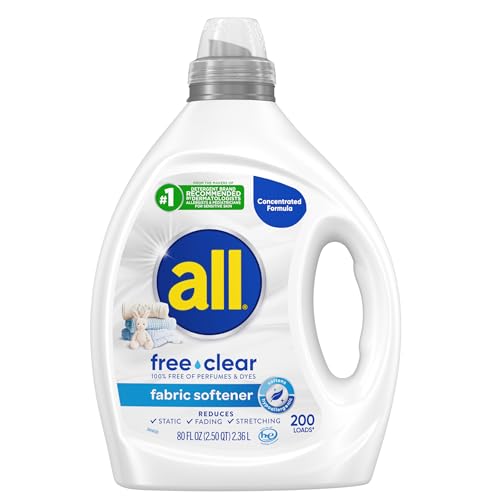
The sensitive-skin option in this group: no dyes, no perfume, and a hypoallergenic formula from a brand that dermatologists, allergists and pediatricians are said to recommend most often. The 80-ounce bottle is concentrated and claims 200 loads, the highest count here. It softens and is sold as reducing static, fading and stretching, and it pairs with the matching detergent for a fully fragrance-free routine.
What stands out
- No fragrance, no dyes and nothing to mask odors
- 200 loads from a concentrated 80-ounce bottle, the best yield here
- Marketed for eczema-prone skin by a dermatologist-recommended brand
Watch out for
- Nothing to mask musty towels or stale gym clothes
- Concentrated dose is easy to overpour into the cap
Downy Calm Liquid Fabric Softener, White Tea and Bergamot Scent, 93 fl oz, 138 Loads

Downy's Calm line in White Tea and Bergamot, with neroli and musk underneath. The current formula carries more softening ingredients than the older Infusions version and more than detergent alone, according to the brand. The 93-ounce bottle is listed at 138 loads and is safe on all fabric types and machines. It sits mid-range on scent: noticeable in the drum, not a candy-store blast.
What stands out
- More softening agents than the previous Infusions formula
- Balanced white tea scent rather than a heavy floral
- 138 loads from a 93-ounce bottle, same as the Calm line
Watch out for
- Fragranced, so not a fit for reactive skin
- Scent stacks with the matching beads and scented detergent
Downy Gentle Soft + Fresh Fabric Softener Liquid, Ocean Mist Scent, 93 fl oz, 138 Loads, Liquid Fabric Softene

Downy's attempt at a softener that scent-sensitive people can still use. It is dermatologist-tested, contains no dyes or heavy perfumes, and the Ocean Mist scent is deliberately light. The bottle is 93 ounces and claims 138 loads, matching the Calm line. The brand says it is safe in all washing machines and expects you to measure it into the softener compartment.
What stands out
- Dermatologist-tested formula that is free of added dyes
- Light Ocean Mist scent rather than a heavy floral
- Same 138-load yield as the Calm bottle at the same size
Watch out for
- Still fragranced, so it is not a fragrance-free choice
- Gentle positioning is not the same as hypoallergenic
ATTITUDE Liquid Fabric Softener, Plant Based, Wildflowers, 40 Loads

A plant-based liquid built on a short ingredient list: a plant-derived conditioning agent, green tea leaf extract, no silicones, no artificial dyes and no MIT or CMIT preservatives. The brand puts it at 98 percent naturally derived under ISO 16128 and sells a refill bag-in-box so the bottle gets reused. Wildflowers is apple over flowers, and a bottle covers about 40 loads in HE or standard machines.
What stands out
- Short, plant-derived ingredient list with no silicones or dyes
- Refillable bottle and bag-in-box refill cut plastic over time
- Rated for both HE and standard washing machines
Watch out for
- About 40 loads per bottle, the shortest run here
- Wildflowers scent is distinct, not a neutral finish
Method Fabric Softener; Beach Sage; 53.5 Ounces; 45 Loads; 1 pack; Packaging May Vary

A 53.5-ounce bottle of Beach Sage, listed at 45 loads, which works out to more than an ounce per wash. Method keeps the pitch simple: soften and fluff fabric, cut static, leave a fresh scent, never test on animals. There is no elaborate claim about fiber technology. Packaging varies between orders, so the bottle that arrives may not match the photo.
What stands out
- Straightforward softening and static control with no extra claims
- Herbal Beach Sage scent instead of another floral
- Cruelty-free formula that is never tested on animals
Watch out for
- 45 loads from 53.5 ounces is a generous dose per wash
- Little detail published about the actual softening ingredients
MRS. MEYER'S CLEAN DAY Liquid Fabric Softener, Rain Water, 32 fl oz
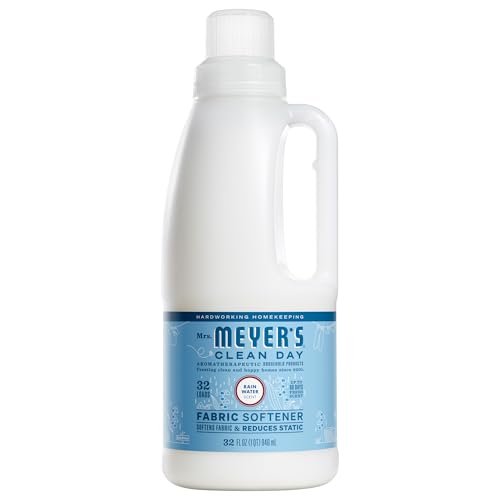
The smallest bottle in the group at 32 ounces, listed at up to 32 loads. Rain Water is a clean, slightly green scent built on essential oils rather than a heavy perfume. The formula skips parabens, phthalates and animal-derived ingredients, is Leaping Bunny certified, and works in both HE and conventional machines. It is the bottle to try when shelf space is tight or you want to sample a scent.
What stands out
- Fits tight shelves and small laundry cupboards without a struggle
- No parabens, phthalates or animal-derived ingredients in the bottle
- Works in both HE and conventional washing machines
Watch out for
- 32 loads per bottle means frequent repurchasing in a busy house
- Essential-oil scent still counts as fragrance on skin
Wickit

Wickit is the outlier here: a softener sold on what it does not leave behind. The brand says its patented technology smooths fibers without the waxy coating that makes towels water-repellent and clogs performance knits, and it markets the product for activewear and towels as much as everyday clothes. It also claims a 40 percent cut in microplastics and 33 percent less dryer time, figures that come from the brand rather than independent testing. No load count is published.
What stands out
- Marketed as safe for towels and performance fabrics
- No-waxy-film claim suits activewear, towels and microfiber cloths
- Designed to go in the rinse alongside regular detergent
Watch out for
- Drying-time and microplastic figures are the brand's own claims
- No published load count, so value per wash is unclear
Buying guide
Liquid versus sheet: what the format actually changes
A dryer sheet is a coating on paper that transfers in heat, inside the drum, at the end of the process. A liquid is a concentrate you put into water, during the rinse, before the clothes ever reach the dryer. That single difference decides dose and timing, and it is why the two products are not interchangeable even when they promise identical softness. With a liquid you can give half a cap to a light load of shirts and a full cap to a heavy one of denim. With a sheet you get one sheet, or a torn half if you bother.
The practical advantage of liquid is dilution. A measured dose mixed into rinse water spreads evenly through the drum instead of sitting against one sleeve, which is what causes the pale patches people mistake for detergent residue. The practical risk is also the dispenser. A clogged siphon or a drawer that drains early can dump the whole cup into the wash, where detergent lifts it straight back off the fabric and sends it down the drain. Check the compartment before you blame the product for stiff towels.
Load counts are a marketing unit, not a measurement
The load number on the front of the bottle is a dose assumption, not a standard. Gain's 140-ounce bottle claims 190 loads, which works out to roughly three-quarters of an ounce per wash. The all free clear 80-ounce bottle claims 200 loads, closer to four-tenths of an ounce because it is concentrated. Mrs. Meyer's 32-ounce bottle claims 32 loads, a full ounce each. All three are describing a legitimate dose. None of them are describing the same dose, and none of them know how big your drum is.
That matters because most people fill the cap by eye. On a concentrated formula the cap is smaller, so a habitual full cap delivers nearly double the intended amount, which is how dispensers end up clogged and towels end up waxy. Use the marked lines, not the width of the cap opening. If your water is already soft, start at half the suggested dose and add only if a load still feels stiff. Hard water is a separate problem that fabric softener cannot solve.
Scent is the part that stays against your skin
Fragrance is the most common reason people abandon softener, and the labels here sort themselves neatly. The all free clear bottle has no perfume and no dyes at all. Downy Gentle is dermatologist-tested and built without dyes or heavy perfume, but it still carries an Ocean Mist scent. Downy Calm sits a step stronger, with white tea, neroli and musk. Gain is the loudest of the eight and is designed to be. Dermatologist-tested is not the same promise as fragrance-free, and the difference matters if you are buying for a reaction rather than a preference.
Scent also stacks. If your detergent is scented, your softener is scented, and you add beads or a dryer sheet, the load can finish with four fragrance systems competing. One scented product per load is usually enough, and the softener is the one to drop, because it sits closest to skin all day. In a house with eczema, asthma or migraines, buy the fragrance-free bottle and spend the difference on an extra rinse cycle instead.
Where softener works against you: towels, activewear, microfiber
Conditioning agents soften by coating fibers, and that coating is the entire problem on the wrong fabric. On cotton terry it blocks the loop from taking up water, so a towel feels smooth in the hand and then smears moisture across your back. On polyester wicking knits it interferes with the capillary action that pulls sweat away from skin. On microfiber it can seal the split fibers that do the cleaning. None of this shows up after one wash; it accumulates over months until the fabric quietly stops doing its job.
Two products here address that directly. Wickit is sold specifically as safe for performance fabrics and towels, with the claim that it smooths fibers without the waxy film. ATTITUDE leans on a short, plant-derived ingredient list rather than heavy conditioning. Even so, the safest rule is mechanical: keep softener off towel loads and gym loads entirely, use it on shirts, denim and bedding, and run a hot wash with detergent only every few weeks to strip what has built up.
Dispensers, dosing balls and the clog nobody notices
Front-loaders siphon the softener cup during the rinse. When the drawer is filmed with old product, the siphon can start early, during the wash, and the softener exits with the detergent before it has any fabric to condition. That is why a bottle can seem to do nothing at all in one machine and work fine in another. Pull the drawer out, run it under hot water, and clear the tube with a bottle brush every month or so. It is a two-minute job that fixes a surprising number of softness complaints.
Top-loaders without a dispenser need a dosing ball, or a capful diluted in a quart of water and added at the rinse fill. Never pour concentrate directly onto clothes, because the spots it leaves are difficult to rinse out. High-efficiency machines use far less water, which makes the same dose stronger and the margin for error smaller; a cap that was correct in an old top-loader can be too much in a new front-loader.
Frequently asked questions
Can I use liquid fabric softener in a front-load washer?
Yes, through the softener compartment only. Front-loaders siphon that cup during the rinse, which is when the product works. If the drawer or siphon tube is filmed with old softener, the cup can drain early and the dose gets flushed out with the detergent. Rinse the drawer in hot water once a month and most of that problem disappears.
Does liquid fabric softener stop static cling?
Partly. It lubricates fibers in the rinse, so there is less friction to build a charge, but a hot tumble in dry winter air puts static straight back. That is why dryer sheets and wool balls exist. If static is your main complaint, shorten the dryer cycle and add a dryer product rather than pouring more softener into the wash.
Is fabric softener safe for baby clothes?
Most mainstream brands say yes when used as directed, and at least one plant-based option here names baby clothes as suitable. The cautious approach is a fragrance-free formula at half dose, because an infant's skin is thinner and fragrance is the usual irritant. Skip it on flame-resistant sleepwear, where the coating can work against the protection.
How much softener should I actually use?
Fill the cap to the line for a full load and use half for a small one. More product does not mean softer clothes; past a point it just leaves residue in the drum and on fabric. If your water is already soft, drop to half a dose. If it is hard, softener will not fix that, because that is a water-softening job.
Will fabric softener ruin my towels?
Over time, yes. The agents that make cotton feel smooth also coat terry loops and block water absorption, so towels turn slick and start to smell sour because they dry slowly. Wash towels without softener, or use it every fourth or fifth wash, and they will stay absorbent far longer.
Verdict
For most households the pick is Downy Gentle Soft + Fresh. It is dermatologist-tested, free of dyes and heavy perfume, and the 93-ounce bottle covers 138 loads, so you are not restocking every month. The Ocean Mist scent is present without being loud, and it is rated for any machine.
The value pick is Gain Original: one 140-ounce bottle covers 190 loads, one of the longest runs here, and it works at every water temperature. Buy it if scent is the point and nobody in the house reacts to fragrance. The upgrade is Wickit for anyone who has given up on softening towels and gym clothes, though its drying-time and microplastic figures are the brand's own claims. If skin is the constraint, all free clear is the safer default.