The first sign is rarely noise. It is a glass in the kitchen cabinet that has started to ring during the spin, or a picture that has moved a quarter inch on its hook. A washer on a second floor does not just make sound; it puts energy into a wood-framed floor, and the floor passes it along to everything attached to it, including the room directly below.
That changes how you shop. Drum size and cycle count still matter, but the deciding specs become the suspension, the motor, the weight of the cabinet and the spin speed on the heaviest load. A 5.0-cubic-foot machine that hits 1,300 RPM with an unbalanced load will shake a house in a way a smaller, better-damped machine will not. A light top loader that thumps across a span can be worse than a heavy front loader that stays planted.
There is also the part nobody photographs: the pan, the hoses and the shutoff valve. A leak on the ground floor is a mop. A leak above a finished ceiling is a contractor, a dehumidifier and a claim. The install matters as much as the appliance, and the appliance has to be chosen for the install you can actually do.
We compared specifications, features and owner reports, and picked with the floor, the stairwell and the ceiling below in mind. Where a listing's numbers contradict the machine, we say so rather than repeat them.
Top picks at a glance
Kenmore 4.5 cu. ft. Front Load Washer
Check price on AmazonMidea MLTW41A1BMG 4.1 Cu. Ft. Gray Top Load Washer
Check price on AmazonLG WM4200HWA 5.0 cu ft Front‑Load Washer, Steam Wash, Allergiene™ Cycle, Large
Check price on AmazonCompare the shortlist
| Model | Type | Capacity | Key feature | Amazon |
|---|---|---|---|---|
| 1. Kenmore 4.5 cu. ft. Front Load Washer | Front-load | 4.5 cu ft | Steam | Check price |
| 2. Midea MLTW41A1BMG 4.1 Cu. Ft. Gray Top Load Washer | Top-load | 4.1 cu ft | Top-load | Check price |
| 3. LG WM4000HBA 4.5 Cu. Ft. Smart Front-Load Washer, High-Efficienc | Front-load | 4.5 cu ft | High efficiency | Check price |
| 4. BLACK+DECKER 4.1 Cu. Ft. Top Load Washing Machine with Agitator, | Top-load | 4.1 cu ft | Delay start | Check price |
| 5. LG WM4200HWA 5.0 cu ft Front‑Load Washer, Steam Wash, Allergiene | Washers | 5.0 cu ft | Steam | Check price |
| 6. GE PROFILE 28 Inch Smart Front Load Washer with 4.8 cu. ft. Capa | Front-load | 4.8 cu ft | Connected controls | Check price |
| 7. LG WM3470CM 27 Inch Front Load Washer with 5.0 Cu. Ft. Capacity, | Front-load | 5.0 cu ft | Front-load | Check price |
| 8. LG WT8400CW 5.5 Cu. Ft. White Mega Capacity Smart Top Load Washe | Top-load | 5.5 cu ft | Connected controls | Check price |
| 9. Electrolux 27 in. W 4.5 cu. ft. Front Load Washer with SmartBoos | Front-load | 4.5 cu ft | Steam | Check price |
| 10. Samsung 4.5 cu. ft. High Efficiency Front Load Washer with Vibra | Front-load | 4.5 cu ft | Low noise | Check price |
Detailed reviews
Kenmore 4.5 cu. ft. Front Load Washer

Kenmore's 4.5-cubic-foot front loader lists 12 cycles, five temperatures, an extra rinse, steam treatment and an Accela wash that the company says cleans a full load up to 26 percent faster than its standard cycle. Express Wash handles a small load in 25 minutes, and Cold Clean is claimed to use up to 90 percent less energy than the normal cycle. It is Energy Star certified and weighs 216 pounds.
What stands out
- 4.5 cubic feet with steam and 12 cycles
- 25-minute express wash for small, lightly soiled loads
- Cold Clean cycle and Energy Star certification listed
Watch out for
- 216 pounds makes it a two-person stair carry
- 34-inch depth needs a genuinely deep alcove or room
Midea MLTW41A1BMG 4.1 Cu. Ft. Gray Top Load Washer
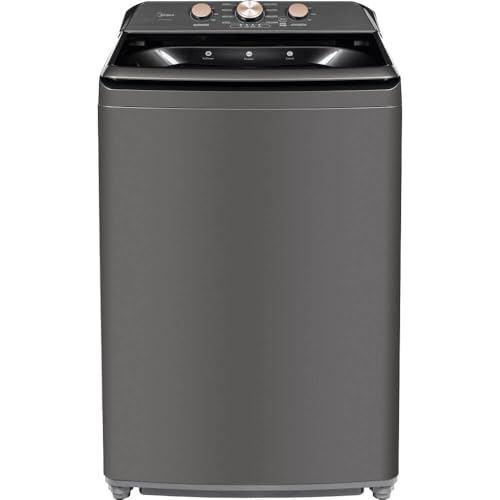
A 4.1-cubic-foot top loader in gray, with a high-water option, a tub-clean cycle, automatic load sensing and eight presets. It is 29 inches wide, 28 deep and 46 tall, and it weighs 128 pounds, which makes it one of the easier machines here to move upstairs. The high-water setting is useful for bulky items, though a vertical basket is harder to balance than a front-load drum.
What stands out
- 4.1 cubic feet and eight preset wash cycles
- High-water option that suits bulky, heavy bedding loads
- 128 pounds, manageable on a narrow stair run
Watch out for
- 46 inches tall, so check the ceiling and door
- Vertical basket thumps when the load is uneven
LG WM4000HBA 4.5 Cu. Ft. Smart Front-Load Washer, High-Efficiency Laundry Machine with Wi-Fi Connectivity, Bla

LG's WM4000HBA is a 4.5-cubic-foot front loader in black steel with TurboWash 360, ThinQ Wi-Fi control and the Allergiene cycle, which the company says removes 95 percent of pet dander and dust. It weighs 198.4 pounds. The listing gives a width of 42 inches, which is a carton or a data error rather than a cabinet measurement, so confirm the real dimensions before you plan the opening.
What stands out
- 4.5 cubic feet with TurboWash 360 on board
- Allergiene cycle targets pet dander and household dust
- ThinQ app control and remote monitoring from a phone
Watch out for
- Listed width of 42 inches is clearly wrong
- No weight or height detail beyond the basics
BLACK+DECKER 4.1 Cu. Ft. Top Load Washing Machine with Agitator, BTLW41MW

A 4.1-cubic-foot top load washer with an agitator, a glass lid, a stainless tub, 10 cycles and a 24-hour delay, running on 120 volts. At 25.75 inches wide and 116.83 pounds it is the lightest full-capacity machine here, and the easiest to get up a narrow stair. The agitator is effective on heavy soil and hard on delicates. It is the straightforward choice when the laundry is upstairs and the budget is not.
What stands out
- 116.83 pounds, the lightest full-size machine in this group
- 10 cycles and a stainless steel wash tub
- 24-hour delay and standard 120-volt household power supply
Watch out for
- Agitator is rough on knits, wool and delicates
- 42.13 inches tall with a lid that needs clearance
LG WM4200HWA 5.0 cu ft Front‑Load Washer, Steam Wash, Allergiene™ Cycle, Large Capacity, SmartThinQ® Wi‑Fi Ena

A 5.0-cubic-foot front loader with steam, the Allergiene cycle, TurboWash 360, Energy Star certification and SmartThinQ Wi-Fi. It is 27 inches wide by 33.25 deep and 39 tall, and it weighs 201.5 pounds. The drum is large enough for a king comforter, which is the main reason to accept the weight on a second floor. The published dimensions are consistent, unlike several listings in this group.
What stands out
- 5.0 cubic feet with TurboWash 360 and steam
- Steam plus the Allergiene cycle for household allergens
- Published dimensions are consistent and usable for planning
Watch out for
- 201.5 pounds to haul up a narrow stairwell
- 33.25 inches deep before you add the hoses
GE PROFILE 28 Inch Smart Front Load Washer with 4.8 cu. ft. Capacity in White GFW550SSNWW

GE Profile's 28-inch, 4.8-cubic-foot front loader includes the UltraFresh Vent system with OdorBlock, which airs and dries the drum between washes, plus built-in Wi-Fi through SmartHQ, a 20-minute quick wash and a 35-minute time-saver mode. It weighs 246 pounds, the heaviest machine here, and stands 39.75 inches tall. The vent system is the feature that matters most in a warm upstairs closet.
What stands out
- UltraFresh Vent with OdorBlock keeps drum moisture down
- 4.8 cubic feet and a 20-minute quick wash
- SmartHQ Wi-Fi control and cycle alerts on a phone
Watch out for
- 246 pounds is the heaviest machine in this group
- 28 inches wide needs a wider opening than most
LG WM3470CM 27 Inch Front Load Washer with 5.0 Cu. Ft. Capacity, 8 Wash Programs, 1,300 RPM, SpeedWash Cycle,

A 27-inch, 5.0-cubic-foot front loader with eight wash programs, a 1,300 RPM spin, SpeedWash, SmartDiagnosis, rinse and spin, a control lock, 6Motion and ColdWash. It is 39 inches tall and 33 deep, and it pairs with the DLE3470M dryer. No weight is published. The 1,300 RPM spin is the highest here, which is good for drying and demanding on the floor.
What stands out
- 5.0 cubic feet with a 1,300 RPM spin
- SpeedWash and ColdWash cycles for time and energy
- Control lock plus SmartDiagnosis for basic fault codes
Watch out for
- No weight published anywhere, which complicates stair planning
- High spin speed transfers more vibration into the floor
LG WT8400CW 5.5 Cu. Ft. White Mega Capacity Smart Top Load Washer w/EasyUnload
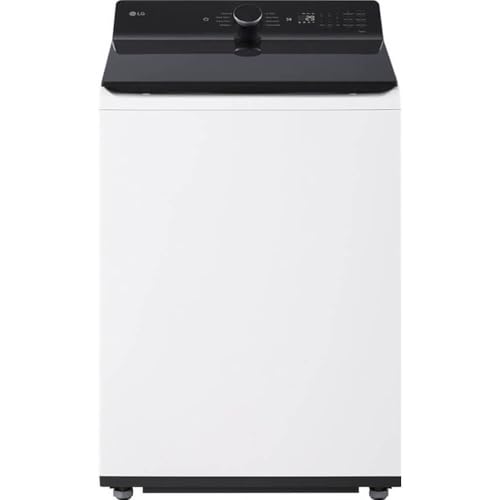
LG's WT8400CW is a 5.5-cubic-foot top loader with an EasyUnload design, built-in AI that selects wash settings and a reworked lid and drum layout. It weighs 130 pounds, which is light for its capacity and makes it a realistic stair carry. The trade is the vertical basket: at this size an unbalanced load moves a lot of mass, and the machine needs a solid floor and careful loading.
What stands out
- 5.5 cubic feet, the largest capacity in this group
- 130 pounds, which is light for the drum size
- AI wash settings and an EasyUnload drum layout
Watch out for
- Vertical basket shakes badly on unbalanced, bulky loads
- Placeholder dimensions on every line of the listing
Electrolux 27 in. W 4.5 cu. ft. Front Load Washer with SmartBoost, LuxCare Plus Wash System, Perfect Steam in

Electrolux's 27-inch, 4.5-cubic-foot front loader uses SmartBoost to premix detergent before it reaches the drum, Perfect Steam for stains, and the LuxCare Plus wash system. The adaptive dispenser takes pods, liquid or powder, with separate compartments for bleach and softener, and the cycle list runs past eleven programs. It is 38 inches tall, 32 deep and 217 pounds. A solid, well-damped machine for a family floor.
What stands out
- SmartBoost premixes detergent before it reaches the drum
- Perfect Steam plus more than eleven wash cycles
- Adaptive dispenser takes pods, liquid or powder detergent
Watch out for
- 217 pounds needs a dolly and two people
- 32 inches deep before you allow for hose clearance
Samsung 4.5 cu. ft. High Efficiency Front Load Washer with Vibration Reduction Technology+, White, WF45T6000AW
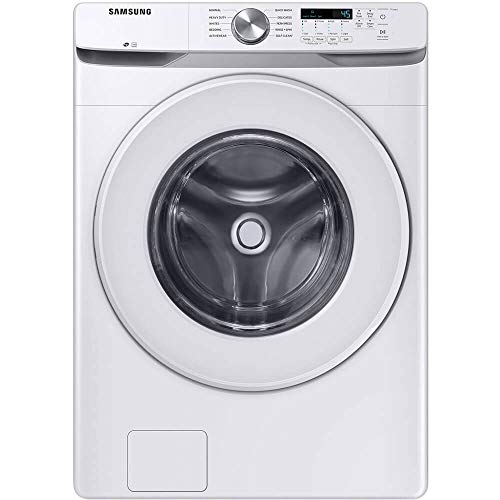
Samsung's 4.5-cubic-foot front loader is the one machine here that names vibration reduction as a feature: Vibration Reduction Technology+ is credited with quieter washing, and the Swirl+ drum interior is designed to pull more water out on the spin. It lists Energy Star certification, 27 inches of width, 31.1 of depth and 38.7 of height, and 200 pounds. The feature list is short, but every line addresses the reason laundry upstairs is difficult.
What stands out
- Vibration Reduction Technology+ targets noise and movement
- 4.5 cubic feet with Energy Star certification
- Published width, depth, height and weight all match the class
Watch out for
- Short feature list, with no steam or Wi-Fi named
- 31.1 inches deep before hoses and clearance
Buying guide
Why Upstairs Laundry Is a Structural Problem
A washer and its water are heavy. A 4.5-cubic-foot front loader weighs around 216 pounds empty, and a full drum adds close to a hundred pounds more. Put that on a wood-framed floor between two joists and spin it at 1,300 RPM, and the load is no longer static: it is a rotating mass that changes direction every few seconds. If the floor's natural frequency is anywhere near the spin frequency, the whole span joins in.
Placement helps more than any accessory. Put the machine against a load-bearing wall or over a beam, not in the middle of a long span, and avoid the spot directly above a china cabinet or a bed. A plywood pad under the machine spreads the load and damps some of the vibration. If the floor bounces when you walk across it, fix that before you buy a washer, because no machine is quiet on a springy floor.
Motors, Suspension and the Quiet Claim
Only one machine here names vibration as a design target: the Samsung 4.5 lists Vibration Reduction Technology+, which the company credits with quieter washing, along with a Swirl+ drum interior that it says extracts more water more quickly. That is the most specific quiet claim in the group, and the machine is also Energy Star certified and 200 pounds, which is heavy enough to sit still but light enough for two people to manage. Its published 27-inch width, 31.1-inch depth and 38.7-inch height agree with the class of machine.
Front loaders have a structural advantage that no feature list changes. The drum spins on a horizontal axis, so gravity helps balance the load and the suspension can absorb the motion in two directions. A top loader spins a vertical basket, and an unbalanced blanket climbs the side and thumps. That is why the top loaders here, including the 4.1-cubic-foot models at 42 to 46 inches tall, are better suited to a ground-floor laundry than to a room above a bedroom.
Weight, Delivery and the Stairwell
The weights in this group run from 116.83 pounds for the BLACK+DECKER 4.1 top loader to 246 pounds for the GE Profile 4.8. The Kenmore 4.5 is 216, the Electrolux 4.5 is 217, the LG 5.0 is 201.5, the Samsung 4.5 is 200 and the Midea 4.1 is 128. Under 150 pounds, two strong people can move a machine with a strap. Over 200, you want an appliance dolly and a second pair of hands, and you want to walk the route before the truck arrives.
The stairwell is the real gate. A 27-inch machine will pass a 30-inch door, but the turn at the landing is where cabinets get gouged. Measure the narrowest point, the ceiling height on the stair, and the handrail projection. Remove the door and the railing if they come off, and take the machine out of its carton at the curb if the carton adds inches. Delivery crews do this every day and still refuse installations that a tape measure would have predicted.
Before You Measure, Check the Listing
The specifications on appliance listings are not always the specifications of the appliance. The LG WM4000HBA here lists a 42-inch width, which is wider than a standard doorway and roughly the width of a shipping carton. The LG WT8400CW lists 10 inches in every dimension, which is a placeholder, not a cabinet. Neither number should go into a floor plan. Cross-check any figure that looks wrong against the manufacturer's spec sheet or the model number on the retailer's page.
The numbers you do want are depth, width, height, weight and door-open depth. Weight tells you what the stairs will demand. Depth with the door open tells you whether the machine can be loaded in the room you have. A 27-inch front loader needs roughly 43 inches of depth with the door at 90 degrees, and that is the measurement that decides between a front loader and a top loader in a narrow upstairs hallway.
Leaks, Pans and the Install Day That Saves a Ceiling
A supply hose failure upstairs is the most expensive thing that can happen to a laundry installation. Use braided stainless hoses rather than rubber, replace them every five years whether they look fine or not, and turn the valves off when you leave for a week. A drain pan under the machine with a float switch that cuts power to the pump is cheap insurance, and some codes require a pan for an upper-floor installation. Check with your local building department before you skip it.
On install day, level the machine with a spirit level on the top panel, front to back and side to side, and lock the feet. Remove the shipping bolts before the first wash, not after the first complaint. Run a short cycle with no clothes and watch the drain hose where it enters the standpipe, because a hose that jumps out under pressure will do it on the first load or the fiftieth. Keep the shutoffs reachable, and leave the manual where the next owner of the house can find it.
Frequently asked questions
Can I put a washing machine on the second floor?
Usually yes, if the floor is framed to code and the machine sits near a load-bearing wall. The load is the machine plus water plus a spinning drum, and older homes with long, shallow joists handle it less well. If the floor feels springy, have a contractor look before you install, not after.
How do I stop a washing machine from shaking the floor?
Balance the load, level the machine, and use a lower spin speed for small or bulky items. Put the machine against a load-bearing wall and set it on a plywood pad. Anti-vibration feet help a little, but they cannot fix a floor that flexes. An out-of-balance drum is the usual cause, not the machine.
Are front loaders quieter than top loaders?
Generally yes, because the drum spins horizontally and the suspension absorbs motion in two directions. A top loader's vertical basket thumps when a blanket climbs one side. The gap widens at high spin speeds. A front loader with a vibration-reduction system is the quietest option here, though installation and floor structure matter just as much.
Do I need a drain pan under an upstairs washer?
It is strongly recommended and may be required by local code. A pan with a float switch shuts the machine down if water collects, which turns a ceiling repair into a mop-up. Pair it with braided hoses and accessible shutoff valves. The pan costs far less than the drywall below it.
Will a washing machine fit up my stairs?
Most 27-inch machines pass a 30-inch doorway, but the landing turn and the handrail are the usual failures. Measure the narrowest point and the ceiling height on the stair, and remove doors and railings where possible. Above 200 pounds, hire movers with an appliance dolly rather than risking the machine and the wall.
Verdict
Quiet on a second floor starts with the Samsung 4.5. It is the only machine here that names vibration reduction in its own feature list, with Vibration Reduction Technology+ and a Swirl+ drum that is designed to pull more water out on the spin. Around that it lists 4.5 cubic feet, Energy Star certification and a 200-pound cabinet with published dimensions that agree with the machine. The value pick is the BLACK+DECKER 4.1 top loader: 116.83 pounds, 10 cycles, a stainless tub and a 24-hour delay, which is easy to carry upstairs and easy to live with.
Step up to the GE Profile 4.8 and you get the UltraFresh Vent system, which addresses the damp, musty drum that upstairs laundry rooms are prone to, plus a 20-minute quick wash for the load you forgot. Choose the Electrolux 4.5 instead if stain removal matters more, and the LG 5.0 if you want a similar drum size in a standard cabinet with published dimensions.