Every connected washer has an energy screen now, and almost every one of those screens is an estimate. The machine counts cycles, multiplies by a modeled figure and draws a tidy bar chart. It does not measure the current running through the cord. That is not a scandal, but it does mean the dashboard is closer to a fuel gauge than to the meter on the side of the house.
Real measurement lives at the breaker panel, where a clamp sensor can watch the laundry circuit and report actual watts. That is a separate purchase, and a worthwhile one if you want to know what a hot wash costs in your own home. Inside the machine, the levers that matter are duller: water temperature, load size, cycle length and how much water the spin leaves in the clothes.
We compared specifications, features and owner reports across ten machines, from a 4.1 cubic foot high-efficiency top loader to a 66-pound commercial extractor. None of them ships with a revenue-grade energy meter. What separates them is how well they use hot water, how fast they spin, and whether their format fits the room you actually have.
Top picks at a glance
Midea MLTW41A1KIT1 Gray Top Load Washer and Dryer Pair MLTW41A1BGPR 4.1 Cu Ft
Check price on AmazonROVSUN 17.6LBS Full Automatic Washing Machine and 1.5CuFt Portable Clothes Dry
Check price on AmazonWYDDDARY Commercial Washer Extractor 66LBS Heavy-Duty Laundry 220V 1PH
Check price on AmazonCompare the shortlist
| Model | Type | Capacity | Key feature | Amazon |
|---|---|---|---|---|
| 1. Midea MLTW41A1KIT1 Gray Top Load Washer and Dryer Pair MLTW41A1B | Top-load | 4.1 cu ft | Low noise | Check price |
| 2. Electrolux 4.5 cu. ft. Stacked Washer and 8.0 cu. ft. Gas Dryer | Gas | 4.5 cu ft | Stackable | Check price |
| 3. GE GUD27ESSMWW Unitized Spacemaker 3.8 Washer with Stainless Ste | Electric | 5.9 cu ft | Stainless drum | Check price |
| 4. Banfluxion Automatic Laundry Washing Machine Commercial/Industri | Stain remover | — | Auto-dispense | Check price |
| 5. WYDDDARY Commercial Washer Extractor 66LBS Heavy-Duty Laundry 22 | Smart Energy | — | Connected controls | Check price |
| 6. ROVSUN 17.6LBS Full Automatic Washing Machine and 1.5CuFt Portab | Portable | 1.5 cu ft | Quick cycle | Check price |
| 7. Auertech Portable Washer and Dryer Combo, 20 Lbs Twin Tub Washin | Portable | 1.5 cu ft | Low noise | Check price |
| 8. Sekido All-in-One Washer Dryer VENTLESS/VENTED PET cycle 1.62cf/ | Ventless | — | Ventless | Check price |
| 9. HayWHNKN Industrial Laundry Washing Machine 220V 1PH | Compact | — | Inverter motor | Check price |
| 10. Equator Premium Stackable 15 Lbs Washer 1.62cf 110V+Vented Digi | Stackable | — | Stackable | Check price |
Detailed reviews
Midea MLTW41A1KIT1 Gray Top Load Washer and Dryer Pair MLTW41A1BGPR 4.1 Cu Ft High Efficiency Washer and 6.7 C
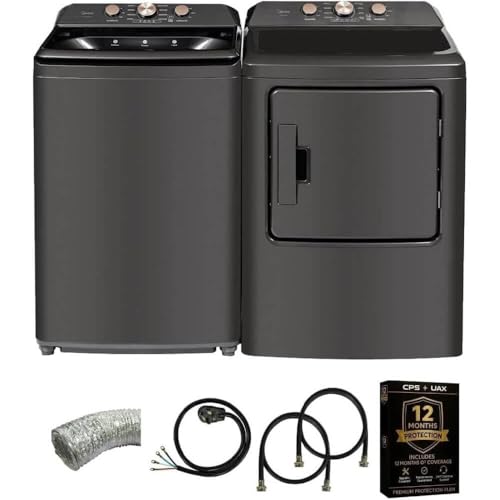
Midea's pair combines a 4.1 cubic foot high-efficiency top-load washer with a 6.7 cubic foot electric dryer in a matching gray finish. The washer is the efficiency story: a top-load design with preset cycles intended to use less water per load. The dryer handles bulky items, and both units use digital controls. No energy meter or app dashboard is documented in the listing.
What stands out
- 4.1 cubic feet is a useful size for a top loader
- Matching 6.7 cubic foot dryer handles bulky bedding
- High-efficiency wash motion cuts water use per cycle
Watch out for
- No energy monitoring or app reporting is listed
- Dimensions are missing from the listing, so measure first
Electrolux 4.5 cu. ft. Stacked Washer and 8.0 cu. ft. Gas Dryer Laundry Tower in Titanium with SmartBoost Prem

Electrolux's gas tower stacks a 4.5 cubic foot front-load washer under an 8.0 cubic foot dryer in titanium. SmartBoost premixes detergent and water before the wash, which is the feature Electrolux leads with, and the tower is aimed at closets where two separate machines will not fit. The gas dryer needs a gas line and venting, and the cabinet is 76.25 inches tall.
What stands out
- 8.0 cubic foot dryer is large for a stacked unit
- SmartBoost premixing helps get results from cold-water washes
- Titanium finish hides lint and dust better than white
Watch out for
- Gas hookup and venting limit where it can go
- No energy dashboard or per-cycle data in the listing
GE GUD27ESSMWW Unitized Spacemaker 3.8 Washer with Stainless Steel Basket and 5.9 Cu. Ft. Capacity Electric Dr
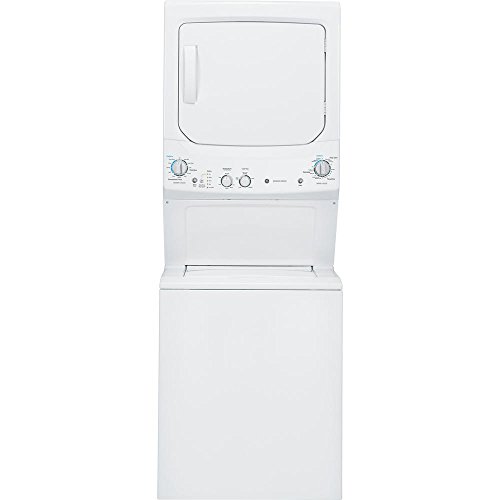
GE's Unitized Spacemaker puts a 3.8 cubic foot washer and a 5.9 cubic foot electric dryer in one 75.875-inch cabinet. The washer uses load sensing to add only the water it needs, and 11 cycles cover the usual fabric mix, with status lights showing where the cycle stands. It is a practical choice for a rental or a narrow alcove, and the smaller drum keeps water and energy use in check.
What stands out
- Load sensing adds only the water the load needs
- One cabinet fits neatly in a 26.75-inch-wide alcove
- Cycle status lights show progress without an app
Watch out for
- 3.8 cubic feet is small for a family's bedding
- No app or energy monitoring in the listing
Banfluxion Automatic Laundry Washing Machine Commercial/Industrial Wash+Spin Washer with 33lbs Dry Clothes Cap

This is a commercial washer, not a laundry-room appliance: 33 pounds of dry clothes, 220-volt single-phase power, a 304 stainless drum and a 1.97-inch drain port. The LCD panel controls wash, hot water, heat, drain and stepless spin adjustment. It needs a qualified installer, a floor that can take the weight, and a business case for washing that volume on site.
What stands out
- 33-pound capacity suits hotels and small commercial laundries
- 304 stainless drum and shell resist detergent corrosion
- Large 1.97-inch drain port resists lint and debris clogs
Watch out for
- 220-volt single-phase power is not a household circuit
- No energy reporting beyond the basic control panel
WYDDDARY Commercial Washer Extractor 66LBS Heavy-Duty Laundry 220V 1PH

WYDDDARY's extractor handles 30 kilograms, about 66 pounds, of dry clothes per cycle at 620 rpm. The three-function cycle covers wash, rinse and spin without a manual transfer, and the 12 kW heater supports high-temperature washing. A full suspension system means it can sit on a floor without a foundation, which is unusual for equipment of this size in a commercial laundry.
What stands out
- 66-pound capacity cuts the number of commercial cycles
- 620 rpm extraction cuts residual moisture before drying
- Full suspension means no concrete foundation is needed
Watch out for
- 12 kW heating load needs serious electrical service
- Oversized for anything except a commercial laundry operation
ROVSUN 17.6LBS Full Automatic Washing Machine and 1.5CuFt Portable Clothes Dryer Set, Compact Laundry Washer a
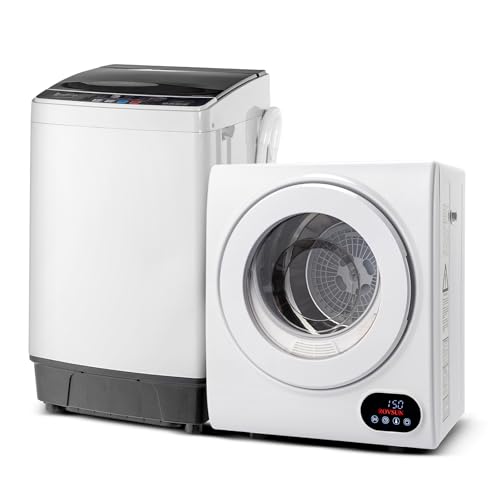
ROVSUN pairs a 17.6-pound automatic washer with a 1.5 cubic foot portable dryer. The washer offers eight modes, five water levels and a 26-minute quick cycle; the dryer uses 850 watts and up to 140 degrees Fahrenheit, with a practical limit of about 5.5 pounds per load for fast drying. The set is aimed at apartments and dorms, and neither unit reports energy use.
What stands out
- 26-minute quick wash suits small and frequent loads
- Eight modes and five water levels add flexibility
- Dryer runs on a standard 850-watt heating element
Watch out for
- Fast drying is limited to about 5.5 pounds
- No energy monitoring is listed for either unit
Auertech Portable Washer and Dryer Combo, 20 Lbs Twin Tub Washing Machine, 1.5 Cu.Ft Compact Clothes Dryer, Po

Auertech's twin-tub set separates washing and spinning: a twin-tub washer with independent timers, plus a 1.5 cubic foot dryer rated at 850 watts. The wash timer runs to 15 minutes and the spin timer to five, so you control each stage rather than choosing a preset. It is a machine you load and transfer by hand, aimed at apartments and RVs, with a faucet adapter for quick hookup.
What stands out
- Independent wash and spin timers give direct control
- Twin tub handles bedding and family-size laundry loads
- Faucet adapter makes temporary hookups easy to set up
Watch out for
- Twin-tub washing requires manual transfer of wet loads
- Listing mixes 20- and 28-pound capacity figures across tubs
Sekido All-in-One Washer Dryer VENTLESS/VENTED PET cycle 1.62cf/15lbs 110V (Black)

Sekido's 1.62 cubic foot combo washes and dries in one drum and can be set up vented or ventless. The pet cycle targets hair on fabrics, and the winterize cycle takes about two minutes, which matters for cabins and seasonal units. Touch buttons, a child lock and oversuds control cover daily operation, and the 15-pound rating is honest about the size of load it can handle.
What stands out
- Vented or ventless installation suits rentals and cabins
- Pet cycle removes hair from fabrics in one pass
- Two-minute winterize cycle protects seasonal cabins and RVs
Watch out for
- 15-pound capacity is small for a family's laundry
- No energy reporting appears in the feature list
HayWHNKN Industrial Laundry Washing Machine 220V 1PH

HayWHNKN's industrial washer handles 33 pounds of dry clothes with a 1.5 kW motor and 6 kW of heating, all on 220-volt single-phase power. A variable-frequency drive allows stepless speed adjustment, and the belt drive is intended to run quieter than a direct-drive commercial unit. The 304 stainless cabinet, safety door lock and full suspension point at hotels, schools and factory laundry rooms.
What stands out
- 33-pound drum handles uniforms and heavy workwear loads
- Variable-frequency drive allows stepless wash and spin control
- Belt drive runs quieter than many direct-drive rivals
Watch out for
- Weighs 1,280 pounds before any laundry goes in
- 6 kW heating load requires a commercial circuit
Equator Premium Stackable 15 Lbs Washer 1.62cf 110V+Vented Digi Dryer 3.5cf 110V in White

Equator's stackable pair combines a 15-pound, 1.62 cubic foot washer with a 3.5 cubic foot vented digital dryer, both 110-volt. The washer keeps four memory programs and a pet cycle; the dryer is designed to stack above it. Running both at once saves time, and the 110-volt setup means no dryer circuit, though the dryer still needs a vent.
What stands out
- Both units run on 110 volts, simplifying installation
- Four memory programs save your frequently used settings
- Stacking kit frees floor space in a small room
Watch out for
- Vented dryer still needs a duct to the exterior
- 1.62 cubic foot washer is a small daily load
Buying guide
What a washer can and cannot report
A washer's control board knows cycle selection, water level, temperature and motor speed. It does not know the wattage of the heating element in your water heater, the length of the pipe run, or whether the load was mostly towels. So the energy figure in an app is a model: a typical cycle energy multiplied by how often you run it. It is useful for spotting a week when you did six extra loads, and useless for arguing with a utility bill. The estimate also ignores standby draw and the temperature of the incoming water, which shifts with the season. It is a reasonable guide to your own habits over a month, and a poor guide to next month's bill.
If you want real numbers, put a clamp meter on the laundry circuit. A whole-home monitor with branch sensors can isolate the washer and dryer, and a plug-in meter works for a 120-volt compact. Look for one-second or two-second sampling and accuracy around two percent. Then compare the meter's total with the app's estimate; the gap will teach you more about your habits than any dashboard. One caveat: a clamp sensor reads the whole circuit, so a shared laundry outlet will blend the washer with whatever else is plugged in. Label the breaker, run one cycle at a time, and the numbers get cleaner.
Reading the label and the hot-water share
The annual kWh figure on an ENERGY STAR listing is a modeled number from a standard test cycle, and for washers it includes the energy used to heat water. That is why a 4.5 cubic foot front loader can post a lower annual figure than an older 3.8 cubic foot unitized machine: the test rewards efficient water and heat use, not just drum size. Compare machines of similar capacity and format, and treat the number as a ranking tool rather than a forecast. A commercial extractor's per-pound figure is not comparable with a home washer's annual total, and neither is a compact combo that runs three loads where a full-size machine runs one.
In a real home, heating water is usually the largest share of a wash cycle's energy, which makes temperature the most useful control on the panel. A cold wash on a machine with five temperature settings can cut the cycle's energy dramatically compared with a hot wash, provided the detergent is designed for cold water. Sanitize and allergen cycles deliberately spend more energy, so use them for illness and pet bedding, not for every load of T-shirts. The same logic applies to extra rinses: each one adds water, and hot water adds cost twice, once at the heater and again at the drain.
Spin speed, moisture and the dryer's share
A faster spin does not use much more electricity, but it changes what the dryer has to do. At 1,400 rpm, a front loader leaves noticeably less water in the fabric than a 620 rpm extractor, and the dryer's heating element runs for fewer minutes. That is why spin speed belongs in an energy conversation even though the washer's own consumption barely moves. The catch is fabric care and vibration: high spins are harder on delicates and demand a stable floor. A machine that walks across the room is not saving anything, and a load spun at the highest setting may need a gentler dry.
The dryer is often the bigger energy user in a laundry pair, which is why matching matters. A 6.7 or 8.0 cubic foot dryer with a moisture sensor can stop when the load is dry instead of running a fixed time. Ventless condensing dryers avoid duct losses but dry more slowly, and a clogged lint filter or crushed duct can erase the advantage of a good washer. Clean the filter after every load, check the duct twice a year, and the numbers improve without buying anything. Sensor dry is the feature to look for if you routinely walk away and forget a timed cycle.
Circuits, formats and the commercial edge
Full-size electric dryers need a 240-volt circuit; washers usually run on a dedicated 120-volt line. Gas dryers need a gas line and venting, and commercial washers often specify 220-volt single-phase power with heating loads that a household service cannot carry. Before comparing efficiency, confirm the circuit. A machine that needs a service upgrade is not a bargain, and a 1,280-pound extractor needs a floor structure that can take the weight as well as the voltage. Ask an electrician for the connected load, not just the breaker size.
Format is the other efficiency decision. A stacked tower saves floor space but locks you into one cabinet; a unitized machine is compact but has a smaller drum; a twin tub uses your hands instead of a program. For most homes, the right answer is the smallest machine that handles the weekly load, run full rather than half-empty, on the coolest temperature that gets the clothes clean. That beats any app's bar chart, and it costs nothing. The exception is a household that regularly washes bedding, where a drum that is too small turns one load into three.
Frequently asked questions
Can a washing machine measure its own energy use?
Not to billing accuracy. It estimates energy from cycle type and run time, and it cannot see the gas or electricity used by your water heater. For real measurement, use a clamp meter on the laundry circuit or a plug-in meter for a 120-volt machine, then compare that with the app's estimate.
Is 607 kWh a year a lot for a washer?
It depends on the household and the water heating. The figure is a modeled annual estimate for a standard test cycle, not a promise. Compare it with another machine of similar capacity, and remember that a family running cold washes will land well below the label while a household washing hot towels daily will land above it.
Do top-load washers use more energy than front-loaders?
Often they use more water, and more hot water means more energy, but the gap depends on the model and the cycle. A high-efficiency top loader with load sensing can be close. Read the annual kWh figure and the water factor rather than assuming from the door style alone.
Does a higher spin speed really save money?
It saves dryer time, which is where the energy goes. A 1,400 rpm spin leaves less water than a 620 rpm spin, so the dryer runs shorter. The savings are real but modest per load, and high spins are harder on delicates and can shake a weak floor, so use the highest speed the fabric allows.
Do I need a 240-volt circuit for a commercial washer?
Many commercial washers specify 220-volt single-phase power, and some include heaters in the 6 kW to 12 kW range. That is not a standard household laundry circuit. Have an electrician confirm the service, the breaker and the wire gauge before delivery, and check the floor load for a heavy extractor.
Verdict
The GE Unitized Spacemaker is the top pick for a household trying to cut laundry energy without buying a dashboard. Its 3.8 cubic foot washer senses the load and adds only the water it needs, the 5.9 cubic foot dryer keeps the pair in one cabinet, and 11 cycles cover the usual mix without encouraging a hot wash for everything. The Midea pair is the value choice if you want a 4.1 cubic foot top loader and a 6.7 cubic foot dryer with more room for bedding.
The Electrolux tower is the upgrade: 4.5 cubic feet, an 8.0 cubic foot dryer and SmartBoost premixing, in a 76-inch cabinet that fits a closet. Skip the commercial machines unless you run a business. They are efficient per pound, but the electrical service and floor loading put them out of reach for most homes.