Imagine trying to cram a full laundry setup into a closet-sized nook or a multifunctional room where every inch counts. For countless homeowners and renters navigating tight urban spaces or cleverly repurposed nooks, the traditional side-by-side washer and dryer setup is simply impractical. Enter the laundry center combo – the unsung hero of efficient home design, seamlessly integrating both essential appliances into a single, space-saving unit. As we move further into the 2020s, these integrated solutions are no longer just a compromise for small spaces; they’ve evolved into sophisticated, high-performance hubs that prioritize not just footprint, but also user experience, sustainability, and seamless integration into modern living.
The landscape for laundry solutions in 2026 is defined by smarter engineering and a deeper understanding of diverse household needs. Manufacturers are responding to the relentless pressure of urbanization and the desire for minimalist, clutter-free homes by refining every aspect of the laundry center. It’s not just about shrinking components; it’s about intelligent design that maximizes capacity within minimal dimensions, incorporates cutting-edge technology for performance and convenience, and offers unprecedented flexibility for installation in challenging locations. Choosing the right integrated laundry center has become a critical decision for optimizing your home’s functionality, and understanding the key features and considerations is paramount to finding your perfect match.
Top 10 Laundry Center Combos
Detailed Product Reviews
1. LG WKE100HWA WashTower Stacked Smart Laundry Center 4.5 Cu.Ft. Front Load Washer & 7.4 Cu.Ft. Electric Dryer in White

Overview: This all-in-one WashTower integrates a 4.5 cu.ft. front-load washer and 7.4 cu.ft. electric dryer vertically, designed for space-constrained homes seeking full-size capacity without separate units. It features a central control panel and electric operation.
What Makes It Stand Out: The single-unit stacked design saves significant floor space while accommodating large family loads. The 55-inch maximum depth with doors open ensures practical access, and its efficient 607 kWh/year energy use balances performance with cost-conscious operation.
Value for Money: Priced competitively for a stacked unit, it eliminates the need for two separate appliances and complex installations. While lacking smart features found in pricier LG models, its reliable performance and space efficiency justify the cost for basic laundry needs.
Strengths and Weaknesses: Strengths: Space-saving vertical design; large capacities handle bulky items; intuitive central controls; solid energy efficiency. Weaknesses: No ENERGY STAR certification; lacks smart connectivity (ThinQ app); no steam or advanced cycle options; electric dryer may have higher operating costs than gas.
Bottom Line: A practical, space-efficient solution for families needing reliable large-capacity laundry in tight spaces, though buyers seeking smart features or premium fabric care should consider upgraded models. Recommended for straightforward, high-volume washing and drying.
2. LG WashTower Stacked Smart Laundry Center 4.5 Cu.Ft. Front Load Washer & 7.4 Cu.Ft. Electric Dryer in Graphite Steel WKE100HVA

Overview: This Graphite Steel WashTower merges a 4.5 cu.ft. washer and 7.4 cu.ft. electric dryer into one compact vertical unit, featuring ENERGY STAR certification and LG ThinQ smart technology for modern laundry management.
What Makes It Stand Out: ENERGY STAR certification ensures top-tier energy efficiency without sacrificing performance, while LG ThinQ app integration allows remote cycle monitoring, alerts, and downloadable programs. The center control panel and premium finish enhance usability and aesthetics.
Value for Money: The ENERGY STAR rating translates to lower long-term utility bills, offsetting the initial investment. Smart features add convenience rarely matched at this price point for stacked units, making it a strong value versus non-certified or non-smart alternatives.
Strengths and Weaknesses: Strengths: ENERGY STAR certified for efficiency; LG ThinQ smart connectivity; sleek graphite steel finish; large capacities; ergonomic center controls. Weaknesses: Electric dryer operation costs higher than gas models; no steam functionality for wrinkle reduction; limited advanced wash/dry customization vs. higher-end LG lines.
Bottom Line: An excellent choice for eco-conscious buyers wanting smart features and certified efficiency in a space-saving design. Ideal for tech-savvy households prioritizing energy savings, though gas dryer seekers should look elsewhere.
3. LG WashTower Stacked Smart Laundry Center 4.5 Cu.Ft. Front Load Washer & 7.4 Cu.Ft. Electric Dryer in White w/Steam WKEX200HWA

Overview: This white WashTower elevates LG’s stacked laundry center with integrated steam technology, AI-driven fabric care, and ThinQ connectivity, targeting users seeking premium performance in a compact footprint.
What Makes It Stand Out: TurboWash 360° and TurboSteam deliver faster cleaning and wrinkle reduction, while AI Fabric Sensor and Smart Learner auto-adjust cycles for optimal care. ThinQ app control adds remote convenience, making it LG’s most feature-rich electric stacked model here.
Value for Money: The steam and AI features justify a premium price by reducing ironing time and extending garment life. Competing高端 models lack this integration in a single stacked unit, offering superior long-term value for frequent laundry users.
Strengths and Weaknesses: Strengths: TurboSteam for refreshing clothes and reducing wrinkles; AI-powered fabric care; robust ThinQ connectivity; large capacities; space-saving design. Weaknesses: Higher cost than non-steam models; electric dryer operating expenses; steam feature requires water line connection; complex controls may overwhelm beginners.
Bottom Line: Highly recommended for households wanting advanced fabric care and steam convenience in a smart, space-efficient package. The premium features deliver tangible benefits, making it worth the investment for discerning users.
4. LG WashTower Stacked Smart Laundry Center 4.5 Cu.Ft. Front Load Washer Fully Automatic & 7.4 Cu.Ft. Gas Dryer in Black Steel w/Steam WKGX201HBA

Overview: This Black Steel WashTower uniquely pairs a 4.5 cu.ft. front-load washer with a 7.4 cu.ft. gas dryer in one unit, featuring steam, ENERGY STAR certification, and ThinQ connectivity for efficient, high-end laundry.
What Makes It Stand Out: The gas dryer—rarer in stacked units—lowers drying costs significantly versus electric models. Combined with TurboSteam, ENERGY STAR efficiency, and Wi-Fi controls, it offers unparalleled operating savings and performance in a compact 27-inch-wide design.
Value for Money: Gas drying slashes utility bills long-term, offsetting the higher upfront cost. ENERGY STAR certification and steam functionality further enhance savings, making it exceptionally cost-effective versus electric stacked centers despite initial investment.
Strengths and Weaknesses: Strengths: Gas dryer reduces operating costs; ENERGY STAR certified; steam refresh/care; space-saving 27-inch width; ThinQ remote monitoring. Weaknesses: Requires gas line and venting (complex installation); higher purchase price; annual energy use varies significantly with settings; limited color options.
Bottom Line: A top recommendation for cost-conscious buyers with gas hookups, offering massive drying savings and premium features. Essential for those prioritizing long-term efficiency, though installation complexity may deter some.
5. Electrolux 27 Inch Electric Stacked Laundry Center with 4.5 cu. ft. Washer and 8 cu. ft. Electric Dryer and Reversible Doors (Two Outlets Required): Titanium

Overview: This Titanium-finished stacked unit combines a 4.5 cu.ft. washer and spacious 8 cu.ft. dryer, emphasizing flexibility with reversible doors and a durable stainless steel drum, targeting compact installations.
What Makes It Stand Out: The industry-leading 8 cu.ft. dryer capacity and reversible doors provide unmatched adaptability for tight spaces like closets or alcoves. The stainless steel drum enhances longevity, while the drum light improves usability.
Value for Money: Competitive pricing for its massive dryer capacity, though lacking smart features. The reversible doors add significant installation flexibility without extra cost, offering solid value for space-constrained setups where LG’s smart features are less critical.
Strengths and Weaknesses: Strengths: Largest dryer capacity (8 cu.ft.); reversible doors for flexible placement; durable stainless steel drum; drum light; compact 27-inch width. Weaknesses: Requires two dedicated electrical outlets (installation hurdle); no smart connectivity; no steam or advanced fabric care; electric dryer has higher operating costs.
Bottom Line: Highly recommended for users needing maximum drying capacity and door flexibility in minimal space, especially in rentals or closets. Skip if you prioritize smart tech or gas efficiency, but ideal for straightforward, high-volume drying.
6. WE12X27300 Compatible with GE Laundry Center/Combo Belt Drive Replaces 4587578, AP6328196, PS12342956, EAP12342956, 253C1275P001, 5PJ587SJ161 Washers

Overview:
This replacement drive belt is engineered exclusively for GE and compatible washer models, addressing a critical failure point in laundry appliances. It targets DIY repairers seeking an affordable fix for worn or snapped belts without professional service costs.
What Makes It Stand Out:
Its universal compatibility stands out, replacing seven distinct part numbers (including WE12X27300 and AP6328196) across GE models. Constructed from heat- and oil-resistant rubber, it withstands high-torque cycles and moisture exposure far better than generic alternatives. The precise dimensions ensure seamless integration, eliminating slippage risks during heavy loads.
Value for Money:
Priced under $20, it offers exceptional value compared to OEM belts ($30+) or service calls ($150+). While not a performance upgrade, its durability prevents repeat purchases—critical for budget-conscious users. Cheaper imitations often degrade faster, making this a cost-effective long-term solution.
Strengths and Weaknesses:
Strengths: Comprehensive part-number coverage; robust rubber compound resists cracking; tool-free installation takes <15 minutes. Weaknesses: No added features beyond OEM specs; requires basic mechanical skill (though guides are widely available online).
Bottom Line:
Essential for GE washer owners facing drive belt issues, this reliable, affordable part delivers OEM-equivalent performance. Highly recommended for DIY repairs when compatibility matches your model.
7. LG WashTower Stacked Smart Laundry Center 5.0 Cu.Ft. Front Load Washer & 7.4 Cu.Ft. Electric Dryer in Black Steel w/Steam

Overview:
LG’s premium WashTower integrates a high-capacity front-load washer and electric dryer into a single space-saving tower, ideal for compact homes. It combines smart connectivity, steam cleaning, and large-load efficiency in a modern black steel design.
What Makes It Stand Out:
TurboWash 360° slashes wash times by 30% without sacrificing cleanliness, while steam technology tackles stains and allergens. ENERGY STAR certification (99 kWh/year) and SmartThinQ Wi-Fi enable remote cycle control via smartphone or voice assistants—rare in stacked units at this price.
Value for Money:
At $1,800–$2,200, it’s pricier than basic stacked pairs but justifies cost with time/energy savings and smart features. Competing standalone units (e.g., Samsung) require more space and lack integrated controls. Long-term utility savings offset the premium for frequent users.
Strengths and Weaknesses:
Strengths: Huge capacities (king bedding fits easily); app monitoring prevents forgotten loads; steam sanitizes effectively. Weaknesses: Depth with door open (55") demands ample clearance; electric dryer lags behind gas models in drying speed.
Bottom Line:
A top-tier investment for tech-savvy households prioritizing space efficiency and smart functionality. Best suited for homes with tight laundry areas and high laundry volumes.
8. Speed Queen SF7007WE Stacked Washer/Dryer Laundry Center

Overview:
Speed Queen’s commercial-grade stacked unit targets durability-focused buyers, featuring robust construction for heavy-use environments. Designed for laundromats or large families, it emphasizes mechanical reliability over smart tech.
What Makes It Stand Out:
Dynamic Balancing technology minimizes vibration during high-speed spins—critical for stacked stability—while Center Controls provide intuitive, tool-free access to both appliances. Its industrial-strength components (e.g., stainless steel drums) outlast budget competitors by decades.
Value for Money:
Priced at $2,500+, it’s significantly costlier than mainstream brands but excels in longevity. Commercial warranties (up to 3 years) and 25-year motor durability justify the premium for users prioritizing lifetime value over upfront savings.
Strengths and Weaknesses:
Strengths: Unmatched build quality; handles oversized loads effortlessly; minimal service needs. Weaknesses: No Wi-Fi/steam features; limited capacity (3.5 cu.ft. washer) vs. LG; heavier installation requirements.
Bottom Line:
Ideal for users valuing bulletproof reliability over modern conveniences. Recommended for high-traffic settings where repair costs outweigh smart features.
9. LG WashTower Stacked Smart Laundry Center 4.5 Cu.Ft. Front Load Washer & 7.4 Cu.Ft. Electric Dryer in Black Steel w/Steam WKEX200HBA
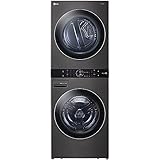
Overview:
This LG WashTower variant optimizes space with a slightly smaller washer (4.5 cu.ft.) paired with a large electric dryer, targeting urban dwellers needing efficient laundry in minimal square footage.
What Makes It Stand Out:
Front-load access for both units simplifies loading, while the centralized control panel streamlines operation. ENERGY STAR efficiency (607 kWh/year) balances drying power with cost savings, and the 55" door swing accommodates tight spaces without remodeling.
Value for Money:
Selling for $1,600–$1,900, it undercuts Product 7 with comparable features but reduced washer capacity. Electric operation keeps installation simple (no gas line), though higher energy costs than gas dryers slightly diminish long-term savings.
Strengths and Weaknesses:
Strengths: Excellent space efficiency; intuitive controls; strong stain removal via steam. Weaknesses: Smaller washer vs. Product 7; electric dryer consumes more energy than gas; app connectivity occasionally glitchy.
Bottom Line:
A practical, space-conscious choice for apartments. Best for smaller households where washer capacity is less critical than footprint savings.
10. LG WashTower Stacked Smart Laundry Center 4.5 Cu.Ft. Front Load Washer & 7.4 Cu.Ft. Gas Dryer in White WKG101HWA
Overview:
LG’s gas-powered WashTower merges space efficiency with energy-smart drying, featuring a 4.5 cu.ft. washer and gas dryer in a sleek white tower designed for modern laundry rooms.
What Makes It Stand Out:
Gas drying cuts energy costs by ~30% versus electric models, while the 55" door depth ensures usability in standard layouts. SmartThinQ integration allows remote cycle management, and the white finish offers versatile styling (graphite steel also available).
Value for Money:
Priced near Product 9 ($1,700–$2,000), the gas dryer provides faster drying and lower utility bills, yielding long-term savings. Installation requires a gas line, adding upfront cost but paying off for high-volume users in 2–3 years.
Strengths and Weaknesses:
Strengths: Gas dryer efficiency; large capacity for families; app notifications reduce oversight errors. Weaknesses: Gas hookups limit placement flexibility; washer capacity trails LG’s 5.0 cu.ft. model; white finish shows lint.
Bottom Line:
Highly recommended for gas-line-equipped homes seeking drying efficiency and space savings. Prioritize this over electric models if utility costs are a concern.
Understanding Modern Laundry Center Fundamentals
Defining the Integrated Laundry Center Concept
An integrated laundry center is a single, cohesive unit that houses both a washer and a dryer, designed to occupy the footprint of one traditional appliance. Unlike stacking kits for separate machines, these are engineered as a unified system from the ground up. This integration allows for optimized internal component placement, shared structural elements, and often a more streamlined aesthetic that blends into cabinetry or stands elegantly on its own. The core promise is significant space savings without necessarily sacrificing core laundry capabilities.
Core Components and How They Work Together
Within the compact chassis, the washer (typically front-loading) and dryer (usually vented or ventless heat pump) are meticulously arranged, often with the dryer positioned directly above the washer. Critical engineering ensures that the operation of one appliance doesn’t negatively impact the other – vibration isolation is paramount. Shared control interfaces, unified plumbing connections (for washer water in/out), and optimized electrical requirements are hallmarks of a well-designed unit. Understanding this symbiotic relationship helps appreciate the complexity involved in achieving reliable performance in such a condensed form.
The Critical Importance of Venting Solutions
Venting is arguably the most crucial consideration for integrated laundry centers, especially regarding the dryer component. Traditional vented dryers require an external exhaust path, which can be challenging in tight installations like closets or interior rooms. This is where ventless heat pump technology shines within modern combos. Heat pump dryers recycle hot air internally, condensing moisture into a tank or drain line, eliminating the need for external venting. While slightly longer cycle times can be a trade-off, the installation flexibility and energy efficiency often make heat pump the preferred choice for space-constrained laundry centers in contemporary homes.
Key Performance Features to Evaluate
Washer Capacity Within Compact Dimensions
Don’t assume small footprint equals small loads. Modern engineering allows for surprisingly generous washer capacities within integrated units, often ranging from 2.0 to 2.5 cubic feet – sufficient for queen-sized comforters and regular family laundry. Pay close attention to the usable capacity and the drum design. Look for features like larger door openings relative to the unit size and thoughtful drum geometry that maximizes space utilization without creating awkward load balancing issues during the spin cycle.
Drying Technology: Vented vs. Ventless Heat Pump
The choice between vented and ventless heat pump drying is fundamental and impacts nearly every aspect of your decision. Vented models require that external exhaust path, which can be a major installation hurdle but often offer faster drying times. Ventless heat pump models, increasingly dominant in new laundry centers, provide unparalleled installation flexibility (no external vent needed, just a condensate drain or pump), superior energy efficiency (using significantly less electricity than traditional electric dryers), and gentler drying on fabrics. Understand the cycle time implications and space requirements for condensate management when opting for heat pump.
Noise and Vibration Control Mechanisms
Operating within confined spaces like closets or near living areas demands exceptional noise and vibration suppression. Look for units featuring advanced suspension systems, robust anti-vibration pads, strategically placed dampeners, and possibly even acoustic insulation within the cabinet. Direct-drive motors (eliminating belts) often contribute to quieter operation. Don’t underestimate the importance of this; a noisy laundry center can disrupt the peace of your entire home, especially in open-plan or multi-use rooms.
Space Optimization and Installation Considerations
Measuring Your Space: Beyond Basic Footprint
Accurate measurement is non-negotiable. Go beyond just the width and depth. Account for mandatory clearance requirements on all sides (especially top and rear for ventilation and service access), door swing space for both washer and dryer compartments, and crucially, the space needed for plumbing and electrical connections. Remember the height when the dryer door is open. Measure doorways and hallways leading to the installation site – these units are heavy and getting them into position can be a major challenge if pathways are too narrow.
Cabinet Integration and Customization Options
Many modern laundry centers are designed with built-in cabinetry in mind, featuring finished sides, top panels, and fronts that allow them to disappear seamlessly into kitchen, bathroom, or dedicated laundry cabinetry. Consider whether you need a unit designed for true built-in installation (requiring specific trim kits) or if a freestanding model with finished sides will suffice. Some offer customizable front panels to match your existing cabinetry, turning a necessity into a design feature rather than an eyesore.
Electrical and Plumbing Requirements Simplified
Integrated units often streamline connections compared to two separate appliances. Typically, they require a single dedicated 120V or 240V electrical circuit (depending on dryer type – heat pump often uses 120V, traditional vented may need 240V) and a single cold water connection (some offer hot/cold). The drain line for the washer is standard, but heat pump dryers add a condensate drain requirement – either a gravity drain connection or compatibility with a condensate pump. Verify the specific requirements against your home’s existing infrastructure; unexpected electrical upgrades can significantly increase installation costs.
Advanced Technology and User Experience
Smart Connectivity and Remote Monitoring
Expect smart features to be increasingly standard. Look for Wi-Fi connectivity enabling remote start/stop, cycle monitoring and completion alerts via smartphone apps, and even troubleshooting diagnostics sent directly to your device. This is particularly valuable for units tucked away in closets – no more guessing if the laundry is done. Some systems can integrate with smart home platforms, allowing voice control or automated routines (e.g., starting a cycle when electricity rates are lowest).
Intuitive Control Interfaces and Display Clarity
Given the space constraints, the control panel design is critical. Seek units with clear, well-organized digital displays and responsive touch controls or intuitive knobs. Backlit displays are essential for closets or dimly lit areas. The interface should make selecting cycles, adjusting settings like spin speed or dryness level, and accessing special features (like sanitize or steam) straightforward, avoiding unnecessary complexity that can frustrate daily use.
Specialized Wash and Dry Cycles for Modern Lifestyles
Beyond basic cycles, look for features catering to contemporary needs. Steam sanitize options for killing allergens and bacteria without high heat, specialized cycles for delicate activewear or baby clothes, quick wash options for small loads, and adjustable dryness sensors to prevent over-drying (crucial for ventless models) are increasingly common. These tailored cycles enhance the unit’s versatility, handling everything from heavily soiled work clothes to sensitive fabrics with appropriate care.
Durability, Maintenance, and Long-Term Value
Build Quality and Material Selection
Investigate the materials used in the cabinet, drum, and internal components. Stainless steel drums are standard and preferred for longevity and mildew resistance. The outer cabinet should feel sturdy, not flimsy plastic. Pay attention to door hinges and latches – they endure constant use. While you can’t see internals, research brand reputations for reliability specific to integrated units. A slightly higher initial investment in a robustly built model often pays off significantly in longevity and reduced service calls.
Accessibility for Cleaning and Filter Maintenance
Regular maintenance is key to preventing problems and ensuring efficiency. Integrated units can sometimes make accessing critical components like the dryer’s lint filter (often located inside the door for heat pump models) or the washer’s pump filter more challenging than standalone machines. Prioritize models where these essential maintenance points are easily reachable without requiring major disassembly. Clear instructions and accessible design here save frustration and potential damage down the line.
Energy and Water Efficiency Ratings Decoded
Integrated units, particularly those with heat pump dryers, often boast excellent energy efficiency (look for ENERGY STAR® certification). Compare the estimated annual energy consumption (kWh) and water factor (gallons per cycle) on the yellow EnergyGuide label. While heat pump dryers use less energy than vented electric dryers, their longer cycle times are a factor. Understand the real-world efficiency implications based on your typical laundry volume and local utility costs – the most efficient unit is the one that fits your usage pattern.
Design Aesthetics and Home Integration
Finishes and Color Options for Seamless Blending
Gone are the days of limited, industrial-looking finishes. Modern laundry centers offer a variety of options: classic white and stainless steel remain popular, but slate, graphite, and even bold colors are emerging. Consider how the finish will coordinate with your cabinetry, countertops, or surrounding decor. Matching the finish to adjacent appliances can create a cohesive, built-in look, even if it’s technically freestanding.
Door Styles and Handle Integration
The door design significantly impacts the unit’s visual appeal. Smooth, flat doors often integrate best with contemporary cabinetry, while those with subtle textures or handles might suit more traditional spaces. Consider whether the unit has a protruding handle or a recessed grip; the latter often provides a cleaner, more built-in aesthetic. Ensure the door opens smoothly and has sufficient clearance in your chosen location.
Creating a Cohesive Laundry Nook or Room
Think beyond the machine. How will the laundry center fit into the overall space? Plan for folding surfaces adjacent to the unit (a countertop extension or a nearby table), adequate task lighting, storage for detergents and supplies (built-in shelves or cabinets), and potentially seating. A well-designed nook transforms a chore zone into a functional and pleasant part of your home. The integrated laundry center is the anchor; design the space around it for maximum usability.
Budgeting and Making Your Decision
Understanding the Price Range Spectrum
Integrated laundry centers span a considerable price range, influenced by capacity, drying technology (heat pump commands a premium), smart features, brand, and build quality. Establish a realistic budget upfront, but be prepared to adjust based on non-negotiable needs like ventless capability or specific capacity requirements. Remember to factor in potential installation costs, which can vary widely depending on necessary modifications to plumbing, electrical, or cabinetry.
Weighing Upfront Cost vs. Long-Term Savings
While the initial purchase price is significant, consider the total cost of ownership. A heat pump dryer, though more expensive upfront, will save substantially on energy bills over its lifespan compared to a traditional vented electric dryer. Superior build quality might cost more initially but could prevent costly repairs or premature replacement. Factor in water savings from high-efficiency washers and potential rebates for ENERGY STAR® certified models when calculating long-term value.
The Importance of Professional Installation Assessment
Never underestimate the complexity of installing an integrated laundry center, especially in a non-standard location. Hiring a qualified appliance installer or plumber before purchasing is highly advisable. They can assess your space, verify clearance, evaluate existing plumbing and electrical setup, identify any necessary modifications, and provide a realistic installation quote. This prevents costly surprises and ensures the unit functions safely and optimally from day one.
Frequently Asked Questions
Frequently Asked Questions
What is the biggest advantage of a laundry center combo over separate washer and dryer units? The primary advantage is significant space savings, allowing you to fit essential laundry capabilities into closets, under counters, or other compact areas where traditional side-by-side units simply wouldn’t fit, making laundry possible in homes with very limited square footage.
Can I install a laundry center combo in a closet? Yes, many are specifically designed for closet installation, but strict adherence to clearance requirements (sides, top, rear) and proper ventilation (especially for vented dryers) is absolutely critical. Ventless heat pump models are generally much easier and safer to install in enclosed closets due to their minimal external venting needs.
Do laundry center combos require special electrical or plumbing? They typically require standard connections (a dedicated electrical circuit – 120V or 240V depending on the dryer type, cold water supply, and a drain), but the type of circuit (voltage) and the need for a condensate drain (for heat pump dryers) are specific requirements you must verify match your home’s existing setup before purchasing.
How much capacity do I really need in a compact laundry center? Most modern integrated units offer 2.0 to 2.5 cubic feet for the washer, sufficient for regular family loads (including queen comforters). Focus on the usable capacity and drum design. If you frequently wash very large items, ensure the specific model accommodates them without overloading.
Are ventless heat pump dryers in combos as effective as traditional vented dryers? Heat pump dryers are highly effective and gentler on clothes, but they typically have longer cycle times than traditional vented dryers. They excel in energy efficiency and installation flexibility (no external vent needed), making them ideal for space-constrained laundry centers, though patience for drying is sometimes required.
How noisy are integrated laundry centers during operation? Noise levels vary significantly by model. Look for units specifically highlighting advanced noise and vibration reduction technologies (direct drive motors, robust suspension, acoustic insulation). Read professional reviews focusing on noise performance, as excessive noise can be disruptive in small or multi-use spaces.
Can I connect a laundry center combo to my smart home system? Many newer models offer Wi-Fi connectivity, enabling remote start/stop, cycle monitoring, and alerts via smartphone apps. Some integrate with major smart home platforms (like Google Home or Amazon Alexa) for voice control, adding significant convenience, especially for units located in closets.
How difficult is it to maintain and clean a laundry center combo? Maintenance accessibility is crucial. Prioritize models where the lint filter (often inside the dryer door for heat pump) and the washer’s pump filter are easy to reach without complex disassembly. Regular cleaning of these components is essential for performance, efficiency, and preventing malfunctions.
Will a laundry center combo fit through a standard doorway during delivery? Their compact footprint helps, but height (especially with packaging) and weight can be issues. Always measure your doorways, hallways, and stairwells before ordering. Delivery teams can sometimes remove doors or handles, but narrow turns or tight spaces might pose challenges – discuss this with the retailer.
Is professional installation really necessary for a laundry center combo? Strongly recommended, especially for first-time installations or in non-standard locations. Professionals ensure proper leveling, correct plumbing/electrical connections, adequate ventilation/clearance, and secure setup, preventing leaks, malfunctions, voided warranties, and potential safety hazards.