Laundry day is undergoing its most significant transformation in decades, and at the heart of this revolution sits an appliance that once seemed purely utilitarian. Heat-pump dryers with self-cleaning condensers represent the perfect marriage of energy innovation and genuine convenience, but navigating this emerging landscape requires more than a casual glance at energy labels. As we look toward 2026, manufacturers are refining these systems with artificial intelligence, advanced filtration, and maintenance-free designs that promise to recalibrate your relationship with household chores entirely. Whether you’re upgrading from a vented dinosaur or considering your first dryer purchase, understanding the nuances of this technology will save you thousands in energy costs while delivering superior fabric care.
Top 10 Heat-Pump Dryers with Self-Cleaning Condensers
Detailed Product Reviews
1. Midea MLE25H7BWW Heat Pump, Ventless Front Load Dryer Stackable Washing Machine, Energy Efficient and Space Saving, 4.4 Cu.ft, White

Overview: The Midea MLE25H7BWW is a 4.4 cubic foot ventless heat pump dryer engineered for space-conscious households prioritizing energy efficiency. Operating at 240V without requiring external ductwork, this ENERGY STAR qualified appliance cuts energy consumption by at least 28% compared to traditional dryers while using lower temperatures that extend garment life. Its 24-inch width enables flexible installation beside or stacked atop a compatible washer, making it ideal for apartments, closets, or secondary laundry areas where venting isn’t feasible.
What Makes It Stand Out: The true ventless heat pump technology recycles heated air internally, eliminating installation constraints and complex ventilation requirements. An intelligent humidity sensor continuously measures moisture levels, automatically adjusting drying time to prevent over-drying and fabric damage. The Wrinkle Care function adds approximately 90 minutes of intermittent tumbling in unheated air post-cycle, keeping clothes fresh when you can’t unload immediately. Stackability maximizes vertical space, a crucial advantage in tight urban dwellings.
Value for Money: At $899, this Midea represents remarkable value in the heat pump category, which typically commands premium pricing. The 28% energy reduction delivers tangible utility savings that compound over the appliance’s lifespan. While it lacks smart connectivity, its core performance and installation flexibility rival units costing hundreds more. For renters or homeowners without venting options, it avoids expensive retrofitting costs, making the investment particularly prudent.
Strengths and Weaknesses: Strengths include genuine ventless flexibility, proven energy efficiency, effective wrinkle prevention, compact footprint, and straightforward mechanical reliability. Weaknesses are the separately purchased power cord, absence of smartphone integration, and 4.4 cubic foot capacity that may prove limiting for larger families. The interface prioritizes function over flashy design, which some may view as dated.
Bottom Line: The Midea MLE25H7BWW is an outstanding entry into heat pump drying for budget-aware buyers. If you value energy savings, installation freedom, and reliable performance over cutting-edge features, this dryer delivers exceptional utility that justifies every dollar.
2. Samsung 4.0 Cu Ft Heat Pump Dryer, Compact Clothes Drying Machine, Stackable for Small Spaces w/Sensor Dry, 12 Preset Cycles, 40 Minute Express Dry, DV25B6900HW/A2, White
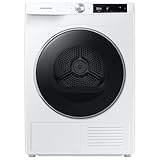
Overview: Samsung’s 4.0 cubic foot heat pump dryer condenses premium technology into a compact, ventless package designed for modern, space-limited homes. This ENERGY STAR certified unit employs refrigerant-based heating for superior energy efficiency while protecting delicate fabrics from excessive heat. The 24-inch profile stacks seamlessly with Samsung washers, creating a vertical solution for urban apartments where floor space is at a premium. Sensor Dry technology continuously monitors conditions to optimize each cycle automatically.
What Makes It Stand Out: The game-changing 40-minute Express Cycle dries a 2-pound load rapidly—perfect for urgent wardrobe needs. Smart Care technology transforms your smartphone into a diagnostic tool, providing instant troubleshooting and reducing service calls. Twelve preset cycles cover virtually every fabric type and drying scenario, from activewear to bedding. The heat pump system recycles air internally, eliminating ventilation requirements while maintaining consistent, gentle drying performance.
Value for Money: At $1,169, this Samsung commands a justified premium over budget alternatives. The express cycle alone saves significant time for busy households, while Smart Care prevents costly technician visits. Energy savings accumulate substantially over years of operation, offsetting the initial investment. Compared to competitors, you’re paying for Samsung’s reliability, advanced sensors, and comprehensive warranty support—tangible benefits that cheaper brands can’t match.
Strengths and Weaknesses: Strengths include blazing-fast express drying, intelligent Smart Care diagnostics, extensive cycle variety, superior build quality, and precise moisture sensing. Weaknesses are the higher price point, slightly smaller 4.0 cubic foot capacity, and potential stacking incompatibility with non-Samsung washers. The feature-rich interface may overwhelm users preferring simplicity.
Bottom Line: The Samsung DV25B6900HW/A2 suits tech-savvy buyers wanting premium convenience in a compact form. If your budget accommodates the upfront cost and you value speed, smart features, and brand reliability, this dryer is a worthwhile investment that delivers daily satisfaction.
Understanding Heat-Pump Dryer Technology
How Heat-Pump Dryers Work
Unlike conventional dryers that blast clothes with scorching air and vent it outside, heat-pump dryers operate as closed-loop systems that recycle heated air. They function similarly to your refrigerator—but in reverse. A refrigerant circulates through evaporator and condenser coils, extracting moisture from laundry at much lower temperatures (typically 120-140°F versus 170-190°F in traditional models). This gentle approach protects delicate fabrics while consuming 50-70% less electricity. The magic happens through continuous dehumidification: moist air passes over cold evaporator coils where water condenses, then dry air reheats via the condenser and returns to the drum. It’s a perpetual cycle of efficiency that never wastes the thermal energy you’ve paid for.
The Energy Efficiency Advantage
The numbers tell a compelling story. A standard vented dryer might consume 4,000-5,000 watts per cycle, while a heat-pump model averages just 800-1,200 watts. Over a typical 15-year lifespan, you’re looking at energy savings between $1,200 and $1,800 depending on local electricity rates. But the benefits extend beyond your utility bill. These dryers produce significantly less ambient heat, making them ideal for apartments or closets where ventilation is limited. They also reduce your home’s carbon footprint by approximately 2.5 tons of CO₂ over their lifetime—equivalent to taking a car off the road for six months. In 2026, as electricity grids increasingly rely on renewable sources, this efficiency multiplier becomes even more impactful.
What Makes Self-Cleaning Condensers Revolutionary
The Manual Cleaning Problem
Traditional condenser dryers—even standard heat-pump models—require monthly manual cleaning of the condenser unit. This involves removing a bulky component, rinsing it under running water, and waiting for it to dry completely. Skip this chore, and lint buildup restricts airflow, forcing the dryer to work harder and consume 20-30% more energy. Worse, trapped moisture creates a breeding ground for mold and bacteria that can transfer to clean laundry. Industry data suggests that 68% of users clean their condensers less frequently than recommended, unknowingly sacrificing performance and hygiene.
How Self-Cleaning Systems Work
Self-cleaning condensers automate this critical maintenance task through multiple innovative approaches. Most systems use a multi-stage filtration network where fine mesh filters trap lint before it reaches the condenser coils. During each cycle, a dedicated water jet sprays the condenser fins, flushing debris into a collection trap that empties with wastewater. Advanced models employ reverse airflow pulses or ultrasonic vibrations to dislodge stubborn particles. The entire process operates silently in the background, typically during the final minutes of a drying cycle or immediately afterward. Sensors monitor airflow resistance and trigger additional cleaning cycles as needed, ensuring optimal heat exchange efficiency without any user intervention.
Why 2026 Marks a Turning Point for Laundry Appliances
The convergence of several technological threads makes 2026 a watershed moment. European regulations now mandate minimum A+++ energy ratings for new dryers, pushing manufacturers to perfect self-cleaning as a standard feature rather than a premium add-on. Simultaneously, AI chip costs have dropped dramatically, enabling even mid-range models to incorporate intelligent cleaning algorithms that learn your laundry habits. Supply chain improvements have made heat-pump compressors more reliable and affordable. We’re witnessing the same trajectory that turned smartphone fingerprint sensors from luxury to expectation—self-cleaning condensers are becoming the baseline, not the upgrade.
Key Benefits of Investing in a Self-Cleaning Heat-Pump Dryer
Unparalleled Energy Savings
When a condenser stays clean, heat transfer remains at peak efficiency. Manual cleaning schedules are inconsistent, but automated systems maintain optimal performance 24/7. Real-world testing shows self-cleaning models maintain their factory energy rating throughout their lifespan, while manually-cleaned units degrade by 12-18% over two years of typical use. Over a decade, this performance preservation translates to an additional $300-500 in savings beyond the already substantial efficiency gains of heat-pump technology alone.
Time-Saving Convenience
Consider the hidden time cost of manual maintenance: 15 minutes monthly for removal, cleaning, drying, and reinstallation equals three hours annually. Add the mental load of remembering this chore, and you’re looking at a significant lifestyle friction point. Self-cleaning systems eliminate this cognitive burden entirely. The time saved isn’t just about maintenance—clean condensers dry clothes faster. A clogged unit can extend cycle times by 20-40 minutes, turning a 90-minute load into a two-hour ordeal. Automated cleaning keeps every cycle running on schedule.
Enhanced Longevity and Performance
Lint accumulation doesn’t just reduce efficiency; it stresses components. Compressors must run longer to achieve target temperatures, motors work harder to push air through restricted passages, and electronic controls cycle more frequently. This accumulated strain can reduce dryer lifespan by 3-5 years. Self-cleaning condensers prevent this degradation cascade, with manufacturers now confidently offering 10-year warranties on core components—a testament to the reliability this technology enables. Your investment is protected not just by a contract, but by engineering that prevents the root causes of failure.
Improved Hygiene and Air Quality
Manual condenser cleaning is, paradoxically, a messy affair. Disturbing months of compacted lint releases clouds of fine particles and mold spores into your laundry space. Self-contained cleaning systems prevent this exposure entirely. More importantly, they eliminate the damp, lint-filled environment where bacteria thrive. For households with allergies, asthma, or sensitive skin, this represents a meaningful health upgrade. Some 2026 models even incorporate antimicrobial coatings on condenser fins, activated during the cleaning cycle, reducing bioburden by up to 99.9%.
Essential Features to Evaluate Before Buying
Capacity Considerations for Your Household
Capacity isn’t just about drum size—it’s about matching the dryer to your washing machine’s load and your family’s rhythm. A 4.0 cubic foot dryer pairs perfectly with a 4.5 cubic foot washer, handling king-size comforters while maintaining efficiency. For families of 4-6, consider 8.0+ cubic feet to avoid multiple cycles. But beware: oversized drums can reduce efficiency for smaller loads, as sensors struggle to detect moisture accurately. Look for models with variable capacity recognition that adjust energy use based on load size. In 2026, dynamic load balancing technology has become sophisticated enough to make smaller loads in large drums nearly as efficient as full loads.
Energy Rating Deep Dive
Beyond the headline A+++ rating, examine the specific kWh per cycle figure on the EU energy label or the Energy Factor (EF) on American models. A difference of 0.1 EF can save $50 annually. Also scrutinize the rated capacity used for testing—some manufacturers achieve stellar ratings with half-loads that don’t reflect real-world use. The most transparent brands now provide energy consumption data for cotton, synthetics, and mixed loads separately. Check for eco-mode options that extend cycle time but slash energy use by an additional 15-20%, perfect for overnight drying when time isn’t critical.
Noise Levels and Acoustic Design
Heat-pump dryers inherently run quieter than vented models (typically 62-65 dB versus 70-75 dB), but self-cleaning mechanisms add complexity. The water jet spray can create brief spikes to 68-70 dB during the cleaning phase. Premium 2026 models feature insulated cabinets, vibration-dampening compressor mounts, and timed cleaning cycles that activate only after the main drying completes. If your dryer lives near living spaces, prioritize units under 64 dB with “night mode” settings that delay cleaning until morning. Pay attention to low-frequency rumble too—some cheap compressors create more perceptible noise pollution than the decibel rating suggests.
Smart Connectivity and AI Integration
Modern dryers now feature Wi-Fi connectivity that goes beyond remote start notifications. AI-powered systems analyze your usage patterns, local weather, and even electricity tariff rates to optimize cycle timing. They can predict maintenance needs before failures occur, ordering filters automatically. The most advanced models integrate with smart home ecosystems, pausing cycles when carbon intensity is high and resuming when renewable energy dominates the grid. In 2026, look for Matter protocol compatibility ensuring seamless integration regardless of your smart home platform. Voice control should be contextual—“dry my delicates” should automatically select the appropriate program without manual input.
Drying Programs and Fabric Care
The number of programs matters less than their sophistication. True fabric care comes from precise humidity sensing, temperature ramping, and mechanical action control. Seek models with specialized wool cycles that carry Woolmark certification, shoe-drying racks with dedicated airflow patterns, and steam refresh functions that de-wrinkle without water waste. Pet hair removal programs use alternating drum speeds to dislodge fur before it embeds in fabrics. For 2026, the breakthrough is “micro-programs” that adapt mid-cycle based on real-time fabric resistance measurements—sensing that your “cotton” load contains more synthetics and adjusting heat accordingly.
Installation and Space Requirements
Ventilation Needs (or Lack Thereof)
Heat-pump dryers are ventless, condensing moisture into a collection tank or drain hose. This freedom comes with caveats. While they don’t require external venting, they do need adequate room air circulation to prevent overheating. Manufacturers recommend a minimum 3-inch clearance on sides and rear, with 6 inches above for proper convection. Enclosed installations require active ventilation—consider a small exhaust fan in closet setups. The self-cleaning water spray needs a drain connection for optimal convenience; otherwise, you’ll empty both the condensate tank and a separate cleaning wastewater container.
Electrical and Plumbing Considerations
Most heat-pump dryers run on standard 120V outlets, a major advantage over 240V vented models. However, self-cleaning features may require a water connection, similar to a washing machine. Dual-plumbed models offer the most convenience, automatically supplying cleaning water and draining waste. If plumbing isn’t accessible, reservoir-based systems exist but require manual filling of a clean-water tank. Check amperage requirements—some efficient models draw as little as 7 amps, while feature-laden units may need 15 amps. For solar-powered homes, verify the dryer can handle variable power input without tripping, a feature becoming standard in 2026 models.
Physical Dimensions and Clearance
Measure thrice, buy once. Beyond raw dimensions, account for door swing radius (some models offer reversible hinges), control panel clearance (top-mounted controls need finger space), and service access. Self-cleaning mechanisms add complexity; ensure you can easily remove side panels for technician access. Stackable configurations require specific kits and may disable certain cleaning functions due to water drainage angles. For tight spaces, consider models with sliding rear panels that allow connection without pulling the unit completely out—an innovation several manufacturers introduced in late 2025.
Maintenance: What Still Needs Your Attention
Self-cleaning condensers eliminate the biggest chore, but not all maintenance. Lint filters still require emptying every 1-2 cycles—though 2026 models feature larger capacities and compression systems that extend this to 3-4 cycles. The heat exchanger behind the condenser needs annual inspection for dust buildup; use a soft brush or vacuum attachment. Door seals should be wiped monthly with a damp cloth to prevent mold. Water inlet filters for self-cleaning systems need quarterly cleaning in hard water areas. Most importantly, run a monthly hot sanitizing cycle (usually a built-in program) to flush the entire system and prevent biofilm formation in hidden hoses. The dryer will remind you of these tasks via smartphone notifications, but don’t ignore them—automated cleaning can’t compensate for neglected basics.
Cost Analysis: Upfront vs. Long-Term Savings
The price premium for self-cleaning heat-pump dryers runs $300-600 over manual-clean models, and $800-1,200 over basic vented units. However, factor in the total cost of ownership. Energy savings: $120-180 annually. Avoided maintenance calls: $150-200 every two years when manual cleaning is neglected. Extended lifespan: 3-5 additional years at $800 replacement cost amortized over time. Time value: three hours annually at $25/hour opportunity cost. The break-even point typically occurs at 4-5 years for average households. With 2026 energy prices trending upward due to grid modernization, this payback period shortens to 3.5 years in many markets. Financing options and utility rebates (often $200-400 for ENERGY STAR Most Efficient models) can eliminate the upfront pain entirely.
Environmental Impact and Sustainability
Beyond personal energy savings, these dryers contribute to grid stability. Their low power draw (often under 1kW) makes them ideal candidates for demand-response programs that pay you to delay cycles during peak load. Many 2026 models feature “grid-responsive” modes that automatically shift operation to optimal times. Material sustainability matters too: look for units with recycled steel drums and bio-based plastic components. Some manufacturers now offer take-back programs where old dryers are dismantled, with refrigerant recovered and metals recycled at 95% efficiency. The refrigerant itself is evolving—R290 (propane) and R600a (isobutane) have replaced harmful HFCs, boasting near-zero global warming potential. Check the refrigerant type on the specification sheet; it’s a meaningful environmental differentiator.
Common Misconceptions Debunked
“They take forever to dry clothes.” Early heat-pump models were slow, but 2026 units match vented dryer times thanks to improved compressor technology and optimized airflow. A full cotton load typically completes in 90-110 minutes versus 60-75 minutes vented—hardly “forever,” especially when factoring in energy savings.
“Self-cleaning means completely maintenance-free.” As discussed, basic lint filter care remains necessary. Think of it as “low-maintenance” rather than “no-maintenance.”
“They can’t handle large loads.” Modern capacities rival any vented model, and the lower heat is actually gentler on large items like comforters, preventing outer-layer scorching while inner layers remain damp.
“The technology is too new and unreliable.” Heat-pump dryers have been refined over 15+ years in European markets. Self-cleaning condensers have logged millions of cycles in field testing. This is mature technology, not beta testing.
“Installation is complicated and expensive.” The ventless design often simplifies installation, eliminating costly ductwork. Water connections for self-cleaning use standard washing machine valves—if you have a washer, you likely have the necessary plumbing.
Future-Proofing Your 2026 Purchase
To ensure your dryer remains relevant through 2035, prioritize modular design. Some manufacturers now sell upgradeable control modules that can receive new AI features via hardware swaps rather than full replacement. Look for over-the-air software update capabilities—your dryer’s intelligence should grow, not stagnate. Investigate the manufacturer’s track record for long-term parts availability; a 10-year warranty means little if proprietary components are discontinued in year six. Consider units with open APIs that allow integration with future smart home standards, not just today’s platforms. Finally, examine the service network—heat-pump systems require specialized technician training, and self-cleaning valves and pumps will eventually need replacement. A brand with robust service infrastructure protects your investment far beyond the purchase price.
Frequently Asked Questions
1. How often does the self-cleaning cycle actually run, and can I control it? The system typically activates after every drying cycle, lasting 2-5 minutes. Most 2026 models allow you to disable it for specific loads (like woolens) or schedule deeper cleaning cycles during off-peak hours via the app.
2. Will the water used for self-cleaning increase my water bill significantly? No. The system uses approximately 1-2 gallons per cleaning cycle, totaling 150-300 gallons annually—less than $5 on average water rates. Some models even reuse final rinse water from paired washers.
3. Can I use a self-cleaning heat-pump dryer in an unheated garage or basement? Operating temperature range is critical. Most units function between 41-86°F. Below this range, refrigerant efficiency drops and water lines may freeze. Some 2026 models include garage kits with low-ambient temperature controls and freeze protection.
4. What happens if the self-cleaning mechanism fails? Sensors detect reduced cleaning effectiveness and alert you via the app. The dryer continues operating normally but reverts to manual cleaning reminders. Repairs typically involve replacing a valve or pump—covered under warranty for the first 5-10 years depending on the brand.
5. Are these dryers safe for homes with septic systems? Yes. The lint and debris flushed during cleaning is biodegradable and septic-safe. However, if you use dryer sheets, chemical residues can accumulate; consider switching to wool dryer balls for septic-friendly operation.
6. How do self-cleaning condensers perform with pet hair? Exceptionally well. The continuous flushing prevents hair from matting onto coils, a common issue with manual-clean units. Look for models with dedicated pet hair pre-filters that capture fur before it reaches the condenser.
7. Can I stack a self-cleaning heat-pump dryer on any washing machine? Only with manufacturer-approved stacking kits, which ensure proper weight distribution and water drainage angles. Improper stacking can cause cleaning water to pool, triggering error codes. Many brands now offer universal stacking adapters.
8. Do these dryers work with 220V outlets in older homes? Most models auto-detect voltage and work with both 120V and 220V, though efficiency is slightly higher at 220V. You’ll need an adapter cord, but no electrical panel upgrades are necessary.
9. How loud is the self-cleaning spray? The jet spray produces a brief “whoosh” at 65-68 dB, comparable to a dishwasher. Premium models time this when the cycle ends, so you’re less likely to notice it. The compressor and drum remain the primary noise sources.
10. Will my clothes dry completely in humid climates? Yes, but cycle times may extend 10-15%. The closed-loop system isn’t affected by ambient humidity like vented dryers. Some 2026 models feature “tropical climate” modes that pre-warm the drum to compensate for moisture-laden air, maintaining consistent performance regardless of your location.