Living in an apartment shouldn’t mean sacrificing the convenience of in-home laundry. Yet for millions of urban dwellers, the reality of cramped closets, strict lease agreements, and limited electrical capacity transforms the simple act of drying clothes into a logistical puzzle. The compact dryer has emerged as the unsung hero of modern apartment living—a space-saving marvel that proves you don’t need a sprawling laundry room to enjoy fresh, perfectly dried laundry whenever you need it.
But here’s the challenge: not all compact dryers are created equal, and the wrong choice can lead to skyrocketing electric bills, moisture issues that plague your living space, or a machine that simply can’t keep up with your lifestyle. Whether you’re a first-time renter navigating the constraints of a studio apartment or a seasoned urbanite looking to upgrade your laundry setup, understanding the nuanced world of compact dryers is essential. This comprehensive guide cuts through the marketing noise to deliver the expert insights you need to make a confident, informed decision that works for your specific space, budget, and laundry demands.
Top 10 Compact Dryers for Apartments
Detailed Product Reviews
1. BLACK+DECKER BCED37 Compact Dryer for Standard Wall Outlet, Small, 4 Modes, Load Volume 13.2 lbs., White
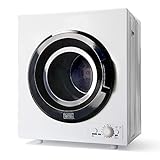
Overview: The BLACK+DECKER BCED37 represents the premium tier of compact drying solutions, engineered for apartment dwellers and space-conscious homeowners who refuse to compromise on capacity. This 3.5 cubic foot dryer handles an impressive 13.2-pound load while operating from a standard 120V outlet, eliminating the need for specialized electrical work. At 23.6" x 21.5" x 27.5", it strikes a balance between substantial drying capability and apartment-friendly dimensions.
What Makes It Stand Out: This model’s 1500W power output delivers genuine drying performance comparable to full-size machines, while the stainless steel drum ensures durability and gentle fabric care. The transparent front-loading lid allows visual monitoring without interrupting cycles. Unlike many competitors, it includes a 4-inch vent hose and exhaust connector, providing everything needed for immediate installation. The four distinct modes—Air Dry, Cool, Warm, and Hot—cover every fabric type and drying urgency.
Value for Money: At $399.99, this sits at the higher end of compact dryers, but the investment proves worthwhile for users requiring serious capacity. The build quality, brand reliability, and included accessories offset the premium. For households processing substantial weekly laundry, it eliminates costly laundromat trips, paying for itself within months.
Strengths and Weaknesses: Pros include exceptional 13.2-pound capacity, powerful 1500W heating, durable stainless steel construction, transparent monitoring window, and comprehensive venting kit. Cons involve its 49.5-pound weight limiting true portability, premium pricing, and larger footprint requiring dedicated space.
Bottom Line: Ideal for families in apartments or homes without vented dryer hookups, the BCED37 delivers near full-size performance from a standard outlet. If your budget accommodates the premium and space permits, this offers the best capacity-to-convenience ratio in its class.
2. Euhomy 110V Portable Clothes Dryer 850W Compact Laundry Dryers 1.5 cu.ft Front Load Stainless Steel Electric Dryers Machine with Stainless Steel Tub for Apartment,RVs,Dorms,White Easy Control

Overview: The Euhomy 110V Portable Dryer positions itself as the budget-conscious entry point into compact laundry, priced aggressively at $194.99. This 1.5 cubic foot unit targets the most space-restricted environments—dorms, RVs, and studio apartments—where every square inch matters. Weighing just 37.5 pounds and measuring 19.5" x 15.7" x 23.6", it can be wall-mounted or tucked into closets when not in use.
What Makes It Stand Out: Remarkably quiet operation allows normal conversation and sleep during cycles, a rare feature in this category. The 850W power consumption saves electricity while still reaching 140°F maximum temperature for effective drying. Its versatility shines through four timed modes spanning 0-200 minutes, accommodating everything from quick freshening to heavy-duty drying. The three-layer cotton filter excels at lint capture, particularly beneficial for pet owners.
Value for Money: This represents exceptional value, costing half of premium competitors while delivering core functionality. The $194.99 price point makes it accessible for students and renters, though the 10-pound capacity requires more frequent loads for families.
Strengths and Weaknesses: Strengths include unbeatable price, ultra-quiet operation, lightweight portability, wall-mount capability, and superior lint filtration. Weaknesses involve smaller capacity demanding more cycles, lower power extending drying times, and basic aesthetic design.
Bottom Line: Perfect for singles, couples, or temporary living situations. If you prioritize affordability, quiet operation, and space savings over raw capacity, this Euhomy model delivers surprising quality without the premium price tag.
3. Euhomy Compact Laundry Dryer, 3.5 cu ft Front Load Stainless Steel Clothes Dryers With Exhaust Pipe, 1500W, LCD Control Panel Four-Function Portable Dryer For Apartments, Home, Dorm, White

Overview: Euhomy’s 3.5 cubic foot compact dryer bridges the gap between budget portability and premium performance, offering substantial capacity at a mid-range $314.99 price point. Handling up to 26.4 pounds of wet laundry, this 1500W machine rivals full-size dryers while maintaining 110V convenience. The unit measures compactly enough for apartments yet houses advanced features typically found in more expensive models.
What Makes It Stand Out: The innovative front-and-back flip function represents a game-changer, ensuring clothes rotate sufficiently to prevent tangling and wrinkles while reducing drying time and energy consumption. The LCD control panel elevates user experience beyond basic dials, offering four intelligent modes: Strong, Intelligent (humidity-sensing), ECO, and Normal. This technology optimizes drying cycles automatically, preventing over-drying and fabric damage.
Value for Money: At $314.99, this dryer punches above its weight class. The 26.4-pound capacity exceeds many competitors priced $100 higher, while the flip mechanism and LCD controls add genuine utility. For frequent users, the energy savings and garment protection justify the moderate premium over budget options.
Strengths and Weaknesses: Advantages include massive capacity, intelligent humidity-sensing technology, wrinkle-reducing flip function, clear LCD interface, and robust 1500W power. Drawbacks include heavier construction limiting mobility, potential complexity for users preferring simplicity, and mid-tier pricing that may stretch tight budgets.
Bottom Line: An excellent choice for apartment-dwelling families needing serious capacity without 220V wiring. The smart features and generous capacity make it a value-packed workhorse that outperforms its price point.
4. BLACK+DECKER BCED26 Compact Dryer for Standard Wall Outlet, Small, 5 Modes, Load Volume 8.8 lbs., White
Overview: The BLACK+DECKER BCED26 occupies the middle ground in the brand’s compact dryer lineup, offering enhanced features at a moderate $279.99 price. This 2.65 cubic foot model processes 8.8-pound loads—suitable for individuals or couples—while maintaining the brand’s commitment to 120V plug-and-play simplicity. Its 23.6" x 17.1" x 27.5" frame fits comfortably in closets or corners.
What Makes It Stand Out: Five drying modes, including a dedicated ECO mode and Sensor Dry technology, differentiate this model from entry-level competitors. The Sensor Dry function automatically measures moisture content and adjusts heat accordingly, preventing energy waste and fabric damage. ECO mode starts with cool air before introducing heat, optimizing energy consumption. Adjustable leveling legs ensure stability on uneven floors, a thoughtful detail for older apartments.
Value for Money: Positioned between budget and premium options, the BCED26 justifies its $279.99 cost through intelligent features that reduce long-term energy expenses. The sensor technology alone can save significant utility costs over time, making it financially savvy despite moderate upfront investment.
Strengths and Weaknesses: Pros include moisture-sensing technology, five versatile drying modes, ECO efficiency, adjustable leveling legs, and trusted brand reputation. Cons feature smaller 8.8-pound capacity limiting family use, extended drying times inherent to 120V operation, and 48.4-pound weight reducing true portability.
Bottom Line: Tailored for environmentally conscious users in small households. The sensor-driven efficiency and multiple modes make it a smart long-term investment for couples or singles prioritizing fabric care and energy savings over maximum capacity.
5. BLACK+DECKER 1.5 Cu. Ft. Compact Dryer, 5.5 lb. Capacity, 850W 120V Vented Electric Drying Machine with Stainless Steel Drum, Portable Dryer for Laundry for Standard Wall Outlet, BCED15, White

Overview: The BLACK+DECKER BCED15 represents the most compact and affordable entry in the brand’s lineup, priced at $251.99. This 1.5 cubic foot dryer handles 5.5-pound loads, targeting single users with minimal space and laundry requirements. Measuring just 19.5" x 16.1" x 23.8", it fits where others cannot—under counters, in RVs, or tucked into bathroom corners.
What Makes It Stand Out: Despite its diminutive size, this model retains BLACK+DECKER’s core quality standards, including a stainless steel drum and electronic control panel. The Anti-Wrinkle cycle provides utility unexpected at this price tier, while Sensor Dry technology prevents over-drying delicate items. Its 850W power draw keeps electricity costs minimal, and the three-prong plug ensures immediate installation without electrical modifications.
Value for Money: At $251.99, this offers brand reliability at a competitive price point, though the 5.5-pound capacity requires realistic expectations. It’s ideal for supplemental drying or single-person households, but families will find capacity limitations frustrating. The requirement for a separate 4-inch duct adds hidden costs.
Strengths and Weaknesses: Strengths include ultra-compact footprint, trusted brand backing, sensor technology, anti-wrinkle feature, and low power consumption. Weaknesses involve very limited capacity, extended drying times for full loads, and lack of included venting duct requiring separate purchase.
Bottom Line: Best suited for solo dwellers, RV owners, or as a secondary dryer for delicates. While capacity constraints limit its appeal for families, it delivers reliable performance and brand peace of mind in the smallest possible package.
6. Euhomy Compact Dryer 1.8 cu. ft. Portable Clothes Dryers with Exhaust Duct with Stainless Steel Liner Four Function Small Dryer Machine, Suitable for Apartments, Dorm, RVs, White

Overview: The Euhomy 1.8 cu. ft. Compact Dryer targets urban dwellers and mobile homeowners seeking full-featured drying capability without permanent installation. This 1020W unit handles 10.5 pounds of wet laundry (6.5 pounds dry) while fitting into tight 19.3" x 17.7" x 27" spaces. Seven specialized drying modes—including an energy-saving ECO mode and intelligent humidity sensing—adapt to everything from delicate blouses to heavy towels. The stainless steel drum and multi-filtration system promise durability and lint-free results, making it suitable for families with pets.
What Makes It Stand Out: Unlike basic compact dryers, this model offers intelligent humidity detection that automatically adjusts heating time—a feature typically found in premium units. The ECO mode’s unique 150-minute cold air pre-cycle followed by 120 minutes of hot air demonstrates genuine energy-conscious engineering rather than mere marketing. The seven-mode versatility (Cool Down, Warm, Hot, Anti-Wrinkle, Air Dry, Intelligent, ECO) provides professional-grade fabric care rarely seen in the sub-$250 category. ETL and DOE certifications ensure safety standards exceed minimum requirements.
Value for Money: At $203.99, this dryer sits in the mid-range for compact units but delivers premium features. Comparable models with intelligent drying sensors often exceed $250, while basic 800W alternatives save $30-$50 but lack versatility. The stainless steel construction and comprehensive accessory package (exhaust duct, mounting brackets, two screw sets) eliminate hidden costs. For apartment renters prohibited from permanent installations, this portable solution avoids laundromat expenses that quickly surpass the purchase price.
Strengths and Weaknesses: Strengths: Intelligent humidity sensor prevents over-drying; genuine ECO mode reduces energy consumption; stainless steel drum enhances durability; seven specialized programs handle diverse fabrics; ETL/DOE certified safety; complete installation hardware included.
Weaknesses: 1-hour mandatory rest after extended use interrupts laundry flow; 6.5-pound dry capacity limits full-family use; exhaust duct requires window placement; heavier than some competitors at 45+ pounds.
Bottom Line: The Euhomy 1.8 cu. ft. dryer excels for small households prioritizing fabric care and energy efficiency. Its intelligent features justify the moderate price premium over basic models, making it ideal for apartments, dorms, and RVs where versatility matters more than maximum capacity.
7. Euhomy Portable Clothes Dryer, 1.5 Cu.Ft. Portable Dryer, 850W Drying Machine with Front-Loading Stainless Steel Drum, 5 Functions, Suitable for Apartments, Dorms, RVs, Small Spaces
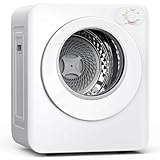
Overview: This 1.5 cu. ft. Euhomy dryer scales down capacity while retaining core functionality for solo users and couples. The 850W heating element reaches 140°F, efficiently drying up to 8.8 pounds of wet laundry in spaces as small as 18.9" x 15.8" x 22.1". Weighing just 34.17 pounds, it moves easily between rooms or vehicles. Five functions (Cooling, Anti-Wrinkle, Standard, Bulk, Cooling/Refreshing) cover essential drying needs without overwhelming users with options. The reversible stainless steel drum and 105° door opening angle enhance practicality.
What Makes It Stand Out: The lightweight portability distinguishes this model—most competitors weigh 40+ pounds. The reversible drum rotation, typically reserved for larger machines, minimizes tangling and wrinkling without adding complexity. The transparent window and automatic door-stop safety feature demonstrate thoughtful user experience design. At 850W, it operates on standard 120V circuits without tripping breakers, crucial for older apartments with limited electrical capacity.
Value for Money: Priced at $170.58, this represents the sweet spot for budget-conscious buyers needing reliable performance without premium features. It undercuts the 1.8 cu. ft. Euhomy by $33 while maintaining stainless steel construction and ETL certification. Basic $100-$120 alternatives sacrifice drum material and safety features, while spending $200+ yields only marginal capacity gains. For dorm students or RV travelers, the weight savings alone justify the price over heavier competitors.
Strengths and Weaknesses: Strengths: Ultra-lightweight at 34 pounds; reversible drum reduces wrinkles; 105° door opening for easy access; transparent monitoring window; automatic safety stop; ETL certified; budget-friendly price.
Weaknesses: 8.8-pound capacity limits family use; 850W heating slower than 1000W+ models; five functions lack specialized modes like ECO or intelligent sensing; no wall-mounting hardware mentioned; single filter system less robust than multi-stage alternatives.
Bottom Line: Perfect for mobile lifestyles and single-person households, this Euhomy balances essential features with exceptional portability. Choose it when space and weight restrictions trump maximum capacity, but skip it if you regularly dry heavy items like comforters.
8. Stopsad 1.6 Cu.Ft Portable Clothes Dryer, 800W Fast Drying Front Load Laundry Dryer with 5 Mode, Mini Electric Clothing Dryer with Stainless Steel Tub, Compact Machine for Apartment, Home, Dorm

Overview: The Stopsad 1.6 cu. ft. dryer enters the market as a budget contender, offering 800W of power in an 18.9" x 15.7" x 22" footprint. Despite the low price point, it includes five drying programs and a stainless steel tub—features often omitted in sub-$150 models. The 32-pound weight facilitates easy relocation between apartments or vacation homes. Designed for simplicity, the intuitive knob control system eliminates learning curves, while the quiet operation suits shared living environments where noise disturbance matters.
What Makes It Stand Out: The $99.99 price tag makes this the most accessible stainless steel drum dryer available. The emphasis on quiet operation—explicitly designed to not disrupt conversation or sleep—addresses a common compact dryer complaint rarely addressed in marketing materials. The “perfect compact size” branding accurately reflects RV and vacation home suitability where units may store in closets between uses. Five versatile programs (though not detailed by name) cover standard, delicate, and heavy-duty needs.
Value for Money: This dryer redefines budget expectations by including stainless steel construction at a price where painted drums are standard. While 800W heating requires longer cycles than 1000W+ models, the $70-$100 savings versus mid-tier competitors fund significant electricity usage. For occasional users—vacation homeowners, seasonal campers, or backup dryer users—the slower drying speed becomes irrelevant. However, daily users will amortize energy costs that favor more efficient models.
Strengths and Weaknesses: Strengths: Exceptional $99.99 price; stainless steel tub at budget tier; whisper-quiet operation; lightweight 32-pound design; straightforward knob controls; five program versatility.
Weaknesses: 800W power slows drying significantly; unspecified capacity likely under 8 pounds; no safety certifications mentioned; lacks advanced features like auto-stop or wrinkle prevention; brand recognition and warranty support unclear; no included accessories.
Bottom Line: The Stopsad dryer serves occasional users and extreme budget shoppers admirably. Accept its slower performance and basic features in exchange for stainless steel durability at an unbeatable price. Daily users should invest more for energy efficiency and certified safety, but for vacation homes or dorm rooms, it’s a remarkable value.
9. Feelfunn 1.8 Cu.Ft Compact Dryer - 1020W Portable Clothes Dryer with Stainless Steel Tub, Front Load Tumble, Four Functions - Compact Drying Unit for Laundry, Apartments, Dorms

Overview: Feelfunn’s 1.8 cu. ft. offering matches larger competitors’ capacity while maintaining a modest 17.8" x 19.3" x 27.1" footprint. The 1020W heating element and forward-reverse tumbling action handle up to 12 pounds of wet laundry efficiently. Weighing 45.1 pounds, it includes wall-mounting hardware for vertical installation—a critical space-saving option absent from many rivals. Four straightforward drying modes prioritize simplicity over complexity, while the multi-filter system and stainless steel tub ensure clean, durable operation.
What Makes It Stand Out: The forward-reverse tumbling at this price point ($169.99) represents exceptional value, as this feature typically appears only in premium compact dryers. Wall-mounting capability with included brackets transforms studio apartments where floor space is non-negotiable. The 12-pound wet capacity exceeds the Euhomy 1.8 cu. ft. model despite similar dimensions. Quiet operation and automatic door-stop safety match user-friendly designs of higher-priced alternatives.
Value for Money: Positioned between budget and mid-tier, this dryer delivers premium mechanical features at a competitive price. The $169.99 cost undercuts the Euhomy 1.8 cu. ft. by $34 while adding reverse tumbling and wall-mounting hardware. Compared to the Stopsad, the extra $70 buys 220W more power, larger capacity, and certified safety features. For apartment dwellers needing wall installation, included mounting kit saves $20-$30 in separate hardware costs.
Strengths and Weaknesses: Strengths: Forward-reverse tumbling prevents tangling; wall-mounting hardware included; 12-pound capacity generous for size; 1020W power efficient; quiet operation; stainless steel tub; multi-filter lint system; automatic safety stop.
Weaknesses: Only four basic modes lack specialized cycles; brand less established than Euhomy; 45-pound weight reduces portability; no ECO or intelligent sensing mode; exhaust installation may challenge renters.
Bottom Line: The Feelfunn dryer excels for spatially constrained apartments where wall mounting transforms usability. Its reverse tumbling and solid capacity make it a smart mid-range choice. Prioritize it over the Euhomy 1.5 cu. ft. if you need more capacity, but choose the Euhomy 1.8 cu. ft. if intelligent drying modes justify the extra cost.
10. Gleedelish 21.1 LBS Compact Laundry Dryer, 3.5 cu ft Front Load Stainless Steel Clothes Dryers With Exhaust Pipe, 1500W, LCD Control Panel, 4 Function Portable Dryer For Apartments, Home, Dorm, White

Overview: The Gleedelish dryer targets a different segment—users needing near-full-size capacity in a portable package. With 3.5 cu. ft. capacity handling 21.1 pounds of wet laundry, this 1500W unit approaches standard dryer performance while maintaining apartment-friendly 27" x 23.6" x 17.6" dimensions. The LCD control panel elevates user experience beyond knob-based competitors, offering four functions: powerful drying, smart drying, deodorizing, and normal drying. At 54.9 pounds, it’s substantially heavier than alternatives but remains movable for dedicated spaces.
What Makes It Stand Out: The 1500W power and 3.5 cu. ft. capacity dwarf all competitors, handling family-sized loads that other compact dryers cannot. The LCD panel provides precise control and timer functions with audible completion alerts—features absent from most portable units. The deodorizing mode addresses pet owners and smokers specifically. Back-and-forth drum rotation ensures even heating across large loads, while flexible placement options (floor, built-in, or wall-mounted) adapt to any living situation.
Value for Money: At $299.99, this premium compact dryer costs 50% more than mid-tier alternatives but delivers triple the capacity. For small families avoiding laundromat trips, the investment pays for itself within months. It competes with ventless heat pump dryers costing $600+, offering comparable capacity at half the price. However, solo users and couples waste money on unused capacity and higher energy consumption. The one-year warranty and ETL/DOE certifications justify the price premium over unbranded large-capacity units.
Strengths and Weaknesses: Strengths: Massive 21.1-pound capacity; powerful 1500W heating; LCD control panel with timer; deodorizing function unique in category; flexible installation options; ETL/DOE certified; stainless steel drum; audible completion alert.
Weaknesses: Premium $299.99 price; 54.9-pound weight hinders true portability; high power consumption unsuitable for RVs/older wiring; overkill for singles and couples; occupies more floor space than smaller models.
Bottom Line: The Gleedelish dryer serves small families needing full-capacity performance without permanent installation. Its size and power make it impractical for RVs or dorms, but apartment renters with children will find the capacity invaluable. Skip it if you’re solo; buy it if laundromat avoidance tops your priority list.
Why Compact Dryers Are Essential for Apartment Living
Space constraints represent the most obvious reason apartment dwellers turn to compact dryers, but the benefits extend far beyond square footage. These specialized appliances address the unique challenges of multi-unit living, from ventilation limitations to noise sensitivity between neighbors. Unlike their full-size counterparts that demand dedicated laundry rooms, compact dryers typically measure between 24 and 27 inches wide—similar to a standard dishwasher—and can tuck into closets, kitchen corners, or bathroom nooks without dominating your living area.
The modern compact dryer also acknowledges the reality of rental life. Many models offer installation flexibility that respects lease restrictions, requiring no permanent modifications to walls or windows. This means you can invest in your own appliance without forfeiting your security deposit. Additionally, their scaled-down capacity naturally encourages more frequent, manageable loads—perfect for busy professionals who prefer doing laundry in smaller batches rather than dedicating an entire weekend to washing mountains of clothes.
Understanding Different Types of Compact Dryers
Before diving into features and specifications, you need to understand the fundamental technologies that power compact dryers. Each type operates differently, with distinct implications for installation requirements, energy consumption, and drying performance.
Electric Vented Dryers
Electric vented dryers function similarly to traditional full-size models, using a heating element to warm air that circulates through tumbling clothes. The hot, moist air then exits through a duct to the outside. While they offer the fastest drying times and most affordable purchase price, they present significant challenges for apartment dwellers. The mandatory venting requirement means you need access to an exterior wall or window, which many apartments simply don’t provide. Even when possible, installing venting in a rental often violates lease terms.
Ventless Condenser Dryers
Ventless condenser dryers represent a breakthrough for apartment-friendly design. These units recycle hot air internally, using a heat exchanger to cool the moist air and condense water into a collection tank or drain hose. Since no external venting is required, you can place them virtually anywhere with an electrical outlet. The trade-off comes in energy efficiency—they use more electricity than vented models—and slightly longer drying cycles. However, for renters, the installation freedom often outweighs these drawbacks.
Ventless Heat Pump Dryers
Heat pump dryers represent the premium tier of compact laundry technology. They operate as closed-loop systems, continuously reheating the same air while extracting moisture through an evaporator. This approach uses up to 50% less energy than conventional dryers and operates at lower temperatures, making them gentler on fabrics. While they command the highest price point and longest drying times, their energy savings over several years can offset the initial investment, particularly in areas with high electricity costs.
Washer-Dryer Combos
All-in-one washer-dryer combos eliminate the need for two separate appliances by washing and drying in the same drum. At first glance, they seem like the ultimate space-saving solution. However, they come with significant limitations: cycle times can stretch to 4-6 hours for a single load, capacity is typically smaller than even compact separate units, and if one function fails, you lose both washing and drying capabilities. They’re best suited for individuals with minimal laundry needs and extreme space constraints.
Ventless vs. Vented: Which Technology Works Best for Apartments?
The venting question stands as perhaps the most critical decision point for apartment dwellers. Your living situation likely makes this choice for you, but understanding the implications helps set realistic expectations.
Vented dryers require a 4-inch diameter duct that exhausts outside, which means cutting holes through walls or windows—something most landlords explicitly prohibit. Even in apartments with existing dryer vents, you’ll need to verify the ductwork’s condition and routing. Shared venting systems in older buildings often suffer from poor maintenance, creating fire hazards and inefficient drying.
Ventless technology liberates you from these constraints entirely. Condenser and heat pump models give you the freedom to install in closets, bathrooms, or even kitchens, provided you can manage the moisture they release into the room. This flexibility makes them the default choice for approximately 80% of apartment dwellers. The key is understanding that you’re trading installation convenience for either higher energy bills (condenser) or higher upfront costs (heat pump).
Key Size and Space Considerations
Measuring your available space represents the most basic yet frequently botched step in selecting a compact dryer. Start by measuring width, depth, and height of your intended location, then subtract at least one inch from each dimension to ensure adequate airflow and installation clearance. Remember that dryers need breathing room—packing them into tight spaces without ventilation gaps can cause overheating and premature failure.
Depth often proves more challenging than width, especially for hallway closets. Standard compact dryers range from 24 to 28 inches deep, but you must account for the door swing and any required clearance for hoses and vents. Some models offer reversible doors, a seemingly minor feature that can make the difference between a functional installation and a daily frustration.
Don’t forget vertical space for stacking. If you’re pairing with a compact washer, stacking kits can save precious floor space but add 2-3 inches to the total height. Ensure your ceiling height accommodates both units plus room for comfortable access to controls.
Power Requirements and Electrical Considerations
Compact dryers typically operate on 240-volt power, but exceptions exist that could make or break your installation plans. Many older apartments, especially in pre-war buildings, lack the necessary 240-volt outlets outside the kitchen. Installing new circuitry requires landlord approval and professional electrician work—costs that can quickly exceed the dryer’s price.
Some newer compact models, particularly heat pump dryers, offer 120-volt operation. These plug into standard household outlets, dramatically expanding installation possibilities. However, 120-volt models generally have smaller capacities and longer drying times. If you’re considering this route, verify the outlet’s amperage rating; these dryers often require dedicated 15- or 20-amp circuits, and sharing with other appliances can trip breakers.
Check your building’s electrical capacity as well. Older apartments may have 60-amp service for the entire unit, and adding a dryer could strain the system. Your lease or property manager can provide this information before you make a purchase.
Capacity: How Much Laundry Can You Actually Dry?
Compact dryer capacity typically ranges from 2.5 to 4.5 cubic feet, but these numbers don’t tell the full story. A 4.0 cubic foot compact dryer holds significantly less than a 4.0 cubic foot full-size model due to differences in drum design and airflow dynamics. Real-world capacity translates to roughly 8-12 pounds of wet laundry per load—approximately 3-4 complete outfits or a single queen-sized sheet set.
Understanding your weekly laundry volume is crucial. A single person generating one small load weekly can manage with the smallest capacity, while couples or those who exercise frequently should target 3.5 cubic feet or larger. Families, even small ones, often find compact dryers inadequate and should consider whether a compact solution truly meets their needs.
Also consider the washer pairing. Your dryer should have roughly double the capacity of your washer, as wet clothes need room to tumble and air to circulate. Matching a large compact washer with a too-small dryer results in damp clothes and frustration.
Energy Efficiency and Operating Costs
The sticker price tells only half the financial story. Operating costs over the appliance’s lifetime often exceed the initial purchase price, especially in markets with high electricity rates. Understanding energy efficiency metrics helps predict your true cost of ownership.
Look for the Energy Star certification, which indicates the dryer uses at least 20% less energy than standard models. However, dig deeper into the EnergyGuide label, which provides estimated annual operating costs based on national averages. For apartment dwellers doing 2-3 loads weekly, these numbers provide a realistic baseline.
Heat pump dryers, despite premium pricing, can save $50-$100 annually in electricity costs compared to condenser models. Over a 10-year lifespan, this adds up to substantial savings. Conversely, vented dryers, while cheap to buy, often cost more to operate due to heat loss and inefficiency.
Consider your local utility rates. In areas with electricity costs above $0.15 per kWh, the premium for a heat pump dryer pays for itself more quickly. Some utility companies offer rebates for energy-efficient appliances, further offsetting upfront costs.
Noise Levels: Maintaining Peace with Neighbors
In apartments, your dryer doesn’t just affect you—it impacts neighbors on all sides, including above and below. Nothing strains landlord-tenant relationships faster than a rumbling appliance disturbing someone else’s peace. Modern compact dryers range from 55 to 70 decibels during operation, a spectrum that spans from refrigerator hum to vacuum cleaner roar.
Look for models specifically advertising quiet operation or noise reduction technology. These typically feature improved insulation, brushless motors, and anti-vibration mounting systems. Some include specialized low-noise cycles that extend drying time in exchange for reduced sound output—perfect for late-night laundry sessions.
Installation significantly impacts noise transmission. Placing your dryer on a concrete floor versus a wood-framed one creates dramatically different acoustic experiences. Anti-vibration pads, available for under $30, can reduce noise transmission by up to 40% by isolating the machine from the floor structure. For second-floor installations or units above basements, these pads aren’t optional—they’re essential neighborly courtesy.
Installation Requirements and Flexibility
The beauty of compact dryers lies in their installation versatility, but each scenario presents unique considerations that affect performance and longevity.
Professional vs. DIY Installation
While compact dryers seem straightforward, professional installation often proves worthwhile. Technicians can verify electrical connections, ensure proper leveling, and test venting or condensate drainage systems. Many retailers offer installation packages for $100-$200, which typically includes hauling away old appliances—a significant value in walk-up apartments.
DIY installation is feasible for 120-volt ventless models, which simply plug in and require only leveling. However, 240-volt connections demand electrical knowledge, and improper installation voids warranties and creates fire hazards. Always consult your lease before drilling, cutting, or modifying any part of your apartment.
Venting Solutions for Apartments
If you’ve somehow secured a vented dryer in an apartment, flexible venting kits allow temporary window installations without permanent modifications. These kits seal into partially opened windows with adjustable panels, exhausting hot air outside while maintaining security. They’re not elegant, but they work for renters willing to accept a slightly makeshift appearance.
For ventless models, condensate management becomes the primary installation challenge. Most units include a collection tank you manually empty after each cycle. Alternatively, you can connect a drain hose to a sink or standpipe, creating a truly hands-off system. Ensure your installation location allows for either option without creating tripping hazards or water damage risks.
Essential Features Worth Paying For
Compact dryers come with a dizzying array of features, but several genuinely impact daily usability and fabric care. Prioritize these when evaluating models.
Moisture Sensors
Moisture sensors detect when clothes are dry and automatically shut off the cycle, preventing over-drying that damages fabrics and wastes energy. This feature alone can extend clothing lifespan by reducing fiber breakdown and shrinkage. In compact dryers, where small loads dry quickly, sensors prevent the machine from running unnecessarily long cycles.
Multiple Dry Cycles
While basic models offer “regular” and “delicate” settings, premium compact dryers provide specialized cycles for jeans, towels, activewear, and even wool. These presets adjust temperature and tumbling patterns to match fabric needs. For apartment dwellers with diverse wardrobes, this versatility ensures everything from gym clothes to work attire receives appropriate care.
Wrinkle Prevention
Look for extended tumble or steam refresh options that periodically tumble clothes after the cycle ends, preventing wrinkles if you can’t immediately remove items. In apartments where laundry competes with work schedules, this feature rescues clothes left sitting for hours. Some models even offer steam cycles that de-wrinkle and deodorize without a full wash—perfect for refreshing work clothes between wears.
Smart Technology and Connectivity Options
Wi-Fi connectivity, once a gimmick, now delivers genuine value for apartment residents. Smart dryers send notifications to your phone when cycles complete, preventing clothes from sitting and wrinkling. They also allow remote monitoring, so you can track progress while in another room or even away from home—crucial in shared living situations where you need to promptly clear machines.
Some apps provide cycle customization beyond built-in settings, letting you create personalized programs for specific garments. Maintenance reminders alert you when to clean filters or run diagnostic tests, preventing breakdowns that create major inconveniences in apartments without backup options.
However, weigh privacy considerations. Smart appliances collect usage data, and in rental situations, you may not control the network security. If you’re privacy-conscious, basic models without connectivity eliminate these concerns while still delivering excellent drying performance.
Maintenance and Longevity Considerations
Compact dryers in apartments face unique maintenance challenges. Unlike houses where laundry rooms offer easy access for repairs, apartment installations often cram machines into tight spaces, making service calls complicated and expensive. Choosing a reliable model with a strong warranty becomes paramount.
Most manufacturers offer one-year comprehensive warranties, but extended service plans merit consideration for apartment dwellers. A $150 three-year extension can save hundreds if a major component fails, especially when technician access fees start at $75 before any repairs. Look for warranties covering both parts and labor, with in-home service rather than depot repair.
Routine maintenance differs by type. Vented dryers need annual duct cleaning to prevent fire hazards—a task that falls entirely on you in a rental. Ventless models require monthly cleaning of condenser units and heat exchangers, typically involving rinsing under a faucet. Heat pump dryers demand the most meticulous maintenance but reward you with longevity, often lasting 12-15 years compared to 8-10 for conventional models.
Budget Planning: What to Expect at Different Price Points
Compact dryer pricing spans from $400 to over $2,000, with each tier offering distinct value propositions. Understanding what you gain at each level prevents overspending on unnecessary features or underspending on critical quality.
Entry-Level ($400-$600)
At this price point, expect basic vented or simple condenser models with limited capacity (2.5-3.0 cubic feet) and minimal features. Controls are typically mechanical rather than digital, and noise levels trend higher. These units work for budget-conscious singles with minimal laundry needs but lack durability for heavy use. Warranty coverage is typically minimal.
Mid-Range ($600-$1,000)
This sweet spot offers the best value for most apartment dwellers. You’ll find 3.5-4.0 cubic feet capacities, moisture sensors, multiple cycles, and ventless operation. Build quality improves significantly, with better insulation and more reliable components. Many Energy Star models appear in this range, delivering operating cost savings that justify the modest price increase over entry-level units.
Premium ($1,000-$1,500)
Premium models introduce heat pump technology, smart connectivity, steam functions, and superior noise reduction. Capacities reach the maximum 4.5 cubic feet, and construction uses higher-grade materials. These dryers appeal to those planning extended stays in their current apartment or prioritizing fabric care for expensive wardrobes. The total cost of ownership often matches mid-range models when factoring in energy savings.
Luxury ($1,500+)
Above $1,500, you’re paying for brand prestige, ultra-quiet operation (under 55 decibels), and advanced fabric care technology. While performance is exceptional, the diminishing returns make these models hard to justify for most renters. They’re best suited for condo owners or those in long-term luxury rentals where the appliance becomes a permanent fixture.
Common Apartment-Specific Challenges and Solutions
Even the perfect compact dryer encounters obstacles unique to multi-unit living. Anticipating these issues prevents costly surprises and ensures your laundry setup works harmoniously within your building’s constraints.
Dealing with Limited Ventilation
Ventless dryers release warm, humid air into your apartment during operation. In small spaces without adequate air circulation, this can create uncomfortable conditions and potential mold growth. Solutions include running bathroom exhaust fans during operation, using a dehumidifier in the laundry area, or simply cracking a window. Some newer heat pump models release significantly less heat, making them ideal for poorly ventilated apartments.
Managing Humidity Concerns
Excess moisture from ventless dryers can damage apartment finishes and create health hazards. Monitor humidity levels with a simple hygrometer, aiming to keep indoor relative humidity below 50%. If levels consistently exceed this, consider a heat pump model that extracts more moisture or install a portable air conditioner in the laundry area to remove humidity. Always report persistent moisture issues to your landlord, as they may indicate larger building ventilation problems.
Making the Final Decision: A Step-by-Step Selection Process
With all these factors in mind, approaching your purchase systematically ensures you select a dryer that truly fits your apartment lifestyle.
First, audit your space and constraints. Measure your installation area, verify electrical specifications, and check lease restrictions. Document these immovable parameters—they’re your non-negotiable boundaries.
Next, calculate your true laundry volume. Track your weekly loads for a month, noting bulkier items like bedding or jackets that require more capacity. Be realistic about lifestyle changes; a new job with business attire or a new workout routine can dramatically increase laundry needs.
Then, set your budget based on total cost of ownership, not just purchase price. Factor in estimated annual energy costs, potential installation fees, and any required accessories like stacking kits or venting solutions. A $800 dryer that saves $75 annually in electricity costs is cheaper over five years than a $500 energy hog.
Finally, prioritize your feature list. Rank must-haves (like ventless operation) against nice-to-haves (like steam cycles). When comparing models, use your ranked list to make objective decisions rather than getting swayed by flashy but unnecessary features.
Frequently Asked Questions
What is the smallest compact dryer available? The most compact dryers measure 24 inches wide, 24 inches deep, and 33 inches tall—roughly the size of a large dishwasher. Some specialized models shrink depth to 22 inches, but these ultra-compact units typically sacrifice capacity (under 2.5 cubic feet) and may lack essential features like moisture sensors. Always verify the exact dimensions before purchasing, as “compact” isn’t a standardized term in the appliance industry.
Can I use a compact dryer without external venting? Absolutely. Ventless condenser and heat pump dryers are specifically designed for apartments without venting access. They extract moisture from clothes and collect it in a tank or drain it through a hose, requiring no external exhaust. This makes them ideal for renters, though you’ll need to manage the heat and humidity they release into your living space.
How much electricity does a compact dryer use? Annual consumption varies dramatically by type. Conventional vented dryers use approximately 3.3 kWh per load, translating to $50-$100 yearly for typical apartment usage. Condenser models use slightly more, around 3.5-4.0 kWh per load. Heat pump dryers are most efficient at 1.5-2.0 kWh per load, cutting annual electricity costs by 40-50%. Check the EnergyGuide label for specific model estimates.
Will a compact dryer fit in my closet? A standard closet can accommodate most compact dryers, but successful installation requires more than just width. You need at least 1 inch of clearance on sides and rear, plus adequate door swing space. Closets also demand special attention to ventilation—solid doors require louvered vents or periodic opening during operation. For reach-in closets, measure depth carefully; many closets are only 24 inches deep, which may be insufficient for some models.
What’s the difference between condenser and heat pump dryers? Both are ventless, but their operating principles differ significantly. Condenser dryers use a heating element to warm air, then cool it rapidly to extract moisture, repeating this process. Heat pump dryers recycle the same air continuously, using a refrigerant system similar to an air conditioner to remove moisture. Heat pumps use half the energy and operate at lower temperatures but cost more upfront and take longer to dry.
Can I install a compact dryer myself? 120-volt ventless models are generally DIY-friendly, requiring only leveling and plugging in. However, 240-volt models demand electrical expertise, and any venting installation benefits from professional handling to ensure safety and efficiency. DIY installation typically voids warranties if damage occurs. When in doubt, professional installation ($100-$200) provides peace of mind and ensures your dryer operates safely in your apartment environment.
Are compact dryers loud enough to bother neighbors? Noise levels vary from 55 to 70 decibels. While even the quietest models produce audible sound, proper installation prevents neighbor disturbances. Place dryers on solid floors when possible, use anti-vibration pads, and avoid running cycles during quiet hours. Heat pump dryers are generally quieter than condenser models. If noise concerns you, look for models specifically advertising quiet operation and read user reviews focusing on acoustic performance.
Do compact dryers work as well as full-size models? For small to medium loads, compact dryers perform exceptionally well, often matching full-size units in drying quality. The primary difference is capacity, not performance. Compact models excel with moisture sensors and specialized cycles that prevent over-drying. However, they struggle with bulky items like comforters that require space to tumble effectively. For typical apartment-dweller laundry—clothes, towels, sheets—compact dryers deliver excellent results.
How long do compact dryers typically last? With proper maintenance, compact dryers last 8-12 years, comparable to full-size models. Heat pump dryers often exceed this range, reaching 12-15 years due to gentler operating temperatures and robust components. Vented models in apartments may suffer shorter lifespans due to installation challenges and maintenance neglect. Regular filter cleaning and following manufacturer maintenance schedules significantly extend any dryer’s operational life.
Is a washer-dryer combo better than separate units? Washer-dryer combos maximize space savings but compromise on performance and convenience. Cycle times stretch to 4-6 hours for a single load, capacity is limited, and if one function fails, you lose both appliances. Separate units allow simultaneous washing and drying, offer larger capacities, and provide redundancy. For most apartment dwellers with space for both, separate compact units deliver superior results and flexibility. Combos only make sense when space is truly non-negotiable.