That innocent-looking hose snaking behind your washing machine holds more power than you might think. In fact, it’s one of the most common culprits in household water damage claims, turning laundry day into a thousand-dollar disaster in minutes. While we obsess over washer capacity and spin cycles, the humble hose and its connectors often remain an afterthought—until disaster strikes.
But here’s the good news: achieving truly leak-free laundry connections isn’t rocket science. It’s about understanding the nuances of materials, mastering proper installation techniques, and knowing what warning signs to watch for before small seepage becomes catastrophic flooding. This guide cuts through the marketing noise to give you the expert knowledge you need to make informed decisions about your laundry room’s most critical components.
Top 10 Hoses for Leak-Free Laundry
Detailed Product Reviews
1. 15ft LONG Washing Machine Hoses UPGRADE by Blutoget- Braided Stainless Steel Washer Hoses - Hot and Cold Water Lines 3/4’’ Standard Interface -Burst Proof Leak Free Hose (2 Pack) - 10 YEARS GUARANTEE

Overview: The Blutoget 15ft Washing Machine Hoses offer a robust solution for connecting washers in challenging spaces. This two-pack includes color-coded red and blue hoses for hot and cold water, plus four rubber washers. Constructed from 304 stainless steel with a lead-free PVC core, these ULTRA-long 15-foot hoses provide exceptional reach for distant plumbing connections.
What Makes It Stand Out: The decade-long 10-year guarantee demonstrates manufacturer confidence in durability. The 304 stainless steel braid delivers explosion-proof protection against bursting while resisting corrosion in extreme temperatures. Uniquely, Blutoget promotes these hoses for multiple applications beyond washers—dehumidifier drains and garden use—maximizing utility. The precision-braided structure maintains flexibility despite its rugged construction, and lead-free brass connectors with thick gaskets ensure leak-free performance.
Value for Money: At $24.97 for 30 feet of premium braided steel ($0.83/foot), these hoses compete directly with shorter, inferior rubber alternatives. The 10-year warranty effectively amortizes the cost to $2.50 annually, making this a smart long-term investment versus replacing cheaper hoses every 2-3 years. The included extra washers and dual-length pack add immediate practical value.
Strengths and Weaknesses: Strengths include exceptional length for hard-to-reach installations, true 304 stainless steel construction, comprehensive warranty, color-coded simplicity, and versatility across appliances. The primary weakness is potential overkill for standard installations where 4-6 foot hoses suffice. The steel braid, while protective, may be slightly stiffer than traditional rubber hoses, requiring careful routing.
Bottom Line: These Blutoget hoses excel for anyone needing extended reach and maximum durability. The 10-year guarantee and premium materials justify the investment, particularly for basement laundry rooms or unconventional setups. A definitive upgrade from basic rubber hoses.
2. 15ft Long Washing Machine Hoses (2 Pack) by Beaquicy - Stainless Steel Hot and Cold Striped Water Supply Lines - Universal Fit to All Wash Machines - Burst Proof Leak Free Hose - 10 YEARS WARRANTY

Overview: Beaquicy delivers a nearly identical offering to competitors with their 15ft Stainless Steel Washing Machine Hoses. This two-pack provides striped red and blue hoses for temperature identification, four washers, and universal 3/4-inch fittings compatible with all standard washers. The working temperature range of -40°F to 210°F and 125 PSI rating promise reliable performance.
What Makes It Stand Out: The bold 10-year after-sales service warranty mirrors premium competitors, while the striped color coding offers slightly better visual distinction than solid colors. Beaquicy explicitly rates their product for tankless water heater flushing—a unique secondary application. The true 304 stainless steel outer braid with thick gasket seals targets professional-grade durability, preventing kinking, crimping, and corrosion simultaneously.
Value for Money: Priced at $24.77 for the pair ($0.83/foot), this matches the market leader penny-for-penny. The cost-benefit equation strongly favors these hoses over $10-15 rubber versions that typically fail within 3-5 years. The decade-long warranty and multi-application versatility provide exceptional residual value, effectively eliminating replacement costs for the foreseeable future.
Strengths and Weaknesses: Major strengths include robust 304 stainless construction, clear temperature coding, impressive temperature/pressure ratings, straightforward DIY installation, and transferable use for dehumidifiers and water heaters. Weaknesses are minimal: the 15-foot length may be excessive for compact laundry closets, and the steel braid’s rigidity demands thoughtful placement to avoid stress on connections.
Bottom Line: Beaquicy’s hoses are functionally equivalent to top-tier options at a competitive price. If you need extended-length, burst-proof washer hoses with a bulletproof warranty, this set deserves serious consideration. Perfect for new installations or upgrading aging rubber hoses.
3. SheeChung Short Garden Hose 6ft x 5/8",Water Hose for Hose Reel Faucet,Lightweight,Leak Free,Flexible,Heavy Duty Leader Hose with Male to Female Fittings,3/4"GHT,Burst 600 PSI

Overview: The SheeChung 6ft Short Garden Hose addresses a specific niche: compact, high-performance connections for hose reels, RVs, and utility applications. Measuring 5/8-inch diameter with male-to-female copper-plated aluminum fittings, this lightweight leader hose delivers 600 PSI burst strength in a maneuverable package designed for tight spaces and minimal kinking.
What Makes It Stand Out: Its ultra-short 6-foot length is purpose-built for connecting hose reels to faucets without excess tangling, a common frustration with standard hoses. The extreme temperature tolerance (-68°F to 140°F) surpasses many rubber alternatives, while the multi-layer elastic rubber material maintains flexibility without the weight of traditional hoses. The kink-free design ensures consistent water flow in confined installations.
Value for Money: At $15.99 ($2.66/foot), the per-foot cost exceeds longer hoses, but this reflects its specialized nature. For its intended use—leader hoses, dehumidifier drains, or RV connections—this price is justified by durability and convenience. Cheaper alternatives fail faster under repeated coiling and temperature stress, making this a cost-effective long-term solution for specific scenarios.
Strengths and Weaknesses: Strengths include perfect length for hose reels and utility connections, exceptional burst pressure, superior temperature resistance, lightweight handling, and versatile applications from pool pumps to washing machines. The primary weakness is limited reach for general watering tasks. The male-to-female configuration, while ideal for extensions, may require adapters for direct faucet-to-tool connections.
Bottom Line: This SheeChung hose excels as a specialized leader or utility hose rather than a general-purpose garden hose. For RV owners, hose reel users, or anyone needing a short, durable connection, it’s an excellent investment that justifies its premium per-foot cost through targeted performance.
4. Kohree 35FT RV Water Hose with Storage Bag, 5/8’’ Upgraded Drinking Water Hose Leak Free, No Kink and Flexible Garden Hose for RV, Camper, Truck, Car - Blue

Overview: Kohree’s 35FT RV Water Hose targets the camping and recreational vehicle market with a food-grade, drinking-safe solution. This 5/8-inch diameter hose features 3/4-inch standard fittings, a premium hybrid polymer construction, and includes a dedicated storage bag. Engineered for potable water, it eliminates rubber and plastic odors while delivering 450 PSI burst protection.
What Makes It Stand Out: The drinking water certification is paramount—being food-grade and phthalate-free ensures safe consumption, a non-negotiable for RV enthusiasts. The included storage bag solves the chronic problem of messy hose storage in compact camper compartments. Its 3-layer hybrid polymer material specifically resists kinking, twisting, and tangling better than traditional vinyl hoses, while pure aluminum fittings with rubber grips facilitate easy, leak-free connections.
Value for Money: At $26.99 for 35 feet ($0.77/foot), this offers the lowest per-foot cost among reviewed hoses despite premium features. RV-specific hoses typically command $1.00+/foot, making this an exceptional value. The storage bag and potable-water certification add $5-10 of implied value versus basic garden hoses, positioning this as a budget-friendly premium product.
Strengths and Weaknesses: Strengths include certified drinking water safety, generous length, excellent cold-weather flexibility (-4°F to 176°F), durable aluminum fittings, effective anti-kink technology, and thoughtful storage accessories. The only notable weakness is the 5/8-inch diameter, which provides slightly less flow than 3/4-inch hoses for high-demand applications like pressure washing.
Bottom Line: Kohree’s RV hose is a standout choice for campers, boaters, or anyone requiring potable water delivery. The combination of safety certification, anti-kink performance, and included storage bag at a competitive price makes it a top-tier option. Highly recommended for mobile lifestyles.
5. 40 Pieces Lint Traps Stainless Steel Washing Machine Lint Snare Traps Laundry Mesh Washer Hose Filter with 40 Pcs Cable Ties

Overview: This 40-piece set of stainless steel lint traps provides a simple, effective solution for preventing washing machine drain clogs. Each mesh filter measures 29cm × 5.5cm, fitting most discharge hoses, and includes a 19.7cm cable tie for secure attachment. The rustproof stainless steel construction promises durability over nylon alternatives.
What Makes It Stand Out: The bulk quantity—40 traps plus 40 cable ties—offers years of supply for multiple machines or extended replacement cycles. Unlike disposable nylon screens, the stainless steel mesh withstands repeated use and aggressive cleaning without degradation. The tool-free installation using integrated cable ties makes this accessible to any homeowner, eliminating plumber calls for drain maintenance.
Value for Money: At $14.99 for 40 units ($0.37 each), this represents exceptional value. Individual lint traps retail for $1-2 each, making this bulk pack 60-80% cheaper. Considering a single plumber visit costs $100+, preventing one clog pays for the entire set. The long-term savings on drain cleaning and pipe maintenance dwarf the initial investment.
Strengths and Weaknesses: Strengths include unbeatable per-unit price, durable stainless steel construction, universal fit for most hoses, simple installation, and effective prevention of lint, hair, and debris clogs. The set provides ample replacements. Weaknesses are minor: traps require periodic cleaning to maintain flow, and improper installation could cause backups. Some users may prefer permanently installed filters over these disposable-style traps.
Bottom Line: An essential preventive maintenance item every homeowner should own. The bulk packaging and stainless steel durability make this a no-brainer investment. For less than $15, you gain peace of mind and protection against costly plumbing emergencies. Install one on every washer drain and keep spares handy.
6. SheeChung Short Garden Hose 2ft x 5/8",Water Hose for Hose Reel Faucet,Flexible,Lightweight Rubber Hose with Female to Female Fittings,Small Leader Hose Heavy Duty,Kink Free,3/4"GHT,Burst 600 PSI

Overview: This ultra-compact 2-foot garden hose serves as a specialized connector rather than a traditional hose. Designed for hose reels, RVs, dehumidifiers, and washing machines, it bridges short gaps where standard hoses are cumbersome. The female-to-female configuration distinguishes it from typical leader hoses, offering unique connectivity options for tight spaces.
What Makes It Stand Out: The female-to-female 3/4" GHT fittings provide rare versatility for connecting between two male-threaded devices, eliminating the need for additional couplers. Its 600 PSI burst rating and extreme temperature tolerance (-68°F to 140°F) exceed typical rubber hose specifications. The copper-plated aluminum connectors offer decent durability while keeping weight minimal, and the kink-free multi-layer design maintains flexibility even in harsh weather.
Value for Money: At $5.00 per foot, this seems expensive initially, but the specialized nature justifies the premium. Traditional 25-foot hoses cost less per foot but waste money when you only need 2 feet. For specific applications like hose reel leaders or appliance connections, buying this purpose-built solution beats cutting down longer hoses and adding fittings.
Strengths and Weaknesses: Strengths: Extremely versatile for short connections; superior pressure and temperature ratings; truly kink-free design; lightweight and easy to maneuver; includes spare washers. Weaknesses: Female-to-female ends limit direct faucet connection without an adapter; copper-plated aluminum isn’t as durable as solid brass; 2-foot length is too short for most general watering tasks.
Bottom Line: Ideal for specific short-connection needs, this hose excels as a leader or adapter hose. Don’t buy it for general garden use, but for hose reels, appliances, or RV connections, it’s a durable, reliable solution that eliminates the frustration of coiling excess length.
7. Niikappu Washing Machine Hoses 5ft, 5 Pack Braided Stainless Steel Washer Hoses with 90 Degree Elbow, Hot and Cold Washer Supply Line, Universal Flexible Laundry Machine Hose for All Washing Machine

Overview: This five-pack of braided stainless steel washing machine hoses delivers professional-grade plumbing supplies for homeowners and landlords. Each 5-foot hose features a 90-degree elbow at one end, solving space constraints behind washers. The universal 3/4" NPT fittings ensure compatibility with all standard US washing machines and supply valves.
What Makes It Stand Out: The 90-degree elbow design is the star feature, allowing washers to sit closer to walls while preventing kinking. UPC and NSF 61 certifications provide peace of mind for water safety and code compliance. The 304 stainless steel braid over lead-free PVC core offers excellent burst protection, and the five-pack quantity makes this perfect for multi-unit properties or future replacements.
Value for Money: At $11.46 per hose, this represents significant savings compared to $15-20 individual stainless steel hoses at hardware stores. The 5-pack structure means you’re essentially getting one free hose compared to buying individually. For landlords or homeowners with multiple properties, the bulk pricing delivers immediate ROI.
Strengths and Weaknesses: Strengths: Space-saving elbow design; certified lead-free and code-compliant; burst-proof construction; excellent bulk pricing; 5-foot length suits most installations; includes gaskets for leak-free connections. Weaknesses: 125 PSI rating is lower than heavy-duty rubber hoses; 5 feet may be short for unusually configured laundry rooms; straight-ended version might be preferable for some setups.
Bottom Line: An exceptional value for anyone managing multiple laundry connections. The elbow design solves common installation headaches, and the certified construction ensures safety. Buy this pack for your home plus spares, or for rental properties—it’s a smart investment that prevents water damage disasters.
8. SheeChung Garden Hose 10ft x 5/8",Short Water Hose for Hose Reel Faucet,Lightweight,Leak Free,Flexible Leader Hose,Rubber Hose with Male to Female Fittings,3/4"GHT,Burst 600 PSI
Overview: This 10-foot rubber leader hose extends the functionality of the shorter 2-foot version, offering more reach while maintaining the same heavy-duty construction. With male-to-female fittings, it serves as a proper extension or primary connection for hose reels, RVs, and appliances where slightly more length is necessary without the bulk of a full-size hose.
What Makes It Stand Out: The 10-foot length hits a sweet spot for medium-distance connections that two feet can’t handle. It maintains the impressive 600 PSI burst rating and extreme temperature resistance (-68°F to 140°F) of its shorter sibling. The male-to-female configuration makes it more universally compatible as a standard extension, and the kink-free multi-layer rubber design remains pliable in all weather conditions.
Value for Money: At $1.70 per foot, this offers better value than the 2-foot version while still commanding a premium over standard vinyl hoses. However, the durability and specialized features justify the cost. For hose reel leaders or appliance connections, it’s cheaper than buying a 25-footer and cutting it down, plus you get purpose-built fittings.
Strengths and Weaknesses: Strengths: Perfect 10-foot length for most leader applications; exceptional pressure and temperature ratings; truly kink-resistant; lightweight yet durable; versatile male-to-female configuration; includes spare washers. Weaknesses: Aluminum fittings aren’t as robust as brass; price still exceeds basic vinyl hoses; may be slightly stiff when brand new in cold weather.
Bottom Line: This 10-foot version is far more practical than the 2-foot model for most users. It eliminates excess while providing enough length for real-world applications. If you need a short, durable hose for reels or appliances, this is an excellent choice that balances length, durability, and price effectively.
9. Niikappu Washing Machine Hoses 5ft, 50 Pack Braided Stainless Steel Washer Hoses, Hot and Cold Washer Supply Line, Universal Flexible Laundry Machine Hose for All Washing Machine
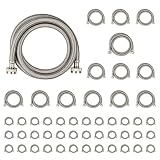
Overview: This massive 50-pack of braided stainless steel washing machine hoses targets property managers, contractors, and landlords managing multiple units. Each 5-foot hose provides the same universal fit and safety certifications as smaller packs, but at a substantial bulk discount. The package includes 100 sealing gaskets, ensuring every installation has fresh, leak-free washers.
What Makes It Stand Out: The sheer quantity delivers unprecedented per-unit pricing for professional-grade hoses. With UPC and NSF 61 certifications, these meet code requirements for commercial installations. The 304 stainless steel braid prevents bursting and corrosion, while the lead-free PVC core ensures water safety. This pack essentially provides a lifetime supply for large property portfolios.
Value for Money: At $7.52 per hose, this is nearly 35% cheaper than the 5-pack and less than half the price of individual retail hoses. For professionals, the math is compelling: a single water damage incident costs far more than this entire pack. The included gaskets add further value, eliminating separate hardware purchases.
Strengths and Weaknesses: Strengths: Exceptional bulk pricing; professional-grade certifications; complete gasket supply; burst-proof construction; universal 3/4" NPT fit; ideal for large properties or group purchases. Weaknesses: Large upfront investment; requires significant storage space; lacks 90-degree elbow option; 125 PSI rating adequate but not exceptional; overkill for single-family homes.
Bottom Line: Perfect for property management companies, apartment complexes, or contractor crews. The bulk pricing makes financial sense only if you genuinely need this quantity. For individual homeowners, split a pack with neighbors. The quality and certifications ensure code compliance and tenant safety, making this a smart business investment.
10. Fevone Garden Hose 75 ft., Lightweight Hybrid Water Hose, Flexible and Durable, Leak-Free Connections

Overview: This 75-foot hybrid polymer hose positions itself as a modern alternative to traditional rubber and vinyl hoses, targeting homeowners who need a full-length, all-purpose solution. The hybrid material promises flexibility without the weight of rubber, while multi-layer construction aims to prevent kinking and leaking at a competitive price point.
What Makes It Stand Out: The hybrid polymer formulation delivers an impressive balance of lightness and durability that pure vinyl can’t match. At $0.63 per foot, it’s priced aggressively against both budget vinyl and premium rubber hoses. The 5/8-inch diameter matches standard hose reels and sprinklers, and the reinforced connections address the most common failure point in garden hoses.
Value for Money: This represents exceptional value—quality rubber hoses cost $1-2 per foot, while cheap vinyl kinks and cracks within a season. The 75-foot length covers most suburban lots without needing couplers. For the price of two cheap hoses that’ll fail, you get one durable hose that should last several seasons, making it a smart long-term purchase.
Strengths and Weaknesses: Strengths: Outstanding price-to-performance ratio; genuinely lightweight; kink-resistant under pressure; weather-resistant materials; crush-resistant fittings; ideal length for typical yards; leak-free connections out of the box. Weaknesses: Hybrid polymer may not match 20-year rubber hose longevity; 75 feet can be heavy when water-filled; lacks specific temperature/pressure ratings in listing; no mention of repairable ends.
Bottom Line: The best value for average homeowners needing a reliable, no-fuss garden hose. It handles typical watering tasks without the back strain of rubber or the frustration of vinyl kinking. While not industrial-grade, it outperforms its price class and should serve most households well for years. Buy this for general yard maintenance and skip the cheap alternatives.
Why Leak-Free Laundry Connections Matter
Water damage from washing machine hoses isn’t just a minor inconvenience—it’s a homeowner’s nightmare that can escalate with terrifying speed. A burst hose releases up to 650 gallons of water per hour, enough to warp hardwood floors, destroy drywall, and create the perfect breeding ground for mold within hours. The financial impact averages $10,000 per incident, but can easily exceed $50,000 in multi-story homes where water cascades through ceilings.
Beyond the immediate damage, there’s the hidden cost of increased insurance premiums, potential policy non-renewal after multiple claims, and the irreplaceable loss of personal belongings. Most homeowners don’t realize that standard insurance policies often have specific clauses about “gradual damage” versus “sudden and accidental” failure, potentially leaving you uncovered if that slow drip could have been prevented with proper maintenance.
The Anatomy of a Washing Machine Hose
Understanding what makes a hose tick helps you spot quality before you buy. Every washing machine hose consists of three critical layers: the inner tube that carries water, the reinforcement layer that provides burst resistance, and the outer cover that protects against abrasion and environmental factors. The connectors at each end feature threaded fittings, a sealing washer, and often a swivel nut to prevent twisting during installation.
The weakest link in this chain is almost always the connection point, where the hose meets the valve or washer inlet. This junction experiences constant pressure fluctuations, temperature swings, and micro-vibrations from the machine’s operation—creating a perfect storm for fatigue failure if components aren’t engineered to work together harmoniously.
Standard vs. High-Efficiency Connections
Not all washing machines speak the same plumbing language. Standard top-loaders typically use 3/4-inch female hose thread (FHT) connections, while many front-loading high-efficiency models require specific adapters or have unique inlet configurations. European and Asian imports sometimes feature 3/8-inch compression fittings or proprietary quick-connect systems that demand specialized hoses.
Before purchasing anything, physically inspect your machine’s inlet ports and measure the threading. The difference between NPT (National Pipe Thread) and BSP (British Standard Pipe) might seem minor, but they’re not interchangeable. Forcing mismatched threads guarantees a leak path and potential cross-threading that damages both the hose and the appliance.
Material Matters: Choosing the Right Hose Construction
The material composition of your laundry hose directly correlates with its lifespan and reliability. While budget options might tempt you with their price point, the material science behind premium hoses explains why they command higher prices—and why they’re worth every penny.
Rubber Hoses: Traditional but Risky
Old-school black rubber hoses represent the baseline option, typically rated for 5-7 years of service. They’re manufactured from EPDM (ethylene propylene diene monomer) rubber, which offers decent flexibility and temperature resistance up to 140°F. However, rubber degrades predictably when exposed to chlorine, hard water minerals, and the constant stress of pressurization.
The real danger lies in their reinforcement—or lack thereof. Basic rubber hoses use a simple braided polyester layer that can delaminate from the inner tube over time. This separation creates bulges that precede catastrophic bursts, often occurring when you’re away from home and the washer’s automatic shutoff valves are closed, creating a pressure spike in the line.
Braided Stainless Steel: The Gold Standard
Braided stainless steel hoses have earned their reputation as the premium choice through superior engineering. The inner core is typically nickel-plated brass or reinforced nylon, surrounded by a tightly woven 304-grade stainless steel mesh. This armor provides exceptional burst resistance—often exceeding 1,500 PSI—and protects against puncture from nearby objects.
What many consumers miss is the quality variation within this category. Look for hoses where the stainless braid is encapsulated in a clear PVC coating; this prevents the steel from corroding when exposed to humidity and salt air in coastal regions. The best examples also feature anti-corrosive collars where the hose meets the fittings, preventing the “necking” failure common in cheaper versions.
PVC and Hybrid Options: Middle Ground Solutions
PVC (polyvinyl chloride) core hoses with braided reinforcement offer a compromise between cost and performance. They’re lighter than rubber, resist chemical degradation better, and don’t impart that characteristic “rubber smell” to your water. However, PVC becomes brittle in cold temperatures and can crack if bent too sharply during installation.
Hybrid hoses combine a rubber inner tube with a stainless steel braid, attempting to capture the best of both worlds. While this sounds ideal, the bonding between dissimilar materials can fail over time, especially in areas with wide temperature fluctuations. If you opt for a hybrid, ensure it carries a UL (Underwriters Laboratories) certification for water supply lines, which verifies the adhesive bonding meets minimum standards.
Hose Length and Diameter: Getting the Fit Right
A hose that’s too long creates unnecessary loops that trap water and create pressure points; too short and you’re pulling connections taut every time the machine vibrates. The Goldilocks principle absolutely applies here.
Measuring for Proper Length
Start by positioning your washer exactly where it will operate, leaving the recommended 4-6 inches of clearance from the wall for ventilation and movement. Measure from the center of each inlet valve to the corresponding washer port, then add 4 inches to allow for gentle curves without kinks. For most installations, this results in 4-foot or 5-foot hoses being optimal.
Remember that braided stainless hoses have less flexibility than rubber—they don’t compress as easily. If your measurement falls between standard lengths, always size up rather than down. A gentle S-curve in a longer hose is far less stressful than a pulled-taut connection that transmits every vibration directly to the fitting threads.
When to Choose Extra-Long Hoses
Laundry rooms with side-by-side units on pedestals, or those using recessed washer boxes set deep in the wall, often require 6-foot or even 8-foot hoses. The key is ensuring the extra length doesn’t create a tripping hazard or get crushed behind the machine.
For these situations, consider hoses with built-in anti-kink springs near the connectors. These helical reinforcements prevent the hose from collapsing when bent, maintaining full water flow and reducing turbulence that can cause premature wear. Just ensure the spring doesn’t interfere with the swivel nut’s rotation during installation.
Connector Types Decoded
The connector is where theory meets reality—where your carefully chosen hose actually mates with your plumbing. This interface demands precision engineering, yet it’s often overlooked until leaks appear.
Threaded vs. Quick-Connect Fittings
Traditional threaded fittings use a hex nut that screws onto the valve or washer inlet, compressing a washer to create the seal. The quality of the threads matters enormously—look for fittings that are forged rather than cast, as forging creates a denser metal structure less prone to cracking under torque.
Quick-connect fittings, popular in Europe and gaining traction in the US, use a push-to-lock mechanism with internal O-rings. While convenient, they require perfectly smooth mating surfaces and can fail if debris accumulates in the locking mechanism. For most homeowners, threaded fittings remain the more reliable and repairable option.
Understanding NPT and BSP Standards
NPT threads are tapered, designed to create a mechanical seal as they’re tightened. BSP threads are parallel and rely entirely on the washer for sealing. Mixing these standards seems to work initially but guarantees a slow leak as the mismatched threads stress the washer unevenly.
Check your washing machine’s manual for the thread specification. If it’s not listed, measure the thread pitch with a gauge or take the inlet fitting to a plumbing supply store. Most modern American washers use 3/4-inch NPT, but imports and commercial units often deviate from this standard.
The Critical Role of Washers and Gaskets
That tiny rubber disc inside the connector nut is your last line of defense against leaks. Understanding its design and limitations is crucial for leak-free operation.
Why Rubber Washers Fail
Standard black rubber washers harden and lose elasticity within 2-3 years, especially in homes with water softeners that increase sodium content. Once hardened, they can’t conform to microscopic imperfections in the mating surfaces, allowing seepage. The compression set is permanent—tightening the nut further just deforms the washer more without improving the seal.
Heat accelerates this degradation dramatically. If your hot water line runs consistently above 120°F, expect washer replacement every 18 months. Some manufacturers use nitrile rubber (Buna-N) for better temperature resistance, but even these have limits.
The Advantage of Reinforced Gaskets
Premium hoses now feature fiber-reinforced EPDM washers or integrated gasket designs that combine rubber and metal. The fiber reinforcement prevents the washer from extruding into the thread gaps under pressure, maintaining a consistent seal over time. These can last 5-7 years even under demanding conditions.
Look for washers with a concave or “dished” design. This shape concentrates sealing pressure at the outer edge where it’s most effective, rather than distributing it evenly across a flat surface. Some advanced designs even incorporate a secondary lip seal that activates under higher pressure, providing redundant protection.
Burst Strength and Pressure Ratings Explained
That PSI number on the packaging isn’t just marketing fluff—it represents engineered safety margins that protect your home when municipal water pressure spikes or your pressure regulator fails.
Decoding PSI Ratings
Residential water pressure typically ranges from 40-60 PSI, but can spike to 150 PSI or more during water main repairs or fire hydrant use. A quality laundry hose should have a minimum burst rating of 1,200 PSI, providing an 8:1 safety factor at normal operating pressures.
The testing methodology matters. UL-certified hoses undergo sustained pressure testing at 300 PSI for 100,000 cycles, simulating years of pressure fluctuations. Non-certified hoses might claim high burst ratings but fail prematurely under cyclic loading—the exact condition they face in real-world use.
Temperature Considerations
Pressure ratings drop significantly with temperature. A hose rated for 1,500 PSI at 70°F might only handle 800 PSI at 180°F. Since hot water lines experience both thermal expansion and higher pressures, they need higher-rated hoses than cold lines.
For homes with tankless water heaters that can deliver 160°F+ water, specify hoses rated for continuous duty at 200°F. The packaging should explicitly state the temperature range, not just the pressure rating. Ambiguous “high temperature” claims without specific numbers are red flags.
Smart Features for Modern Laundry Rooms
Technology has finally reached the lowly laundry hose, adding layers of protection that were impossible just a decade ago. These features aren’t gimmicks—they’re engineered responses to common failure modes.
Auto-Shutoff Mechanisms
Integrated auto-shutoff valves use a mechanical or electronic sensor to detect abnormal water flow. If the hose ruptures and flow exceeds a preset threshold (typically 0.5 gallons per minute for more than 30 seconds), the valve snaps shut, limiting damage to just a few gallons.
Mechanical versions use a flow-sensitive spring that doesn’t require batteries, making them more reliable long-term. Electronic models offer smartphone alerts and can distinguish between normal fill cycles and true leaks, but need power and Wi-Fi connectivity. For most homeowners, the mechanical simplicity wins out.
Flood Prevention Technology
Advanced systems now incorporate pressure sensors that monitor for slow leaks, not just catastrophic bursts. These detect the subtle pressure drop that occurs when water seeps past a failing washer, triggering an alarm before visible damage occurs.
Some premium washer boxes include drip trays with integrated sensors that shut off both hot and cold supplies if any moisture is detected. While these add $100-200 to installation costs, they provide comprehensive protection that extends beyond just the hoses to cover valve failures and overflow scenarios.
Installation Best Practices
Even the world’s best hose will leak if installed incorrectly. The difference between a 10-year reliable connection and a 6-month failure often comes down to technique, not materials.
Proper Tightening Techniques
Hand-tighten the connector nut until the washer makes contact, then use a wrench for an additional quarter-turn—no more. Over-tightening compresses the washer unevenly and can crack the fitting, especially on plastic inlet valves. The goal is sufficient compression to create a seal, not maximum torque.
Always hold the valve or inlet fitting stationary with a second wrench while tightening the hose nut. This prevents twisting stress on the pipe connection, which can loosen solder joints or crack CPVC fittings inside the wall. For washer inlets, support the inlet assembly to prevent stressing the mounting screws.
Avoiding Kinks and Stress Points
Route hoses with generous, sweeping curves rather than sharp 90-degree bends. A kinked hose creates turbulence that erodes the inner tube and increases pressure at the bend point. Use the swivel feature at the connector to orient the hose naturally without twisting.
Secure hoses to the wall or washer box with cushioned clamps, keeping them 2-3 inches away from the wall. This prevents them from being crushed when you push the machine back and eliminates vibration wear against rough surfaces. Never let hoses rest on sharp edges or hot surfaces like dryer vents.
Maintenance and Inspection Schedules
Set-it-and-forget-it doesn’t apply to laundry hoses. A proactive inspection routine catches 90% of failures before they become emergencies.
Monthly Visual Checks
Every month, pull the washer away from the wall just enough to see the connections. Look for moisture on the valves, connectors, and the first 6 inches of hose. Run your finger along the bottom of each connection—slow leaks often evaporate before they become visible drips, leaving behind a telltale crust of mineral deposits.
Check for kinks or sharp bends that weren’t there during installation. Machines can shift slightly during spin cycles, gradually stressing hoses in new ways. While you’re back there, verify that the shutoff valves operate smoothly; a stuck valve is useless in an emergency.
Annual Deep Inspection Protocol
Once a year, shut off the water supply and disconnect both hoses. Inspect the washers for cracks, hardness, or compression set. Replace them even if they look marginal—washers cost pennies, water damage costs thousands.
Run your fingers along the entire length of each hose, feeling for bulges, soft spots, or external cracks. Flex the hose gently at each end; if you hear crackling or feel stiffness, the inner tube is degrading. Check the stainless braid for broken wires or corrosion, particularly near the collars. Any sign of rust on stainless steel indicates a low-grade alloy that won’t last.
Warning Signs of Impending Failure
Hoses rarely fail without warning. Learning to read the subtle distress signals gives you time to replace them on your schedule, not in crisis mode.
Bulges, Cracks, and Discoloration
A bulge in a rubber hose indicates the reinforcement braid has separated from the inner tube, allowing pressure to balloon the rubber outward. This is a final warning—replace the hose immediately. Even a small bulge can burst within days.
Surface cracks in rubber, especially those that reveal the underlying braid, indicate advanced UV or ozone degradation. On stainless hoses, discoloration or rainbow patterns near the fittings suggest galvanic corrosion from dissimilar metals, compromising the connection’s integrity.
Corrosion on Connectors
White or green crust on brass fittings is more than cosmetic—it’s evidence of dezincification, where zinc leaches from the brass alloy, leaving behind a porous, weak structure that will eventually crumble. This is common in areas with aggressive water chemistry.
Rust on steel components or pitting on stainless steel indicates the protective chromium oxide layer has been compromised, usually by chloride exposure from laundry detergents. Once corrosion starts, it accelerates exponentially.
When to Replace Your Hoses
Replacement timing shouldn’t be arbitrary. Base it on actual service conditions, not just calendar pages.
The 5-Year Rule Myth
You’ve heard “replace hoses every 5 years.” While not bad advice, it’s overly simplistic. A lightly used washer in a single-person household might have hoses last 8-10 years, while a family of five doing daily loads could see failure in 3 years. Water quality matters too—softened water is actually more aggressive to rubber than moderately hard water.
Instead of a fixed schedule, replace based on inspection findings and cycle count. Most hoses are rated for 5,000-7,000 wash cycles. If your machine has a cycle counter, use it. If not, estimate: a family of four typically runs 300-400 loads annually.
Usage-Based Replacement Guidelines
For households running fewer than 200 loads per year, a 7-year replacement interval is reasonable if annual inspections show no deterioration. At 200-400 loads per year, plan on replacement every 5 years. Over 400 loads annually? Every 3-4 years, regardless of appearance.
Always replace hoses after any incident that could have stressed them: moving the washer, a severe off-balance spin cycle that shook the machine violently, or any plumbing work that introduced debris into the lines. Sediment can lodge in the hose, creating erosion that weakens the inner tube.
Specialty Solutions for Unique Situations
Standard hoses don’t fit every installation. Recognizing when you need a specialized solution prevents dangerous compromises.
Recessed Washer Boxes
When valves are set 3-4 inches into the wall, standard hoses can’t make the connection without severe bending stress. Use “gooseneck” or “offset” connectors that provide a gentle 90-degree turn in the first few inches, allowing the hose to route naturally from the recessed valve.
These specialized connectors often include integrated hammer arrestors, which absorb the pressure spike when valves close suddenly. This protects not just your hoses but also the solenoid valves inside your washer, extending their lifespan significantly.
Multi-Unit Installations
In apartment buildings or condos, building codes often require metal-jacketed hoses or hoses with fire-rated insulation. These prevent a hose failure from flooding multiple units and provide crucial fire-stopping capabilities.
For shared laundry rooms with commercial-grade machines, step up to hoses rated for continuous duty and equipped with quarter-turn ball valves rather than gate valves. The faster shutoff can mean the difference between a minor incident and a major insurance claim when you’re dealing with high-volume machines.
Environmental Considerations
Modern plumbing codes and environmental awareness have introduced new factors into hose selection that go beyond simple leak prevention.
Lead-Free Requirements
Since the 2014 federal mandate, all potable water components must contain less than 0.25% lead. However, some imported hoses still use leaded brass in their fittings. Look for NSF/ANSI 61 certification, which verifies the entire assembly meets drinking water standards.
This matters even for laundry because hot water lines can leach lead more readily, and that water eventually enters the wastewater stream. For homes with septic systems, lead accumulation can disrupt beneficial bacteria. The certification also ensures the hose won’t impart unpleasant tastes or odors that could transfer to clothes.
Recyclable Materials
At end-of-life, rubber hoses typically go to landfills, while stainless steel braided hoses can be partially recycled. Some manufacturers now offer take-back programs where the steel braid and brass fittings are recovered. The inner tube, usually nylon or EPDM, remains challenging to recycle but represents a small fraction of the material.
Consider the total lifecycle impact: a durable stainless steel hose replaced every 7 years generates less waste than three rubber hoses replaced every 3 years each. The energy and water used in manufacturing also favor longer-lasting options.
Troubleshooting Common Leak Issues
When you discover moisture, systematic diagnosis prevents misdiagnosis and unnecessary parts replacement.
Dripping at the Connection Point
If water appears at the hose-to-valve connection, first try tightening an additional eighth-turn. If that doesn’t work, shut off the water and inspect the washer. A damaged washer is the culprit 80% of the time. When replacing it, check the mating surface for scratches or corrosion that could prevent a seal.
Persistent dripping after washer replacement suggests a cracked fitting or damaged threads. Remove the hose and inspect the valve’s male threads with a magnifying glass. Even a single damaged thread can prevent sealing. In such cases, the valve itself may need replacement—a job for a professional if soldering is involved.
Pinhole Leaks in the Hose Body
A pinhole leak in the middle of a hose indicates either manufacturing defect or chemical attack on the inner tube. The stainless braid might contain the spray temporarily, but the hose is compromised and must be replaced immediately.
Don’t attempt temporary repairs with tape or sealant. The pressure will force failure at another weak point, often more catastrophically. Trace the cause: if the leak is near the hot water connection, check your water heater temperature. Anything above 140°F accelerates inner tube degradation. If it’s on the cold side, test for chlorine levels above 4 ppm, which attacks rubber compounds.
Frequently Asked Questions
How tight should I make the hose connections?
Hand-tighten until the washer contacts the fitting, then use a wrench for an additional quarter-turn. Over-tightening cracks fittings and distorts washers, causing leaks. If you’re using Teflon tape (generally unnecessary with good washers), stop at hand-tight plus an eighth-turn.
Can I reuse old hoses when moving my washer?
Only if they’re less than 3 years old and pass a rigorous inspection. Moving stresses hoses in new ways, and the jostling can dislodge internal scale that then erodes the inner tube. Given the low cost relative to risk, new hoses are cheap insurance for a new installation.
Why does my brand-new hose leak at the connection?
First, verify you didn’t cross-thread the connection. Then check if the washer fell out during installation—this happens more often than you’d think. If the washer is in place, inspect it for damage from over-compression. Some hoses ship with thin, low-quality washers that should be replaced with reinforced ones before installation.
Are stainless steel hoses really worth the extra cost?
For most homeowners, absolutely. They last 2-3 times longer than rubber, resist damage from nearby objects, and provide visible warning signs (broken wires, corrosion) before catastrophic failure. The cost difference amortizes to about $3 per year over the hose’s lifespan—far less than your insurance deductible.
What’s the deal with washing machine hose filters?
In-line filters trap sediment that can erode solenoid valves and hose interiors. They’re especially valuable in areas with well water or old municipal pipes. Install them on both hot and cold lines, and check them monthly. A clogged filter reduces water pressure and forces the washer to work harder, but a clean filter extends the life of your entire laundry system.
Can I install hoses myself or do I need a plumber?
Most homeowners can handle hose replacement with basic tools and this guide. However, call a plumber if your shutoff valves are stuck, if you need to replace the valves themselves, or if the installation requires modifications to hard plumbing. The $150 service call is worthwhile if it prevents a $15,000 mistake.
Why do my hoses make banging noises when the washer fills?
That’s water hammer—a pressure spike when the solenoid valve closes suddenly. It stresses hoses and fittings. Install hammer arrestors on both supply lines, or upgrade to hoses with integrated arrestors. The noise isn’t just annoying; it’s a sign of pressure spikes that will eventually cause a failure.
How do I know if my water pressure is too high for standard hoses?
Buy a $10 pressure gauge that screws onto a hose bibb. If it reads above 80 PSI consistently, you need a pressure regulator on your main line. High-pressure-rated hoses help, but they’re a band-aid. The root cause must be addressed to protect your entire plumbing system.
Is it normal for hoses to get warm during operation?
Slight warmth on the hot water hose is normal. However, if the cold water hose gets noticeably warm, you may have cross-contamination through a failing mixing valve, or your washer is drawing hot water when it shouldn’t. This constant temperature cycling ages hoses prematurely, so investigate the cause.
Can I extend my hoses by connecting two together?
Never. Every connection is a potential leak point, and the joined section becomes a stress concentration that will fail first. Buy a single hose of the correct length. If you truly need an extra-long run, have a plumber install permanent copper or PEX piping to a new valve location closer to the washer.