In most restaurants the dryer lives in the back hall, between the mop sink and the breaker panel, and it is the least glamorous piece of equipment in the building. It also runs some of the dirtiest fabric: bar mops stained with beer and syrup, aprons stiff with cooking oil, chef coats with charred cuffs and kitchen towels that smell of the fryer. A machine that handles a family's sheets will not necessarily handle that load.
Grease changes the drying problem. Oil holds heat and slows moisture release, so a mixed load of bar mops and heavy aprons dries unevenly. The dryer is not there to clean anything; if grease survives the wash, the heat will set the stain and the smell. What the dryer can do is move water fast, avoid over-drying cotton into brittle rags, and keep lint from accumulating inside a cabinet that sits inches from a gas line.
There are three practical routes. A 33-pound commercial tumbler such as the INTSUPERMAI or EQCOTWEA handles a full service's linen but needs three-phase power and a dedicated exhaust. A 7 to 7.4 cu ft LG or Speed Queen works for a small dining room on standard 240V or gas. And a ventless heat pump or condenser model fits a basement room where no duct can go.
We compared specifications, features and owner reports to sort out which one belongs in which kitchen.
Top picks at a glance
LG DLEX4200B 7.4 cu. ft. Ultra Large Capacity Smart Wi‑Fi Enabled Front Load D
Check price on AmazonEQCOTWEA Commercial Clothes Dryer 33LB Heavy-Duty, 8KW Industrial Laundry Drye
Check price on AmazonINTSUPERMAI Commercial & Industrial Clothes Dryer Heavy-Duty Automatic Dryer M
Check price on AmazonCompare the shortlist
| Model | Type | Capacity | Key feature | Amazon |
|---|---|---|---|---|
| 1. LG DLEX4200B 7.4 cu. ft. Ultra Large Capacity Smart Wi‑Fi Enable | Front-load | 7.4 cu ft | Sensor drying | Check price |
| 2. Speed Queen ADA 7 Cu. Ft. Sanitizing Gas Dryer with Pet Plus in | Gas | 7 cu ft | Sanitize cycle | Check price |
| 3. LG DLEX4000B 7.4 cu. ft. Ultra Large Capacity Smart Wi‑Fi Enable | Front-load | 7.4 cu ft | Steam | Check price |
| 4. EQCOTWEA Commercial Clothes Dryer 33LB Heavy-Duty, 8KW Industria | Stain remover | — | Efficiency | Check price |
| 5. INTSUPERMAI Commercial & Industrial Clothes Dryer Heavy-Duty Aut | Dryers | — | Connected controls | Check price |
| 6. 7.4 cu. ft. Ultra Large Capacity Smart wi-fi Enabled Front Load | Front-load | 7.4 cu ft | Connected controls | Check price |
| 7. BLACK+DECKER 4.4 Cu. Ft. Electric Dryer with Heat Pump, 22 lb. C | Heat pump | 4.4 cu ft | Ventless | Check price |
| 8. ConServ 240V Condensor 4 cu.ft Refresh Dryer Energy Star (Matte | Dryers | 4 cu ft | Delay start | Check price |
Detailed reviews
LG DLEX4200B 7.4 cu. ft. Ultra Large Capacity Smart Wi‑Fi Enabled Front Load Dryer in Black Steel with TurboSt

LG's DLEX4200B brings a 7.4 cu ft drum, TurboSteam and an AI fabric sensor to a small restaurant laundry. The sensor reads load size and moisture and adjusts the cycle, which helps when different staff load the machine. Steam refresh is useful for chef coats and aprons that need odor removal rather than a full wash. It needs 240V service and a clean vent.
What stands out
- 7.4 cu ft drum takes a full bar-mop load
- Steam refresh removes kitchen odors from coats
- AI sensor adjusts for mixed fabric loads
Watch out for
- Requires 240V service and a proper vent
- Residential build, not rated for all-day kitchen use
Speed Queen ADA 7 Cu. Ft. Sanitizing Gas Dryer with Pet Plus in Matte Black

Speed Queen's gas dryer is the simple option: 7 cu ft, a sanitizing cycle, over-dry protection, anti-static control and Pet Plus for lint. There is very little to configure, which suits a kitchen where staff change weekly. Gas heat recovers quickly between loads, and the sanitizing cycle helps with shared aprons. The cabinet is taller than a typical residential dryer at 42.75 inches.
What stands out
- Gas heat bounces back fast between lunch and dinner
- Sanitizing cycle suits aprons and shared towels
- Few electronics means fewer breakdowns in a kitchen
Watch out for
- Needs gas service, a flue and an installer
- Tall cabinet may not fit under a back-hall shelf
LG DLEX4000B 7.4 cu. ft. Ultra Large Capacity Smart Wi‑Fi Enabled Front Load Electric Dryer — Black Steel

The DLEX4000B pairs the same 7.4 cu ft drum with FlowSense duct monitoring and twelve programs. In a restaurant, FlowSense is the standout: grease and lint build up faster than in a home, and a restricted duct slows every cycle while raising drum temperature. Steam sanitizing and heavy-duty cycles cover aprons and towels. It is an electric machine, so a 240V circuit is required.
What stands out
- FlowSense warns when grease and lint restrict the duct
- Twelve programs include heavy duty and steam sanitize
- Large drum keeps up with a busy bar menu
Watch out for
- Electric only, so 240V service is required
- Not a commercial-duty cabinet for round-the-clock use
EQCOTWEA Commercial Clothes Dryer 33LB Heavy-Duty, 8KW Industrial Laundry Dryer,Stainless Steel Drum, with saf
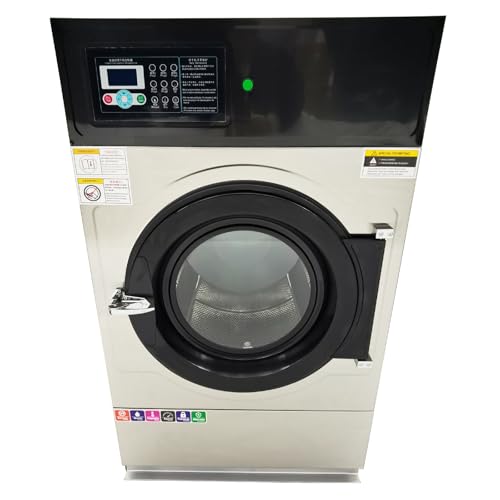
EQCOTWEA's 33-pound industrial dryer is built for commercial linen: 8KW of heat, a 0.55KW motor, a 304 stainless drum and a safety lock. Overheat protection and computerized temperature control keep fabric from scorching, and the noise rating is quoted under 80 dB(A). A tempered-glass door and removable lint net make daily cleaning straightforward. It needs 220V three-phase power and a 545-pound delivery plan.
What stands out
- 33 lb batches clear a full day of kitchen linen
- Stainless drum stands up to greasy towels
- Safety lock and overheat protection suit staff use
Watch out for
- Three-phase 220V service is a significant install
- 545 pounds needs floor support and rigging
INTSUPERMAI Commercial & Industrial Clothes Dryer Heavy-Duty Automatic Dryer Machine Laundry Equipment,33LB Au
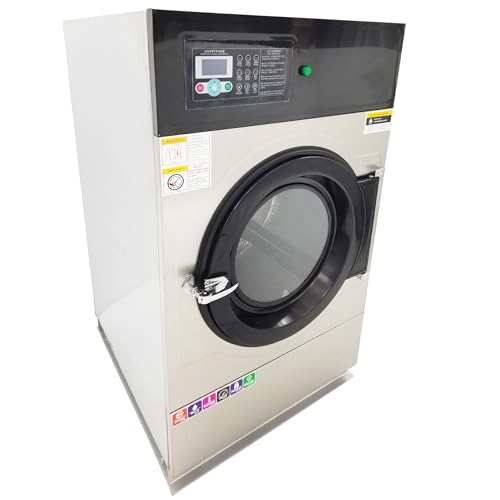
INTSUPERMAI's commercial tumbler matches the 33-pound class with a 220V three-phase motor, an 8KW heater and a 304 stainless drum. The fabric-to-space ratio is quoted at 20:1, dual thermal sensors guard against shrinkage, and the belt drive runs at or below 80 dB. A large lint filter and quick-drain outlet simplify the daily clean-down. The 3.9-inch exhaust outlet needs a dedicated metal duct.
What stands out
- Full 33 lb loads finish in roughly forty-five minutes
- Large lint filter suits greasy kitchen linen
- Dual thermal sensors protect cotton and blends
Watch out for
- Requires a dedicated 3.9-inch vent and 3-phase power
- Large footprint may not suit a cramped back hall
7.4 cu. ft. Ultra Large Capacity Smart wi-fi Enabled Front Load Gas Dryer with Built-In Intelligence

This LG gas dryer, model DLG3601V, offers 7.4 cu ft and built-in intelligence on a gas connection. The supplied listing is short on cycle detail, but the drum size and heat source are what matter for aprons and bar mops. Wi-Fi lets a manager check a cycle from the office. It is a sensible choice where a gas line already runs to the laundry.
What stands out
- Gas heat and 7.4 cu ft handle daily linen
- Built-in intelligence reduces settings for new staff
- Wi-Fi status checks save a walk from the office
Watch out for
- Very little cycle information in the supplied listing
- Gas line and venting limit where it can be placed
BLACK+DECKER 4.4 Cu. Ft. Electric Dryer with Heat Pump, 22 lb. Capacity , 240V Electric Clothes Dryer with 16

BLACK+DECKER's BDFH44M is a 4.4 cu ft ventless heat pump dryer with a 22-pound capacity and sixteen cycles. Condensed water goes to a tank or out through the included 51-inch drain hose, so no exterior duct is needed. The stainless drum and transparent door make it easy to check a load. It requires professional hardwiring on 240V and is best for lighter, smaller batches.
What stands out
- Ventless design fits a basement prep room
- Drain hose avoids the daily tank-emptying chore
- Sixteen cycles include delicates and bulky items
Watch out for
- 4.4 cu ft drum is small for a service's linen
- Heat pump drying is slower on heavy cotton
ConServ 240V Condensor 4 cu.ft Refresh Dryer Energy Star (Matte Black)

ConServ's 4 cu ft condenser dryer is another ventless option, with automatic temperature control, a damp alert, a filter check indicator and a child lock. The stainless drum is built for daily use, and the two-year comprehensive warranty is longer than most. It suits a small prep room where towels and aprons are dried in several short batches rather than one large load.
What stands out
- No exterior duct needed for basement installs
- Damp alert prevents damp linen going back on the shelf
- A two-year comprehensive warranty covers the entire machine
Watch out for
- 4 cu ft capacity means frequent small batches
- Condensate tank or drain needs daily attention
Buying guide
Kitchen Linen Carries Grease, Not Just Water
Restaurant linen is a mix of absorbent cotton and heavy poly-cotton, and both arrive wet with more than water. Bar mops hold spills, aprons hold oil, and kitchen towels hold a combination of both. That matters for drying because grease-coated fibers release moisture more slowly, and a load that feels dry at the surface can still be damp in the middle. Separate the greasy kitchen load from bar mops and napkins, and give the heavy items their own cycle rather than cramming everything into one drum. A wing basket and a stack of folded aprons can wait; greasy kitchen towels should go in alone, with room to tumble, because the fabric needs airflow more than it needs heat.
Washing is the other half of the job, and the dryer cannot compensate for a weak wash. Use a detergent that cuts grease, run a hot cycle where the fabric allows, and check that the machine is not so full that items never separate. If aprons still smell after drying, the soil is still there. A dryer with a sensor helps because it keeps running until the moisture is actually gone, rather than stopping on a timer while the center of the load is still damp. If the machine has a prewash or soak option, use it on aprons before the main cycle; the dryer will finish faster and the fabric will smell cleaner. That extra step is worth the water.
Space and Voltage in a Back-of-House Laundry
Measure the path before the machine. Back-of-house corridors are narrow, turns are tight, and a 39-inch-wide industrial cabinet will not fit through a 30-inch door no matter how carefully it is tilted. The LG and Speed Queen models are around 27 inches wide and fit where the commercial units cannot. Height matters too: a 59-inch tumbler needs vertical clearance and a service gap, while a 42.75-inch Speed Queen may not slide under an existing shelf. Check the floor as well: a commercial tumbler can weigh 545 pounds empty, and a raised wooden floor over a crawl space may need bracing before the machine goes in. Put it where a cart can reach the door, not in a corner behind the prep table.
Voltage usually decides the shortlist. The 33-pound INTSUPERMAI and EQCOTWEA units need 220V three-phase service and an 8KW heater, which means a dedicated circuit, a panel review and usually a licensed electrician. The LG electric models need 240V, the gas models need a gas line and a flue, and the heat pump units run on 240V but need a drain or tank. Ask what the building already has before you fall for a capacity figure. If the answer is single-phase only, choose a residential electric or gas model rather than assuming a commercial unit can be adapted. The two 33-pound machines here are three-phase, and an electrician should confirm the nameplate before you buy.
Lint, Grease and Fire Risk
A restaurant dryer is a fire risk in a way a home dryer is not, because the lint is mixed with cooking oil. Clean the filter before every cycle, and do not rely on a quick shake. Once a week, pull the filter and wash it if the manufacturer allows, then look inside the drum for a film of grease. A clogged filter raises drum temperature and lengthens cycles, and a hot drum full of oily lint is exactly the combination you do not want behind a kitchen. Keep a metal bin with a lid for oily rags and empty it at closing; a rag pile in a warm corner is a fire load independent of the dryer.
The vent run deserves the same attention. Use smooth metal duct rather than flexible foil, support it so it does not sag, and keep the run short with few elbows. Check the exterior hood for lint and grease buildup every month. Never put rags soaked in solvent, oil-based cleaning products or floor finish into a dryer, even for a short air cycle; the vapors can ignite. A heat pump or condenser dryer avoids the duct but still needs its filter pack and condenser coil cleaned regularly. If the duct runs through a cold space, insulate it to stop condensation, which otherwise drips back into the cabinet and rusts the base. Check that the exterior hood flap moves freely on windy days.
Throughput Between Lunch and Dinner
Service comes in waves, and the laundry has to clear between them. A 7.4 cu ft dryer will process a load of bar mops in roughly 40 to 50 minutes, which is fine if the machine starts when the lunch rush ends. A 33-pound commercial tumbler handles a much larger batch in about 45 minutes, so it can clear a full day's kitchen linen in two or three cycles. If the laundry is staffed by one person who also preps, the bigger machine is often the difference between finishing before dinner and leaving a wet pile overnight. Track how long a cycle actually takes for a week; the display estimate is rarely the whole story once a load is dense.
Plan the staging area as carefully as the machine. Wet linen needs a cart or bin, clean linen needs a shelf, and the two should not share a surface. A dryer that finishes after the closers leave will sit overnight, and a damp load in a warm kitchen grows mildew by morning. Use sensor dry rather than a fixed timer, take the load out promptly, and fold or hang it before the next cycle starts. Spare bar mops cost less than a reopened kitchen. Label the clean and dirty sides of the room with tape, and do not let a bus tub of dirty aprons sit on the folding table. Small habits keep the laundry from becoming a health inspection finding.
Simple Controls for a High-Turnover Staff
Kitchen staff do not have time to learn a menu tree. Look for a short list of clearly labeled cycles, a start button that does not require a confirmation screen, and a door that opens wide enough for bulky aprons. Child locks are useful in a restaurant too, because they stop a well-meaning staff member from changing a cycle mid-dry. Delay start helps if the kitchen has off-peak power or if the linen needs to be ready before the first delivery. A machine with a mechanical dial is easier to replace than a touch panel when a cook with flour on their hands jabs at it, so weigh simplicity against features. The best control is the one staff cannot misread.
Wi-Fi monitoring is a nice extra, not a reason to buy. It helps a manager see whether a load is done, but only if someone checks the phone during service. What matters more is a printed cleaning schedule taped to the wall and a spare lint filter on the shelf. Train one person per shift on the machine, and leave the manual in a plastic sleeve beside it. A dryer that is easy to operate correctly is safer than one with more features. Keep a laminated card with the model number, the electrician's number and the vent cleaner's number inside the door, so nobody has to search during a breakdown. That card saves more time than any app.
Frequently asked questions
Can a restaurant use a residential dryer for kitchen linen?
A small cafe or food truck with a few aprons and bar mops can use a 7.4 cu ft residential dryer on 240V or gas. Keep grease-heavy items separate, clean the lint filter every cycle, and do not expect it to survive a full-service kitchen's daily load. Once you run two shifts, a commercial unit is the safer choice.
How do I stop bar mops from smelling after drying?
The smell is usually still in the fabric when it reaches the dryer. Wash with a grease-cutting detergent at the hottest temperature the fabric allows, use the correct dose, and make sure the load is not packed so tightly that water cannot circulate. Dry completely, then store the mops somewhere dry. A dryer cannot remove a sour smell that the wash left behind.
Is a ventless dryer safe in a restaurant basement?
Yes, if the condensate and humidity are managed. Heat pump and condenser dryers do not exhaust lint and moisture outside, but they release some heat and humidity into the room and need a drain or tank. Keep the space ventilated, clean the filter pack, and do not store grease or open chemicals beside the machine.
What size dryer does a 60-seat restaurant need?
Most 60-seat restaurants generate a few loads of bar mops, aprons and kitchen towels per day, which two 7.4 cu ft dryers or one 33-pound commercial unit can cover. The commercial unit needs three-phase power and a larger vent. Measure your actual linen weight over a busy week before deciding.
How often should restaurant dryer vents be cleaned?
Check the lint filter before every load and inspect the exterior vent hood monthly. Have the full duct run cleaned professionally at least once a year, and more often if the dryer serves a fryer-heavy kitchen. Greasy lint is more flammable than household lint, so an annual inspection is not excessive.
Verdict
For a small dining room with standard 240V service, the LG DLEX4000B is the pick. It holds a full load of bar mops and aprons, the steam cycle handles chef coats that need refreshing, and FlowSense warns when grease and lint begin restricting the duct, which is the safety issue that matters most in a kitchen.
Food trucks and cafes with a handful of aprons should choose the BLACK+DECKER heat pump; it is ventless, so it can sit in a basement prep room, though it dries slowly. Full-service restaurants with three-phase power should buy the INTSUPERMAI 33-pound tumbler, which clears a day's linen in a few cycles. The Speed Queen gas model is the low-electronics alternative where gas is already piped.