The strangest thing about the detergent aisle is that the smaller bottle often does more work. An 82.5-ounce bottle can claim 110 loads while a 194-ounce jug claims 134, and both are telling the truth. The difference is the dose the maker assumes, which in turn decides how much chemistry reaches each wash. Concentration is the reason one shelf looks like a puzzle and the other looks like a bargain.
It is also the most abused word in the category. Two-times, three-times and ultra appear on labels with no shared definition, and none of them tells you how a formula performs on a collar or a towel. The number that does tell you something is fluid ounces divided by load count, because it is the only figure the maker has to stand behind. Everything else is a comparison the marketing department chose.
We compared specifications, features and owner reports for ten concentrated or concentrated-leaning liquids, from a half-ounce-per-load baby formula to a 194-ounce odor-defense jug. The notes below are about reading the bottle correctly, dosing it in a machine that uses very little water, and knowing when concentration is doing real work rather than just shrinking the package.
Top picks at a glance
ARM & HAMMER Baking Soda Fresh Liquid Laundry Detergent
Check price on AmazonMolly's Suds Baby Liquid Laundry Detergent
Check price on AmazonGain Liquid Laundry Detergent, Now with Odor Defense, Original Scent, 132 fl o
Check price on AmazonCompare the shortlist
| Model | Type | Capacity | Key feature | Amazon |
|---|---|---|---|---|
| 1. ARM & HAMMER Baking Soda Fresh Liquid Laundry Detergent | Liquid | — | — | Check price |
| 2. Gain Liquid Laundry Detergent, Now with Odor Defense, Original S | Liquid | — | Softening | Check price |
| 3. Gain Odor Defense Liquid Laundry Detergent, Super Fresh Blast Sc | Liquid | — | High efficiency | Check price |
| 4. ARM & HAMMER Plus OxiClean with Odor Blasters Liquid Laundry Det | Liquid | — | — | Check price |
| 5. Dreft Newborn Baby Liquid Laundry Detergent, Gentle on Sensitive | Liquid | — | High efficiency | Check price |
| 6. Tide Liquid Laundry Detergent, Original Scent, 80 Loads, 100 fl | Liquid | — | Quick cycle | Check price |
| 7. Tide Ultra Sport Liquid Laundry Detergent, 92 fl oz, 65 Loads, L | Liquid | — | — | Check price |
| 8. Tide Simply Liquid Laundry Detergent, Free & Sensitive, 138 Load | Liquid | — | High efficiency | Check price |
| 9. Molly's Suds Baby Liquid Laundry Detergent | Liquid | — | High efficiency | Check price |
| 10. Tide Ultra Oxi Boost Liquid Laundry Detergent, 148 fl oz, 105 Lo | Liquid | — | — | Check price |
Detailed reviews
ARM & HAMMER Baking Soda Fresh Liquid Laundry Detergent

ARM & HAMMER Baking Soda Fresh, 110 ounces for 110 loads, one ounce per wash. It carries ten times the baking soda of the brand's original formula, which helps with odor and light soil, plus a two-times stain-fighter claim against a leading value detergent. It is phosphate-free and works at all temperatures. The simple one-ounce dose makes it the easiest bottle here to halve for a small load.
What stands out
- 110 loads at a clean one ounce per wash
- Ten times the baking soda of the original formula
- Phosphate-free and works well in cold wash water
Watch out for
- Modest enzyme power compared with the premium liquids here
- Its fresh scent is noticeable on towels and bedding
Gain Liquid Laundry Detergent, Now with Odor Defense, Original Scent, 132 fl oz, 100 Loads

Gain Odor Defense in Original Scent, 132 ounces for 100 loads, about 1.32 ounces per wash. The formula pairs standard Gain cleaning with an odor-defense claim aimed at musty, set-in smells, and the fragrance capsules keep releasing scent after the wash. Both standard and high-efficiency washers can use it. The dose is moderate rather than ultra-concentrated, so the bottle is a middle option in this group.
What stands out
- 100 loads at about 1.32 ounces per wash
- Odor Defense targets musty, damp and set-in smells
- Works in every machine type and all water conditions
Watch out for
- Not especially concentrated given its large 132-ounce bottle
- The strong fragrance is not for sensitive noses
Gain Odor Defense Liquid Laundry Detergent, Super Fresh Blast Scent, 194 fl oz, 134 Loads, 2 in 1, Laundry Det

Gain Odor Defense in Super Fresh Blast, 194 ounces for 134 loads, about 1.45 ounces per wash. It is the largest jug here and the least concentrated by dose, which is worth knowing before you assume a big bottle means a strong formula. The odor-defense chemistry is aimed at musty towels and gym clothes, and the scent is built to last through wear. A practical family jug rather than a compact one.
What stands out
- Odor Defense targets musty, damp and set-in smells
- 134 loads at about 1.45 ounces per wash
- Works in every machine type and all water conditions
Watch out for
- The strong scent is not ideal for sensitive noses
- Bulky jug takes up a lot of shelf space
ARM & HAMMER Plus OxiClean with Odor Blasters Liquid Laundry Detergent

ARM & HAMMER Plus OxiClean with Odor Blasters, 96.2 ounces for 74 loads, about 1.3 ounces per wash. The smaller bottle is the point: it is a mid-size option for a household that wants oxygen and odor fighting without committing to a 158-ounce jug. The formula carries a three-times odor-fighter claim and a dermatologist testing statement. It suits small laundry rooms and renters.
What stands out
- OxiClean plus Odor Blasters in a mid-size bottle
- 74 loads at about 1.3 ounces per wash
- Dermatologist tested and works well in cold water
Watch out for
- 74 loads goes fast in a busy household
- Oxygen power drops in cold and quick cycles
Dreft Newborn Baby Liquid Laundry Detergent, Gentle on Sensitive Skin, HE Compatible, 2 Pack, 32 Loads Each

A two-pack of Dreft Newborn liquid, 32 loads per bottle, with no total volume listed. It is hypoallergenic and free of added chlorine, dyes and phosphates, built for milk and spit-up stains on newborn clothes. Two bottles mean one stays in the nursery and one in the laundry room. Because the volume is not stated, the load count is the only useful comparison with the other bottles here.
What stands out
- Two 32-load bottles are convenient for a nursery
- Hypoallergenic, with no added chlorine, dyes or phosphates
- Targets milk and spit-up stains more directly than adult liquids
Watch out for
- Total volume is not listed on the pack
- Gentle formula is not a heavy stain remover
Tide Liquid Laundry Detergent, Original Scent, 80 Loads, 100 fl oz, Boosted Clean Even in Cold Water, Laundry
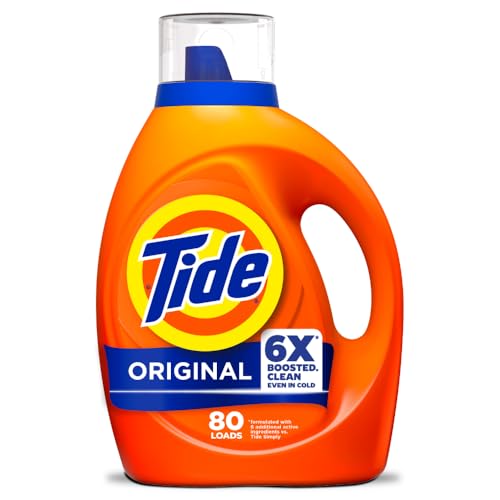
Tide Original at 100 ounces for 80 loads, about 1.25 ounces per wash. It is a genuinely concentrated mainstream liquid, with the brand's usual grease and stain performance and a formula that works in cold and quick cycles. The dose is moderate, the cap is easy to read, and the bottle is a sensible size for a household that does not want a giant jug. The scent is strong and lingers.
What stands out
- 80 loads at about 1.25 ounces per wash
- Strong grease and stain performance on everyday loads
- Works in cold water and in short quick cycles
Watch out for
- Its fragrance lingers on bedding and bath towels
- It is not positioned for sensitive skin or allergies
Tide Ultra Sport Liquid Laundry Detergent, 92 fl oz, 65 Loads, Laundry Detergent Liquid with Advanced Sweat Pl

Tide Ultra Sport, 92 ounces for 65 loads, about 1.42 ounces per wash. It is built for sweat and body odor in activewear, with a two-times cleaning claim against a leading baking soda detergent, and a clear cap for measuring. The dose is high, so the bottle is less economical than the load count suggests, but the odor focus is real. It suits households with gym clothes in every load.
What stands out
- Formulated for sweat and body odor in synthetic activewear
- A clear, easy-pour cap makes accurate dosing simple
- Works on technical fabrics without leaving visible residue
Watch out for
- 65 loads from 92 ounces is a high dose
- Not necessary for everyday cotton T-shirts and towels
Tide Simply Liquid Laundry Detergent, Free & Sensitive, 138 Loads, 173 fl oz

Tide Simply Free & Sensitive, 173 ounces for 138 loads, about 1.25 ounces per wash. It has no dyes or perfumes, works in cold water and fits both HE and standard machines, which makes it the fragrance-free value option in this group. The large bottle and moderate dose give it a low cost per load. It is a plain cleaner rather than a stain specialist.
What stands out
- 138 loads at about 1.25 ounces per wash
- No dyes or perfumes; works in cold water
- Compatible with both HE and standard washing machines
Watch out for
- Basic stain performance on grease and cooking oil
- Large jug is awkward for small laundry rooms
Molly's Suds Baby Liquid Laundry Detergent
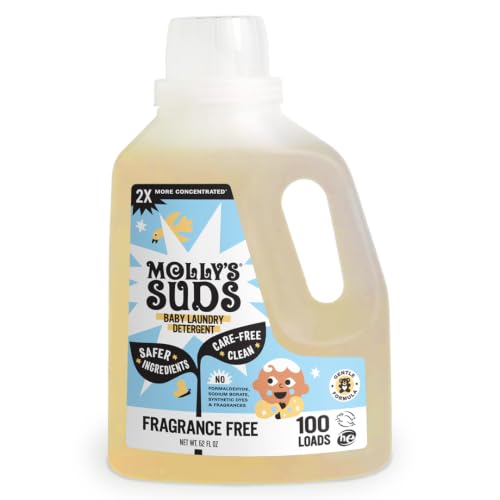
Molly's Suds Baby, 50 ounces for 100 loads, about half an ounce per wash, the most concentrated bottle in this group. The formula is built around enzymes for breast milk, formula and diaper stains, with no dyes or artificial fragrances, and it is septic and grey-water safe. It rinses clean with minimal suds. The small dose is a genuine advantage in an HE machine, provided the load is baby laundry rather than heavy adult soil.
What stands out
- About 0.5 ounces per load, the lowest dose here
- Enzyme formula for milk, formula and diaper stains
- Septic safe and free of dyes and synthetic fragrance
Watch out for
- The gentle formula struggles with grease and mud
- A small 50-ounce bottle for a whole household
Tide Ultra Oxi Boost Liquid Laundry Detergent, 148 fl oz, 105 Loads, Advanced Stain Remover, Laundry Detergent

Tide Ultra Oxi Boost, 148 ounces for 105 loads, about 1.41 ounces per wash. The oxygen boost is aimed at set-in stains, and the label claims you can skip pretreating, which holds for food and mud more than for grease. It has a clear easy-pour cap and works in all machine types. The high dose means the bottle lasts less long than 105 loads suggests if you wash large loads.
What stands out
- The oxygen boost targets set-in stains and lingering odor
- 105 loads with no separate oxygen booster needed
- Clear cap makes a 1.4-ounce dose easy to measure
Watch out for
- 1.41 ounces per load is a large dose
- The skip-pretreat claim is optimistic for heavy grease
Buying guide
What concentrated actually means on a label
Every bottle in this category uses a multiplier, and none of them mean the same thing. A 2x label usually compares the formula with an earlier version of the same product or with a standard non-concentrated reference. A 3x or 4x label may compare surfactant load, cleaning actives, or simply the number of loads per ounce. There is no industry definition that makes a 2x bottle from one brand equivalent to a 2x bottle from another. The only number you can compare across brands is fluid ounces divided by the stated load count, which gives you the dose the maker assumes. Everything else is shorthand, useful as a hint that the formula is denser than the old one, not as a measurement.
Concentration exists for reasons that have little to do with cleaning. Water is heavy, and shipping it costs money and fuel; a smaller bottle fits more units on a shelf and in a warehouse. That is why the trend toward ultra-concentrated formulas accelerated as shipping costs rose. It does not follow that the most concentrated bottle cleans best. A formula can be concentrated by removing water and still carry fewer surfactants per wash than a less concentrated competitor, especially if the recommended dose is correspondingly small. Concentration tells you about the package. The dose tells you about the cleaning. Two bottles can both be honest about their load counts and still deliver very different amounts of active chemistry to the drum.
There is also a physical limit. Liquid detergent needs water to keep surfactants dissolved and enzymes stable, so a formula can only be concentrated so far before it becomes a gel or separates in the bottle. That is why ultra liquids still contain a substantial share of water, and why a bottle claiming four times the concentration usually recommends a dose that is not four times smaller. If a detergent were truly four times as concentrated, the cap would need to hold a quarter of the usual amount, and most caps are not designed for that. A pump dispenser solves the problem by making the dose independent of the cap. It also keeps the last third of the bottle usable instead of sticking to the sides.
The ounces-per-load numbers that matter
Run the math on the ten bottles here and the range is wider than the marketing suggests. Molly's Suds Baby is the outlier at about 0.5 ounces per load from a 50-ounce bottle claiming 100 loads. ARM & HAMMER Baking Soda Fresh sits at 1.0 ounce for 110 loads. Tide Original and Tide Simply Free & Sensitive land at 1.25, ARM & HAMMER OxiClean at about 1.3, Gain's 132-ounce bottle at 1.32, and then a cluster between 1.4 and 1.45 for Tide Ultra Oxi, Tide Ultra Sport and the 194-ounce Gain jug. Dreft's newborn two-pack does not list a total volume, so the load count is the only comparison you get. The spread is nearly three to one, which means similar-looking bottles hide very different economics.
Comparing in the store takes about ten seconds. Divide ounces by loads, then ask whether the resulting dose matches how you actually wash. A bottle that assumes 1.45 ounces per load will be overdosed if you fill the cap for a small load, and a bottle that assumes 0.5 ounces will be underdosed if you pour a careless glug. The second number to check is cap size, because a concentrated formula with a wide cap invites the same pour as a dilute one. If the cap has no lines below the halfway mark, measure with a tablespoon instead. Two tablespoons is roughly one ounce, which is a useful conversion to keep in your head.
Load counts also assume a medium load in the maker's test conditions. A household that fills the drum, washes heavily soiled workwear, or lives in hard water will get fewer loads than the label states, and the gap can reach 30 percent or more. That does not make the label dishonest; it makes it a baseline. If you want a realistic estimate, count your actual loads for a week and compare them with the bottle's claimed load count. Most families discover they are closer to three-quarters of the label number, which changes how they should think about the value of a bottle they use twice a week. Keep the count on your phone for a month and the estimate gets close to exact.
Small caps and the overdosing habit
The most common mistake with a concentrated bottle is using the old dose. A capful of a 1.4-ounce formula carries nearly three times the detergent of a capful of a 0.5-ounce one, and the machine has no way to know you switched. The symptoms are predictable: stiff towels, a coated door glass, extra rinses that stretch the cycle, and a faint sour smell in the drum after a few weeks. If you move to a more concentrated product, cut the dose first and add only if cleaning suffers. That is the opposite of the instinct most people have, which is to assume a smaller bottle needs a bigger pour to compensate. A marked cup removes the guesswork and takes up almost no drawer space.
Where you put the dose matters more with a concentrated liquid, because there is less water to dilute it. Pouring directly onto dry fabric can leave a concentrated patch that fades a dark shirt or stiffens a towel. Use the dispenser drawer, or start the fill and add the detergent to the water before loading. In a top-loader, make sure there is water around the agitator before you pour. In a front-loader, the drawer's siphon needs a clean path; a clogged drawer releases detergent late in the cycle, which is nearly as bad as not adding it at all. Rinse the drawer under warm water once a month and the dose will arrive when it should.
Concentration and the chemistry inside the bottle
Concentration changes how much enzyme you get per wash, and that is where the cleaning difference shows. Enzymes are expensive ingredients, so a formula concentrated by removing water but not by adding actives will deliver a similar enzyme load as the dilute version. A formula that is genuinely denser delivers more. You cannot tell which is which from the front label. The practical test is a stained load: if a concentrated detergent at the label dose leaves a collar ring that a cheaper bottle removed, the concentration is in the package rather than the chemistry. Give any new bottle three loads before you judge it, because one unusual stain proves nothing. If two bottles dose the same but perform differently, the difference is in the formula, not the concentration.
The oxygen question cuts the same way. A bottle that carries OxiClean or an oxygen boost is doing two jobs at once, and the dose has to be large enough to deliver both. ARM & HAMMER Plus OxiClean at 96.2 ounces for 74 loads is dosed at about 1.3 ounces, a normal dose with the oxygen built in. That is convenient, but it also means you cannot dial the oxygen up without dialing the detergent up. If one load needs more stain power, a separate booster gives you that control. It also lets you keep the base detergent at a dose your machine tolerates, which matters in a front-loader with a sensitive suds sensor.
Molly's Suds Baby is the clearest example of concentration done for a reason: 50 ounces for 100 loads, about half an ounce per wash, with a formula built around enzymes for milk, formula and diaper stains. The small dose suits a high-efficiency machine and a small baby load, and the low-suds formula rinses out of thin fabric. It is also a reminder that a concentrated bottle is not automatically a heavy-duty one. This is a gentle detergent that happens to be dense, not a stain remover that happens to be small. Match the concentration to the job, not to the shelf position or the size of the cap. A dense formula in the wrong job is just a small bottle that under-cleans.
HE machines and the half-cap habit
High-efficiency machines and concentrated detergents are natural partners, because both are built around less water. The machine uses a shallow bath and relies on mechanical action; the detergent delivers its cleaning power in a small volume. That works until the dose is wrong. An HE machine cannot rinse away a capful of ultra-concentrated liquid in the water it uses, so residue stays in the fabric and in the machine. The fix is not a different detergent. It is a smaller dose and, if the machine allows it, an extra rinse on towels and bedding. Load sensing helps, but only if you let the machine finish weighing before you add detergent. On a machine without a load-size option, choose the normal cycle and dose for a medium drum.
Small loads are where the half-cap habit earns its keep. A three-shirt refresh does not need the same dose as a full drum of towels, and a concentrated formula makes the difference between those loads easy to hit. Use half the cap for a small load in soft water, and the full cap only for a large, soiled one. If the cap is hard to read, keep a tablespoon measure in the drawer; two tablespoons is about an ounce, which is a useful unit for almost every bottle here. A pump bottle is the simplest solution when several people dose the same detergent, because it removes the cap entirely. Write the correct dose on a sticky note inside the cabinet door.
Storage and the last third of the bottle
Concentrated liquids separate more visibly than dilute ones. A bottle that has sat in a cold garage may show a clear layer at the top and a denser layer at the bottom, and pouring off the top gives you a weaker dose. Shake the bottle before the first use of the season, and store it upright at room temperature. Do not decant into an unlabeled bottle, because a concentrated liquid looks like a dozen other things and a guest will not know it is detergent. If you do decant, mark the dose on the side. A funnel helps, but a labeled squeeze bottle is easier to control than a heavy jug. A bottle that has frozen and thawed may never fully recombine, so keep it out of the garage.
The last third of a bottle is where dosing usually drifts. The jug is lighter and easier to tip, so more comes out than intended, and the cap is often crusted with dried product that changes the volume. Rinse the cap under warm water every few weeks and keep the threads clean. When a bottle is nearly empty, add a little warm water, shake, and use the rinse on a load of rags rather than pouring it down the drain. That recovers the last dose and keeps the laundry room from smelling like a perfume counter. Buy the size you will finish in a season, since detergent does not improve with age. The last pour is also the most concentrated, so shake before you use it.
Frequently asked questions
Is concentrated detergent better?
It is better packaged, not automatically better at cleaning. Concentration cuts water, shipping weight and plastic, and it can put more actives in each dose. Whether it cleans better depends on the dose the maker recommends. Compare ounces per load, then compare how the formula performs on the stains you actually get.
How much concentrated detergent should I use?
Start below the cap line and increase only if clothes come out dull or still smelly. A concentrated formula often needs a third of a cap for a small load and half to three-quarters for a normal one. In soft water, the smallest marked dose is usually enough for everyday laundry.
Can I use less than the cap says?
Yes, and many households should. The cap assumes a medium load, average water hardness and a machine with a normal water level. If you wash small loads, have soft water or use a high-efficiency washer, a smaller dose will usually clean just as well and leave less residue on towels and darks.
Is 2x concentrated the same as ultra?
No. There is no shared definition, and ultra is a marketing word. One brand's 2x may mean half the water; another's may mean twice the actives per dose. The only reliable comparison is fluid ounces divided by the stated load count, which gives you the dose the maker assumes per wash.
Does concentrated detergent work in cold water?
Yes, and it often works better than a dilute liquid, because there is more surfactant and enzyme in the same volume of water. Cold water still slows the reaction, so give stained loads a longer cycle or a short soak. A concentrated formula dosed correctly will disperse in cool water without leaving clumps.
Verdict
Tide Original is the pick if you want a concentrated liquid that behaves like a workhorse: 80 loads from 100 ounces, about 1.25 ounces per wash, with the grease and stain performance the brand is known for. ARM & HAMMER Baking Soda Fresh is the value choice, with a clean one-ounce dose and 110 loads per bottle, and it is the easiest formula here to scale down for small loads.
Tide Ultra Oxi Boost is the upgrade for households with set-in stains, at 105 loads and a built-in oxygen source. Molly's Suds Baby is the most concentrated bottle in the group at roughly half an ounce per load, but it is a gentle baby formula, not a heavy-duty cleaner. Buy it for infant laundry, not for a grease-stained work shirt.