In the past decade the cold setting stopped being the compromise and became the default. Most washing in an average American home now happens between 60 and 80 degrees Fahrenheit, and the machines have adapted with shorter cycles, less water and soil sensors that guess at how dirty a load is. What has not adapted is the habit of filling the cap to the top line. Cold water dissolves more slowly, suspends soil less readily and rinses differently, so a dose that works in a warm bath can leave a film in a cool one.
Cold washing is also where formulation shows. Enzymes need time and the right temperature band to break down protein and starch, and surfactants need to lift oily soil and hold it until the drain. A concentrated liquid puts more of both in each ounce, which is why the bottles that do well in cool water tend to claim the most loads from the smallest volume. The ten formulas here run from half an ounce per load to nearly one and a half, and that spread matters more in cold than in hot.
Cold water is not one thing. A January tap in Minnesota is not a July tap in Florida, and a cold cycle on a high-efficiency machine often blends in a little warm water to hit its target. We compared specifications, features and owner reports for ten liquids, and the notes below are organized around how people actually wash now: quick cycles, cold rinses and clothes that still have to come out clean.
Top picks at a glance
Purex Baby Soft Liquid Laundry Detergent, 82.5 fl oz, 165 Loads
Check price on AmazonArm & Hammer Liquid Laundry Detergent Professional, Clean Burst, 5 Gallon (Pac
Check price on AmazonARM & HAMMER Plus OxiClean Ultra Stain Fighters Liquid Laundry Detergent
Check price on AmazonCompare the shortlist
| Model | Type | Capacity | Key feature | Amazon |
|---|---|---|---|---|
| 1. Purex Baby Soft Liquid Laundry Detergent, 82.5 fl oz, 165 Loads | Liquid | — | High efficiency | Check price |
| 2. Arm & Hammer Liquid Laundry Detergent Professional, Clean Burst, | Liquid | — | High efficiency | Check price |
| 3. ARM & HAMMER Plus OxiClean Ultra Stain Fighters Liquid Laundry D | Liquid | — | — | Check price |
| 4. Dreft Liquid Laundry Detergent for Babies, Tackles 100% of Commo | Liquid | — | — | Check price |
| 5. Gain Liquid Laundry Detergent, Original Scent, 88 fl oz, 61 Load | Liquid | — | High efficiency | Check price |
| 6. ARM & HAMMER Sensitive Skin Liquid Laundry Detergent | Liquid | — | High efficiency | Check price |
| 7. Persil Intense Fresh Liquid Laundry Detergent, 110 Loads, 82.5 F | Liquid | — | High efficiency | Check price |
| 8. Amazon Basics Concentrated Liquid Laundry Detergent, Clean Linen | Liquid | — | High efficiency | Check price |
| 9. Dreft Toddler Liquid Laundry Detergent, Fights Stains, Removes O | Liquid | — | Auto-dispense | Check price |
| 10. Gain Liquid Laundry Detergent, Now with Odor Defense, Original S | Liquid | — | Softening | Check price |
Detailed reviews
Purex Baby Soft Liquid Laundry Detergent, 82.5 fl oz, 165 Loads

A dye-free, hypoallergenic liquid aimed at baby clothes but dosed so generously that it works for the whole household. One 82.5-ounce bottle claims 165 loads, roughly half an ounce per wash, the smallest dose in this group. It is rated for HE machines and all water temperatures, and the scent is light enough that it does not linger on blankets.
What stands out
- Lowest dose per load here at roughly half an ounce
- Dye-free and hypoallergenic, with a soft baby-friendly scent
- Rated for high-efficiency washers and every water temperature
Watch out for
- Modest stain power on grease and set-in marks
- Its light fragrance still clings to blankets and sleepwear
Arm & Hammer Liquid Laundry Detergent Professional, Clean Burst, 5 Gallon (Pack of 1) 640 Loads

Commercial-grade Clean Burst liquid in a 40-pound jug dosed at 640 loads, about one ounce per wash. The low-suds formula is built for high-efficiency and commercial machines, and the concentration is honest: no dosing tricks, just a large bottle of ordinary liquid. It is the sensible buy for a laundromat, a small hotel or a household running more than a dozen loads a week. The jug itself is the drawback.
What stands out
- 640 loads from one jug, about an ounce per wash
- Low-suds formula works in HE, commercial and standard machines
- Built for volume buyers rather than shelf appeal
Watch out for
- A 40-pound jug is awkward to lift and pour
- Clean Burst scent is noticeable on bedding and towels
ARM & HAMMER Plus OxiClean Ultra Stain Fighters Liquid Laundry Detergent

The OxiClean version of ARM & HAMMER's standard liquid, dosed at 122 loads from 158.6 ounces, about 1.3 ounces per wash. The oxygen source is the point: it goes after food, grass, mud and grease in the wash rather than requiring a separate booster scoop. The label lists five cleaning claims, but the useful one is stain removal, and the Fresh Scent stays mild enough for everyday loads.
What stands out
- Built-in OxiClean stain fighters handle food, grass and mud
- 122 loads with no separate booster to measure
- Works across temperatures, including cold and warm cycles
Watch out for
- About 1.3 ounces per load, so the bottle empties fast
- Won't replace pretreating on heavy grease or old stains
Dreft Liquid Laundry Detergent for Babies, Tackles 100% of Common Baby Stains, Laundry Detergent, 42 fl oz, 32

Dreft's original baby liquid, 42 ounces for 32 loads, roughly 1.3 ounces per wash. It is dermatologist tested, free of added chlorine bleach and dyes, and aimed at milk, spit-up and blowout stains. The formula is gentle enough for newborn clothes but not especially concentrated, so a family washing several baby loads a week will go through a bottle quickly. It works in all machines and water conditions.
What stands out
- Targets milk, spit-up and newborn stains more specifically than adult formulas
- No added chlorine bleach or dyes; dermatologist tested
- Works in every machine type and at any water temperature
Watch out for
- Only 32 loads per bottle at a fairly generous dose
- Limited power on toddler food and outdoor stains
Gain Liquid Laundry Detergent, Original Scent, 88 fl oz, 61 Loads, Freshness + Odor Fighting, High Efficiency

Gain's Original Scent liquid, 88 ounces for 61 loads, or about 1.4 ounces per wash. The label is explicit about cold water and HE machines, and the fragrance capsules are the reason people buy it: scent keeps releasing for weeks rather than fading after the dryer. Cleaning is solid on everyday soil, less so on grease. If you like a strong, sweet laundry smell, this delivers; if you do not, it is the wrong bottle.
What stands out
- Explicitly rated for cold water and HE machines
- Fragrance keeps releasing for weeks after the wash
- Solid everyday cleaning at a familiar, easy-to-measure dose
Watch out for
- The scent is strong and divides most households
- At 1.4 ounces per load the bottle empties quickly
ARM & HAMMER Sensitive Skin Liquid Laundry Detergent

A dye-free sensitive-skin liquid with a light fresh scent, 105 ounces for 105 loads, about one ounce per wash. It carries dermatologist testing and a hypoallergenic claim, and the baking soda base helps with odor without the perfume load of a mainstream formula. The dose is moderate, the cleaning is better than most free-and-clear products, and it handles cold water without leaving much behind.
What stands out
- Dye-free and dermatologist tested, which suits sensitive skin
- One ounce per load, a moderate and predictable dose
- Baking soda base helps with odor and light soil
Watch out for
- Still scented, so not a true fragrance-free option
- Struggles with heavy grease and older set-in stains
Persil Intense Fresh Liquid Laundry Detergent, 110 Loads, 82.5 Fl Oz
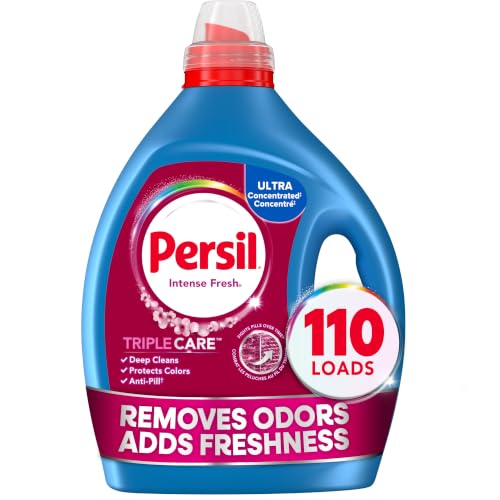
Persil's concentrated liquid, 82.5 ounces for 110 loads, about 0.75 ounces per wash. It is rated for all water temperatures and all washer types, and the fabric-care side is the differentiator: the formula is built to limit color fading while still removing odor and everyday stains. Dose it in the drawer, pretreat collars with a dab, and the bottle lasts a long time. The scent is fresh but not subtle.
What stands out
- 0.75 ounces per load from a compact 82.5-ounce bottle
- Rated for every water temperature and HE machines
- Color-care focus suits darks, knits and everyday clothes
Watch out for
- The fragrance is noticeable on towels and bedding
- Premium positioning without a dedicated stain-fighting claim on the label
Amazon Basics Concentrated Liquid Laundry Detergent, Clean Linen, 110 loads, 82.5 Fl Oz, Packaging May Vary

A plain, concentrated Clean Linen liquid at 82.5 ounces for 110 loads, about 0.75 ounces per wash. The formula is simple, the scent is light, and the bottle is rated for both standard and high-efficiency machines. It will not rescue a grease-stained shirt, but for everyday cold loads it is the least expensive way to get a sensible dose. Packaging varies, which occasionally surprises buyers.
What stands out
- Matches the 0.75-ounce dose of pricier bottles for less
- Light clean-linen scent that does not linger on fabric
- Safe for both standard and high-efficiency washing machines
Watch out for
- Basic stain performance on grease, grass and mud
- Packaging design changes without notice, which surprises buyers
Dreft Toddler Liquid Laundry Detergent, Fights Stains, Removes Odors, 45 loads, 60 fl oz

Dreft's toddler formula, 60 ounces for 45 loads, about 1.3 ounces per wash. It is built for the food, dirt and grass stains that arrive with walking, and it keeps the no-dye, no-chlorine-bleach approach of the baby version. The scent is light and the cleaning is a step up from the newborn liquid. At 45 loads, it is not a bottle for a family washing everything together.
What stands out
- Formulated for toddler food, dirt and grass stains
- No added chlorine bleach or dyes in the formula
- Gentle enough for daily washes of children's clothes
Watch out for
- 45 loads per 60-ounce bottle goes quickly in a family
- Not designed for adult workwear or heavy grease
Gain Liquid Laundry Detergent, Now with Odor Defense, Original Scent, 177 fl oz, 134 Loads

A 177-ounce jug dosed at 134 loads, roughly 1.3 ounces per wash, with Gain's Odor Defense built in. The Original Scent leans citrus and floral, and the fragrance capsules are designed to keep releasing after the wash. It works in all machines and water conditions, including cold, and the size makes it a reasonable choice for a busy family that does not want to rebuy often.
What stands out
- 134 loads per jug at about 1.3 ounces per wash
- Odor Defense targets musty, damp and set-in smells
- Works in all machine types and water conditions
Watch out for
- The heavy fragrance is not right for every household
- Large jug is hard to store on a shelf
Buying guide
Cold water changes the dose before it changes the detergent
Detergent does three jobs: it wets the fiber, lifts soil off it, and holds that soil in the water until the drain. Cold water slows all three. Surfactants dissolve more reluctantly, fats stay thicker, and the reaction runs with less energy behind it. The practical answer is not a special cold-water product, since nearly every liquid here is rated for all temperatures, but a dose and a cycle long enough to let the chemistry finish. A 30-minute quick wash with a full cap is not the same wash as a 50-minute normal cycle with the right dose, even though the label calls both cold. Watch what the machine actually does, too: many cold cycles begin with a short warm fill to protect the sensor, and some eco programs stretch the wash phase while cutting the rinse.
The dose question gets harder in winter. Municipal water arrives colder in January than in July, and a machine that targets 70 degrees will add hot water to get there, so your cold wash is sometimes a lukewarm wash. That is fine for cleaning and slightly worse for dark colors. If you want a genuinely cold wash, look for a tap cold setting rather than a temperature-controlled one, and expect to add time rather than detergent. Pouring in more liquid to compensate is how towels end up stiff and dark jeans end up streaked. If a cold load comes out clammy or smells faintly of the bottle, the detergent never fully dispersed, and the cure is a longer agitation phase.
What a cold cycle handles well, and what it leaves behind
Sweat, body oil, deodorant, dust and most food stains come out in cold water as long as the dose is right. Protein stains actually prefer it: blood, milk and egg set permanently in hot water, so a cool rinse first is the correct move. Everyday shirts, gym clothes, jeans and synthetic activewear are all better served by cold, both for color and for the elastic and stretch fibers that heat degrades over time. A modern cold cycle with a concentrated liquid covers the majority of a normal household's laundry. The exceptions are worth knowing. Anything with a visible grease sheen, a heavy kitchen smell or a dried sauce mark belongs in a warmer load or needs a pretreatment step first.
Grease is where cold water gives up. Butter, cooking oil, salad dressing, mechanic's grease and the oily ring around a collar need warmth or mechanical help. A cold wash will move some of it, but the remainder oxidizes in the dryer and becomes a permanent yellow patch. The fix is pretreatment, not temperature: work a small amount of liquid into the stain, let it sit five to ten minutes, then wash cold. For kitchen towels and aprons, run the occasional warm or hot load and accept the color risk. A degreasing dish soap works on the same stains, but it foams heavily in an HE drum, so keep it to a drop and rinse before the wash.
Mud, clay and heavy outdoor soil are a middle case. Cold water suspends particles well but rinses them out less completely, so a second rinse helps more than extra detergent. Let mud dry and brush it off before washing, because a wet slurry pushes dirt deeper into the weave. If a load comes out of a cold cycle looking dull rather than dirty, the problem is usually residue, not soil. Cut the dose by a third and add a rinse before you decide the detergent is at fault. On white socks and undershirts, a cold wash will slowly build a grey cast that no amount of detergent removes; a warm wash with oxygen bleach every few weeks keeps them bright.
Enzymes have a temperature floor
Most liquid detergents rely on a mix of proteases, amylases and lipases to break down protein, starch and fat. Each enzyme has a working range, and below roughly 60 degrees Fahrenheit the reaction slows sharply. That is not a reason to abandon cold washing, but it is a reason to give the load time. A 15-minute cold cycle may not give a protease enough contact time to digest a food stain, while a 45-minute cold cycle will. The same bottle can look weak or strong depending on which button you press. Enzyme performance also depends on pH, which is why a detergent formulated for cold water is not simply a diluted version of a warm-water formula.
This is also why detergent makers put so much emphasis on concentration. More active ingredients per ounce means more enzyme molecules in the drum, which partly compensates for the slower reaction. It does not fully compensate, and no liquid will digest a set-in grease stain at 60 degrees in twenty minutes. If your machine has a soak option, use it for stained loads; if it does not, pretreat and choose the longest cold cycle available. Time is the cheapest thing you can add to a cold wash. Water hardness matters here too, because calcium binds both enzymes and surfactants, so a hard-water household may need a little more detergent for the same cold-water result. In cold water, the enzyme system matters more than the surfactant count on the label.
Ounces per load is the number that predicts cold-water results
Bottle size tells you almost nothing. Divide the fluid ounces by the stated load count and you get the dose the maker assumes, and that number separates the field here. Purex Baby Soft works out to about 0.5 ounces per load, Persil Intense Fresh and Amazon Basics to 0.75, ARM & HAMMER Sensitive Skin and the Professional jug to roughly 1.0, and most of the mainstream bottles to between 1.3 and 1.45. A smaller dose is not automatically better, but it does mean the formula is built to deliver its cleaning power in less liquid, which matters when the water is cold. The label's load count also assumes a medium load, so a family that fills the drum will get fewer washes than promised.
Use the number as a starting point, not a rule. A medium load in soft water often needs less than the label assumes, and a full drum of heavily soiled workwear needs more. The trick is to change one variable at a time: hold the dose steady, adjust the cycle length, and see which direction improves the result. If you switch from a 1.4-ounce-per-load bottle to a 0.75-ounce one and keep filling the cap, you are effectively doubling the dose, which is how people conclude that a new detergent leaves residue. Keep a measuring cup in the laundry room for a week and you will learn more about your machine than any label can tell you.
High-efficiency machines, quick cycles and suds
High-efficiency washers use a fraction of the water of an old top-loader, so the detergent has to work in a thin film. That is why HE-rated liquids are low-sudsing, and why suds are a poor measure of cleaning power in a modern machine. Excess foam cushions the clothes, reduces the mechanical action of the tumble and can trigger extra rinses that stretch a 40-minute cycle past an hour. If the display keeps adding time, or the door glass is coated after the cycle, the dose is too high for the water level. Front-loaders are less forgiving here than top-loaders, because the foam has nowhere to go and gets pushed back through the drum. A machine that pauses mid-cycle is usually fighting foam, not dirt.
Quick cycles are the other cold-water trap. A 15- or 30-minute wash is designed for lightly soiled clothes and small loads, not for a full drum of towels. The machine will still use the dose you give it, but the clothes may not tumble long enough for the detergent to do its work. Use quick cycles for freshening, not cleaning, and keep a normal cold cycle for anything with visible soil. Rinse aid is not a thing in laundry, but a second rinse is, and it is the simplest fix for residue on dark fabric. On a machine with a load-size setting, choose it honestly; the small-load option saves water and keeps the dose proportional.
Baby laundry, sensitive skin and residue in a cool rinse
Cold water is the right default for baby clothes, which shrink and pill in heat, but infants are also the group most likely to react to detergent residue. Dye-free formulas are the sensible starting point, and both Purex Baby Soft and the Dreft liquids are built around that idea. Dose them lightly. A baby load is small, the clothes are thin, and the machine's medium setting will use more water than the fabric needs. Half a cap is usually enough, and an extra rinse costs little. Wash bibs and burp cloths separately from sleepwear, since the first group carries food residue that can transfer in a mixed load. A bulky setting uses more water, which helps rinse thin fabric, but check the cycle time before committing a whole load to it.
Sensitive-skin adults face the same math. A dye-free liquid dosed at one ounce per load in cool water leaves less behind than a mainstream formula dosed at 1.4 ounces, simply because there is less material to rinse away. If a rash appears, change the dose and add a rinse before changing products, then switch to a fragrance-free formula if the problem persists. Wash new clothes once before wearing them; the sizing and dye in new fabric cause more reactions than detergent does. Scented dryer sheets are a common culprit that people blame on detergent, so remove them from the routine first when you are troubleshooting. Wash sleepwear and undershirts in the same dye-free liquid so the whole load rinses at the same rate.
Do not overlook the machine itself. A washer that only ever runs cold develops a biofilm of detergent residue and body oil behind the drum, and that film transfers to every load. Run a hot cleaning cycle once a month with a washer cleaner, wipe the gasket on a front-loader, and leave the door ajar between washes. A clean drum makes a cold wash perform closer to its label, and it removes the musty note that people often blame on the detergent. If the drum already smells, run two hot cycles back to back before changing anything else in your routine. Wipe the dispenser drawer as well, because old liquid turns sticky and slows the siphon on the next load.
Frequently asked questions
Can you use regular liquid detergent in cold water?
Yes. Nearly every liquid sold today is formulated to work across temperatures, and the cold-water or HE claim on the bottle confirms it. What changes is speed. Cold water slows stain removal, so give tough loads a longer cycle and pretreat visible marks rather than pouring extra detergent into a short wash.
Does cold water clean clothes as well as warm?
For everyday soil, sweat and body oil, yes, if the dose and cycle time are right. Warm water still wins on grease, cooking oil and heavy outdoor dirt. Cold is the better default for dark colors, synthetics and anything that might shrink. Choose warm for kitchen towels and work clothes, cold for most everything else.
Why do my clothes still smell after a cold wash?
Usually because the drum and the fibers both carry residue. Cold water rinses away less detergent, so overdosing leaves a film that holds odor, and a machine washed only in cold develops a biofilm behind the drum. Run a hot cleaning cycle monthly, cut the dose, and leave the door open between washes.
Which detergent is best for cold-water baby laundry?
A dye-free formula rated for all temperatures, dosed lightly. Purex Baby Soft stretches to 165 loads from an 82.5-ounce bottle, and the Dreft baby and toddler liquids are built around milk, spit-up and food stains. Both handle cold water, but blowouts benefit from a cool pretreat and a longer cycle rather than a hotter one.
Do I need more detergent in cold water?
Not automatically, and adding more is the most common mistake. Cold water holds less dissolved detergent, so extra can leave residue on dark fabric and towels. Increase the dose only if clothes come out grey or still smell after a normal cycle, and then by a small amount. In soft water, most loads need less than the cap suggests.
Verdict
Persil Intense Fresh is the pick for cold washing. At about 0.75 ounces per load it is one of the most concentrated bottles here, it is rated for every water temperature, and its fabric-care focus suits the colors and synthetics that usually go through a cool cycle. Amazon Basics Concentrated is the value choice at the same dose rate, with a plainer formula and a clean-linen scent that will not fight with fabric softener.
If your cold loads are stained rather than just worn, step up to ARM & HAMMER Plus OxiClean Ultra Stain Fighters: 122 loads, a built-in oxygen source, and more power on food and grass than a standard liquid. Households washing baby clothes should look at Purex Baby Soft first, since 165 loads from one bottle is the smallest dose per load in this group.