A booster fan is the most commonly mis-sold part of a laundry system. When a dryer takes two cycles to finish a towel, the usual cause is a clogged duct, a crushed transition hose or an outside flap that never opens. A fan does not fix any of those, and fitting one first can hide the real problem for another year.
What a fan does is add pressure to a run that is too long or too crooked for the dryer's own blower. A basement laundry with the vent on the far wall, a second-floor closet with a duct that loops through the attic, a mobile home with a shallow joist space: those are the layouts where a booster earns its place.
The units here run from 167 to 260 CFM and from preset pressure switches to adjustable sensors with post-purge timers. Several are the same DBF110 or M-4DBT pattern sold under different names, which makes the spec sheet less useful than the installation notes. A fan you can reach and clean beats a bigger fan you cannot.
One listing in this batch is a 700-watt boat engine heater, not a booster fan. We left it in the notes to flag the mismatch, because the same confusion shows up in search results all the time.
Top picks at a glance
MIDCVFRUN Dryer Vent Booster Fan with Pressure Switch for Automatic Activation
Check price on AmazonZuomeng M-4DBT Automatic Dryer Vent Booster Fan, 4 Inch Exhaust Fan for Long D
Check price on AmazonTjernlund LB2 No-Clog, Zero Maintenance DEDPV Dryer Duct Booster Fan with Auto
Check price on AmazonCompare the shortlist
| Model | Type | Capacity | Key feature | Amazon |
|---|---|---|---|---|
| 1. MIDCVFRUN Dryer Vent Booster Fan with Pressure Switch for Automa | Vent | — | Sensor drying | Check price |
| 2. Tjernlund LB2 No-Clog, Zero Maintenance DEDPV Dryer Duct Booster | Dryers | — | Drum light | Check price |
| 3. Zuomeng M-4DBT Automatic Dryer Vent Booster Fan, 4 Inch Exhaust | Vent | — | Sensor drying | Check price |
| 4. Dryer Booster Fan 4” DBF 110 Inline with Auto On/Off Pressure Se | Vent | — | Sensor drying | Check price |
| 5. Rysmirs 4 Inch 240CFM Dryer Booster Fan | Dryers | — | Sensor drying | Check price |
| 6. Dryer Booster Fan with Pressure Switch for Automatic Activation, | Vent | — | Sensor drying | Check price |
| 7. M-4DBT Automatic Dryer Vent Booster Exhaust Fan for 4 Inch Ducts | Vent | — | Low noise | Check price |
| 8. 4 Inch Dryer Booster Fan with Pressure Switch for Auto On/Off DB | Vent | — | Connected controls | Check price |
| 9. GMKYH M-4DBT Dryer Vent Booster Fan, 200 CFM Automatic Inline Ex | Vent | — | Low noise | Check price |
| 10. Boat Engine Compartment Heater 700W with Self-Regulated PTC Elem | Dryers | — | Compact footprint | Check price |
Detailed reviews
MIDCVFRUN Dryer Vent Booster Fan with Pressure Switch for Automatic Activation, 4" Inline Exhaust Fan 260CFM H
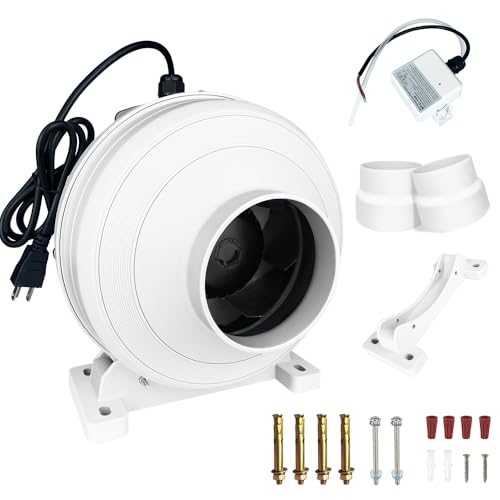
MIDCVFRUN's fan is the highest-rated unit in the batch at 260 CFM, with an adjustable pressure switch and a real-time display on the switch body. The display is the practical touch: the fan can sit outdoors while the switch stays indoors, and you can see whether it is running. The impeller is shaped to resist lint buildup, and the housing is sealed against backflow.
What stands out
- Highest airflow rating in the batch at 260 CFM
- Adjustable trigger point suits weaker or unusual dryer airflow
- Remote display confirms an outdoor fan is running
Watch out for
- Outdoor mounting puts the fan out of easy reach for cleaning
- Adjustable switch adds a setting that can be misconfigured
Tjernlund LB2 No-Clog, Zero Maintenance DEDPV Dryer Duct Booster Fan with Automatic Activation
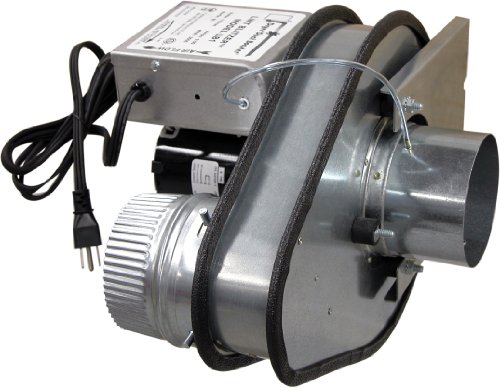
The LB2 is the reference product in this category. The motor sits outside the airstream, so lint never reaches the bearings, and the Lint Blitzer impeller is shaped to throw lint off rather than collect it. Tjernlund recommends it for runs of 25 feet or more, up to 100 equivalent feet. It mounts horizontally or vertically and weighs about 14 pounds, so plan on supporting it.
What stands out
- Motor outside the airstream stays clear of lint
- Rated for duct runs up to 100 equivalent feet
- Mounts horizontally or vertically, unlike most fans here
Watch out for
- Heaviest unit in the batch at about 14 pounds
- Bulky body needs clear space and independent support
Zuomeng M-4DBT Automatic Dryer Vent Booster Fan, 4 Inch Exhaust Fan for Long Dryer Ducts, 200 CFM High Airflow

A 200 CFM unit built around a metal housing and a digital controller. The pressure sensor starts the fan with the dryer and stops it when airflow drops, and the delay timer can be set from one to thirty minutes to clear the duct after the cycle. Zuomeng targets runs over 25 feet or runs with several bends. The fan fits standard 4-inch duct.
What stands out
- Delay timer adjustable from one to thirty minutes
- Metal housing and digital controller feel more substantial
- 200 CFM suits runs over 25 feet with bends
Watch out for
- Long delay can run the fan well after the load is dry
- Digital controller is another part that can fail
Dryer Booster Fan 4” DBF 110 Inline with Auto On/Off Pressure Sensor
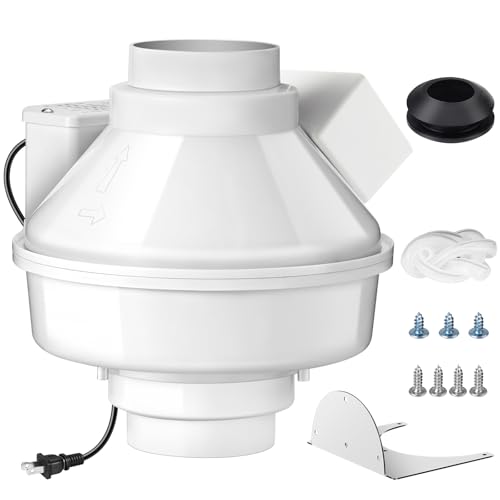
A DBF110-pattern fan rated at 167 CFM with a factory-calibrated pressure switch. It is built for vertical installation only, connects to 4-inch flexible or rigid duct, and plugs into a standard outlet. The housing is sealed against water and dust. The listing includes a start-up tip: if the fan does not trigger, warm air into the silicone tube helps it sense pressure.
What stands out
- Sealed housing suits outdoor and damp crawl-space installs
- Plugs in with no electrician or wiring needed
- Three-year warranty is longer than most fans here
Watch out for
- Vertical installation only limits where it can go
- May need a manual prime on first start-up
Rysmirs 4 Inch 240CFM Dryer Booster Fan

The Rysmirs fan is rated at 240 CFM and adds a post-purge that runs three to five minutes after the dryer stops. The pressure sensor is adjustable, which helps on dryers with weak airflow, and the housing is fire-resistant thermoplastic with thermal overload protection. Rysmirs says the fan suits duct runs up to 100 feet and works with most 120V electric dryers.
What stands out
- Post-purge clears residual lint and moisture after each load
- Adjustable pressure sensor works with most dryer brands
- Thermal overload protection sits inside a fire-resistant housing
Watch out for
- No mention of gas-dryer compatibility in the listing
- Plastic housing is less stout than the metal units
Dryer Booster Fan with Pressure Switch for Automatic Activation, Effectively Boosting Drying Efficiency and Re

A 167 CFM booster with a diaphragm pressure switch and an electronic low-pressure sensor. FixOasis presets both trigger points at the factory and does not let the owner adjust them, which removes a common source of fiddling. The circuit board can be replaced on its own. The housing is leak-proof plastic, rated water-resistant and dust-proof, and the motor is commercial grade.
What stands out
- Preset switch removes adjustment guesswork for most owners
- Replacement circuit board extends the unit's service life
- Sealed plastic housing resists dust and damp air
Watch out for
- Preset trigger cannot be tuned to a weak dryer
- Less airflow than the 200 and 240 CFM units
M-4DBT Automatic Dryer Vent Booster Exhaust Fan for 4 Inch Ducts

An M-4DBT fan rated at 200 CFM, with a pressure switch, a post-purge cycle and a claimed noise level under 47 dB. The listing says it works with both gas and electric dryers and targets runs up to 100 feet, including mobile homes with long, winding ducts. The housing is slim at about 1.7 inches tall, which helps in tight joist spaces.
What stands out
- Works with gas and electric dryers, per the listing
- Slim housing fits tight joist and wall spaces
- Post-purge clears the duct after the cycle ends
Watch out for
- One-year warranty is the shortest in this batch
- Quiet rating is a manufacturer claim, not a standard test
4 Inch Dryer Booster Fan with Pressure Switch for Auto On/Off DBF 110

A DBF110-style fan rated at 167 CFM with a factory-calibrated pressure switch. It must be installed vertically, connects to 4-inch duct and plugs into a standard outlet. The housing is waterproof and rust-resistant. No mounting hardware is included. CONGKAILU positions it for basements, garages and complex duct layouts where the dryer's blower runs out of push. It is a straightforward vertical unit.
What stands out
- Waterproof housing suits damp crawl spaces and sheds
- Factory-calibrated switch needs no setting up at all
- Vertical-only install keeps the duct work simple and short
Watch out for
- No mounting hardware is included in the box
- Vertical-only design limits it to drop-style duct layouts
GMKYH M-4DBT Dryer Vent Booster Fan, 200 CFM Automatic Inline Exhaust Fan

Another M-4DBT-pattern fan, rated at 200 CFM with pressure-sensing control. It is designed for long or complex runs and uses balanced blades and a low-vibration motor to keep noise down. The listing is light on specifics: no duct-length rating beyond the general claim, no delay timer and no published decibel figure. It is a plain, mid-power unit for a run that needs a push.
What stands out
- 200 CFM is enough for most long residential runs
- Balanced blades and low-vibration motor keep it quiet
- Inline body fits standard 4-inch duct work easily
Watch out for
- No published duct-length rating and no decibel figure
- No post-purge timer, unlike several of its rivals here
Boat Engine Compartment Heater 700W with Self-Regulated PTC Element and Waterproof Fan for Boats Up To 36', Mu
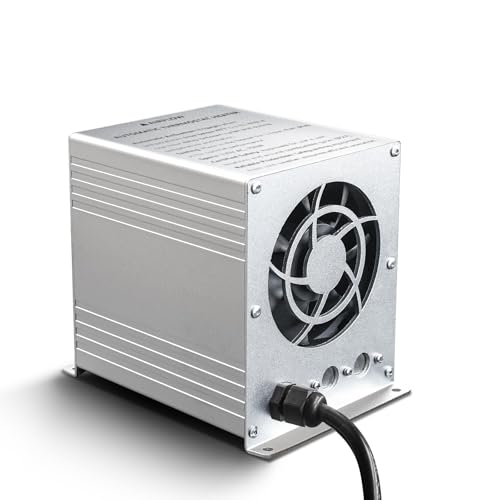
This is not a dryer vent booster. It is a 700-watt PTC heater for boat engine compartments, sold to keep bilges above freezing, with a thermostat that starts at 40 degrees Fahrenheit and stops at 55. It appears in this batch by mistake. Do not put it in a dryer duct: it is a heat source, not an exhaust fan.
What stands out
- Self-regulating PTC element resists overheating in tight spaces
- Thermostat switches on at 40 degrees and off at 55
- Compact housing fits an engine bay or well house
Watch out for
- Not a dryer vent product and does not move air
- A heater inside a lint duct would be a fire risk
Buying guide
What a Booster Fan Can and Cannot Fix
A booster fan belongs at the end of a diagnosis, not the start. Begin by pulling the dryer out, disconnecting the transition hose and looking inside both ends. A hose crushed behind the machine, a wall duct packed with felt-like lint or an outside flap painted shut will each cause the same symptom: clothes that come out damp after a normal cycle. Fix those first. Then measure the run. Most residential codes cap a dryer duct at 35 feet of equivalent length, and every 90-degree elbow counts as several feet of that total. A run over 25 feet, or one with three or four bends, is where a fan starts to make sense. If the run passes that test, a fan is money spent for nothing.
What a fan cannot do is substitute for cleaning. Lint that has already coated the duct walls stays there; the fan just pushes air past it. Worse, a fan gives a false sense of improvement, so the duct goes another year without attention. The same applies to a blocked outside screen or a damper that opens only halfway. If the dryer's own blower cannot move air through the run, adding a fan increases velocity but not clearance. Clean first, then boost. If the run is short and clean and the dryer still struggles, the problem is usually the dryer, not the duct. A clean 4-inch duct with a short run can move a surprising amount of air on the dryer's own blower.
Sizing: CFM, Duct Length and Backpressure
The ratings here run from 167 to 260 CFM, and those numbers are measured at the fan, not at the wall. In a real duct, static pressure, elbows and the outside hood all take a share. A 167 CFM unit is enough for a run in the 25 to 40 foot range with a couple of bends; 200 to 240 CFM suits longer runs or tighter duct. The 260 CFM MIDCVFRUN is the most powerful in the batch. More airflow is not automatically better: an oversized fan on a short run can be noisy and can stir lint off the duct walls, sending it toward the hood. Ask what the fan does at the pressure your duct actually produces, not what it does on a test bench.
Match the fan to the duct, not to the dryer's price tag. A 4-inch flexible hose that snakes through a ceiling void has more resistance than a smooth metal pipe of the same length, so the fan has to work harder for the same result. Two brands here publish a 100-foot equivalent-length ceiling: Tjernlund for the LB2 and konzition for its M-4DBT. Treat those as marketing limits rather than guarantees, and keep the run as straight as the house allows. If you are close to the limit, a bigger fan buys margin; if you are well past it, rerouting the duct is the better money. Flexible hose also sags, and a low spot collects lint and condensate. Rigid pipe with swept elbows is always the better host for a fan.
Pressure Switches, Timers and Post-Purge
Every fan in this batch turns itself on, which is the point. A pressure switch senses the slight positive pressure your dryer creates and closes a circuit; when the dryer stops, the switch opens. The difference is adjustment. The MIDCVFRUN and Rysmirs switches can be tuned to the trigger point, which helps with dryers that produce weak or unusual airflow. FixOasis uses preset settings the owner cannot change, and GUOJINJISM and CONGKAILU ship factory-calibrated switches. A preset is simpler and one less thing to misadjust; an adjustable switch is worth having if your first attempt does not trigger. A switch that never triggers is the most common complaint, and it is usually a tubing or placement problem rather than a failed sensor.
Post-purge is the feature to look for if you dry heavy loads. Rysmirs runs three to five minutes after the cycle, Zuomeng offers a 1-to-30-minute delay, and konzition advertises a post-purge cycle as well. The fan keeps pulling moisture-laden air out of the duct after the dryer stops, so the run is left drier and less lint settles on the walls. It also means the fan runs while you are not watching, so buy one with a sealed motor and a housing that will not let lint into the bearings. A real-time display, like the one on the MIDCVFRUN switch, lets you confirm from indoors that an outdoor fan is working. Check whether the timer resets if you open the door mid-cycle.
Mounting, Power and Service Access
Orientation rules vary by model and matter more than the instructions suggest. GUOJINJISM and CONGKAILU specify vertical installation only, which limits where the fan can go. Tjernlund lists both horizontal and vertical duct mounting. Put the fan where you can reach it, because it needs cleaning. A unit buried above drywall or behind a finished ceiling will be abandoned after the first service. Both the fan body and the pressure switch should be accessible, and the switch tubing should be short enough that you can check it for lint or condensation. The switch also needs a clean tap into the duct and a length of soft tubing that will not kink behind the machine. Keep that tubing away from the dryer's heat.
Power is the easy part: every unit here plugs into a standard 120V outlet, so no electrician is required. That also means the outlet has to be within reach of the cord, which is often the real constraint in a basement or garage. If the cord will not reach, add an outlet rather than an extension cord. Use foil tape on the joints, not duct tape, and support the duct so its weight does not hang on the fan collars. Check the impeller every few months. Tjernlund puts the motor outside the airstream and shapes its impeller to shed lint; the others rely on blade geometry and a sealed housing. Either way, a fan that starts sounding different needs a look.
Frequently asked questions
Do I need a booster fan for a long dryer duct?
Only if the run is long, crooked or both, and the duct is already clean. A fan helps beyond roughly 25 feet of equivalent length or with several elbows. If your duct is shorter and still slow, look for a clog, a crushed hose or a stuck outside flap before adding equipment.
Will a booster fan reduce drying time?
It can, when weak exhaust is the reason clothes stay damp. A fan restores airflow through a long run, so moisture leaves the drum faster. It will not help if the lint screen is clogged, the duct is blocked or the dryer's heating element is failing. Fix those first.
Can I install a dryer booster fan myself?
Yes, in most cases. The units here fit 4-inch duct, plug into a standard outlet and need no wiring. You will need foil tape, clamps and a way to support the fan. Check local code and the dryer manufacturer's instructions first, because some warranties and jurisdictions restrict booster fans.
Where should a booster fan be installed?
Near the end of the run, downstream of most of the duct, but in a place you can reach for cleaning. Some models must be mounted vertically. Keep the pressure switch indoors if the fan itself sits outside. Never bury the fan behind finished drywall or in a spot that requires dismantling the laundry to service.
Does a booster fan work with a gas dryer?
Only if the listing says so. konzition states compatibility with gas and electric dryers; several other listings do not mention gas at all. A gas dryer already needs a properly sealed vent, and adding a fan changes the pressure in the duct. Ask the manufacturer before you modify a gas installation.
Verdict
Top pick: the Tjernlund LB2. It is the only fan here with the motor outside the airstream, it mounts in either orientation and it is rated for the long, elbow-heavy runs that actually need a booster. Value pick: the GUOJINJISM DBF110, a 167 CFM vertical unit that plugs in, seals against weather and carries a three-year warranty.
Upgrade: the MIDCVFRUN if you want the most airflow and a remote display, or the Rysmirs if post-purge matters more than raw CFM. Buy a booster only after the duct is clean and the outside flap moves freely; otherwise you are paying to move air through a clog.