The last four feet of a dryer installation cause more trouble than the machine. A hose that looked fine in the box gets folded behind the cabinet, taped at one end and left loose at the other, and two years later the dryer needs an extra cycle to finish a towel load. The appliance is not at fault. The duct is.
Most of the products here are not hoses in the simple sense. They are elbow kits, indoor filter boxes, secondary lint traps and clamps, because that is what a real installation needs once you measure the gap behind the machine. Only a few are plain lengths of flexible duct. The rest solve a specific fit problem, and picking the wrong one wastes an afternoon.
Four inches is the standard, but the details vary: a 90-degree elbow instead of a crushed bend, a rubber seal instead of tape, a metal box instead of an open hose end. The temperature ratings differ too, from 185 to 300 degrees Fahrenheit, which matters if the run passes near another heat source.
This guide covers how to measure, how to keep the run short and sealed, and where indoor venting is acceptable. It assumes a standard residential dryer and a 4-inch wall opening, because that is what almost every US installation has.
Top picks at a glance
HG Power Metal Indoor Dryer Vent Kit, Dryer Vent Box, Safety Vent Flap
Check price on AmazonDryer Vent Hose 4 Inch
Check price on AmazonDryer Vent Hose for Tight Space, 90 Degree Dryer Vent Elbow Connector Kit with
Check price on AmazonCompare the shortlist
| Model | Type | Capacity | Key feature | Amazon |
|---|---|---|---|---|
| 1. HG Power Metal Indoor Dryer Vent Kit, Dryer Vent Box, Safety Ven | Electric | — | Manual operation | Check price |
| 2. Dryer Vent Hose 4 Inch | Stain remover | — | Delay start | Check price |
| 3. Dryer Vent Hose for Tight Space, 90 Degree Dryer Vent Elbow Conn | Hose | — | Quick cycle | Check price |
| 4. Upgraded 90 Degree Dryer Vent Elbow Kit for 4 Inch Dryer Duct Ve | Hose | — | Connected controls | Check price |
| 5. US Patented Dryer Vent Hose 4 Inch 8 Feet, Flexible Heat Resista | Hose | — | Vibration control | Check price |
| 6. CAT SO RICH Dryer Vent Hose Connector Kit for Tight Spaces, 90° | Hose | — | Connected controls | Check price |
| 7. DHGBD 90° Dryer Lint Trap | Gas | — | Connected controls | Check price |
| 8. POWERTEC 4 Inch Double Loop Hose Clamps for Dust Collection Hose | Hose | — | Quick cycle | Check price |
| 9. Dryer Vent Hose | Hose | — | — | Check price |
| 10. HAUTMEC 2 Piece Double-Loop 4 Inch Hose Clamp for Dryer Vent Hos | Hose | — | — | Check price |
Detailed reviews
HG Power Metal Indoor Dryer Vent Kit, Dryer Vent Box, Safety Vent Flap

The HG Power kit is an indoor venting box for electric dryers, not a length of duct. A metal housing holds a stainless filter and replaceable polyester filters, and the outlet faces upward so heavy lint falls out of the airstream. A safety flap opens when the filter clogs. The package includes an eight-foot 4-inch hose, four filters, two clamps and screws.
What stands out
- Metal housing with stainless steel and polyester filters
- Safety flap warns when the filter is clogged
- Complete kit with hose, clamps, screws and spare filters
Watch out for
- For electric dryers only, never for gas models
- Adds indoor humidity and requires frequent filter cleaning
Dryer Vent Hose 4 Inch

Pet Time's 4-inch duct is a flexible hose with a flame-resistant aluminum and PVC wall over a double steel wire helix. It bends through tight spaces without collapsing and ships with two stainless clamps that adjust from 4 to 6 inches. The smooth inner layer is meant to reduce lint buildup compared with ribbed foil. It suits a short transition, not a long run.
What stands out
- Double steel wire resists crushing behind heavy appliances
- Smooth inner layer reduces lint accumulation over time
- Two adjustable stainless steel clamps included in the box
Watch out for
- Flexible hose is a poor choice for long runs
- Not a complete elbow or wall mounting kit
Dryer Vent Hose for Tight Space, 90 Degree Dryer Vent Elbow Connector Kit with 6-Layer Flexible Aluminum Duct,

Matework's kit pairs a 90-degree elbow with a six-layer duct and a stretchable rubber wall seal. The hose combines aluminum foil, PET film, steel wire and a PVC coating, and it extends to six feet while fitting 3.95-to-4.15-inch outlets. The seal presses against the wall and clamps are included. It is designed for dryers that need to sit close without a crushed bend.
What stands out
- Six-layer duct resists tearing, punctures and crushing behind dryers
- Rubber wall seal presses into place without tools
- Fits most outlets in the common 3.95-to-4.15-inch range
Watch out for
- Six-foot length may be short for some routes
- Rated to 212 degrees, lower than premium hoses
Upgraded 90 Degree Dryer Vent Elbow Kit for 4 Inch Dryer Duct Vent Hose.

The YZMLOL kit is built around a rigid ABS 90-degree elbow rather than a flexible bend. A rubber seal presses against the wall, and three stainless clamps hold the hose and elbow together. The elbow fits 4-inch duct and works with most standard dryer outlets. Because ABS will not crush, the kit keeps its shape when the dryer is pushed back hard.
What stands out
- Rigid ABS elbow will not crush or tear
- Rubber seal and three stainless steel clamps included
- Push-fit installation needs no tools or extra sealant
Watch out for
- No hose included, so check what you already own
- Best only when outlet and wall heights are close
US Patented Dryer Vent Hose 4 Inch 8 Feet, Flexible Heat Resistant Dryer Hose for Tight Space, Indoor Dryer Ve
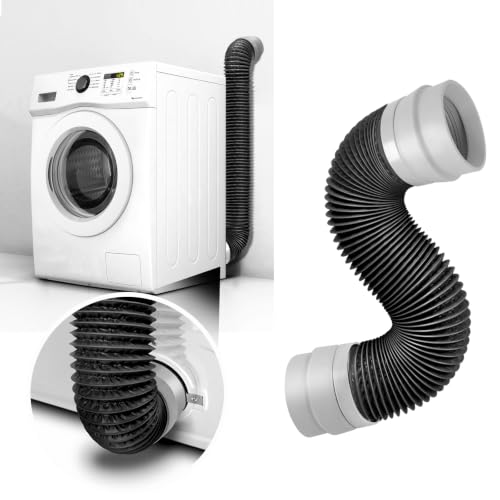
Nightyling's kit combines an eight-foot hose, a 90-degree connector and a silicone sleeve assembly. The multi-layer hose is described as more than twice the thickness of standard duct, with a range from minus 22 to 300 degrees Fahrenheit. The sleeve is meant to stay sealed through heat cycling and vibration. The kit is sized for standard 4-inch vents and installs in four steps.
What stands out
- Wide minus 22 to 300 degree temperature range
- Silicone sleeve resists loosening from heat and vibration
- Eight-foot hose covers most short residential vent runs
Watch out for
- Longer hose needs room to coil behind the dryer
- Thicker build is heavier and stiffer to route
CAT SO RICH Dryer Vent Hose Connector Kit for Tight Spaces, 90° Elbow with 4-Inch 6.5FT PVC Hose, Transparent

CAT SO RICH's kit uses two transparent 90-degree connectors so you can see lint building up without dismantling the duct. It includes a 6.5-foot PVC-coated hose, rubber seals, clamps and silicone sealing tape. The connectors twist off for cleaning, and the assembly goes together without tools. The transparent plastic is the selling point: vent problems stay invisible until the dryer slows down.
What stands out
- Transparent connectors show lint buildup before it blocks airflow
- Tool-free twist clamps speed up routine duct cleaning
- Rubber gasket and silicone sealing tape improve the seal
Watch out for
- PVC-coated hose has a lower heat tolerance than foil
- Transparent plastic can yellow and cloud over time
DHGBD 90° Dryer Lint Trap

The DHGBD is a secondary lint trap with a 90-degree body, two stainless mesh filters and an eight-foot 4-inch hose. It installs inline before the main duct, catching lint that gets past the dryer screen, and the clear lid shows when it needs cleaning. The L-shaped body reduces hose bending in tight spaces. The listing describes it for gas and electric dryers.
What stands out
- Dual stainless filters catch lint before the duct
- 90-degree body reduces hose kinking in tight spaces
- Clear lid makes the lint load obvious at a glance
Watch out for
- Adds a restriction that must be cleaned regularly
- Indoor use needs code approval, especially with gas
POWERTEC 4 Inch Double Loop Hose Clamps for Dust Collection Hose and Dryer Vent Hose, Quick Release Spring Cla

POWERTEC's double-loop clamps are a workshop staple that works on dryer hose. The spring design holds steady pressure on wire-reinforced duct without crushing it, and the quick-release handles make removal easy. Each 4-inch clamp opens to about 4.5 inches inside diameter. The steel is coated for corrosion resistance. Two clamps come in the pack, enough for one connection at both ends.
What stands out
- Spring tension holds firmly without crushing the hose
- Quick-release handles speed up hose removal and refitting
- Coated steel resists corrosion in damp laundry rooms
Watch out for
- Only two clamps per pack, so buy two packs
- Not adjustable like a worm-gear clamp under load
Dryer Vent Hose

LHHXX33's hose is a four-layer flexible duct with two aluminum foil layers, a PET film and a steel wire helix. It is eight feet long, fits 4-inch systems and ships with two clamps. The temperature range is 0 to 185 degrees Fahrenheit, which suits a standard dryer but not a run near a heat source. It cuts easily with shears and is intended for DIY replacement.
What stands out
- Four layers with a steel wire helix for strength
- Eight-foot length covers most short residential vent runs
- Two clamps included for an immediate DIY install
Watch out for
- 185-degree limit is modest for close heat sources
- Flexible ribs collect lint and need regular cleaning
HAUTMEC 2 Piece Double-Loop 4 Inch Hose Clamp for Dryer Vent Hose HT0085-HC

HAUTMEC's two-pack of 4-inch double-loop clamps is aimed at the same job as the POWERTEC pair, with rubber grips added to the handles. The double-loop design grips wire-reinforced hose tightly and releases without tools, which helps when the dryer must be pulled out. Each clamp opens to roughly 4.5 inches. The rubber grips reduce hand fatigue during long installation days.
What stands out
- Rubber grips make repeated use easier on the hands
- Double-loop design grips wire-reinforced flexible dryer hose firmly
- Opens to about 4.5 inches for easy fitting
Watch out for
- Only two clamps per pack, so order spares
- Spring tension is fixed and cannot be adjusted
Buying guide
Four Inches Nominal, and Often Not Exactly
Four inches is a nominal size, not a guarantee. Dryer outlets and wall thimbles commonly measure between about 3.9 and 4.2 inches depending on the manufacturer and how the pipe was cut, which is why the Matework kit lists a 3.95-to-4.15-inch fit range. Measure both ends with a tape or a pair of calipers before ordering. A hose that is too loose will leak hot air and lint into the room; one that is too tight will tear when you push it on. The clamp has to compress the hose onto the pipe, not bridge a half-inch gap. If the wall pipe is galvanized and dented, replace the thimble end rather than forcing a seal over a deformed lip. Measure twice.
The other measurement is the offset. The dryer outlet and the wall opening rarely line up at the same height, and the gap behind the machine is usually shallower than the hose wants. That is what elbow kits and periscopes are for: they turn the exhaust 90 degrees in a flat profile so the dryer can sit closer to the wall. Write down the gap, the height difference and the diameter, then compare all three to the product's range. If the numbers do not fit, no amount of tape will fix it, and forcing the machine back will crush the duct. A periscope handles large offsets, an elbow handles small ones, and using the wrong one is how hoses get pinched.
Short, Smooth and Sealed Beats Long and Flexible
Airflow is the whole point of the duct. Every foot of hose and every turn adds resistance, and a dryer rated for a maximum run will not perform to that rating with a crushed hose or three elbows. Smooth rigid pipe is best, semi-rigid aluminum is the practical compromise, and fully flexible foil is the weakest option because its ribs trap lint. Many manufacturers publish a maximum equivalent length and count each elbow as several feet. Check the manual for your dryer before you plan a run that looks short on paper but measures long once the turns are counted. A 25-foot run with four elbows can behave like a much longer straight pipe, and the dryer's high-limit switch is the part that pays for it.
Installation details decide whether the run stays clean. Support the duct so it does not sag, keep it as straight as possible, and avoid sharp turns right at the machine. Do not drive sheet metal screws through the duct to hold it; the screw tips catch lint and the holes leak. Seal every joint with foil tape, not cloth duct tape, which dries out and lets go. Leave the hose slightly long so the dryer can be pulled out for cleaning without stretching the connection, but not so long that it loops and collects lint at the bottom of the loop. Keep the hose off the floor in a room that can flood, and never route it through a doorway where the door will pinch it.
Elbow Kits for the Space Behind the Dryer
The space behind the dryer is where most installations fail. A straight hose pushed into a four-inch gap folds into a Z and loses most of its cross-section. A 90-degree elbow kit replaces that fold with a rigid turn, and the better kits add a rubber or silicone seal so the connection stays put under heat and vibration. The Matework kit uses a six-layer duct with a rubber wall seal and lists a 212-degree Fahrenheit limit. It extends to six feet, which is enough for a dryer that sits close to the wall, and the layers include aluminum foil, PET film and a steel wire helix. The rubber seal also takes up small misalignments between the dryer outlet and the wall pipe, which is where leaks usually start.
The YZMLOL kit takes a simpler approach: an ABS elbow, a rubber seal and three stainless clamps. ABS is rigid and will not crush, and the push-fit design means you can seat the elbow against the wall without tools. The CAT SO RICH kit adds transparent connectors, so you can see lint collecting before it becomes a blockage, plus a 6.5-foot PVC-coated hose and silicone sealing tape. Both are aimed at the same problem, and both work best when the wall opening and the dryer outlet are at similar heights. A large offset needs a periscope, not an elbow. Choose the transparent kit if you want to watch for buildup, and the ABS kit if the gap is tight and you already own a hose. The Nightyling kit adds an eight-foot hose, a silicone sleeve and a 300-degree rating.
Heat, Indoor Venting and Clamps
Heat ratings are not decoration. Dryer exhaust runs warm and can spike when airflow is restricted, and a hose used near its limit will soften, sag and fail. The LHHXX33 is rated from 0 to 185 degrees Fahrenheit, the Matework to 212 and the Nightyling to 300. Look for aluminum foil layers rather than bare plastic, and confirm the hose is listed for dryer transition use. Fire safety still comes down to lint and restriction: clean the filter every load, inspect the hose monthly, and replace anything torn or kinked. An indoor kit is a compromise for electric dryers only, and it adds humidity to the room. Never use one with gas. The HG Power metal box and the DHGBD secondary trap are the two indoor options here.
Indoor venting needs the manufacturer's approval and your inspector's sign-off, and the filter must be cleaned every two or three uses or the dryer will overheat. The DHGBD trap is a secondary filter rather than a complete indoor system, useful on a long run where lint gets past the screen. Clamps finish the job: a worm-gear clamp can crush foil, while a double-loop spring clamp holds steady pressure. The POWERTEC and HAUTMEC pairs both open to about 4.5 inches. Seal every joint with foil tape, not cloth duct tape, and recheck the connections after a week of vibration. A clamp that fails quietly is worse than one that is obviously loose. Keep two spares. Keep the receipt with the manual; it helps with claims.
Frequently asked questions
What length of dryer vent hose can I use?
Follow the dryer manufacturer's maximum equivalent length, which counts each elbow as extra feet. The number varies by model. Keep the total as short and straight as possible, and never use a longer hose to make up for a bad route; reroute the duct instead.
Can I use foil hose for the whole run?
It will work for a short, accessible transition behind the machine, but it is the weakest choice for a long run. The ribs collect lint, the walls crush easily and the pressure drop is higher than smooth pipe. Use semi-rigid or rigid aluminum for anything beyond a few feet, and keep flexible hose out of concealed walls.
Do I need a 90-degree elbow?
If the dryer sits close to the wall and the outlet points straight back, yes. A rigid elbow keeps the hose from folding and lets the machine sit flush without crushing the duct. Measure the gap first; if you have more than a foot of clearance, a gentle bend in a short semi-rigid hose may be enough.
Can I vent an electric dryer indoors?
Only with a purpose-built indoor vent kit and only where local codes allow it. The kit filters lint and returns warm, moist air to the room, so you need ventilation or a dehumidifier. Never vent a gas dryer indoors with a filter box; combustion products need to go outside. Check the dryer manual before installing any indoor kit.
How do I stop the hose from coming off?
Use a proper clamp, not tape alone, and seat the hose fully over the pipe before tightening. Clean both surfaces first. Add a second clamp on a dented pipe, support the hose so its weight is not hanging from the connection, and recheck the joint after a week of use.
Verdict
Top pick: the Nightyling 4-inch by 8-foot kit. The 90-degree connector, silicone sleeve and 300-degree rating cover the common tight-space install with margin. Value pick: the LHHXX33 four-layer hose with two clamps, a straightforward replacement for a torn or crushed hose where the existing elbows can be reused.
Upgrade: the HG Power metal indoor kit if the building cannot be vented outside and the dryer is electric. For a shallow gap with a straight wall opening, the Matework six-layer elbow kit is the tidier fix. Whatever you choose, spend ten minutes sealing the joints; the best hose in this group will underperform if the last foot is taped and crushed.