A cabin asks different things of a dryer than a house does. The service panel may be 60 amps, the walls may be logs that nobody wants to open with a four-inch hole saw, and the building may sit below freezing for weeks between visits. Under those conditions the standard advice, buy a full-size vented electric dryer and a stacking kit, stops making sense. What works is a machine that matches the power that is actually available and the wall that is actually there.
The eight dryers here cover that range. Three are 120-volt portables that plug into an ordinary outlet: the Effidry, the Panda 3.5 and the smaller VCJ. Two are ventless heat pumps that need 240 volts but no duct, the Midea and the Smad. Two are mini dryers in the 1.5 cubic foot class, from Stopsad and Euhomy, sized for a weekend's laundry. One is a 7.4 cubic foot LG gas dryer for cabins with propane and a utility corner.
Venting is the decision that comes before brand. A log wall, a foam-insulated shed and a 1950s cabin with a crawlspace each need a different answer, and only one of the three tolerates a ventless machine left running while nobody is there. The sections below work through the wall, the panel, the propane tank and the cold.
Top picks at a glance
Effidry 110V Portable Clothes Dryer 1350W Compact Laundry Dryers 3.0 cu.ft Ele
Check price on AmazonEuhomy Portable Clothes Dryer for Laundry, 1.5 Cu. Ft. Small Portable Dryers f
Check price on AmazonMidea Heat Pump Ventless Front Load Dryer Stackable 4.4 Cu.ft White
Check price on AmazonCompare the shortlist
| Model | Type | Capacity | Key feature | Amazon |
|---|---|---|---|---|
| 1. Effidry 110V Portable Clothes Dryer 1350W Compact Laundry Dryers | Portable | 3.0 cu ft | Connected controls | Check price |
| 2. Midea Heat Pump Ventless Front Load Dryer Stackable 4.4 Cu.ft Wh | Heat pump | 4.4 cu ft | Sensor drying | Check price |
| 3. Panda 3.5 Cu. Ft. Portable Clothes Dryer, 13.2 lbs Capacity, 150 | Front-load | 3.5 cu ft | Sensor drying | Check price |
| 4. Smad 23.4" Ventless Heat Pump Dryer, 4.4 Cu.Ft Front Load Clothe | Heat pump | 4.4 cu ft | Sanitize cycle | Check price |
| 5. 7.4 cu. ft. Ultra Large Capacity Smart wi-fi Enabled Front Load | Front-load | 7.4 cu ft | Connected controls | Check price |
| 6. VCJ 2.8 cu.ft Portable Dryer, 1400W Electric Clothes Dryer with | Front-load | 2.8 cu ft | Low noise | Check price |
| 7. Stopsad 1.5 Cu.Ft Portable Clothes Dryer, 800W 5 Modes Stainless | Front-load | 1.5 cu ft | Low noise | Check price |
| 8. Euhomy Portable Clothes Dryer for Laundry, 1.5 Cu. Ft. Small Por | Portable | 1.5 cu ft | Compact footprint | Check price |
Detailed reviews
Effidry 110V Portable Clothes Dryer 1350W Compact Laundry Dryers 3.0 cu.ft Electric Machine with Stainless Ste

A 3.0 cubic foot portable that runs on 110 volts and can sit on the floor, a counter or a wall bracket. One knob runs four programs, the drum is stainless, and a double lint screen sits behind the door. The listing quotes 1350W in the title and 1100W in the description, so check the label before sizing a circuit.
What stands out
- Standard 110-volt plug, with no electrician required at all
- Wall-mount or tabletop setup without a separate pedestal
- Four programs including a cool-air freshen cycle for touch-ups
Watch out for
- Power rating differs between the title and the body copy
- Timer only, with no moisture sensor to end the cycle
Midea Heat Pump Ventless Front Load Dryer Stackable 4.4 Cu.ft White

A 4.4 cubic foot ventless heat pump in a 24-inch cabinet that stacks on a matching washer. A humidity sensor ends the cycle at the chosen dryness, and wrinkle care tumbles the load in unheated air for about 90 minutes afterward. It is 240 volts, and the power cord has to be bought separately. Its 4.4 cubic foot drum is the largest ventless option in this batch.
What stands out
- No duct needed, so no hole in a log wall
- ENERGY STAR rated and noticeably gentler on fabrics
- Humidity sensor prevents over-drying and saves energy on every load
Watch out for
- Needs a 240-volt circuit and a separate power cord
- Cycle times run long compared with vented units
Panda 3.5 Cu. Ft. Portable Clothes Dryer, 13.2 lbs Capacity, 1500W, 120V

A 3.5 cubic foot vented dryer measuring 23.5 by 21 by 27.25 inches, wired for a standard 120-volt outlet. Sensor dry and an ECO mode separate it from the timer-only portables, and a three-layer filter catches lint and pet hair. The door opens to 105 degrees and stops the drum when it is opened. It is the most capable 120-volt machine on this list.
What stands out
- Sensor dry and ECO mode run on standard 120 volts
- Compact enough for a 24-inch cabinet with clearance
- Three-layer lint filter handles pet hair well in daily use
Watch out for
- Needs a duct or a window for the exhaust
- Small drum rules out comforters and heavy bedding
Smad 23.4" Ventless Heat Pump Dryer, 4.4 Cu.Ft Front Load Clothes Dryer with Wrinkle Care,10KG Load, 120/240V,

A 23.4-inch ventless heat pump rated for a 10 kg load, with 16 programs, sanitize and wrinkle care. The listing shows 120/240V and the dimensions appear twice in different orders, so confirm voltage, plug type and depth with the seller before ordering. It stacks and has an LED display with cycle status lights. The cabinet is 23.4 inches wide, so it fits a compact washer.
What stands out
- Sixteen programs including sanitize and a dedicated wrinkle care cycle
- Ventless and stackable inside a compact cabinet slot
- LED display shows cycle status clearly from a distance
Watch out for
- Voltage listing is ambiguous and needs checking first
- Condenser filter cleaning is easy to neglect between loads
7.4 cu. ft. Ultra Large Capacity Smart wi-fi Enabled Front Load Gas Dryer with Built-In Intelligence

A 7.4 cubic foot LG gas dryer, model DLG3601V, with Wi-Fi and built-in intelligence that sets cycles from load size and fabric. It is 27 inches wide, 39 tall and 31 deep, and needs a gas line plus 120 volts for controls. This is a utility-room machine, not something that fits under a cabin counter. Venting has to run outside, ideally through a short straight duct.
What stands out
- 7.4 cubic foot drum takes bedding and towels
- Gas heat dries fast on a small electrical service
- Wi-Fi monitoring and smart diagnostics are included in the app
Watch out for
- Still requires a vent through the exterior wall
- Too large for most cabin laundry corners and closets
VCJ 2.8 cu.ft Portable Dryer, 1400W Electric Clothes Dryer with 6 Drying Modes & LED Control Panel, Front Load
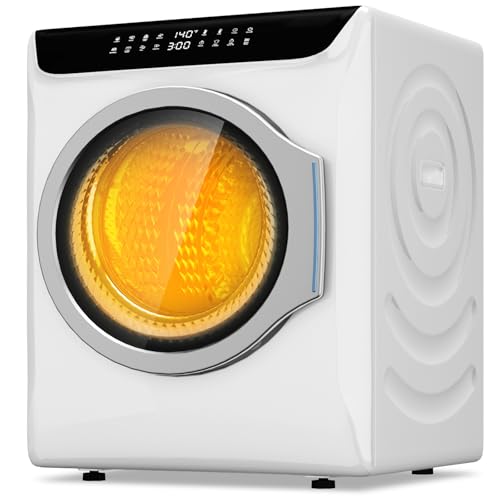
A 2.8 cubic foot portable rated at 1400W with six drying programs on an LED panel, including settings for wool, down and cotton. It adds an eight-hour delay start and a child lock, and the cabinet measures 23 by 20 by 27 inches. The listing claims quiet operation from a redesigned air duct. The 1400W element is the most powerful in the portable group here.
What stands out
- Six fabric programs cover wool, down and cotton blends
- Eight-hour delay start plus a child lock for families
- 1400W element heats quickly for a cabinet this small
Watch out for
- No moisture sensor is listed, so cycles are timer-based
- Exhaust routing still needs a window or wall opening
Stopsad 1.5 Cu.Ft Portable Clothes Dryer, 800W 5 Modes Stainless Steel Tub
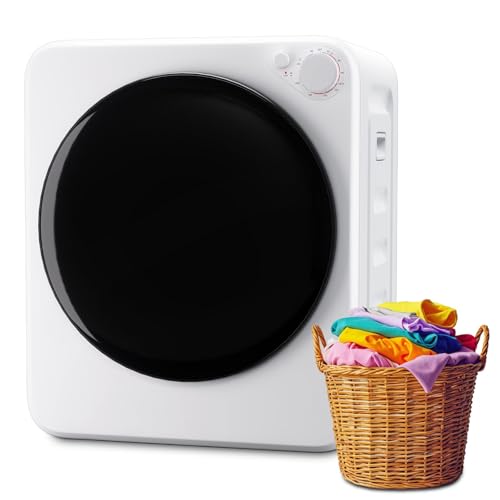
A 1.5 cubic foot mini dryer at 800W with five modes, a stainless tub and a multiple-stage lint filtration system. It weighs 31.9 pounds and measures 15.8 by 18.9 by 22.1 inches, so it sits on a counter or a firm floor. The listing recommends an hour of rest after long runs and stops the drum when the door opens.
What stands out
- Light enough to carry home for the winter
- Five modes with adjustable temperature for different fabrics
- Door-open shutoff adds a basic safety layer for children
Watch out for
- Needs an hour of rest after long cycles, per the manual
- Very small drum for anything beyond daily wear
Euhomy Portable Clothes Dryer for Laundry, 1.5 Cu. Ft. Small Portable Dryers for Clothes, 120V Electric Dryer

A 1.5 cubic foot, 850W portable with a stainless drum, a 105-degree door and a triple-layer lint filter. It holds up to 10 pounds of wet laundry, reaches a listed peak of 140 degrees, and can be wall-mounted, set on a shelf or left free-standing. The listing notes ETL and DOE certification and a one-year warranty. That stated warranty is a point in its favor for a cabin purchase.
What stands out
- ETL and DOE listing on a compact portable
- Triple-layer lint filter suits households with shedding pets
- Wall bracket and exhaust fitting are both included
Watch out for
- Small capacity means frequent loads for a family
- Shelf or wall mounting needs solid blocking behind it
Buying guide
Cutting a vent hole in a log wall is a project, not an errand
A vented dryer needs a four-inch duct that runs as short and as straight as the building allows, terminates outside with a hood and a backdraft flap, and does not dump lint into a crawlspace. In a cabin with log walls that means boring through a foot of solid wood, flashing the penetration so water cannot find it, and setting the hood above the snow line. Plenty of cabins have exactly that, but it is a job for a carpenter and a long hole saw, and the duct needs cleaning every year or two afterward.
If the wall is not going to be opened, the choice narrows to a heat pump or nothing. The Midea and Smad both condense moisture internally and need no duct, which is the main reason they turn up on cabin shortlists. The catch is that a heat pump needs air clearance around the cabinet and somewhere to put the condensate, and it still needs a 240-volt circuit. Neither will run from the single 120-volt outlet that the cabin already has beside the woodstove.
What the panel can actually carry
A 60-amp cabin service can run a 1,500-watt portable dryer, but not while the water heater, the well pump and a space heater are also drawing. At 120 volts, 1,500 watts is 12.5 amps, which is most of a 15-amp circuit and roughly a third of what a small subpanel can spare. On a generator, check both the running watts and the surge rating. A 3,500-watt unit will carry a portable dryer and a few lights, and not much else at the same time.
Heat pumps draw less current while running but need a 240-volt circuit, and the Midea's cord is sold separately. In a cabin that may mean a new subpanel and a permit, which is why the 120-volt machines stay popular despite their long cycles. An off-grid solar system with a modest inverter will not start a heat pump compressor reliably, whatever the running wattage says. The LG gas dryer needs a gas line and only 120 volts, making it the easiest large machine to run from a small panel, provided the propane is there.
Propane changes the arithmetic
A cabin with a propane tank already has the hardest part of a gas dryer installation finished. The LG DLG3601V is a 7.4 cubic foot gas machine with Wi-Fi and sensor-driven drying, and it needs only a 120-volt outlet for the controls and drum, which is a light load on a small panel. Gas also heats faster than a 1,500-watt element, so a family's towels are done in one cycle instead of three, and the drum holds bedding that a portable will never fit.
The trade-offs are real. A gas dryer still needs a vent, so the log-wall question comes back. It occupies 27 by 31 inches of floor plus clearance, which is a lot of a cabin's utility corner. And propane delivery at the end of a dirt road is not always reliable in February, so a cabin that runs out mid-winter is back to a line and a woodstove. For a seasonal camp used a few weekends a year, a 120-volt portable plus a drying rack is the more resilient setup.
The 1.5 cubic foot class is small, not useless
The Stopsad and Euhomy units hold around 1.5 cubic feet, roughly one outfit plus towels or two people's underwear and t-shirts. They run on 800 to 850 watts, weigh about 32 to 38 pounds, and fit on a counter or a shelf. The Euhomy takes up to 10 pounds of wet laundry and carries ETL and DOE listing, which matters in a cabin where the wiring may be older than the owner expects. The Stopsad asks for an hour's rest after long runs, a limitation worth respecting.
These are not substitutes for a full-size dryer. A load of jeans takes multiple cycles, and a bath towel comes out warm but stiff. What they do well is handle the small daily loads that would otherwise hang in the cabin for two days, using a fraction of the power a full-size machine draws. For a couple in a 400-square-foot cabin that is often enough. For a family of five arriving with a week of laundry, it is not.
Cold, damp and empty for six weeks
A cabin that sits empty is a good place for mold. A dryer door closed on a damp drum grows it, and a lint filter left loaded feeds it. Leave the door ajar, clean the filter before locking up, and wipe the drum dry. If the cabin is unheated, empty the heat pump's condensate tank, because a full tank that freezes can crack. The Midea and Smad collect water internally, so that step is not optional once the temperature drops.
Vent hoods are an entry point for mice and wasps, and a nest in a duct is a fire risk. Fit a hood with a flap that closes, check it each spring, and clean the duct before the season starts. The 120-volt portables have an advantage here: they can be unplugged, carried home and stored indoors, which solves the cold, the damp and the rodents in one move.
Frequently asked questions
Can a dryer vent through a log wall?
Yes, but it needs a long hole saw, a properly flashed penetration and a hood with a backdraft flap set above the snow line. Keep the duct short and avoid sharp elbows, because lint collects at every turn. If opening the wall is not an option, a ventless heat pump avoids the penetration entirely and only needs a circuit.
Will a heat pump dryer work in an unheated cabin?
It will run, but the condensate is the problem. A full tank that freezes can crack, and very cold intake air slows the cycle. Either keep the cabin above freezing, plumb the drain so it empties continuously, or drain the tank before you leave. Check the manual for the operating temperature range before relying on one through a northern winter.
Can I run a portable dryer on a generator?
A 1,500-watt dryer draws about 12.5 amps at 120 volts, so plan on a generator with at least 2,000 running watts and a surge rating above that. Do not share the circuit with a space heater or a microwave. Start the dryer after the well pump has finished, since motor startup is the biggest load a small generator will see.
What size dryer does a weekend cabin need?
For one or two people, 1.5 to 3.5 cubic feet is workable, with the smaller end handling daily items and the larger end taking a set of sheets. Bedding and beach towels are the limit at every size below 4.4 cubic feet. If the cabin sleeps six, plan on a laundromat trip or a gas dryer with a full-size drum.
Do I need a plumber for a ventless dryer?
Not for a tank model. You empty the reservoir by hand after each load, which takes a minute. A plumbed drain is optional and convenient if the machine is stacked or used heavily, and that does need a drain line. Confirm whether the hose comes with the dryer, because on some models it is a separate purchase.
Verdict
For a cabin with 240 volts and no duct, the Midea heat pump is the pick. It fits a 24-inch footprint, stacks on a matching washer, needs no wall penetration and is ENERGY STAR rated, which matters when every load runs off a small service. The extra circuit is the price of admission.
If the panel is 120 volts only, the Panda 3.5 is the value choice, with sensor dry, ECO mode and a wall bracket, as long as there is a vent path. The Stopsad 1.5 suits a weekend camp where the dryer lives on a counter and gets carried home in October. The LG gas dryer is the upgrade for a cabin with propane, a vent and a utility corner that can spare the floor space.