Laundry detergent is mostly water. A typical liquid jug runs around 80 to 90 percent water, which means you are paying to ship a product you could add at home from the tap. Sheets strip that water out, compress the surfactants and enzymes into a film, and ship in a cardboard box. That is the entire environmental case, and it is a good one as far as it goes.
The case gets weaker when a box is wrapped in plastic, or when a sheet is dosed so generously that half of it rinses down the drain. Concentration only helps if you use the right amount. It also helps if the product actually cleans, because a second wash cancels the savings from the first.
We compared packaging claims, third-party certifications, dose guidance and load counts for ten products. One is not a sheet at all: BlueLand sells compressed tablets, and we included it because the comparison is useful. Where a brand's green language outruns its documentation, we say so.
The ranking rewards published certification over vague words like natural and eco-friendly, and it rewards honest dose charts over 1,000-load claims that assume a third of a sheet per wash.
Top picks at a glance
Earth Breeze Laundry Detergent Sheets Fragrance Free 180 Loads
Check price on AmazonEco-friendly Laundry Detergent Sheets, Travel Size Liquidless Soap Sheets Neat
Check price on AmazonNavona 1000 Loads Mega Pack Laundry Detergent Sheets, Fresh Scent
Check price on AmazonCompare the shortlist
| Model | Type | Capacity | Key feature | Amazon |
|---|---|---|---|---|
| 1. Earth Breeze Laundry Detergent Sheets Fragrance Free 180 Loads | Detergent sheets | — | Compact footprint | Check price |
| 2. Navona 1000 Loads Mega Pack Laundry Detergent Sheets, Fresh Scen | Detergent sheets | — | Efficiency | Check price |
| 3. ECOS Laundry Detergent Sheets Vegan, No Plastic Jug, No Mess & L | Detergent sheets | — | Drum light | Check price |
| 4. BLUELAND 100% Plastic-Free Laundry Detergent Tablets, 36ct, Free | Pods | — | High efficiency | Check price |
| 5. Eco-friendly Laundry Detergent Sheets, Travel Size Liquidless So | Detergent sheets | — | High efficiency | Check price |
| 6. Kind Laundry Detergent Sheets, Fragrance Free, Travel Size, 18 L | Detergent sheets | — | High efficiency | Check price |
| 7. Tru Earth Laundry Detergent Sheets, Up to 64 Loads, Fresh Linen | Detergent sheets | — | High efficiency | Check price |
| 8. Enyur Laundry Detergent Sheets | Portable | — | High efficiency | Check price |
| 9. ARM & HAMMER Plus OxiClean Power Sheets Laundry Detergent, 52 Co | Stain remover | — | — | Check price |
| 10. Seventh Generation Laundry Detergent Sheets, Free & Clear, 32 Co | Detergent sheets | — | High efficiency | Check price |
Detailed reviews
Earth Breeze Laundry Detergent Sheets Fragrance Free 180 Loads
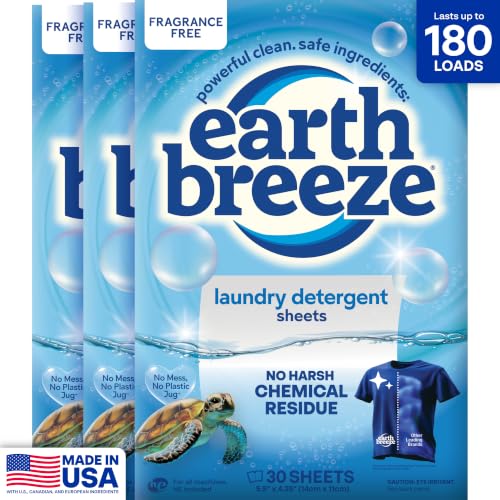
A 180-load box of the fragrance-free Earth Breeze sheet, the version to buy if scent is the thing you want to avoid rather than a feature you want. The listing calls it dermatologist tested, hypoallergenic and cruelty-free, with no optical brighteners, dyes, parabens, phthalates or preservatives. The company also says it donates detergent to shelters, a claim worth noting but not a reason to buy.
What stands out
- 180 loads packed in a single cardboard box
- Fragrance-free, with no dyes or added optical brighteners
- Thin sheets work in hot or cold cycles
Watch out for
- No published dimensions or pack weight on the listing
- No third-party certification is named on the box
Navona 1000 Loads Mega Pack Laundry Detergent Sheets, Fresh Scent

A thousand sheets in a six-inch box that weighs two thirds of a pound, advertised as a year of laundry. The formula is scented, and the listing claims enzyme cleaning and sensitive-skin suitability without naming a certification. It is the most extreme concentration play here, and also the hardest to store without moisture getting into the stack. It is a year-long commitment in one purchase.
What stands out
- 1,000 sheets for roughly a year of washes
- Compact six-inch box that is easy to shelve
- Enzyme formula aimed at both stains and odors
Watch out for
- No certification and no detailed ingredient list online
- A year in one box invites moisture damage
ECOS Laundry Detergent Sheets Vegan, No Plastic Jug, No Mess & Liquid Free

The middle of ECOS's sheet range: 64 unscented sheets, plastic-free packaging and a plant-based formula the company has been refining since 1967. One sheet does a full load and half does a small one, which is the dose flexibility that makes a concentrated product work. No dyes, optical brighteners, parabens or phosphates. The box is compact and easy to store on a shelf.
What stands out
- Half-sheet dosing for smaller loads and hand washing
- Comes in plastic-free packaging with a plant-based formula
- Free of dyes, brighteners, parabens and added phosphates
Watch out for
- 64 sheets goes quickly in a busy family
- No third-party seal is named on the listing
BLUELAND 100% Plastic-Free Laundry Detergent Tablets, 36ct, Free & Clear

Not a sheet, and included because the comparison is instructive. Thirty-six compressed tablets drop straight into the drum, with no PVA film and no sleeve to peel. The formula is free of dyes and fragrance, and the certification list is the longest in this guide: EPA Safer Choice, Leaping Bunny, B Corp, Climate Neutral and USDA Bio-Preferred, plus septic-safe and HE-compatible claims.
What stands out
- No PVA film, unlike a conventional laundry pod
- EPA Safer Choice, B Corp and Climate Neutral certified
- Fragrance-free formula that is safe for septic systems
Watch out for
- A tablet, not a sheet, so it is bulkier
- 36 tablets is a short supply for a big household
Eco-friendly Laundry Detergent Sheets, Travel Size Liquidless Soap Sheets NeatClear

A small kraft-paper packet of 32 strips, positioned as the travel and dorm option. The formula is plant-based and low-suds, septic safe, and designed for standard and HE machines. There is no plastic in the packaging, and the strips dissolve in any water temperature according to the listing. It is the smallest commitment here, if not the best value per load.
What stands out
- Kraft paper packaging with no plastic film at all
- A low-suds formula that also suits hand washing
- Plant-based and septic safe, according to the listing
Watch out for
- Only 32 loads, the smallest pack in this guide
- No certification or half-sheet dose chart on the listing
Kind Laundry Detergent Sheets, Fragrance Free, Travel Size, 18 Loads

Eighteen loads in a package smaller than a phone, with the most rigorous certification set of any sheet here: EWG Verified, Leaping Bunny, USDA BioPreferred and a Think Dirty score of zero. The formula is fragrance-free and built around seven enzymes, and the company claims it dissolves fully at any temperature. The catch is the count, because 18 loads does not go far.
What stands out
- EWG Verified, the strictest seal in this guide
- Fragrance-free, built around a blend of seven enzymes
- Packs smaller than a phone for travel use
Watch out for
- Just 18 loads, so repurchasing becomes a constant chore
- Smallest supply here relative to the amount of packaging
Tru Earth Laundry Detergent Sheets, Up to 64 Loads, Fresh Linen

A flat sleeve of 64 thin strips in a fresh linen scent, made without parabens, phosphates, phthalates, dyes or chlorine bleach. The format dissolves quickly in cold water and works in high-efficiency machines. Tru Earth was one of the brands that made this category mainstream, and the product still reads as a straightforward concentrate with no certification claims attached. It is a simple product with few moving parts.
What stands out
- The flat sleeve uses a minimum of cardboard
- Free of parabens, phosphates, phthalates and added dyes
- Works in HE machines and cold wash cycles
Watch out for
- Scented, with no unscented option in this listing
- No third-party certification is printed on the box
Enyur Laundry Detergent Sheets

Thirty-two strips in a package that converts into a small storage box, which is a neat trick for a dorm or a narrow laundry shelf. The listing claims a five-second dissolve, TSA approval and a low-suds formula for HE machines, plus eco-friendly packaging. No certification is named, and the environmental case rests on the packaging and the concentrate. The box is small enough to keep on a shelf.
What stands out
- The packaging converts into a small storage box
- A five-second dissolve claim that suits cold water
- Compact 4.7-inch pack for dorms and small shelves
Watch out for
- No certification is named on the product listing
- 32 loads is a short trial supply for a family
ARM & HAMMER Plus OxiClean Power Sheets Laundry Detergent, 52 Count
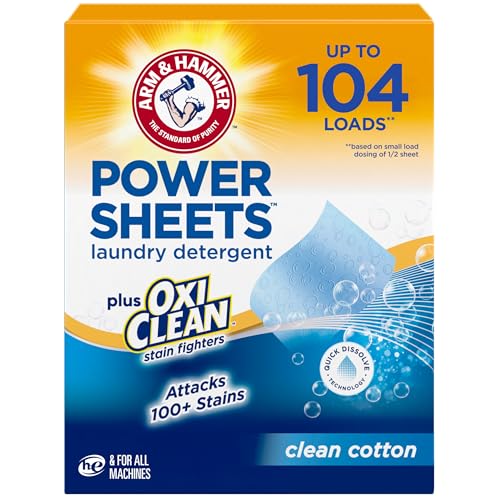
The mainstream option: 52 sheets advertised at 104 medium loads, with OxiClean stain fighters and a clean cotton scent. ARM & HAMMER says the sheets use the same kind of cleaning ingredients as its liquids, with no fillers. There is no certification here and the packaging is a standard carton, but the brand is easy to find and the dose math is simple.
What stands out
- 104 medium loads out of only 52 sheets
- OxiClean stain fighters are built into each sheet
- Easy to find in most grocery stores nearby
Watch out for
- No certification and no full ingredient disclosure online
- Scented only, and the scent is clean cotton
Seventh Generation Laundry Detergent Sheets, Free & Clear, 32 Count

Thirty-two sheets with bio-enzyme cleaning, no dye and no fragrance, plus the most verifiable credentials here: EPA Safer Choice and a 59 percent USDA Certified Biobased formula. The dose chart is specific, with half a sheet for small and medium loads and two for extra large. It is the box to point at when someone asks what an eco claim should look like.
What stands out
- EPA Safer Choice plus a 59 percent biobased claim
- Clear half-sheet dose instructions printed on the box
- Bio-enzyme formula with no added dye or fragrance
Watch out for
- 32 sheets is a small box for a family
- Only sold in small counts at most stores
Buying guide
Plastic-free packaging is the easy promise
Almost every box here arrives in cardboard, and several go further. NeatClear uses kraft paper, Kind uses plastic-free packaging, and ECOS and Cleancult use recyclable paperboard. That matters, because the jug is the most visible part of the problem. A family that switches from a large bottle every few weeks to a box every few months removes a steady stream of HDPE from the recycling bin. It is also the easiest claim to verify, since you can look at what arrives at your door and judge it without a chemistry degree. A carton that ships flat and stacks on a shelf also takes less warehouse space, and that is a smaller but real part of the footprint that no brand bothers to advertise on the front panel.
The harder question is what happens to the sheet after it dissolves. A film goes into the water stream, and no sheet is designed to be recovered. Brands argue the ingredients break down; independent verification is rare. What you can check is whether the outer box is plastic-free, whether the inner sleeve is coated, and whether the product carries a certification that covers the whole formula rather than one ingredient. If a listing says eco-friendly without naming a standard, treat the word as decoration rather than information. A coated inner sleeve is the usual culprit, and it is why some boxes that look recyclable end up in landfill. Check the resin code or ask the brand before you assume. It takes one email.
The certifications worth reading
EWG Verified, EPA Safer Choice, USDA Certified Biobased, Leaping Bunny, B Corp and Climate Neutral are not interchangeable, and each covers a different part of the story. EWG Verified reviews ingredient hazards against a published database. EPA Safer Choice vets the formula for human and environmental health. USDA Biobased measures the plant-derived share. Leaping Bunny covers animal testing. B Corp and Climate Neutral look at the company and its emissions rather than the product in the box. None of them measures how well the detergent cleans. The practical move is to pick the seal that matches your concern, whether that is ingredients, emissions, animal testing or biodegradability, then compare only products that carry it. Chasing all six at once usually means buying nothing.
In this lineup, Seventh Generation carries EPA Safer Choice and a 59 percent biobased figure. BlueLand carries EPA Safer Choice, Leaping Bunny, B Corp, Climate Neutral and USDA Bio-Preferred. Kind Laundry carries EWG Verified and a Think Dirty score of zero. Those are specific, checkable claims with public criteria behind them. A box that says plant powered and nothing else is asking you to trust its own marketing department, which is not the same thing as a standard that an outside organization audits every year. If a listing displays a seal, click through to the certifying body and search the product name. It takes two minutes and eliminates most of the guesswork. Do it once per brand and you are set for years.
Concentration is the lever, not the format
The strongest environmental argument for any concentrated detergent is weight. Water is heavy, and every ounce of it shipped across the country carries fuel cost. A box of 60 sheets weighs a quarter of a pound, while a jug with 60 loads weighs several pounds and needs a plastic bottle thick enough to survive the trip. That ratio is why concentrates exist in liquid form too, and why the sheet format is not unique in this respect. It is simply the most extreme version of the same idea. The counterargument is that sheets cost more per load than the cheapest liquid, so the shipping saving is not the whole story. Value and footprint are different axes. Neither one is a moral position.
There is a second lever that gets less attention: water temperature. Heating a wash is the largest energy use in a laundry cycle, and most of these sheets claim to work at any temperature. If you switch to a sheet but keep washing hot, you have saved the bottle and spent the savings on the water heater. The reverse is also true. A modest liquid detergent used cold can beat a premium sheet used hot, which is why the format alone does not make a wash green. If you want one change with a measurable effect, wash cold and use a sheet built to dissolve in it. That combination beats switching brands. Everything else is rounding at the edges of the energy bill.
Dose control and the rebound effect
A pre-measured sheet is supposed to prevent over-pouring, and it does if you follow the chart. It does not if you add a second sheet because the load looks dirty. Half of the environmental benefit of concentration disappears the moment you double the dose, and the rinse water carries the rest into the drain. Brands that print a half-sheet dose for small loads, like ECOS and Seventh Generation, make it easier to use the right amount. A brand that only says one sheet per load is leaving the math to you. A kitchen scale settles it: weigh the box, divide by the stated loads, and compare that number with the liquid you used before. Most people find they were over-dosing liquid by a third.
Pods deserve a mention because they are the format most people compare sheets to. Pods are wrapped in polyvinyl alcohol film, which dissolves in the wash, though how completely it biodegrades is still debated. Sheets and compressed tablets skip that film entirely. If microplastic shedding is your concern, that difference is more meaningful than the cardboard box. It is also the reason a tablet like BlueLand belongs in this comparison even though it is not a sheet. That is the quietest advantage of the format, and it rarely makes the front of the box. Pods also carry a dose that is hard to split, which encourages running a full drum for one school uniform. Sheets let you tear one in half.
Frequently asked questions
Are detergent sheets really better for the environment?
They are lighter and usually packed in paper, which cuts plastic and shipping weight. That advantage shrinks if you overdose them, wash in hot water, or buy a box that arrives in plastic. The format helps, but the habits around it decide most of the impact.
What does EWG Verified mean on a laundry sheet?
It means the Environmental Working Group reviewed the ingredient list against its own hazard database and found no ingredients on its restricted list. It is a stricter screen than the word natural. It does not test cleaning performance, and it is not a medical guarantee for sensitive skin.
Do detergent sheets contain microplastics?
A sheet is a compressed detergent film rather than a plastic carrier, so it does not leave the PVA pod shell behind. Some formulas include synthetic polymers for texture or scent, which is why the ingredient panel matters. Check for polyethylene or acrylic copolymer listings if this is your concern.
Is a 1,000-load box actually a good deal?
Only if you have dry storage and will use it within a couple of years. Sheets absorb humidity, and a box that sits open in a damp laundry room clumps. The per-load math looks better than it is when the last third of the box is unusable.
Can I recycle the packaging?
Most of these boxes are plain paperboard and go in curbside recycling. Remove any plastic window or coated inner sleeve first, since those contaminate the paper stream. Kraft paper packets are usually recyclable too, but check your local rules for coated paper.
Verdict
Seventh Generation is the pick because it is the only box here where the environmental claims come with documentation you can check: EPA Safer Choice, a 59 percent biobased formula and a dose chart that treats small loads honestly. ECOS Free and Clear is the value choice, with plastic-free packaging, a plant-based formula and a half-sheet dose for smaller washes at 64 loads.
The upgrade is Kind Laundry if certification matters more than load count, since EWG Verified is the strictest screen in this guide and 18 loads is enough to know whether you like the format. Choose BlueLand instead if you want a tablet and the longest list of seals.