A dryer is the one appliance in the laundry room that can undo an entire week of careful washing. Run a cold cycle, hang half the load, then finish the towels in a vented electric dryer for seventy minutes and the gas meter has barely moved while the electric meter has. That is the shape of the problem, and no certification sticker changes it.
The ten machines here range from a 7.8 cubic foot GE with steam and sanitize cycles to a 33-pound commercial unit that needs a three-phase service. In between sit a laundry tower, two all-in-ones, a condensing dryer, and a heated drying stand that is not a tumble dryer at all. The range is the point: the efficient choice depends on whether you have a duct, a gas line, a 240-volt circuit, or none of the above.
What follows is organized around those constraints rather than around capacity, because capacity is the number shoppers already know how to read.
Specifications, feature lists and owner reports were compared across the group, and where a listing is vague about a number that matters, this guide says so.
Top picks at a glance
GE 7.8 cu.ft. Smart Front Load Gas Dryer in Carbon Graphite with Steam and San
Check price on AmazonGiantex 17.6lbs Portable Washing Machine, 900W Clothes Dryer, Electric Laundry
Check price on AmazonEQCOTWEA Commercial Clothes Dryer 33LB Heavy-Duty, 8KW Industrial Laundry Drye
Check price on AmazonCompare the shortlist
| Model | Type | Capacity | Key feature | Amazon |
|---|---|---|---|---|
| 1. GE 7.8 cu.ft. Smart Front Load Gas Dryer in Carbon Graphite with | Front-load | 7.8 cu ft | Steam | Check price |
| 2. GE 7.8 cu. ft. Smart Front-Load Electric Dryer with Steam and Sa | Front-load | 7.8 cu ft | Steam | Check price |
| 3. BLACK+DECKER 8.0 Cu. Ft. Electric Front Load Dryer with Steam, B | Front-load | 8.0 cu ft | Steam | Check price |
| 4. Electrolux ELTE7600AW 4.5 Cu. Ft. Front-Load Washer & 8.0 Cu. Ft | Front-load | 4.5 cu ft | Stackable | Check price |
| 5. LG DLEX4200B 7.4 cu. ft. Ultra Large Capacity Smart Wi‑Fi Enable | Front-load | 7.4 cu ft | Sensor drying | Check price |
| 6. Arbreau 1.6 cu.ft. CONVERTIBLE Compact Combo Washer Dryer with P | Compact | 1.6 cu ft | Compact footprint | Check price |
| 7. EQCOTWEA Commercial Clothes Dryer 33LB Heavy-Duty, 8KW Industria | Stain remover | — | Efficiency | Check price |
| 8. Equator All-in-One Washer Dryer VENTED-DRY 30% FASTER than Conde | All-in-one | — | Sensor drying | Check price |
| 9. Giantex 17.6lbs Portable Washing Machine, 900W Clothes Dryer, El | Ventless | — | Ventless | Check price |
| 10. ConServ 240V Condensor 4 cu.ft Refresh Dryer Energy Star (Matte | Smart Energy | 4 cu ft | Delay start | Check price |
Detailed reviews
GE 7.8 cu.ft. Smart Front Load Gas Dryer in Carbon Graphite with Steam and Sanitize GFD65GSPVDS

A 7.8 cubic foot gas dryer in carbon graphite with steam and sanitize cycles, an aluminized steel drum and a 134-pound shipping weight. The listing rates it ENERGY STAR and estimates annual electrical use near 687 kWh, which covers the motor and controls rather than the gas. It pairs with GE's SmartDispense washers for automatic detergent dosing. The gas model and its electric twin share the same cabinet dimensions.
What stands out
- 7.8 cubic feet handles comforters and family loads
- Steam and sanitize cycles cut wrinkles and odors
- ENERGY STAR listed with a published annual estimate
Watch out for
- Needs a gas line, a 120V outlet and outside venting
- Darker finish shows lint and dust more than white
GE 7.8 cu. ft. Smart Front-Load Electric Dryer with Steam and Sanitize Cycle White

The electric version of GE's 7.8 cubic foot front loader, in white, with steam and sanitize cycles and an aluminized steel drum. It is ENERGY STAR certified, with Wi-Fi for remote monitoring and alerts for remote monitoring through the GE Appliances app. Dimensions match the gas model at 39.75 inches tall and 28 inches wide, so either fits the same opening.
What stands out
- 7.8 cubic feet with steam and sanitize cycles
- ENERGY STAR certified, with Wi-Fi for remote monitoring and alerts
- Same footprint as the gas model, so either fits
Watch out for
- Requires a dedicated 240V circuit and a vent
- Steam adds water use, so it is not an energy saver
BLACK+DECKER 8.0 Cu. Ft. Electric Front Load Dryer with Steam, BFLD80ME

An 8.0 cubic foot electric front load dryer with steam, an aluminized alloy steel drum, twelve cycle selections and sensor dry. The listing rates it ENERGY STAR and specifies 240 volts with professional installation and a cord kit that is not included. The door is reversible, which helps in a narrow room. The drum is aluminized alloy steel rather than stainless.
What stands out
- 8.0 cubic feet is the largest single dryer here
- Sensor dry ends cycles when the load is actually dry
- Reversible door suits awkward laundry rooms and narrow hallways
Watch out for
- Cord kit and professional install are extra steps
- No app or remote start at this level
Electrolux ELTE7600AW 4.5 Cu. Ft. Front-Load Washer & 8.0 Cu. Ft. Electric Dryer Stacked Laundry Tower in Whit

A stacked tower with a 4.5 cubic foot front load washer and an 8.0 cubic foot electric dryer in white. The listing calls out ENERGY STAR efficiency and SmartBoost premixing on the wash side. It measures 27 inches wide, 32 deep and 76.25 tall, so it fits a closet that would not take a side-by-side pair. It is one unit, so both halves arrive together.
What stands out
- 8.0 cubic foot dryer in a 27-inch footprint
- ENERGY STAR efficiency is claimed for the complete pair
- One cabinet and one delivery, with no stacking kit to buy
Watch out for
- 76.25 inches tall rules out shelves and low ceilings
- Washer and dryer cannot be replaced separately if one fails
LG DLEX4200B 7.4 cu. ft. Ultra Large Capacity Smart Wi‑Fi Enabled Front Load Dryer in Black Steel with TurboSt

A 7.4 cubic foot front load electric dryer in black steel with TurboSteam, an AI fabric sensor and LG's ThinQ app for monitoring and proactive care notices. The drum is large enough for a queen comforter, and the sensor adjusts cycle time to the load rather than to a fixed timer. It weighs about 125 pounds. The black steel finish is the only color offered here.
What stands out
- 7.4 cubic feet paired with a moisture-sensing dry cycle
- TurboSteam refreshes clothes without running a full wash cycle
- ThinQ app sends notifications when a cycle ends
Watch out for
- Needs a 240V circuit and a vent like any vented dryer
- Black steel finish collects dust and lint visibly
Arbreau 1.6 cu.ft. CONVERTIBLE Compact Combo Washer Dryer with Pet Cycle (Black)

A 1.6 cubic foot compact combo that washes and dries, with a pet cycle designed to pull embedded hair out before drying. It can be set up as vented or condensing, which makes it unusually flexible for a machine this size. The listing warns against heavy blankets and bulky loads, and it stands 33.5 inches tall. It is a compromise machine, and the listing says so.
What stands out
- Vented or condensing setup, so a duct is optional
- Pet cycle targets hair that survives a normal wash
- Two-year manufacturer warranty covers the whole unit, not just parts
Watch out for
- 1.6 cubic feet will not take a comforter
- Combined wash and dry cycles take hours from start to finish
EQCOTWEA Commercial Clothes Dryer 33LB Heavy-Duty, 8KW Industrial Laundry Dryer,Stainless Steel Drum, with saf
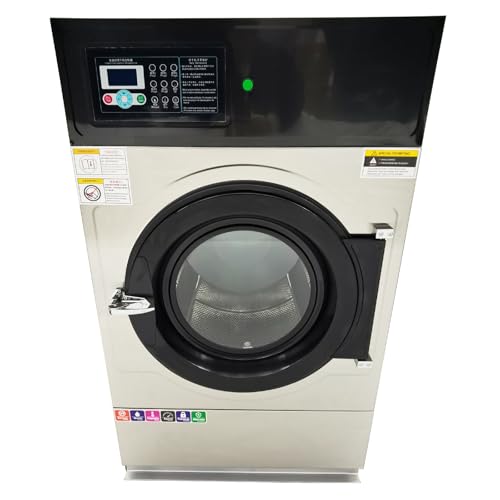
A 33-pound commercial dryer with an 8 kW heating element, a 304 stainless drum, a safety lock and automatic temperature control. It runs on 220-volt three-phase power, weighs 545 pounds, and the listing puts noise under 80 dB. Built for hotels, dry cleaners and factories rather than homes. It is sold as commercial equipment and installed the same way, with no household plug.
What stands out
- 33-pound drum dries commercial volumes in a single cycle
- 304 stainless drum resists rust and fabric wear
- Temperature control and safety lock suit staffed use
Watch out for
- 220-volt three-phase power is a commercial service, not residential
- 545 pounds needs a reinforced floor and rigging
Equator All-in-One Washer Dryer VENTED-DRY 30% FASTER than Condense 15lb 110V in White

An all-in-one washer dryer with a 15-pound capacity and a 110-volt plug, using vented drying that the listing rates 30 percent faster than condensing. It has eleven wash cycles, dual fans and three dry options including sensor, timed and refresh. The listing notes RV approval by full-time RVers. It still needs a vent, which is the catch in an RV or a closet.
What stands out
- Standard 110V plug, so no new circuit is needed
- Vented drying is faster than a condensing combo
- Sensor, timed and refresh dry modes in one machine
Watch out for
- 15 pounds is a small load for a family
- Still needs a vent, which an RV or closet may lack
Giantex 17.6lbs Portable Washing Machine, 900W Clothes Dryer, Electric Laundry Dryer and Heater, Washer & Spin
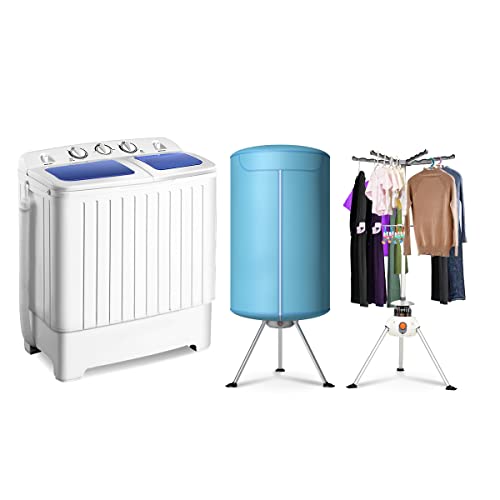
A twin tub washer with an 11-pound wash capacity and a 6.6-pound spin basket, bundled with a 900-watt ventless heated drying stand. The dryer uses spiral heating to reach about 60 degrees Celsius and runs on a 30 to 180 minute timer. Nothing in the set needs a duct or a 240-volt circuit. The washer and the drying stand ship as two boxes.
What stands out
- No duct and no 240-volt circuit are required
- Drying stand folds away when not in use
- Twin tub lets you wash and spin at the same time
Watch out for
- Hanging clothes in hot air is slow and uneven
- Spin basket holds only 6.6 pounds per pass
ConServ 240V Condensor 4 cu.ft Refresh Dryer Energy Star (Matte Black)

A 4.0 cubic foot condensing dryer rated ENERGY STAR, with automatic temperature control, a stainless steel drum and a 240-volt connection. It adds a damp alert, a child lock and a filter check indicator. The listing includes a two-year comprehensive warranty and notes that it needs no exterior vent. It is a niche machine for rooms where a duct is impossible.
What stands out
- No duct needed, so it suits basements and closets
- Damp alert stops you pulling clothes out too early
- Stainless drum backed by a two-year comprehensive warranty
Watch out for
- Condensing cycles run longer than vented drying on the same load
- Still requires a 240V circuit and a drain or tank
Buying guide
Where the Energy Goes in a Dryer
Almost all of a dryer's energy goes into heat, which is why the label on a dryer is a weaker signal than the label on a washer. A vented electric model turns electricity into heat at the element and then blows it through the drum once before it leaves the house. A gas model burns gas for the same job and uses electricity only for the motor, the controls and the igniter, which is why the GE gas model's listing can quote an estimated annual electrical use near 687 kWh while still drying a 7.8 cubic foot drum.
That does not make gas automatically cheaper, because gas and electricity are priced differently and the comparison changes by region and by season. What it does mean is that the two machines are not interchangeable, and the decision is usually made by the house rather than by the shopper. If there is a gas line behind the dryer, the gas model wins on running cost in most markets. If there is a 240-volt circuit and no gas, the electric model is the only option without a renovation.
Sensor Dry and the Cycles Worth Paying For
A moisture sensor is the single most useful efficiency feature on a dryer, because it ends the cycle when the clothes are dry instead of when a timer expires. The BLACK+DECKER BFLD80ME pairs twelve cycle selections with sensor dry, and LG's DLEX4200B uses an AI fabric sensor alongside its TurboSteam setting. The ConServ adds a damp alert that tells you the load needs more time, which sounds trivial until you have pulled a half-dry duvet out at bedtime. The difference shows up on towels and jeans, which hold water unevenly and can fool a timer into stopping early or running long.
Steam is the feature most likely to be sold as efficiency and used as convenience. It refreshes clothes, reduces wrinkles and can sanitize, and the GE models pair it with a sanitize cycle. It also uses water and a little extra energy, so it is not a saving; it is a substitute for dry cleaning or an iron. Buy steam because you will use it on shirts, not because it appears on a specification sheet next to a certification badge.
Gas, Electric and the Circuit Behind the Wall
An electric dryer needs a dedicated 240-volt circuit, a cord kit that matches the receptacle, and a vent to the outside. The BLACK+DECKER listing is explicit that professional installation is required and that the cord is not included, which is the honest version of what every dryer listing should say. A three-wire versus four-wire cord is not a detail you can guess at; the receptacle in the wall decides it, and the wrong cord is a fire risk rather than an inconvenience.
Gas models need a gas line, a 120-volt outlet for the controls, and the same vent. Venting is where efficiency quietly leaks away. A short, straight, rigid duct to a wall cap is close to ideal. A long run with two elbows, a flexible foil section and a clogged screen is a dryer working against itself, and it will take two cycles to do what one should. Clean the lint screen every load and the duct once a year, whatever the machine costs.
Condensing and Ventless: When There Is No Duct
The ConServ is a 4.0 cubic foot condensing dryer rated ENERGY STAR, which means it pulls moisture out of the air inside the drum instead of pushing it through a wall. It needs a 240-volt circuit and a drain or a water tank, but no duct. That makes it the answer for a basement laundry, an apartment with no exterior wall, or a renovation where cutting a four-inch hole is not possible. The trade is time: condensing dryers generally run longer than vented models and put some heat back into the room.
The compact end of the market makes the same trade in a smaller box. The Arbreau 1.6 cubic foot combo can be set up as vented or condensing, which is unusual flexibility for a machine that size, and the Equator all-in-one is vented and rated for RV use with a 110-volt connection. The Giantex is different again: a 900-watt heated drying stand that hangs clothes in a tent of hot air rather than tumbling them. None of these dries a king comforter. All of them beat a clothesline in February.
Commercial and Compact: The Two Ends of the Market
The EQCOTWEA is a 33-pound commercial dryer with an 8 kW heating element, a 304 stainless drum, a safety lock and an automatic temperature control that keeps the drum from scorching fabric. It runs on 220-volt three-phase power, lists a noise level under 80 dB, and weighs 545 pounds. It is built for hotels and factories where the dryer runs all day, and the electrical service alone puts it out of reach for a house.
At the other end, the Arbreau's 1.6 cubic feet and 33.5-inch height suit a studio or an RV, and its pet cycle is aimed at people who share a bed with a shedding dog. The honest framing is that these two machines are not competing: one is a piece of commercial equipment and the other is a compact compromise. Most households belong in the middle, with a 7.4 or 8.0 cubic foot vented dryer and a moisture sensor.
Frequently asked questions
Is a gas dryer cheaper to run than an electric one?
Usually, where gas is inexpensive relative to electricity. But the difference depends on local rates, and a gas dryer costs more to install if there is no line. Compare your price per therm and per kilowatt-hour, and remember the venting and installation costs either way.
Do condensing dryers need a vent?
No. They condense moisture into a tank or a drain, so they can sit against any wall. They generally take longer per load and release some heat into the room. The ConServ also needs a 240-volt circuit, so ventless does not mean plug-and-play.
What does ENERGY STAR mean on a dryer?
Less than it means on a washer, because most of the energy is heat and every dryer uses roughly the same amount to evaporate a given weight of water. The label usually indicates a moisture sensor and an efficient default cycle. Sensor behavior and duct condition matter more than the badge.
Does a bigger dryer cost more to run?
Per load, a little, because it heats a larger drum. Per pound of laundry, usually less, because you run fewer loads and a big drum lets bedding tumble freely. The waste comes from running a large dryer half full, which is common in households of two.
Can I run a 240-volt dryer on a regular outlet?
No. A full-size electric dryer needs a dedicated 240-volt circuit, typically on a 30-amp breaker. Compact 110-volt vented combos exist, such as the Equator, but they dry much smaller loads. Never adapt a 240-volt dryer to a 120-volt outlet, because the cord, the breaker and the wiring all have to match.
Verdict
The GE GFD65ESSVWW is the pick for most homes: 7.8 cubic feet, a steam and sanitize cycle, an aluminized steel drum and an ENERGY STAR rating, with Wi-Fi for the people who want it. Households with a gas line should take the GFD65GSPVDS instead, which is the same drum and the same cycles on a cheaper fuel.
The BLACK+DECKER BFLD80ME is the value pick, with 8.0 cubic feet, twelve cycles, sensor dry, steam and a reversible door, and no connected features to pay for. The upgrade is the Electrolux ELTE7600AW tower if you are replacing both machines: an 8.0 cubic foot dryer stacked over a 4.5 cubic foot washer in a 27-inch footprint, with SmartBoost on the wash side.