People with solar panels tend to ask the wrong laundry question first. They ask which washer is best for solar, as if the machine could tell. A washer is a modest load, usually a few hundred watts with a short surge when the motor starts, and almost any modern machine will run from a reasonably sized array. The dryer is the appliance that decides whether the system keeps up.
So the useful way to read this list is by electrical demand. So the useful way to read this list is by electrical demand. One entry is a 120-volt full-size washer that runs on a standard circuit, and one is a compact all-in-one. Two are pairs or centers whose dryers need 240 volts, one is a tower that puts the drying load on gas, three are portable twin tubs, and one is a hand-sized mini washer that clips onto a bucket.
The last entry is a 44-pound commercial machine on three-phase power, which is here because it turns up in searches and because it makes the point better than any paragraph: solar compatibility is a question about service and load, not about the badge on the drum.
What follows draws on specifications, feature lists and owner reports, read with an eye on what each machine asks of a house that makes its own electricity.
Top picks at a glance
BLACK+DECKER 4.5 Cu. Ft. Front Load Washer, 120V, BFLW45M, White
Check price on AmazonZENY Portable Washing Machine, 13 lbs Twin Tub Compact Washer & Spin Dryer
Check price on AmazonHayWHNKN 44LBS Commercial Washer Dryer Machine 220V 60Hz 3PH
Check price on AmazonCompare the shortlist
| Model | Type | Capacity | Key feature | Amazon |
|---|---|---|---|---|
| 1. BLACK+DECKER 4.5 Cu. Ft. Front Load Washer, 120V, BFLW45M, White | Front-load | 4.5 cu ft | Delay start | Check price |
| 2. Magic Chef Front Load All in One Washer Dryer Combo | All-in-one | 2.7 cu ft | Front-load | Check price |
| 3. Electrolux 4.5 cu. ft. Stacked Washer and 8.0 cu. ft. Gas Dryer | Gas | 4.5 cu ft | Stackable | Check price |
| 4. Samsung White Top Load High Efficiency Smart Washer and Electric | Top-load | 4.4 cu ft | High efficiency | Check price |
| 5. GE GUD27ESSMWW Unitized Spacemaker 3.8 Washer with Stainless Ste | Electric | 5.9 cu ft | Stainless drum | Check price |
| 6. Superday Portable Washing Machine, 25.4lbs Mini Washing Machine | Portable | — | Compact footprint | Check price |
| 7. HayWHNKN 44LBS Commercial Washer Dryer Machine 220V 60Hz 3PH | Stain remover | — | Quick cycle | Check price |
| 8. Omelaza Portable Washing Machine,25.3 lbs Washer and Dryer Combo | Portable | — | Delay start | Check price |
| 9. KOFOHON Portable Washing Machine Small Mini Hand Compact Semi Au | Portable | — | Compact footprint | Check price |
| 10. ZENY Portable Washing Machine, 13 lbs Twin Tub Compact Washer & | Portable | — | Quick cycle | Check price |
Detailed reviews
BLACK+DECKER 4.5 Cu. Ft. Front Load Washer, 120V, BFLW45M, White

A 4.5 cubic foot front load washer rated ENERGY STAR, with twelve cycles, five wash temperatures and five spin settings up to 1,300 rpm. The listing gives a 120-volt connection, a 24-hour delay start and automatic unbalance detection. At 27 inches wide and 39 tall, it fits a standard opening. It is the only full-size 120-volt washer in this guide.
What stands out
- 120V connection is easier to back up than a 240V pair
- 1,300 rpm spin cuts the water left for drying
- Delay start shifts the cycle into peak solar hours
Watch out for
- 120V at this size is unusual, so verify the circuit
- No steam cycle and no app, which keeps it simple
Magic Chef Front Load All in One Washer Dryer Combo

A 2.7 cubic foot all-in-one that washes and dries in a single drum, with fourteen wash cycles, five temperature settings and two dry cycles. It is built for apartments and small homes where a separate dryer will not fit. The stainless tub and touch panel are the durable parts; the small drum is the compromise. It is a one-person machine in practice.
What stands out
- One machine, one circuit and one footprint to plan around
- Five temperatures let you stay cold by default
- Dries without a duct in most apartment installations
Watch out for
- 2.7 cubic feet is a one-person capacity in practice
- Long combined cycles can outlast the afternoon sun
Electrolux 4.5 cu. ft. Stacked Washer and 8.0 cu. ft. Gas Dryer Laundry Tower in Titanium with SmartBoost Prem

A stacked tower with a 4.5 cubic foot front load washer and an 8.0 cubic foot gas dryer in titanium. SmartBoost premixes detergent and water before the wash. The cabinet is 27 inches wide, 32 deep and 76.25 tall, and the gas dryer keeps the largest electrical load off the array. The gas connection is what makes it plausible on a modest system.
What stands out
- Gas drying removes the biggest electrical load from the array
- 8.0 cubic foot drum handles bulky bedding and towels
- 27-inch footprint fits a closet or a narrow alcove
Watch out for
- Needs a gas line, a 120V outlet and a vent
- 76.25 inches tall leaves no room for storage above
Samsung White Top Load High Efficiency Smart Washer and Electric Laundry Pair 4.4 Cu Ft Washer 7.2 Cu Ft Elect

A 4.4 cubic foot top load washer with a 7.2 cubic foot electric dryer, sold with a vent, power cable, water hoses and a one-year protection plan. The washer is described as high efficiency and the dryer handles blankets and jeans. No model numbers are published, which makes verification harder than it should be. The kit sells the pair as one installation.
What stands out
- Complete install kit included with the pair of machines
- 4.4 cubic feet suits a household of four
- Top load lid makes loading quick and simple
Watch out for
- Vented electric dryer is a heavy 240V load
- No model numbers, so specifications are hard to check
GE GUD27ESSMWW Unitized Spacemaker 3.8 Washer with Stainless Steel Basket and 5.9 Cu. Ft. Capacity Electric Dr
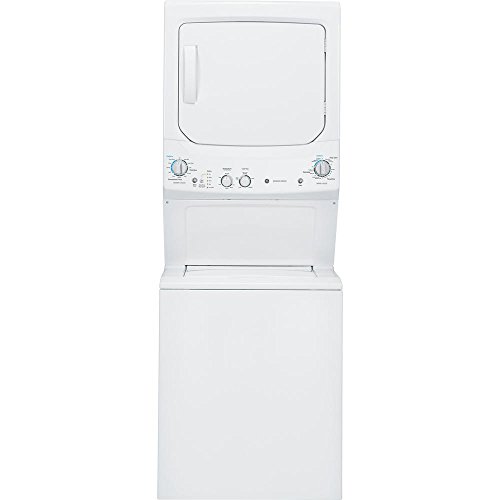
A one-piece unitized washer and dryer with 3.8 cubic feet of wash over a 5.9 cubic foot electric dryer. Eleven wash cycles, cycle status lights and a sensing fill that measures each load. At 26.75 inches wide it fits a closet that will not take two separate machines, which is the whole point of the format. It is the narrowest full laundry solution in this guide.
What stands out
- 26.75 inches wide fits narrow utility closets and alcoves
- Sensing fill limits water use on small loads
- One cabinet and one delivery instead of two
Watch out for
- 3.8 cubic feet is tight for a comforter or bedding
- Electric dryer still needs 240V and a vent
Superday Portable Washing Machine, 25.4lbs Mini Washing Machine and Spin Dryer Combo, Mini Twin Tub Laundry Ma

A 25.4-pound twin tub with a 14.3-pound wash tub and an 11-pound spin basket, plus a silver-ion inlet system. Each tub has its own timer, with wash settings from 3 to 15 minutes and spin from 1 to 5. It needs no permanent plumbing and fits in a corner at 26.36 inches tall. It is a manual machine, however clever the silver-ion inlet sounds.
What stands out
- Low, steady draw that a small inverter can carry
- Wash and spin tubs run at the same time
- No permanent plumbing or 240-volt circuit is required
Watch out for
- Clothes come out damp and need air drying
- Filling by hose and moving wet laundry by hand
HayWHNKN 44LBS Commercial Washer Dryer Machine 220V 60Hz 3PH

A 44-pound commercial washer with wash, spin and dry functions in one drum, a SUS304 stainless body, a variable frequency copper motor and a belt drive. It runs on 220-volt three-phase power and ships without a plug, because it is meant to be hard-wired. The shipping weight is 1,800 pounds, and nothing about the installation is domestic, from the service to the floor.
What stands out
- 44-pound drum handles commercial batch volumes per cycle
- Variable frequency motor adjusts wash and spin speeds
- Full suspension keeps high-speed spins stable on a concrete floor
Watch out for
- Three-phase power rules out an ordinary residential service
- 1,800 pounds needs a structural review before delivery day
Omelaza Portable Washing Machine,25.3 lbs Washer and Dryer Combo Machine for Homes & Apartments,Twin Tub Laund

A 25.3-pound twin tub with a 14.3-pound wash tub and 11-pound spin tub, a 15-minute wash timer, a 5-minute spin timer and a soak function up to 20 minutes. It includes a drain hose and needs no permanent plumbing. The unit stands 25.1 inches tall and runs on a standard household outlet. The soak function is what separates it from the ZENY.
What stands out
- Soak cycle helps with heavily soiled work clothes
- Drain hose means no permanent plumbing or pump install
- Compact enough for a bathroom or closet floor
Watch out for
- Spin leaves fabric damp rather than dry enough to fold
- Manual fill and transfer required for every single load
KOFOHON Portable Washing Machine Small Mini Hand Compact Semi Automatic Washer Laundry Perfect for Home Apartm

A 6.5-pound mini washer that clips onto a bucket and uses a pulsator and a 15-minute timer. It measures roughly 17 by 7 by 6 inches and weighs 5.5 pounds, so it stores in a drawer or a rucksack. The listing recommends a round bucket of about 7.5 gallons for best results. It is a hand-washing aid, not a washing machine in the usual sense.
What stands out
- Draws very little, so a small inverter runs it
- Packs away in a drawer or a travel bag
- Good for single items like shirts and baby clothes
Watch out for
- No spin cycle, so everything has to drip dry
- 6.5 pounds is one outfit at a time
ZENY Portable Washing Machine, 13 lbs Twin Tub Compact Washer & Spin Dryer

A 13-pound twin tub with an 8-pound wash tub and a 5-pound spin tub, a 1,300 rpm spin and knob timers for up to 15 minutes of washing and 5 minutes of spinning. The gravity drain hose needs the machine raised above a tub or floor drain. It measures about 23 by 13.5 by 26 inches. The knob controls have no circuit board to fail.
What stands out
- 1,300 rpm spin removes more water than most portables
- Light enough at 26 pounds to move and store
- Simple knob controls with no electronics to fail
Watch out for
- Gravity drain requires an elevated, stable position near a tub
- 5-pound spin basket means several passes per wash
Buying guide
Watts, Watt-Hours and Why the Washer Is Not the Problem
A solar array is rated in kilowatts, and a battery in kilowatt-hours. A washer's energy use is measured the same way: a few hundred watt-hours for a single cycle, most of it spent heating water if you choose a warm wash. That is a rounding error next to a refrigerator running all day or an air conditioner in July. The appliance that breaks a solar budget is the one with a heating element, and in a laundry room that is the dryer, followed by the water heater feeding the washer. The honest way to size is to add up the watt-hours of a laundry day, not the nameplate watts of the machines.
This is why the most effective solar upgrade in a laundry room is usually not a new washer. It is a cold wash, a higher spin, and a clothesline or a heat pump dryer for the rest. If the array is grid-tied with net metering, timing matters less than total consumption, because the meter nets the month rather than the hour. If the array is off-grid or on a time-of-use rate, timing becomes the whole game, and a delay start is worth more than a certification badge.
120 Volts, 240 Volts and the Battery Question
Most home batteries and hybrid inverters pass through a limited amount of power, and many residential units supply 120-volt loads more easily than 240-volt ones. That makes a 120-volt washer genuinely easier to back up than a pair that includes a 240-volt dryer. The BLACK+DECKER BFLW45M is listed at 120 volts, which is unusual for a 4.5 cubic foot front loader and worth confirming with the seller before you plan a circuit around it.
The towers and pairs here are a different proposition. The Electrolux and LG-style stacked units use a 240-volt dryer, and the Samsung pair uses a vented electric dryer that will not run at all on a 120-volt backup circuit. If those machines are on a critical-load panel, the inverter has to be sized for the dryer's draw, not the washer's. Most people are better off leaving the dryer off the backup panel entirely and drying on a rack when the grid is down.
Cold Water, High Spin and the Settings That Matter
The BLACK+DECKER offers five wash temperatures and five spin settings, with a 1,300 rpm maximum. That combination is the practical definition of solar-friendly: wash cold, spin hard, and let the dryer do less work or none. The machine also has a 24-hour delay start, which lets a midday array run the cycle while the sun is up and the household is at work. Those three features together do more than any efficiency label. A 1,300 rpm spin leaves noticeably less water in the fabric than the 800 rpm ceiling common on cheap portables, and that difference shows up in drying time.
Detergent choice matters more on a cold cycle, because cold water dissolves some powders poorly and leaves residue that prompts a second rinse. A liquid or a pod formulated for cold water avoids that. It is also worth running the longest, heaviest cycle in the middle of the day rather than at 7 p.m., when the array is producing less and the house is drawing more. A washer is flexible in a way an air conditioner is not.
The Honest Case for a Twin Tub
Three of the machines here are portable twin tubs: the Superday and Omelaza at about 25 pounds of combined capacity, and the ZENY at 13 pounds with an 8-pound wash tub. The KOFOHON is smaller again, a 6.5-pound pulsator that clips onto a bucket. They share a virtue that matters off-grid: they draw very little, they need no 240-volt circuit, and several need no plumbing at all beyond a hose over a sink.
They also share a set of limitations that no listing mentions prominently. You fill them with a hose, you move wet clothes from the wash tub to the spin tub by hand, and the spin leaves clothes damp enough to need air drying. The ZENY relies on gravity drain, so it has to sit above the drain point. For a cabin, a boat or an apartment with a strict landlord, that is a fair trade. For a family of four, it is a hobby. A twin tub that sits on a counter needs a drain within hose reach, and a bucket works if you are willing to lift it.
What Does Not Belong on a Solar Circuit
The HayWHNKN is a 44-pound commercial washer with three-phase 220-volt power, a 304 stainless drum, a variable frequency motor and a full suspension system. It ships without a plug because it is meant to be hard-wired by an electrician. At 1,800 pounds it also needs a floor that was designed for it. No residential solar system is going to carry this machine, and no residential service is going to feed it.
The conventional pairs sit in a gray area. The Samsung 4.4 cubic foot pair includes a vented electric dryer and a full install kit, and the Electrolux tower pairs a 4.5 cubic foot washer with an 8.0 cubic foot gas dryer. The gas tower is the more solar-compatible of the two, because the biggest load is handled by gas rather than by the array. That is a legitimate reason to choose gas that has nothing to do with the price of either fuel. Check whether the gas line has the capacity for a dryer before delivery, because a line sized for a range may not carry both appliances at once.
Frequently asked questions
Can I run a washing machine directly from solar panels?
Only with an inverter and, usually, a battery or grid connection to smooth the load. Panels produce direct current that varies with sun, and a washer expects steady alternating current. In practice the array charges a battery or feeds the grid, and the washer draws from the house supply.
Is 240 volts a problem for a solar system?
Not for a grid-tied system, which passes utility power through. It becomes a problem during an outage if the battery inverter only supplies 120 volts. Check the backup output before assuming a 240-volt dryer will run when the grid is down.
Do I need a battery to do laundry at night?
Yes, if you are off-grid and want to wash after dark. On a grid-tied system with net metering, night laundry is fine because the meter credits daytime production against nighttime use. Without net metering, run the load at midday. On a grid-tied system the battery is optional, and the utility effectively stores the surplus for you.
Will a gas dryer work with solar?
Yes, and it is often the better pairing. The dryer's heat comes from gas, so the array only carries the washer, the controls and the lights. You still need a gas line and a vent, and gas is not free, but the electrical load drops dramatically.
Are portable twin tubs really lower energy?
They use less per cycle because they heat no water and move a smaller mass, but they also wash smaller loads, so the comparison per pound is closer than it looks. Their real advantage off-grid is a low, steady draw that a small inverter can supply.
Verdict
The BLACK+DECKER BFLW45M is the pick for a solar household that wants a normal washer. It is ENERGY STAR listed, runs on 120 volts, spins at 1,300 rpm and offers a 24-hour delay, which is the combination that lets an array do the work at noon and the dryer do less afterward.
The ZENY 13-pound twin tub is the value pick for cabins, RVs and off-grid setups, where a low draw and a gravity drain matter more than capacity. The upgrade is the Electrolux gas tower: 4.5 cubic feet of wash over an 8.0 cubic foot gas dryer, which takes the largest electrical load in the laundry room off the array entirely.