Nobody notices a loud washer until it runs at 10 p.m. above a bedroom, or until a spin cycle makes the dog leave the room. Then the search begins for something quieter, and the spec sheets turn unhelpful: most top-loaders do not publish a decibel rating at all, and the ones that do measure a different part of the cycle than their competitors.
The good news is that noise in a top-loader is mostly mechanical and mostly predictable. A direct drive motor with fewer moving parts hums. A belt-driven machine with a worn belt squeals. A drum on weak suspension thumps when a towel load goes off balance. And a machine on a springy wood floor transmits every one of those sounds into the room below, no matter how well it was built.
We compared specifications, features and owner reports on eight machines, from a Speed Queen marketed as ultra-quiet to mainstream 4.1 to 5.5 cu ft models and the Kenmore impeller and agitator pair. The ranking below weighs motor design, out-of-balance handling and cabinet size, plus the practical matter of whether the machine will fit where you need it to be quiet.
Top picks at a glance
Speed Queen ADA 3.2 Cu. Ft. Ultra-Quiet Top Load Washer in Matte Black
Check price on AmazonMidea MLTW41A1BMG 4.1 Cu. Ft. Gray Top Load Washer
Check price on AmazonBLACK+DECKER 4.1 Cu. Ft. Top Load Washing Machine with Agitator, BTLW41MW
Check price on AmazonCompare the shortlist
| Model | Type | Capacity | Key feature | Amazon |
|---|---|---|---|---|
| 1. Speed Queen ADA 3.2 Cu. Ft. Ultra-Quiet Top Load Washer in Matte | Top-load | 3.2 cu ft | Low noise | Check price |
| 2. BLACK+DECKER 4.1 Cu. Ft. Top Load Washing Machine with Agitator, | Top-load | 4.1 cu ft | Delay start | Check price |
| 3. Midea MLTW41A1BMG 4.1 Cu. Ft. Gray Top Load Washer | Top-load | 4.1 cu ft | Top-load | Check price |
| 4. Kenmore 4.1 cu. ft. Top Load Washer with Triple Action Agitator | Top-load | 4.1 cu ft | High efficiency | Check price |
| 5. LG WT8400CW 5.5 Cu. Ft. White Mega Capacity Smart Top Load Washe | Top-load | 5.5 cu ft | Connected controls | Check price |
| 6. Kenmore 4.4 cu. ft. Top Load Washer with Triple Action Agitator | Top-load | 4.4 cu ft | High efficiency | Check price |
| 7. Samsung WA50R5200AW 4.5 cu. ft. White Top Load Washer | Top-load | 4.5 cu ft | Top-load | Check price |
| 8. Kenmore 4.5 cu. ft. Top Load Washer with Triple Action Impeller | Top-load | 4.5 cu ft | High efficiency | Check price |
Detailed reviews
Speed Queen ADA 3.2 Cu. Ft. Ultra-Quiet Top Load Washer in Matte Black
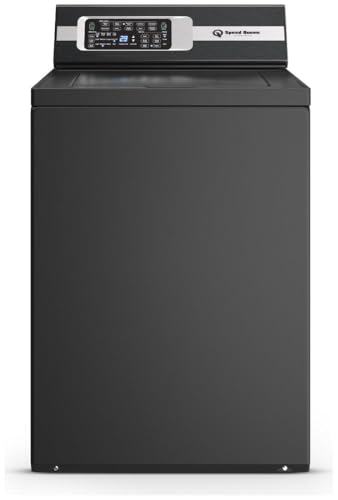
The Speed Queen ADA model is the only machine here marketed explicitly as ultra-quiet, and the rest of the package supports that pitch. Sixteen cycles, Perfect Wash and out-of-balance management keep the drum from hammering when a load shifts. At 44.5 inches tall and 30.5 inches deep it needs a real alcove rather than a closet corner. The 28-inch width helps in a narrow room.
What stands out
- Marketed as ultra-quiet with active out-of-balance drum control
- Sixteen cycles cover more fabric types than most
- Matte black cabinet looks purposeful in a visible room
Watch out for
- 3.2 cu ft is small for bedding-heavy family households
- 30.5-inch depth limits tight laundry closets and galley rooms
BLACK+DECKER 4.1 Cu. Ft. Top Load Washing Machine with Agitator, BTLW41MW

BLACK+DECKER's 4.1 cu ft washer is a conventional agitator machine with a stainless tub, glass lid, LED display and ten cycles. There is no direct drive motor or insulation claim here, so it will not be the quietest machine in the room, but the narrow 25.75-inch cabinet and 24-hour delay make it easy to schedule loads for daylight hours. It is a practical choice when noise is a timing problem.
What stands out
- Narrow 25.75-inch cabinet fits tight laundry alcoves and doorways
- 24-hour delay moves noisy cycles into daylight hours
- Stainless tub damps vibration better than a plastic tub does
Watch out for
- Belt-driven design grows louder as the belt wears
- No sound rating or insulation claim from the brand
Midea MLTW41A1BMG 4.1 Cu. Ft. Gray Top Load Washer
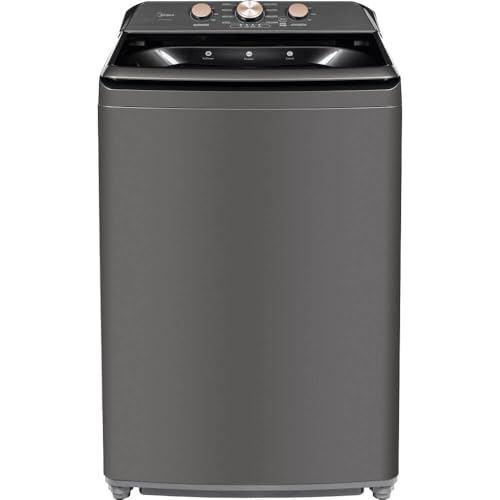
Midea's gray 4.1 cu ft top-loader keeps controls simple with eight presets, auto sensing, a high-water option and a tub clean cycle. It is 46 inches tall, which puts the lid mechanism above ear level in a low room and can make the drain pump sound louder than it is. Nothing in the listing suggests extra sound insulation. It is best behind a closed door.
What stands out
- Auto sensing keeps small loads short and quiet
- Tub clean cycle controls odor and residue between washes
- High-water option helps with bulky and heavy items
Watch out for
- 46-inch height limits placement beneath shelves and wall cabinets
- No quiet mode, insulation claim or sound rating listed at all
Kenmore 4.1 cu. ft. Top Load Washer with Triple Action Agitator

Kenmore's 4.1 cu ft agitator model is the smallest of the brand's trio, rated for about 20 bath towels and built around a triple-action agitator. Ten cycles, four temperatures, a soft-close tempered glass lid and touch controls. The soft-close lid removes the nightly bang, though the agitator itself is the main noise source during the wash. At 25.5 inches wide it fits where bigger machines will not.
What stands out
- Soft-close glass lid will not slam at night
- 25.5-inch width fits narrow closets, doorways and hallways
- Four temperatures allow shorter and gentler wash cycles
Watch out for
- Agitator adds mechanical noise during the wash phase
- Smaller drum means more cycles, so more noise overall
LG WT8400CW 5.5 Cu. Ft. White Mega Capacity Smart Top Load Washer w/EasyUnload
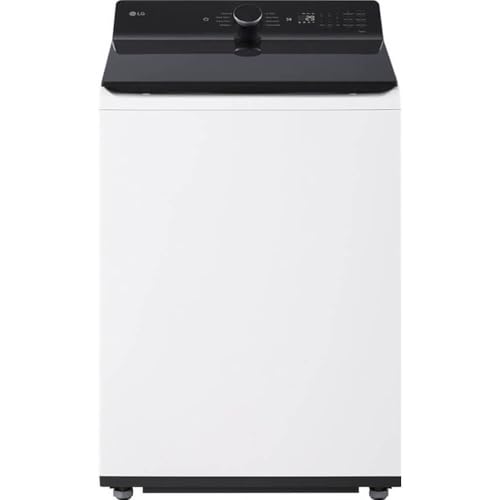
The LG WT8400CW is a 5.5 cu ft mega-capacity top-loader with the EasyUnload layout and AI cycle selection. A big drum running a partial load is usually quieter than a small drum running a full one, since the machine is not working at its limit. The listing's dimensions look like placeholders, so confirm them before planning the alcove. No noise figure is published for this model.
What stands out
- Large drum runs relaxed, low-effort cycles most of the time
- AI settings avoid aggressive cycles for light soil
- EasyUnload layout reduces lifting, reaching and awkward bending
Watch out for
- No published noise figure or insulation claim from LG
- Listing dimensions appear to be placeholders and need checking
Kenmore 4.4 cu. ft. Top Load Washer with Triple Action Agitator

Kenmore's 4.4 cu ft agitator machine is the larger sibling of the 4.1, with the same triple-action wash, ten cycles, four temperatures and soft-close lid. Express Wash clears a small load in 28 minutes, which is useful when you want the noise finished quickly. The extra drum volume means fewer cycles per week, and fewer cycles means less total noise. It is a sensible family machine.
What stands out
- Larger drum cuts the number of weekly cycles
- 28-minute Express Wash limits how long the noise lasts
- Soft-close lid and extra rinse round out the package
Watch out for
- Triple-action agitator is audible through thin closet doors
- Dimensions in the listing need verification before you order
Samsung WA50R5200AW 4.5 cu. ft. White Top Load Washer
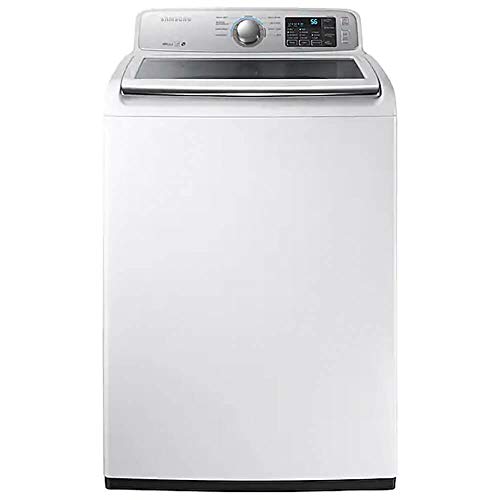
Samsung's WA50R5200AW is a 4.5 cu ft white top-loader, 27.5 inches wide and 44.35 inches tall. Samsung publishes no sound rating here, and the listing carries no cycle list at all, so there is no evidence either way on noise. Judge it on drum size and the standard footprint, then ask Samsung about the motor and suspension before assuming it is quiet. The weight figure shown is clearly wrong.
What stands out
- 4.5 cu ft drum lets most loads run well below capacity
- 27.5-inch width fits standard alcoves and closets
- White cabinet suits a utility room or hallway
Watch out for
- No sound rating, cycle list or motor detail in the listing
- Weight figure is obviously wrong, which undermines the spec sheet
Kenmore 4.5 cu. ft. Top Load Washer with Triple Action Impeller
Kenmore's 4.5 cu ft impeller washer is the largest of the Kenmores here and the one with the least mechanical noise in the wash, since an impeller replaces the agitator post. Ten cycles, four temperatures, an extra rinse and Cold Clean cover the routine, and Express Wash clears a small load in 30 minutes. The open drum also means fewer, fuller loads, which cuts total running time. No sound rating is published.
What stands out
- Impeller wash is quieter than an agitator during the cycle
- Larger drum means fewer weekly cycles and less total noise
- Express Wash limits how long a noisy session lasts
Watch out for
- No published sound rating or insulation claim
- Impeller needs a high water level for bulky, soiled loads
Buying guide
Where the Noise Actually Comes From
A wash cycle has four noise events. The inlet valves hiss while filling, the motor and drum move the load, the drain pump hums or grinds as it empties, and the spin accelerates to a whine. Quiet machines address all four differently: slower fill valves, insulated cabinets, a direct drive motor and a pump mounted on rubber. A machine that is quiet during wash can still be loud at drain if the pump is cheap. A machine that sounds fine in an empty showroom can rattle a shelf of detergent bottles once it is wedged into a closet, because the cabinet acts as a speaker. Clearance is part of the acoustic design, not just an installation detail. Sound travels through gaps as readily as through walls.
Motor design is the biggest lever. A direct drive motor connects the drum to the shaft without a belt, so there is no belt tension, no pulley rumble and fewer parts to wear. A belt-driven machine can be perfectly quiet when new and noticeably louder after a few years, especially if the belt glazes. If quietness matters in year five as much as year one, look for direct drive and a stainless drum, which damps vibration better than plastic. Direct drive also removes the belt dust that collects behind the machine and the tensioner that squeals after a few years. That is a maintenance saving as well as a noise one, and it explains why the quietest models tend to be the simplest mechanically.
What Ultra-Quiet Claims Really Promise
Marketing terms such as ultra-quiet are not standardized. Some brands mean the machine has an insulated cabinet and a suspended tub. Others mean it has a slower spin. A few mean nothing at all beyond a nicer control panel. The only reliable evidence is a published sound level measured on a defined cycle, and even then you need to know whether the number covers wash, drain or spin. Ask for the measurement conditions, because a figure taken at the quietest point of a delicate cycle tells you nothing about a spin. Ten seconds of context beats a big number on a badge, and most brands would rather show the badge. That is why two machines can both claim quiet and sound nothing alike.
When a number is missing, look at the design instead. Out-of-balance management is the clearest signal that the manufacturer thought about noise, because an unbalanced spin is the loudest thing a top-loader does. A soft-close lid matters less than people think, though it does stop the nightly bang when someone drops the lid. Suspension rods, a heavy base and adjustable leveling legs are all quiet features even when they are not sold that way. A machine rated at 50 decibels in wash can still hit the high 70s at spin, which is the number your neighbor hears through a shared wall. That gap is normal rather than a defect, which is why cabinet mass and rubber feet matter so much.
Placement Does Half the Work
A quiet machine on a bad floor is a loud machine. Wood-framed floors deflect under a spinning drum, and the deflection amplifies the thump into the room below. Put the washer over a load-bearing wall if you can, use a drip pan with a rubber pad, and level the machine after the first week when it has settled. Anti-vibration pads help on tile and concrete as well, mostly by stopping the cabinet from walking. A joist that flexes under a static load will flex far more under a spinning drum, and the resulting thump travels through the structure rather than through the air. That is why a machine can sound quiet in the basement and loud in the kitchen above it.
Room surfaces matter too. A tiled laundry closet reflects sound; a room with cabinets, a door and a rug absorbs it. If the machine shares a wall with a bedroom, leave a gap between the cabinet and that wall and avoid mounting shelves directly above it, since shelves rattle. Clearing the lid's full opening arc also stops the lid from tapping a shelf during a spin. If the room has hard floors and bare walls, add a rug or a cork board and the difference is audible within a week. Cheap fixes come first, before you replace a machine that was never the problem. A concrete basement floor is far more forgiving than a joisted floor above a living room.
Spin Speed, Balance and the Late Load
Spin is where quiet washers earn their keep. Faster spin extracts more water, which shortens dryer time, but it also produces the highest forces in the cycle. A machine with good out-of-balance management will redistribute the load and try again instead of hammering the cabinet. That is worth more at night than a slightly lower decibel rating during the wash phase. Slow spin cycles exist on most machines for exactly this reason, and a lower final speed costs dryer time but almost nothing in cleaning. Use it after ten at night if the laundry sits near a bedroom. Spin speed also varies by cycle, so the same machine can be gentle on delicates and loud on a heavy towel load.
Delay start is the other underrated feature. If the laundry shares a wall with a nursery or a home office, scheduling the load for the morning solves the problem without buying anything. Look for a delay of at least eight hours and check that the cycle ends with the lid unlocked, so clothes are not sitting wet in a sealed drum overnight. A lid lock that clicks loudly every few minutes is its own small annoyance. Check that the delay works with the cycle you chose, because some machines disable it for steam or sanitize settings. Read the manual before relying on it, and never leave wet clothes sealed in the drum overnight. That is how a delay setting turns into a mildew problem.
If Space Forces a Compact Machine
If a compact is the only machine your space allows, know what it does with sound. Portable washers move less mass, so they usually make less low-frequency noise than a 5.5 cu ft drum. They also spin faster relative to their size and produce a higher-pitched whine that carries through doors. Some compact models have a quiet-close lid and unbalance detection, which helps, but the drain pump is often the loudest part and there is little insulation around it. A compact unit on a tile floor in a bathroom is often quieter in the next room than a full-size machine in a closet, simply because of the wall mass between them. Mass absorbs sound better than insulation does. Bathroom tile also gives you a drain and a water supply without new plumbing, which matters more than a decibel rating.
For an apartment or an RV, the practical answer is a machine with a delay start, a stable base and a drain hose routed so the pump is not working against gravity. A portable unit in a bathroom is quieter than a full-size machine in a closet, simply because the bathroom has more mass in the walls and floor. If you are choosing between a compact and a full-size machine in the same space, the full-size one with a direct drive motor is usually the quieter long-term bet. Look for a drain hose long enough to reach a standpipe without a kink, because a restricted pump is louder than a free one. That restriction is the usual culprit when a portable machine sounds strained.
Frequently asked questions
How quiet is a quiet top-load washer in decibels?
Manufacturers rarely publish a figure, and those that do measure different stages, so comparisons are unreliable. A normal conversation is around 60 decibels, and quiet machines aim to sit below that during the wash phase. Read owner reports about spin noise rather than trusting one headline number.
Is a direct drive motor quieter than a belt drive?
Generally yes, and it stays quieter over time. A belt drive adds tension, a pulley and a wear item that can glaze and squeal after a few years. A direct drive motor connects the drum shaft directly, with fewer parts to rattle or replace.
How do I stop a washer from vibrating on a second floor?
Level the machine first, then add anti-vibration pads or a rubber-mounted drip pan. Check that the floor is stiff enough, and avoid placing the machine across the middle of a span where deflection is greatest. Wash balanced loads rather than single heavy pieces.
Do quiet washers cost more to buy?
Quiet construction tends to appear on premium models, so yes, you usually pay for insulation, better suspension and a direct drive motor. Those machines often add capacity and cycle options too. A mid-range model on a level floor with a pad can get close.
Why does my washer click during the cycle?
Clicks usually come from the lid lock engaging, the water valve opening or the drain pump starting. A single click at the start of a stage is normal. Repeated clicking during spin suggests the machine is rebalancing an uneven load.
Verdict
The top pick is the Speed Queen ADA 3.2 cu ft top-loader. Ultra-quiet is in the product name, and the design backs it up: sixteen cycles, out-of-balance management and a settled build that will not walk across the floor. It is small for a family, which is the honest trade.
The value pick is the Kenmore 4.1 cu ft agitator model, with ten cycles, four temperatures and a soft-close lid in a 25.5-inch cabinet. The upgrade is the LG WT8400CW: 5.5 cu ft and an EasyUnload drum, so most weeks run well under capacity instead of straining at the limit. LG publishes no noise figure for it, so pair it with a pad and a level floor.