The towel is the giveaway. It comes out of the dryer stiff enough to stand on its own, and the white wash has gone the color of weak tea. Nothing is wrong with the washer. The water is carrying dissolved calcium and magnesium, and every load leaves a little behind in the fabric, on the drum and around the inlet valve. In a house like that, the machine matters less than the three things it lets you control: how much water goes in, how many times it rinses, and how easily the tub can be cleaned.
Hard water is not a marketing problem. The minerals bind to detergent and form an insoluble curd that settles into fabric, which is why clothes feel rough and colors look dull. They also plate out as scale wherever water sits still or gets hot. A top loader dilutes what comes in with more water per load, but that same volume carries more minerals through the drum. The balance is a high fill, an extra rinse and a monthly descale.
These eight machines are the usual mid-priced top loaders, and only a few of their listings name anything that helps with hardness. Three Kenmores list an extra rinse. One Midea lists a high-water setting and a tub clean cycle. The rest are competently built but quiet on the details, which is why the advice below leans on what you can verify.
We compared specifications, features and owner reports rather than running our own tests. Check the current price on Amazon; no figures are quoted here.
Top picks at a glance
BLACK+DECKER 4.1 Cu. Ft. Top Load Washing Machine with Agitator, BTLW41MW
Check price on AmazonMidea MLTW41A1BMG 4.1 Cu. Ft. Gray Top Load Washer
Check price on AmazonSamsung WA50R5200AW 4.5 cu. ft. White Top Load Washer
Check price on AmazonCompare the shortlist
| Model | Type | Capacity | Key feature | Amazon |
|---|---|---|---|---|
| 1. BLACK+DECKER 4.1 Cu. Ft. Top Load Washing Machine with Agitator, | Top-load | 4.1 cu ft | Delay start | Check price |
| 2. Midea MLTW41A1BMG 4.1 Cu. Ft. Gray Top Load Washer | Top-load | 4.1 cu ft | Top-load | Check price |
| 3. LG WT8400CW 5.5 Cu. Ft. White Mega Capacity Smart Top Load Washe | Top-load | 5.5 cu ft | Connected controls | Check price |
| 4. Kenmore 4.4 cu. ft. Top Load Washer with Triple Action Agitator | Top-load | 4.4 cu ft | High efficiency | Check price |
| 5. Kenmore 4.5 cu. ft. Top Load Washer with Triple Action Impeller | Top-load | 4.5 cu ft | High efficiency | Check price |
| 6. Samsung WA50R5200AW 4.5 cu. ft. White Top Load Washer | Top-load | 4.5 cu ft | Top-load | Check price |
| 7. KoolMore 25-Inch 4.0 Cu. Ft. Top Load Washing Machine with Agita | Top-load | 4.0 cu ft | High efficiency | Check price |
| 8. Kenmore 4.1 cu. ft. Top Load Washer with Triple Action Agitator | Top-load | 4.1 cu ft | High efficiency | Check price |
Detailed reviews
BLACK+DECKER 4.1 Cu. Ft. Top Load Washing Machine with Agitator, BTLW41MW

A 4.1-cubic-foot agitator machine with a glass lid, a stainless steel tub and ten cycles. The 24-hour delay and 120-volt cord are the only extras listed. At 25.75 inches wide and 116.83 pounds it is the narrowest and lightest full-size washer here, which helps in a closet laundry. It does not list an extra rinse or a high-water setting, so in hard water you would lean on detergent choice and a monthly clean.
What stands out
- The 25.75-inch width fits a tight closet opening
- 116.83 pounds is light for a full-size cabinet
- Stainless steel tub wipes down easily after a wash
Watch out for
- No extra-rinse option is listed for this model
- No high-water or deep-fill setting is offered here
Midea MLTW41A1BMG 4.1 Cu. Ft. Gray Top Load Washer
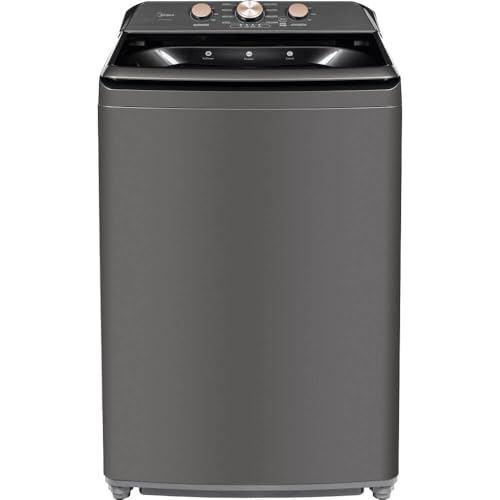
The only machine in this group whose listing names a high-water setting, which is the single most useful feature in hard water. It adds auto sensing, a tub clean cycle and eight presets in a 4.1-cubic-foot drum. It is also the tallest and widest cabinet here at 46 by 29 inches, and at 128 pounds it needs two people to move. Check the lid clearance before ordering.
What stands out
- The high-water setting dilutes minerals in the wash
- The tub clean cycle makes monthly descaling simple and quick
- Auto sensing and eight presets cover daily loads
Watch out for
- Tallest cabinet here at 46 inches, so measure first
- Wash action is not stated in the listing
LG WT8400CW 5.5 Cu. Ft. White Mega Capacity Smart Top Load Washer w/EasyUnload
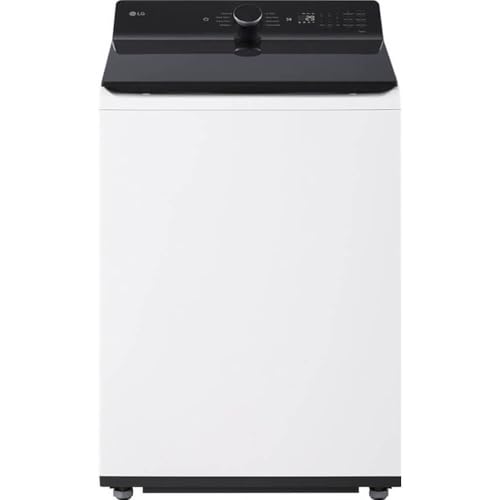
LG's 5.5-cubic-foot WT8400CW is the largest drum in the group, with EasyUnload and AI cycle selection. Fewer, fuller loads mean fewer fills and less total mineral exposure, which is a real advantage in hard water. The listing publishes no usable cabinet dimensions, so the footprint has to come from the seller in writing, and no water-level or extra-rinse option is named.
What stands out
- 5.5 cubic feet means fewer loads per week
- EasyUnload layout is easier on a full drum
- AI selection adjusts the wash settings to each load
Watch out for
- No cabinet dimensions appear anywhere on the listing
- No extra rinse or fill control is listed
Kenmore 4.4 cu. ft. Top Load Washer with Triple Action Agitator

A 4.4-cubic-foot Kenmore with a triple-action agitator, ten cycles, four temperatures and an extra rinse. Express Wash is quoted at 28 minutes for a small load, and AccelaWash at up to 51 percent faster on full loads. The soft-close tempered glass lid is a small but welcome detail. In hard water the extra rinse is the headline feature, and the agitator helps shift detergent curd out of heavy cotton.
What stands out
- An extra rinse flushes mineral-heavy water out fast
- Four temperature selections dissolve powder properly and fully
- The triple-action agitator works stiffened cotton fabrics clean
Watch out for
- No high-water setting is named in the listing
- The agitator is harder on thin or worn fabrics
Kenmore 4.5 cu. ft. Top Load Washer with Triple Action Impeller
The 4.5-cubic-foot Kenmore impeller machine lists ten cycles, four temperatures and an extra rinse, with a cold-wash setting that Kenmore says uses up to 90 percent less energy than the normal cycle. Express Wash is quoted at 30 minutes. There is no post in the drum, so bedding loads stay untangled. Weight is 125.7 pounds, and no cabinet dimensions are published.
What stands out
- Extra rinse and four temperatures in one machine
- 4.5 cubic feet with no center post in the drum
- Cold Clean option for lightly soiled everyday loads
Watch out for
- Impeller needs a pre-soak on heavy soil loads
- Cabinet dimensions are not published for this model
Samsung WA50R5200AW 4.5 cu. ft. White Top Load Washer
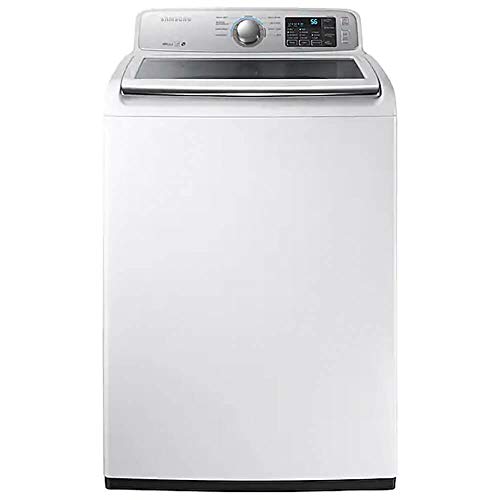
A 4.5-cubic-foot Samsung top loader in white, with no cycle list, no wash action and no water-level information on its Amazon page. The dimensions are 44.35 inches tall, 29.25 deep and 27.5 wide. The weight field is a data error. It is a reasonable size for a family, but in hard water you would be buying blind on the two features that matter, so ask the seller first.
What stands out
- The 4.5-cubic-foot drum suits a family laundry load
- 44.35-inch height fits under a standard laundry shelf
- Simple white finish matches most other kitchen appliances
Watch out for
- No features or cycles are listed at all
- No confirmation of an extra-rinse option on the listing
KoolMore 25-Inch 4.0 Cu. Ft. Top Load Washing Machine with Agitator, High-Efficiency Clothes Washer for Home L

A 25-inch, 4.0-cubic-foot machine with a single-action agitator, a 304 stainless drum and ten cycles including Tub Clean and Heavy Duty. It is UL certified with a one-year parts and labor warranty. The stainless tub is easy to wipe and shows scale clearly, which is useful in hard water, and the 25.25-inch depth fits shallow alcoves. No extra rinse is listed.
What stands out
- Tub Clean cycle helps manage scale and residue
- UL certified with a one-year parts and labor warranty
- 25.25 inches deep, the shallowest cabinet in this group
Watch out for
- Capacity is listed as both 4.0 and 4.1
- No extra-rinse option is named in the listing
Kenmore 4.1 cu. ft. Top Load Washer with Triple Action Agitator

A 4.1-cubic-foot Kenmore with a triple-action agitator, four temperatures, two options and ten cycles including Soak. It is rated for up to 20 bath towels on an 18.7-pound maximum load, and the 25.5-inch width is the narrowest full-size cabinet in this group. In hard water the soak cycle earns its place: an overnight soak with a builder gives detergent time to work before the rinse carries the minerals away.
What stands out
- The soak cycle lets detergent work before the rinse
- Four temperatures and an extra-rinse option are listed
- 25.5 inches wide, the narrowest full-size cabinet here
Watch out for
- AccelaWash gain is 14 percent here, not 51
- No high-water setting is named in the listing
Buying guide
What Hard Water Does Inside the Drum
Hardness is calcium and magnesium held in solution. It is measured in grains per gallon or milligrams per liter, and it varies enormously within the same state, sometimes within the same county. When those minerals meet detergent, they react with the surfactant and lock it up, so a dose that works in soft water produces flat, gray wash water in hard water. What is left over is soap curd, a sticky residue that clings to cotton, traps soil and makes towels feel like cardboard. That is the film you see on a glass lid after a week of washing.
The second effect is scale. Heat drives the minerals out of solution, so they deposit on the hottest surfaces first: the inlet valve, the water-level sensor, the heating element if the machine has one, and the inside of the drain pump. A thin layer is harmless. A thick layer narrows passages, slows the fill and makes the machine work harder. None of the washers here has a built-in softener, and no cycle removes scale completely, so the practical defense is dilution, rinsing and a cleaning routine that dissolves what has already formed.
Get Your Number Before You Shop
A test strip from a hardware store costs less than a coffee and tells you more than any product page. The usual bands are soft below about 3.5 grains per gallon, moderate from 3.5 to 7, hard from 7 to 10.5, and very hard above 10.5. If your municipal report lists milligrams per liter, divide by 17.1 to get grains. Well water can run far higher than any municipal supply, and it can also carry iron, which stains and behaves differently from hardness.
The number changes what you should buy. Under 7 grains, any machine here will do, and an extra rinse is a nice-to-have. Between 7 and 10.5, a high fill and an extra rinse move from optional to important. Above 10.5, the machine is the smaller half of the decision: a softener or a regular descale will do more than any cycle. Renters who cannot install a softener should weight detergent choice and a monthly cleaner more heavily than drum size.
Detergent, Boosters and the Overdose Trap
Powdered detergent generally carries more built-in water conditioners than liquid, and those builders are what neutralizes hardness before it reaches your clothes. In very hard water, a powder with sodium carbonate does more for a load than a premium liquid. That said, liquid works better in cold water because it dissolves instantly, and many households run cold washes for everything. The practical answer is to match the detergent to the temperature you actually use and to dose for hardness rather than for load size alone.
The overdose trap is real. Hard water produces thin suds, so people add more detergent, and the extra detergent binds with minerals instead of soil and leaves more residue. A half-dose of a good powder plus a scoop of washing soda often beats a full dose of a weak liquid. Oxygen bleach helps keep whites bright without chlorine, and fabric softener makes the film worse, not better. If towels are stiff, the fix is an extra rinse and less product, not more softener.
Fill, Rinse and the Features That Help
Two controls matter more than any specialty cycle. The first is fill level, because a shallow fill concentrates minerals against the fabric and leaves the top of the load barely rinsed. The Midea 4.1 is the only machine in this group whose listing names a high-water setting, and it also lists auto sensing, a tub clean cycle and eight presets. That combination is the closest thing here to a hard-water package, though at 46 inches tall it is also the tallest cabinet in the group.
The second control is the rinse. An extra rinse flushes the mineral-laden water out instead of letting it dry into the fabric, and both Kenmore agitator models and the Kenmore impeller list it. Four temperature selections help too, because warm water dissolves powder and releases scale better than cold. Where a listing does not name an extra rinse, check the manual or ask the seller before you assume; it is a common feature that is often left off the bullet list.
Scale, the Pump and a Monthly Habit
A monthly clean is the cheapest maintenance there is. Run the tub clean cycle with a citric-acid washing machine cleaner, or use a proprietary descaler, and wipe the lid and the top of the agitator while the tub is empty. Citric acid dissolves calcium carbonate well and rinses clean. White vinegar works on light film, but repeated use can degrade rubber seals and hoses, so save it for the dispenser and use a proper descaler inside the drum.
Check the inlet screens twice a year. They sit where the hoses meet the back of the machine, and grit and scale collect there until the fill slows to a trickle. Pull the hoses, rinse the screens, and reattach them hand-tight. If the machine is in a basement with a utility sink, look at the drain hose for crusting as well. None of this is difficult, and it is the difference between a washer that lasts a decade in hard water and one that starts throwing fill errors in year three.
Frequently asked questions
How can I tell whether my water is hard?
Look for scale on the faucet aerators, a chalky ring in the toilet bowl, stiff towels and soap that will not lather. A test strip confirms it in a minute, and your municipal water report lists calcium and magnesium in milligrams per liter. Divide that figure by 17.1 for grains per gallon.
Can a top-load washer cope with hard water?
Yes. A top loader uses enough water to dilute the minerals, and a high fill plus an extra rinse flushes most of them away. What it cannot do is prevent scale from forming over time. Plan on a monthly descale and check the inlet screens twice a year. Above 10.5 grains, treat the water rather than the washer.
Which detergent works best in hard water?
A powder with built-in builders, such as sodium carbonate, generally handles hardness better than a liquid. Dose for your water, not for the drum size, and add washing soda if the wash water stays flat. Avoid oversudsing, and skip fabric softener, which adds another layer of film to fabric that is already coated.
Will hard water damage the washing machine?
It shortens its life rather than breaking it overnight. Scale narrows the inlet valve and the pump passages, coats sensors and makes the fill slow. In a machine with a heater, it insulates the element and wastes power. A monthly citric-acid clean and clean inlet screens prevent most of that, and a softener prevents the rest.
Is a water softener worth it for laundry alone?
Above 10.5 grains, usually yes. A softener cuts detergent use, keeps whites brighter and protects the washer and the water heater at the same time. It needs space, a drain and salt, and it is not an option in every rental. A detergent booster and a monthly descaler are the fallback, not an equivalent.
Verdict
The pick is the Kenmore 4.5 with the triple-action impeller. It lists an extra rinse and four temperatures, which are the two controls that matter most when the water is hard, and the 4.5-cubic-foot drum means fewer loads and fewer flushes of mineral-heavy water. The impeller is also gentler on fabric that has already been roughened by scale.
The value pick is the Midea 4.1: high-water setting, tub clean cycle, auto sensing and eight presets for the least money in the group, in a cabinet you will need to measure carefully because it is 46 inches tall. The upgrade is the LG WT8400CW at 5.5 cubic feet, the biggest drum here, so long as you confirm its fill options and footprint. Above 10.5 grains, spend the upgrade budget on a softener first.