There is a particular kind of frustration in pulling a shirt out of the third wash and finding the collar ring exactly where it was. Nothing was wrong with the machine, the detergent or the temperature. The stain had simply never been given time. Detergent needs minutes to wet a fiber, break the bond between soil and fabric, and lift the soil into the water, and a twelve-minute wash gives it almost none. Soaking is what happens when you stop rushing that chemistry.
A soak cycle automates the process: the machine fills, agitates briefly to distribute detergent, then sits. The dwell is the whole point. Some machines agitate intermittently during the soak, some do nothing at all, and a few drain and refill afterward so the loosened soil leaves before the wash begins. The difference between a good soak and a bad one is usually measured in hours, not in agitation speed.
This is a thin category in the listings, which is worth saying plainly. Only one machine here names a soak cycle, and the rest either publish no cycle names or publish a list without a soak, which means the feature may exist and simply not be advertised. If soaking matters to you, that gap is the first thing to resolve before you compare drums.
We compared specifications, features and owner reports rather than running our own tests. Check the current price on Amazon; no figures are quoted here.
Top picks at a glance
Kenmore 4.1 cu. ft. Top Load Washer with Triple Action Agitator
Check price on AmazonMidea MLTW41A1BMG 4.1 Cu. Ft. Gray Top Load Washer
Check price on AmazonSamsung WA50R5200AW 4.5 cu. ft. White Top Load Washer
Check price on AmazonCompare the shortlist
| Model | Type | Capacity | Key feature | Amazon |
|---|---|---|---|---|
| 1. Kenmore 4.1 cu. ft. Top Load Washer with Triple Action Agitator | Top-load | 4.1 cu ft | High efficiency | Check price |
| 2. BLACK+DECKER 4.1 Cu. Ft. Top Load Washing Machine with Agitator, | Top-load | 4.1 cu ft | Delay start | Check price |
| 3. Midea MLTW41A1BMG 4.1 Cu. Ft. Gray Top Load Washer | Top-load | 4.1 cu ft | Top-load | Check price |
| 4. LG WT8400CW 5.5 Cu. Ft. White Mega Capacity Smart Top Load Washe | Top-load | 5.5 cu ft | Connected controls | Check price |
| 5. Kenmore 4.4 cu. ft. Top Load Washer with Triple Action Agitator | Top-load | 4.4 cu ft | High efficiency | Check price |
| 6. Kenmore 4.5 cu. ft. Top Load Washer with Triple Action Impeller | Top-load | 4.5 cu ft | High efficiency | Check price |
| 7. KoolMore 25-Inch 4.0 Cu. Ft. Top Load Washing Machine with Agita | Top-load | 4.0 cu ft | High efficiency | Check price |
| 8. Samsung WA50R5200AW 4.5 cu. ft. White Top Load Washer | Top-load | 4.5 cu ft | Top-load | Check price |
Detailed reviews
Kenmore 4.1 cu. ft. Top Load Washer with Triple Action Agitator

The only machine here with a named soak cycle. Kenmore pairs it with Heavy Duty, Whites, Delicates and Express in a ten-cycle list, plus four temperatures and two options. The drum is rated for up to 20 bath towels on an 18.7-pound load, and the cabinet is 42.1 inches tall, 27 deep and 25.5 wide. AccelaWash is quoted at up to 14 percent faster here rather than the 51 percent of the larger Kenmores.
What stands out
- The only machine here with a soak cycle
- Four temperatures and two extra options are listed
- 25.5 inches wide, the narrowest published cabinet here
Watch out for
- AccelaWash gain is 14 percent here, not 51
- 4.1 cubic feet is modest beside the 5.5-cubic-foot LG
BLACK+DECKER 4.1 Cu. Ft. Top Load Washing Machine with Agitator, BTLW41MW

A 4.1-cubic-foot agitator machine with ten cycle selections, a glass lid, a stainless tub and a 24-hour delay. None of the ten cycles is named in the listing, so there is no confirmation of a soak program. The delay is useful for scheduling a wash, but it is not a soak: the clothes sit dry until the cycle starts. At 116.83 pounds it is the lightest machine with a published weight here.
What stands out
- Ten cycle selections sit in a simple layout
- 116.83 pounds, the lightest published weight here
- Glass lid lets you watch the fill and the wash
Watch out for
- Cycles are not named, so no soak is confirmed
- Delay start is not the same as a soak
Midea MLTW41A1BMG 4.1 Cu. Ft. Gray Top Load Washer
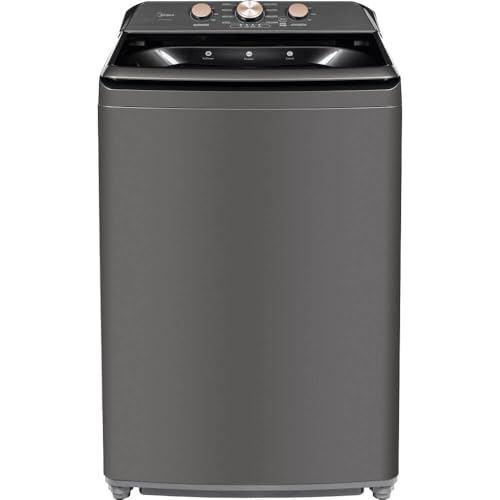
A 4.1-cubic-foot Midea with high-water, auto sensing, a tub clean cycle and eight presets. The high-water setting is genuinely useful for soaking, because a soak needs enough water to cover the load, and eight presets suggest a program for most fabrics. The preset names are not published, so whether one is a soak is unknown. It is the tallest cabinet in this group at 46 inches and 29 inches wide, which is worth checking against overhead clearance.
What stands out
- The high-water setting supports a manual soak in the drum
- Tub clean cycle after a long, wet load
- Auto sensing and eight presets cover the daily loads
Watch out for
- Preset names are not listed, so no soak confirmed
- 46 inches tall, so check the space above it
LG WT8400CW 5.5 Cu. Ft. White Mega Capacity Smart Top Load Washer w/EasyUnload
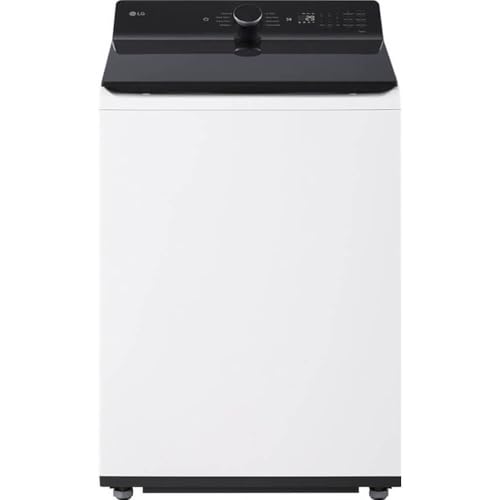
The 5.5-cubic-foot LG is the largest drum here, with EasyUnload and AI cycle selection. A big drum is an advantage for soaking bedding, since the load needs room to move and water to cover it, but the listing names no soak cycle and no water-level control. It weighs 130 pounds, and no cabinet dimensions are published. Confirm both the program list and the footprint with the seller.
What stands out
- 5.5 cubic feet leaves room for bulky soaks
- The EasyUnload layout is easier on wet bedding
- AI cycle selection handles everyday laundry loads well
Watch out for
- No soak or pre-soak program is named in the listing
- No cabinet dimensions are published for this model
Kenmore 4.4 cu. ft. Top Load Washer with Triple Action Agitator

A 4.4-cubic-foot Kenmore with a triple-action agitator, ten cycles, four temperatures and an extra rinse. The named cycles are Heavy Duty, Whites, Towels, Delicates and Express, with no soak among them. The extra rinse is still useful after a manual soak, since it clears the loosened soil and the residual detergent. Express Wash is quoted at 28 minutes, which is the opposite of patience but handy for the follow-up wash.
What stands out
- Extra rinse clears soil loosened by a manual soak
- The triple-action agitator handles the follow-up wash well
- 4.4 cubic feet takes a family stain load
Watch out for
- No soak cycle appears in the named cycle list
- The agitator is hard on delicate soaked fabrics
Kenmore 4.5 cu. ft. Top Load Washer with Triple Action Impeller
The 4.5-cubic-foot Kenmore impeller machine lists ten cycles, four temperatures and an extra rinse, with names that stop at Heavy Duty, Whites, Towels, Delicates and Express. The impeller is gentle enough for soaked delicates, and the 4.5-cubic-foot drum gives a wet load room to turn. Express Wash is quoted at 30 minutes. No soak program is stated, so plan on a pause or a bucket.
What stands out
- Gentle impeller action suits soaked delicates and knits
- An extra rinse follows a manual soak nicely
- 4.5 cubic feet gives wet fabric room to turn
Watch out for
- No soak cycle is named in the listing
- Cabinet dimensions are not published for this model
KoolMore 25-Inch 4.0 Cu. Ft. Top Load Washing Machine with Agitator, High-Efficiency Clothes Washer for Home L

A 25-inch, 4.0-cubic-foot KoolMore with a single-action agitator, a 304 stainless drum and ten cycles including Heavy Duty, Whites, Bulky, Quick Wash, Delicates and Tub Clean. No soak is listed, but the Tub Clean cycle is useful after a long wet load. It is UL certified with a one-year parts and labor warranty, and 25.25 inches deep makes it the shallowest cabinet here.
What stands out
- Tub Clean cycle runs after a long, wet soak
- UL certified with a one-year parts and labor warranty
- 25.25 inches deep, it fits shallow laundry alcoves
Watch out for
- No soak cycle appears in the ten-cycle list
- Capacity is listed as both 4.0 and 4.1
Samsung WA50R5200AW 4.5 cu. ft. White Top Load Washer
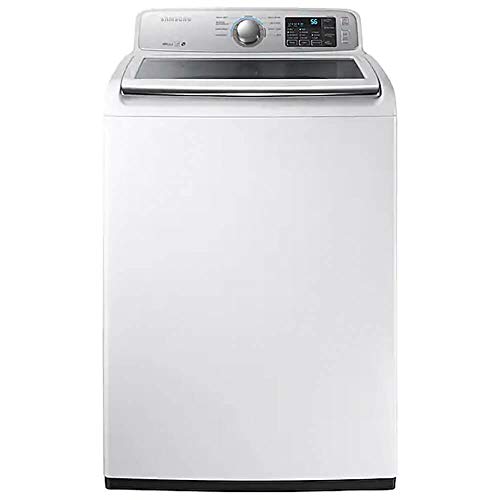
A 4.5-cubic-foot Samsung with no features published beyond the title, and therefore no confirmation of a soak cycle, a wash system or a water-level control. The drum is large enough for a soaked king-size duvet to turn, and the cabinet is 44.35 inches tall, 29.25 deep and 27.5 wide. Everything else about the program list has to come from the seller or the manual. Treat it as a capacity-first choice rather than a soaking machine.
What stands out
- 4.5 cubic feet takes a large soaked load
- 27.5 inches wide fits a standard alcove
- 44.35-inch height clears most shelves
Watch out for
- No cycle names or soak program published
- No wash system or water-level control stated
Buying guide
What a Soak Actually Does
A soak is a controlled pause. The drum fills with water and detergent, turns just enough to wet the load and distribute the solution, and then stops. During the pause, surfactant lowers the surface tension of the water so it can penetrate the fiber, enzymes break proteins and starches into smaller pieces, and oxygen bleach releases its active oxygen slowly. None of that is fast. Most of the cleaning happens in the first thirty minutes, and a useful amount continues for several hours.
The mechanical part of the wash does something different. Agitation lifts soil that has already been loosened and holds it in suspension until the drain carries it away. Soaking without agitation leaves the soil in the water next to the fabric, which is why a soak is normally followed by a wash rather than replacing one. The best results come from the pair: a long soak to break the bond, then a normal cycle to flush the loosened soil out of the drum.
Soak, Pre-Soak and Soak Wash: Reading the Label
Manufacturers use at least four terms for the same idea, and they are not interchangeable. A soak cycle is a program you select instead of a wash. A pre-soak is a stage that runs before the main cycle, sometimes with its own detergent dose. Soak Wash is a program name some panels use for the same kind of dwell. A stain soak is usually a manual instruction in the owner's manual telling you to pause the machine after the fill. The label on the panel tells you which one you are getting.
In this group, the Kenmore 4.1 is the only machine that lists Soak among its ten cycles, alongside Heavy Duty, Whites, Delicates and Express. The other two Kenmores list Heavy Duty, Whites, Towels, Delicates and Express but not soak. The BLACK+DECKER, Midea, LG and Samsung listings do not name their cycles, and the KoolMore names ten without a soak among them, so treat the feature as unconfirmed rather than absent.
Which Stains Reward Patience
Protein stains are the classic case. Blood, sweat, egg, milk and baby formula bind tightly to cotton and set permanently in hot water, so they want a cold soak with an enzyme detergent, then a cold or warm wash. Tannin stains from tea, coffee, wine and fruit respond to a warm soak with oxygen bleach. Collar and cuff grime is a mix of sweat, skin cells and oil, and it benefits from a warm soak with a detergent that contains protease. Grease needs warmth and time more than force.
Some things should not be soaked. Wool and silk can lose shape or bleed over hours, and anything with a heat-set stain has already bonded and will not improve. Metal zippers, snaps and rivets can rust in a long soak, and leather trim should never go in water at all. Cloth diapers and kitchen towels are excellent candidates because the soil is organic and the fabric is sturdy. When in doubt, test an inside seam for colorfastness before committing a whole load.
Temperature, Time and the Risk of Setting a Stain
Temperature decides whether a soak helps or hurts. Enzymes in biological detergent work best in warm water, roughly hand-warm rather than hot, and they are denatured by very hot water. Oxygen bleach needs warmth to activate but not boiling water. Protein stains need cold to start, because heat coagulates the protein and locks it into the fiber. The safe sequence for an unknown stain is cold soak, check, then warm wash if the stain has lifted.
Time has a practical ceiling. Thirty minutes handles light soil, two hours handles most food and sweat, and overnight is for stubborn organic stains on sturdy fabric. Beyond that, the returns flatten and the risks grow: mildew in a sealed drum, odors in the tub, and in some machines a control board that times out and drains the water. Do not leave a soaked load in the washer for a day in a warm room. If you need a long soak, use a bucket and start the machine when you are ready.
Soaking Without a Soak Cycle
A machine without a soak program can still soak. The simplest method is to start a normal cycle, let it fill and agitate for two or three minutes, then pause it. Many top loaders hold the water when paused, though some drain after a set time, so check the behavior once with an old towel before trusting it with a stained shirt. If the machine unlocks the lid, you can also add the detergent and water by hand and let the load sit before closing the lid and starting the cycle.
A five-gallon bucket is more reliable and costs almost nothing. Mix warm water and detergent, submerge the load, weight it with a plate, and leave it on the porch or in the tub. When you are ready, wring it out and run a normal wash. The bucket also lets you use a stronger concentration than the machine would, which helps on collar grime. The only real disadvantage is lifting a wet load, and a 4.1-cubic-foot drum's worth of water is heavier than most people expect.
Frequently asked questions
What is the difference between a soak cycle and a pre-soak?
A soak cycle is a program you run instead of a wash, usually followed by a separate wash cycle. A pre-soak is a stage built into the main cycle, and it runs automatically before the wash begins. Both do the same chemical work. The difference is whether you choose it each time or the machine decides for you.
How long should I soak heavily soiled clothes?
Thirty minutes for light soil, two hours for most food, sweat and collar grime, and overnight for stubborn organic stains on sturdy fabric. Longer than that adds little and risks odor or mildew. If you need more than a few hours, soak in a bucket rather than leaving a wet load sitting in the drum.
Does a soak cycle use more detergent?
It uses the same dose, but the concentration matters. Use the amount for a normal load and enough water to cover the fabric, not a full tub. If the load is heavily soiled, a scoop of washing soda or oxygen bleach does more than extra detergent, and it rinses out more cleanly at the end of the cycle.
Can I soak clothes in hot water?
For grease and cooking oil, yes, as long as the fabric allows it. For blood, sweat, egg and milk, no: heat sets protein and makes the stain permanent. Start those cold, check after thirty minutes, and only move to warm water once the stain has lifted. Wool and silk should not be soaked at all without a care label that says otherwise.
Do all top-load washers have a soak option?
No, and the listings often do not say. Only the Kenmore 4.1 here names one. On the others the feature may exist under a different name or as a manual pause instruction. Check the owner's manual or ask the seller before you buy, because soaking is not something you want to discover is missing after delivery.
Verdict
The pick is the Kenmore 4.1. It is the only machine in this group that lists a soak cycle, and it backs that up with a triple-action agitator, four temperatures and a drum rated for up to 20 bath towels. The 25.5-inch width fits a utility room, and the 42.1-inch height clears most shelves.
The value pick is the KoolMore 4.0: a 304 stainless drum, ten cycles including Heavy Duty and Tub Clean, UL certification and a one-year parts and labor warranty. It lists no soak, so plan on a pause or a bucket. The upgrade is the LG WT8400CW at 5.5 cubic feet, the largest drum here, which gives a soaked load room to turn; confirm the soak program with the seller before you spend the money.