Wool dryer balls are usually sold as a straight swap for dryer sheets, which undersells what the good ones do. A dense felted ball absorbs some of the moisture coming off the load, then releases it as the drum heats, and it physically pushes layers of fabric apart so air can move between them. That combination is why wool can shorten a cycle. A plastic ball does the separating but not the absorbing, and it leaves no coating behind, so towels keep their absorbency. Same shape, different job.
The category is also repetitive in a way that hides real differences. Six-packs look identical in photos, but density, diameter and wool source separate a set that lasts a thousand loads from one that collapses in a month. A plastic ball is a different tool again: it separates fabric without managing moisture, which suits a household that dislikes wool noise.
We compared specifications, materials, claimed load life and owner reports across ten products, including wool sets in several sizes and two plastic sets. The notes below say what each one is actually for.
Top picks at a glance
Handy Laundry Wool Dryer Balls 6-Pack, Reusable Natural Fabric Softener
Check price on AmazonWool Dryer Balls 6-Pack L
Check price on AmazonChemical Free & Baby Safe! Reusable Wool Dryer Balls XL 6-Pack
Check price on AmazonCompare the shortlist
| Model | Type | Capacity | Key feature | Amazon |
|---|---|---|---|---|
| 1. Handy Laundry Wool Dryer Balls 6-Pack, Reusable Natural Fabric S | Liquid | — | Quick cycle | Check price |
| 2. 6 Pcs Dryer Balls Laundry Reusable, Soften Fabrics, Reduce Stati | Fabric Care | — | Wrinkle care | Check price |
| 3. Chemical Free & Baby Safe! Reusable Wool Dryer Balls XL 6-Pack | Wool | — | Wrinkle care | Check price |
| 4. Bienstylife Reusable Laundry Dryer Balls | Fabric Care | — | Wrinkle care | Check price |
| 5. Molly's Suds Wool Dryer Balls | Wool | — | Delay start | Check price |
| 6. Wool Dryer Balls 6-Pack L | Wool | — | Softening | Check price |
| 7. Premium New Zealand Wool Dryer Balls | Wool | — | Wrinkle care | Check price |
| 8. Wool Dryer Balls, New Zealand Dryer Balls Laundry Reusable Reduc | Wool | — | Softening | Check price |
| 9. WoollyPals Dryer Balls (6-Pack, XL Size) | Dryer sheets | — | Connected controls | Check price |
| 10. Bziia Wool Dryer Balls 8-Pack Reusable Natural Fabric Softener f | Wool | — | Softening | Check price |
Detailed reviews
Handy Laundry Wool Dryer Balls 6-Pack, Reusable Natural Fabric Softener
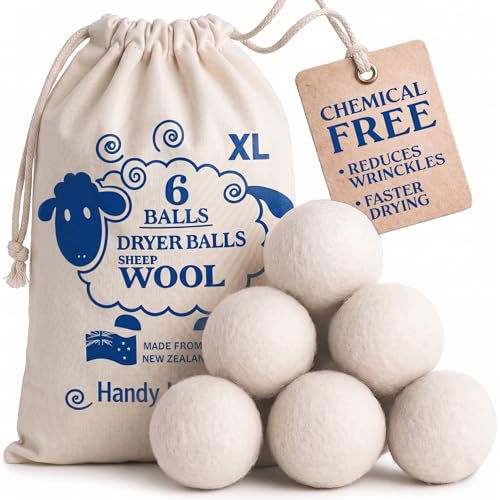
The straightforward New Zealand wool six-pack, tightly rolled and felted rather than loosely wound. Handy Laundry says the balls are 100 percent wool with no synthetic filler and will last more than a thousand dryer loads. They lift and separate laundry to shorten dry time and cut static, and they make a steady thumping that some households notice through a floor. Six extra-large balls is the right count for a full drum.
What stands out
- 100 percent New Zealand wool with no synthetic filler
- Extra-large, tightly felted balls hold their shape well
- Six balls suit a full load for a family
Watch out for
- Loud thumping carries through floors above the laundry
- Can shed lint onto dark clothes for the first few loads
6 Pcs Dryer Balls Laundry Reusable, Soften Fabrics, Reduce Static & Wrinkle

Six 2.4-inch balls molded from TPR, a rubbery plastic, rather than wool. They are quieter than wool and firmer than sponge, and the listing claims they separate clothes, speed drying, reduce wrinkles and keep towels absorbent because they leave no coating. TPR will not absorb water the way wool does, so the drying benefit comes from agitation and airflow rather than moisture transfer. A sensible pick if wool noise is a problem.
What stands out
- Quieter than wool balls in a metal drum
- Leaves no coating, so towels stay absorbent longer
- Six balls at 2.4 inches suit a standard drum
Watch out for
- Does not absorb moisture the way wool does
- Plastic surface does little for embedded pet hair
Chemical Free & Baby Safe! Reusable Wool Dryer Balls XL 6-Pack

A six-pack of extra-large balls made from organic New Zealand wool, hand-felted and sold as chemical-free and baby-safe. The maker says each set lasts more than a thousand loads and replaces boxes of disposable sheets. The balls are dense and hold shape, which is what you want; loose, fluffy balls collapse and stop lifting fabric. Wooly Heroes also leans on the artisan angle, with handmaking by women artisans under responsible practices.
What stands out
- Organic New Zealand wool, hand-felted and suitably dense
- Marketed as chemical-free and safe for baby laundry
- XL size moves more fabric with every tumble
Watch out for
- No stated ball diameter, so fit is guesswork
- Handmade batches vary slightly in size and color
Bienstylife Reusable Laundry Dryer Balls

Four reusable balls in random colors, sold as a quiet alternative to wool. The maker says they soften without noise and also collect hair and lint while drying, and that they preserve towel absorbency because they leave no residue. Four is a modest count; the listing does not give a diameter, so expect them to suit a small or medium load. The random-color packing means you do not choose what arrives.
What stands out
- Quiet in the drum compared with wool balls
- Collects some hair and lint while the load dries
- No residue, so towels keep their full absorbency
Watch out for
- Only four balls, and no diameter is listed
- Random colors may not match your laundry room
Molly's Suds Wool Dryer Balls
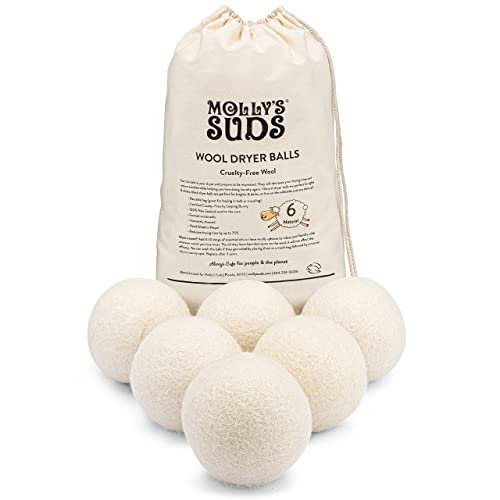
Molly's Suds sells six hand-felted wool balls in a muslin storage bag, made from New Zealand wool sourced from small farms and felted in a fair-wage Nepali workshop. The brand claims up to 30 percent shorter dry time and roughly 1,000 loads per ball, which is three years for an average home. The balls are white and undyed, with natural color variation. It is Leaping Bunny certified and cruelty-free per the label.
What stands out
- Hand-felted wool with a muslin storage bag included
- Made in a fair-wage workshop and Leaping Bunny certified
- Dense felt holds shape through hundreds of loads
Watch out for
- White wool shows lint and dye transfer over time
- Up to 30 percent dry-time claim is optimistic for heavy loads
Wool Dryer Balls 6-Pack L

Six large New Zealand wool balls with a linen storage bag, sold as a chemical-free replacement for liquid softener and sheets. Qiseec claims a 10 to 25 percent shorter dry time, which is a more conservative range than most competitors, and says the balls reduce tangles, wrinkles and lint. They can be scented with essential oil per the listing. The set is a reasonable gift, and the bag keeps the balls together between loads.
What stands out
- Conservative 10 to 25 percent dry-time claim on the bag
- Linen storage bag keeps the whole set together
- Large balls fluff bulky items like quilts and blankets
Watch out for
- Wool can pick up and transfer essential oils unevenly
- Six large balls crowd a compact apartment dryer
Premium New Zealand Wool Dryer Balls

Six hand-felted balls made from organic New Zealand wool, sold as chemical-free and safe for baby clothes and sensitive skin. GroundLuxe says the set contains no fillers and that the company pays a living wage. The balls are dense and undyed, and the listing positions them as a gift set alongside mesh laundry bags and washing machine cleaners. There is no stated diameter or load life, which makes this a pick based on the wool claim rather than numbers.
What stands out
- Made from 100 percent organic New Zealand wool, hand-felted
- No fillers, dyes or added fragrance in the set
- Marketed as safe for baby clothes and sensitive skin
Watch out for
- No diameter or load life stated in the listing
- Six balls only, with no storage bag mentioned
Wool Dryer Balls, New Zealand Dryer Balls Laundry Reusable Reduce Static Cling, Dryer Ball to Reduce Wrinkles

Six wool balls at 2.75 inches, made from New Zealand wool and sold as a replacement for plastic balls and liquid softener. YONSEN states a drying-time reduction of up to 25 percent, which is in line with the more conservative claims in this category, and recommends three to six balls per load. The listing also suggests adding essential oils for scent. It is a mid-size set with a stated diameter, which makes it easier to match to your drum.
What stands out
- The 2.75-inch diameter is stated, unlike many competitors
- Up to 25 percent shorter drying time per the brand
- Gives a clear three-to-six-ball dose for each load
Watch out for
- No load-life estimate is given for the set
- The essential-oil suggestion can leave spots on light fabrics
WoollyPals Dryer Balls (6-Pack, XL Size)

Six extra-large balls at 3 inches, plus a drawstring cotton bag and an instruction sheet. Prushh says the set is reusable for up to 1,000 loads, which is the specific life claim missing from several competitors here. The wool is New Zealand grown, the balls are undyed white, and the listing markets them as hypoallergenic and safe for sensitive skin. The 3-inch size suits blankets and bedding; in a compact dryer, six of them will crowd a small load.
What stands out
- The three-inch extra-large size moves bulky bedding well
- Rated for up to 1,000 loads per set by the brand
- Includes a drawstring cotton storage bag and instructions
Watch out for
- Six large balls crowd a compact apartment dryer
- No stated farm or felting source beyond New Zealand
Bziia Wool Dryer Balls 8-Pack Reusable Natural Fabric Softener for Laundry

An eight-pack of New Zealand wool balls sold as a natural replacement for sheets and liquid softener, with no synthetic fillers, chemicals or fragrance. The set is aimed at households that want enough balls to keep a large drum moving, and Bziia also sells four- and six-packs for smaller machines. There is no stated diameter or load life. Eight is more than most loads need, so expect to keep a few in reserve or split them between two dryers.
What stands out
- Eight balls suit a large drum or two machines
- No synthetic fillers, harsh chemicals or added fragrance
- The brand also offers four- and six-pack sizes
Watch out for
- No diameter or load-life figure in the listing
- Eight is more than a normal single load requires
Buying guide
Wool and plastic do different jobs in the drum
Wool is the only material here that manages moisture. Felted wool takes up water from damp fabric and gives it back into the hot air stream, which keeps humidity moving out of the drum instead of condensing on the door. The ball also tumbles between layers, opening gaps that let heat reach the middle of a packed load. That is a modest effect, not a magic one, and it depends on the ball being dense enough to keep its shape after dozens of cycles. Loose, fluffy balls flatten and stop separating anything. You can feel the difference in your hand: a good ball is firm enough to resist a squeeze, and it stays that way after a wash.
Plastic and TPR balls separate fabric and make less noise, but they shed water rather than absorb it. Bienstylife and PEASUG both lean on that trade: quieter tumble, no wool lint, similar mechanical action. Neither softens by coating, so towels keep their absorbency, and neither does much for pet hair. That is the main reason to choose a ball over a sheet. Match the material to the load: wool for towels and bedding, plastic for synthetics when the thumping bothers you.
Size and count: what a load actually needs
Most sets ship with four to six balls, and that range is about right for a normal family load. Three balls will struggle in a packed drum because they cannot circulate; six in a small dryer just crowd the clothes and thump. Large balls move more fabric per tumble and suit blankets and bedding, while small ones work better in a compact apartment dryer. If a set does not state a diameter, treat the count as a rough guide and start with four, then add until the load tumbles freely rather than balling up. A dryer more than half full is the real constraint; ball count cannot compensate for a drum packed to the door.
The count matters less than the total surface area. Six small balls can do the work of four large ones if they are dense enough to keep moving, which is why stated diameters help. YONSEN's set is 2.75 inches, Prushh's is 3 inches, and Bziia sells an eight-pack for larger drums. More balls help a bulky load; they do not fix an overloaded dryer. Start with four to six and add a couple if the laundry still clumps in one corner.
Wool quality: felting, sourcing, and shedding
The difference between a good wool ball and a bad one is density. Wool that has been tightly rolled and felted holds its shape for hundreds of loads; wool that has been loosely wound around a core collapses in a month and leaves lint on everything dark. Hand-felting is a decent signal, though not a guarantee. Molly's Suds hand-felts New Zealand wool in a fair-wage Nepali workshop and ships six balls in a muslin bag; Handy Laundry rolls extra-large balls from New Zealand wool with no synthetic filler. Both are the dense kind. Some balls hide a synthetic core under a thin wool wrap, which is why they feel light for their size. Weight in the hand is the quickest test.
Sourcing claims are worth reading but hard to verify. Wooly Heroes says its wool is organic and its balls are handmade by women artisans; Qiseec says pure New Zealand wool and ships a linen storage bag. What you can check at home is shedding. A new wool ball will drop some fibers for the first few loads, especially on dark clothing, and that is normal. A ball that keeps shedding after a month, or one that has compressed to half its size, is not going to last the thousand loads the box promised. If you cannot find the farm, look for a brand that names the country and the felting process, which is at least checkable.
Static, drying time, and the claims worth believing
Dryer balls do reduce static, but they do it by keeping fabrics apart and cutting overdrying rather than by conducting charge away like a coated sheet. In humid weather the effect is barely noticeable; in a dry winter house it helps, and it will not match a sheet on a fleece blanket. The honest expectation is fewer clingy synthetics and less need to run a second cycle. If static is your only problem, a sheet is the more direct tool. If you want softer towels that still absorb water, balls are the better answer. Balls also make a useful diagnostic: if a load with six of them still comes out damp in the middle, the drum is overloaded.
Drying-time claims range widely. Handy Laundry says up to 25 percent shorter cycles, Molly's Suds says up to 30 percent, and Qiseec makes the more conservative claim of 10 to 25 percent. Treat all of them as best-case numbers measured against an overloaded dryer. A loosely packed load with six dense balls will dry faster than the same load without them; a tightly packed drum with three balls will not. The savings come from airflow, so load size matters as much as the product. The other variable is how wet the clothes are going in; a fast spin cycle does more for dry time than any accessory.
Frequently asked questions
How many wool dryer balls should I use?
Start with four for a normal load and six for bedding or a large family wash. The balls need room to tumble between layers, so a crowded drum defeats them. If the load balls up in one corner, add a ball or two; if the drum is packed tight, split the load instead.
Do wool dryer balls really reduce drying time?
They can, by 10 to 25 percent in a loosely packed load, because they separate fabric and improve airflow. The bigger the load and the wetter the clothes, the less difference they make. Claims above 30 percent assume ideal conditions and should not be treated as typical.
Do dryer balls get rid of static?
They reduce it, mostly by cutting overdrying and keeping layers apart. They do not leave a conductive coating like a sheet, so a fleece blanket in dry air can still crackle. Dry synthetics separately, use a lower heat setting, and pull the load while it is slightly damp.
How long do wool dryer balls last, and how do I clean them?
Dense felted balls typically last hundreds to around a thousand loads. Rinse them occasionally in warm water and let them air-dry fully; a damp ball left in the drum can smell musty. Do not put them through a hot wash cycle, which encourages more felting and shrinkage.
Can I add essential oil to dryer balls?
You can, but apply a drop to a cloth or a cotton pad rather than the ball. Wool holds oil and can transfer it to the next load, leaving spots on light fabrics. If scent matters, use one dedicated ball and keep it away from whites and delicates.
Verdict
Molly's Suds takes the top spot. Six dense hand-felted balls, a storage bag and a sourcing story that holds up make it the set to buy if you want wool and nothing else. Handy Laundry is the value pick for a straightforward New Zealand wool six-pack that does the same physical work without the extras, and Prushh is the upgrade if you want a stated 3-inch size, a 1,000-load claim and a cotton bag.
Choose GroundLuxe for organic wool in a simple six-pack, YONSEN if you want a stated 2.75-inch diameter, Bziia for an eight-pack, and PEASUG or Bienstylife if wool noise is the problem rather than dryness.