The laundry room usually makes this decision before you do. If there is a gas stub behind the old dryer, the previous owner already paid for the hard part, and a gas replacement is the cheaper install. If there is a 240-volt outlet and no gas pipe, the arithmetic flips, and an electric dryer is the obvious choice even when gas costs less per load.
Both machines dry clothes with heat and a fan. The difference is where the heat comes from and what the house has to supply. Gas burns at a burner, electric resistance heats a coil, and a heat pump moves heat from one place to another instead of generating it. Each approach carries a different install cost, a different running cost and its own set of failure points.
This guide compares the two fuels on the things that actually vary: the circuit, the vent, the per-load cost and the conversion rules. It then looks at eight gas dryers that make the gas case, from a 7.0 cubic foot Kenmore to an 8.0 Electrolux. We compared specifications and owner reports rather than running timed tests.
If you are building or renovating, run both a gas line and a 240-volt circuit while the walls are open. It costs less now than either retrofit later, and it keeps your options open when the dryer dies.
Top picks at a glance
GE GTD48GASWWB 7.2 cu. ft. Gas Dryer with Up to 120 ft. Venting and Extended T
Check price on AmazonElectrolux ELFG7637AT 8 cu. ft. Titanium Front Load Perfect Steam Gas Dryer wi
Check price on AmazonGE 7.8 cu.ft. Smart Front Load Gas Dryer in Carbon Graphite with Steam and San
Check price on AmazonCompare the shortlist
| Model | Type | Capacity | Key feature | Amazon |
|---|---|---|---|---|
| 1. GE GTD48GASWWB 7.2 cu. ft. Gas Dryer with Up to 120 ft. Venting | Gas | 7.2 cu ft | Capacity | Check price |
| 2. Electrolux ELFG7637AT 8 cu. ft. Titanium Front Load Perfect Stea | Front-load | 8 cu ft | Steam | Check price |
| 3. GE 7.8 cu.ft. Smart Front Load Gas Dryer in Carbon Graphite with | Front-load | 7.8 cu ft | Steam | Check price |
| 4. Kenmore 7.4 Cubic Feet Front Load Gas Dryer with Steam Technolog | Front-load | 7.4 cu ft | Steam | Check price |
| 5. Speed Queen ADA 7 Cu. Ft. Sanitizing Gas Dryer with Pet Plus in | Gas | 7 cu ft | Sanitize cycle | Check price |
| 6. GE Profile PTD60GBSRWS 7.4 Cu. Ft. White Front Load Gas Dryer | Front-load | 7.4 cu ft | Sensor drying | Check price |
| 7. Kenmore 29" Front Load Gas Dryer with Wrinkle Guard and 7.0 Cubi | Front-load | — | Quick cycle | Check price |
| 8. 7.4 cu. ft. Ultra Large Capacity Smart wi-fi Enabled Front Load | Front-load | 7.4 cu ft | Connected controls | Check price |
Detailed reviews
GE GTD48GASWWB 7.2 cu. ft. Gas Dryer with Up to 120 ft. Venting and Extended Tumble

GE's GTD48GASWWB is the model to pick when the vent run is the hard part of the install. It is rated for up to 120 feet, runs heavy, normal, delicate and timed cycles, and adds Extended Tumble after the heat stops. At 44 inches tall and 107 pounds it is the tallest and lightest full-size machine here, and it needs only a standard 120-volt outlet.
What stands out
- Rated for vent runs of up to 120 feet
- The dryer runs on a standard 120-volt household outlet
- The lightest full-size cabinet here at just 107 pounds
Watch out for
- No steam cycle or sanitize option is offered at all
- The tall cabinet needs clearance above the lid
Electrolux ELFG7637AT 8 cu. ft. Titanium Front Load Perfect Steam Gas Dryer with Predictive Dry and Instant Re

Electrolux's 8.0 cubic foot Titanium model is the largest and most feature-rich dryer in this comparison. Predictive Dry and LuxCare Dry adjust the cycle from moisture readings, Perfect Steam and Instant Refresh handle creases, and eleven programs include allergen, towels and activewear. The 15-minute fast dry is useful for a school uniform at bedtime. It measures 38 by 32 by 27 inches and weighs 126 pounds.
What stands out
- Eight cubic feet is the largest drum in this guide
- Eleven separate programs cover allergen, towels and activewear loads
- A fifteen-minute fast dry cycle rescues small, urgent loads
Watch out for
- The thirty-two-inch depth needs a genuinely deep alcove
- It needs an LP conversion kit to run on propane
GE 7.8 cu.ft. Smart Front Load Gas Dryer in Carbon Graphite with Steam and Sanitize GFD65GSPVDS

The GE 7.8 cubic foot model combines steam and a sanitize cycle, which is unusual at this size. It uses an aluminized steel drum, pairs with a SmartDispense washer, and is ENERGY STAR certified with about 687 kWh of estimated annual electrical use. It is 28 inches wide rather than the usual 27, and 32 inches deep at 134 pounds, so check both dimensions against the opening.
What stands out
- Steam and sanitize cycles share a 7.8 cubic foot drum
- It is ENERGY STAR certified with a stated annual energy figure
- An aluminized steel drum resists rust over many years
Watch out for
- A twenty-eight-inch width complicates matching a typical washer
- The deep cabinet and premium features raise the cost
Kenmore 7.4 Cubic Feet Front Load Gas Dryer with Steam Technology, White
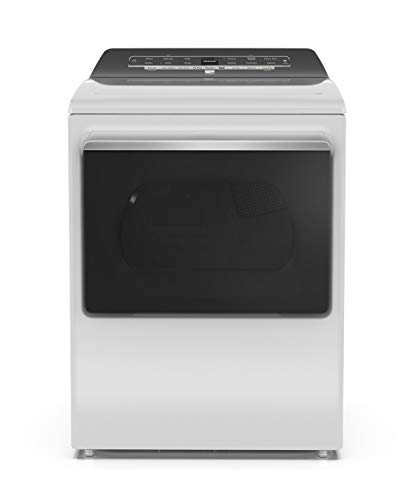
Kenmore's 7.4 cubic foot gas dryer brings steam and a drop-down door that works as a folding shelf. It is ENERGY STAR certified, measures 40.88 by 29.88 by 27 inches and weighs 120 pounds. The listing states that the power cord and exhaust vent are not included, so add both to the install budget. For a gas household, it is a straightforward mid-size option.
What stands out
- The steam cycle reduces both wrinkles and fabric wear
- A drop-down door doubles as a folding and sorting surface
- It is ENERGY STAR certified with a 7.4 cubic foot drum
Watch out for
- Power cord and vent kit are sold separately
- The forty-inch height may block a low window frame
Speed Queen ADA 7 Cu. Ft. Sanitizing Gas Dryer with Pet Plus in Matte Black

Speed Queen's 7.0 cubic foot sanitizing gas dryer is the durability pick. Pet Plus, anti-static and over-dry protection address hair, cling and heat damage, and Extended Tumble keeps the drum moving after the cycle. The matte black finish hides fingerprints, and the listed height of 42.75 inches means it will not fit under a standard counter despite the ADA name. It weighs 140 pounds.
What stands out
- The sanitizing cycle suits bedding and heavy pet laundry
- The over-dry protection guards fabrics against unnecessary heat damage
- The anti-static feature reduces cling and loose household lint
Watch out for
- It is the heaviest cabinet here at 140 pounds
- No steam refresh and no smart controls at all
GE Profile PTD60GBSRWS 7.4 Cu. Ft. White Front Load Gas Dryer

GE Profile's 7.4 cubic foot gas dryer keeps to sensor drying, a sanitize cycle and ENERGY STAR certification. The listing gives a weight of 122.47 pounds but no cabinet dimensions, so confirm height, width and depth before ordering. It is the least documented machine in this group, and the case for it is the Profile finish and the sanitize cycle rather than a long feature list.
What stands out
- Sensor Dry ends each cycle at the measured moisture level
- A sanitize cycle is included for bedding and towels
- It is ENERGY STAR certified at 7.4 cubic feet
Watch out for
- No cabinet dimensions appear anywhere in the product listing
- No steam cycle is named anywhere in the listing
Kenmore 29" Front Load Gas Dryer with Wrinkle Guard and 7.0 Cubic Ft. Total Capacity, White
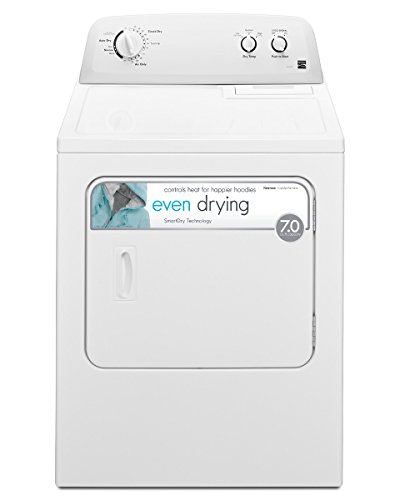
Kenmore's 7.0 cubic foot gas dryer is the budget entry in this comparison. SmartDry sensors adjust heat and time, four temperatures plus air dry cover everyday fabrics, and Wrinkle Guard tumbles for up to 40 minutes after the cycle. It is 29 inches wide and 28 deep, and the listing gives two conflicting heights, 36 and 43 inches, so measure the actual cabinet.
What stands out
- Wrinkle Guard keeps tumbling for forty minutes after the cycle
- SmartDry sensors adjust both heat and time automatically
- The narrow cabinet depth suits shallow closets and alcoves
Watch out for
- Two conflicting cabinet heights appear in the same listing
- No steam, sanitize or smart features are offered here
7.4 cu. ft. Ultra Large Capacity Smart wi-fi Enabled Front Load Gas Dryer with Built-In Intelligence

LG's DLG3601V puts a 7.4 cubic foot gas drum in a 27-inch cabinet and adds Wi-Fi and built-in intelligence. It measures 39 inches tall and 31 deep, so it slots into more alcoves than the 32-inch Electrolux. The listing is thin beyond the model number, which makes the smart features harder to verify. Confirm the LP kit and exact dimensions with the seller.
What stands out
- The 7.4 cubic foot drum fits a standard 27-inch cabinet
- Wi-Fi and built-in intelligence are both included as standard
- A thirty-one-inch depth fits more laundry alcoves than rivals
Watch out for
- No steam or sanitize cycle is named in the listing
- The specifications are sparse beyond the model number itself
Buying guide
The outlet decides more than the brochure
A gas dryer plugs into a standard 120-volt outlet and gets its heat from a burner. An electric dryer needs a 240-volt, 30-amp circuit, which means a dedicated run of heavy cable from the panel. If the laundry room already has the right outlet, that difference costs nothing. If it does not, the electrician's bill can exceed the price gap between the two machines by a wide margin. An electrician can tell you in ten minutes whether the panel has room, and that answer is worth having before you shop.
The gas side has its own fixed cost: a shutoff valve, a connector and a vent. Most homes with gas service already have the stub, but a new drop is plumber work and may need a permit. An electric install needs the circuit and still needs the vent, because an electric dryer also pushes moist air outside. Neither fuel avoids the duct. Permits and inspection add time to either route, and the timeline matters if the old dryer has already died.
Cost per load, with the variables named
Per load, gas usually costs less than electric resistance heat because gas is priced lower per unit of energy in most US markets. The gap is not universal. In places with cheap hydroelectric power and expensive propane, an electric dryer can win. Heat pump dryers change the comparison again by moving heat rather than generating it, which cuts energy use sharply at the cost of speed. Efficiency ratings help here, but only if you compare the same metric across both fuels.
Fixed charges muddy the picture. Propane delivery fees, tank rental and minimum fills can erase a per-load advantage, and electric rates vary by time of day in some regions. The honest method is to take your last twelve months of bills, find the per-unit price for each fuel, and compare the annual energy figures for the two dryers. That takes twenty minutes and beats any general rule. Time-of-use plans can make an evening load cost more than a morning one on the electric side.
Dry times and fabric care
A gas burner reaches temperature quickly, and so does an electric resistance element; both dry a normal load in roughly the same time when drum sizes match. The real difference is the heat pump, which runs cooler and slower, often taking noticeably longer per load. If speed matters because you run three loads on a Sunday, a heat pump may frustrate you even though it saves energy. Drum size and airflow still set the floor, which is why a 7.0 machine and an 8.0 machine behave differently on bedding.
Fuel does not protect fabric; temperature and cycle length do. A gas dryer on high heat will fade a dark shirt as surely as an electric one. Sensor drying, a low-heat setting and prompt unloading matter more than the fuel label. That is why the gas models below are worth comparing on sensors and steam rather than on the burner alone. Sorting by fabric weight does more for a mixed load than any single setting on the panel.
Safety and venting
A gas dryer produces carbon monoxide and water vapor, so the vent is a safety device, not just a convenience. The duct must run outdoors, stay clear of lint, and end in a damper that closes when the dryer stops. An electric dryer also vents moisture, but it has no combustion byproducts, so a blocked duct is an efficiency and mold problem rather than an immediate poisoning risk.
That does not make electric dryers risk-free. Lint is flammable, and a duct packed with it is a fire waiting for a hot cycle. Clean the filter every load, vacuum the duct annually, and check the exterior flap. With gas, add a carbon monoxide alarm near the laundry area and have the connector and shutoff inspected when you move in.
Heat pump dryers complicate the safety discussion in a useful way. Most are ventless, so they do not push air outside, and they run at lower temperatures. That makes them attractive for apartments and closets without a duct, but they need a drain or a water tank emptied by hand. They also cost more up front, which is why they have not replaced either fuel in most homes.
Converting, moving, and the resale question
A gas dryer can be converted to propane with a manufacturer's kit; an electric dryer cannot be converted to gas at all. Going the other way, from gas to electric, means adding a 240-volt circuit, which is often the most expensive part of a renovation. If you rent, ask before swapping fuels: the landlord owns the infrastructure, and the lease may prohibit it. A gas line that has been capped for years should be tested before it is put back into service.
Resale favors whichever fuel the house already has. A buyer with a gas stub will expect a gas dryer, and a 240-volt outlet signals an electric one. Matching a dryer to the washer you already own is mostly about width and stacking kits, not fuel, though a paired set from the same brand usually stacks more predictably. Measure the opening before you fall for a finish, because neither fuel makes a 30-inch cabinet fit a 27-inch gap.
Frequently asked questions
Is gas or electric cheaper to install?
Whichever matches the existing hookup. If the laundry room has a gas stub and a 120-volt outlet, a gas dryer needs only a connector and vent. If it has a 240-volt circuit, an electric dryer is cheaper to install. Adding a new gas line or a new 240-volt circuit is the expensive scenario in either direction.
Do gas dryers dry faster than electric?
Not meaningfully, when both use resistance heat and similar drums. A gas burner and an electric element both reach temperature quickly. Heat pump dryers are the slow exception. Load size, moisture sensors and vent condition affect drying time more than the fuel does.
Can I convert an electric dryer to gas?
No. There is no conversion kit that turns an electric dryer into a gas appliance, because the burner, gas valve and venting logic are designed in from the start. If you want gas, buy a gas dryer and have a line run. Converting the other way, gas to propane, is possible with a manufacturer's kit.
Which is safer, a gas or electric dryer?
Both are safe when installed correctly. Gas adds combustion, so it needs a proper vent, a leak-free connector and a carbon monoxide alarm. Electric adds a high-current circuit, so it needs correct wiring and a compatible outlet. Lint and blocked ducts are a fire risk for both, which makes cleaning the filter the most important habit.
Do gas dryers need a 240-volt outlet?
No. A gas dryer uses a standard 120-volt outlet for the controls, igniter and drum motor; the heat comes from the burner. That is one reason a gas install can be simpler where a stub already exists. An electric dryer is the one that needs the 240-volt, 30-amp circuit.
Verdict
For a house with a gas stub, the Electrolux ELFG7637AT is the best machine here: 8.0 cubic feet, Predictive Dry, Perfect Steam and eleven programs. The GE GTD48GASWWB is the value pick when the duct run is long, and the GE 7.8 is the upgrade for anyone who wants steam and sanitize in one cabinet.
If there is no gas line, do not build one just to buy a dryer. A 240-volt electric model will cost less to install and dry just as well. Choose gas when the hookup exists, the vent is sound and the local fuel price favors it; choose electric when the circuit is already there. The fuel matters less than the install behind it.