A ventless dryer looks like the easy appliance to install. There is no duct to cut, no roof penetration and no lint run to the outside, so the job sounds like sliding a box into a closet and plugging it in. Then the machine arrives, and the last three feet turn out to be the whole project: the receptacle is the wrong shape, the closet floor slopes toward the hall, and the drain hose has nowhere to go but up.
The order of work matters more than the tools. Electrical comes first, because a 240-volt circuit is the one task most owners cannot do themselves and the one that takes the longest to schedule. Leveling comes second, because a heat-pump dryer that leans will vibrate, and vibration is what makes a stacked pair walk. Water comes third, once you know whether the machine will use a tank or a hose. Do those three in that order and the actual placement takes twenty minutes.
The machines covered here are all compact ventless dryers in the 4.0 to 4.4 cu. ft. range, from LG, Midea, Samsung, Electrolux, Techomey, Smad and Bosch. We compared specifications, features and owner reports to sort out what each one needs before the first load.
Top picks at a glance
LG DLHC1455W 24 in. W 4.2 Cu. Ft. Ventless Stackable Compact Smart Electric Dr
Check price on AmazonMidea Heat Pump Ventless Front Load Dryer Stackable 4.4 Cu.ft White
Check price on Amazon800 Series 24 in. 4 cu. ft. Stackable Ventless Compact Front Load Smart Electr
Check price on AmazonCompare the shortlist
| Model | Type | Capacity | Key feature | Amazon |
|---|---|---|---|---|
| 1. LG DLHC1455W 24 in. W 4.2 Cu. Ft. Ventless Stackable Compact Sma | Ventless | 4.2 cu ft | Sensor drying | Check price |
| 2. Midea Heat Pump Ventless Front Load Dryer Stackable 4.4 Cu.ft Wh | Heat pump | 4.4 cu ft | Sensor drying | Check price |
| 3. Samsung 4.0 cu. ft. Compact Ventless Heat Pump Dryer with AI Sma | Heat pump | 4.0 cu ft | Sensor drying | Check price |
| 4. Electrolux 24 in. 4.0 cu. ft. Compact Stackable Electric Ventles | Ventless | 4.0 cu ft | Stackable | Check price |
| 5. Techomey 4.4 Cu.Ft Ventless Heat Pump Clothes Dryer, 24" Compact | Heat pump | 4.4 cu ft | Sensor drying | Check price |
| 6. Smad 23.4" Ventless Heat Pump Dryer, 4.4 Cu.Ft Front Load Clothe | Heat pump | 4.4 cu ft | Sanitize cycle | Check price |
| 7. 800 Series 24 in. 4 cu. ft. Stackable Ventless Compact Front Loa | Ventless | 4 cu ft | Connected controls | Check price |
Detailed reviews
LG DLHC1455W 24 in. W 4.2 Cu. Ft. Ventless Stackable Compact Smart Electric Dryer in White with Dual Inverter

LG's 24-inch ventless dryer fits 4.2 cu. ft. into a cabinet meant for closets and small laundry corners. Dual inverter heat-pump technology removes the duct, fourteen programs cover the fabric mix, and Sensor Dry ends the cycle on moisture. ThinQ adds remote start and alerts. For installation, the listing's dimension fields are the problem: they read ten inches on every side, an obvious error, so request the real cabinet measurements before you build a stack or cut a shelf.
What stands out
- 4.2 cu. ft. drum in a true 24-inch cabinet
- Fourteen drying programs, each ended by a moisture sensor
- ThinQ adds remote start plus end-of-cycle alerts on your phone
Watch out for
- Listing dimensions read ten inches on every side
- Voltage is not stated in the product bullets
Midea Heat Pump Ventless Front Load Dryer Stackable 4.4 Cu.ft White

Midea's 4.4 cu. ft. heat pump is the most install-friendly listing in the group because it states 240 volts and warns that the cord is sold separately. A humidity sensor sets the cycle, Wrinkle Care tumbles intermittently for about 90 minutes after the load is dry, and the machine is ENERGY STAR qualified. The cabinet measures 23.4 inches wide, 25.7 deep and 33.5 tall, a standard compact footprint for a 24-inch stack. Add the cord to the order before delivery day.
What stands out
- 240-volt requirement stated plainly in the product listing
- ENERGY STAR qualified, with a humidity sensor onboard
- Cabinet dimensions published, which makes the install easier
Watch out for
- Power cord is not included in the box
- No cabinet weight is published for upstairs moves
Samsung 4.0 cu. ft. Compact Ventless Heat Pump Dryer with AI Smart Dial, Wi-Fi Connected, Smart Dry Technology
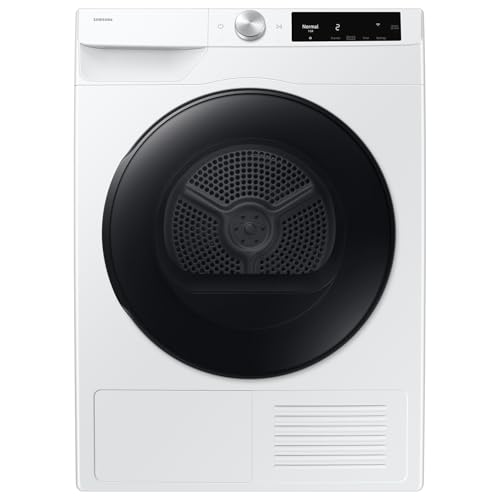
Samsung's 4.0 cu. ft. heat pump is the lightest machine here at 110.2 pounds, which matters when the laundry closet is upstairs or the stairwell turns. An AI Smart Dial learns your cycle habits, SmartThings handles alerts and remote start, and Sensor Dry adjusts time and temperature. It is ENERGY STAR certified. The listing gives no cabinet dimensions and no voltage, so both need confirming before the delivery crew arrives and before an electrician quotes the circuit.
What stands out
- Lightest cabinet in this group at 110.2 pounds
- SmartThings alerts and remote start from a phone
- Sensor Dry control with ENERGY STAR certification included
Watch out for
- No cabinet dimensions published anywhere in the listing
- Voltage requirement is not stated in the bullets
Electrolux 24 in. 4.0 cu. ft. Compact Stackable Electric Ventless Dryer in White with Instant Refresh ELFE4222

Electrolux's 24-inch ventless dryer pairs a 4.0 cu. ft. drum with twelve cycles, including towels, delicates, jeans and heavy duty settings, plus Instant Refresh between wash days. The cabinet is 23.1 inches wide, 24.53 deep and 32.12 tall, the shortest and narrowest here, which helps in a closet with a low header. It weighs 178.6 pounds, the heaviest in the group, so plan a second pair of hands and a clear path. The listing gives no voltage detail.
What stands out
- Narrowest cabinet in this group at 23.1 inches
- Twelve cycles, including Instant Refresh between full washes
- Fits low closet headers at 32.12 inches tall
Watch out for
- Heaviest machine on the list at 178.6 pounds
- No voltage or venting detail anywhere in the listing
Techomey 4.4 Cu.Ft Ventless Heat Pump Clothes Dryer, 24" Compact 120/240V Electric Front Load Drying Machine,

Techomey's 4.4 cu. ft. heat pump lists sixteen cycles and a sensor that pauses the program when the load reaches the selected dryness. The brand says process air stays below 50 degrees Celsius, which is gentle on wool and delicates, and the cabinet is sized to stack on a matching washer. Two install details come from the listing: the tank must be emptied after each use or the program pauses, and the dryer arrives with a four-prong cable that needs an adapter on a three-prong outlet.
What stands out
- Sixteen cycles with moisture sensing and automatic stop
- Low process temperature protects wool and other delicates
- Stackable 23.4 by 25.7 by 33.5 inch cabinet
Watch out for
- Tank must be emptied after every load or it pauses
- Four-prong cable may need an adapter on three-prong outlets
Smad 23.4" Ventless Heat Pump Dryer, 4.4 Cu.Ft Front Load Clothes Dryer with Wrinkle Care,10KG Load, 120/240V,

Smad's 4.4 cu. ft. heat pump carries a 10 kg load rating, sixteen programs, wrinkle care and a sanitize cycle. The LED display shows cycle status, and the cabinet measures 25.7 inches deep, 23.4 wide and 33.5 tall, matching the Midea and Techomey footprint for a stacked pair. The title claims 120/240V, but the listing never explains how the lower voltage is configured, so get that answer in writing before the electrician starts.
What stands out
- 4.4 cu. ft. drum rated to a 10 kg load
- Sixteen programs plus a sanitize cycle for bedding
- Stackable footprint that matches several common 24-inch washers
Watch out for
- 120/240V claim is never explained in the listing
- No cabinet weight or cycle time figures published
800 Series 24 in. 4 cu. ft. Stackable Ventless Compact Front Load Smart Electric Dryer in Pearl Steel, Energy

Bosch's 800 Series is a 24-inch, 4 cu. ft. stackable ventless dryer in Pearl Steel, ENERGY STAR rated and described as smart. The listing is the least useful here: one placeholder feature bullet and dimension fields of 23 inches high, 35 long and 27 wide that contradict the 24-inch title. Before installing one, get the cut sheet from Bosch and confirm the cabinet size, the voltage and the cord type. The brand's compact laundry reputation is good, but the page will not carry an install plan.
What stands out
- 24-inch stackable cabinet in a Pearl Steel finish
- ENERGY STAR rating claimed in the product title
- Bosch has decades of experience with compact laundry
Watch out for
- Only feature bullet is placeholder text with no detail
- Listed dimensions contradict the 24-inch description in the title
Buying guide
Before the Box Comes Inside
Measure the path into the room before you measure the closet. A 24-inch cabinet has to clear the front door, the hallway, the stair landing and the laundry room doorway, and the tightest of those is the number that matters. Measure the door frame with the door open, not the door itself, and check the turn at the top of any stair. Then measure the closet at floor, waist and shoulder height, because a shelf, a rod or a baseboard usually narrows the opening somewhere. Write the numbers on a sketch and keep it with the delivery paperwork. A cheap laser measure is fine, but a pencil mark on the frame is what the installer will actually trust when the truck arrives.
Clear the space before the truck arrives. Remove the closet doors and their hinges, take out the shelf and rod, and pull up anything that blocks the floor. If the old appliance is still there, disconnect it the day before and cap the water lines. Have a level, a tape, a flashlight, a bucket and a set of nut drivers within reach. The delivery crew will place the machine, but they will not level it, connect a drain hose or move a shelf, and a dryer sitting in the hallway while you look for a screwdriver is how a one-hour job becomes a three-day one. Put the manual on the counter, not in a drawer; you will need the clearance figures at least twice.
Power, Cord and Breaker
This is the step to settle first, because it is the only one that may need a licensed trade. Midea states 240 volts and sells the power cord separately, so the cord has to be on hand before the machine can be tested. Techomey ships with a four-prong cable and notes that a three-prong setup needs an adapter. Techomey and Smad both advertise 120/240V in their titles without explaining how the lower voltage is configured. Samsung, LG, Electrolux and Bosch do not state voltage in their bullets at all. Confirm the requirement for your exact model in writing, then match it to the receptacle on the wall. An adapter that changes the plug shape does not change the circuit behind it.
A dedicated circuit is the safe assumption. A dryer that shares a circuit with a microwave or a window air conditioner will trip the breaker mid-cycle, and an extension cord is not an answer for a machine that draws current for ninety minutes. Have an electrician check the panel for a spare slot before delivery day, because a full panel turns a simple install into a service upgrade. Ask for the work to be permitted and inspected where local rules require it. Photograph the receptacle and the breaker label, and keep both pictures with the manual for the next owner of the house. If the panel is in a finished basement, ask whether the electrician will need to open the wall.
Leveling, Stacking and Clearance
Set the machine in place, then level it before you connect anything. Most dryers have adjustable front feet and a lock nut, and the goal is a cabinet that does not rock when you press a corner. A heat-pump dryer runs a compressor, so a lean shows up as a low hum that travels through the floor. Check front to back and side to side, then tighten the lock nuts. If the machine sits on a wooden floor over a crawl space, a plywood pad spreads the load and quiets the drum. On a concrete floor, isolation feet do the same job for less money. A four-foot level is better than a phone app, and a second person is better than either.
Stacking adds two more steps. Use the manufacturer's kit for the pair, bolt the kit to the washer, and set the dryer on the kit rather than on the washer top. Strap the top of the dryer to wall structure if the manufacturer allows it, and recheck the level after a week of use. Leave the clearance the manual specifies behind the cabinet for the cord and hose, and enough room in front for the door to open past 90 degrees. The Bosch listing is the one to be careful with: its dimension fields read 23 inches high, 35 long and 27 wide, which cannot all describe a 24-inch dryer, so get the cut sheet from Bosch before you build a stack around it.
Water: Tank, Drain and the First Test
Every one of these dryers condenses water, so decide where it goes before the first load. The tank is the default: slide it into its slot, make sure the seal seats, and plan to empty it after every cycle. Techomey's listing warns that the program pauses when the tank fills, which is easy to miss on a busy day. If a standpipe or laundry sink is within reach, fit the drain hose instead. Route it with a continuous fall, avoid kinks behind the cabinet, and leave an air gap where it discharges so dirty water cannot siphon back into the drum. Keep a shallow pan under the machine if it sits above a finished ceiling, and check it after the first week.
Then run a test cycle with nothing in the drum, or with a couple of old towels, and watch for three things. Listen for a rattle that means a shipping bolt is still in place or a pan is touching the cabinet. Check the floor around the machine for drips after twenty minutes, especially at the tank seal and the hose connection. Feel the air coming off the cabinet; a heat-pump dryer releases warm, slightly humid air, and a closet with the door shut will hold it. If the room feels damp, open the door, add a louver or run a fan before the first real load. Write the cycle time down; it becomes the baseline for every complaint later.
The First Load and the Habits That Follow
The first real load will probably take longer than you expect. Heat-pump dryers run at low temperature, and 80 to 100 minutes is normal for a mixed load, with towels and denim at the top of that range. Do not judge the machine by the first cycle in a cold room. Sort by fabric weight rather than color, keep the drum about two-thirds full, and clean the lint screen before every load. A packed drum blocks airflow, and blocked airflow is the difference between a 90-minute cycle and a two-hour one that leaves the middle of the load damp. Hang or fold the load as soon as the cycle ends, because a warm drum left closed is a wrinkle press with a lid.
Maintenance is mostly about lint and the coil. The screen catches the obvious fibers; the condenser area behind it collects a finer felt that quietly raises cycle times. Check it monthly and clean it as the manual directs, usually with a soft brush or a rinse. Empty and rinse the tank, wipe the door gasket, and leave the door ajar between loads so the drum dries. If the machine starts taking longer, check the screen, the coil and the load size in that order before calling for service. Most slow-dryer complaints end at one of those three. Keep a log of cycle times for the first month; it makes a warranty call much easier to argue with a service desk.
Frequently asked questions
How long does it take to install a ventless dryer?
The physical installation takes about an hour if the circuit, the space and the drain are ready. The electrical work is the variable: adding a 240-volt circuit can take a day or more to schedule. Measure, confirm the voltage and clear the closet first, then the placement and leveling go quickly.
Can I install a ventless dryer myself?
You can place, level and connect one, but the circuit is a job for an electrician in most homes. A 240-volt dryer circuit involves the panel, the breaker and the wire gauge, and a mistake there is a fire risk. Have the circuit installed and inspected, then do the rest yourself with the manual in hand.
Does a ventless dryer need a plumber?
No, unless you want a permanent drain line. The tank is a manual solution that needs no plumbing at all. A drain hose to a standpipe or laundry sink is a simple connection, but it needs a continuous fall and an air gap. If a new standpipe has to be added, that is a plumbing job.
What voltage does a ventless dryer need?
It varies by model. Midea states 240 volts and sells the cord separately. Techomey ships a four-prong cable and advertises 120/240V, and Smad makes the same 120/240V claim without explaining it. Samsung, LG, Electrolux and Bosch do not state voltage in their listings. Confirm in writing before you buy.
Why is my new ventless dryer taking so long?
Low-temperature drying is slow by design, so 80 to 100 minutes is normal. Check the lint screen, the condenser coil and the load size before assuming a fault. A cold room, a packed drum or a clogged coil each add time. If the load is still wet, check the sensor and airflow.
Verdict
The Midea is the easiest install of the group on paper: 4.4 cu. ft., a stated 240-volt requirement, a humidity sensor, wrinkle care and ENERGY STAR qualification, with the cord sold separately and no ambiguity about the circuit. The Smad is the value pick for the same drum size and sixteen programs, provided the seller explains its 120/240V claim before delivery.
The LG is the upgrade for a stacked closet, with 4.2 cu. ft., fourteen programs and ThinQ controls, though its listed dimensions are wrong and need confirming. If the machine has to be carried upstairs, the Samsung at 110.2 pounds is the one to choose. For any of them, settle the circuit and the drain route first; the rest is leveling and patience.