The washer stops with a drum full of water, the panel beeps, and a code appears that you have never seen. Most people do the same two things: press start again, then search the code and find six answers that contradict each other. Half of them insist on a new control board. One of them mentions a sock.
The code is rarely cryptic. It reports that a sensor saw something outside its expected range: water that did not drain, water that did not arrive, a load that would not balance, a door that would not lock. What it does not tell you is which of several possible causes is responsible. That is the part you have to work out, and it is usually cheaper than the part the search results suggest.
Machines differ in how much help they offer at that moment. Some show a code and a symbol. Some push the same information to a phone, with the cycle stage and a suggested action. A few show only a blinking light. The difference matters at eleven at night with a wet load sitting in the drum. We compared specifications, features and owner reports for eight washers to see which ones make that moment easier.
Top picks at a glance
Kenmore 4.5 cu. ft. Front Load Washer
Check price on AmazonMidea MLTW41A1BMG 4.1 Cu. Ft. Gray Top Load Washer
Check price on AmazonLG WM4200HWA 5.0 cu ft Front‑Load Washer, Steam Wash, Allergiene™ Cycle, Large
Check price on AmazonCompare the shortlist
| Model | Type | Capacity | Key feature | Amazon |
|---|---|---|---|---|
| 1. Kenmore 4.5 cu. ft. Front Load Washer | Front-load | 4.5 cu ft | Steam | Check price |
| 2. Electrolux 27 in. W 4.5 cu. ft. Front Load Washer with SmartBoos | Front-load | 4.5 cu ft | Steam | Check price |
| 3. BLACK+DECKER 4.1 Cu. Ft. Top Load Washing Machine with Agitator, | Top-load | 4.1 cu ft | Delay start | Check price |
| 4. LG WM4000HBA 4.5 Cu. Ft. Smart Front-Load Washer, High-Efficienc | Front-load | 4.5 cu ft | High efficiency | Check price |
| 5. LG WT8400CW 5.5 Cu. Ft. White Mega Capacity Smart Top Load Washe | Top-load | 5.5 cu ft | Connected controls | Check price |
| 6. LG WM4200HWA 5.0 cu ft Front‑Load Washer, Steam Wash, Allergiene | Washers | 5.0 cu ft | Steam | Check price |
| 7. Midea MLTW41A1BMG 4.1 Cu. Ft. Gray Top Load Washer | Top-load | 4.1 cu ft | Top-load | Check price |
| 8. GE PROFILE 28 Inch Smart Front Load Washer with 4.8 cu. ft. Capa | Front-load | 4.8 cu ft | Connected controls | Check price |
Detailed reviews
Kenmore 4.5 cu. ft. Front Load Washer

Kenmore's 4.5 cubic foot front loader is the straightforward option for someone who wants the code on the machine rather than in an app. It has twelve cycles, five wash temperatures, an Extra Rinse setting and Steam Treat for stained loads, plus Accela Wash for shorter full-size cycles. The LED readout shows time remaining and cycle status. It is ENERGY STAR certified, 27 inches wide and 39.6 inches tall. No connected diagnostics are listed.
What stands out
- Clear LED panel shows cycle status and remaining time
- Twelve cycles cover most everyday fault-free laundry routines
- Extra Rinse helps clear suds-related faults after overdosing
Watch out for
- No app or guided diagnosis is listed for this model
- Manual must be kept on hand to decode any fault
Electrolux 27 in. W 4.5 cu. ft. Front Load Washer with SmartBoost, LuxCare Plus Wash System, Perfect Steam in

Electrolux's 4.5 cubic foot washer pairs SmartBoost, which premixes detergent, with Perfect Steam and an Adaptive Dispenser that accepts pods, liquid or powder. The machine lists more than eleven cycles with separate bleach and softener compartments. At 38 inches tall it is shorter than most front loaders, and the 27-inch cabinet is standard. No app is listed, so fault reporting happens at the panel. The dispenser is the first thing to check if a cycle ends with residue.
What stands out
- Adaptive dispenser reduces detergent-related residue in the drawer
- Perfect Steam adds a hot option for stained or soiled loads
- 38-inch height leaves room under a low counter
Watch out for
- No connected diagnostics or stored fault history available
- Eleven-plus cycles make the printed manual harder to navigate
BLACK+DECKER 4.1 Cu. Ft. Top Load Washing Machine with Agitator, BTLW41MW

The BLACK+DECKER BTLW41MW is a 4.1 cubic foot top loader with an agitator, a stainless steel tub and ten cycles. It has a glass lid, an LED display and a 24-hour delay start, and it runs on 120 volts. At 116.83 pounds it is light enough for two people to move, and the 25.75-inch width fits a narrow alcove. There is no app and no filter to service. When it stops, the display and the manual are the whole diagnostic system.
What stands out
- LED display shows the fault code without a phone
- No pump filter to clog, clean or forget about
- Light cabinet is easy to pull out for inspection
Watch out for
- No fault history or guided troubleshooting on the panel
- Agitator can throw a heavy load off balance
LG WM4000HBA 4.5 Cu. Ft. Smart Front-Load Washer, High-Efficiency Laundry Machine with Wi-Fi Connectivity, Bla

LG's WM4000HBA is a 4.5 cubic foot front loader in black steel with TurboWash 360, ThinQ app control and the Allergiene cycle, which the listing says removes 95 percent of pet dander and dust. The app adds remote start and cycle alerts. The listed dimensions read 42 inches wide and 29 inches tall, which is not plausible for a front loader of this capacity, so confirm the cabinet size with the seller before ordering. The drum and feature set are otherwise conventional LG.
What stands out
- ThinQ app surfaces faults and sends cycle alerts
- Allergiene cycle adds a high-heat, high-rinse wash option
- TurboWash 360 keeps full wash cycles shorter overall
Watch out for
- Listed 42-inch width looks wrong for this machine class
- Black steel finish shows every water spot and smudge
LG WT8400CW 5.5 Cu. Ft. White Mega Capacity Smart Top Load Washer w/EasyUnload
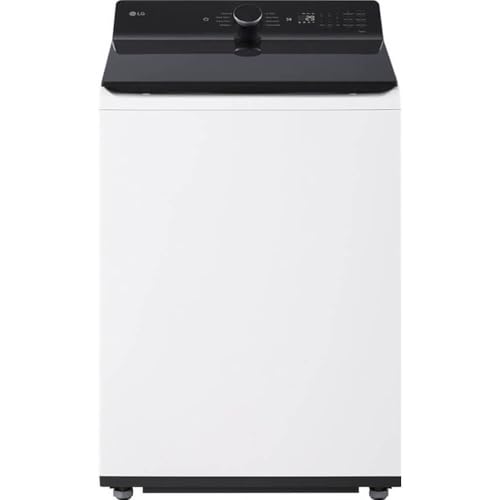
The LG WT8400CW is a 5.5 cubic foot top loader with an EasyUnload design, built-in AI that selects wash settings and a redesigned lid and drum layout. The capacity is the largest here, which means fewer cycles and less wear per week. The listing gives 10 by 10 by 10 inches for all three dimensions, an obvious placeholder rather than a measurement, and the 130-pound weight is the only figure that looks real. Measure the opening before you buy.
What stands out
- 5.5 cubic feet cuts the number of weekly laundry loads
- AI settings remove guesswork from everyday cycle choice
- EasyUnload design simplifies reaching the bottom of the drum
Watch out for
- Listed dimensions are placeholders rather than real measurements
- Large top-load lid needs clearance above the machine
LG WM4200HWA 5.0 cu ft Front‑Load Washer, Steam Wash, Allergiene™ Cycle, Large Capacity, SmartThinQ® Wi‑Fi Ena

The LG WM4200HWA is a 5.0 cubic foot front loader with TurboWash 360, Steam Wash and Allergiene. SmartThinQ brings remote start, notifications and voice control via Google Assistant or Alexa, and the unit is ENERGY STAR certified. Its 27-inch width suits a standard alcove, and the height clears counters. Diagnostics are the strongest part of the package: the app reports status and the panel still shows the code, so you are not dependent on either one alone.
What stands out
- App and panel both report faults and cycle status
- Five cubic feet means fewer cycles every single week
- Allergiene gives bedding a hot, high-rinse wash cycle
Watch out for
- Wi-Fi setup is required to get the full diagnostics
- Large drum is slow to fill for a small load
Midea MLTW41A1BMG 4.1 Cu. Ft. Gray Top Load Washer
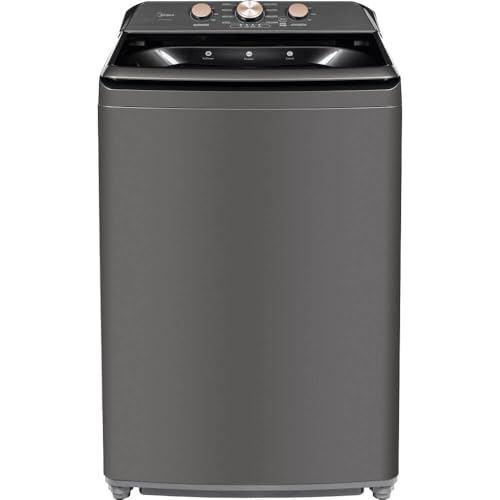
The Midea MLTW41A1BMG is a 4.1 cubic foot top loader with eight presets, auto sensing, a High Water option and a Tub Clean cycle. The control set is small, which makes a fault easier to reproduce and describe. It is 29 inches wide and 46 inches tall, and at 128 pounds it is manageable for two people. No app or fault history is listed. For a rental or a second home, the lack of complexity is the point.
What stands out
- Few modes make faults easier to reproduce and describe
- Tub Clean cycle handles residue in the outer tub
- No filter means one less drain-related cause to check
Watch out for
- No app, fault log or guided diagnosis is listed
- Tall 46-inch cabinet needs overhead clearance for the lid
GE PROFILE 28 Inch Smart Front Load Washer with 4.8 cu. ft. Capacity in White GFW550SSNWW

The GE Profile 4.8 is a 28-inch front loader with SmartHQ Wi-Fi, a 20-minute Quick Wash and a 35-minute Time Saver mode. UltraFresh Vent System with OdorBlock is designed to dry the drum after a cycle, which removes a common cause of musty smells that owners mistake for a drainage fault. The app sends alerts and cycle status. At 39.75 inches tall and 246 pounds, it needs a solid floor and a helper for installation.
What stands out
- SmartHQ explains faults and sends cycle alerts remotely
- UltraFresh vent reduces the moisture that causes musty odors
- Quick Wash gives you a fast test cycle after repair
Watch out for
- 28-inch width needs a wider alcove than standard machines
- Heavy cabinet is awkward for one person to level
Buying guide
A Code Names a Symptom, Not a Part
When a washer reports a drain fault, it knows only that the water level did not fall within the expected time. The pressure switch or float told it so. The machine cannot distinguish between a sock blocking the pump, a kinked drain hose, a clogged filter and a pump that has stopped turning. All four produce the same report, which is why the first step is always physical inspection rather than ordering a part. The code narrows the system. It does not identify the component.
The same logic applies to fill faults, balance faults and door faults. A fill fault can be a closed supply valve, a blocked inlet screen, a kinked hose or a failed valve solenoid. A balance fault is often a single heavy item, such as a bath mat, wrapped into a ball on one side of the drum. A door fault can be a latch that is not engaging, a wire that has come loose or a load pressing against the glass. Reading the code correctly means asking what the sensor measures, then checking the cheapest causes first.
How These Machines Report a Fault
The Kenmore 4.5 and the BLACK+DECKER top loader use conventional panels. The Kenmore has light-touch controls with an LED readout for time remaining and cycle status, and twelve cycles to choose from. The BLACK+DECKER has an LED display, ten cycles and a 24-hour delay. Neither lists an app. When something goes wrong, you read the code on the machine and look it up in the manual.
The connected machines take a different approach. LG's ThinQ app covers the WM4000HBA and the WM4200HWA, and the WT8400CW adds built-in AI that selects settings on its own. GE's SmartHQ covers the Profile 4.8, and Samsung's SmartThings covers the 5.0. These apps show cycle status, send alerts when a cycle stops and, in some cases, offer a diagnosis routine that listens to the machine or reads its fault log. The practical benefit is speed: you learn whether the problem is water, balance or a latch before you start moving appliances.
The Electrolux 4.5 and the Midea sit in between. Neither is listed with app control, but both have clear panels and documented cycle behavior. The Midea's auto sensing and eight presets keep the control set small, which means fewer modes to misinterpret. The Electrolux's eleven-plus cycles come with a longer manual, and its Adaptive Dispenser gives you one more thing to check when a cycle stops early. A simple panel is not automatically easier to diagnose, but it is easier to describe to a technician over the phone.
The Six Fault Families
Nearly every code on a residential washer falls into one of six families. Fill faults mean water did not reach the expected level in time. Drain faults mean it did not leave. Balance faults mean the drum could not distribute the load. Door or lid faults mean the lock did not confirm. Temperature faults mean the water did not heat or the sensor disagreed with the expected value. Communication faults mean two boards stopped talking to each other. Learn the six and most codes become a process of elimination rather than a mystery.
The first four families are usually mechanical or plumbing problems, and they are the ones a homeowner can fix. A fill fault often ends at the inlet screens or the supply valve. A drain fault often ends at the filter, the hose or the standpipe. A balance fault usually ends when you open the door and redistribute the load. A door fault may end with a wiped latch or a straightened strike. The last two families are electrical, and they are where a multimeter and the service manual start to matter more than a wrench.
Communication faults deserve a special note because they look worse than they are. A loose connector on a control board can produce the same code as a failed board, and reseating the harness costs nothing. Before replacing electronics, unplug the machine for a few minutes, check that the connectors are fully seated and look for signs of moisture or insect activity around the board. If the code returns immediately after that, the board or the sensor is the likely culprit, and it is time for a technician.
The Maintenance Behind Most Codes
A surprising share of service calls end with a cleaning task. The pump filter is the first suspect on any front loader that will not drain, and it takes minutes to check once you know where it is. The inlet screens are the first suspect on any machine that fills slowly or times out during fill, especially on well water or after plumbing work. The drain hose is the first suspect when the machine drains and then refills itself, which usually means the hose sits too low and siphons. None of these is a failure of the appliance.
The gasket and the dispenser cause fewer codes and more smells, but they belong in the same routine. A gasket that does not seal can trigger a door fault or a suds fault. A blocked dispenser siphon can leave detergent in the drawer and produce a cycle that finishes with residue on the clothes. If you clean the filter, the screens, the hose, the gasket and the drawer on a schedule, you remove most of the conditions that generate the codes in the first place.
What to Do Before You Book a Repair
Start with a power cycle. Unplug the machine or trip the breaker for five minutes, then restore power and run a short cycle. Control boards latch faults, and a transient voltage dip can leave a code stored after the condition has passed. If the code clears and does not return, note the date and move on. If it returns during the same part of the cycle, you have narrowed the system to that stage, which is exactly what the technician will ask you on the phone.
Then write down the model and serial numbers before you call anyone. They are on a plate inside the door opening or on the back panel, and the serial usually encodes the build date that determines which parts fit. Have the code, the cycle stage, the symptoms and anything unusual, such as a recent move or a plumbing repair, ready. A technician who arrives with the right part saves you a second visit.
Frequently asked questions
What should I do first when a washing machine shows an error code?
Write the code down, then unplug the machine for five minutes and restore power. If the code returns on the same cycle stage, check the obvious mechanical causes for that family: filter and drain hose for a drain code, supply valves and inlet screens for a fill code, load distribution for a balance code. Only then consider parts.
Can I keep using a washer after an error code?
If the code clears and the machine completes a full cycle, yes, but run it while you are home and note whether the code returns. Do not ignore a drain or fill fault that repeats, because the machine may be running the pump dry or letting water overflow. A door lock fault should be treated as a safety issue until it is fixed.
Why does the same code appear for different problems?
Because the sensor reports a condition, not a cause. A drain code means the water level did not fall in time, which can come from a blocked filter, a kinked hose, a failed pump or a pressure switch that reads incorrectly. The code narrows the system. Physical checks identify the part.
Do I need the app to read a fault code?
No. Every machine here displays something on its own panel. The app adds explanation, history and sometimes a guided diagnosis, but the code appears at the machine. If you buy a connected model, confirm that the panel shows the full code rather than a generic symbol, so you are not locked out when the network is down.
When is a code worth a service call?
When it points to a communication, temperature or motor fault and returns after a power cycle, or when you have checked the filter, hoses, screens and load and the symptom persists. Also call if you smell burning or see water near the control board. Continuing to run the machine can turn a repair into a replacement.
Verdict
The LG WM4200HWA is the pick for anyone who would rather read a diagnosis than guess. SmartThinQ reports cycle status and faults to the phone, Steam Wash and Allergiene give you hot, high-rinse options, and the 5.0 cubic foot drum means fewer cycles and fewer chances for something to stop. The Kenmore 4.5 is the value choice, with twelve cycles, five temperatures and a clear LED panel that puts the code in front of you without an app.
The upgrade is the GE Profile 4.8, where SmartHQ alerts and the UltraFresh vent system address both the fault you can see and the moisture problem you cannot. If you prefer the simplest possible machine, the BLACK+DECKER top loader has a plain LED display and no network dependency.