Washing machines rarely fail because the motor wore out. They fail because a pump filter filled with hair, a door gasket held a cup of water for a month, or a detergent drawer turned powder into cement. Those are cheap parts and boring tasks, and they are the difference between a machine that runs eleven years and one that leaves the house at six.
Maintenance is therefore a shopping criterion, not just a chore. A filter behind a hinged door gets cleaned. A filter behind four screws does not. A drum that vents itself after the cycle stays dry; one that seals moisture inside grows a smell that no amount of detergent fixes. The industry sells capacity and cycle count, but the parts you touch between loads decide how ownership actually feels.
The eight machines below all wash well enough. What separates them is access: how easily you can reach the pump filter, pull the dispenser, wipe the gasket and find out what a fault code means. We compared specifications, features and owner reports rather than running our own tests, and we have flagged the listings where a number looks wrong.
Top picks at a glance
Kenmore 4.5 cu. ft. Front Load Washer
Check price on AmazonMidea MLTW41A1BMG 4.1 Cu. Ft. Gray Top Load Washer
Check price on AmazonLG WM4200HWA 5.0 cu ft Front‑Load Washer, Steam Wash, Allergiene™ Cycle, Large
Check price on AmazonCompare the shortlist
| Model | Type | Capacity | Key feature | Amazon |
|---|---|---|---|---|
| 1. Kenmore 4.5 cu. ft. Front Load Washer | Front-load | 4.5 cu ft | Steam | Check price |
| 2. Electrolux 27 in. W 4.5 cu. ft. Front Load Washer with SmartBoos | Front-load | 4.5 cu ft | Steam | Check price |
| 3. LG 4.5 cu. ft. Capacity Smart Front Load Washer with TurboWash | Front-load | 4.5 cu ft | Steam | Check price |
| 4. Midea MLTW41A1BMG 4.1 Cu. Ft. Gray Top Load Washer | Top-load | 4.1 cu ft | Top-load | Check price |
| 5. GE PROFILE 28 Inch Smart Front Load Washer with 4.8 cu. ft. Capa | Front-load | 4.8 cu ft | Connected controls | Check price |
| 6. Samsung 5.0 cu. ft. Extra Large Capacity Smart Front Load Washer | Front-load | 5.0 cu ft | Steam | Check price |
| 7. LG WM4200HWA 5.0 cu ft Front‑Load Washer, Steam Wash, Allergiene | Washers | 5.0 cu ft | Steam | Check price |
| 8. BLACK+DECKER 4.1 Cu. Ft. Top Load Washing Machine with Agitator, | Top-load | 4.1 cu ft | Delay start | Check price |
Detailed reviews
Kenmore 4.5 cu. ft. Front Load Washer

Kenmore's 4.5 cubic foot front loader keeps the maintenance story simple: 12 cycles, five wash temperatures, an Extra Rinse option and Steam Treat for stained loads. Accela Wash shortens full-size cycles, and Cold Clean is there when you want to save energy. The touch controls are flat, which makes them easy to wipe down in a damp room. It is ENERGY STAR certified, 27 inches wide and just under 40 inches tall. No app is listed, so diagnosis happens at the panel.
What stands out
- Extra Rinse helps flush detergent residue out of the drum
- Steam Treat handles stained loads without a long pre-soak
- Flat touch panel wipes clean in seconds with a damp cloth
Watch out for
- No vent or fan to dry the drum after a cycle
- No app or remote diagnosis beyond the panel display
Electrolux 27 in. W 4.5 cu. ft. Front Load Washer with SmartBoost, LuxCare Plus Wash System, Perfect Steam in

Electrolux's 4.5 cubic foot model centers on SmartBoost, which mixes detergent with water before the wash, and Perfect Steam for stains and sanitizing. The Adaptive Dispenser accepts pods, liquid or powder, with dedicated compartments for bleach and softener, and the machine lists more than eleven cycles. At 38 inches tall it fits under a lower counter than most front loaders here, and the 27-inch width is standard. A sensible choice for a household that uses powder and is tired of finding it undissolved.
What stands out
- SmartBoost dissolves powder before the wash cycle actually starts
- Adaptive dispenser accepts pods, liquid or powder detergent
- 38-inch height fits under a lower kitchen-style counter
Watch out for
- No vent cycle to dry the gasket area after washing
- Eleven-plus cycles means a longer manual to learn
LG 4.5 cu. ft. Capacity Smart Front Load Washer with TurboWash

LG's 4.5 cubic foot smart front loader pairs TurboWash with a four-tray dispenser that separates prewash, main wash, bleach and softener. Steam is included for stain removal and refreshing, and SmartDiagnosis lets the machine transmit fault information through a phone. The cabinet is 27 inches wide and 39 inches tall. More trays mean more places for residue to collect, so the drawer needs a monthly soak, but the separation keeps bleach away from softener and makes each dose easier to control.
What stands out
- Four-tray dispenser keeps bleach and softener completely separate
- SmartDiagnosis shortens troubleshooting calls to a service line
- TurboWash shortens everyday cycles without cutting the load size
Watch out for
- Four trays take longer to clean than a single drawer
- No drum vent or drying cycle is listed for this model
Midea MLTW41A1BMG 4.1 Cu. Ft. Gray Top Load Washer
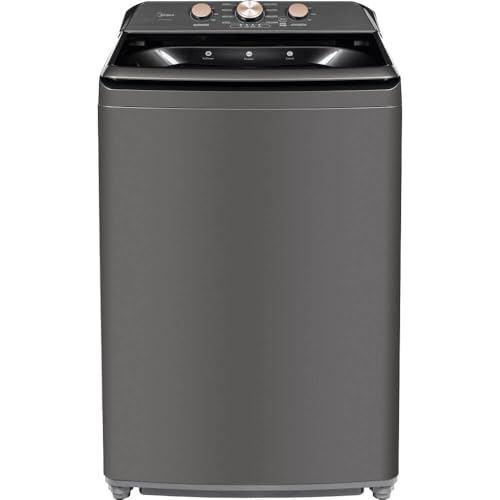
The Midea MLTW41A1BMG is a 4.1 cubic foot top loader with eight presets, auto sensing and a High Water option for bulky loads. Its Tub Clean cycle is the maintenance feature that matters, since top loaders have no filter to empty and rely on flushing the outer tub. The cabinet is 29 inches wide and 46 inches tall, and the 128-pound weight is light enough for two people to move. Controls are simple, which leaves few parts to fail but also little manual control.
What stands out
- Tub Clean cycle flushes the outer tub on a schedule
- No pump filter to empty every month or two
- Light enough to move without a crew or dolly
Watch out for
- Eight presets leave little manual control over the cycle
- No listed filter means debris stays in the outer tub
GE PROFILE 28 Inch Smart Front Load Washer with 4.8 cu. ft. Capacity in White GFW550SSNWW

The GE Profile 4.8 is the most maintenance-aware machine in this group. UltraFresh Vent System with OdorBlock is designed to remove moisture after each cycle, which is the root cause of gasket odor. SmartHQ adds remote control and alerts, and the 20-minute Quick Wash and 35-minute Time Saver cover small and mixed loads. At 28 inches wide and 39.75 inches tall it needs a slightly wider opening than the standard 27-inch machines, and the 246-pound weight is worth planning for.
What stands out
- UltraFresh vent dries the drum after every wash cycle
- SmartHQ alerts you when a cycle stops unexpectedly
- Quick Wash finishes a small load in twenty minutes
Watch out for
- 28 inches wide needs a wider alcove than standard
- 246 pounds makes installation a job for two people
Samsung 5.0 cu. ft. Extra Large Capacity Smart Front Load Washer with Super Speed Wash and Steam, Brushed Blac

Samsung's 5.0 cubic foot front loader in brushed black lists Super Speed Wash at about 28 minutes for a full load, plus steam, Wi-Fi through SmartThings and ENERGY STAR certification. It can be stacked with a matching dryer, which helps in a closet laundry. The 27-inch cabinet is standard and the 216-pound weight is normal for the class. Fewer loads per week is itself a maintenance strategy, since the drum, filter and gasket simply see less use between cleanings.
What stands out
- Five cubic feet cuts the number of weekly laundry loads
- Super Speed Wash shortens the busiest cycles to 28 minutes
- Stackable with a matching Samsung dryer to save floor space
Watch out for
- Brushed black shows lint and water spots between cleanings
- No vent system listed for drying the drum afterward
LG WM4200HWA 5.0 cu ft Front‑Load Washer, Steam Wash, Allergiene™ Cycle, Large Capacity, SmartThinQ® Wi‑Fi Ena

LG's WM4200HWA is a 5.0 cubic foot front loader with TurboWash 360, Steam Wash and the Allergiene cycle, which the listing describes as removing allergens along with stains. SmartThinQ adds remote start, notifications and voice control through Google Assistant or Alexa, and the machine is ENERGY STAR certified. The 27-inch cabinet is standard and the 39-inch height fits most counters. The large drum handles king comforters, so the machine runs less often and the filter fills more slowly.
What stands out
- Allergiene cycle adds a hot, high-rinse option for bedding
- TurboWash 360 keeps cycle times reasonable on full loads
- Five cubic feet handles comforters, towels and family wash
Watch out for
- Large drum takes longer to fill on a small load
- App setup adds a step before the first wash
BLACK+DECKER 4.1 Cu. Ft. Top Load Washing Machine with Agitator, BTLW41MW

The BLACK+DECKER BTLW41MW is a 4.1 cubic foot top loader with a traditional agitator, a stainless steel tub and ten cycles. There is a glass lid, an LED display and a 24-hour delay start. At 116.83 pounds it is the lightest machine here, and the 25.75-inch width fits a tight alcove. No filter to clean, no app to configure, and a tub that resists rust. The trade-off is agitation that is harder on knits, delicates and anything with a loose weave.
What stands out
- Agitator handles heavy soil, work clothes and shop towels
- Stainless tub resists rust and odor over the years
- Lightest machine here at under one hundred twenty pounds
Watch out for
- Agitator is rough on sweaters, knits and delicates
- No filter access for lint trapped in the outer tub
Buying guide
The Service Points That Decide the Lifespan
On a front loader the drain pump filter sits behind the lower front panel, usually on the right. It catches coins, bobby pins, hair and the occasional sock, and it has to be emptied before the pump inlet clogs. When it does clog, the machine drains slowly, leaves water in the drum or stops with a drain fault. Every front loader in this group has one, and none of the listings says how easy it is to reach, which is exactly the detail worth checking before you buy. A hinged door means the job takes two minutes and gets done. A panel with four screws means it does not.
Top loaders work differently. The Midea and the BLACK+DECKER use a washplate or an agitator inside a stainless tub, and neither lists a user-serviceable filter, because lint and grit are meant to flush down the drain. That removes one chore and creates another: debris can settle in the outer tub, where the only access is through the drum itself. Midea's Tub Clean cycle is the tool for that job. The BLACK+DECKER's stainless tub resists the rust that painted steel develops after years of damp, which is one less thing to inspect. Fewer service points is not the same as no maintenance, but it is fewer chances to forget one.
Moisture Is the Real Enemy
The rubber gasket around a front-load door has a fold, and that fold holds water. Add lint and a little detergent and you have the ideal environment for the black biofilm that gives a laundry room its distinctive smell. Wiping the fold once a week with a cloth and leaving the door ajar between loads solves most of it. A machine that helps dry the drum is worth more than one with an extra cycle you will never use, because the extra cycle adds a button while the drying addresses the cause.
The GE Profile 4.8 is the clearest example. Its UltraFresh Vent System with OdorBlock is designed to pull moisture out of the drum after the wash and keep the interior fresher between uses. The Midea's Tub Clean cycle attacks the same problem from the other direction, using a dedicated program to flush the tub. Top loaders have a structural advantage, since the lid is not airtight, but the outer tub still stays damp if you shut the lid on a wet drum. Leave it open for an hour and the difference is noticeable.
Dispensers, Detergent and Residue
The detergent drawer is the most neglected part of any washer. Powder plus cold water makes paste. Liquid plus hard water makes a film. Pods dropped into the wrong compartment leave a sticky residue that eventually blocks the siphon. Pull the drawer out once a month, soak it in warm water and scrub the tube, because a blocked siphon either overdoses or underdoses every load that follows. The drawer is also where mold starts on a top loader, since it is the one part of the machine that stays wet and never gets rinsed by the drum.
How a machine accepts detergent matters as much as how often you clean it. The LG 4.5 uses a four-tray dispenser with separate paths for prewash, main wash, bleach and fabric softener. That keeps additives apart, but it gives you four chambers to clean. The Electrolux 4.5 uses an Adaptive Dispenser that takes pods, liquid or powder, and SmartBoost premixes detergent with water before the wash starts, so powder has a better chance of dissolving instead of caking. Both designs reduce residue compared with pouring liquid into an open drawer and hoping the water reaches it.
What Diagnostics Are Actually Worth
A fault code is only useful if you can read it. LG's SmartDiagnosis shares diagnostic information with a service line through a phone, and the ThinQ app on the WM4200HWA and the WT8400CW puts cycle status and alerts on your phone. GE's SmartHQ does the same for the Profile 4.8, and Samsung's SmartThings covers the 5.0. In practice that means you learn whether a stopped cycle is a door latch, a drain problem or a balance issue before you pay for a visit. For a household that has never owned a front loader, that guidance is worth more than an extra rinse option.
The trade-off is complexity. Every board, sensor and Wi-Fi module is another part that can fail, and control boards are among the most expensive repairs on a modern washer. The BLACK+DECKER top loader and the Midea rely on simple controls and preset programs, with an LED display and a delay timer rather than an app. If you want the least to go wrong, that simplicity is a feature rather than a limitation. If you want help when something does go wrong, the connected machines earn their premium, provided you keep the app updated and the network working.
The Annual Routine, in Order
Once a year, pull the washer out far enough to see the hoses. Rubber inlet hoses should be replaced every five years whether they look fine or not, because they fail from the inside. Braided stainless is worth the small extra cost. Check the inlet screens for grit, look for kinks in the drain hose, and confirm the hose rises to the height the manual specifies before it enters the standpipe. If it sits too low, the machine siphons water back in and every cycle starts with dirty water you cannot see.
Once a month, run the hottest cycle with no clothes and a washer cleaner or descaler, wipe the gasket, rinse the dispenser and empty the filter. In hard water, do it every two weeks and use a descaling product made for washing machines rather than relying on extra detergent. None of this takes more than twenty minutes. It is the entire difference between a machine that smells clean and one that makes freshly washed clothes smell like a basement, and it costs less per year than a single service call.
Frequently asked questions
How often should I clean a washing machine?
Wipe the gasket and leave the door open after every load, clean the pump filter every two to three months, and run a hot maintenance cycle with a cleaner once a month. Twice a month in hard water. Pull and rinse the detergent drawer monthly. The whole routine takes about twenty minutes a month and prevents most of the failures that shorten a washer's life.
Does a self-clean cycle remove the need to clean the filter?
No. A tub clean cycle flushes the drum and outer tub with hot water, but it cannot reach the pump filter, the gasket fold or the dispenser siphon. Those are the three places where residue and odor actually start. Treat the cycle as one step in the routine, not a replacement for the manual parts.
Is it bad to wash everything in cold water?
Cold water is fine for everyday soil and saves energy, but detergent and fabric softener leave residue that cold water cannot fully dissolve. Run one hot cycle a month with no clothes to clear it. If your machine has a Tub Clean program, use that. Skipping heat entirely for years is how a washer develops a permanent musty smell.
Do top-load washers need less maintenance than front-loaders?
They need different maintenance. There is usually no pump filter to empty, and the lid is not airtight, so the drum dries faster. But lint can settle in the outer tub, agitator dogs wear out, and older belt-drive models need belt inspection. Front loaders demand more frequent gasket care. Neither design is maintenance-free.
Can vinegar damage a washing machine?
Diluted white vinegar is fine for the dispenser drawer and for wiping the gasket, but do not leave rubber parts soaking in it. Vinegar is acidic enough to soften and dull door seals over repeated exposure. For scale inside the drum, a citric-acid descaler or a washing machine cleaner is gentler on rubber and more predictable than household vinegar.
Verdict
The GE Profile 4.8 is the pick for anyone who wants maintenance to be optional rather than constant. The UltraFresh vent system tackles the moisture behind gasket odor, the 20-minute Quick Wash keeps small loads from piling up, and SmartHQ tells you when a cycle stops. The Electrolux 4.5 is the value choice, because SmartBoost dissolves powder before it can cake in the drawer and the Adaptive Dispenser suits whatever detergent you already buy.
Step up to the LG WM4200HWA if your household runs five or six loads a week. The 5.0 cubic foot drum cuts the number of cycles, and Allergiene gives you a hot, high-rinse option for bedding. If you want the least to break, the BLACK+DECKER top loader has no filter, no app and no board to update, which is its own kind of reliability.