Nap mats, spare clothes, art smocks, hand towels, the inevitable bag of soiled clothing from a two-year-old. A daycare does not produce a large weekly wash the way a family does. It produces a steady trickle of small, urgent loads, and the urgency is the part that shapes the purchase. A blowout at nine in the morning needs a machine free by ten, not a drum big enough for a comforter.
That is why the usual advice does not transfer. A home buyer shops for capacity and cycle variety. A daycare director should shop for cycle speed, a short quick-wash option, a control lock that stops a curious four-year-old from opening a running machine, and a drum that stays fresh in a humid room where the door is open all day.
Sanitation deserves a careful sentence, because it is where daycare buying goes wrong. A machine with a steam or sanitize cycle gives you hotter water and a better wash, and that is worth having. It does not give you a validated disinfection process with a log you can show an inspector. Many licensing rules also direct that soiled bedding and clothing go home in a sealed bag rather than through the classroom machine, and those rules vary by state. Check yours before you build a routine around the washer.
We compared specifications, features and owner reports from home daycares and small centers, and ranked these eight on speed, cleanliness and child-safety details.
Top picks at a glance
BLACK+DECKER 4.1 Cu. Ft. Top Load Washing Machine with Agitator, BTLW41MW
Check price on AmazonKenmore 4.5 cu. ft. Front Load Washer
Check price on AmazonGE PROFILE 28 Inch Smart Front Load Washer with 4.8 cu. ft. Capacity in White
Check price on AmazonCompare the shortlist
| Model | Type | Capacity | Key feature | Amazon |
|---|---|---|---|---|
| 1. BLACK+DECKER 4.1 Cu. Ft. Top Load Washing Machine with Agitator, | Top-load | 4.1 cu ft | Delay start | Check price |
| 2. Kenmore 4.5 cu. ft. Front Load Washer | Front-load | 4.5 cu ft | Steam | Check price |
| 3. GE PROFILE 28 Inch Smart Front Load Washer with 4.8 cu. ft. Capa | Front-load | 4.8 cu ft | Connected controls | Check price |
| 4. LG WM3470CM 27 Inch Front Load Washer with 5.0 Cu. Ft. Capacity, | Front-load | 5.0 cu ft | Front-load | Check price |
| 5. Electrolux 27 in. W 4.5 cu. ft. Front Load Washer with SmartBoos | Front-load | 4.5 cu ft | Steam | Check price |
| 6. Samsung 4.5 cu. ft. High Efficiency Front Load Washer with Vibra | Front-load | 4.5 cu ft | Low noise | Check price |
| 7. LG WM3400CW 4.5 cu ft Front-Load Washer | Front-load | 4.5 cu ft | Low noise | Check price |
| 8. LG WM4000HBA 4.5 Cu. Ft. Smart Front-Load Washer, High-Efficienc | Front-load | 4.5 cu ft | High efficiency | Check price |
Detailed reviews
BLACK+DECKER 4.1 Cu. Ft. Top Load Washing Machine with Agitator, BTLW41MW

BLACK+DECKER's 4.1 cubic foot top loader with a dual-action agitator, stainless tub, glass lid and ten cycles. It runs on standard 120-volt power, has a 24-hour delay, and weighs under 120 pounds. At 25.75 inches wide it fits a narrow utility alcove, though the lid needs clearance above rather than a counter. It is a reasonable second machine for craft smocks and spare clothes.
What stands out
- The narrow cabinet fits a small utility alcove
- Agitator action handles heavy food and craft stains
- Lowest-cost way to add a second machine on site
Watch out for
- No control lock to stop small hands on the panel
- 4.1 cubic feet needs two cycles for nap bedding
Kenmore 4.5 cu. ft. Front Load Washer

A 4.5 cubic foot Kenmore front loader in metallic silver with Steam Treat, twelve cycles, five temperatures and an extra rinse. Express Wash is rated at 25 minutes for a small load, which fits the gap between lunch and nap. Accela Wash shortens full loads, and Cold Clean saves energy on lightly soiled towels. The cabinet is 27 inches wide and just over 34 inches deep.
What stands out
- The 25-minute express cycle fits a short nap-time window
- Extra rinse helps with sensitive skin and detergent residue
- Steam Treat handles blowout and food stains on fabric
Watch out for
- Deep cabinet at just over 34 inches front to back
- No child lock on the control panel, so add a gate
GE PROFILE 28 Inch Smart Front Load Washer with 4.8 cu. ft. Capacity in White GFW550SSNWW

GE Profile's 4.8 cubic foot front loader with the UltraFresh Vent System and OdorBlock, built-in Wi-Fi through SmartHQ, a 20-minute Quick Wash and a 35-minute Time Saver mode. The vent feature dries the cabinet between uses, which is the most useful thing a daycare machine can do in a humid room. At 28 inches wide it is slightly wider than the standard 27, so measure first.
What stands out
- UltraFresh vent keeps a damp cabinet from souring
- The 20-minute Quick Wash suits small, urgent loads
- 4.8 cubic feet takes a full nap-bedding set
Watch out for
- 28 inches wide, so measure the alcove first
- Heaviest machine here at 246 pounds, so plan the install
LG WM3470CM 27 Inch Front Load Washer with 5.0 Cu. Ft. Capacity, 8 Wash Programs, 1,300 RPM, SpeedWash Cycle,

LG's WM3470CM is a 5.0 cubic foot front loader with eight programs, a 1,300 RPM spin, SpeedWash, Rinse plus Spin, SmartDiagnosis and a Control Lock. The high spin speed pulls more water out of nap bedding before drying, and the lock disables the panel during a cycle. A matching dryer, model DLE3470M, is available for a stacked setup in a narrow closet.
What stands out
- Control Lock keeps children out of the panel
- 1,300 RPM spin cuts dryer time on bedding
- 5.0 cubic foot drum handles a full bedding set
Watch out for
- Eight programs is a short list for specialty fabrics
- No steam option is listed on this model for stains
Electrolux 27 in. W 4.5 cu. ft. Front Load Washer with SmartBoost, LuxCare Plus Wash System, Perfect Steam in

Electrolux's 4.5 cubic foot front loader with SmartBoost premixing, Perfect Steam and an adaptive dispenser for pods, liquid or powder. Separate bleach and softener compartments keep the routine clear for staff, and eleven-plus cycles cover towels, bedding and staff clothing. The cabinet is 27 inches wide and 32 inches deep, shallower than most machines here, which helps in a converted closet.
What stands out
- Separate bleach and softener compartments prevent mixing mistakes
- Perfect Steam helps with set-in stains on bedding
- The shallower 32-inch cabinet fits more utility closets
Watch out for
- No control lock for child safety on the panel
- Dispenser needs weekly cleaning in a humid room
Samsung 4.5 cu. ft. High Efficiency Front Load Washer with Vibration Reduction Technology+, White, WF45T6000AW
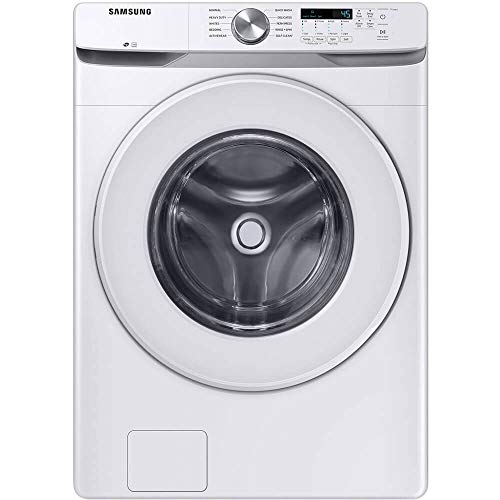
A 4.5 cubic foot Samsung front loader with Vibration Reduction Technology+ and a Swirl+ drum, plus ENERGY STAR certification. No steam and no app, which keeps the panel simple. The quiet spin matters most: a machine beside a nap room needs to disappear during rest time, and this one comes closest. It fits the same 27-inch alcove as the rest of the group.
What stands out
- Vibration Reduction Technology+ keeps spin noise and vibration low
- Swirl+ drum extracts more water for faster tumble drying
- Simple panel with fewer settings for staff to misread
Watch out for
- No steam or sanitize cycle for nap bedding
- No child lock and no app controls on this model
LG WM3400CW 4.5 cu ft Front-Load Washer

The LG WM3400CW is a 4.5 cubic foot front loader with LoDecibel quiet operation, TrueBalance anti-vibration and 6Motion wash action. It is ENERGY STAR certified and deliberately basic: no steam, no Wi-Fi, no cycle menu to interpret. For a daycare where staff turnover is high, a machine that works the same way every time has real value. It is also the lightest front loader here at 187 pounds.
What stands out
- TrueBalance keeps vibration down on raised wooden floors
- Straightforward cycle selection that rotating staff learn quickly
- The 4.5 cubic foot drum covers a nap bedding set
Watch out for
- No steam cycle for stained or soiled bedding
- No control lock on the panel for child safety
LG WM4000HBA 4.5 Cu. Ft. Smart Front-Load Washer, High-Efficiency Laundry Machine with Wi-Fi Connectivity, Bla

LG's WM4000HBA is a 4.5 cubic foot smart front loader in black steel with TurboWash 360, ThinQ app control and the Allergiene cycle, which the manufacturer says removes 95 percent of pet dander and dust. In a daycare the same hot cycle is useful for dust mite reduction on nap bedding, and TurboWash keeps the cycle short enough for a lunch break.
What stands out
- Allergiene cycle helps with dust mites on bedding
- TurboWash 360 shortens the wash on full loads
- ThinQ alerts tell staff when a load is done
Watch out for
- No control lock to keep children off the panel
- App setup adds a step for new staff
Buying guide
Small Loads, Many Times a Day
Count the loads rather than the pounds. A home daycare with six children might run a nap-mat load at noon, a towel load after lunch, a craft-smock load in the afternoon and a spare-clothes load whenever a bag comes back full. Four cycles of six pounds each is a very different duty cycle from one thirty-pound load, and it punishes machines that only perform well when full. Small loads also mean the washer sits partly empty, which wastes water but is unavoidable when hygiene requires keeping bedding, towels and soiled clothing apart.
The practical answer is a quick cycle and a drum that does not need to be full. GE's Quick Wash is rated at 20 minutes and its Time Saver mode at 35, while LG's SpeedWash and Kenmore's Express Wash occupy similar territory. A 4.5 cubic foot drum running a 25-minute cycle twice is more useful to a daycare than a 5.2 running a ninety-minute normal cycle once, because the real constraint is staff attention rather than drum volume. A top loader with a high-water setting is tempting for rinsing, but it fills a whole tub for six towels, and the water bill adds up over a year.
Sanitation, Bodily Fluids and Licensing
Bodily fluids are the reason daycare laundry exists, and they need a defined procedure more than a special machine. Soiled clothing comes off the child, goes into a sealed bag, and leaves the building with the parent. Nap bedding and hand towels that stay on site go into a dedicated hamper, never into a tote that also carries toys. Anything heavily contaminated gets a prewash and the hottest cycle the fabric allows, followed by a full dry cycle, because damp linen in a cubby grows mold overnight and smells like it by Friday afternoon.
Where licensing rules apply, read them before you buy. Requirements for how often bedding is washed, whether it must go home, and what temperature is required differ from state to state, and a washer cannot compensate for a procedure that ignores them. Keep a simple log of date, load, cycle and temperature setting. It takes seconds, it demonstrates good faith during an inspection, and it helps you notice when a machine is quietly defaulting to a cooler wash than the label suggests. During an outbreak, follow your health department's guidance rather than improvising a hotter cycle.
Space, Safety and Supervision
A washer in a childcare space is a climbing structure with a door on it. The safest layout puts the machine in a locked utility room or behind a gate, out of the classroom and away from nap mats. Where that is impossible, a stacked pair against a wall with a barrier in front is better than a front loader at floor level with a latch a child can reach. Confirm the door locks during a cycle, and confirm that no cycle can be started by a small hand on the panel.
LG's WM3470CM includes a Control Lock, which disables the panel until it is released, and that is the single most useful childcare feature in this group. Detergent pods are the other hazard. They look like candy, they dissolve on contact with wet skin, and they belong in a locked cabinet rather than on top of the machine. If the laundry opens onto a play area, route the drain hose and power cord so nothing loops within reach, keep the floor dry, and check that the machine cannot tip if a child pulls on an open door.
Noise During Nap Time
Nap time is the constraint nobody plans for. Between roughly one and three, a spin cycle on the other side of a drywall partition is enough to wake the light sleepers, and a woken room is a twenty-minute recovery. Machines with suspension systems and balance control run measurably smoother: LG's LoDecibel and TrueBalance, Samsung's Vibration Reduction Technology+. A front loader on a concrete floor is quieter than a top loader on a wooden one, and a machine in a closet with a solid-core door is quieter than both, which is worth remembering when you choose the room.
Scheduling does the rest. Run the noisy bedding load before nap and the quiet towel load during it, or set a delay so the spin finishes before the children lie down. If the machine shares a wall with the nap room, anti-vibration pads and a level floor help more than any marketing claim. Keep the laundry door closed during a spin, and listen to the dryer as well, since a dryer with a rattling vent hood can be louder than the washer beside it. A written schedule taped to the wall stops the argument about whose turn it is.
Sensitive Skin, Detergent and the Rinse
Children in group care have more skin reactions than a family does, and detergent residue is a common culprit. Use a free-and-clear detergent without dye or perfume, dose it for the load rather than the drum, and add an extra rinse on nap bedding and anything that will sit against skin for an hour. Fabric softener should not go anywhere near childcare linen: it coats fibers, reduces absorbency and adds a fragrance that parents notice before the staff do. Wash new bedding once before it goes on a cot, since sizing and finishes irritate some children.
Stain treatment matters too, because diaper cream, spit-up and food dye are all fat or protein based. Treat before washing with an enzyme detergent, use oxygen bleach rather than chlorine on colored items, and avoid drying anything until the stain is gone, since heat sets it permanently. A machine with a steam option helps on set-in stains, but the sequence of prewash, oxygen bleach and a full dry cycle does most of the work. Check pockets before every load, because a crayon through a hot dryer is a ruined drum and an afternoon of scraping.
Frequently asked questions
Can I wash daycare bedding and towels in a regular washer?
Yes, for a home daycare or a small center, a high-capacity front loader is a practical choice. Use the hottest cycle the fabric allows, wash bedding separately from towels, and dry fully. Check your state's childcare licensing rules first, since some require bedding to be sent home rather than washed on site.
Do I need a commercial washer for a home daycare?
Rarely. A home daycare running four or five small loads a day sits comfortably within the duty cycle of a good consumer front loader. A commercial machine makes sense for a center with dozens of children and staff laundry, where the volume justifies the plumbing, power and service contract.
How do I sanitize after a blowout?
Bag the clothing at the point of use, rinse off solids in a utility sink rather than the washer, then run a prewash plus the hottest cycle the fabric allows with an enzyme detergent. Dry completely. Follow with a hot cleaning cycle on the machine if the load was heavily contaminated.
What if a child reacts to the detergent?
Switch the whole daycare to a fragrance-free, dye-free detergent and add an extra rinse to every load, not just that child's. Residue on shared towels and nap bedding affects everyone. Skip fabric softener and dryer sheets entirely, since both leave a coating that can irritate skin.
Where should the washer go in a daycare?
In a locked utility room or behind a barrier, away from nap mats and play areas. If that is not possible, keep detergent locked, use the control lock during cycles, and route cords and hoses out of reach. A machine that a child can open mid-cycle is a hazard regardless of how well it washes.
Verdict
The GE Profile 4.8 is the pick for a daycare. The UltraFresh vent moves air through the cabinet after the cycle, which matters in a room where the door is open all day, and the 20-minute Quick Wash fits a nap-time window. The Kenmore 4.5 in metallic silver is the value choice: a 25-minute express cycle, Steam Treat for the worst stains, and an extra rinse that suits sensitive skin.
Step up to the LG WM3470CM if safety and throughput are the priorities. The 5.0 cubic foot drum takes a full set of nap bedding, the 1,300 RPM spin gets more water out before the dryer, and the Control Lock is the feature a center with curious toddlers actually needs.