Walk into a small dental office at four in the afternoon and count the linen: patient bibs, reusable gowns, the towels folded under instrument trays, scrubs from the back. Maybe forty pounds on a busy day. Not a hospital laundry, and nowhere near enough to justify a barrier washer and a service contract, but more than a home machine sees in a month, and dirtier in a specific way that matters.
Healthcare laundry is judged on two things a household never thinks about. The first is temperature control, because the wash needs to reach a range that reduces pathogens rather than merely removing visible soil. The second is separation, because clean linen that touches a soiled bag on the way back to the shelf is clean in name only. No washer solves the second problem. It is a room-layout problem, and it is the one most small practices get wrong.
The third issue is honesty about equipment. A consumer washer with a sanitize or steam cycle is not a validated medical device, and no manufacturer on this list claims it is. Used for clinic towels, gowns and staff scrubs by a practice that needs a practical on-site option, these machines work. Used for surgical linen or anything the accreditation surveyor asks about, they do not substitute for a proper on-premise laundry.
We compared specifications, features and owner reports, then ranked these eight by the things a clinic actually manages: hot water, cycle clarity, drum hygiene and how much linen the machine returns per shift.
Top picks at a glance
LG WM4200HWA 5.0 cu ft Front‑Load Washer, Steam Wash, Allergiene™ Cycle, Large
Check price on AmazonMidea MLTW41A1BMG 4.1 Cu. Ft. Gray Top Load Washer
Check price on AmazonElectrolux 27 in. W 4.5 cu. ft. Front Load Washer with SmartBoost, LuxCare Plu
Check price on AmazonCompare the shortlist
| Model | Type | Capacity | Key feature | Amazon |
|---|---|---|---|---|
| 1. LG WM4200HWA 5.0 cu ft Front‑Load Washer, Steam Wash, Allergiene | Washers | 5.0 cu ft | Steam | Check price |
| 2. Electrolux 27 in. W 4.5 cu. ft. Front Load Washer with SmartBoos | Front-load | 4.5 cu ft | Steam | Check price |
| 3. LG WM3400CW 4.5 cu ft Front-Load Washer | Front-load | 4.5 cu ft | Low noise | Check price |
| 4. LG 5.2 cu. Ft Stackable Smart Front Load Washer in Black Steel w | Front-load | 5.2 cu ft | Steam | Check price |
| 5. Midea MLTW41A1BMG 4.1 Cu. Ft. Gray Top Load Washer | Top-load | 4.1 cu ft | Top-load | Check price |
| 6. Samsung 4.5 cu. ft. High Efficiency Front Load Washer with Vibra | Front-load | 4.5 cu ft | Low noise | Check price |
| 7. Kenmore 4.5 cu. ft. Front Load Washer | Front-load | 4.5 cu ft | Steam | Check price |
| 8. Samsung 5.0 cu. ft. Extra Large Capacity Smart Front Load Washer | Front-load | 5.0 cu ft | Steam | Check price |
Detailed reviews
LG WM4200HWA 5.0 cu ft Front‑Load Washer, Steam Wash, Allergiene™ Cycle, Large Capacity, SmartThinQ® Wi‑Fi Ena

A 5.0 cubic foot front loader with Steam Wash, the Allergiene cycle and TurboWash 360. Wi-Fi through ThinQ allows remote start, pause and cycle alerts, which helps a manager check a load left running at closing. ENERGY STAR certified, 27 inches wide, about 33 inches deep. The drum takes a set of gowns and a load of towels in one pass, and the steam option gives clinic linen a hotter wash.
What stands out
- Allergiene cycle targets allergens as well as visible soil
- The 5.0 cubic foot drum handles gowns and bedding together
- Remote monitoring covers a load left running at closing
Watch out for
- Steam cycles extend the wash beyond an hour on linen
- Wi-Fi setup requires an account most staff never open
Electrolux 27 in. W 4.5 cu. ft. Front Load Washer with SmartBoost, LuxCare Plus Wash System, Perfect Steam in

A 4.5 cubic foot Electrolux front loader with SmartBoost detergent premixing and Perfect Steam. The dispenser accepts pods, liquid or powder and has separate bleach and softener compartments, which keeps the routine simple for staff rotating through the laundry. Eleven-plus cycles cover the fabric types a practice actually washes. At 27 inches wide and 32 inches deep it fits a narrow utility closet, and the shallow cabinet leaves room for hoses.
What stands out
- Perfect Steam adds a hot option for towels and gowns
- Dispenser handles pods, liquid or powder without inserts
- SmartBoost noticeably improves detergent performance in cold water
Watch out for
- No remote monitoring, cycle alerts or app diagnostics
- Dispenser drawer needs regular rinsing to avoid residue
LG WM3400CW 4.5 cu ft Front-Load Washer

The WM3400CW is LG's straightforward 4.5 cubic foot front loader. LoDecibel construction and TrueBalance anti-vibration keep it steady, and 6Motion changes the drum movement to suit each cycle. There is no steam and no Wi-Fi, so the appeal is fewer parts to fail and controls anyone can operate without reading a manual. ENERGY STAR certified, with a drum that covers a clinic's daily linen comfortably.
What stands out
- Simple control panel with no app or account required
- TrueBalance reduces vibration on upper floors and wood
- The 4.5 cubic foot drum covers a clinic's daily linen
Watch out for
- No steam option for a hotter sanitizing wash cycle
- No diagnostics beyond a basic error code on the panel
LG 5.2 cu. Ft Stackable Smart Front Load Washer in Black Steel with Steam & Turbowash Technology

A 5.2 cubic foot LG front loader in black steel with steam, TurboWash and an inverter direct drive motor. It stacks with the matching dryer, runs at roughly 105 kWh a year by the manufacturer's figure, and carries an ENERGY STAR rating. The direct drive design removes the belt and tensioner, the parts most likely to fail on a machine used daily. The largest drum here, which matters if the practice washes bedding.
What stands out
- Largest drum here at 5.2 cubic feet of capacity
- Inverter direct drive motor is quiet and belt-free
- The stackable cabinet fits inside a small utility closet
Watch out for
- Dark finish shows every water mark and smudge
- Retailer-listed dimensions are inconsistent, so verify before you order
Midea MLTW41A1BMG 4.1 Cu. Ft. Gray Top Load Washer
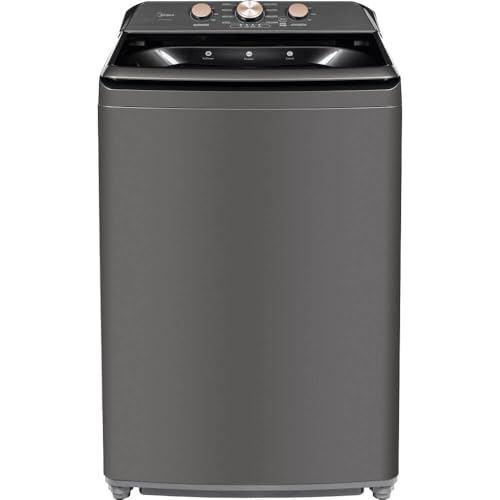
Midea's MLTW41A1BMG is a 4.1 cubic foot top loader with a tub clean cycle, high water option, auto sensing and eight presets. It is the only top loader in this group, and the high-water setting is useful for rinsing bulky towels. At 29 inches wide and 46 inches tall it needs open space above rather than a counter, so it suits an alcove but not an under-counter slot.
What stands out
- Dedicated Tub Clean cycle simplifies routine drum maintenance
- High water option helps rinse thick clinic towels
- Auto sensing adjusts the fill to the load size
Watch out for
- Weaker spin leaves towels wetter for the dryer
- Top-load design needs clearance above the lid opening
Samsung 4.5 cu. ft. High Efficiency Front Load Washer with Vibration Reduction Technology+, White, WF45T6000AW
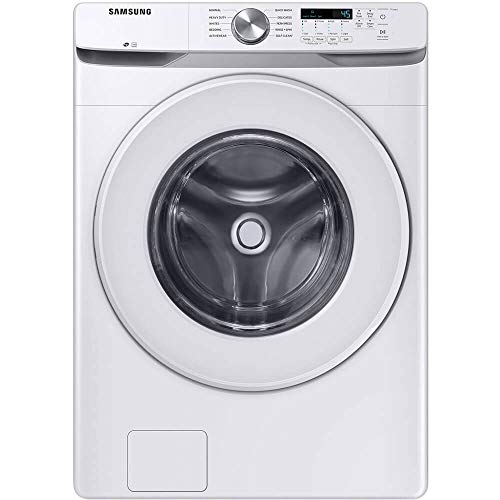
Samsung's WF45T6000AW is a 4.5 cubic foot front loader built around quiet operation. Vibration Reduction Technology+ cuts noise and movement during the spin, the Swirl+ drum pattern extracts water faster, and the machine is ENERGY STAR certified. There is no steam or Wi-Fi, so it suits a practice that wants a dependable hot wash without extra controls. At 27 inches wide it fits the same alcove as the rest of the group.
What stands out
- Vibration Reduction Technology+ keeps spin noise and movement low
- Swirl+ drum extracts more water for shorter drying
- ENERGY STAR certified, which lowers running cost over time
Watch out for
- No steam cycle for a hotter sanitizing wash
- Plain controls with no remote monitoring or alerts
Kenmore 4.5 cu. ft. Front Load Washer

For clinic linen, this Kenmore offers a 4.5 cubic foot drum, Steam Treat and an extra rinse. Express Wash is rated at 25 minutes for a small load, and Accela Wash shortens full loads, which helps when a practice needs turnover between appointments. ENERGY STAR certified with a Cold Clean option. The cabinet is 27 inches wide but just over 34 inches deep.
What stands out
- Steam Treat handles stains without a chlorine bleach routine
- The extra rinse clears detergent from sensitive-skin linen
- Express cycle useful for a small midday load
Watch out for
- Deep cabinet at just over 34 inches front to back
- Manual detergent dosing only, with no auto dispense
Samsung 5.0 cu. ft. Extra Large Capacity Smart Front Load Washer with Super Speed Wash and Steam, Brushed Blac

Samsung's Super Speed Wash is the headline here: a full load in about 28 minutes on a 5.0 cubic foot drum. Steam and SmartThings Wi-Fi are included, and the machine can be stacked or installed side by side. ENERGY STAR certified. For a practice running linen between a morning and an afternoon clinic, that speed is the argument, and the drum is large enough for gowns and towels together.
What stands out
- Super Speed turns a full load around in about 28 minutes
- Steam adds heat for towels, gowns and bedding
- Stackable or side by side for flexible layouts
Watch out for
- Fast cycle is less tolerant of an overloaded drum
- App required for remote start and cycle alerts
Buying guide
Where a Clinic Washer Actually Fits
A small practice generates a narrow, predictable stream of linen. Exam table rolls are disposable now, but the pillowcases, gowns, hand towels, ultrasound wipes and staff scrubs are not. Add reusable patient bibs in dentistry, hot packs and table covers in chiropractic and massage, and the daily total lands somewhere between one and three loads. That is a volume a 4.5 cubic foot front loader handles comfortably, which is why most of this list sits in that size class. Sort the stream by bulk and by soil and the shopping question gets simpler: the bulkiest item sets the drum size, and the dirtiest item sets the cycle.
What should not go in is the part people skip. Anything saturated with blood or body fluids, anything from a treatment room where a procedure generated visible contamination, and anything the practice's infection control policy classifies as regulated waste belongs in a bagged linen service, not a consumer washer. The machine's job is the ordinary soil: sweat, skin cells, lotion, food, the occasional spot of betadine. That is a job it can do well. Write the boundary down and post it above the machine, because the person loading the drum on a Friday afternoon is rarely the one who set the policy.
What a Sanitize Cycle Can and Cannot Promise
Look closely at the language. LG's Allergiene cycle is described as removing allergens, Samsung and Kenmore market steam for stain removal, and Electrolux sells Perfect Steam as a sanitizing option. Those are performance claims about cleaning, not certification of disinfection. A residential machine has no way to log and prove that the load reached a specific temperature for a specific time, which is exactly what a clinical protocol requires. Read the feature list with that distinction in mind, and stay suspicious of any description that blurs cleaning with sterilization.
What the cycles do provide is heat. Hot water above roughly 140 degrees Fahrenheit, combined with detergent and a full-length cycle, reduces the microbial load on linens substantially compared with a cold wash. That is useful for towels and scrubs and useless for a compliance file. If your policy requires documentation, ask your linen vendor for it. If you want the best practical result from a machine like these, choose the hottest cycle the fabric tolerates, use detergent with oxygen bleach, and do not shorten the cycle to save time on a busy afternoon.
Separation Is a Floor Plan Problem
The standard workflow is simpler than the equipment list. Soiled linen comes off the treatment table into a bag at the point of use, the bag goes into a closed hamper, and the hamper travels to the washer without being shaken out or sorted on an open counter. Clean linen comes out of the dryer into a separate covered cart or closed cabinet. Never the same surface, never the same bag, never the same corner of the room if the room allows it. Do not shake soiled linen to sort it, either; that aerosolizes whatever is on it and lands it on every surface within a few feet.
In a closet-sized laundry, that separation has to be invented. A shelf above the washer for clean storage, a lidded bin on the floor for soiled, and a strict rule that soiled bags are emptied straight into the drum work better than any label. Some practices buy two smaller machines so one handles soiled towels and the other handles scrubs and gowns that only need a refresh. Two 4.5 cubic foot machines cost less floor space than most people expect and remove the cross-contamination question entirely. Put the clean side furthest from the door so nobody walks past a soiled bag to reach a folded towel.
Throughput, Rotation and Dryer Reality
Count the linen by patient, not by weight. A dental office with four chairs and twelve patients a day generates bibs and hand towels but relatively few gowns. A physical therapy clinic with tables and hot packs generates towels continuously. A small assisted-living home generates bedding, and bedding is bulky enough that a 4.5 cubic foot drum holds one set comfortably and two sets badly. Matching the drum to the bulkiest item you wash is more useful than matching it to the weekly total. A queen comforter is the classic test: it fits a 5.0 cubic foot drum with room to move and does not fit a 4.1 at all.
Then look at the other end of the cycle. A washer that finishes in forty minutes is only half the equation; the dryer is usually the bottleneck, and wet towels from a weak spin take twice as long to dry. Front loaders extract more water than top loaders, which is one reason they dominate this list. Plan the rotation so a load finishes before the shift ends, and resist the temptation to run the washer overnight in an empty building where a leak would go unnoticed until morning. If the building is empty, use the delay start to finish before the last person leaves.
Drum Hygiene and the Maintenance File
A washer that runs warm, damp loads all week grows biofilm in the boot and dispenser. In a clinic that film is both a smell and a bad look during an inspection. Wipe the boot dry, leave the door open between uses, and run a hot cleaning cycle weekly or at minimum monthly with a washer cleaner. Midea's Tub Clean cycle exists for exactly this, and the same function appears under different names on the others. Pull the detergent drawer and rinse it, because powdered detergent turns to stone in a damp drawer. A faint sour smell at the door is the early warning, and it usually means the boot fold rather than the drum.
Keep a maintenance log in the laundry room. Date, cycle run, filter cleaned, anything repaired. It takes a minute a week and it is the first thing an inspector or an insurer asks for after a water damage claim. Check the inlet hoses for bulging, confirm the drain is not shared with a sink that backs up, and make sure the machine sits level on a floor that can carry 200 pounds of washer plus water. Service access matters too: a stacked pair in a closet needs room to slide out, and a machine that cannot be reached gets replaced early.
Frequently asked questions
Can a home washer be used in a medical office?
For ordinary clinic linen such as towels, gowns and scrubs, a high-capacity front loader is a practical option when there is no linen service. It is not appropriate for surgical linen, contaminated laundry or anything your infection control policy classifies as regulated. Check your state and accreditation requirements before relying on one.
Is a sanitize cycle the same as disinfection?
No. A sanitize or steam cycle reduces microbes on fabric, but consumer machines do not validate or document the temperature and dwell time a clinical protocol requires. Treat these cycles as better cleaning, not as certified disinfection, and keep a linen service for anything that needs a documented process.
Should staff wash scrubs at home?
Many practices allow it, and many infection control specialists discourage it, because scrubs travel through a car and a kitchen before they reach a washer. If scrubs go home, bag them, wash them separately from household laundry, and use the hottest cycle the fabric allows. On-site washing in a dedicated machine is easier to control.
How do I stop the drum from growing mold?
Moisture is the cause. Leave the door ajar between loads, wipe the boot dry, pull the detergent drawer out to air, and run a hot cleaning cycle weekly. Front loaders with a vent or fresh-air feature dry the drum after the cycle, but wiping takes ten seconds and prevents most of the problem.
Do I need a separate washer for soiled linen?
Not necessarily, but it is the safest arrangement in a small space. If you use one machine, bag soiled linen at the point of use, never sort it on a clean surface, and run a hot cleaning cycle between soiled and clean loads. A second smaller machine removes the judgment call entirely.
Verdict
The LG WM4200HWA is the pick for a clinic. The 5.0 cubic foot drum takes a full set of gowns and towels, steam plus the Allergiene cycle gives you a defensible hot wash, and Wi-Fi monitoring means a load left running at closing can be checked from a phone. The Samsung 4.5 is the value choice: Vibration Reduction Technology+ keeps it quiet on an upper floor, it is ENERGY STAR certified, and it costs less than the LG without giving up the essentials.
Step up to the LG 5.2 if the practice washes bedding or stacked loads and space is the constraint. It is the largest drum here, stackable, and its inverter direct drive motor is the quietest in the group, which matters in a building where patient rooms share a wall with the laundry.