The duct behind a dryer is the part of the installation nobody plans. It gets chosen after the machine is delivered, from whatever the hardware store has in stock, and it gets crushed into a space that was never measured. Then the dryer takes two cycles to finish a load and the owner blames the appliance.
Duct type matters more than length in most homes. A periscope solves a three-inch gap behind a stacked unit. A semi-rigid aluminum duct handles a short straight run and survives being pushed back into place. A foil laminate hose is cheap, flexible and easy to crush, which is exactly why so many installations use it badly. A booster fan exists for the runs that none of the others can rescue.
There is also a category that does not belong outdoors at all. PVC condenser-dryer kits recirculate air through a water tank; they are not vent ducts and should never be connected to a wall cap.
This guide sorts the options by the problem they solve, covers the clearance and heat limits that decide the choice, and points out where a cheap duct costs more in drying time than it saves at the register.
Top picks at a glance
Periscope Dryer Vent 9.5-14.5",Low Profile Telescoping Duct for Tight Space
Check price on AmazonDryer Vent Hose 4 Inch
Check price on AmazonTjernlund LB2 No-Clog, Zero Maintenance DEDPV Dryer Duct Booster Fan with Auto
Check price on AmazonCompare the shortlist
| Model | Type | Capacity | Key feature | Amazon |
|---|---|---|---|---|
| 1. Periscope Dryer Vent 9.5-14.5",Low Profile Telescoping Duct for | Stain remover | — | Stainless drum | Check price |
| 2. Periscope Dryer Vent, Adjustable 12-19" Telescoping Duct for Tig | Stain remover | — | Stackable | Check price |
| 3. Tjernlund LB2 No-Clog, Zero Maintenance DEDPV Dryer Duct Booster | Installation Parts | — | Drum light | Check price |
| 4. Dryer Vent Hose 4 Inch | Stain remover | — | Delay start | Check price |
| 5. 4 Inch 25 Feet R4.2 Insulated Flexible Duct | Installation Parts | — | High efficiency | Check price |
| 6. Dryer Vent Hose | Hose | — | — | Check price |
| 7. Deflecto Aluminum Duct with Connectors, Semi Ridgid, Flexible , | Installation Parts | — | — | Check price |
| 8. Eastman 8 Foot ArmorFlex Dryer Vent, Flexible Aluminum Duct with | Vent | — | Stainless drum | Check price |
| 9. 1PCS Drying Machine Water Tank PVC Air Duct Drum Dryer Condenser | Condenser | — | Condenser | Check price |
| 10. Frost King CF55 Foil Backed "No Itch" Natural Cotton Duct Wrap, | Installation Parts | — | — | Check price |
Detailed reviews
Periscope Dryer Vent 9.5-14.5",Low Profile Telescoping Duct for Tight Space
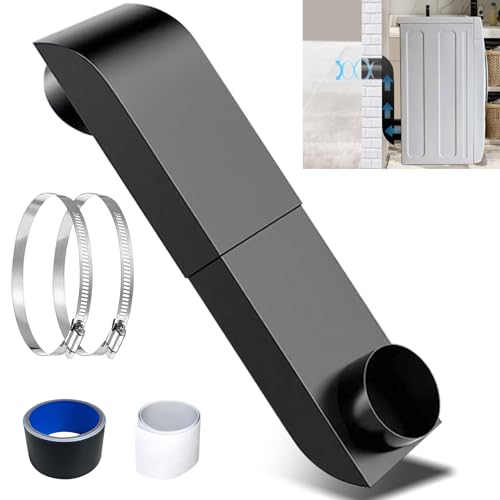
A 304 stainless periscope that adjusts from 9.5 to 14.5 inches, built for gaps where a round hose would fold. The flat body fits standard 4 inch outlets and ships with three clamps and a silicone connector that compresses to seal the dryer side. The rigid offset keeps the interior smooth, so lint has fewer places to catch than in an accordion hose.
What stands out
- Telescopes from 9.5 to 14.5 inches for shallow gaps
- Silicone connector seals the joint without relying on tape alone
- Rigid stainless body resists crushing, kinking and sagging
Watch out for
- Fixed offset may not line up with every wall opening
- Not long enough for gaps beyond 14.5 inches
Periscope Dryer Vent, Adjustable 12-19" Telescoping Duct for Tight Space

A periscope duct that slides from 12 to 19 inches, aimed at deeper recesses and stacked units. It is stainless steel with a flat profile, and the kit includes clamps and two rolls of aluminum foil tape for sealing both ends. The slide-and-lock body holds its length once set, so the dryer can be pushed back without shortening the duct.
What stands out
- Adjusts from 12 to 19 inches for deeper gaps
- Foil tape and clamps included for both ends
- Flat profile lets the dryer sit close to the wall
Watch out for
- Needs at least 12 inches of clearance to fit
- Tape alone is weaker than a clamped seal
Tjernlund LB2 No-Clog, Zero Maintenance DEDPV Dryer Duct Booster Fan with Automatic Activation
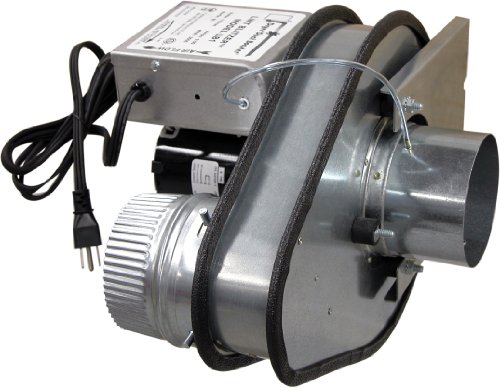
A duct booster fan from Tjernlund for long or convoluted runs, rated to maintain exhaust velocity up to 100 equivalent feet. It activates automatically with the dryer and has an LED status panel. The motor sits outside the air stream and is permanently lubricated, and the unit installs in horizontal or vertical duct. It is equipment, not duct, and it assumes the rest of the run is clean and sealed.
What stands out
- Handles duct runs up to 100 equivalent feet
- Automatic activation, with an LED panel showing operating status
- Motor mounted outside the air stream for long life
Watch out for
- Costs far more than a length of semi-rigid duct
- Cannot compensate for a crushed hose or blocked cap
Dryer Vent Hose 4 Inch

A 4 inch flexible duct built from flame-resistant aluminum foil with a PVC layer and double steel wire. It is meant to bend through tight spaces, and the kit includes two stainless clamps that adjust across a 4 to 6 inch range. The smooth inner layer is designed to reduce lint buildup compared with a ribbed hose, though it still crushes if the dryer is pushed back hard.
What stands out
- Bends through tight gaps behind stacked washer-dryer units
- Two stainless clamps included for a sealed fit
- Flame-resistant foil and PVC outer layer resist stray sparks
Watch out for
- Still crushes if the machine is pushed back hard
- Ribbed bore traps more lint than semi-rigid pipe
4 Inch 25 Feet R4.2 Insulated Flexible Duct

A 4 inch by 25 foot flexible duct with R4.2 insulation, sold for heating and cooling rather than dryer exhaust. The insulation and weather-resistant jacket suit garages, basements and outdoor runs, and the duct can be cut and bent without special tools. It is useful as insulated duct or as wrap over a vent run, but it is not marketed as a dryer vent and should not be treated as one.
What stands out
- R4.2 insulation limits heat loss and stops condensation forming
- 25 foot length suits long HVAC and vent runs
- Weather-resistant jacket handles damp basements and cold garages
Watch out for
- Not sold or rated as a dryer vent duct
- Bulkier than a bare 4 inch duct in tight runs
Dryer Vent Hose

An 8 foot flexible duct with four layers: two aluminum foil plies, a PET film and a PVC outer wrap over a steel wire helix. It is rated from 0 to 185 degrees Fahrenheit and comes with two clamps. The layered wall resists tears and punctures better than a single-ply foil hose, and the 8 foot length suits a straightforward dryer-to-wall connection.
What stands out
- Four-layer wall resists tears, punctures and rough handling
- 8 foot length covers a typical short run
- Two clamps included for both ends of the run
Watch out for
- 185 degree rating is modest for dryer exhaust
- Flexible bore still catches lint, so clean it yearly
Deflecto Aluminum Duct with Connectors, Semi Ridgid, Flexible , 4" x 2', Silver (AM42)

Deflecto's 4 inch by 2 foot semi-rigid aluminum duct, made from 30 gauge metal with a maximum temperature rating of 284 degrees Fahrenheit. It is designed to connect two ducts or bridge a short gap, and it bends without collapsing. At two feet it is a connector or extension rather than a full run, and it has no clamps in the box.
What stands out
- 30 gauge aluminum holds its shape without collapsing
- Rated to 284 degrees Fahrenheit for dryer heat
- Useful for joining two ducts or bridging a gap
Watch out for
- Only 2 feet long, so it is not a full run
- Clamps and foil tape are not included in the box
Eastman 8 Foot ArmorFlex Dryer Vent, Flexible Aluminum Duct with Clamps, Semi-Rigid, 69028

Eastman's 8 foot ArmorFlex duct in semi-rigid aluminum, rated from -22 to 482 degrees Fahrenheit and Class 0 for flame spread. It bends to 90 degrees without kinking, holds its shape while the dryer is pushed back, and ships with two stainless steel clamps. The smooth bore and wide temperature range make it the safest general-purpose choice for a normal laundry room.
What stands out
- Semi-rigid aluminum holds its shape and resists kinking
- Rated from -22 to 482 degrees Fahrenheit for hot exhaust
- Two stainless clamps included for both duct connections
Watch out for
- 8 feet may be short for an offset or long run
- Aluminum dents if it is bent sharply more than once
1PCS Drying Machine Water Tank PVC Air Duct Drum Dryer Condenser Dust Collector Flexible Stretch Exhaust Duct

A PVC air duct and water tank kit intended for condenser or drum dryers that collect moisture instead of venting it outdoors. The stretchable pipe fits standard cabinet spaces, and the tank captures condensate during the cycle. It is a legitimate accessory for a condenser machine and a serious mistake on a vented dryer, where it would dump hot moist air back into the room.
What stands out
- Designed for condenser dryers that do not vent outside
- Stretchable duct fits a range of cabinet spaces
- Water tank captures condensate instead of venting it outside
Watch out for
- Not for vented dryers or outdoor wall caps
- Small kit with limited published dimensions, so measure first
Frost King CF55 Foil Backed "No Itch" Natural Cotton Duct Wrap, 12-Inch x 1-Inch x 15-Feet

Frost King CF55 foil-backed cotton duct wrap, 12 inches wide by 1 inch thick by 15 feet long. It insulates, cushions and reduces vibration on ducts, and it carries a Class A fire rating. The no-itch cotton means no gloves or mask are needed to install it. It is wrap, not duct, and it goes over a sealed pipe rather than replacing one.
What stands out
- Class A fire rating suits duct insulation work
- No-itch cotton is easy to handle without gear
- Cushions vibration and reduces heat loss along the run
Watch out for
- Not a duct and cannot carry exhaust air
- Needs foil tape or ties to stay wrapped in place
Buying guide
The Four Kinds of Dryer Duct
Periscope ducts are rigid boxes that telescope, usually from around 9.5 to 14.5 inches or 12 to 19 inches, and turn a 4 inch outlet through a flat offset. They exist for the gap between the back of the dryer and the wall, where a round hose would kink. Semi-rigid aluminum is a spiral-wound pipe that holds its shape, bends without collapsing and is the type most dryer makers prefer for short runs. Flexible foil laminate is the accordion hose sold in every hardware aisle: light, cheap, and easy to squash into a ninety-degree turn that strangles airflow. The price differences are small enough that material choice should follow the install, not the budget.
Booster fans are the fourth type, and they are not duct at all. They mount in the run and move air when the duct is long, when it climbs, or when it has more bends than the equivalent-length chart allows. A booster does not fix a crushed hose or a blocked cap. It adds pressure to a system that is otherwise sound. Buying one to compensate for a bad duct is the most common mistake in this category, and it usually ends with a noisy fan and a dryer that still takes too long. If the duct cannot be cleaned or shortened, the fan is a patch, not a repair.
Clearance Behind the Dryer
Measure the gap from the wall to the back of the dryer before you shop, then subtract the depth of the elbow or periscope you plan to use. A periscope that extends 9.5 inches needs at least that much room plus the wall cap, and the 12 to 19 inch version needs more. The reward is that the dryer can sit close to the wall without the duct folding, which is why periscopes are standard in apartment laundry closets and stacked units. The flat profile also keeps the machine from resting on the hose, which is the quiet cause of a crushed run.
Two details decide whether a periscope works. First, the outlet has to line up with the wall opening; most models are adjustable, but the offset is fixed by the design, so check the height of both. Second, the connection has to be sealed. A silicone connector or a clamped collar is better than tape alone, because tape dries out and lets hot, moist air leak into the wall cavity. If the gap is under four inches, no standard periscope will fit and the machine needs to move out or the vent needs to be rerouted. Neither is a weekend job once the cabinets are in.
Long Runs, Bends and Boosters
Every bend costs more than a foot of straight pipe. A run that looks short on the floor plan can exceed the limit once two elbows, a transition and a wall cap are counted, and the usual guidance is to keep the total equivalent length modest, with 25 feet as the number most installers treat as the point where performance starts to suffer. Flexible hose makes the math worse because its ribs add resistance that smooth pipe does not. Two 45-degree bends are gentler than one 90, and a short straight section between bends lets the air recover. That is why a semi-rigid duct on a short run often outperforms a longer foil hose with a booster bolted to it.
When the run genuinely cannot be shortened, a booster such as the Tjernlund LB2 is the honest fix. It is rated for duct runs up to 100 equivalent feet, activates automatically when the dryer runs, and mounts in horizontal or vertical duct. It still needs a clean duct and an unobstructed exterior cap to work. A booster that pushes against a lint-clogged line will overheat, cycle on its limit, and leave you with the same damp clothes and a new noise to troubleshoot. Install it where you can reach the housing for service, and keep the wiring away from the duct's hot surface.
Heat, Lint and Material Choice
Dryer exhaust is hot and wet, and the material has to tolerate both. Semi-rigid aluminum is rated for high temperatures and holds a smooth interior, which reduces lint catch. Foil laminate with a wire helix is fine for a short, gentle run but crushes easily and its ribs collect lint. PVC and vinyl hoses have no place in a vented dryer installation, though PVC kits do have a legitimate use on condenser dryers, where the air is cooled and the water collected rather than exhausted. Those kits should never be connected to an outdoor vent. Read the temperature rating on the label, not the picture on the box.
Joints matter as much as the pipe. Use metal clamps or foil tape on every connection, and avoid driving screws through the duct, because each screw becomes a lint hook. Support horizontal runs so the duct does not sag, and keep the exterior damper clear of leaves and nests. Insulated duct and duct wrap have a place when the run passes through an unheated space, where warm moist air condenses inside the pipe, but wrap is an accessory and not a substitute for a proper duct. Clean the whole run once a year, and replace any section that has been crushed.
Frequently asked questions
Is flexible duct as good as rigid duct?
No. Flexible foil hose has ribs that create turbulence and catch lint, and it crushes easily behind the machine. Semi-rigid aluminum holds its shape and keeps a smoother bore, which is why dryer manufacturers tend to prefer it. Use flexible hose only for short, accessible runs where a rigid pipe cannot be fitted.
How long can a dryer vent run be?
It depends on the duct type and the number of elbows. A common rule of thumb is to keep the equivalent length around 25 feet, counting each bend as several feet. Smooth semi-rigid or rigid metal allows more distance than foil hose. Check your dryer manual, because the manufacturer's number overrides general guidance.
Will a periscope vent work behind a stacked washer and dryer?
Often yes, if the gap is deep enough and the outlets line up. Periscopes extend from roughly 9.5 to 19 inches depending on the model, and their flat profile keeps the machine from resting on the duct. Measure the gap and the height of the wall opening before ordering, then seal both ends with clamps or a silicone connector.
Does a booster fan mean I can skip duct cleaning?
No, and it makes cleaning more important. A booster pushes against whatever resistance is in the line, so a lint-clogged duct or a stuck exterior damper will overload it. Clean the run, check the cap, and only then decide whether the fan is needed. A booster cannot fix a crushed hose or a blocked termination.
Can I insulate a dryer duct?
Yes, where the duct passes through an unheated attic, garage or crawl space. Insulation limits condensation inside the pipe, which otherwise drips back toward the dryer. Use a wrap rated for the application, install it over a sealed duct, and never bury a damaged hose under insulation where you cannot inspect it.
Verdict
For a tight closet, the Solarisync periscope is the top pick. It telescopes from 9.5 to 14.5 inches, fits standard 4 inch outlets, and includes a silicone connector and three clamps, so the connection can be sealed without tape alone. The cdipkif periscope covers the same job for deeper gaps, up to 19 inches.
The Eastman ArmorFlex is the value pick for an ordinary short run: 8 feet of semi-rigid aluminum, rated from -22 to 482 degrees Fahrenheit and Class 0, with two clamps in the box. If the duct is long, the Tjernlund LB2 booster is the upgrade, and it is the only sensible answer when the run cannot be shortened.