Type dryer vent tape into a search box and the results split into two unrelated products: narrow rolls of foil tape made to seal a metal joint, and wide rolls of insulation made to wrap the duct afterward. They are sold side by side, they look similar in a thumbnail, and they do different jobs. Tape goes on the seam first. Wrap goes over the tape, and only when the run actually needs it.
The tape most people reach for is cloth duct tape, and it is the wrong choice here. The adhesive on a cloth-backed roll softens in warm, damp air, which is exactly what a dryer pushes out. Within a season the edges lift, lint catches on the curl, and the joint ends up worse than it started, because now there is a flap of tape collecting debris inside the wall.
A foil tape made for duct work behaves differently. The backing is aluminum rather than cloth, the adhesive is usually acrylic, and the roll is rated well above the temperatures a home dryer produces. It also conforms to a crimped seam instead of bridging over it. None of the four products on this page is that tape. All four are wraps, and the advice below explains where each one belongs.
Worth saying plainly. Foil tape is easy to find once you know the markings. The wraps here are the second half of the job: they keep the duct from losing heat, sweating in a cold space, and rattling against a joist after the seam is sealed.
Top picks at a glance
Frost King SP55/6 Foil and Fiberglass Duct Wrap, 12" x 2 ft x 15 ft
Check price on AmazonFrost King Foil Backed Fiberglass Pipe Wrap, 3"x1"x25'
Check price on AmazonVIVOSUN Double Bubble Foil Insulation Roll, 6" x 25 ft Insulated Wrap
Check price on AmazonCompare the shortlist
| Model | Type | Capacity | Key feature | Amazon |
|---|---|---|---|---|
| 1. Frost King SP55/6 Foil and Fiberglass Duct Wrap, 12" x 2 ft x 15 | Installation Parts | — | Vibration control | Check price |
| 2. Frost King Foil Backed Fiberglass Pipe Wrap, 3"x1"x25' | Installation Parts | — | — | Check price |
| 3. VIVOSUN Double Bubble Foil Insulation Roll, 6" x 25 ft Insulated | Installation Parts | — | Efficiency | Check price |
| 4. Frost King CF55 Foil Backed "No Itch" Natural Cotton Duct Wrap, | Installation Parts | — | — | Check price |
Detailed reviews
Frost King SP55/6 Foil and Fiberglass Duct Wrap, 12" x 2 ft x 15 ft

A 12-inch wide foil-and-fiberglass blanket in a 15-foot roll. The fiberglass core is where the R-6 rating comes from, and the foil facing accepts tape at the seams. This is the most insulation per roll in the batch and also the product that demands the most preparation: gloves, long sleeves and a work area you can vacuum afterward, because the fibers shed whenever the roll is cut.
What stands out
- R-6 foil-faced blanket insulates better than any wrap here
- Twelve-inch width covers a four-inch duct in one spiral
- Foil surface takes ordinary foil tape without priming
Watch out for
- Fiberglass core sheds fibers, so gloves and sleeves are required
- Stiff roll fights tight ninety-degree bends behind a dryer
Frost King Foil Backed Fiberglass Pipe Wrap, 3"x1"x25'
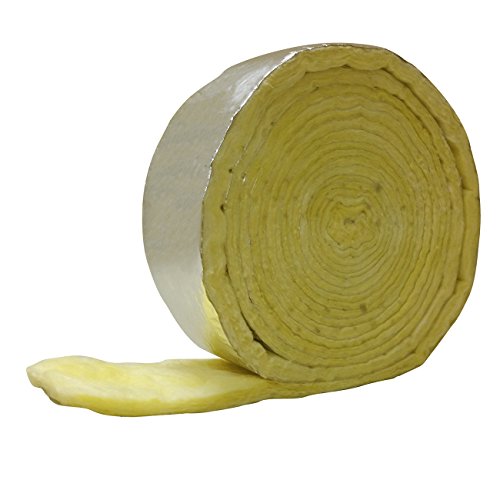
A narrow foil-backed fiberglass pipe wrap, 3 inches wide and 25 feet long, with a 1-inch thickness. It is sold for pipes and works on a duct where a wide blanket will not fit, such as the gap between a joist and a wall. The narrow width means more laps, and every lap is another place for the foil to wrinkle.
What stands out
- Narrow three-inch roll reaches gaps a wide blanket cannot enter
- Twenty-five feet covers a full basement run with material left
- Foil backing accepts tape at every overlapping lap
Watch out for
- Narrow width means several laps on a single four-inch duct
- One-inch thickness bulges where the run passes a tight closet
VIVOSUN Double Bubble Foil Insulation Roll, 6" x 25 ft Insulated Wrap

A 6-inch by 25-foot roll of double-bubble foil with a 10 mm bubble layer between two aluminum skins. It cuts with scissors, does not itch, and forms a moisture barrier on the outside of a duct. On a 4-inch duct the narrow width means a spiral wrap with small overlaps, which is slower than a blanket but far cleaner to handle indoors.
What stands out
- No fiberglass anywhere, so it cuts and handles cleanly indoors
- Reflective foil on both faces forms a moisture barrier
- Twenty-five-foot roll leaves spare material for cutting mistakes
Watch out for
- Six-inch width turns a duct wrap into a slow spiral job
- Bubble layer flattens and loses loft at tight bends
Frost King CF55 Foil Backed "No Itch" Natural Cotton Duct Wrap, 12-Inch x 1-Inch x 15-Feet

A 12-inch by 15-foot roll of natural cotton duct wrap with a foil facing and a Class A fire rating on the product page. The cotton core is soft, so it cushions vibration as well as insulating, and it can be handled without gloves or a mask. It is bulkier than a foil blanket, which matters when the space behind the dryer is already tight.
What stands out
- Cotton core needs no gloves, mask or goggles to handle
- Class A fire rating is stated on the product page
- Soft wrap cushions vibration noise traveling along the duct
Watch out for
- Bulkier than foil blanket, so it needs clearance behind the dryer
- Foil facing tears when pulled hard around a sharp corner
Buying guide
Cloth duct tape fails at the seam, not on the roll
Cloth duct tape was designed for holding, not sealing, and its rubber-based adhesive does not like heat or humidity. A dryer exhaust carries both. The tape goes on soft and pliable, then the adhesive migrates, the cloth backing dries out, and the leading edge lifts a few millimeters. That is enough. Lint sticks to the lifted edge, the flap grows, and airflow through the joint gets worse every month.
Foil tape holds because the backing does not stretch and the adhesive is usually acrylic, which tolerates heat far better than rubber. It still needs a clean surface. A new duct arrives with a light oil film from forming, and that film is enough to make any tape let go. Wipe the first two inches on either side of the joint with rubbing alcohol, let it dry completely, then tape.
Foil tape, duct wrap and pipe wrap are three products
Foil tape is 2 to 3 inches wide, comes on a paper or plastic liner, and does one job: it seals a seam, a crimp, or the transition from a hose to a wall thimble. It is not structural and it is not insulation. A roll of foil tape on a shelf next to a roll of foil wrap looks similar, but a tape roll is thin, adhesive-backed, and measured in feet rather than in R-value.
Duct wrap is the wide blanket. The Frost King SP55/6 here is 12 inches by 15 feet with an R-6 rating, and the Frost King CF55 is the same footprint in a natural cotton core with a Class A fire rating on the label. Pipe wrap is the narrow version, 3 inches wide and 25 feet long, sold for pipes and useful on a duct in a gap too narrow for a blanket. Bubble foil sits between them: thin, reflective, and easy to cut.
The order of work matters more than the brand. Seal every joint with foil tape, then wrap the body of the duct if the run passes through an unconditioned space, then tape the seams of the wrap. Wrapping first and taping through the insulation does neither job well.
Prep and pressure decide whether tape stays stuck
A dryer joint is a dirty place to stick anything. Lint, detergent residue and dust all sit on the outside of an old hose, and none of them bond to adhesive. Cut the tape to length before you start, peel only a few inches of liner at a time, and press the tape down with a rag rather than a fingertip. Body heat and skin oil are not helpful here; firm, even pressure is.
Overlap the tape past the joint by at least an inch in both directions, and wrap it fully around the circumference rather than laying a strip down one side. On a spiral hose, follow the seam instead of fighting it. If the tape wrinkles, pull it off and start again with a fresh piece, because a wrinkled section will lift at the crease within weeks.
Room temperature matters more than most people expect. Foil tape applied in a cold garage grabs poorly and stays poorly. Bring the roll inside for a day, and if the duct itself is cold, warm it with a hair dryer on low before pressing the tape down. This is a five-minute step that decides whether the joint lasts a year or a decade.
Heat rating, adhesive and foil thickness
The label on a foil tape should state a service temperature range and an adhesive type. Acrylic adhesive is the safer choice for a dryer because it resists heat aging. Rubber adhesive is cheaper, grabs faster on a cold surface and lets go sooner on a hot one. Foil thickness is usually given in mils; a thicker foil tears less easily at a crimped seam, which is where most failures begin.
Look for a tape listed for duct sealing, which in practice means a UL 181 listing on the core or the box. That listing is the manufacturer's claim that the product has been evaluated for duct work, and it is the quickest way to separate a real foil tape from a decorative one sold for craft projects. If the roll says nothing about ducts or temperature, treat it as general-purpose and keep it away from the exhaust.
One thing to avoid entirely is a butyl or rubberized patch sold as a leak stopper. Those products are thick, they do not conform to a spiral seam, and they leave a sticky residue that makes the next repair harder. A plain foil tape and a clean surface will outlast any shortcut.
Wrapping a 4-inch duct: width, overlap and clearance
A 12-inch wrap on a 4-inch duct spirals on with roughly a 2-inch overlap, which leaves about 8 inches of coverage per turn. A 15-foot roll therefore covers somewhere between 10 and 12 feet of duct once the overlaps and the ends are accounted for. That is usually enough for a short basement run and not enough for a duct that crosses an entire attic, so measure before ordering.
Clearance is the constraint people forget. A wrap adds an inch or more on each side, and the space behind a dryer is often 4 inches total. The bubble foil is thinner and more forgiving in that gap than a fiberglass blanket. Never compress a flexible duct to make a wrap fit, because a squashed duct costs far more airflow than the insulation saves in heat.
Face the vapor barrier outward. On a foil-and-fiberglass blanket, the foil side goes away from the duct, and every seam in the wrap gets its own strip of foil tape. An unwrapped seam is where warm air meets cold and condenses, which is the problem the wrap was supposed to solve.
When tape and wrap will not fix the run
A dryer that takes two cycles is usually starving for airflow, not losing heat. A hose crushed behind the machine, three 90-degree elbows, a run over 25 feet, or a termination hood packed with lint will all slow the exhaust no matter how well the seams are sealed. Insulation does not add a single cubic foot per minute of flow.
Fix the geometry first. Replace a foil flex hose with semi-rigid aluminum, shorten the run if the layout allows, and clean the outside hood. If the duct is genuinely long, a booster fan is the honest answer, and it belongs on a run that is otherwise in good condition. Tape is the cheapest part of the system and the one that fails first, but it cannot compensate for a duct that was installed badly.
Frequently asked questions
Can I use regular duct tape on a dryer vent?
No. Cloth duct tape uses an adhesive that softens in the warm, damp air a dryer produces, and the leading edge lifts within a season. Lint then catches on the lifted flap and the joint gets worse. A foil tape made for duct work, with an acrylic adhesive and an aluminum backing, is the right product and it is sold at any hardware store.
Do I need tape if the connection already has a clamp?
Yes, in most cases. A clamp holds the hose onto the fitting; it does not seal the crimped seam or the small gap between the hose and the pipe. Clamp first, then tape over the clamp and the joint. If the duct passes through an unconditioned space, wrap it after the tape is pressed down.
How much foil tape does one dryer take?
Two connections, one at the machine and one at the wall, use roughly 6 to 10 feet of 2-inch tape if each joint is wrapped twice. Buy a 30-foot roll and keep the remainder, because the same tape seals the seams of any insulation wrap you add later and gets used again at the next hose replacement.
Is insulation wrap required on a dryer duct?
Only in some situations. A short run inside a conditioned laundry room does not need it. A duct that crosses a cold garage, crawlspace or attic does, because warm moist exhaust condenses inside a cold duct and the water collects lint. Wrap the duct, not the dryer, and keep the vapor barrier facing outward.
Will wrapping the duct make clothes dry faster?
Rarely by much. Insulation keeps the exhaust warm and reduces condensation, but drying speed depends on airflow: duct diameter, run length, bends and a clear termination. If a normal load still needs two cycles, look for a crushed hose or a blocked outside hood before adding insulation to the run.
Verdict
For the insulation half of the job, the Frost King SP55/6 is the pick. Twelve inches wide, 15 feet long, R-6, with a foil face that takes tape at every seam. It is unpleasant to handle, and that is the price of the highest insulating value in this batch. The VIVOSUN bubble roll is the value choice if you want something you can cut without gloves; six inches wide means a spiral wrap and the bubbles flatten at bends, but it goes on clean and leaves spare material.
The Frost King CF55 is the upgrade when the duct sits in a closet and fiberglass dust would end up in the laundry, because the cotton core needs no gloves and the label carries a Class A fire rating. Buy the foil tape separately, seal the joint before anything else, and skip the wrap entirely if the real problem is a crushed hose or a run that is simply too long.