Dryer vent insulation is usually bought for the wrong reason. The complaint is slow drying, the guess is that heat is escaping through the duct wall, and the actual cause is a run that is too long, too bent, or blocked at the outside hood. Wrapping a restricted duct keeps the exhaust warm on its way to a problem insulation cannot solve.
It still earns its place in specific situations. A duct that crosses an unheated garage, crawlspace or attic gets cold, and warm moist exhaust condensing inside a cold pipe is how lint turns into a wet mat that closes the run down. A wrap holds the duct wall above the dew point and cuts the sweating. That is a real benefit, just a narrower one than most shoppers expect.
The products in this search are a mixed bag. Two are insulation, three are booster fans, four are short duct sections or a periscope, and one is a PVC condenser attachment that has no business inside a wall.
So the advice below is organized by what each one fixes. If you came for a wrap, the second section is yours. If the run is long, read the fan section first, because a fan does more for drying time than a blanket.
Top picks at a glance
Frost King Foil Backed Fiberglass Pipe Wrap, 3"x1"x25'
Check price on AmazonTjernlund LB2 No-Clog, Zero Maintenance DEDPV Dryer Duct Booster Fan with Auto
Check price on AmazonVIVOSUN Double Bubble Foil Insulation Roll, 6" x 25 ft Insulated Wrap
Check price on AmazonCompare the shortlist
| Model | Type | Capacity | Key feature | Amazon |
|---|---|---|---|---|
| 1. Frost King Foil Backed Fiberglass Pipe Wrap, 3"x1"x25' | Installation Parts | — | — | Check price |
| 2. VIVOSUN Double Bubble Foil Insulation Roll, 6" x 25 ft Insulated | Installation Parts | — | Efficiency | Check price |
| 3. Zuomeng M-4DBT Automatic Dryer Vent Booster Fan, 4 Inch Exhaust | Vent | — | Sensor drying | Check price |
| 4. Tjernlund LB2 No-Clog, Zero Maintenance DEDPV Dryer Duct Booster | Installation Parts | — | Drum light | Check price |
| 5. Deflecto Aluminum Duct with Connectors, Semi Ridgid, Flexible , | Installation Parts | — | — | Check price |
| 6. MATEWORK 5FT Dryer Vent Hose 4 Inch, Heavy Duty Flexible Aluminu | Hose | — | — | Check price |
| 7. 1PCS Drying Machine Water Tank PVC Air Duct Drum Dryer Condenser | Condenser | — | Condenser | Check price |
| 8. HOOMESUN 4 Inch 8FT Semi Rigid Dryer Duct, Vent Hose for Improve | Hose | — | — | Check price |
| 9. Periscope Dryer Vent, 2 Fixed Sizes 5.9" & 11", Stainless Steel | Stain remover | — | Stainless drum | Check price |
| 10. M-4DBT Automatic Dryer Vent Booster Exhaust Fan for 4 Inch Ducts | Vent | — | Low noise | Check price |
Detailed reviews
Frost King Foil Backed Fiberglass Pipe Wrap, 3"x1"x25'
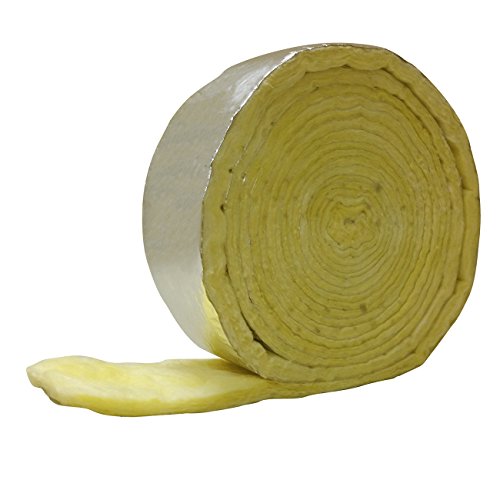
A 3-inch by 25-foot roll of foil-backed fiberglass pipe wrap, 1 inch thick, sold for pipes and useful on ducts in narrow gaps. The narrow width is the point: it slides between a joist and a wall where a 12-inch blanket cannot go. Expect several laps on a 4-inch duct, and tape every lap. It is the roll for a gap, not for a long open run.
What stands out
- Narrow roll slips into gaps a wide blanket cannot reach
- Twenty-five feet covers a long basement run comfortably
- Foil backing takes tape at every overlapping lap
Watch out for
- Three-inch width needs many laps on a four-inch duct
- One-inch thickness bulges where the duct passes close
VIVOSUN Double Bubble Foil Insulation Roll, 6" x 25 ft Insulated Wrap

A 6-inch by 25-foot roll of double-bubble foil with a 10 mm bubble layer between two aluminum skins. It handles like heavy craft paper, cuts with scissors, and leaves no fiberglass dust. On a 4-inch duct the narrow width means a spiral wrap, and the bubbles flatten at tight bends, but it is the easiest product here to install indoors.
What stands out
- No fiberglass, so it cuts and handles cleanly indoors
- Reflective foil on both faces forms a vapor barrier
- Twenty-five feet leaves spare material for cutting mistakes
Watch out for
- Six-inch width makes a spiral wrap slow to finish
- Bubbles flatten at bends and lose some of their loft
Zuomeng M-4DBT Automatic Dryer Vent Booster Fan, 4 Inch Exhaust Fan for Long Dryer Ducts, 200 CFM High Airflow

An automatic 4-inch booster fan rated at 200 CFM, intended for runs over 25 feet or with multiple bends. A pressure sensor starts it with the dryer and a 1-to-30-minute delay clears the duct afterward. The metal housing and digital controller are more substantial than the photos suggest. It solves airflow, not heat loss. Pair it with a wrap only if the run also crosses an unheated space.
What stands out
- Pressure sensor starts the fan with the dryer automatically
- Adjustable post-run delay clears residual moisture and lint
- Metal housing suits a damp utility room better than plastic
Watch out for
- Needs a power outlet within reach of the duct
- Adds a device that must be cleaned periodically
Tjernlund LB2 No-Clog, Zero Maintenance DEDPV Dryer Duct Booster Fan with Automatic Activation
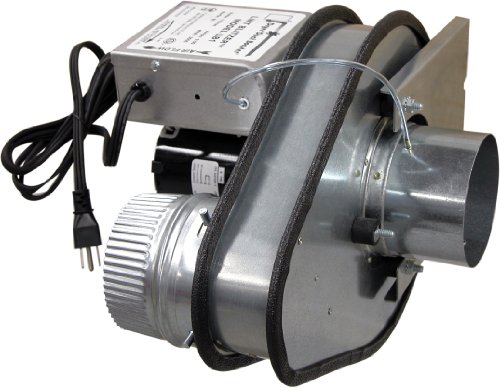
Tjernlund's LB2 dryer duct booster, aimed at runs of 25 feet or more and rated for up to 100 equivalent feet. The impeller is shaped to shed lint, the motor sits outside the airstream, and the housing installs in horizontal or vertical duct. This is commercial-grade hardware compared with the imported fans here. The trade is size: it needs more room at the duct than the compact units.
What stands out
- Rated for duct runs up to one hundred equivalent feet
- Motor mounted outside the airstream should last longer
- Impeller is shaped to shed lint and need less cleaning
Watch out for
- Large housing needs real space beside the duct
- Heavier than the compact fans and harder to fit
Deflecto Aluminum Duct with Connectors, Semi Ridgid, Flexible , 4" x 2', Silver (AM42)

Two feet of 4-inch semi-rigid aluminum duct with connectors, made from 30-gauge aluminum and rated to 284 degrees Fahrenheit. It is the piece you use to bridge two fixed sections or to extend a short wall collar far enough to clamp and tape. Short, stiff and unglamorous, and exactly right for that job. The 30-gauge wall resists crushing better than foil flex behind an appliance.
What stands out
- Semi-rigid wall holds shape and will not kink
- Connectors make a straight splice between ducts simple
- Thirty-gauge aluminum resists crushing better than thin foil
Watch out for
- Two feet is short for anything but a splice
- Cut edges stay sharp until they are taped
MATEWORK 5FT Dryer Vent Hose 4 Inch, Heavy Duty Flexible Aluminum Duct

A 5-foot, 4-inch dryer hose built from six layers including two foil skins, PET film, steel wire and a PVC coat, with rubber ring seals at both ends and two clamps. The rubber seals are the unusual part and the reason it is here: they push onto a fitting and seal without tape. Rated to 212 degrees Fahrenheit. It is a hose, not insulation, so treat it as a replacement part.
What stands out
- Rubber end seals simplify a connection in a tight gap
- Six-layer wall resists tearing, punctures and rough handling
- Five-foot length is right for a close-coupled dryer install
Watch out for
- PVC coating limits the heat rating to 212 degrees
- Foam seals tear if forced over a rough pipe
1PCS Drying Machine Water Tank PVC Air Duct Drum Dryer Condenser Dust Collector Flexible Stretch Exhaust Duct

A PVC condenser duct with a water tank, sold for drum dryers and condensation collection. The listing describes a stretchable exhaust pipe and moisture capture rather than venting to the outdoors. It is not a substitute for a vented duct on a conventional dryer, and no fire rating is stated. If your dryer vents outdoors through a wall, this is not the part you need.
What stands out
- Captures condensate for condenser-style appliances that cannot vent
- Stretches to fit several machine sizes and spaces
- No tools needed for basic assembly and fitting
Watch out for
- Not for a standard vented dryer exhaust run
- No fire rating is stated anywhere on the listing
HOOMESUN 4 Inch 8FT Semi Rigid Dryer Duct, Vent Hose for Improved Airflow

Eight feet of 4-inch semi-rigid aluminum duct with a smooth inner wall, supplied with two hose clamps and a roll of foil tape. The listing gives it a Class 0 fire rating and a range of -22 to 482 degrees Fahrenheit, and the semi-rigid construction takes a 90-degree bend without collapsing. A complete, sensible replacement kit. The smooth bore is the reason to pick it over a ribbed foil hose.
What stands out
- Tape and clamps included, so nothing else to buy
- Smooth interior helps airflow and cuts lint catch
- Class 0 fire rating stated on the product listing
Watch out for
- Eight feet is long for a tight closet install
- Semi-rigid duct is harder to route than foil flex
Periscope Dryer Vent, 2 Fixed Sizes 5.9" & 11", Stainless Steel Slim Duct

A periscope-style vent in stainless steel with a black coating, assembling to two fixed lengths of 5.9 or 11 inches. It ships with a 4-inch adapter, two adjustable clamps and foil tape. The flat profile is made for the gap between a dryer and a wall, and the fixed lengths mean you have to measure before ordering. The black coating hides exhaust staining better than bare steel.
What stands out
- Flat profile fits gaps a round hose cannot enter
- Stainless steel resists rust in a damp laundry room
- Adapter, two clamps and a roll of foil tape included
Watch out for
- Only two fixed lengths, with no fine adjustment
- Allows less flex when aligning the dryer to the wall
M-4DBT Automatic Dryer Vent Booster Exhaust Fan for 4 Inch Ducts

A second version of the automatic 4-inch booster fan, this one at 200 CFM and rated for duct runs up to 100 feet. The pressure switch starts it with the dryer and a post-purge cycle clears leftover hot air and lint. The listing quotes under 47 dB, roughly the level of a refrigerator, and covers gas and electric dryers. It is the same concept as the Zuomeng unit in a different housing.
What stands out
- Post-purge cycle clears the duct after every load
- Quiet enough for a room next to living space
- Fits standard four-inch duct on gas or electric dryers
Watch out for
- Requires a power source at the duct location
- The 200 CFM figure is a claim, not a verified rating
Buying guide
Insulation is the last step, not the first
Before a duct gets wrapped, it needs to be short, smooth and sealed. A crushed section behind the dryer, a run over 25 feet, three elbows, or a hood packed with lint will all throttle airflow, and no amount of R-value on the outside changes that. Insulation slows heat loss; it does not move air.
The order that works is unglamorous. Pull the dryer out, inspect the whole run, replace any hose that is kinked or torn, seal every joint with foil tape, clean the outside termination, then wrap the sections that pass through an unconditioned space. Skipping to the wrap leaves the restriction in place, insulates a bottleneck and adds a layer to strip off later.
Two wraps, and the blanket this list lacks
The Frost King pipe wrap is 3 inches wide, 1 inch thick and 25 feet long, foil-backed fiberglass sold for pipes. On a duct it earns its keep in gaps a blanket cannot enter, such as the space between a joist and a wall, or the last foot before a thimble. Narrow means more laps, and more laps mean more seams to tape.
The VIVOSUN roll is double-bubble foil, 6 inches by 25 feet, with a 10 mm bubble layer between two aluminum skins. It does not itch, it cuts with scissors, and it forms a vapor barrier on the outside of the duct. On a 4-inch duct the 6-inch width means a spiral wrap with small overlaps, which is slower than a blanket but much cleaner indoors.
A wide foil-fiberglass blanket is the third option, and the one to choose for a long straight run in an attic. None of the blankets appear here, which is worth knowing before you shop: if the run is more than ten feet in a cold space, a 12-inch R-6 blanket is the more efficient purchase than narrow rolls.
Cold spaces and condensation: the real argument for wrapping
A dryer pushes out air that is warm and full of moisture. When that air meets a cold duct wall it condenses, and the water sticks to lint already traveling through the pipe. The mixture sets into a felt-like layer that narrows the duct a little more each month. In a cold attic this happens fast, which is why vent runs in cold climates clog sooner than the same length indoors.
Insulation interrupts that cycle by keeping the duct wall warm. The vapor barrier has to be on the outside, facing the cold air, and every seam in the wrap needs foil tape. A wrap with open seams lets moist room air into the insulation, where it condenses just as readily and soaks the blanket instead of the duct.
Booster fans fix length, not heat loss
Three products here are fans: the Tjernlund LB2, the Zuomeng M-4DBT and the konzition M-4DBT. All three target a duct run long enough that the dryer's blower cannot push air through it. The Tjernlund listing cites runs of 25 feet or more and up to 100 equivalent feet, with the motor mounted outside the airstream.
The pair of M-4DBT units claim 200 CFM and use a pressure sensor to start with the dryer and run on after it stops, with an adjustable delay. That automatic behavior matters more than the airflow figure, because a fan wired to a manual switch gets left off. The konzition listing also quotes under 47 dB, which is roughly refrigerator level.
What a fan cannot do is fix a crushed hose or replace missing insulation. It also adds an electrical device into a damp, linty space, so it needs a proper power source and a mounting position that can be reached for cleaning. If the run is short and the dryer is still slow, the fan is the wrong purchase.
Short ducts, periscopes and the tight-gap problem
Four items here are duct sections rather than insulation. The Deflecto AM42 is 2 feet of 4-inch semi-rigid aluminum with connectors, useful for bridging two fixed pieces where a hose would sag. The Matework hose is 5 feet of six-layer aluminum with rubber seals at both ends. The HOOMESUN is 8 feet of semi-rigid duct supplied with two clamps and a roll of foil tape.
The OCZWV periscope is the specialist. It assembles to two fixed lengths, 5.9 inches with two sections or 11 inches with three, and fits the gap between a dryer and a wall where a round hose will not. It is not infinitely adjustable, and the listing says so plainly, which is why measuring the gap before ordering matters more than any spec on the page.
These short pieces are where a tight install succeeds or fails. A 5-foot hose on a 3-foot gap has to be compressed, and every compression crease is a lint trap. Match duct length to the space and use a periscope where the gap is inches.
What should not go into a vent run
One product in this list is a PVC condenser duct with a water tank, sold for drum dryers and condensation collection. It is not a substitute for a vented duct, it is not rated for the heat of a conventional dryer exhaust, and the listing offers no fire rating at all. Treat it as a part for a condenser appliance, not as insulation or as a vent upgrade.
The same caution applies to anything that narrows the airstream. A screen at the termination that clogs weekly, a length of flexible foil squeezed behind the machine, or a run spliced together with three types of tape all cost more airflow than they return. A vent system works best when it is boring: smooth pipe, few bends, sealed joints, clear exit.
Frequently asked questions
Does insulating a dryer duct actually help?
It helps in a cold space. Keeping the duct wall warm reduces condensation inside the pipe, which is what makes lint stick and clog the run. In a conditioned laundry room with a short duct, the gain is small. Fix airflow problems first, then insulate the sections that pass through unheated areas.
Can I wrap a dryer duct with ordinary attic insulation?
Not directly. Loose fiberglass or batts need a sealed vapor barrier on the outside, or they soak up moisture and lose performance. A foil-faced wrap made for ducts already has that barrier and can be taped at the seams. If you use batts, build a proper vapor barrier over them.
How do I know if my vent run is too long?
Count the equivalent length: straight feet plus about 5 feet for each 90-degree elbow. Many dryer makers cap the recommended run around 25 equivalent feet, and the Tjernlund listing here addresses runs up to 100 equivalent feet with a booster. If loads take two cycles, measure before buying anything.
Do booster fans work with any dryer?
They fit standard 4-inch duct and are used with both gas and electric dryers, but the fan has to be matched to the run and wired to a power source. A pressure-sensing model that starts with the dryer is easier to live with than a manually switched one, which tends to be left off.
Is it safe to insulate a duct inside a wall cavity?
Only with a foil-faced product and sealed seams, and only if the cavity itself is not a fire stop. Most codes want rigid metal duct inside walls, not flexible hose, so check the local requirement before wrapping anything concealed. Insulation on a concealed flexible duct is rarely the right fix.
Verdict
The VIVOSUN double-bubble roll is the pick for actual insulation. It cuts with scissors, does not itch, and the foil faces form a vapor barrier, which matters most in a cold space. The Frost King pipe wrap is the value choice when the duct runs through a gap too narrow for a 6-inch roll; it takes more laps, but it fits where a wide wrap simply will not go.
If the real complaint is drying time on a long run, skip the wraps and look at the Tjernlund LB2, the most serious fan in this batch and the one rated for the longest duct. The two M-4DBT units are the budget version of the same idea. Insulate after the airflow is right, not instead of fixing it.