Dye-trapping sheets are one of the few laundry products that show you their work. Pull one out of the drum after a mixed load and it has changed color, sometimes dramatically. That visible result is also the best way to judge whether the sheet is doing anything, which is more than can be said for most of what sits on the same shelf.
The category is built on a simple mechanism. The sheet is a nonwoven material treated to attract the dye molecules that wash out of fabric, so the dye bonds to the sheet instead of to the lighter garment beside it. Every sheet has a limit, and the limit is roughly proportional to its area and basis weight. That is why a large load needs more than one, and why a 70-count box and a 288-count case are not the same purchase at different prices.
Most of the products here are sold as color catchers, which is the same idea under a friendlier name. A few are marketed as dye traps and one is a microfiber absorber. One is a scent booster that has no business in the category at all. The useful distinction is capacity and construction, not the word on the box.
We compared specifications, features and owner reports for nine products, then ranked them on how much dye each sheet can realistically hold and how well it survives a wash cycle.
Top picks at a glance
Dye Trapping Sheets, 108 Count Color Keeper Sheets for Laundry, Prevent Light
Check price on AmazonARM & HAMMER Odor Blasters Laundry Scent Booster, Fresh Burst Scent, 24 Oz
Check price on AmazonShout Color Catcher Dye-Trapping Laundry Sheets, 72 Count, (4-Pack)
Check price on AmazonCompare the shortlist
| Model | Type | Capacity | Key feature | Amazon |
|---|---|---|---|---|
| 1. Dye Trapping Sheets, 108 Count Color Keeper Sheets for Laundry, | Vent | — | Child lock | Check price |
| 2. Xcleen Color Absorber Laundry Sheets 120 Count, Dye Catcher to P | Vent | — | — | Check price |
| 3. Grove Co. Bamboo Dye Trapping Laundry Sheets, 70 Count, Free & C | Vent | — | — | Check price |
| 4. Shout Color Catcher Dye-Trapping Laundry Sheets, 72 Count, (4-Pa | Vent | — | High efficiency | Check price |
| 5. Color Keeper® Dye-Trapping Laundry-Saving Sheets | Bleach | — | High efficiency | Check price |
| 6. Shout Color Catcher, Dye-Trapping Sheets, 24 Sheets | Vent | — | High efficiency | Check price |
| 7. 168 Count Color Abosorber Sheets for Laundry | Vent | — | Delay start | Check price |
| 8. ARM & HAMMER Odor Blasters Laundry Scent Booster, Fresh Burst Sc | Fabric Care | — | — | Check price |
| 9. Binbata Color Grasper for Laundry 110 Count, Dye Catcher Color A | Vent | — | Compact footprint | Check price |
Detailed reviews
Dye Trapping Sheets, 108 Count Color Keeper Sheets for Laundry, Prevent Light Colored Clothes from Being Dyed

ECO-CLEAN's 108-count box is aimed at protecting light-colored clothes from dye that runs off darker ones. The sheets are single-use, work at any temperature, and are described as safe for washable colorfast fabrics. The brand pitches the box as a time and water saver, since mixed loads mean fewer cycles. The count is a sensible middle size, and the price per sheet sits between the trial boxes and the large cases.
What stands out
- 108 sheets at a mid-range cost per wash
- Works at any water temperature your machine offers
- Single-use sheets that need no measuring or pouring
Watch out for
- No sheet dimensions are published on the listing
- Plain nonwoven with no mesh or microfiber claim
Xcleen Color Absorber Laundry Sheets 120 Count, Dye Catcher to Prevent Clothes from Smearing, Fragrance Free C

A 120-count box of Xcleen sheets with a high-density diamond mesh and a fragrance-free, dye-free finish. The mesh is the selling point: more surface area per sheet and better resistance to tearing, which matters in a front loader. One sheet goes in with detergent and clothes, and the sheet is discarded after the cycle. It is a solid middle-of-the-market box for a home that runs a couple of mixed baskets each week.
What stands out
- 120-count box at a low cost per sheet
- The diamond mesh adds surface area and tear strength
- Fragrance-free and dye-free, which suits very sensitive skin
Watch out for
- No dosing guidance beyond one sheet per load
- Thin enough to fold into a corner in a big drum
Grove Co. Bamboo Dye Trapping Laundry Sheets, 70 Count, Free & Clear
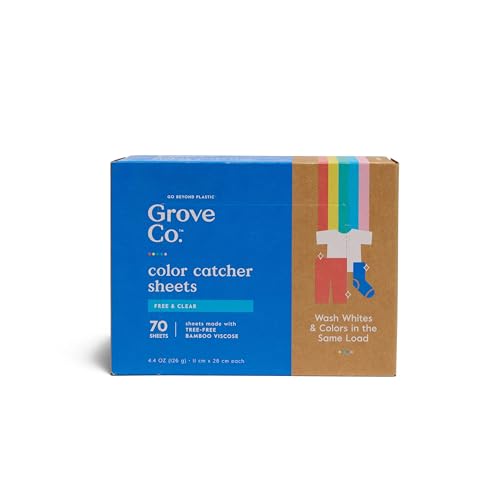
Grove Co.'s bamboo sheets come 70 to a box under a Free & Clear label. Bamboo is the story here, along with packaging that uses less plastic than a rigid tub. The sheet is designed to capture loose color in the wash and reduce transfer, and the low-mess format needs no measuring. Seventy sheets is the smallest full-size box in this group, so it suits a household that only occasionally washes colors and whites together.
What stands out
- Bamboo-based sheet with no fragrance or added dyes
- Packaging uses less plastic than the usual rigid tub
- Low-mess sheet format that needs no measuring at all
Watch out for
- 70 sheets is a short supply for a family
- Highest cost per wash among the bulk boxes
Shout Color Catcher Dye-Trapping Laundry Sheets, 72 Count, (4-Pack)

Four 72-count boxes of Shout Color Catchers, 288 sheets in total and the largest supply here. The formula and instructions match the familiar small box, and the case is aimed at households that would otherwise reorder every month. Storage is the only real consideration: two pounds of sheets in four boxes need a dry shelf. If you have the space and a steady stream of mixed laundry, the per-wash cost is hard to beat.
What stands out
- 288 sheets in total, spread across four boxes
- Same Shout formula as the small retail box
- Lowest cost per wash of any product here
Watch out for
- Four boxes need a dry, dedicated storage shelf
- Serious overkill for a one- or two-person household
Color Keeper® Dye-Trapping Laundry-Saving Sheets

Color Keeper's 120-sheet value pack uses a nonwoven infused with positively charged compounds that the brand says chemically bond to released dye. The sheet is fragrance-free, bleach-free and marketed as gentle on delicates as well as workwear. It is compatible with standard and high-efficiency machines. The technical explanation on the listing is more specific than most, which is a good sign in a category full of vague claims.
What stands out
- Charged nonwoven bonds dye rather than just absorbing
- Fragrance-free and bleach-free, which suits very sensitive skin
- 120 sheets works out to months of protection
Watch out for
- No sheet dimensions or basis weight are published
- Brand is less familiar than the legacy options
Shout Color Catcher, Dye-Trapping Sheets, 24 Sheets
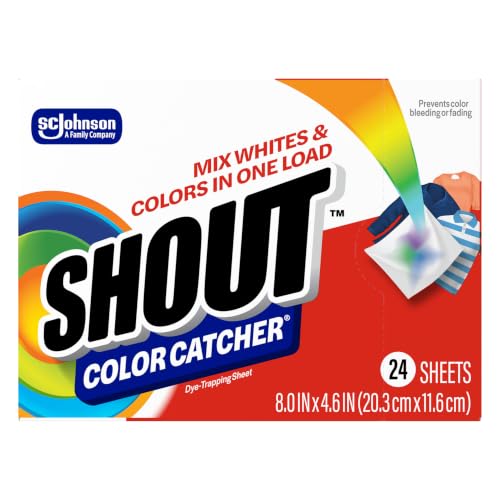
The 24-sheet Shout box is the reference product in this category and the easiest to find in a supermarket. It is labeled for all machine-washable whites and colors, all water temperatures, and both HE and standard machines. The sheet is designed to hold loose dye in suspension before it can settle on lighter fabric. Twenty-four sheets is a trial size, and the per-sheet cost reflects that.
What stands out
- Available in almost any grocery store or pharmacy
- Labeled for all water temperatures and machine types
- Simple and familiar instructions printed on the box
Watch out for
- 24 sheets runs out in under a month
- The highest cost per sheet in this comparison
168 Count Color Abosorber Sheets for Laundry

ECO-CLEAN's larger box holds 168 sheets and uses a microfiber construction the brand says absorbs loose dye and grime. That dual action is the difference from a plain nonwoven: the sheet picks up particulate soil as well as color, which helps keep wash water cleaner. The sheets are fragrance-free and meant for mixed-color loads. One hundred sixty-eight sheets is the second-largest count here and the cheapest per wash after the Shout case.
What stands out
- 168 sheets, which is the second-largest count here
- The microfiber captures both dye and particulate soil
- Fragrance-free and simple to use in any machine
Watch out for
- Microfiber sheet can feel bulky in a small drum
- No published dimensions or basis weight on the listing
ARM & HAMMER Odor Blasters Laundry Scent Booster, Fresh Burst Scent, 24 Oz

Another reminder that search results are not a category. ARM & HAMMER Odor Blasters is a scent booster, 24 ounces of baking soda and fragrance, designed to be added to the drum before the clothes. It neutralizes musty and sweaty odors and works in cold water. It contains no dye-trapping material, so it will not keep a navy towel from graying a white one. Buy it to fix a smell, not a color problem.
What stands out
- Its baking soda formula targets musty, sour towels
- Works in all machines at all wash temperatures
- Free of dyes, parabens and any heavy perfume
Watch out for
- It has no dye-trapping function whatsoever in the drum
- Scent is heavier than the no-heavy-perfume claim suggests
Binbata Color Grasper for Laundry 110 Count, Dye Catcher Color Absorber

Binbata's 110-sheet box is built on a raised rhombus weave that the brand describes as denser than an ordinary blocker. The sheet is fragrance-free and free of added dyes, and the company markets it for dorm rooms, families and travel. The stiffer texture helps it stay open in the drum instead of balling up, which is the practical benefit of the mesh. One hundred ten sheets is a reasonable middle count.
What stands out
- 3D rhombus mesh resists balling up in the drum
- 110 sheets at a competitive cost per wash
- No added fragrance and no added dyes of any kind
Watch out for
- Stiff sheet is less kind to very delicate fabric
- No third-party certification is named on the box
Buying guide
What dye trapping means on a label
The word trapping is doing real work. These sheets are not filters and they do not treat the water; they provide a surface that loose dye prefers to fabric. The treatment gives the sheet a positive surface charge, and most laundry dyes are anionic, so the dye is drawn to the sheet and held there. Once the available sites are occupied, the sheet stops absorbing and the remaining dye goes wherever it can, which is usually the lightest thing in the drum.
That is why the product is single-use and why a sheet that comes out pale did little. It is also why the sheets cannot rescue a load that was doomed before it started. If a new garment releases more dye than the sheet can hold, the excess lands on the other clothes, and no amount of extra sheets fully compensates. The sheet reduces risk. It does not eliminate it, and any brand that implies otherwise is overselling a piece of nonwoven fabric.
Sheet construction: mesh, microfiber and basis weight
The products here use three constructions. Standard nonwoven is the baseline: a bonded fiber mat that holds the charged treatment and stays intact through a cycle. Dense mesh versions, such as the diamond and rhombus patterns Xcleen and Binbata advertise, increase surface area per sheet and resist tearing. Microfiber, which ECO-CLEAN uses in its larger box, adds physical capture on top of the charge, so it picks up grit as well as dye.
Construction explains most of the price difference. A thicker sheet with more surface area can hold more dye before it saturates, and it survives a heavy load without shredding. A thin sheet is fine for a light mixed load but folds into a corner and does less. If you routinely wash towels with dark clothing, buy the denser sheet. If you only need insurance on a small basket, a standard nonwoven is enough, and paying for thickness is wasted money.
Capacity math for a real load
Use one sheet for a standard basket, two when the drum is full, and a third when several garments are brand new. That is the working rule, and it holds across every brand here. The reason is not brand caution but surface area: a single sheet can only contact so much water, and a drum packed with bedding leaves little room for the sheet to travel. Capacity is a function of contact, so a sheet pinned against the door does nothing.
A king comforter is the stress test. Wash it alone with two sheets, on a cycle with enough water to let it move, and expect the sheet to come out heavily tinted. A comforter that has been washed many times releases little dye, so one sheet may be plenty. The same logic applies to dark jeans: the first wash releases the most indigo, and the fifth releases almost none. Match the sheet count to the garment's history, not to the size of the drum alone.
The bulk boxes and what they actually cost
The counts here run from 24 sheets to 288. A 288-sheet case is roughly nine months at one sheet a day, and it is the cheapest per wash by a wide margin. The catch is storage: nonwoven sheets pick up humidity, and a box left open in a damp laundry room can smell like the room. Keep the case closed, keep it out of the splash zone, and decant a week's worth into a smaller box near the machine.
A 70- or 108-count box is the better shape for most households, because it fits a shelf and gets used before it goes stale. The 24-count is a trial size and priced like one. If you are buying for a shared laundry room or a large family, the case makes sense. If you are buying for two people in an apartment, the middle size will last a year and take up less space. Cost per wash only matters if the sheets get used.
Placement, pump risk and cycle length
Put the sheet in the drum, not the dispenser. In a top loader it can go in first or on top of the load. In a front loader, add it with the clothes and make sure small items are in a mesh bag, because a stray sock can gather the sheet and drag it into the pump. A sheet that ends up in the filter has done nothing for the load and may cost you a repair. This is the one real mechanical risk in the category.
Cycle length matters more than temperature. A long wash gives the sheet time to contact dye, while a 30-minute quick cycle may end before the sheet has done much. That is the opposite of what most people assume, since heat accelerates dye release. If you use quick cycles, add a second sheet rather than turning up the temperature. And do not put a sheet in a pre-wash dispenser or a soaking tub and expect it to work twice; it is saturated after one use.
Test it yourself, then stop guessing
A white cotton sock makes a decent control. Wash it with one new dark T-shirt, one dye-trapping sheet and your normal detergent, then compare the sock to a second sock that stayed out of the load. If the sock is noticeably grayer, the sheet was overmatched or the load was too small to let it circulate. Repeat with two sheets and a larger drum of water. Two tests will teach you more about your machine than any review.
Keep a note of the result. Households differ enormously in water hardness, drum size and how much new clothing they wash, so the right sheet count is local knowledge. Once you know that your machine needs two sheets for a mixed load of towels and darks, the brand matters much less. Buy on construction and count, test once, and then stop shopping for the category. It is a small part of laundry and should stay that way.
Frequently asked questions
Are dye-trapping sheets reusable?
No. The sheet works by binding dye to a fixed number of sites, and once those sites are occupied it cannot absorb more. A second run would release some of the captured dye back into the water. Use it once and throw it away. The sheet is not flushable and should go in the trash rather than the recycling bin.
Do dye-trapping sheets work with chlorine bleach?
Carbona says bleach will not damage its sheet, but bleach loads should still be washed separately. Bleach attacks the dyes in colored fabric, which is the opposite of what a dye sheet is protecting, and it can yellow synthetics. Use the sheet for mixed colors, and keep the bleach load on its own.
How many sheets should I use for a comforter or a large load?
Use two sheets for a full drum and a third when the wash includes new dark garments. Wash the comforter alone so it can move, and choose a cycle with enough water. A sheet pinned against the drum cannot contact the dye, so loading less is more effective than adding a fourth sheet.
Will a dye-trapping sheet stop new jeans from bleeding?
It will reduce the transfer, not stop it. New indigo releases a lot of dye in the first five washes, which is why the standard advice is to wash new dark garments separately at first, with or without a sheet. Use two sheets and keep whites out of the load until the color stops running.
Do these sheets affect detergent or fabric softener?
No. They are passive and do not change how detergent cleans or how softener deposits. Put the sheet in the drum with the load and keep liquids in their usual compartments. Do not confuse them with dryer sheets, which are a different product and should never go in the washer.
Verdict
Color Keeper's 120-sheet value pack is the top pick. The sheets use a charged nonwoven that bonds dye rather than merely absorbing it, the formula is fragrance-free and bleach-free, and 120 sheets cover a household for months without a reorder. ECO-CLEAN's 168-count microfiber box is the value choice, with the lowest cost per wash of anything here and a sheet dense enough for towels and darks in the same drum.
The Shout 288-sheet case is the upgrade for a family that runs mixed loads daily; it is the same trusted sheet in a quantity that lasts most of a year. Skip the 24-count unless you are testing, and skip the scent booster entirely if what you want is color protection.