By the time a stain reaches the laundry room, two decisions have usually already been made badly. Someone rubbed it with a wet cloth, which pushed it deeper into the weave. Then someone else washed it in hot water, which set it. The pretreater gets blamed for a result that was decided before the bottle was opened.
The order of operations matters more than the brand. Identify what the mark is, lift off whatever sits on the surface, treat with the right chemistry at the right temperature, give it time, then wash and check before drying. Each of those steps is simple. Skipping one is what turns a ten-minute job into a permanent shadow on a shirt.
This guide walks through that sequence in the order you would actually do it, from the moment a glass of wine goes over to the point where the garment goes into the machine. The products mentioned are examples of each type rather than a shopping list you need to complete. One gel stick, one spray and one bar will cover most of what a household meets.
We compared specifications, features and owner reports for the products named. Where something is not a laundry product at all, the guide says so instead of pretending otherwise.
Top picks at a glance
Miss Mouth's Messy Eater Stain Treater, Laundry Stain Remover, 4 Oz, 2 Pack
Check price on AmazonOxiClean Max Force Laundry Stain Remover Gel Stick, 6.2 fl oz
Check price on AmazonSweat X Extreme Stain Remover Spray for Clothes, 16 fl oz, 2 Pack
Check price on AmazonCompare the shortlist
| Model | Type | Capacity | Key feature | Amazon |
|---|---|---|---|---|
| 1. Miss Mouth's Messy Eater Stain Treater, Laundry Stain Remover, 4 | Stain remover | — | — | Check price |
| 2. Miss Mouth's Messy Eater Stain Remover Pen, On-The-Go Travel, 2 | Stain remover | — | — | Check price |
| 3. The Clean People Laundry Detergent Pods | Pods | — | High efficiency | Check price |
| 4. Carbona, Stain Devil Blood Milk No 4, 1.7-Ounce (6 Pack) | Stain remover | — | — | Check price |
| 5. ATTITUDE Baby Laundry Stain Remover Spray, Free & Clear, 27 oz | Stain remover | — | Enzyme formula | Check price |
| 6. Pit Stop, Sweat Stain & Deodorant (Antiperspirant) Armpit Stain | Stain remover | — | — | Check price |
| 7. OxiClean Max Force Laundry Stain Remover Gel Stick, 6.2 fl oz | Stain remover | — | Oxygen bleach | Check price |
| 8. Sweat X Extreme Stain Remover Spray for Clothes, 16 fl oz, 2 Pac | Stain remover | — | — | Check price |
| 9. Concentrated Coffee Pot Cleaner / Food and Beverage Stain Remove | Stain remover | — | — | Check price |
| 10. Dreft Laundry Stain Remover, 22 Fl. Oz (Pack of 1) | Stain remover | — | — | Check price |
Detailed reviews
Miss Mouth's Messy Eater Stain Treater, Laundry Stain Remover, 4 Oz, 2 Pack
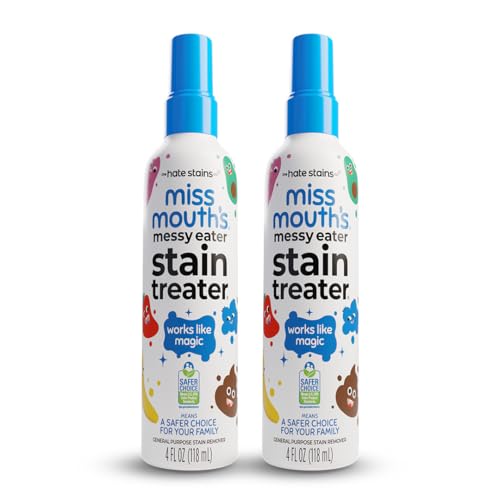
A two-pack of four-ounce stain treater spray, sold for baby and toddler messes and carrying EPA Safer Choice certification. It works on fruit juice, baby food, formula, ketchup, blowouts and blood, on fresh or set-in marks. The small bottles suit a nursery shelf and a changing bag better than a single large trigger, and the formula is mild enough for everyday use.
What stands out
- EPA Safer Choice certified formula for family use
- Handles both fresh and already set-in baby stains
- Two small bottles suit the nursery and changing bag
Watch out for
- Four ounces empties quickly with daily family use
- Mild formula is weak on heavy grease and ink
Miss Mouth's Messy Eater Stain Remover Pen, On-The-Go Travel, 2 Pack

A two-pack of stain remover pens sized for a purse or diaper bag, using the same Safer Choice formula as the spray. The label describes spraying, blotting and rinsing, and the pen format is for fresh marks while you are out rather than for a laundry-room treatment. It is a stopgap, not a replacement for a proper pretreat at home, and the slim body fits a side pocket.
What stands out
- Fits easily into a bag or a glovebox
- Good for fresh spills while you are out
- Two pens, so one can live in the car
Watch out for
- Small reservoir runs out fast with regular use
- Only limited effect on dried-in or greasy stains
The Clean People Laundry Detergent Pods

Thirty-two hypoallergenic laundry pods in recyclable paper packaging, free of dye, chlorine, parabens and phosphates, and labeled septic safe for top loaders, front loaders and HE machines. This is a wash detergent rather than a pretreater. It belongs in the routine for sensitive skin, after the stain itself has been treated, and the paper tub avoids another plastic jug. Each pod is pre-measured, so there is no scoop to lose or overfill.
What stands out
- Hypoallergenic and free of added dyes and chlorine
- Recyclable paper packaging rather than another plastic jug
- Works in top load, front load and HE machines
Watch out for
- It is not a pretreater despite the stain-fighting claims
- Lavender scent means it is not truly fragrance free
Carbona, Stain Devil Blood Milk No 4, 1.7-Ounce (6 Pack)

A six-pack of 1.7-ounce Stain Devil No. 4, formulated for blood and milk stains. Carbona sells a numbered range with a different formula for each stain family, and this is the protein specialist. The small bottles are precise for spot work, though the multipack is more than most households need unless blood stains are a frequent problem in the house.
What stands out
- Purpose-built for blood and milk, both protein stains
- The small bottle allows precise application on a spot
- Six bottles last through months of repeated treatment
Watch out for
- A single-purpose formula for one stain family only
- Six-pack is more than most households really need
ATTITUDE Baby Laundry Stain Remover Spray, Free & Clear, 27 oz

A 27-ounce enzyme spray, free and clear, made with plant-based ingredients and 98 percent naturally derived content. It targets food, sauce, grease, oil and dirt, works best on fresh stains, and the label advises reapplying on anything set in. Truly unscented, with no masking perfume, and sold in a recyclable bottle. It is made without borax, sodium borate, phthalates or MIT/CMIT. It is preserved with sodium benzoate and made without borax or synthetic fragrance.
What stands out
- Large bottle suits frequent treating in busy homes
- Truly unscented, with no masking fragrance at all
- An enzyme-powered formula built from renewable plant-based ingredients
Watch out for
- Needs a second application on most dried-in stains
- Not the strongest choice for heavy kitchen grease
Pit Stop, Sweat Stain & Deodorant (Antiperspirant) Armpit Stain Remover, Multi-stain formulation, 16oz.

A 16-ounce formula aimed at sweat and antiperspirant staining in armpits, and also sold for makeup marks and ring around the collar. It is one of the few products here addressing deodorant buildup specifically, which behaves differently from food stains because it combines aluminum salts with body oils. Also labeled for carpets, upholstery and bedding, which widens its use beyond the laundry.
What stands out
- Targets deodorant and sweat staining directly in armpits
- Also works on collars, cuffs and makeup marks
- Can be used on carpets, upholstery and bedding too
Watch out for
- Not a general-purpose product for most food stains
- Strong formula needs a patch test on color
OxiClean Max Force Laundry Stain Remover Gel Stick, 6.2 fl oz

A 6.2-ounce gel stick with pinpoint application, color safe and chlorine free, and labeled for oil, grease, makeup, blood, grass, ink and food. The gel can be applied now and washed up to seven days later. For a household building a small kit, it is the most useful single item because it covers the widest range of stains without overspraying the garment.
What stands out
- Precise gel application that produces almost no overspray
- Seven-day window before the treated item needs washing
- Color safe on whites, colors and dark fabrics
Watch out for
- Slow to spread across a large stained area
- Gel can feel tacky on the fabric until washed
Sweat X Extreme Stain Remover Spray for Clothes, 16 fl oz, 2 Pack
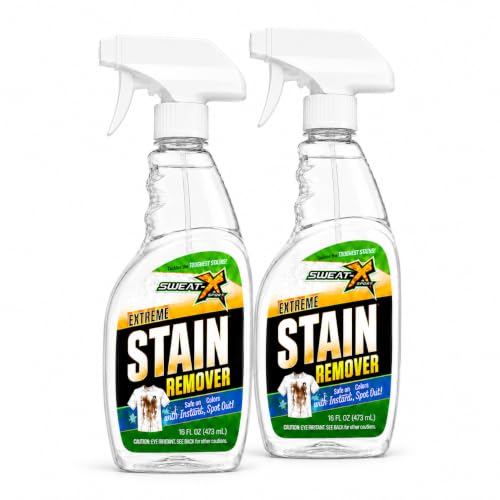
A two-pack of 16-ounce spray aimed at performance fabrics, sold for clay, grass, mud, blood and grease on sportswear and uniforms. The label claims a non-toxic, biodegradable formula that is safe on most fabrics including shoes. It is the specialist option when the laundry is mostly technical fabric rather than cotton, and the twin pack keeps one bottle in a kit bag.
What stands out
- Specifically formulated for technical fabrics and performance sportswear
- Handles clay, grass and mud from outdoor sports
- Two bottles for a kit bag and laundry room
Watch out for
- Overkill for ordinary cotton shirts and food stains
- A specialist product for a fairly narrow range of use
Concentrated Coffee Pot Cleaner / Food and Beverage Stain Remover
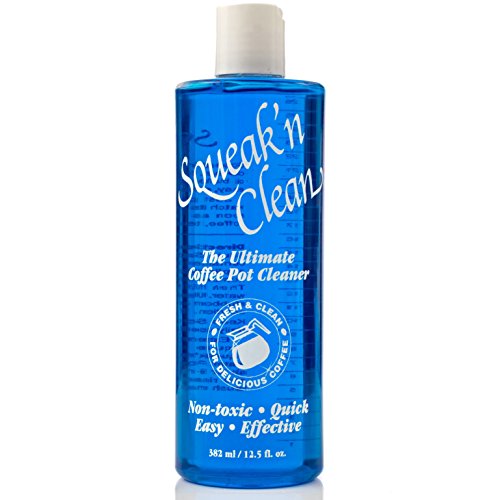
A 12.5-ounce concentrated cleaner for coffee pots, carafes and mugs, with more than twenty uses per bottle. It removes coffee and tea residue from equipment, not from clothing, and should not be used as a fabric pretreater. Included here because beverage stains are the most common kitchen problem, and the equipment that brews them needs cleaning too. The bottle is small enough to store under a kitchen sink.
What stands out
- Concentrated formula gives over twenty uses per bottle
- Cuts coffee and tea residue from glass carafes
- Made in the United States under domestic standards
Watch out for
- Not for use on clothing, fabric or upholstery
- Requires dilution, careful application and a thorough rinse
Dreft Laundry Stain Remover, 22 Fl. Oz (Pack of 1)

A 22-ounce stain remover sold for babies' clothing, effective at all temperatures and safe on colorfast fabrics. The label states it does not harm the flame-resistant capability of sleepwear, which is the specific assurance to look for on infant garments. It removes both stains and odors, and the large bottle suits a family with young children and near-daily baby laundry.
What stands out
- Label states it will not harm sleepwear flame resistance
- Works at all wash temperatures, including cold water
- Large bottle suited to frequent baby laundry loads
Watch out for
- Scented, which some parents prefer to avoid entirely
- Not marketed for adult clothing or technical fabrics
Buying guide
Step one: identify the stain before you touch it
Stains fall into a few families, and the family decides the method. Protein stains include blood, milk, egg, vomit, formula and most baby messes. Tannins come from tea, coffee, wine, fruit and juice. Oils and greases cover cooking fat, salad dressing, motor oil and many cosmetics. Pigments are the solids: mud, clay, mascara, ink and grass. Then there are the awkward singles such as rust, dye transfer and deodorant buildup.
Identification is usually obvious, but the combination cases are where people go wrong. A coffee stain with milk in it is a tannin plus a protein. A grass stain is pigment plus chlorophyll plus a little oil. In those cases, treat for the harder member of the pair first, which is usually the protein, and use cool water throughout. Heat is the one move that cannot be undone.
Step two: lift what you can, in cold water, without rubbing
Scrape or blot off anything solid before applying product. A spoon edge works for food, a paper towel for liquid, and a dull knife for wax or gum after freezing. Blot from the outside of the stain inward so you are not spreading it, and use a clean part of the cloth each time. Rubbing is the most common self-inflicted wound: it abrades the fiber and drives the stain deeper.
For dried stains, rehydrate before treating. A splash of cool water and five minutes of patience softens the crust so the product can penetrate. For protein stains, keep the water cool. For tannins and grease, warm water is acceptable and helps the product move. If the garment is dry clean only, stop here and take it to a cleaner rather than experimenting.
Step three: choose the product by stain family
Protein stains want enzymes and cool water. A dedicated enzyme spray such as ATTITUDE's baby stain remover or Miss Mouth's treater is the right first move, and Carbona's Stain Devil No. 4 is sold specifically for blood and milk. Apply, wait at least fifteen minutes, and resist the urge to use hot water to speed things up. If the mark is on sleepwear, confirm the product does not affect flame resistance.
Tannins and general discoloration want oxygen. An oxygen-based spray or a gel stick does the job, and a warm wash afterward helps. Grease responds to surfactant and time: a gel stick rubbed in and left for an hour, or a dish soap dab on a fresh oil mark, then a warm wash. Deodorant and sweat buildup in armpits is its own problem, which is what Pit Stop is formulated for.
Performance fabrics need a different approach again. Sweat X is aimed at technical fabrics and the clay, grass and mud that come with sport, and the label claims a non-toxic, biodegradable formula. The general rule with synthetics is to avoid fabric softener, which coats the fiber and traps odor, and to wash them inside out with the zippers closed.
Step four: dwell time and temperature are the only two knobs
Every pretreater label gives a minimum dwell. Five minutes is the floor for fresh food stains, fifteen for most sprays, and several hours for enzyme products on older marks. The OxiClean gel stick allows up to seven days. Longer is better up to a point, but a week in a warm hamper is a mildew risk, not a cleaning strategy.
Temperature should follow the stain, not the fabric care label's maximum. Blood, dairy, egg and formula get cool water at every stage, including the rinse. Tannins and oils tolerate warm. Oxygen products need warmth to activate, so a warm wash after treatment is appropriate once the protein risk is gone. When a garment's label says cold only, respect it and extend the dwell instead.
Step five: wash, inspect, repeat, and never tumble a stain
Wash at the warmest temperature the care label allows, with a normal dose of detergent. Do not add extra detergent to compensate for the stain; excess detergent leaves residue that attracts dirt and makes the fabric look dull. For a treated load, avoid overloading the drum, because clothes need room to move for the detergent to carry soil away.
The critical step is the inspection. Pull the garment out while it is still wet and look at the mark in good light. If any trace remains, treat it again and rewash. Once it goes into a dryer, the heat sets what is left, and the next attempt starts from a much worse position. Air dry anything you are unsure about. This one habit prevents more permanent stains than any product on the shelf.
Treat one garment at a time and keep it out of a mixed load until the stain is gone. A treated item that still holds soil or loose dye can transfer both to everything else in the drum. Wash several pieces together only after each has passed inspection.
Step six: build a kit for the laundry room and the bag
A workable kit is small: a gel stick for controlled treatment, a spray for area coverage, a bar for ground-in grime, and a pen for the bag. Miss Mouth's sells its treater as a four-ounce two-pack and as a two-pack of pens, which covers the nursery and diaper bag without decanting anything. Keep the pen in the car if spills happen on the way to school.
The kit should also include a soft brush, a clean white cloth and a plastic basin. White cloth matters because a colored one can bleed dye onto the wet stain. A basin lets you soak a single item without filling the machine. None of it needs to be fancy, and a household that has it will treat stains at the moment they happen rather than a week later.
Frequently asked questions
How do you get blood out of fabric?
Cool water only, immediately, then an enzyme or blood-specific treater such as Carbona's Stain Devil No. 4. Blot rather than rub, and let the product sit for at least fifteen minutes before washing cool. If the blood has dried, rehydrate it first and expect to repeat the treatment. Never use hot water or an iron on a blood stain, because heat sets the protein permanently.
What is the best way to treat a red wine stain?
Blot, do not rub, then apply an oxygen-based spray or gel and give it fifteen minutes before washing warm. Wine is a tannin, so oxygen does more than enzyme. If the garment is white cotton and the mark has dried, a long oxygen soak helps. Club soda is a harmless flushing agent but not a treatment; it will not reverse a set stain.
How do you pretreat a grease stain?
Lift the excess with a paper towel, then work a gel stick or a drop of dish soap into the mark and leave it at least an hour. Grease needs surfactant and time rather than heat. Wash warm, and check before drying. On polyester and blends, a second treatment is often needed because oil binds tightly to synthetic fibers.
Can old yellow stains be removed from white shirts?
Sometimes. Yellowing on white cotton is usually oxidized sweat and deodorant, which responds to an oxygen soak over several hours and a warm wash. Pit Stop is formulated for armpit staining specifically. If the yellow is discoloration of the fiber rather than a deposit, no product will restore it. Avoid chlorine bleach on synthetic blends, which can turn them yellow permanently.
Can I leave pretreater on clothes overnight?
Yes, for most enzyme and oxygen products, and overnight is often better than five minutes on a set-in stain. Hang the treated item rather than leaving it in a closed hamper so it can dry, and wash it the next day. Do not leave treated fabric for a week in a warm room, and never treat wool or silk and walk away, because both can be damaged by prolonged wet contact.
Verdict
The OxiClean Max Force gel stick is the one product to own if you only own one. It puts concentrate on the mark, tolerates a week before washing, and is color safe on everything from baby clothes to work shirts. The value pick is Miss Mouth's four-ounce two-pack: small bottles, a certified formula, one per room.
The upgrade is ATTITUDE's 27-ounce enzyme spray for households that treat often and want something unscented and plant based, with Sweat X alongside it for sports gear. Carbona's Stain Devil No. 4 is the specialist for blood and milk, and Pit Stop earns its space once deodorant stains recur.