Rigid dryer duct is a term the market uses loosely. A spiral-wound aluminum pipe that flexes in your hands is often labeled rigid. A periscope made of stainless sheet usually is not, even though it holds its shape better than most of the pipe on the shelf. The label matters less than the bore: a duct with a smooth, supported interior and no sharp crush points moves air, and one that sags or folds does not.
That is why the best rigid installations are often a mix. A periscope handles the last foot behind the machine, where clearance disappears. A semi-rigid aluminum section carries the short run to the wall. A flexible length appears only where nothing else will bend. The point is to keep the flexible part short and accessible, not to eliminate it entirely.
This guide covers the products that genuinely hold shape, the accessories that get sold alongside them, and the two impostors in the category: duct wrap, which insulates rather than carries air, and a booster fan, which moves air but is not duct at all.
If your run is long, bent or crushed, the fix starts with the duct, not with a fan bolted to the end of it.
Top picks at a glance
Periscope Dryer Vent 9.5-14.5",Low Profile Telescoping Duct for Tight Space
Check price on AmazonDryer Vent Hose 4 Inch
Check price on AmazonZuomeng M-4DBT Automatic Dryer Vent Booster Fan, 4 Inch Exhaust Fan for Long D
Check price on AmazonCompare the shortlist
| Model | Type | Capacity | Key feature | Amazon |
|---|---|---|---|---|
| 1. Periscope Dryer Vent 9.5-14.5",Low Profile Telescoping Duct for | Stain remover | — | Stainless drum | Check price |
| 2. Periscope Dryer Vent, Adjustable 12-19" Telescoping Duct for Tig | Stain remover | — | Stackable | Check price |
| 3. Eastman 8 Foot ArmorFlex Dryer Vent, Flexible Aluminum Duct with | Vent | — | Stainless drum | Check price |
| 4. Frost King CF55 Foil Backed "No Itch" Natural Cotton Duct Wrap, | Installation Parts | — | — | Check price |
| 5. 4 Inch 25 Feet R4.2 Insulated Flexible Duct | Installation Parts | — | High efficiency | Check price |
| 6. Frost King SP55/6 Foil and Fiberglass Duct Wrap, 12" x 2 ft x 15 | Installation Parts | — | Vibration control | Check price |
| 7. Dryer Vent Hose 4 Inch | Stain remover | — | Delay start | Check price |
| 8. Upgraded 90 Degree Dryer Vent Elbow Kit for 4 Inch Dryer Duct Ve | Hose | — | Connected controls | Check price |
| 9. Dryer Vent Hose | Hose | — | — | Check price |
| 10. Zuomeng M-4DBT Automatic Dryer Vent Booster Fan, 4 Inch Exhaust | Vent | — | Sensor drying | Check price |
Detailed reviews
Periscope Dryer Vent 9.5-14.5",Low Profile Telescoping Duct for Tight Space
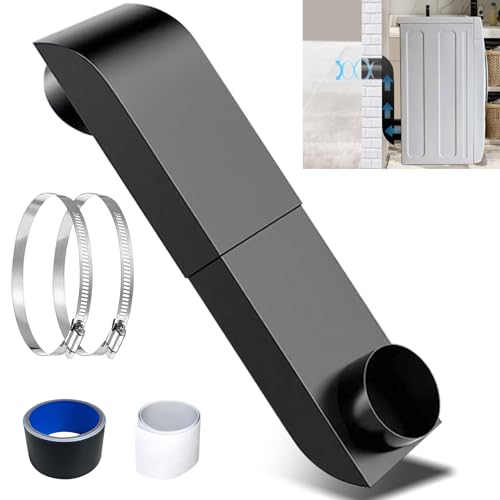
A 304 stainless periscope that adjusts from 9.5 to 14.5 inches, with a flat body that fits standard 4 inch outlets. It ships with three clamps and a silicone connector that compresses against the dryer outlet. The rigid offset replaces the folded hose that usually sits behind a machine pushed close to the wall, and the smooth interior gives lint fewer places to catch.
What stands out
- Telescopes from 9.5 to 14.5 inches for shallow gaps
- Stainless body will not crush, sag or deform
- Silicone connector and three clamps included in the kit
Watch out for
- Fixed offset will not suit every wall opening
- Too short for gaps deeper than 14.5 inches
Periscope Dryer Vent, Adjustable 12-19" Telescoping Duct for Tight Space

A stainless periscope that slides from 12 to 19 inches, built for deeper recesses and stacked units. The kit adds clamps and two rolls of aluminum foil tape, so both joints can be sealed without a trip to the store. The slide-and-lock body holds its length once set, which lets the dryer be pushed back without shortening the duct or loosening either collar.
What stands out
- Adjusts from 12 to 19 inches for deeper gaps
- Foil tape and clamps included for both ends
- Flat profile keeps the dryer close to the wall
Watch out for
- Requires at least 12 inches of clearance behind the machine
- Tape seals are weaker than clamped metal connections
Eastman 8 Foot ArmorFlex Dryer Vent, Flexible Aluminum Duct with Clamps, Semi-Rigid, 69028

Eastman's 8 foot ArmorFlex duct in semi-rigid aluminum, rated from -22 to 482 degrees Fahrenheit and Class 0 for flame spread. It forms a 90 degree bend without kinking, holds its shape while the dryer is positioned, and includes two stainless steel clamps. The smooth bore and wide temperature range make it the most dependable general-purpose duct in this group.
What stands out
- Semi-rigid aluminum holds its shape and resists kinking
- Rated from -22 to 482 degrees Fahrenheit for dryer heat
- Two stainless clamps included in the box for both ends
Watch out for
- 8 feet is short for an offset or long run
- Dents if it is bent sharply more than once
Frost King CF55 Foil Backed "No Itch" Natural Cotton Duct Wrap, 12-Inch x 1-Inch x 15-Feet

Frost King CF55 foil-backed cotton duct wrap, 12 inches wide, 1 inch thick and 15 feet long, with a Class A fire rating. It insulates, cushions and reduces vibration on ducts, and the no-itch cotton needs no gloves or mask. It is wrap rather than duct, so it goes over a sealed pipe and cannot carry exhaust air on its own.
What stands out
- Class A fire rating suits duct insulation work
- No-itch cotton is easy to handle without gear
- Cushions vibration and reduces heat loss along the run
Watch out for
- Not a duct and cannot carry exhaust air
- Needs foil tape or ties to stay wrapped
4 Inch 25 Feet R4.2 Insulated Flexible Duct

A 4 inch by 25 foot flexible duct with R4.2 insulation, sold for heating and cooling systems. The insulation and weather-resistant jacket suit garages, basements and outdoor runs, and it can be cut and bent without special tools. It works as insulated ductwork but is not marketed as a dryer vent, so it should not be used for hot lint-laden exhaust.
What stands out
- R4.2 insulation limits heat loss and stops condensation
- 25 foot length suits long HVAC and vent runs
- Weather-resistant jacket handles damp basements, garages and cold rooms
Watch out for
- Not sold or rated as a dryer vent duct
- Bulkier than a bare 4 inch duct in tight spaces
Frost King SP55/6 Foil and Fiberglass Duct Wrap, 12" x 2 ft x 15 ft

Frost King SP55/6 foil and fiberglass duct wrap, 12 inches by 2 feet by 15 feet, rated R-6. It insulates ductwork, helps stop vibration and tapes in place, and the foil facing resists moisture. The higher R value suits colder spaces than the cotton wrap, though it is bulkier and itchier to handle. Like the CF55, it is insulation and not a duct.
What stands out
- R-6 rating suits cold attics and crawl spaces
- Foil facing resists moisture, tears and light abrasion
- Tapes in place without special tools or fasteners
Watch out for
- Fiberglass needs gloves and long sleeves to handle
- Cannot be used as duct on its own
Dryer Vent Hose 4 Inch

A 4 inch flexible duct made from flame-resistant aluminum foil with a PVC layer and double steel wire. It bends through tight spaces and includes two stainless clamps that adjust across a 4 to 6 inch range. The smooth inner layer is meant to reduce lint buildup compared with a ribbed hose, but the duct still crushes if the dryer is pushed back against it.
What stands out
- Bends through tight gaps behind stacked washer-dryer units
- Two stainless clamps included for a sealed fit
- Flame-resistant foil and PVC outer layer resist sparks
Watch out for
- Crushes if the machine is pushed back hard
- Ribbed construction traps more lint than metal pipe
Upgraded 90 Degree Dryer Vent Elbow Kit for 4 Inch Dryer Duct Vent Hose.

A 90 degree elbow kit in ABS with a rubber seal, a hose connector and three stainless clamps. It is designed to let a 4 inch duct sit close to the wall without crimping, and the seal is meant to prevent leaks at the dryer outlet. It is an accessory rather than a duct, and it works best as the single turn at the machine rather than a chain of turns.
What stands out
- Rubber seal limits leaks at the dryer outlet
- Three clamps included for a secure, sealed connection
- ABS body resists crushing at the tight bend
Watch out for
- Only one elbow, so long offsets need more parts
- Adds resistance compared with a straight outlet at the machine
Dryer Vent Hose

An 8 foot flexible duct with four layers: two aluminum foil plies, PET film and a PVC outer wrap over steel wire. It is rated from 0 to 185 degrees Fahrenheit and ships with two clamps. The layered wall resists tears and punctures better than single-ply foil, and the length suits a short, straightforward dryer-to-wall connection. It is the least rigid duct here, and it is included because it is often sold as a vent upgrade.
What stands out
- Four-layer wall resists tears, punctures and rough handling
- 8 foot length covers a typical short run
- Two clamps included for both ends of the run
Watch out for
- 185 degree rating is modest for dryer exhaust
- Flexible bore still catches lint, so clean it yearly
Zuomeng M-4DBT Automatic Dryer Vent Booster Fan, 4 Inch Exhaust Fan for Long Dryer Ducts, 200 CFM High Airflow

An automatic duct booster fan rated at up to 200 CFM, with a pressure sensor that starts it with the dryer and a 1 to 30 minute delay timer. It is aimed at runs over 25 feet or runs with several bends, and the metal housing is built for continuous service. The digital display shows operating status, and the fan is designed to run quietly in a closet or utility room.
What stands out
- Up to 200 CFM for long or winding runs
- Pressure sensor starts and stops the fan automatically
- Adjustable 1 to 30 minute delay clears moisture
Watch out for
- Adds a powered component that can fail or jam
- Will not fix a crushed or clogged duct
Buying guide
What Rigid Actually Means
A rigid duct resists collapsing under the weight of the machine and the pull of the blower. Semi-rigid aluminum does that reasonably well: it is spiral-wound, holds a bend once formed, and will not flatten like foil laminate. True rigid pipe, usually galvanized or aluminum with snap-lock seams, does it best, but it needs fittings and room, and it rarely fits behind a modern dryer. A stainless periscope sits between the two, with a flat body that cannot crush and an adjustable length that replaces a pair of elbows. The category is really about support, not stiffness, because anything that keeps a smooth bore open vents better than a soft hose with a fold in it.
The practical test is simple. Squeeze the duct. If it deforms and stays deformed, it will sag between supports and collect lint at the low point. Look inside as well. A smooth bore with a visible seam is better than a ribbed accordion, because every rib is a place where lint catches and airflow slows. Manufacturers tend to recommend semi-rigid aluminum over foil for exactly this reason, and the recommendation is about airflow and fire risk rather than stiffness for its own sake. A rigid duct that is three feet too long, with four elbows, still vents worse than a short flexible run with one gentle bend.
Periscopes: Rigid Where It Counts
The last 12 inches behind a dryer is where ducts fail. The machine gets pushed back, the hose folds, and the fold becomes a lint trap. A periscope replaces that fold with a rigid offset that telescopes to the gap. The Solarisync unit runs from 9.5 to 14.5 inches; the cdipkif runs from 12 to 19. Both accept standard 4 inch outlets, and both keep the dryer far enough from the wall that the body of the machine does not rest on the duct. That alone prevents the slow crush that turns a two-cycle load into a three-cycle one.
Check the wall opening height as carefully as the gap. A periscope has a fixed vertical offset between its two collars, and if the dryer outlet and the wall cap do not sit at compatible heights, the duct will not fit even when the length is right. Seal both ends with the supplied clamps and a silicone connector or foil tape. A periscope that is merely pushed into place, unsealed, leaks hot moist air into the wall cavity, which is worse than a slightly crushed hose in open air. If the offset is wrong, an elbow plus a short pipe is the better answer.
Semi-Rigid, Flexible and the Booster Shortcut
Eastman's ArmorFlex is the reference semi-rigid duct in this group: 8 feet of aluminum, rated from -22 to 482 degrees Fahrenheit, Class 0, with two stainless clamps. It bends to 90 degrees without kinking if you form the bend by hand rather than forcing it with the machine. That habit matters. Semi-rigid duct that is bent once and left alone performs well; the same duct bent back and forth while someone shuffles the dryer into place develops creases that never come out. Form the bend on the floor, tape the joint, then slide the machine back in one motion.
When the run is long, a booster such as the Zuomeng unit is the alternative to opening a wall. It delivers up to 200 CFM, senses pressure to start and stop with the dryer, and offers a 1 to 30 minute delay to clear residual moisture. It is not a substitute for duct, and it will not rescue a line that is crushed or clogged. Treat it as the last 20 percent of performance on a run that is otherwise correctly sized, sealed and clean. If the duct is undersized or full of lint, the fan just adds noise to the same problem.
Elbows, Wrap and the Accessories That Get Mislabeled
A 90 degree elbow is not a duct, but it decides how well one works. The YZMLOL elbow kit uses an ABS body with a rubber seal and three stainless clamps, and it lets the vent sit close to the wall without crimping the hose. Two tight elbows back to back are worse than a single sweep, so use one elbow and a short straight section where the space allows. Every additional turn adds resistance that the blower has to overcome. A pair of 45 degree elbows is gentler than one 90 if you have room to spread them out.
Then there is wrap. Frost King's CF55 is foil-backed cotton, 12 inches wide and 15 feet long, with a Class A fire rating, and the SP55/6 is a foil and fiberglass wrap rated R-6. Both insulate a duct; neither carries air. They belong over a sealed pipe that passes through a cold space, where warm moist exhaust would otherwise condense and drip back. The muctamo R4.2 insulated flexible duct is a similar story: useful as insulated ductwork, not sold as a dryer vent. Buy these for insulation, and buy a duct for exhaust.
Frequently asked questions
Is semi-rigid duct the same as rigid duct?
No. Semi-rigid aluminum holds a bend and resists crushing, but it is still a flexible spiral pipe. True rigid duct is snap-lock galvanized or aluminum pipe with fixed fittings. Semi-rigid is usually the better compromise behind a dryer, where a rigid pipe cannot make the final turn without several elbows.
Can I replace rigid duct with flexible foil hose?
You can, but performance drops. Foil hose has a ribbed bore that catches lint, crushes easily and adds resistance over distance. If the run is short, straight and accessible, the difference is modest. On a longer run, or one with bends, semi-rigid aluminum keeps more airflow and is less likely to become a fire hazard.
Do I need a booster fan with rigid duct?
Only when the run is long or unavoidably bent. Rigid duct reduces resistance, so a well-planned run usually does not need help. A booster adds noise and another component to maintain. Fix the duct first: clean it, seal the joints, replace crushed sections and check the exterior damper before adding a fan.
What is duct wrap actually for?
Insulation. Wrap goes over a sealed duct to limit heat loss and prevent condensation when the run passes through an unheated attic, garage or crawl space. It does not carry air and cannot replace a damaged duct. Frost King's CF55 and SP55/6 are wraps, not vent pipes, despite appearing in vent searches.
Can I put a 90-degree elbow right at the dryer outlet?
Usually yes, if it is a close-turn elbow designed for the job and the machine can still sit close to the wall. Avoid stacking two elbows immediately after the outlet. One elbow plus a short straight section gives the air somewhere to recover, and it keeps the connection accessible for cleaning.
Verdict
The Solarisync periscope is the top pick for the place rigid duct matters most: the gap behind the machine. It telescopes from 9.5 to 14.5 inches, uses a stainless body that will not crush, and includes a silicone connector and three clamps. Step up to the cdipkif version if the gap runs to 19 inches.
For the run itself, the Eastman ArmorFlex is the value pick, with 8 feet of semi-rigid aluminum, a 482 degree rating and Class 0 flame performance. If the duct is long and cannot be rerouted, the Zuomeng booster is the upgrade, but only after the line is clean and sealed. The wraps are for insulation, not for carrying air.