A cabin washer has to survive things a suburban machine never meets: water from a well with grit in it, a breaker panel last updated in the 1970s, plumbing that gets drained every November, and weeks of disuse in between. The machine that wins on a showroom floor is rarely the one that survives a January cold snap in an unheated mudroom.
The other constraint is supply. Cabin wells are often low-yield, and a long wash cycle can empty a pressure tank faster than the pump refills it. That pushes the choice toward front loaders, which use less water per pound of laundry, or portable machines that fill from a sink and drain into a bucket. They fail in different ways, and the sections below explain which failure you can live with.
We compared specifications, features and owner reports for ten machines, from a 2.2 cubic foot Kenmore front loader to a cordless mini washer that fits in a duffel bag. Some are permanent installations; some are carried to the sink. A cabin with a real laundry room and a standby generator has far more options than one hauling water from a hand pump.
Top picks at a glance
GODECOR 3.0 Cu.Ft Portable Washing Machine, 30 lbs Full-Automatic Top Load Was
Check price on AmazonKenmore 2.2 cu. ft. Compact Front Load Washer
Check price on AmazonPortable Washing Machine, Mini Compact Single Tub Washer for Deep Clean Small
Check price on AmazonCompare the shortlist
| Model | Type | Capacity | Key feature | Amazon |
|---|---|---|---|---|
| 1. GODECOR 3.0 Cu.Ft Portable Washing Machine, 30 lbs Full-Automati | Top-load | 3.0 cu ft | Low noise | Check price |
| 2. Portable Washing Machine, Mini Compact Single Tub Washer for Dee | Portable | — | Quick cycle | Check price |
| 3. Compact Front Load Washer Washing Machine 2.8 cu. ft. Small Fron | Front-load | 2.8 cu ft | Low noise | Check price |
| 4. 16L Foldable Portable Washing Machine, 45dB Quiet 3-Mode Mini Wa | Portable | — | Low noise | Check price |
| 5. Fox Shack Washing Machine 15.6 lbs Automatic Laundry Machine 10 | Top-load | — | High efficiency | Check price |
| 6. Portable Foldable Washing Machine, Mini Washer for Deep Cleaning | Portable | — | Low noise | Check price |
| 7. 2026 Upgrade Portable Washing Machine 16L — Foldable Portable La | Portable | — | Low noise | Check price |
| 8. ALLEN ADMONDS Portable Mini Washing Machine, 16L Upgraded Foldab | Portable | — | Low noise | Check price |
| 9. Kenmore 2.2 cu. ft. Compact Front Load Washer | Front-load | 2.2 cu ft | Steam | Check price |
| 10. BLACK+DECKER Front Load Washer, 2.7 Cu. Ft. Compact Washing Mach | Front-load | 2.7 cu ft | Quick cycle | Check price |
Detailed reviews
GODECOR 3.0 Cu.Ft Portable Washing Machine, 30 lbs Full-Automatic Top Load Washer with Stainless Steel Drum, 8
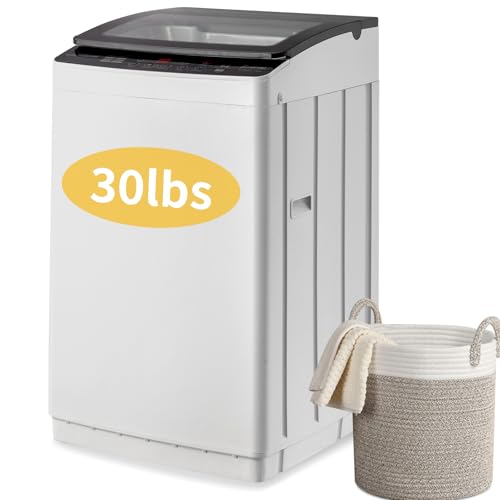
The largest portable in this group, rated for 30 pounds of laundry with a 3.0 cubic foot drum, 8 programs and 5 water levels. GODECOR uses an impeller rather than an agitator, which is easier on delicates, and adds a 24-hour delay, child lock and automatic unbalance detection. It is a serious machine for a cabin that has a sink and floor space but no laundry room.
What stands out
- 30-pound capacity from a machine you can move yourself
- Impeller action suits delicates, baby clothes and lingerie
- Delay start and child lock are included at this size
Watch out for
- 36 inches tall, so the lid needs clear headroom
- No stacking option, so it uses valuable floor space
Portable Washing Machine, Mini Compact Single Tub Washer for Deep Clean Small Laundry, Ideal for Socks, Underw

A battery-powered single-tub washer with a 4,000 mAh pack and a touchscreen. Two cycles are offered, a 5-minute quick wash and a 10-minute deep clean, and there is no spin or dry function, so clothes come out wet. It measures roughly 9 by 6 by 6 inches and is built for a suitcase, a boat locker or a camper drawer.
What stands out
- Runs from an internal 4,000 mAh battery, no outlet needed
- Small enough to store in a drawer or duffel bag
- Splash-proof body suits camp, boat and cabin use
Watch out for
- No spin cycle, so clothes come out dripping wet
- The tub holds socks and underwear, very little else
Compact Front Load Washer Washing Machine 2.8 cu. ft. Small Front Foading Space Saving Washer 24" with 36-Minu

A 2.8 cubic foot front loader with a quiet inverter motor, 16 cycles and a 36-minute quick wash, in a body listed at 24 inches wide. Noise is capped at 72 dB and a Tub Clean cycle handles drum hygiene. It can be stacked with a dryer, and the stainless drum resists the mineral buildup that comes with hard well water.
What stands out
- 2.8 cubic feet in a cabinet listed at 24 inches wide
- 36-minute quick cycle handles a day of cabin clothes
- Stackable, which saves the closet floor for storage
Watch out for
- Shipping bolts must be removed before the first use
- No steam option is listed for this model
16L Foldable Portable Washing Machine, 45dB Quiet 3-Mode Mini Washer, No Installation Compact Laundry for Trav

A 16-liter foldable washer with three modes of 3, 5 and 10 minutes and a claimed 45 dB noise level. Setup is a hose and a drain, not a plumbing job: add water, detergent and clothes, then let it empty. Folded, it stores under a bed or on a shelf. It washes small items but does not spin them dry, so a drying line is part of the system.
What stands out
- Folds flat for storage under a bed or on a shelf
- Three timed modes cover light, medium and heavy soil
- Quiet enough for a shared bunk room at night
Watch out for
- No spin basket, so hand wringing follows every wash
- 16 liters is a sink load, not a laundry load
Fox Shack Washing Machine 15.6 lbs Automatic Laundry Machine 10 Programs, LED Display, 8 Water Levels Top Load

A 15.6-pound top-load portable with 10 programs, 8 water levels, a 24-hour delay and a built-in drain pump with an extended hose. It ships with inlet and outlet hoses and a faucet adapter, so it can be set up without permanent plumbing. At 33 inches tall and 18.5 inches square, it fits where a full-size washer cannot go. It is a good fit for a cabin with a utility sink.
What stands out
- Built-in drain pump can lift water up to a sink
- Ten programs and eight water levels give useful control
- Faucet adapter and both hoses are included in the box
Watch out for
- 15.6 pounds per load is small for bedding and towels
- The faucet connection must be secure to prevent leaks
Portable Foldable Washing Machine, Mini Washer for Deep Cleaning, Ideal for Underwear Baby Clothes, Compact fo

A 20-liter foldable unit with three wash modes, a 45 dB rating and a folded footprint of about 12 by 12 by 6 inches. It is built for underwear, baby clothes and socks, and it runs without plumbing. The blue light is a marketing feature rather than a cleaning specification, but the quiet motor and the small packed size are real advantages in a loft or a bunkhouse.
What stands out
- Folds to roughly 12 by 12 by 6 inches
- 20 liters is generous capacity for a foldable washer
- No installation needed, drains into a sink or bucket
Watch out for
- There is no spin cycle to remove water
- Not intended for towels, jeans or family loads
2026 Upgrade Portable Washing Machine 16L — Foldable Portable Laundry Machine and Spinner for Baby Clothes, Un
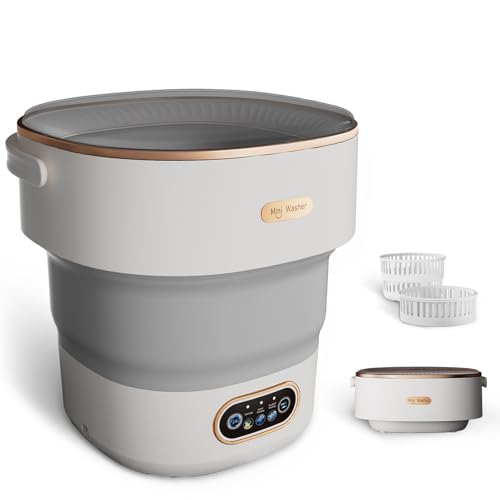
A 16-liter foldable washer with a spin basket, aimed at baby clothes, underwear and socks. The listing claims lower water and power use and quiet operation, and the machine is meant for travel, dorms and camping. A spin basket at this size is unusual, and it cuts drying time enough to matter when clothes are going on a line in cool weather.
What stands out
- Spin basket shortens line-drying time in cool weather
- Folds flat for storage between weekend visits to the cabin
- Low water and power draw suit a small solar system
Watch out for
- Small drum limits each load to a few garments
- The spin basket is small, so some wringing remains
ALLEN ADMONDS Portable Mini Washing Machine, 16L Upgraded Foldable Laundry Machine with Spin Basket, 3 Cleanin

A 5-pound foldable washer with a spin basket, a hidden drain hose and a UV blue light, rated at 26 watts and 12 volts. It runs three timed modes of 3, 5 and 10 minutes and folds from about 13 inches tall to 7 inches. The spin basket removes most of the standing water, which is rare at this size and makes it more useful than a wash-only tub.
What stands out
- Weighs about 5 pounds and folds down to 7 inches
- Spin basket removes most of the standing water
- 26-watt draw is easy on a small solar system
Watch out for
- 12-volt design is aimed at vehicle power, not wall outlets
- Water temperature is whatever the cabin tap gives
Kenmore 2.2 cu. ft. Compact Front Load Washer

A 2.2 cubic foot front loader with a steam option, an Iron Ready setting, Express and Accela Wash, and 15 cycles. It is ENERGY STAR certified, which matters when the cabin runs on a generator or a small solar array. The compact body can sit beside a dryer or stack under one, so a closet can hold a full laundry pair.
What stands out
- Steam option reduces wrinkles and shortens ironing time
- ENERGY STAR certified, which suits a generator power budget
- Side-by-side or stacked, so a closet can hold both units
Watch out for
- 2.2 cubic feet is small for comforters and bedding
- Steam cycle adds time and water to the wash
BLACK+DECKER Front Load Washer, 2.7 Cu. Ft. Compact Washing Machine with LED Display & 16 Cycles

A 2.7 cubic foot front loader with a stainless drum, 16 cycles and a 1,300 RPM maximum spin. The cycle list includes Sanitary, Wool, Bulky and Tub Clean, plus Add a Garment and Extra Rinse options. For a cabin that sees real use, the fast spin is what makes line drying practical in cool weather. It is the machine to buy if the cabin gets real use.
What stands out
- 1,300 RPM spin cuts line-drying time in cool weather
- Sixteen cycles, including Sanitary, Wool and Bulky settings
- Stainless drum resists the scale that hard well water leaves
Watch out for
- About 161 pounds, so installation takes two people
- There is no steam setting on this particular model
Buying guide
Water: wells, pressure tanks and hauling
A cabin well is not a municipal supply. It may deliver three gallons a minute or thirty, and the pressure tank may be small enough that one wash cycle drops the gauge to zero. Before shopping, time how long the pump runs to refill after you draw ten gallons, and look at the sediment filter. Grit and iron are hard on inlet screens and valves, and a machine that sits unused for weeks gives sediment time to settle and clog. A simple cartridge filter ahead of the washer is cheaper than a service call, and it keeps grit out of the inlet valve. Change it when the cabin opens and again when you close the place for the season, and write the date on the housing with a marker.
Front loaders are the safer bet for a low-yield well because they use less water per load. A portable that fills from a sink is safer still if you can watch the pressure. If the cabin has a cistern, you are managing a fixed volume and every cycle is a withdrawal. In that case, wash full loads only, skip the extra rinse, and keep a five-gallon jug on hand for the mid-cycle top-off some machines ask for. A cold wash stretches a tank further, and most modern detergents are formulated for it. Warm water is a luxury in a cabin, so save it for greasy work clothes and rinse cold when the well is low. Every cycle you avoid leaves water in the tank for dishes.
Power: generators, inverters and 12-volt machines
A generator that runs the lights will not necessarily start a washer. The motor pulls a surge at spin-up and a heater or steam generator adds load later in the cycle. Add the washer's rating to whatever else is running and compare the total with the generator's continuous rating, not its peak. If the cabin is off-grid with an inverter and a battery bank, a front loader with a heating element is usually out of reach, and cold washing becomes a habit rather than a preference. A 2,000-watt camping generator will run a small washer on a cold cycle only if nothing else is drawing at once, and electric heat is the line most cabin systems cannot cross, no matter how good the brochure looks.
Small machines change the math. The foldable units draw 26 watts or run from a 4,000 mAh battery, which is phone-charger territory, and they will run from a modest inverter. The trade-off is that they do not spin or heat. A middle path is a compact top loader run on cold cycles from a generator sized for the surge, with a line-dry routine that does not depend on a dryer at all. Battery units need charging too, and a 4,000 mAh pack gives only a handful of small loads before it goes back on the charger. Plan those loads for sunny afternoons if the cabin charges from solar, and keep a spare pack if you rely on the machine daily.
Freezing, draining and the empty months
The first hard freeze is what kills cabin washers. Water left in the inlet valve, the pump or the drain hose expands and splits castings, and the damage often shows up as a leak the following spring. Drain the supply lines, run a spin cycle to clear the drum, and pull the drain hose out of the standpipe so it can empty. Open the cabinet door as well, so air reaches the pump and the valve. If the machine has a filter, open it and let the water out. A cup of RV antifreeze in the pump housing is cheap insurance against a cracked housing. Do not forget the hose bib and the supply hoses themselves; a rubber hose that froze once will bulge and burst later.
Spring startup matters too. Before the first load, check the inlet screens for grit, look for mice in the cabinet insulation, and run a Tub Clean cycle. Machines that sat all winter with the door shut often smell of mildew, and a gasket can grow mold that no amount of detergent removes. Leave the door ajar whenever the cabin is empty, and prop the lid on a top loader. A dry drum is the single best predictor of a machine that still works in year five. In a humid summer, leave a moisture absorber in the drum and inspect the door gasket for black spots before the first wash of the season. Run a Tub Clean cycle before you trust the machine with a real load.
Drainage: where the water actually goes
Where the water goes is a legal question as much as a plumbing one. A cabin on septic should avoid sending a large wash volume into a marginal drain field in one shot; several smaller loads spaced through the day are gentler on the system. A gray-water line to the woods may be legal in one county and a violation in the next, so check before you plumb one. A portable that drains into a bucket gives you the most control and the least paperwork. Some cabins use a dry well or a French drain, which tolerates a wash cycle better than a septic tank but still has a limit. A bucket is also easy to inspect for lint, grit and the occasional sock.
If you need to drain uphill, you need a pump. Gravity hoses only work when the outlet sits below the machine, and a kink in a cheap hose will flood the floor. A built-in drain pump that lifts water to a sink or a standpipe is the difference between a machine you use and one you avoid. Whichever route you choose, add a drip pan and a water alarm. A slow leak in a cabin is discovered weeks later, usually by the smell. Fit a shutoff valve on the supply line so a burst hose cannot run until the next visit. Check the drip pan each time you open the cabin, and put the alarm where you will hear it from the porch.
Frequently asked questions
Can you put a regular washing machine in a cabin?
Yes, if the cabin has a durable water supply, a reachable drain and a circuit that carries the load. The usual blockers are a low-yield well, a marginal septic field and unheated plumbing. A compact front loader in a protected closet solves most of that.
Do portable washing machines work without plumbing?
The small ones do. They fill from a faucet or bucket, agitate, then drain through a hose into a sink or bucket. Models with a pump can push water upward; gravity models must drain downhill. You still need water in and water out.
How do you keep a cabin washer from freezing?
Drain it before the first freeze. Clear the inlet hoses, run a spin cycle, empty the drain hose and open the pump filter. Leave the door or lid open so the drum dries, and add RV antifreeze to the pump housing if the cabin sits below freezing.
Is a front loader better for a well with low pressure?
Usually, because it uses less water per load and fills more slowly. That said, a weak well can still struggle with any machine that runs several fill cycles. Measure the recovery rate first; if the pump cannot keep up, a hand-filled portable is more honest.
What size washer makes sense for a weekend cabin?
For two to four people, 2.2 to 2.8 cubic feet covers clothes, towels and limited bedding. Anything larger spends most of its life half full, wasting water and power. If guests bring comforters, a 3.0 cubic foot top loader is a reasonable step up.
Verdict
The Kenmore 2.2 is the pick for a cabin with real plumbing. Steam, Express and Accela Wash, 15 cycles and ENERGY STAR certification cover the practical cases, and the small drum suits a place that sleeps four. It also stacks in a closet.
Without permanent plumbing, choose the GODECOR 3.0. Its 30-pound capacity, delay start and child lock make it the most useful portable here. The SMETA 2.8 is the upgrade for a larger drum, a 36-minute quick cycle and quieter operation in a 24-inch cabinet. For a hunting camp with no outlet, the battery-powered unit still has a place.