Most cold-water advice starts with detergent, which gets the problem backwards. A modern detergent dissolves fine in 60-degree water. What changes is everything around it: surfactants work more slowly, body oils stay solid, and soil that would lift in a warm wash needs more time and more water to leave the fabric. The machine decides whether that happens.
That is why two washers rated for the same load can produce very different results on cold. One extends the tumble and rinses hard. The other senses a light load, cuts the fill to a few cups and runs a 30-minute cycle. The second machine is not lying about being efficient. It is simply doing less work.
We compared specifications, features and owner reports on eight machines that are set up for low-temperature washing, from a front loader with a purpose-built cold cycle to a 5.5 cu. ft. top loader that fills high enough to handle a duvet. None of them needs a special detergent, and all of them will punish overdosing.
One caveat before the picks: cold water is the wrong tool for grease, illness, pet accidents and anything biological. Use these machines' warm and steam options for those loads, then go back to cold for the 80 percent of laundry that is just daily wear.
Top picks at a glance
Electrolux 27 in. W 4.5 cu. ft. Front Load Washer with SmartBoost, LuxCare Plu
Check price on AmazonMidea MLTW41A1BMG 4.1 Cu. Ft. Gray Top Load Washer
Check price on AmazonLG WM4200HWA 5.0 cu ft Front‑Load Washer, Steam Wash, Allergiene™ Cycle, Large
Check price on AmazonCompare the shortlist
| Model | Type | Capacity | Key feature | Amazon |
|---|---|---|---|---|
| 1. Electrolux 27 in. W 4.5 cu. ft. Front Load Washer with SmartBoos | Front-load | 4.5 cu ft | Steam | Check price |
| 2. Midea MLTW41A1BMG 4.1 Cu. Ft. Gray Top Load Washer | Top-load | 4.1 cu ft | Top-load | Check price |
| 3. BLACK+DECKER 4.1 Cu. Ft. Top Load Washing Machine with Agitator, | Top-load | 4.1 cu ft | Delay start | Check price |
| 4. Samsung 5.0 cu. ft. Extra Large Capacity Smart Front Load Washer | Front-load | 5.0 cu ft | Steam | Check price |
| 5. Kenmore 4.5 cu. ft. Front Load Washer | Front-load | 4.5 cu ft | Steam | Check price |
| 6. LG WM4200HWA 5.0 cu ft Front‑Load Washer, Steam Wash, Allergiene | Washers | 5.0 cu ft | Steam | Check price |
| 7. LG WM3470CM 27 Inch Front Load Washer with 5.0 Cu. Ft. Capacity, | Front-load | 5.0 cu ft | Front-load | Check price |
| 8. LG WT8400CW 5.5 Cu. Ft. White Mega Capacity Smart Top Load Washe | Top-load | 5.5 cu ft | Connected controls | Check price |
Detailed reviews
Electrolux 27 in. W 4.5 cu. ft. Front Load Washer with SmartBoost, LuxCare Plus Wash System, Perfect Steam in

A 4.5 cu. ft. front loader whose SmartBoost system premixes detergent with water before it enters the drum. That is genuinely useful in a cold wash, because premixing does part of the dissolving work the temperature is not doing. Perfect Steam adds heat when a load needs it, and the dispenser takes pods, liquid or powder without a separate cup.
What stands out
- SmartBoost premixes detergent with water before it reaches the drum
- Perfect Steam adds a heated option for stained or sanitized loads
- The 4.5 cu. ft. drum fits a family load in one cycle
Watch out for
- Steam cycles undercut the energy savings you wash cold for
- At 217 pounds it needs two people and a solid floor
Midea MLTW41A1BMG 4.1 Cu. Ft. Gray Top Load Washer
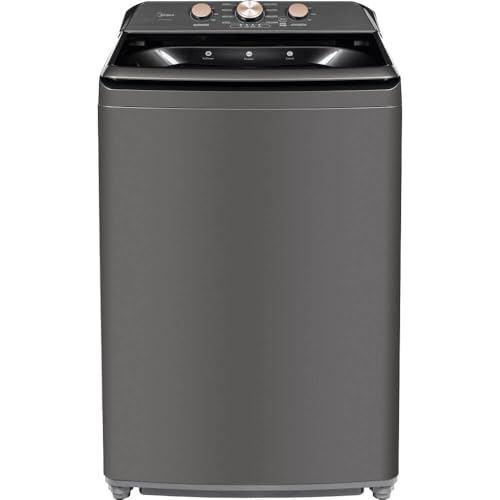
A 4.1 cu. ft. top loader with a High Water setting, the most useful cold-wash feature in a top-load design. More water means more dissolved detergent and better soil suspension. Eight presets, auto sensing and a Tub Clean cycle cover the basics, and at 128 pounds it is light enough for two people to move without a dolly. It is a sensible first machine.
What stands out
- High Water gives cold washes enough volume to dissolve detergent
- The Tub Clean cycle keeps film and odor in check
- At 128 pounds it is light enough for a two-person install
Watch out for
- Auto sensing can under-fill a small, lightly soiled load
- Eight presets is a short list next to the competition
BLACK+DECKER 4.1 Cu. Ft. Top Load Washing Machine with Agitator, BTLW41MW

BLACK+DECKER's 4.1 cu. ft. top loader uses a single agitator, a stainless steel tub and ten cycles, plus a 24-hour delay. The reversing agitator is hard on delicate knits but effective on work clothes and towels, and it keeps cycle times short. At just under 117 pounds it is the lightest full-size machine in this group, which matters if the laundry is upstairs.
What stands out
- The agitator handles heavy soil and stained work clothes quickly
- At just under 117 pounds it stays easy to deliver and set up
- A 24-hour delay lets cold washes run overnight on cheap power
Watch out for
- The agitator is rough on sweaters and anything with elastane
- There is no steam or sanitize cycle for stained loads
Samsung 5.0 cu. ft. Extra Large Capacity Smart Front Load Washer with Super Speed Wash and Steam, Brushed Blac

A 5.0 cu. ft. front loader with Super Speed, which Samsung rates at 28 minutes for a full load, plus steam and Wi-Fi through SmartThings. The drum swallows duvets and family loads, and the machine can be stacked or set side by side. Vibration reduction is not listed for this model, so give it a solid, level floor and a little clearance.
What stands out
- The 5.0 cu. ft. drum swallows duvets and large family loads
- Super Speed is rated at 28 minutes for a full load
- Wi-Fi adds end-of-cycle alerts and remote start through SmartThings
Watch out for
- No vibration-reduction feature is listed for this model
- At 216 pounds it needs a rigid, level floor
Kenmore 4.5 cu. ft. Front Load Washer

Kenmore's 4.5 cu. ft. front loader is built around a Cold Clean cycle that the listing says uses up to 90 percent less energy than the normal cycle on default settings with an 8-pound load. Steam Treat handles stains, and twelve cycles let you step down to cold without giving up heat. The controls are simple enough for a busy shared laundry.
What stands out
- Cold Clean is designed around low-temperature washing, not adapted to it
- Steam Treat rescues the stains cold water tends to leave behind
- Five wash temperatures let you step down gradually
Watch out for
- The energy figure depends on one specific small load
- At 34 inches deep it may not fit a shallow closet
LG WM4200HWA 5.0 cu ft Front‑Load Washer, Steam Wash, Allergiene™ Cycle, Large Capacity, SmartThinQ® Wi‑Fi Ena

LG's 5.0 cu. ft. WM4200HWA pairs TurboWash 360 with steam and the Allergiene cycle, which the listing says removes allergens plus 95 percent of pet dander and dust. SmartThinQ adds remote start and cycle status. It is the most feature-dense machine here, and the drum handles king comforters in one load. It is a strong pick for busy bedding-heavy households.
What stands out
- The 5.0 cu. ft. capacity cuts the number of weekly loads
- Allergiene suits bedding, pet blankets and allergy households
- ENERGY STAR certified, with Wi-Fi control through SmartThinQ
Watch out for
- More electronics means more control boards that can fail
- At 201 pounds and 33 inches deep, plan the alcove
LG WM3470CM 27 Inch Front Load Washer with 5.0 Cu. Ft. Capacity, 8 Wash Programs, 1,300 RPM, SpeedWash Cycle,

The WM3470CM is the cold-water specialist here. ColdWash is a named cycle that pairs cooler water with longer tumbling and the drum's six motion patterns, and the 1,300 RPM spin pulls out enough water to shorten drying. Eight programs, SpeedWash and SmartDiagnosis keep the control panel simple. If most of your laundry is shirts, jeans and activewear, the feature set is aimed squarely at you.
What stands out
- ColdWash is engineered for cold water rather than merely adapted
- The 1,300 RPM spin pulls out enough water to cut dryer time
- 5.0 cu. ft. of drum in a standard 27-inch width
Watch out for
- Only eight programs for a machine of this capacity
- There is no steam cycle on this model
LG WT8400CW 5.5 Cu. Ft. White Mega Capacity Smart Top Load Washer w/EasyUnload
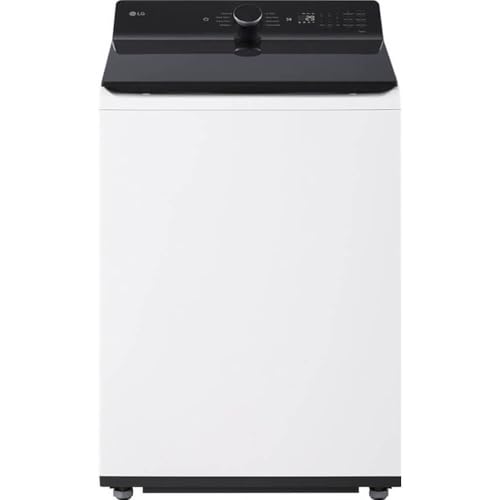
A 5.5 cu. ft. top loader with EasyUnload, a drum angled so you can reach the bottom without a grabber, and built-in AI that picks settings from the load. Capacity is the point: it is the largest machine here, useful for comforters and blankets. The published dimensions on this listing look incomplete, so measure the space and confirm the figures with the seller.
What stands out
- 5.5 cu. ft. is the largest drum in this comparison
- EasyUnload saves your back when the drum is full
- Built-in AI picks a cycle when nobody wants to choose
Watch out for
- The listing dimensions look incomplete, so verify before ordering
- Top-load agitation is less gentle than a front loader
Buying guide
What cold water actually changes
Temperature is one of four things doing the work in a washer, along with detergent chemistry, mechanical action and time. Drop the temperature and the chemistry weakens first. Surfactants dissolve more slowly, enzymes slow to a crawl, and body oils that would melt in a warm wash stay solid on the fibers. A well-designed cold cycle compensates with longer tumbling, more water and a more thorough rinse. A lazy one turns down the thermostat and hopes. The difference shows up on collars and cuffs long before it shows up on a spec sheet, and it explains why two machines with identical capacity ratings can produce different results on the same load. Check the length of the wash phase before you check the temperature dial.
This is also why the 25-minute and 28-minute cycle claims deserve a second look. Those numbers are measured on specific loads and often on warm settings, where detergent does more of the work. A cold wash of a genuinely soiled load takes longer, and it should. If a machine offers a quick cycle and a cold temperature but no way to extend the wash phase, plan on pretreating more and running two lighter loads instead of one heavy one. Speed and cold cleaning pull in opposite directions. The machines that manage both use water and drum motion to make up the difference, which is a fair description of the best units on this list. Time is the only lever that replaces heat, and it is free.
Cold cycles worth paying for
Two machines here name their cold setting. LG's ColdWash pairs cooler water with longer wash motions and the drum's six movement patterns. Kenmore's Cold Clean is the default energy-saving path, and the listing claims up to 90 percent less energy than the normal cycle on default settings with an 8-pound load. Treat that figure as a comparison between two cycles on one machine, not a promise about your utility bill. What matters is that both designs give the load more time instead of only turning down the heat. When you compare models, ask what the cycle changes mechanically, not what it is called. A named cycle with no extra time behind it is marketing. Ask for the cycle chart, not the brochure.
On machines without a named cold cycle you are choosing a temperature, not a strategy. Five temperature selections, as on the Kenmore, let you step down gradually instead of jumping from warm to tap cold. That matters in winter, when tap water can be cold enough to slow detergent action to a crawl. A steam option is useful but not free: Perfect Steam and Steam Treat both add heat, which is the thing you were trying to avoid. Use steam for stains and sanitizing, then return to cold for routine loads. The machines with the most temperature steps give you the most room to find a middle setting that works in your climate. Winter tap water is the real test of that middle setting.
Drum action and water level
Front loaders tumble clothes through a shallow pool, which is gentle and uses less water, but at cold temperatures that thin film has to carry all the detergent. A 4.5 to 5.0 cu. ft. drum with a long tumble handles this well. Top loaders with an agitator take the opposite approach: more water, more mechanical force, faster cycles and more wear. For work clothes, towels and diapers that trade is often worth it. For knits and anything with elastane, it is not. The practical test is simple: if your cold loads are mostly cotton and towels, an agitator will do the job; if they are mostly shirts and activewear, a front loader is the safer choice. Cotton likes agitation; elastane does not.
Water level is the quiet specification. Midea's High Water option and LG's 5.5 cu. ft. WT8400CW both give a cold load enough volume to keep soil suspended instead of redepositing it. Auto sensing is the feature that can undo this. Sensors read a small load and cut the fill, which saves water and is terrible for a cold wash of heavily soiled items. If a machine lets you override the sensed level, use that override. If it does not, wash smaller items together so the sensor sees a real load rather than a single shirt. Deep fill is the low-tech version of the same idea, and often the more reliable one. The manual water-level button is worth more than a dozen presets.
Detergent, hard water and residue
Cold water is unforgiving of overdosing. Liquid HE detergent disperses fastest. Powder can leave specks on dark fabric when the water never gets warm enough to dissolve it fully. Pods need enough water and time to break down, and a short cold cycle can leave the film intact against the clothes. Start at the low end of the dose printed on the bottle and add only if laundry comes out dull. In soft water, the low end is usually enough. If you have been using the same capful for years, measure it once; most people pour two to three times the dose they need. A cheap kitchen scale is more accurate than the cap and takes ten seconds per load.
Hard water is the other half of the residue problem. Calcium and magnesium bind with detergent and leave a gray film that shows first on towels. An extra rinse helps, and so does a monthly maintenance wash on hot with a tub-cleaning cycle, which both the Midea and several machines here offer. If your water is very hard, a softener will do more for your laundry than any cycle setting on this list. You can test hardness with a strip for a few dollars, and the result tells you whether to adjust detergent or treat the supply. Do not solve hard water by adding more detergent; that trades a mineral film for a soap film. Test the water before you treat it.
Installation, noise and running cost
All eight machines run on a standard 120V circuit, so the electrical work is minimal. The physical work is not. The front loaders here weigh between 198 and 217 pounds and need a level floor plus a firm connection to a standpipe or drain. Measure the doorway and the closet depth before ordering, and allow 28 to 30 inches of opening for a 27-inch machine once hoses and vibration are factored in. If the laundry is upstairs, check that the floor can carry the machine plus a full drum of water; a 200-pound washer becomes a 300-pound point load when it is running. A flexible drain hose and a shut-off valve within easy reach make future maintenance much simpler and cheaper.
Running cost comes down to hot water and spin speed. A cold-only routine removes the water-heating load almost entirely, and ENERGY STAR certification on the LG and Samsung models confirms the rest of the machine is efficient. Spin speed decides how much water the dryer must boil off. The LG WM3470CM's 1,300 RPM spin will leave towels noticeably drier than a top loader at roughly half that speed. Noise is the last variable: inverter motors run quietly, while agitators clunk. In an open-plan house, that difference is worth as much as a slightly larger drum, especially if the laundry shares a wall with a bedroom. Local utility rebates can narrow the gap between a standard model and an efficient one.
Frequently asked questions
Does cold water actually get clothes clean?
For everyday soil, yes. Cold water handles sweat, dust and light body soil as long as the detergent dose is right and the cycle runs long enough. It struggles with grease, cooking oil, heavy body oils and visible stains. Pretreat those or run them on warm.
Does washing in cold water kill bacteria?
No. Most bacteria survive a cold wash, and some survive warm. If someone in the house is sick, or you are washing gym clothes, kitchen towels or pet bedding, use the hottest cycle the fabric allows and a sanitizing option if the machine has one. Cold is for routine soil, not disinfection.
Do I need a special detergent for cold water?
Not necessarily. Most modern HE liquids are formulated to work across temperatures. Liquid disperses faster than powder in cold water, and pods need enough time to dissolve. If you prefer powder, choose a longer wash phase or pre-dissolve it in a cup of warm water.
Can sheets and towels be washed in cold water?
Routinely, yes, but not exclusively. Towels hold body oils and skin cells that cold water does not fully remove, and bedding collects dust mites. Run towels and sheets on warm or hot every second or third wash to keep them fresh and absorbent. Cold in between is fine and saves energy.
Why is there detergent residue after a cold wash?
Usually overdosing, hard water or an overloaded drum. Cold water dissolves less detergent, so use the low end of the dose, add an extra rinse and leave room for clothes to move. If white streaks appear, the powder is not dissolving; switch to a liquid.
Verdict
For cold-water washing, the LG WM3470CM is the pick. ColdWash is a designed cycle rather than a temperature setting, and the 1,300 RPM spin means the water you saved in the wash does not come back as dryer time. If most of your laundry is everyday clothing, this is the one.
On a tighter budget, the BLACK+DECKER BTLW41MW does the job for work clothes and towels, provided you can live with an agitator. The upgrade case belongs to the LG WM4200HWA: 5.0 cu. ft., steam for loads cold water cannot rescue, and the Allergiene cycle for bedding. Choose it if someone in the house has allergies, not just for the extra capacity.