The clearest sign of hard water is rarely in the washer. It is the white crust on the faucet aerator, the film on drinking glasses and the ring in the toilet bowl. Inside a washing machine, the same minerals work more quietly: they bind with detergent before it reaches the clothes, plate the drum and heating surfaces, and leave towels stiff enough to stand on their own.
No machine in this group softens water, and none claims to. What a good washer can do is give detergent enough water and heat to work, rinse the mineral load out of the fabric, and stay clean enough that scale does not turn into odor. Those are the criteria that separate the eight models here, more than any cycle name.
We compared specifications, features and owner reports, weighing extra-rinse options, dispensing design, spin speed and drum-cleaning cycles. Two top loaders make the list because a high-water fill still has real advantages when the water is hard. The rest are front loaders with steam, and one has a premix system aimed squarely at powder that will not dissolve.
Top picks at a glance
Kenmore 4.5 cu. ft. Front Load Washer
Check price on AmazonMidea MLTW41A1BMG 4.1 Cu. Ft. Gray Top Load Washer
Check price on AmazonLG WM4200HWA 5.0 cu ft Front‑Load Washer, Steam Wash, Allergiene™ Cycle, Large
Check price on AmazonCompare the shortlist
| Model | Type | Capacity | Key feature | Amazon |
|---|---|---|---|---|
| 1. Kenmore 4.5 cu. ft. Front Load Washer | Front-load | 4.5 cu ft | Steam | Check price |
| 2. Midea MLTW41A1BMG 4.1 Cu. Ft. Gray Top Load Washer | Top-load | 4.1 cu ft | Top-load | Check price |
| 3. Electrolux 27 in. W 4.5 cu. ft. Front Load Washer with SmartBoos | Front-load | 4.5 cu ft | Steam | Check price |
| 4. BLACK+DECKER 4.1 Cu. Ft. Top Load Washing Machine with Agitator, | Top-load | 4.1 cu ft | Delay start | Check price |
| 5. LG WM4200HWA 5.0 cu ft Front‑Load Washer, Steam Wash, Allergiene | Washers | 5.0 cu ft | Steam | Check price |
| 6. LG WM3470CM 27 Inch Front Load Washer with 5.0 Cu. Ft. Capacity, | Front-load | 5.0 cu ft | Front-load | Check price |
| 7. GE PROFILE 28 Inch Smart Front Load Washer with 4.8 cu. ft. Capa | Front-load | 4.8 cu ft | Connected controls | Check price |
| 8. LG WM4000HBA 4.5 Cu. Ft. Smart Front-Load Washer, High-Efficienc | Front-load | 4.5 cu ft | High efficiency | Check price |
Detailed reviews
Kenmore 4.5 cu. ft. Front Load Washer

A 4.5 cubic foot Kenmore front loader in white, with 12 cycles, five wash temperatures and an Extra Rinse option. Steam Treat handles stained loads, Cold Clean covers the low-energy end, and the machine is ENERGY STAR certified. Express Wash is listed at 25 minutes for a 3-pound load. The cabinet is 27.01 inches wide and 39.6 inches tall, with 34.02 inches of depth, so it fits a standard alcove but needs room behind it.
What stands out
- Extra Rinse clears mineral-heavy water out of the fabric
- Steam Treat helps with stained loads without soaking
- Twelve cycles, including a dedicated whites program for towels
Watch out for
- No bulk detergent tank to simplify daily dosing
- Thirty-four-inch depth crowds a narrow laundry room or closet
Midea MLTW41A1BMG 4.1 Cu. Ft. Gray Top Load Washer
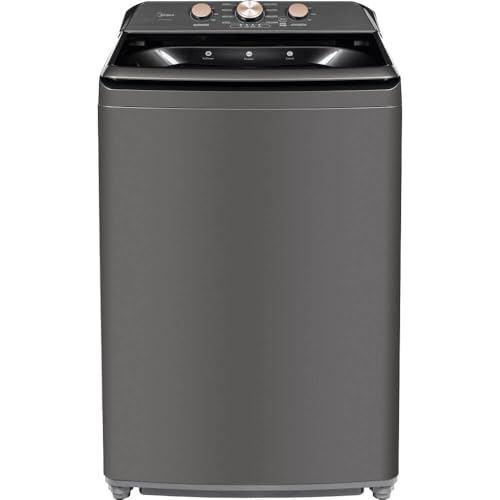
A 4.1 cubic foot Midea top loader in gray, with a High Water option, a Tub Clean cycle and Auto Sensing. Eight presets cover the basics, and the cabinet is 46 inches tall, 29 inches wide and 28 inches deep, at 128 pounds. The High Water setting is the reason it belongs here: more water dilutes the mineral load and gives detergent room to work. There is no steam and no extra-rinse button beyond the presets.
What stands out
- High Water option dilutes minerals across a full drum
- Tub Clean cycle flushes scale and detergent film
- Light enough for two people to move without a dolly
Watch out for
- No dedicated extra-rinse setting in the supplied specs
- Basic controls with no steam, heater or delay start
Electrolux 27 in. W 4.5 cu. ft. Front Load Washer with SmartBoost, LuxCare Plus Wash System, Perfect Steam in

A 27-inch Electrolux front loader with 4.5 cubic feet, SmartBoost, Perfect Steam and the LuxCare Plus system. SmartBoost mixes detergent with water before the cycle, which is exactly what powder needs in hard water, and the adaptive dispenser accepts pods, liquid or powder with separate bleach and softener compartments. Eleven or more cycles cover the usual fabrics, and the machine stands 38 inches tall with 32 inches of depth.
What stands out
- SmartBoost dissolves powder before it enters the drum
- Adaptive dispenser suits powder, liquid or pods equally well
- Perfect Steam adds heat for stubborn stains and greasy collars
Watch out for
- No built-in softener, hardness sensor or descale program
- Gasket needs drying to prevent odor between loads
BLACK+DECKER 4.1 Cu. Ft. Top Load Washing Machine with Agitator, BTLW41MW

BLACK+DECKER's 4.1 cubic foot top loader has a glass lid, a stainless tub and an agitator, and stands 42.13 inches tall. Ten cycles, an LED display and a 24-hour delay cover daily laundry, and the stainless tub resists the rust and film that hard water encourages. At 25.75 inches wide it slips into closets a 27-inch front loader cannot use. No steam or extra-rinse option appears in the supplied specs.
What stands out
- Narrow 25.75-inch cabinet fits tight closets and doorways
- Stainless tub resists mineral film, rust and chipping
- Agitator handles heavily soiled work clothes and shop towels
Watch out for
- No steam or second-rinse option listed for hard water
- Top-load design uses more water per cycle than a front loader
LG WM4200HWA 5.0 cu ft Front‑Load Washer, Steam Wash, Allergiene™ Cycle, Large Capacity, SmartThinQ® Wi‑Fi Ena

A 5.0 cubic foot LG front loader with Steam Wash, Allergiene, TurboWash 360 and SmartThinQ Wi-Fi. The larger drum means fewer loads of mineral-heavy water through the machine, and the steam cycle helps with stained towels. It is ENERGY STAR certified and measures 27 inches wide, 39 inches tall and 33.25 inches deep. At 201.5 pounds it is manageable for two people with a stair dolly.
What stands out
- Five cubic feet reduces the number of wash cycles
- Steam Wash helps with stained towels and workwear
- TurboWash 360 keeps cycle times reasonable on bulky loads
Watch out for
- No dedicated hard-water or descale program on the dial
- Deep cabinet needs 33.25 inches of space behind the door
LG WM3470CM 27 Inch Front Load Washer with 5.0 Cu. Ft. Capacity, 8 Wash Programs, 1,300 RPM, SpeedWash Cycle,

An LG front loader with 5.0 cubic feet, eight wash programs and a 1,300 RPM spin, the fastest listed here. SpeedWash shortens the normal cycle, Rinse and Spin adds a rinse without a wash, and SmartDiagnosis helps with fault codes. ColdWash and 6Motion cover fabric care, and there is a control lock for households with children. The cabinet is 27 inches wide, 39 inches tall and 33 inches deep.
What stands out
- 1,300 RPM spin extracts more mineral-heavy water before drying
- Rinse and Spin adds a rinse without a full wash
- Five cubic feet handles bulky bedding and full family loads
Watch out for
- No steam cycle appears in the supplied specifications
- Eight programs is a short list for the size
GE PROFILE 28 Inch Smart Front Load Washer with 4.8 cu. ft. Capacity in White GFW550SSNWW

A 4.8 cubic foot GE Profile front loader, 28 inches wide and 39.75 inches tall, with UltraFresh Vent, OdorBlock and built-in Wi-Fi. The vent dries the drum after each cycle, which matters in hard water because damp mineral film is where odor starts. A 20-minute Quick Wash and a 35-minute Time Saver mode cover small and mixed loads, and the SmartHQ app adds remote start and alerts.
What stands out
- UltraFresh vent keeps the drum dry between loads
- 4.8 cubic feet fits bedding, towels and a week of clothes
- Quick Wash handles small loads in 20 minutes
Watch out for
- Twenty-eight-inch width will not fit a 27-inch space
- No dedicated descale or hard-water cycle in the specs
LG WM4000HBA 4.5 Cu. Ft. Smart Front-Load Washer, High-Efficiency Laundry Machine with Wi-Fi Connectivity, Bla

A 4.5 cubic foot LG front loader in black steel with TurboWash 360, ThinQ app control and the Allergiene cycle, which the listing says removes 95 percent of pet dander and dust. The steam and longer wash are useful for towels that have gone stiff, and the 4.5 cubic foot drum is a sensible size for two or three people. The listing's dimension data is inconsistent, so confirm the cabinet size before you order.
What stands out
- Allergiene cycle adds heat and a longer wash
- TurboWash 360 shortens the normal cycle by several minutes
- Black steel finish hides scuffs in a utility room
Watch out for
- Listing dimensions are inconsistent, so measure before ordering
- Dark finish shows water spots and mineral dust
Buying guide
What Scale Does Inside a Machine
Hard water carries dissolved calcium and magnesium. Heat pushes those minerals out of solution, which is why scale collects on heating elements, drum surfaces and valve seats rather than staying suspended. A front loader uses less water per load, so the minerals are more concentrated in the small volume that does the work. Over a few years the film traps detergent, lint and body oils, and the machine develops a smell that no amount of fragrance will cover. Scale does not announce itself. The first sign is usually an element that takes longer, or a drum that feels rough under your hand. By the time the machine smells, the film is thick enough to hold lint.
The warning signs are consistent: towels that feel like cardboard, whites that drift grey, detergent that will not lather, and white streaks on dark clothes. A chalky ring in the dispenser drawer is another. If two or more of those sound familiar, test the water before you shop. Municipal reports list hardness, and a lab test costs less than a service call. Anything above roughly seven grains per gallon is where the routines below start to matter. A water test also tells you whether the hardness is carbonate or non-carbonate, which changes how easily it lifts with acid. Your city report is free, and a well needs a lab test anyway. Start there. Test kits are cheap and take ten minutes.
Detergent Form and Dose
Powder detergent usually contains builders that grab calcium and magnesium so the surfactants can do their job. That makes powder a sensible default in hard water, provided it dissolves. Liquid detergent is convenient and gentler on dark colors, but some formulas have less builder content and rely on the water being soft. Pods dose precisely but cannot be adjusted, which is a problem when your water needs more help than the pod was designed to give. Check the label for a hardness chart instead of guessing. Most brands publish one, and it says whether to add a quarter cup or a half at your level. Ignoring it is how people end up with stiff towels in a machine that works correctly.
More detergent is not the answer. Past a point, the extra surfactants have nothing to bind to and stay in the fabric, which is how stiff, scratchy towels happen. Follow the manufacturer chart for your water hardness, use the warm setting so powder dissolves, and add a booster only for stained loads. A whole-house softener or an under-sink ion exchange unit is the only real fix; the washer can only cope. A softener also cuts the detergent you need, which repays part of the cost over a few years. If a whole-house unit is out of reach, a small under-sink cartridge for the laundry tap is a fair compromise. Measure before you buy the machine, not after.
Settings That Earn Their Place
An extra rinse is the most valuable button in a hard-water house. It carries away the mineral-laden water that the spin leaves in the fabric, along with the detergent that was bound to it. Warm water dissolves powder faster and keeps detergent working, while a cold wash with powder is a recipe for grit in the drum. On a top loader, a High Water option does similar work by giving the load more liquid to dilute into. Look at the cycle table in the manual for rinse counts. Some machines add a rinse automatically on certain programs, and knowing which saves you from pressing the button twice. Use High Water for towels and jeans rather than every load.
Cycle choice matters less than people expect. Normal and heavy duty differ mainly in agitation time and soil settings, not water chemistry. A prewash or soak helps stained loads, and steam helps loosen soil, but neither removes scale. Rinse and Spin, as on the LG WM3470CM, adds a rinse without repeating the wash. Fabric softener is not a fix for stiffness; it coats fibers and makes the residue problem worse. Temperature is the other lever. A warm wash with a correct dose beats a hot wash with too much detergent, because heat and excess surfactant set residue into the fibers. Your heater setting caps what hot can do. Warm is the workhorse setting in a hard-water house.
The Monthly Routine That Delays Damage
Run a tub clean or hot maintenance cycle once a month, and wipe the door gasket and dispenser drawer in the same session. A washer cleaner or a citric-acid descaler, used as the manual directs, dissolves the film that holds odor. Do not mix it with bleach, and do not pour vinegar into the dispenser routinely; the acid is fine in a maintenance cycle but hard on rubber parts if it sits. Follow the manufacturer's instructions rather than a social media recipe. Frequency matters more than strength. A mild cleaner used monthly beats a harsh descaler used once a year, because the film never gets a chance to set. Put the date on the calendar and treat it like a filter change.
The drain pump filter, where one exists, collects coins, lint and scale flakes, and a clogged filter shows up as slow drains and standing water. Clean it quarterly with a towel underneath. Pull the dispenser drawer out and soak it in hot water every few weeks. These habits will not soften the water, but they keep the machine from compounding the problem, and they cost almost nothing. Scale flakes also collect in the inlet screens and the drain pump, which is why flow and drainage faults appear together. A slow fill is often a screen, and a slow drain is often the filter. A bucket and a towel make the filter job painless. Do it outside if you can.
Spin Speed, Pressure and Installation
A faster final spin leaves less mineral-heavy water in the fabric, which shortens dryer time and reduces the residue that drying bakes in. The LG WM3470CM lists 1,300 RPM, the highest in this group. High spin speeds demand a level floor and a solid cabinet; on a wood-framed floor, vibration can be worse than the water savings are worth. Check the floor before you chase the number. A front loader on a suspended floor may need a mat or a brace at 1,300 RPM. If the machine walks across the floor, stop using the high spin until it is level. A bubble level and a wrench solve most of it. Do that before the first load.
Inlet screens are the other hard-water weak point. Mineral flakes and sediment collect in the small mesh filters at the back of the machine, and flow drops until the fill valves strain. Clean them once a year, and replace rubber hoses every five years or at the first sign of bulging. Every model here runs on 120-volt power and standard hookups; the practical constraint is depth, which runs from 27 to 34 inches. Depth is the number people forget. A 34-inch machine needs 36 inches with hoses, and bifold doors cost another inch to the track. Measure the opening and the stair turn before delivery. Keep the manual with the machine, not in a drawer.
Frequently asked questions
Can a washing machine soften hard water?
No. A washer can rinse more thoroughly and use heat to help detergent work, but it cannot remove calcium or magnesium. Only an ion-exchange softener does that, whether whole-house or a small under-sink unit. If hardness is above about seven grains per gallon, treat the water first and the machine second.
Is powder or liquid detergent better in hard water?
Powder generally performs better because it contains builders that tie up minerals, provided it dissolves fully. Use warm water and add powder before the clothes. Liquid is fine for dark colors and cold washes, but check the label for hardness guidance. Pods are convenient but fixed in dose, which limits them in very hard water.
Should I use more detergent in hard water?
A little more, following the chart on the package for your hardness level, but not double. Excess detergent leaves residue that makes towels stiff and traps minerals in the drum. If clothes still look dull after the correct dose, the problem is usually the rinse and the drum film, not the amount of soap.
Does vinegar damage a washing machine?
Diluted white vinegar in an occasional maintenance cycle is commonly used and generally tolerated, but check your manual first. Do not leave it sitting in the dispenser, and never mix it with bleach, which produces a dangerous gas. Citric-acid washer cleaners are a safer default if you are unsure.
How often should a washer be cleaned in hard water?
Once a month for the drum, gasket and dispenser, and every three weeks if the machine already smells musty. Clean the drain pump filter quarterly. In very hard water, scale builds faster than the manual's schedule assumes, so treat the suggested interval as a minimum rather than a target.
Verdict
The Electrolux 4.5 is the pick for hard water because it addresses the root problem: SmartBoost premixes detergent with water before the wash, so powder dissolves instead of caking, and Perfect Steam adds heat without a long soak. The adaptive dispenser takes powder, liquid or pods, which matters when you change detergent to suit the water.
The Kenmore 4.5 in white is the value choice, with Extra Rinse, Steam Treat and 12 cycles in a standard 27-inch cabinet. If you want a larger drum, the LG WM4200HWA gives you 5.0 cubic feet plus steam. For the fastest spin here, the LG WM3470CM lists 1,300 RPM and a Rinse and Spin cycle that helps in mineral-heavy water.