Rental laundry is its own product category. The machine will be loaded by people who never read the manual, run with the door shut wet, filled with a comforter that should have gone to a laundromat, and expected to work on a Sunday night when nobody has the repair tech's number. Durability matters, but so does the cost of a callback.
That reframes the shopping list. A twenty-cycle panel with a WiFi app becomes a liability when a tenant cannot work it and calls you instead. A top loader with an agitator and a dial is boring, and boring is what you want at turnover. Front loaders still earn their place where water and power sit on the owner's bill, or where only a stacked pair fits.
We compared specifications, features and owner reports for eight machines that turn up in rental inventories: three LG front loaders, a Kenmore, a Samsung, and top loaders from GE, Midea and BLACK+DECKER. The notes below focus on what a landlord pays for over five years, which is rarely the purchase price alone. Simple controls, standard footprints and easy service count for more here than in a family home.
Top picks at a glance
LG WM4200HWA 5.0 cu ft Front‑Load Washer, Steam Wash, Allergiene™ Cycle, Large
Check price on AmazonMidea MLTW41A1BMG 4.1 Cu. Ft. Gray Top Load Washer
Check price on AmazonKenmore 4.5 cu. ft. Front Load Washer
Check price on AmazonCompare the shortlist
| Model | Type | Capacity | Key feature | Amazon |
|---|---|---|---|---|
| 1. LG WM4200HWA 5.0 cu ft Front‑Load Washer, Steam Wash, Allergiene | Washers | 5.0 cu ft | Steam | Check price |
| 2. Kenmore 4.5 cu. ft. Front Load Washer | Front-load | 4.5 cu ft | Steam | Check price |
| 3. BLACK+DECKER 4.1 Cu. Ft. Top Load Washing Machine with Agitator, | Top-load | 4.1 cu ft | Delay start | Check price |
| 4. Midea MLTW41A1BMG 4.1 Cu. Ft. Gray Top Load Washer | Top-load | 4.1 cu ft | Top-load | Check price |
| 5. GE GTW500ASNWS Top Loading Washer with Stainless Steel Basket, 4 | Top-load | 4.6 cu ft | Top-load | Check price |
| 6. LG WM3470CM 27 Inch Front Load Washer with 5.0 Cu. Ft. Capacity, | Front-load | 5.0 cu ft | Front-load | Check price |
| 7. Samsung 4.5 cu. ft. High Efficiency Front Load Washer with Vibra | Front-load | 4.5 cu ft | Low noise | Check price |
| 8. LG 5.2 cu. Ft Stackable Smart Front Load Washer in Black Steel w | Front-load | 5.2 cu ft | Steam | Check price |
Detailed reviews
LG WM4200HWA 5.0 cu ft Front‑Load Washer, Steam Wash, Allergiene™ Cycle, Large Capacity, SmartThinQ® Wi‑Fi Ena

A 5.0 cubic foot LG front loader with steam, an Allergiene cycle, TurboWash 360, SmartThinQ WiFi and ENERGY STAR certification. At 27 inches wide it fits a standard alcove, and the 201-pound cabinet is manageable for a delivery crew. The feature set suits a premium rental where the tenant pays utilities and expects a modern machine. It is the most feature-heavy option here.
What stands out
- 5.0 cubic feet handles bulky tenant loads like comforters
- ENERGY STAR certified with steam and allergen cycles
- WiFi status lets a remote owner check the machine
Watch out for
- The app setup tends to generate support calls at move-in
- About 201 pounds, so book a two-person install
Kenmore 4.5 cu. ft. Front Load Washer

A 4.5 cubic foot front loader with Steam Treat, 12 cycles, Cold Clean and ENERGY STAR certification, in metallic silver. The 27-inch width fits a standard alcove, and the light-touch controls are simpler than a full smart panel. It is a sensible middle option when the building pays for water and power but the unit is not a luxury listing.
What stands out
- The standard 27-inch width makes later replacement simple
- Steam Treat reduces the pretreating tenants never do
- ENERGY STAR certified for buildings where the owner pays utilities
Watch out for
- About 216 pounds, so plan the delivery route
- The front-load gasket needs wiping that most tenants skip
BLACK+DECKER 4.1 Cu. Ft. Top Load Washing Machine with Agitator, BTLW41MW

A 4.1 cubic foot top loader with an agitator, 10 cycles, a glass lid and a 24-hour delay. At about 117 pounds it is the lightest full-size machine here, and the controls are a short list rather than a menu. For a budget unit, the combination of low weight, simple controls and an agitator is close to ideal. It is also the easiest of the group to move with two people.
What stands out
- Lightest full-size option here at about 117 pounds
- Agitator tolerates sand, pet hair and heavy soil
- Ten cycles with a short and simple control list
Watch out for
- The agitator is hard on delicates and wool
- Top-load cycles use noticeably more water per pound
Midea MLTW41A1BMG 4.1 Cu. Ft. Gray Top Load Washer
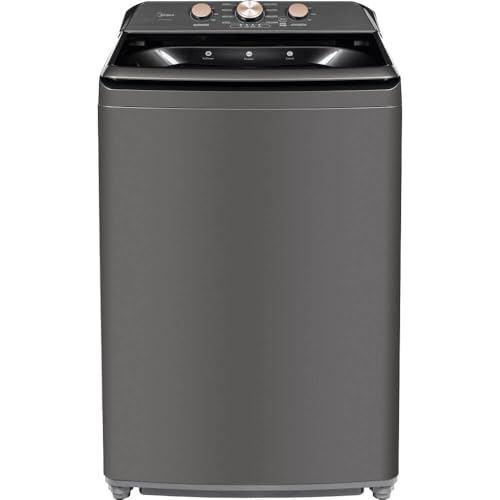
A 4.1 cubic foot top loader with eight presets, auto sensing, a high-water option and Tub Clean. The console sits at the back of a 46-inch cabinet, and the machine weighs about 128 pounds. Auto sensing takes the water-level decision away from the tenant, which reduces both waste and the temptation to set everything to maximum. It is a quiet, low-drama machine for a unit that turns over often.
What stands out
- Auto sensing prevents tenants guessing at water levels
- Eight presets leave very little for a tenant to misconfigure
- The Tub Clean cycle makes turnover cleaning easier
Watch out for
- Back-mounted controls require a long reach across the lid
- 46 inches tall with a deep drum to unload
GE GTW500ASNWS Top Loading Washer with Stainless Steel Basket, 4.6 Cu. Ft. Capacity, 13 Cycles, White
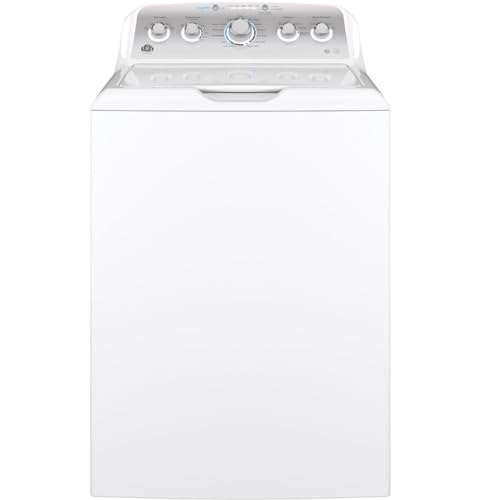
A 4.6 cubic foot top loader with 13 cycles, a stainless steel basket and a dual-action agitator. The stainless tub will not chip, rust or snag, which matters in a machine that gets cleaned with whatever is under the sink. It is a plain, repairable design that a local technician will have seen before. The second rinse is useful in a building with hard water or heavy detergent use.
What stands out
- The stainless basket resists chips, rust and fabric snags
- Dual-action agitator cleans heavy soil and work clothes
- Thirteen cycles, including a second rinse for detergent removal
Watch out for
- 44 inches tall with a deep tub to reach
- There are no high-efficiency water savings on this model
LG WM3470CM 27 Inch Front Load Washer with 5.0 Cu. Ft. Capacity, 8 Wash Programs, 1,300 RPM, SpeedWash Cycle,

A 5.0 cubic foot front loader with eight wash programs, a 1,300 RPM spin, SpeedWash, Rinse plus Spin and Control Lock. Eight programs is a short list for a tenant to learn, and the control lock stops accidental changes. SmartDiagnosis sends a fault code to a phone, which saves a service visit when the issue is a blocked filter. It is the least intimidating front loader in this group.
What stands out
- Eight programs, so fewer wrong settings at move-in
- The control lock prevents accidental changes by tenants or children
- SmartDiagnosis cuts down on unnecessary service calls and visits
Watch out for
- No steam cycle is listed for this model
- About 33 inches deep before the inlet hoses go on
Samsung 4.5 cu. ft. High Efficiency Front Load Washer with Vibration Reduction Technology+, White, WF45T6000AW
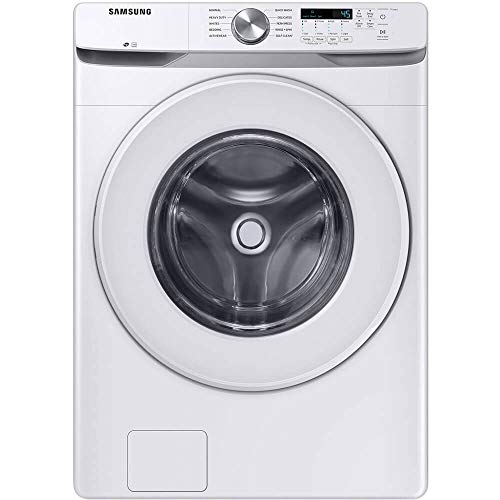
A 4.5 cubic foot front loader with Vibration Reduction Technology plus, a Swirl+ drum and ENERGY STAR certification, and no app or steam layer. Fewer features means fewer things to explain at move-in. The 200-pound cabinet and 27-inch width are typical, so replacing it later is straightforward. It is the machine to buy when the unit shares a wall with a neighbor.
What stands out
- Simple feature set means less to explain at move-in
- Vibration reduction suits shared walls and upper floors
- ENERGY STAR certified and a standard 27 inches wide
Watch out for
- There is no steam or sanitize cycle offered
- The front-load gasket still needs regular wiping by someone
LG 5.2 cu. Ft Stackable Smart Front Load Washer in Black Steel with Steam & Turbowash Technology

A 5.2 cubic foot LG front loader in black steel with steam, TurboWash, an inverter direct drive motor and ENERGY STAR certification at roughly 105 kWh a year. The larger drum reduces the number of cycles a tenant runs, and the stackable design suits a closet. It is the upgrade pick when the unit is premium and floor space is tight.
What stands out
- 5.2 cubic feet means fewer tenant loads each week
- Inverter direct drive is quiet and built to last
- Stackable with a matching dryer in a closet
Watch out for
- Black steel finish shows lint and water spots
- A larger drum makes a full load heavier
Buying guide
Buy for the tenant you will actually get
Every landlord has a story about a machine destroyed in a way the manual did not anticipate: a drum packed with dog beds, a dispenser clogged with powder, a door gasket growing mold because it stayed shut while wet for a year. None of that is prevented by a spec sheet. What you can do is choose a machine with fewer parts to break, a design that tolerates neglect and a control panel that does not invite experimentation. A machine that costs a little more and has three fewer moving parts is usually the cheaper machine by year three. Shop for what the tenant cannot break in year two, not for what the brochure promises in year one, and the callback rate will follow.
That points toward top loaders with mechanical controls for budget units, and toward front loaders only where water or space demands them. A top load with an agitator is crude next to a front loader, but it survives sand, pet hair and a tenant who adds one more towel to every load. Front loaders need the door left ajar and the gasket wiped, which is exactly the maintenance a tenant will not do. If you choose one anyway, budget for a gasket replacement at turnover. A front loader also needs a level floor and a drain it can reach, and in a basement unit those are not always present. If the lease says the tenant maintains the appliances, write down exactly what that means before move-in.
Simple controls beat smart features in a rental
Smart features create support calls. A tenant moves in, cannot connect the machine to the building's Wi-Fi, and the next message is about a washer that will not start. Firmware updates, app accounts and remote start all add failure points that have nothing to do with clean clothes. If you would not install a smart lock without a backup key, do not install a smart washer without a plain control panel. The same goes for touch panels with hidden menus, since a tenant who cannot find Rinse plus Spin will run a normal cycle and complain about residue. Every feature that needs explaining becomes a text message. A tenant who cannot find the right cycle will pick Normal and walk away.
A rotary dial, eight to ten programs and a physical Start button cover every load a tenant will run. A control lock is worth having when the unit rents to families, because it stops a child from changing a cycle mid-wash. Delay start is useful in buildings with time-of-use electricity. Neither feature needs an account or a phone, and both can be explained in one sentence at move-in. If the building has a shared laundry room, a coin-op or card system is a different purchase entirely, and none of these machines is set up for it. These are in-unit machines. Write the two useful cycles on a card and tape it inside the lid or door, where the next tenant will see it.
Footprint, stacking and the 27-inch standard
Most full-size washers are 27 inches wide, which is the width of the alcove in a lot of older rentals. Depth is where models differ: 30 to 34 inches before hoses, and a shallow closet will not take the deeper machines. Measure the opening, the door swing and the path through the unit. A machine that cannot make the turn at the top of the stairs is a delivery charge and a returned order, not an install. A 27-inch machine needs a 27-inch opening plus a little clearance, and the hoses behind it need two or three more inches. Photograph the alcove and the doorway before ordering, because the delivery crew will not measure for you. Measure twice and order once, then keep the tape measure in the car for the next turnover.
Stacking is the answer in a tight unit, but it commits you to a matched pair and a stacking kit, and it puts the dryer above shoulder height for the next tenant. Side-by-side in a closet needs doors that open without hitting each other, which sometimes means reversing a hinge. Decide the layout before you buy, because moving a 200-pound machine twice is how a cheap project turns into an expensive one. A stacking kit is machine-specific, so buy it with the pair rather than hunting for one in three years, and keep the kit model number with the appliance paperwork. A pedestal under a stacked pair is a bad idea in a rental, since it raises the column and makes service harder.
Water, energy and who pays the bill
Who pays the utility changes the math. If the tenant pays, a top loader with a high water level is acceptable and the tenant absorbs the cost. If the building pays, a front loader with ENERGY STAR certification and a cold cycle saves real money over a five-year hold, especially in a multi-unit property where every unit has its own machine. Put the savings in the lease file and review them when the machine needs replacing. An ENERGY STAR machine also tends to carry a longer warranty on the motor, which is the expensive part to replace. Read the lease before assuming the tenant pays, because in some markets water is included and the difference is significant. A five-year hold is long enough for that to show up in the operating budget.
Water hardness is the other hidden cost. In a hard-water area a machine scales up, detergent works poorly, and tenants use more of it, which leads to oversudsing and complaints about residue. A monthly Tub Clean cycle and a softener on the building supply do more than any premium feature. If the property is on a well, test the water before you choose a machine, and check the inlet screens at every turnover. A water test costs little and tells you whether to budget for a softener or for more frequent descaling. Tenants will not descale a machine, so the building has to make the water easier to live with. Hard water is the most common hidden cost in rental laundry, and it never appears on a listing sheet.
Service, parts and the five-year view
A rental washer is a service contract you did not know you signed. Choose a brand with technicians in your area and parts that are easy to order, not simply the cheapest machine on the shelf. Phone-based fault reporting, such as LG's SmartDiagnosis, helps when a tenant can read a code instead of describing a noise. Keep the model and serial number in the lease file, along with the date of purchase and the warranty terms. A local dealer who will deliver and install is worth more than an online discount when a machine fails on a Friday. Keep a spare drain hose and a spare inlet screen in the maintenance closet. That is also the number a dispatcher asks for first.
Plan the end of life. Five to seven years is a realistic replacement cycle for a machine that runs several loads a week with no maintenance. Put a drip pan and braided hoses in at installation, use lever shutoffs, and label the breaker. When the machine fails, a standard 27-inch footprint means the replacement fits the same hole, which is the quiet reason to avoid unusual sizes and imported brands with no local support. Photograph the model and serial plate before installation, since the plate is often at the back, and register the warranty in the property's name rather than the tenant's. A replacement that fits the old hole is a one-hour job; one that does not is a renovation.
Frequently asked questions
What washing machine is best for a rental property?
A simple, standard-size machine from a brand with local service. For budget units, a 4.1 to 4.6 cubic foot top loader with an agitator and a dial is hard to beat. Where the owner pays utilities, a 27-inch ENERGY STAR front loader is the better buy.
Should a rental have a top-load or front-load washer?
Top loads tolerate neglect better and cost less to replace, which suits budget units and short holds. Front loads use less water and power and stack in a closet, which suits premium units where the owner pays the bills, and the lease usually decides it.
Is a used washer a good idea for a rental?
Only with a service history and a local technician who still works on it. A used machine can save money up front and cost more in year one if the bearing or control board fails. See it run a full cycle and confirm parts are available.
How do I protect a rental washer from misuse?
Install a drip pan and braided hoses, label the breaker, and leave a one-page guide with the two cycles that matter. Show the tenant where the lint and drain filters are. A machine that is easy to use correctly gets abused less.
Do I need to provide a dryer too?
In most US rentals, yes. A washer without a dryer is a hard sell, and a stacked pair is expected in a small unit. If you provide only a washer, say so in the listing, because tenants will assume a dryer exists.
Verdict
The LG WM3470CM is the pick for most rentals. It is a standard 27-inch front loader with eight programs, a control lock, a 1,300 RPM spin and SmartDiagnosis, so a tenant can read a fault code instead of describing a beep over the phone.
The GE GTW500ASNWS is the value choice for a budget unit: 4.6 cubic feet, 13 cycles, a stainless basket and a dual-action agitator that shrugs off heavy soil. Choose the LG 5.2 for a premium unit with a stacked closet and the larger drum. Whatever you buy, put the model and serial number in the lease file.