People with eczema and contact dermatitis usually change three things first: the detergent, the dryer sheets and the lotion. What they often overlook is the machine. Detergent that never rinses clear of the outer drum, softener trapped in the dispenser drawer and a damp door gasket all end up back against the skin, and the rash returns with the next load of towels.
The fix is rarely a setting with a medical-sounding name. It is water volume, a real second rinse, a dispenser that does not cake, and a drum that dries between washes. Hot water helps with bedding; steam helps with stains; neither one substitutes for rinsing. A washer that leaves residue behind will undo the most careful detergent choice you make.
We compared specifications, features and owner reports for eight machines that approach the problem differently. Two are basic top loaders with a high-water option, four are front loaders with steam and extra-rinse programs, and two are larger family machines. Where a model is a compromise, we say so, including the refurbished Amana and the 28-inch GE that will not fit a standard alcove.
Top picks at a glance
Midea MLTW41A1BWW 4.1 Cf Top Load Washer Agitator Stainless Tub
Check price on AmazonAmana NTW4516FW 3.5 Cu. Ft. White Top Load Washer
Check price on AmazonLG WM4200HWA 5.0 cu ft Front‑Load Washer, Steam Wash, Allergiene™ Cycle, Large
Check price on AmazonCompare the shortlist
| Model | Type | Capacity | Key feature | Amazon |
|---|---|---|---|---|
| 1. Midea MLTW41A1BWW 4.1 Cf Top Load Washer Agitator Stainless Tub | Top-load | — | Top-load | Check price |
| 2. Amana NTW4516FW 3.5 Cu. Ft. White Top Load Washer | Top-load | 3.5 cu ft | Top-load | Check price |
| 3. Kenmore 4.5 cu. ft. Front Load Washer | Front-load | 4.5 cu ft | Steam | Check price |
| 4. BLACK+DECKER 4.1 Cu. Ft. Top Load Washing Machine with Agitator, | Top-load | 4.1 cu ft | Delay start | Check price |
| 5. Electrolux 27 in. W 4.5 cu. ft. Front Load Washer with SmartBoos | Front-load | 4.5 cu ft | Steam | Check price |
| 6. LG WM4200HWA 5.0 cu ft Front‑Load Washer, Steam Wash, Allergiene | Washers | 5.0 cu ft | Steam | Check price |
| 7. GE GTW500ASNWS Top Loading Washer with Stainless Steel Basket, 4 | Top-load | 4.6 cu ft | Top-load | Check price |
| 8. GE PROFILE 28 Inch Smart Front Load Washer with 4.8 cu. ft. Capa | Front-load | 4.8 cu ft | Connected controls | Check price |
Detailed reviews
Midea MLTW41A1BWW 4.1 Cf Top Load Washer Agitator Stainless Tub

A 4.1 cubic foot top loader with an agitator and a stainless steel tub, 45.75 inches tall and 29 inches wide. The feature list is short: a High Water option, a Tub Clean cycle and Auto Sensing. For sensitive skin, High Water is the useful part, because a fuller drum dilutes detergent and carries more of it out on the drain stroke. There is no steam and no second-rinse button in the supplied specs.
What stands out
- High Water option gives detergent room to dilute
- Tub Clean cycle makes monthly drum washing simple
- Stainless tub resists the film plastic tubs collect
Watch out for
- Basic feature set with no steam or sanitize cycle
- Agitator is hard on knits and delicate sleepwear
Amana NTW4516FW 3.5 Cu. Ft. White Top Load Washer

A 3.5 cubic foot white top loader and the smallest machine in this group. The listing is for a refurbished unit that has been tested, cleaned and repackaged, sometimes in a generic box, which is worth knowing before you compare it with new stock. Capacity is the limitation: a comforter or a week of family laundry will not fit, so you will run more cycles. For one or two people with light laundry, that is a fair trade.
What stands out
- Small 3.5 cubic foot drum suits one or two people
- Straightforward top-load design has few failure points to go wrong
- Refurbished unit is tested and repackaged before sale
Watch out for
- Refurbished stock may arrive in a generic box
- 3.5 cubic feet means more cycles for families
Kenmore 4.5 cu. ft. Front Load Washer

A 4.5 cubic foot front loader in metallic silver with a 27-inch cabinet and 12 cycles, including Kids Wear, Whites, Delicates and Express Wash. Extra Rinse is the setting that matters for skin, and Steam Treat gives stained loads a heat boost without a separate sanitize program. Five wash temperatures and Cold Clean cover the rest, and the machine is ENERGY STAR certified. Express Wash is rated at 25 minutes for a 3-pound load.
What stands out
- Extra Rinse option clears detergent from towels and sheets
- Steam Treat helps with stained kids' clothes and school uniforms
- Twelve cycles include a gentle delicates program for knits
Watch out for
- No dedicated allergen or sanitize cycle on the dial
- Touch controls show fingerprints and collect lint quickly
BLACK+DECKER 4.1 Cu. Ft. Top Load Washing Machine with Agitator, BTLW41MW

A 4.1 cubic foot top loader with an agitator, a glass lid and a stainless steel tub, 42.13 inches tall and 25.75 inches wide, which makes it the narrowest machine here. Ten cycles, an LED display and a 24-hour delay are the feature highlights. The agitator is aggressive enough for work clothes, and the stainless tub resists the rust and film that show up in older porcelain drums. No steam or extra-rinse option is listed.
What stands out
- 25.75-inch width fits narrow laundry closets and tight doors
- Agitator handles heavy soil, work clothes and garden gear
- Stainless tub resists rust, chips and residue buildup over time
Watch out for
- No steam or second-rinse option in the specs
- Lid needs clearance above the 42-inch cabinet when open
Electrolux 27 in. W 4.5 cu. ft. Front Load Washer with SmartBoost, LuxCare Plus Wash System, Perfect Steam in

A 27-inch, 4.5 cubic foot front loader with SmartBoost, Perfect Steam and the LuxCare Plus wash system. SmartBoost premixes detergent with water before the wash starts, which matters if you use powder in cool water and have been finding grit in the dispenser. The adaptive dispenser takes pods, liquid or powder, with separate compartments for bleach and softener, and the machine offers 11 or more cycles. It stands 38 inches tall and weighs 217 pounds.
What stands out
- SmartBoost premixes detergent so powder dissolves fully before washing
- Adaptive dispenser accepts pods, liquid or powder without swapping trays
- Perfect Steam adds stain help without a long soak
Watch out for
- Door gasket still needs wiping after every wash
- Thirty-eight-inch height rules out some under-counter and shelf spots
LG WM4200HWA 5.0 cu ft Front‑Load Washer, Steam Wash, Allergiene™ Cycle, Large Capacity, SmartThinQ® Wi‑Fi Ena

A 5.0 cubic foot front loader with Steam Wash and a dedicated Allergiene cycle, the closest thing here to a program built for sensitive households. TurboWash 360 shortens cycle times, SmartThinQ adds Wi-Fi control and diagnostics, and the machine is ENERGY STAR certified. The cabinet is 27 inches wide and 39 inches tall, with 33.25 inches of depth, so it needs a real laundry room rather than a closet.
What stands out
- Allergiene cycle targets allergens with steam and heat
- Five cubic feet means fewer loads per week
- TurboWash 360 cuts time on normal and mixed cycles
Watch out for
- No drum-vent or door-drying feature for between washes
- Wi-Fi setup is unnecessary for most households and rarely used
GE GTW500ASNWS Top Loading Washer with Stainless Steel Basket, 4.6 Cu. Ft. Capacity, 13 Cycles, White
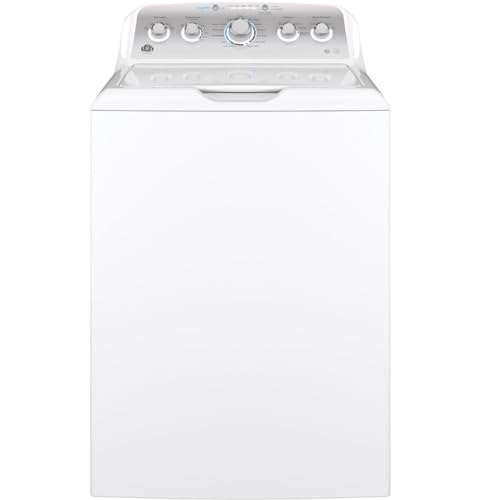
A 4.6 cubic foot top loader with a stainless steel basket, 13 cycles and a dual-action agitator, 44 inches tall on a 27-inch footprint. The 2nd Rinse option adds a full extra rinse after the wash, which is the most useful control on the panel for anyone chasing detergent residue. The stainless basket will not chip, rust or snag, and the reversing agitator works through heavy loads rather than spinning them one way.
What stands out
- 2nd Rinse option is a full extra rinse, not a spray
- Thirteen cycles cover delicates through heavy duty workwear
- Stainless basket resists chips, rust and snags on knits
Watch out for
- Forty-four-inch height limits where it fits under a shelf
- Agitator can stretch cuffs, thin knits and elastic waistbands
GE PROFILE 28 Inch Smart Front Load Washer with 4.8 cu. ft. Capacity in White GFW550SSNWW

A 4.8 cubic foot smart front loader, 28 inches wide and 39.75 inches tall, with the UltraFresh Vent System and OdorBlock. The vent runs after the cycle to pull moisture out of the drum and gasket area, which addresses the damp-machine problem directly rather than masking it with scent. Built-in Wi-Fi and the SmartHQ app add remote start and alerts, and there is a 20-minute Quick Wash plus a 35-minute Time Saver mode for mixed loads.
What stands out
- UltraFresh vent dries the drum after each cycle
- 4.8 cubic feet fits comforters and big towels
- Quick Wash and Time Saver cover small loads
Watch out for
- Twenty-eight-inch width will not fit a 27-inch alcove
- At 246 pounds it needs two people to move
Buying guide
Rinsing Is the Setting That Matters
Detergent residue is the most common laundry irritant, and it is a rinse problem more than a detergent problem. Front loaders use a fraction of the water a top loader does, which is good for the utility bill and bad for anyone whose skin reacts to leftover surfactant. A second rinse is the counterweight. Look for a button marked Extra Rinse or 2nd Rinse rather than a cycle name, because cycle names vary by brand and the extra rinse is the part that does the work. On a top loader, a High Water option buys similar insurance, keeping the drum fuller so detergent has somewhere to go besides the fabric. Neither feature is costly to use once a week.
A second rinse costs water, time and a little energy, and that is the honest trade. It matters most when you use powder in cool water, when your water is hard, or when the drum is packed. An overloaded machine traps detergent in fabric folds where the rinse water cannot reach it, so loading to about three-quarters full does more for your skin than any sanitize cycle on the dial. Run the extra rinse on towels, sheets and underwear; skip it for garden clothes and dog beds. If the machine has no extra-rinse button, a Rinse and Spin cycle after the wash does the same job, at the cost of one more trip to the laundry room.
The Dispenser Drawer Is a Residue Trap
Powder sits in a wet drawer between loads and turns into paste. Liquid pools in the siphon tube. Fabric softener leaves a waxy film on the plastic that never fully washes away. Any of that can drop into the next load. Machines that premix detergent with water before it enters the drum, such as the Electrolux SmartBoost system, solve the powder problem at the source. A dispenser that accepts pods, liquid and powder gives you options when your skin reacts to one form but not another, and a removable drawer is far easier to rinse out than a fixed one. Look at the drawer before the cycle list; you will clean it far more often than you will use steam.
The maintenance is unglamorous but effective. Pull the drawer out once a month and rinse it in hot water, including the siphon cap. Leave the drawer slightly open between loads so it dries. Skip fabric softener entirely, since it is formulated to coat fibers, and measure detergent against your water hardness and load size instead of filling the cap to the line marked for large loads. Two tablespoons of liquid detergent is enough for a normal load in soft water, and less is usually better in a high-efficiency machine. A soft brush reaches the corners that a quick rinse misses, and a sour smell means the drawer needs a hot soak.
Mold Lives in the Door Gasket
Front loaders have a rubber gasket with two folds, and both hold water, lint and a little detergent. The smell that develops there transfers to clothes even when they look clean, and the spores are a problem for anyone with allergic asthma. Wiping the gasket dry once a week and leaving the door ajar costs nothing. The GE Profile goes further with a vent system that moves air through the drum after the cycle, which is the most direct fix in this group and the reason it leads the picks. Cheaper machines rely on you remembering, and most people do not. Set a reminder on your phone if the laundry is in a basement. A gasket that stays black at the fold has gone too long between cleanings.
Top loaders have a quieter version of the same issue: a damp tub under a closed lid. A Tub Clean cycle, like the one on the Midea, runs a hot high-water cycle through the outer drum to flush the film. Stainless steel resists biofilm better than plastic, but no tub stays clean if the lid is shut on a wet drum every day. A towel left in the drum overnight is enough to start the smell. Leave the lid open for an hour after the last load, and wipe the underside of the lid if you see dark spots. It takes less time than folding a single shirt. Two minutes with a dry cloth is the whole job.
Heat, Steam and Realistic Expectations
Hot water above roughly 130 degrees Fahrenheit does more for bedding, towels and washcloths than a gentle cycle ever will, because heat helps break down body oils and rinse them away. Steam cycles such as Kenmore Steam Treat, Electrolux Perfect Steam and LG Steam Wash add stain help and refresh items that cannot take a hot wash. They are useful, but they are not a substitute for a thorough rinse, and no steam cycle removes the need to clean the drum. If your water heater is set to 120 degrees, the hot wash is milder than you think. Check the setting before you blame the detergent. Most machines measure the incoming water, not the temperature at the fabric.
The fabrics closest to irritated skin are usually the ones that tolerate heat worst: elastic waistbands, modal underwear, brushed cotton. Those do better with a warm wash, a full extra rinse and line drying. A sanitize cycle that leaves detergent in the fabric has solved nothing. Match the temperature to the item, then let the rinse do the rest. When in doubt, wash cooler and rinse longer. A shirt that shrinks in a hot wash will not be worn again, no matter how clean it is, and replacing a drawer of stretched underwear costs more than a bottle of detergent. Wash bedding hot, then dry it fully before it goes back on the bed.
Fit, Plumbing and the Details That Bite
Width decides more installations than capacity does. Most front loaders here are 27 inches wide, the GE Profile is 28, and the BLACK+DECKER top loader is 25.75, which is the difference between fitting a closet and not. Add an inch around the cabinet for hoses and vibration, and remember that top loaders need clearance for the lid plus a cabinet height between 42 and 46 inches. A front loader also needs room for the door to swing open. Measure the opening at the narrowest point, not at the trim, and check the delivery path before you order. A half inch of trim can turn a 27-inch opening into a 26-inch one.
Every machine listed runs on standard 120-volt power with hot and cold hookups, so there is no special circuit to run unless your laundry room lacks one already. Front loaders weigh between 200 and 246 pounds, so plan for two people, a level floor and a drain pan if the laundry is upstairs. Measure the doorway and the turn in the hall before delivery day, not after the truck arrives. A machine that fits the alcove but not the stairwell is a return waiting to happen. Keep the shipping bolts until the first wash is done. The bolts protect the drum in transit and belong in a drawer afterward.
Frequently asked questions
Is a top load or front load washer better for sensitive skin?
Neither design is automatically better. A top loader with a high-water option rinses with more water per fill, while a front loader uses less water and depends on an extra-rinse setting to clear detergent. What matters is whether you can add a rinse, clean the drum easily, and leave the door or lid open to dry.
Does an extra rinse really remove detergent?
It removes detergent still suspended in the drum and fabric, and it helps most with powder used in cool water or with hard water. It will not rescue an overloaded drum or a dirty dispenser. Run the extra rinse on towels, sheets and anything worn against the skin, and skip it for garden clothes.
Should I stop using fabric softener?
Yes, if skin is the concern. Softener is designed to leave a waxy coating on fibers, which reduces absorbency and traps detergent and fragrance against the body. Dryer sheets do the same thing in the dryer. Wool dryer balls or a lower heat setting handle static without the coating.
How often should I clean the washing machine?
Run a tub clean or hot maintenance cycle once a month, wipe the door gasket weekly, and rinse the dispenser drawer every few weeks. Check the drain pump filter quarterly if your machine has one. If the drum smells musty after a wash, the machine needs cleaning before the next load goes in.
Do I need a steam or sanitize cycle?
Not for everyone. A hot wash, the right amount of detergent and a second rinse handle most household laundry. Steam is worth having for bedding, towels and stained children's clothes, and it is gentler than a full hot cycle on fabrics that would otherwise shrink. Treat sanitize as an occasional tool, not the default.
Verdict
For skin-first laundry, the GE Profile 4.8 is the pick. The UltraFresh vent and OdorBlock go after the damp drum that turns a clean machine into a smelly one, and the 4.8 cubic foot capacity handles bedding without a second load. It is 28 inches wide and 246 pounds, so measure the alcove and plan for help moving it.
The Kenmore 4.5 is the value choice: Extra Rinse, Steam Treat and 12 cycles in a standard 27-inch cabinet. The Electrolux 4.5 is the upgrade for powder users, since SmartBoost premixes detergent before it reaches the drum. If you want the biggest drum and a dedicated Allergiene cycle, the LG 5.0 is the alternative.