Septic trouble rarely announces itself at the tank. It shows up as a soft patch in the yard, a gurgle in the floor drain, or a washing machine that drains slowly on the third load of the day. By then the drain field has been taking water it could not absorb for months, and the repair is measured in excavation, not plumbing. Most of the fixes are habits rather than hardware.
The washing machine matters because it is the largest single water user in most laundry routines. A top loader can put forty gallons through a cycle, and three loads on a Saturday can equal a day's household use. A high-efficiency front loader cuts that substantially, but only if you resist the urge to add a rinse to every load.
This guide weighs specifications, features and owner reports for eight machines with septic households in mind. The right machine makes those habits easier to keep. weighing water per cycle, capacity, cycle length and how easy each one is to keep clean. Some are obvious picks, and one is a compromise we would only recommend with conditions attached. That is the standard we used.
Top picks at a glance
Electrolux 27 in. W 4.5 cu. ft. Front Load Washer with SmartBoost, LuxCare Plu
Check price on AmazonMidea MLTW41A1BMG 4.1 Cu. Ft. Gray Top Load Washer
Check price on AmazonLG WM4200HWA 5.0 cu ft Front‑Load Washer, Steam Wash, Allergiene™ Cycle, Large
Check price on AmazonCompare the shortlist
| Model | Type | Capacity | Key feature | Amazon |
|---|---|---|---|---|
| 1. Electrolux 27 in. W 4.5 cu. ft. Front Load Washer with SmartBoos | Front-load | 4.5 cu ft | Steam | Check price |
| 2. BLACK+DECKER 4.1 Cu. Ft. Top Load Washing Machine with Agitator, | Top-load | 4.1 cu ft | Delay start | Check price |
| 3. LG WM4200HWA 5.0 cu ft Front‑Load Washer, Steam Wash, Allergiene | Washers | 5.0 cu ft | Steam | Check price |
| 4. LG WM3470CM 27 Inch Front Load Washer with 5.0 Cu. Ft. Capacity, | Front-load | 5.0 cu ft | Front-load | Check price |
| 5. LG WM4000HBA 4.5 Cu. Ft. Smart Front-Load Washer, High-Efficienc | Front-load | 4.5 cu ft | High efficiency | Check price |
| 6. Midea MLTW41A1BMG 4.1 Cu. Ft. Gray Top Load Washer | Top-load | 4.1 cu ft | Top-load | Check price |
| 7. LG WM3400CW 4.5 cu ft Front-Load Washer | Front-load | 4.5 cu ft | Low noise | Check price |
| 8. Kenmore 4.5 cu. ft. Front Load Washer | Front-load | 4.5 cu ft | Steam | Check price |
Detailed reviews
Electrolux 27 in. W 4.5 cu. ft. Front Load Washer with SmartBoost, LuxCare Plus Wash System, Perfect Steam in

The Electrolux is a 27-inch front loader with a 4.5 cubic foot drum, SmartBoost and the LuxCare Plus wash system. SmartBoost mixes detergent with water before the wash, so a smaller dose works harder, and the adaptive dispenser takes pods, liquid or powder with separate bleach and softener compartments. There are more than eleven cycles, which is generous for a machine this size. It stands 38 inches tall with 32 inches of depth.
What stands out
- SmartBoost makes a smaller detergent dose work just as hard
- Perfect Steam cleans without adding a full extra rinse
- Adaptive dispenser accepts liquid, powder or pods without swapping
Watch out for
- No published water factor to compare cycles across models
- Gasket needs weekly drying to stay fresh between loads
BLACK+DECKER 4.1 Cu. Ft. Top Load Washing Machine with Agitator, BTLW41MW

This 4.1 cubic foot BLACK+DECKER top loader pairs an agitator with a stainless tub and a glass lid, 42.13 inches high. Ten cycles, an LED display and a 24-hour delay cover daily laundry, and the stainless tub resists rust and film. It is the only top loader here, included for tight closets and tight budgets. A top loader uses more water per cycle, which is a real drawback on septic.
What stands out
- Narrow 25.75-inch cabinet fits tight closets and doorways
- Stainless tub resists rust, chips and detergent film
- Simple controls with a 24-hour delay for off-peak loads
Watch out for
- Higher water use per cycle than a front loader
- No steam or extra-rinse option listed in the specs
LG WM4200HWA 5.0 cu ft Front‑Load Washer, Steam Wash, Allergiene™ Cycle, Large Capacity, SmartThinQ® Wi‑Fi Ena

This LG pairs a 5.0 cubic foot drum with Allergiene, Steam Wash, TurboWash 360 and SmartThinQ. The large drum means fewer cycles for the same volume of laundry, which is the main argument for it in a septic house. It carries ENERGY STAR certification and measures 27 by 39 by 33.25 inches. Steam adds cleaning power without a long soak full of water.
What stands out
- Five cubic feet reduces the number of cycles
- Steam Wash cleans without a deep soak or extra fill
- TurboWash 360 shortens cycle time on normal loads
Watch out for
- Allergiene cycle uses more water than a normal wash
- Deep cabinet needs 33.25 inches of clearance behind the door
LG WM3470CM 27 Inch Front Load Washer with 5.0 Cu. Ft. Capacity, 8 Wash Programs, 1,300 RPM, SpeedWash Cycle,

This LG has a 5.0 cubic foot drum, eight programs and a 1,300 RPM final spin. SpeedWash trims the normal cycle, Rinse and Spin adds a rinse on its own, and SmartDiagnosis reads fault codes. ColdWash and 6Motion look after fabrics, and a control lock keeps children out of the settings. It measures 27 inches across, 39 high and 33 deep.
What stands out
- 1,300 RPM spin extracts more water before drying
- Rinse and Spin avoids a full extra cycle
- Five cubic feet means fewer wash days and fewer cycles
Watch out for
- No steam option appears in the supplied specifications
- Eight programs is a short list for the size
LG WM4000HBA 4.5 Cu. Ft. Smart Front-Load Washer, High-Efficiency Laundry Machine with Wi-Fi Connectivity, Bla

A black steel LG with a 4.5 cubic foot drum, TurboWash 360, ThinQ app control and the Allergiene cycle. The steam and longer wash help with towels, and the 4.5 cubic foot drum suits two or three people without pushing into oversized loads. The dimension data in the listing is inconsistent, so confirm the cabinet size before ordering. It suits a couple with a dog and a weekly bedding load.
What stands out
- Allergiene cycle handles pet bedding and dander well
- 4.5 cubic feet suits couples and small households
- TurboWash 360 keeps cycles short on mixed loads
Watch out for
- Listing dimensions are inconsistent, so measure before ordering
- Dark finish shows water spots, dust and lint
Midea MLTW41A1BMG 4.1 Cu. Ft. Gray Top Load Washer
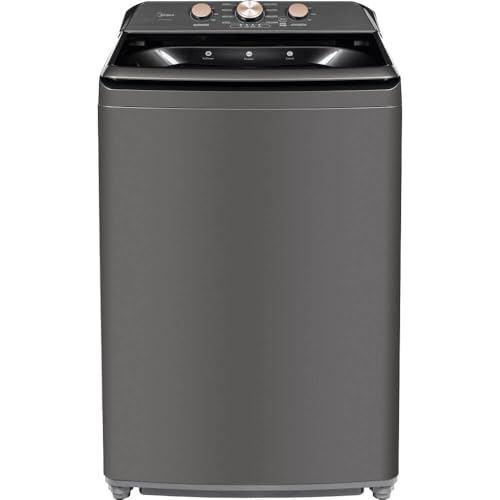
Midea's 4.1 cubic foot top loader has a Tub Clean cycle, Auto Sensing and a High Water option for full loads. Eight presets are listed, and the cabinet measures 46 by 29 by 28 inches at 128 pounds. The Tub Clean cycle is useful between loads, but the High Water setting is the opposite of what a septic field wants. Buy it for budget and simplicity, not water efficiency.
What stands out
- Tub Clean cycle helps between laundry days and seasons
- Light enough for two people to move without a dolly
- Simple controls with few failure points and no app
Watch out for
- High Water setting adds volume a field must absorb
- No steam or dedicated extra-rinse control on the panel
LG WM3400CW 4.5 cu ft Front-Load Washer

An LG front loader with 4.5 cubic feet, LoDecibel quiet operation and the TrueBalance anti-vibration system. 6Motion provides several wash motions, and the machine is ENERGY STAR certified for water and energy use. There is no steam and no smart app, which keeps the feature set and the setup simple. The published dimensions are inconsistent, so measure a floor model before you order.
What stands out
- ENERGY STAR rating points to lower water use
- LoDecibel and TrueBalance keep the spin cycle quiet
- 4.5 cubic feet without the smart features and app setup
Watch out for
- Listing dimensions are inconsistent, so measure before ordering
- No steam or allergen cycle in the specs
Kenmore 4.5 cu. ft. Front Load Washer

The metallic silver Kenmore is a 4.5 cubic foot front loader with a dozen programs and five wash temperatures. Steam Treat is there for stained loads, Cold Clean for efficiency, and the machine carries ENERGY STAR certification. Express Wash is claimed to finish a 3-pound load in 25 minutes. Width is 27.01 inches, height 39.6 and depth 34.02, so it needs a deep alcove.
What stands out
- ENERGY STAR certified for lower water and energy use
- Steam Treat reduces the need for a soak
- Twelve cycles, including a quick 25-minute wash for small loads
Watch out for
- Extra Rinse adds water a septic field must absorb
- Thirty-four-inch depth needs a deep alcove or utility room
Buying guide
What a Septic Tank Can Absorb
A septic tank separates solids, and the drain field absorbs the liquid that leaves it. Both parts have limits measured in gallons per day, not gallons per load. When the field is saturated, wastewater backs up or surfaces, and no amount of bacterial additive fixes a hydraulic overload. The first job is to spread water use across the week rather than concentrating it on laundry day. A tank that is pumped on schedule still has a field that can only take so much water. The two work together, and the field is the expensive half to replace. It is also the half most homeowners never see. A failed field can cost more than every appliance in the house combined.
Signs that the system is already struggling: slow drains throughout the house, gurgling from the floor drain when the washer empties, sewage odor in the yard, or a patch of unusually green grass over the field. If any of those appear, get the tank pumped and inspected before you buy a new appliance. A washer with a gentler water profile helps, but it cannot rescue a failing field. Write the pump date on the tank lid or in the utility folder, because the interval depends on tank size, household size and solids. A family of five with a 1,000-gallon tank is on a different schedule than a couple. Ask the pumper what they found. Keep the receipt with the date.
Water Per Cycle Beats Drum Size Claims
Front loaders use far less water than top loaders for the same weight of laundry, which is why every pick here except one is a front loader. Capacity still matters, because a bigger drum means fewer cycles to get through the same pile. The ideal for a septic house is a large front loader run full, not a small machine run twice. Choose 4.5 to 5.0 cubic feet and load it properly. A front loader with a 4.5 cubic foot drum holds roughly the same weight of laundry as a 4.5 cubic foot top loader, but it does it in a fraction of the water. That is the number to compare, not the cycle count on the panel. Weigh a load once and you will know.
The settings matter as much as the machine. An extra rinse can add ten to fifteen gallons, so reserve it for detergent residue or skin problems rather than using it by default. A sanitize cycle with bleach is occasional, not weekly. Wash one or two loads a day instead of five in a row. Those habits do more for the drain field than any feature on the dial. A load at 6 a.m. and another at 8 p.m. gives the tank a settling window that back-to-back loads never allow. If guests are coming, start a day early rather than running four cycles in an afternoon. The field will thank you. That weight is the only fair comparison.
Detergent, Bleach and the Tank's Biology
The bacteria in a septic tank work best without interference. Liquid, low-suds detergent measured to the load size is the simplest choice, and it rinses out of fabric more readily than powder in cold water. Avoid antibacterial formulas, which are designed to kill the organisms the tank depends on. Fabric softener adds a waxy load that the tank does not need either, and dryer sheets are cheaper and easier on the system. Check the detergent label for the word septic-safe, which usually means low-suds and biodegradable. Most major liquid brands qualify, and the specialty additives sold in hardware stores are rarely necessary. The tank does not need a booster; it needs less soap and fewer solids.
Bleach is the question everyone asks. An occasional quarter cup in a white load is not going to sterilize a tank, but routine sanitize cycles with bleach are a different matter. Keep bleach for stains and mildew, not for every wash, and never pour a jug down the drain. Oxygen bleach is a gentler alternative for colored fabrics, and it breaks down faster in the system. If someone in the house is immunocompromised and a sanitize cycle is medically necessary, run it sparingly and let the tank recover. A septic professional can say what the system tolerates. The stakes are a new drain field. Bleach also shortens the life of rubber seals in the machine.
Lint, Drain Lines and the Stuff That Clogs
Lint is a solid, and solids are what fill a tank. A front loader's drain pump filter catches much of it, along with coins and hair, and cleaning that filter monthly keeps the lint out of the tank and the field. Top loaders send more lint down the drain because there is no filter in the same place. A lint trap on the drain hose is not standard, but an inline mesh filter is sold for the purpose. Clean the filter over a bucket, not a drain, and throw the lint in the trash. A clogged filter also makes the machine work harder, which is its own repair bill. If the filter is hard to reach, that is a design flaw worth knowing before you buy.
The drain hose itself should rise above the machine's water line before it turns down, or dirty water can siphon back into the drum. Check that loop when you install the machine, and check the hose for kinks every few months. If the laundry drains into a utility sink before the main line, keep that sink clean and do not let lint build up in the trap. A hose that loops too low can siphon dirty water back into the drum between cycles, which is why the manual specifies a height. If the standpipe is short, raise the hose with a clip rather than stuffing it deeper. A zip tie and a hook solve it.
Scheduling and Habits That Protect the Field
Run laundry on a schedule rather than in marathons. One full load in the morning and one in the evening gives the tank time to settle and the field time to absorb. If a big wash day is unavoidable, split it across two days. A family of four with a 1,000-gallon tank should think in terms of two or three loads a day at most, and less during wet weather when the ground is already saturated. Wet weather is the other variable. A saturated field cannot accept normal volume, so cut back during a rainy week and let the ground recover. If the tank has a high-water alarm, treat it as a stop sign rather than a nuisance.
Keep an eye on the machine's own leaks. A slow drip from a supply hose or a door gasket adds water continuously, and continuous water is worse for a drain field than a single large load. Check under the machine monthly, replace hoses every five years, and fix a dripping inlet valve promptly. The goal is not a perfect machine but a predictable one. A supply hose that bursts while you are at work can put hundreds of gallons into the house in an hour, and the septic system sees all of it. Braided hoses and a shutoff valve at the wall are cheap insurance. Turn the water off before a trip, too. It takes ten seconds.
Frequently asked questions
Can I use a regular washing machine with a septic system?
Yes. A standard high-efficiency front loader is fine, and most newer machines are efficient enough for a healthy system. The risk comes from volume and timing, not from the appliance itself. Avoid marathon laundry days, fix leaks, and have the tank pumped on the schedule your septic contractor recommends.
How much laundry water is too much for a septic tank?
There is no universal number, since tank size and soil matter, but a common guideline is two to three loads a day for a family of four, spread across the day. Five loads back to back is the pattern that overwhelms a field. If drains gurgle after a load, the system is already telling you to slow down.
Is bleach safe for a septic system?
Small, occasional amounts are generally tolerated, but routine bleach use is not. Skip sanitize cycles as a default, never pour leftover bleach down a drain, and use oxygen bleach for colors. If someone in the house is immunocompromised and sanitizing is required, talk to a septic professional about the trade-off.
What detergent is best for a septic system?
A liquid, low-suds detergent measured to the load size. Liquids dissolve readily and leave fewer fillers behind than powder in cool water, and low-suds formulas are easier on the tank. Skip antibacterial products and excess softener. If clothes come out stiff, rinse once rather than adding more detergent.
Should I use an extra rinse with a septic system?
Usually not. An extra rinse adds water volume, which is the opposite of what a drain field needs. Use it only when detergent residue is causing skin irritation or when you have used too much detergent. For normal loads, the correct dose and a full spin do the job without the extra water.
Verdict
The Electrolux 4.5 is the pick for a septic household. It is a high-efficiency front loader with a 4.5 cubic foot drum, SmartBoost premixing and Perfect Steam, so you can get a thorough wash without leaning on extra rinses. The adaptive dispenser takes liquid or powder, and the 27-inch cabinet fits a utility room.
The LG WM3400CW is the value choice: 4.5 cubic feet, LoDecibel operation, TrueBalance and 6Motion, with ENERGY STAR certification and no smart features to configure. If your household generates a lot of laundry, the LG WM4200HWA is the upgrade at 5.0 cubic feet, which means fewer cycles for the same pile. Skip the top loader if water volume is your main concern.