Well water has a way of showing up on white laundry. A rust-colored ring around the drum, a yellow tint on undershirts, or a sulfur smell that survives detergent and a hot wash. The machine gets blamed first, and it is almost never the cause. It is easy to miss on dark clothes and impossible to ignore on a white towel.
What comes out of the tap decides what the washer can do. Iron, manganese, sediment, hardness and sulfur all change how detergent behaves and how much rinsing a load needs. A treatment system is the real fix for most of it. Start with the lab report, then decide which appliance you actually need. The washer's job is to cope without making things worse, and to be easy to clean when it does.
We compared specifications, features and owner reports on eight machines for houses on wells: front loaders with steam, top loaders with high-water fills, and a 5.5 cubic foot LG that will take a week of laundry in one go. Two of the top loaders are here because a big drum can be the difference between one load and three. Where the supplied data is thin, we say so rather than guess at a number.
Top picks at a glance
Electrolux 27 in. W 4.5 cu. ft. Front Load Washer with SmartBoost, LuxCare Plu
Check price on AmazonMidea MLTW41A1BMG 4.1 Cu. Ft. Gray Top Load Washer
Check price on AmazonLG WM4200HWA 5.0 cu ft Front‑Load Washer, Steam Wash, Allergiene™ Cycle, Large
Check price on AmazonCompare the shortlist
| Model | Type | Capacity | Key feature | Amazon |
|---|---|---|---|---|
| 1. Electrolux 27 in. W 4.5 cu. ft. Front Load Washer with SmartBoos | Front-load | 4.5 cu ft | Steam | Check price |
| 2. LG WM4200HWA 5.0 cu ft Front‑Load Washer, Steam Wash, Allergiene | Washers | 5.0 cu ft | Steam | Check price |
| 3. BLACK+DECKER 4.1 Cu. Ft. Top Load Washing Machine with Agitator, | Top-load | 4.1 cu ft | Delay start | Check price |
| 4. LG 5.2 cu. Ft Stackable Smart Front Load Washer in Black Steel w | Front-load | 5.2 cu ft | Steam | Check price |
| 5. Kenmore 4.5 cu. ft. Front Load Washer | Front-load | 4.5 cu ft | Steam | Check price |
| 6. LG WT8400CW 5.5 Cu. Ft. White Mega Capacity Smart Top Load Washe | Top-load | 5.5 cu ft | Connected controls | Check price |
| 7. Midea MLTW41A1BMG 4.1 Cu. Ft. Gray Top Load Washer | Top-load | 4.1 cu ft | Top-load | Check price |
| 8. LG WM4000HBA 4.5 Cu. Ft. Smart Front-Load Washer, High-Efficienc | Front-load | 4.5 cu ft | High efficiency | Check price |
Detailed reviews
Electrolux 27 in. W 4.5 cu. ft. Front Load Washer with SmartBoost, LuxCare Plus Wash System, Perfect Steam in

Electrolux builds this 4.5 cubic foot front loader into a 27-inch cabinet, with SmartBoost premixing and Perfect Steam on board. SmartBoost mixes detergent with water before the cycle, which helps when well water arrives cold and hard, and the adaptive dispenser takes pods, liquid or powder with separate bleach and softener compartments. The cycle list runs past eleven programs, covering delicates through heavy duty. It stands 38 inches tall and 32 inches deep.
What stands out
- SmartBoost premixes detergent for cold, hard well water
- Adaptive dispenser suits powder, liquid or pods without extra trays
- Perfect Steam helps with iron-tinted stains and greasy soil
Watch out for
- No built-in sediment filter, softener or iron treatment
- Door gasket needs drying after each wash to prevent odor
LG WM4200HWA 5.0 cu ft Front‑Load Washer, Steam Wash, Allergiene™ Cycle, Large Capacity, SmartThinQ® Wi‑Fi Ena

LG's 5.0 cubic foot front loader adds Steam Wash, Allergiene, TurboWash 360 and SmartThinQ control. Five cubic feet means fewer loads, which matters when the well recovers slowly, and the steam cycle helps with towels that have picked up iron film. ENERGY STAR certification is included, and the cabinet measures 27 by 39 by 33.25 inches at 201.5 pounds. The drum is a useful size for family bedding.
What stands out
- Five cubic feet cuts the number of loads
- Steam Wash helps refresh stained towels and work clothes
- TurboWash 360 shortens the normal cycle by several minutes
Watch out for
- No sediment filter or inlet screen upgrade included
- Deep cabinet needs 33.25 inches of clearance behind the door
BLACK+DECKER 4.1 Cu. Ft. Top Load Washing Machine with Agitator, BTLW41MW

A 4.1 cubic foot BLACK+DECKER top loader with an agitator, glass lid and stainless steel tub, 42.13 inches tall and 25.75 inches wide. Ten cycles, an LED display and a 24-hour delay cover daily laundry, and the stainless tub wipes clean more easily than plastic when iron film appears. The narrow cabinet fits closets that will not take a 27-inch front loader. No steam or extra-rinse option is listed.
What stands out
- Narrow 25.75-inch cabinet fits tight closets and doorways
- Stainless tub wipes clean after iron film and grit
- Agitator handles muddy work clothes and barn gear
Watch out for
- No steam or second-rinse option in the specs
- Top-load fill uses more water per cycle from the well
LG 5.2 cu. Ft Stackable Smart Front Load Washer in Black Steel with Steam & Turbowash Technology

The LG 5.2 is a stackable black steel front loader with steam, TurboWash and an inverter direct drive motor. The inverter direct drive motor keeps spin noise down, and the listing cites roughly 105 kWh per year under ENERGY STAR. Controls are straightforward rather than app-heavy. The published dimensions in the listing are inconsistent, so confirm the cabinet size with the seller before ordering.
What stands out
- 5.2 cubic feet is the largest front-load drum here
- Inverter direct drive motor runs quietly near living spaces
- Stackable design saves floor space in a narrow laundry
Watch out for
- Listing dimensions are inconsistent, so confirm them before ordering
- Black steel finish shows water spots and mineral dust
Kenmore 4.5 cu. ft. Front Load Washer

Kenmore's white 4.5 cubic foot front loader comes with a dozen cycles, five temperatures and an Extra Rinse button. Steam Treat takes on stained loads, Cold Clean handles the energy-saving end, and the certification is ENERGY STAR. The quick cycle is rated at 25 minutes for a three-pound load. The cabinet is 27.01 inches wide and 39.6 inches tall, with 34.02 inches of depth.
What stands out
- Extra Rinse helps clear iron-heavy water from towels
- Steam Treat lifts light rust staining on white cottons
- Twelve cycles, including a whites program for stained cottons
Watch out for
- No bulk detergent tank to simplify daily dosing
- Thirty-four-inch depth crowds a narrow room or hallway
LG WT8400CW 5.5 Cu. Ft. White Mega Capacity Smart Top Load Washer w/EasyUnload
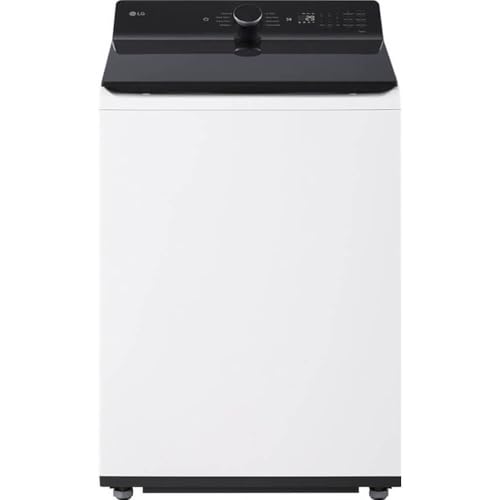
An LG top loader with 5.5 cubic feet, the largest drum in this group, plus EasyUnload and built-in AI that selects settings for the load. The reworked top-load design is aimed at reaching deep items without bending, and the machine weighs 130 pounds. It is the practical choice for washing a week of family laundry in one cycle. The listing's dimension fields are not reliable, so measure one in person.
What stands out
- 5.5 cubic feet takes bedding and towels together
- EasyUnload design reaches the bottom of the drum
- AI settings reduce guesswork when the load is mixed
Watch out for
- Listing dimensions are unreliable, so measure the cabinet yourself
- Uses more water per load than a front loader
Midea MLTW41A1BMG 4.1 Cu. Ft. Gray Top Load Washer
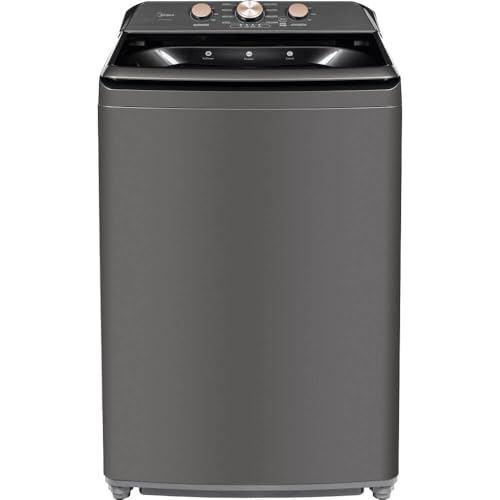
The Midea is a 4.1 cubic foot gray top loader with Auto Sensing, a Tub Clean program and a High Water setting. There are eight presets in total, and the cabinet stands 46 inches tall, 29 wide and 28 deep at 128 pounds. High Water is the useful setting for well water because it dilutes sediment and gives detergent more room. There is no steam and no separate extra-rinse control.
What stands out
- High Water option dilutes sediment in the drum
- Tub Clean cycle flushes iron film from the outer drum
- Light enough for two people to move without a dolly
Watch out for
- No dedicated extra-rinse setting in the supplied specs
- Basic controls with no steam, heater or delay start
LG WM4000HBA 4.5 Cu. Ft. Smart Front-Load Washer, High-Efficiency Laundry Machine with Wi-Fi Connectivity, Bla

LG's 4.5 cubic foot black steel front loader includes TurboWash 360, ThinQ control and Allergiene, claimed to remove 95 percent of pet dander. The steam and longer wash help with towels that have gone stiff, and the 4.5 cubic foot drum suits two or three people. Measure the cabinet yourself, because the listing's dimensions do not agree with each other.
What stands out
- Allergiene cycle adds heat and a longer wash
- TurboWash 360 cuts time on mixed and bulky loads
- Compact 4.5 cubic foot drum suits couples and small families
Watch out for
- Listing dimensions are inconsistent, so confirm them before ordering
- Dark finish shows water spots and mineral dust
Buying guide
Test the Well Before You Shop
A well test is the cheapest part of this decision. Ask for iron, manganese, hardness, pH, nitrate and coliform, and test in spring if your area gets snowmelt, because that is when the numbers move. Iron above about 0.3 parts per million stains laundry, hardness above seven grains per gallon wastes detergent, and any coliform result needs treatment before the laundry does. Manganese behaves like iron and stains darker, and both show up on white cotton first. Test the raw water at the tap, not water that has been through the softener, or you will size the treatment for the wrong problem. Ask for the raw-water numbers, not the treated sample.
Treat the water first and the machine second. A sediment filter catches grit, a softener handles hardness, an iron filter handles the staining, and a UV unit handles bacteria if the test calls for one. Put them in that order and the washer sees water it can work with. A whole-house filter also protects the inlet screens and fill valves, which is cheaper than a repair visit. A sediment filter alone will not remove dissolved iron, which passes through a five-micron cartridge as clear water and stains later. That is the difference between a filter and a treatment system, and it is where most well owners start out wrong. Ask a dealer to size the system from the lab numbers.
Sediment, Screens and the Fill Valve
Every washer has small mesh screens where the hoses connect at the back. Well water fills them with grit, and a clogged screen shows up as a slow fill, a chattering valve or a cycle that times out before the drum is full. Shut off the supply, unscrew the hoses and rinse the screens once a quarter. A five-micron prefilter upstream is the better long-term answer, and it costs less than a valve. Do not overtighten the hoses when you reconnect them, because a cracked plastic thread is a leak waiting for wash day. Use new hose washers and check for drips after the first fill. A quarter turn past hand tight is enough. Replacement cartridges are cheap and fit most housings.
Sediment also settles in the drum and the drain pump. Front loaders usually have a small access panel at the bottom, and the filter behind it collects grit, coins and lint. A top loader hides the same debris in the outer tub until it smells. If the dispenser drawer feels gritty or the drum leaves brown streaks on a white rag, sediment is getting through and the filter schedule needs to be tighter. On a front loader, put a shallow pan and a towel under the panel before you open it, because the filter housing holds water. On a top loader, the same debris sits under the agitator, where a service call is the only practical access.
Iron, Sulfur and the Stains They Leave
Iron leaves rust-colored stains that look like the washer is dirty when the water is the problem. Chlorine bleach makes them worse by oxidizing the iron into a form that bonds to fabric, so keep bleach away from stained whites until the water is treated. A chelating detergent or a rust remover formulated for laundry can lift light staining, but it will return with the next untreated load. Stainless tubs wipe clean more easily than plastic ones. If the stains are already set, rewash with a chelator rather than bleach, and dry in sunlight only after the stain is gone, since heat sets what remains. Test on a hidden seam first. Iron also collects in the dispenser, so rinse it weekly.
Hydrogen sulfide gives well water its rotten-egg smell, and hot water releases more of it. A washer cannot remove the gas, and the smell will cling to towels until the water is treated with carbon filtration or aeration. In the meantime, wash cooler, ventilate the laundry room, and clean the gasket and dispenser more often, because sulfur encourages the biofilm that holds odor. A carbon whole-house filter is the usual fix, and it needs replacing on schedule or the smell returns. Do not shock chlorinate a well and then wash laundry the same day, since chlorine bleaches fabric and damages rubber parts. Wait until it clears. Sulfur also corrodes copper and brass, so fix it before it reaches the plumbing.
Water Volume and Pressure: Top Loaders Still Win
A deep well and a pressure tank rarely deliver the flow of a city main. Most washers need roughly 20 psi to fill reliably, and the number drops when a shower, dishwasher and irrigation zone run at once. Schedule laundry for a quiet hour, and check the pressure gauge on the tank before you blame the machine. A front loader uses less water per load, which matters when the well recovers slowly. A pressure gauge that drops to 20 psi when the washer fills points to a tired tank bladder or pump, not a broken washer. A booster pump is a bigger job than a new appliance, so diagnose before you spend. A gauge is a fifteen-dollar part and worth owning.
A top loader uses more water per cycle, but the LG WT8400CW's 5.5 cubic feet means fewer loads overall. That is the trade: fewer cycles against more water per cycle. For a family of five on a slow well, the front loader usually wins. For a household that wants to wash bedding and towels in one go, the big top loader is the practical choice. Front loaders typically use half or less of the water a top loader uses per cycle, which is why recovery rate matters as much as drum size. If the well makes five gallons a minute, a big top load will empty the pressure tank and stall mid-fill. Know your recovery rate.
A Maintenance Rhythm for Well Water
Once a month, run a tub clean cycle, wipe the gasket, rinse the dispenser and look for rust streaks. Once a quarter, clean the inlet screens and the drain pump filter. Once a year, retest the water and inspect the hoses for bulging or stiffness. Write the dates on the inside of the laundry cabinet door, because well water problems creep in slowly and memory is unreliable. Keep a short log of water tests and filter changes, because patterns only appear over months. If iron rises after heavy rain, the well head or casing may need attention, and the laundry is telling you before the fixtures do. Photograph the test strip next to the date.
Know when to call someone else. A rotten-egg smell that returns within days is a water treatment issue, not a washer issue. A fill valve that hums for a minute before water arrives is a pressure or screen issue. Brown streaks that come back after a cleaning mean iron is still getting through. Fix the water and the machine will last its full life. A washer that fills slowly on every cycle is usually a screen, while one that fills slowly only when the sprinklers run is a pressure problem. That distinction saves a service call. Write down what you observe before you call. Most well problems show up in the laundry first. That is useful, not annoying.
Frequently asked questions
Can a washing machine remove iron from well water?
No. It can rinse fabric, but iron in the water deposits on clothes and in the drum as the water sits. The fix is an iron filter or a softener sized for the test result. Until then, avoid bleach on stained items and clean the drum monthly, because iron film holds odor and grit.
Why does my laundry look yellow after washing?
Iron is the usual culprit, especially on white cotton. Chlorine bleach can make the stain permanent by oxidizing the iron, so stop using it until the water is treated. A rust remover made for laundry may lift light staining, and a sediment or iron filter upstream prevents the next round.
Is well water hard on washing machines?
It can be. Sediment clogs inlet screens, hardness scales heating surfaces, and iron stains the drum and the laundry. None of that is immediate, but it shortens the machine's life if the water is untreated. Test annually and service the filters on schedule rather than waiting for a symptom.
Do I need a water softener if I have a well?
If hardness is above about seven grains per gallon, yes. Hard water forces you to use more detergent, leaves film on the drum and makes towels stiff. A softener also reduces the amount of iron and sediment that reaches the washer. Test first, because a softener sized for the wrong hardness wastes salt and water.
Why does my laundry smell like sulfur?
Hydrogen sulfide in the water, usually. The smell is stronger in hot water, and it clings to towels and synthetics. Carbon filtration or an aeration tank at the well is the fix. In the meantime, wash cooler, leave the laundry room vented, and clean the gasket and dispenser, since sulfur feeds the biofilm that holds odor.
Verdict
The Electrolux 4.5 is the pick for a well-fed house. SmartBoost premixes detergent with water, which helps when the supply is cold and hard, and Perfect Steam adds stain help without a long soak. The adaptive dispenser handles powder, liquid or pods, so you can switch detergent as the water test changes. It is 27 inches wide and 38 inches tall.
The Kenmore 4.5 in white is the value choice, with Extra Rinse and Steam Treat for iron-tinted loads. If capacity matters more than water use, the LG WT8400CW is the volume pick at 5.5 cubic feet, with EasyUnload and AI cycle selection. For a household of two, the LG 4.5 front loader is the fit.