Apartment laundry is a game of inches and volts. A 24-inch dryer will fit in the closet. The question is whether the closet has a 240-volt circuit, a place for the water to go, and enough clearance for the door to open without hitting the opposite wall.
Heat pump dryers are the practical answer for most renters and condo owners because they do not need an exterior vent. No hole in the wall, no landlord negotiation, no lint decorating the balcony. They also dry at lower temperatures, which is easier on clothes and on the building's wiring.
The catch is that ventless does not mean plug-and-play. Every machine here produces condensate that has to be emptied or drained, and most want a 240-volt circuit. One model specifies professional hardwiring. Another sells the power cord separately. A third uses a four-prong cable that needs an adapter on older three-prong outlets.
We compared the six compact heat pump dryers that show up most often in apartment searches, focusing on cabinet dimensions, voltage, condensate handling and stacking. Where a listing does not publish a dimension, we say so rather than guessing at it. The goal is a machine that fits the room you actually have, not the laundry room you wish you had.
Top picks at a glance
BLACK+DECKER 4.4 Cu. Ft. Electric Dryer with Heat Pump, 22 lb. Capacity , 240V
Check price on AmazonMidea Heat Pump Ventless Front Load Dryer Stackable 4.4 Cu.ft White
Check price on AmazonSmad 23.4" Ventless Heat Pump Dryer, 4.4 Cu.Ft Front Load Clothes Dryer with W
Check price on AmazonCompare the shortlist
| Model | Type | Capacity | Key feature | Amazon |
|---|---|---|---|---|
| 1. BLACK+DECKER 4.4 Cu. Ft. Electric Dryer with Heat Pump, 22 lb. C | Heat pump | 4.4 cu ft | Ventless | Check price |
| 2. Smad 23.4" Ventless Heat Pump Dryer, 4.4 Cu.Ft Front Load Clothe | Heat pump | 4.4 cu ft | Sanitize cycle | Check price |
| 3. Midea Heat Pump Ventless Front Load Dryer Stackable 4.4 Cu.ft Wh | Heat pump | 4.4 cu ft | Sensor drying | Check price |
| 4. Samsung 4.0 cu. ft. Compact Ventless Heat Pump Dryer with AI Sma | Heat pump | 4.0 cu ft | Sensor drying | Check price |
| 5. Summit 3.88 cu.ft. Heat Pump Dryer, ENERGY STAR Certified, 208-2 | Heat pump | 3.88 cu ft | Delay start | Check price |
| 6. Techomey 4.4 Cu.Ft Ventless Heat Pump Clothes Dryer, 24" Compact | Heat pump | 4.4 cu ft | Sensor drying | Check price |
Detailed reviews
BLACK+DECKER 4.4 Cu. Ft. Electric Dryer with Heat Pump, 22 lb. Capacity , 240V Electric Clothes Dryer with 16

The largest drum in this group at 4.4 cubic feet, with a 22-pound capacity and 16 cycles. It is the only one here that specifies professional hardwiring, and the required three- or four-wire cord is not included. The condensate tank can be emptied by hand or plumbed to the included 51-inch drain hose, which is the better setup in an apartment with a standpipe.
What stands out
- 4.4 cu. ft. drum with a 22-pound capacity
- Drain hose included for permanent condensate disposal to a floor drain
- Stainless steel drum with a transparent door for checking loads
Watch out for
- Requires professional hardwiring plus a separate cord you supply
- At 121 pounds, it is a two-person delivery
Smad 23.4" Ventless Heat Pump Dryer, 4.4 Cu.Ft Front Load Clothes Dryer with Wrinkle Care,10KG Load, 120/240V,

Smad's 4.4-cubic-foot ventless dryer is the one to look at if the apartment has only 120 volts available, since the listing specifies 120/240V operation. It has 16 programs, a sanitize function and wrinkle care, and the 23.4-inch width means it can stack on a matching washer. The trade-off is that 120-volt heat pump drying is slow, so plan around longer cycles.
What stands out
- Listed for 120/240V operation, which helps in older buildings
- 16 programs including sanitize and wrinkle care for fabrics
- 23.4-inch width fits a standard stacking pair of machines
Watch out for
- 120-volt operation means noticeably longer cycles than 240 volts
- Condensate tank still needs regular emptying by hand
Midea Heat Pump Ventless Front Load Dryer Stackable 4.4 Cu.ft White

Midea's 4.4-cubic-foot heat pump dryer is a 240-volt machine with a 24-inch cabinet, built to sit beside or under a matching washer. A humidity sensor ends the cycle when the load is dry instead of running on a timer, and the wrinkle care option tumbles in unheated air for about 90 minutes after the cycle ends. The power cord is sold separately, so order it with the dryer.
What stands out
- Humidity sensor adjusts drying time automatically as the load dries
- 24-inch cabinet stacks with a matching washer from the same line
- ENERGY STAR qualified for lower energy use per load
Watch out for
- Power cord is not included and must be ordered separately
- Needs a dedicated 240-volt circuit at the installation spot
Samsung 4.0 cu. ft. Compact Ventless Heat Pump Dryer with AI Smart Dial, Wi-Fi Connected, Smart Dry Technology
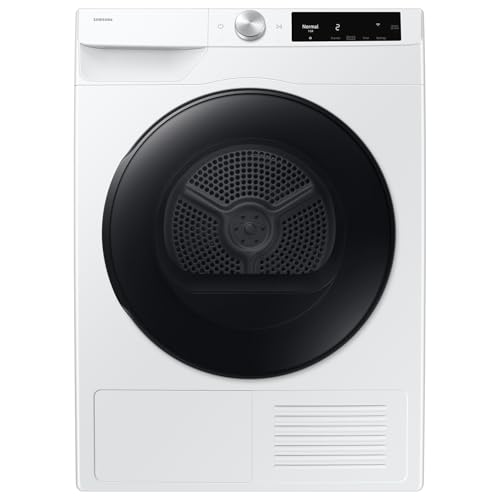
The only 4.0-cubic-foot machine here, and the only one with Wi-Fi. Samsung's AI Smart Dial learns which cycles you use and puts them first, and the SmartThings app sends end-of-cycle alerts and allows remote start, stop or delay. Sensor Dry adjusts time and temperature as the load dries. Samsung's listing does not publish full cabinet dimensions, so measure the space before ordering.
What stands out
- Wi-Fi alerts suit shared or basement laundry rooms
- AI Smart Dial reduces the number of buttons to learn
- Sensor Dry adjusts the cycle to the load
Watch out for
- Full cabinet dimensions are not published in the listing
- Smallest drum in this group at 4.0 cu. ft.
Summit 3.88 cu.ft. Heat Pump Dryer, ENERGY STAR Certified, 208-240V, Slim 24” Width, White

The smallest drum here at 3.88 cubic feet, and the only one with a pre-installed three-prong cord for a 208-240-volt, 15-amp outlet. Summit includes 14 dry settings, a start delay and a half-load option, plus an ECOEYE display that shows power use. The pull-out condensation tank needs emptying about every two cycles, which is the main day-to-day chore. It is the easiest machine here to connect without an electrician.
What stands out
- Pre-installed three-prong cord for a 15-amp, 208-240V dryer circuit
- 14 settings including wool, delicates and air fluff
- ECOEYE shows power consumption for every cycle you run
Watch out for
- Condensate tank needs emptying roughly every two drying cycles
- Smallest capacity in this group at 3.88 cubic feet
Techomey 4.4 Cu.Ft Ventless Heat Pump Clothes Dryer, 24" Compact 120/240V Electric Front Load Drying Machine,

A 4.4-cubic-foot, 24-inch ventless dryer listed for 120/240V operation and built to stack on a same-size washer. It has 16 cycles and sensor drying that pauses when the load reaches the selected dryness. Two practical notes from the listing: the tank has to be emptied after each use or the program pauses, and the four-prong cable needs an adapter on a three-prong outlet.
What stands out
- 4.4 cu. ft. drum in a 24-inch cabinet
- 120/240V listing gives more installation flexibility than 240V only
- Sensor drying and 16 cycles cover most everyday loads
Watch out for
- Tank must be emptied after every load or the cycle pauses
- Four-prong cable needs an adapter for three-prong outlets
Buying guide
Start With the Circuit, Not the Dryer
Before you compare drums, look at the breaker panel. Most apartments have a 120-volt laundry circuit for the washer and nothing else, and a heat pump dryer that needs 240 volts will not run on it. A dryer receptacle is easy to recognize: it is much larger than a standard wall outlet and has three or four flat slots instead of two vertical ones. The listings here are specific. Midea states 240V and sells the cord separately. BLACK+DECKER requires professional hardwiring with a cord that is not included. Summit ships with a pre-installed three-prong cord for a 208-240V, 15-amp outlet. If the outlet matches and the breaker is labeled for a dryer, you are most of the way there.
If the building only has 120 volts, the field narrows to the two models listed for 120/240V operation, the Smad and the Techomey. Expect longer cycles on the lower voltage, because the machine has less power to work with and the heat pump has to make up the difference. Do not solve a voltage problem with an extension cord or a plug adapter; both are a fire risk on an appliance that runs unattended for an hour. Ask the landlord which circuit the laundry closet is on, and have an electrician confirm it before the delivery date, not after the box is in the hallway. A subpanel is a landlord decision, not a tenant one.
Ventless in a Rental: What It Solves and What It Does Not
The obvious win is the wall. A ventless dryer needs no 4-inch penetration, no exterior hood, and no permission to cut into a building envelope you do not own. That makes interior closets, hallway nooks and basement corners usable. It also removes a maintenance item that apartment dwellers rarely control: a duct run shared with the building, full of lint nobody has cleaned since the last tenant moved out. And because the machine recirculates room air instead of pulling in outdoor air, it does not fight the building's heat in winter or its air conditioning in summer. For a renter, that is the whole argument.
What it does not solve is moisture. A heat pump dryer condenses water out of the air, but the room still gets warm and slightly humid while the cycle runs. A closet with a solid door and no return air will feel damp, and over a winter that is how musty smells start. Leave the door open during cycles, or use a louvered door if the building allows it. Run a bathroom fan nearby if the closet shares a wall with one. A small dehumidifier is overkill for most apartments, but it is not crazy in a basement unit. Wipe the door gasket and the lint housing dry once a month.
Fitting a 24-Inch Cabinet Into a Closet
The machines here are roughly 23.4 to 24 inches wide and 25.7 inches deep, with heights between 33 and 33.5 inches. Samsung's listing does not publish full cabinet dimensions, which is a real problem for closet planning; measure a floor model or ask the seller before ordering. Depth is the number people forget. A 25.7-inch cabinet plus a hose and a vent-free back panel needs close to 27 inches of clear space, and the door still has to swing. If the closet has a standard 24-inch door, the dryer will go through it, but the packaging will not. Measure the door frame, not the door, and check the opening height as well.
Also measure the path to the closet, not just the closet. A machine that weighs as much as 121 pounds has to come through the front door, around the stair landing and past the bathroom door. Two people and a furniture dolly are the minimum, and a tight stair turn is where deliveries fail. Stacking is the other option, and the Midea, Smad and Techomey are described as stackable, but the washer underneath needs to match and the stack needs a bracket. If you rent, get the stacking kit approved in writing before you drill anything. A stack puts the controls at eye level, which is easier on your back.
Where the Water Goes
Every heat pump dryer here collects condensate. You can empty a pull-out tank by hand or connect a hose to a drain, and the difference is the difference between a chore every load and a chore every few months. BLACK+DECKER includes a 51-inch drain hose. Summit's tank should be emptied about every two cycles. Techomey's listing says the tank has to be emptied after each use or the program pauses. Tank capacity varies and is not always stated, so treat the first week as a calibration period and learn how many loads fit. Most tanks pull out like a drawer and pour badly if you rush.
A gravity drain is the best setup if you have a standpipe, laundry sink or floor drain at the right height. The hose has to run downhill the whole way; a loop that rises will trap water and back up into the machine. If there is no drain, plan for the tank. Empty it into the sink before you start the next load, not after you have already filled the drum. An overflow switch may pause the cycle, but it will not save the floor. A plastic tray under the machine is cheap insurance in a rental. Some owners add a condensate pump, but none of these kits includes one.
Noise, Cycle Time and Upstairs Neighbors
A heat pump dryer sounds different from a conventional one. There is no roaring element and no blast of hot exhaust, but there is a compressor, and it hums and cycles throughout the run. The tumbling drum is the other noise. In a wood-frame building, vibration travels further than sound, so a level machine on a rubber mat matters more than the decibel rating on the spec sheet. Put the dryer on an interior wall rather than the wall you share with the bedroom next door, and check the feet after the first week. A machine that rocks will thump through the whole cycle.
Cycles run long. Low-temperature drying is gentler, but it is not fast, and a heavy load of towels can take considerably longer than it would in a vented machine. Sensor drying helps by ending the cycle when the load is actually dry instead of running a timer down to zero. Start loads earlier in the evening, and if your lease has quiet hours, run the dryer before them rather than during. Clean the lint filter every load and the condenser coil as the manual directs; a clogged filter adds time to every cycle. Wrinkled clothes are often a sign of overloading, not a bad machine.
Frequently asked questions
Do heat pump dryers need to be vented?
No. Every dryer on this list is ventless, which is the main reason they suit apartments. Moisture is condensed into a tank or drained through a hose instead of being pushed outside. That also means no duct to clean and no exterior hood to freeze or clog, but the room needs some air movement while the machine runs.
Can a heat pump dryer run on a standard 120-volt outlet?
Only if the model is listed for it. The Smad and Techomey are described as 120/240V machines, while the Midea is a 240V unit and the BLACK+DECKER requires hardwiring. On 120 volts, expect longer cycles. Have an electrician check the circuit and confirm the plug type before delivery, because returns on appliances this heavy are painful.
Do I need a drain for a ventless dryer?
No, but it makes life easier. Without a drain you empty the condensate tank by hand, which on some models means after every load. With a drain hose running to a standpipe or laundry sink, you can forget about it for weeks. The hose must slope downhill continuously, so the drain has to sit lower than the dryer outlet.
Will a 24-inch heat pump dryer fit in an apartment closet?
Usually, if the closet is at least 27 inches deep and 27 inches wide with the door open. Width is rarely the issue; depth and door swing are. Measure the path from the front door as well, since a 110-pound machine still has to turn corners. Leave a couple of inches behind the cabinet for the hose and the plug.
Do heat pump dryers take longer than regular dryers?
Generally yes. They dry at lower temperatures, so a heavy load takes longer than it would in a vented machine with a hot element. Sensor drying reduces the penalty by stopping when the clothes are dry rather than when the timer ends. Smaller loads and a clean lint filter make more difference than any setting.
Verdict
The top pick for most apartments is the Midea. It is a true 240-volt heat pump dryer in a 24-inch cabinet, with a humidity sensor that ends the cycle on moisture rather than time, and it is ENERGY STAR qualified. The practical value pick is the Smad, which is listed for 120/240V and includes sanitize and wrinkle care, so it covers more wiring situations without extra parts. The upgrade is the Samsung for anyone who wants app notifications and a machine that learns the cycles they actually use.
If the closet has no drain, look hard at the BLACK+DECKER, which includes a 51-inch drain hose and a 4.4-cubic-foot drum. If the outlet is an older 15-amp 208-240V circuit, the Summit is the only one here with a pre-installed three-prong cord. Match the machine to the wiring and the drain first; the drum size is the easy part.